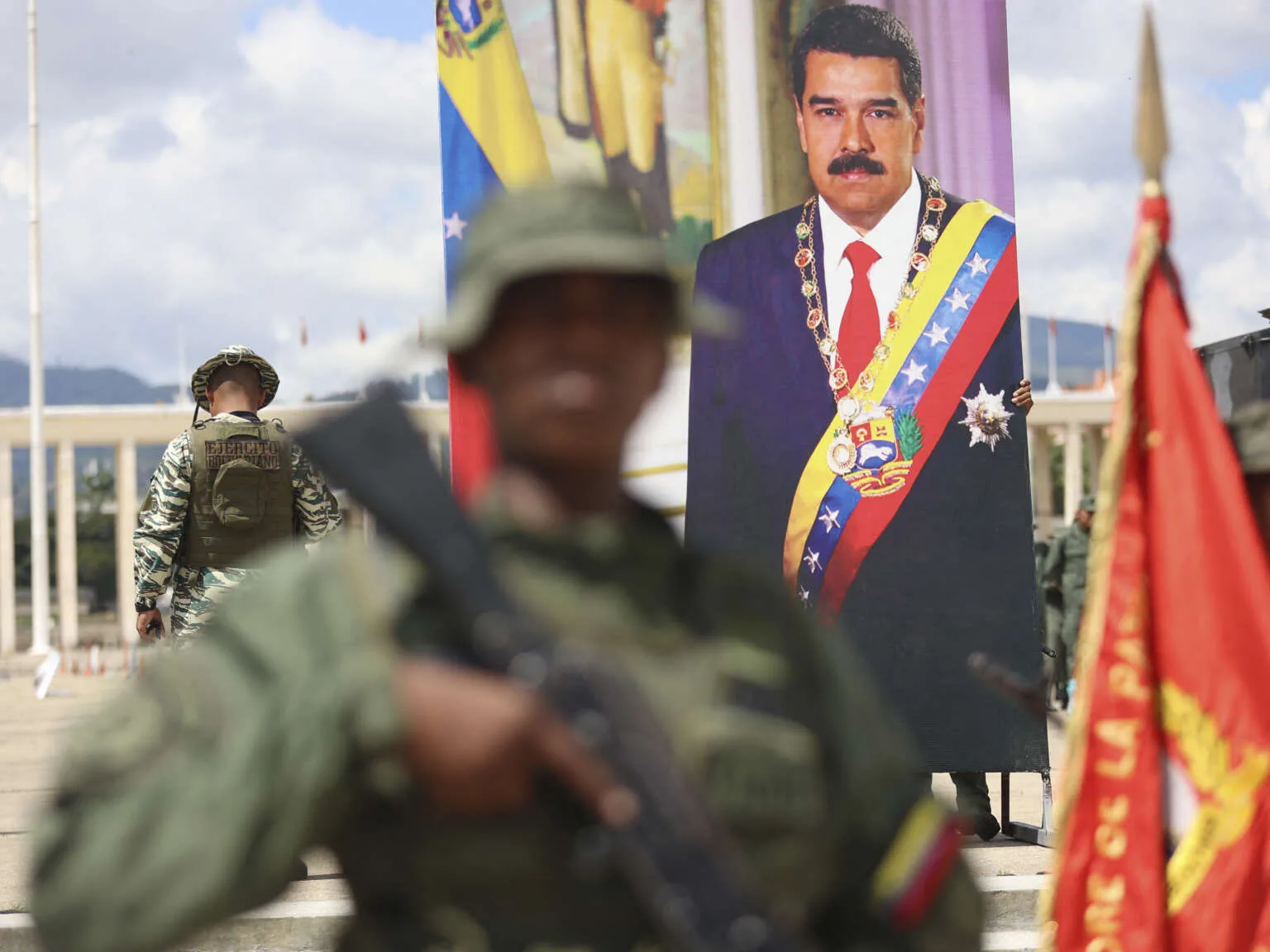
Unmasking imperial hypocrisy: Trump’s 2025 Venezuela escalation is a sham for oil
Originally published: CovertAction Magazine on October 27, 2025 by Gloria Guillo (more by CovertAction Magazine) | (Posted Oct 29, 2025)
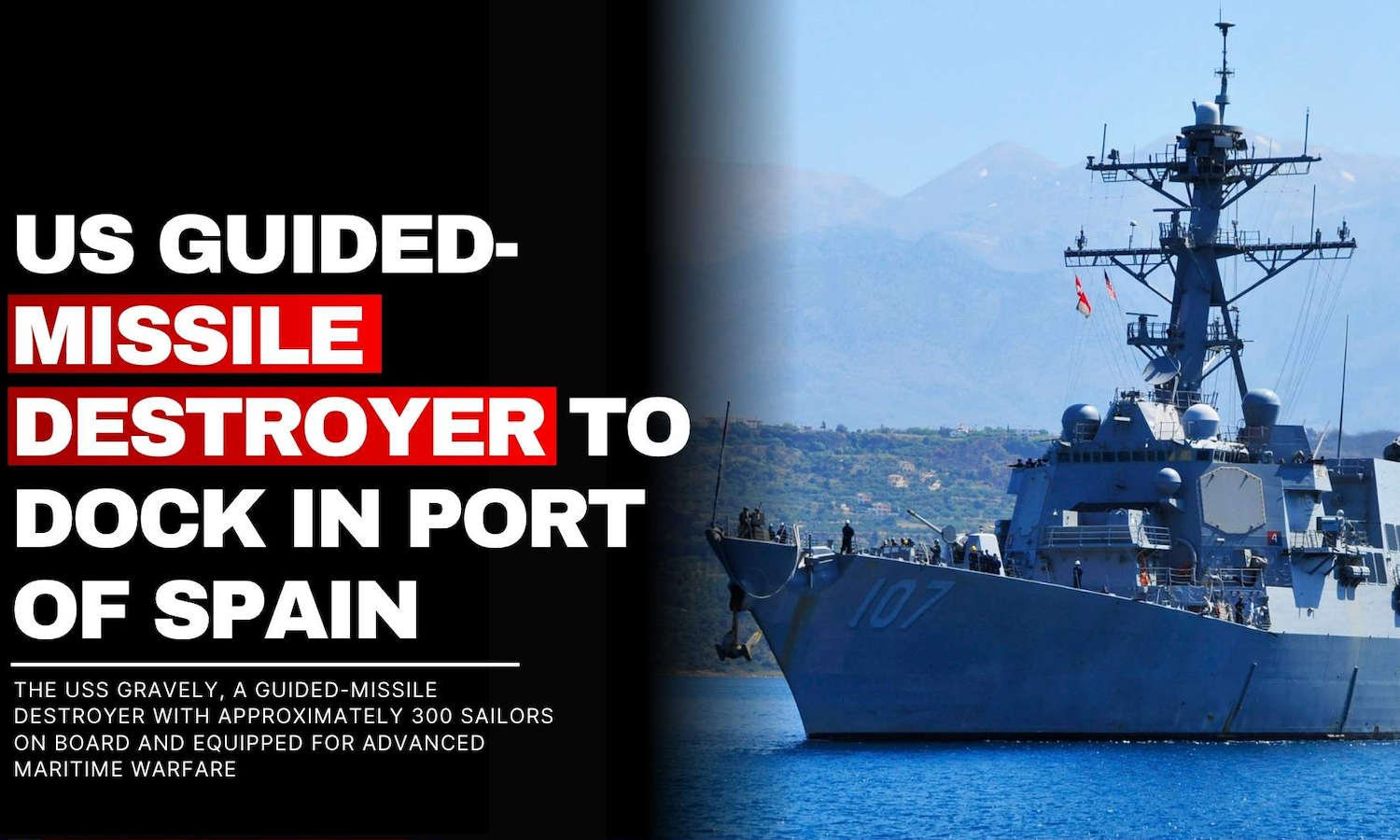
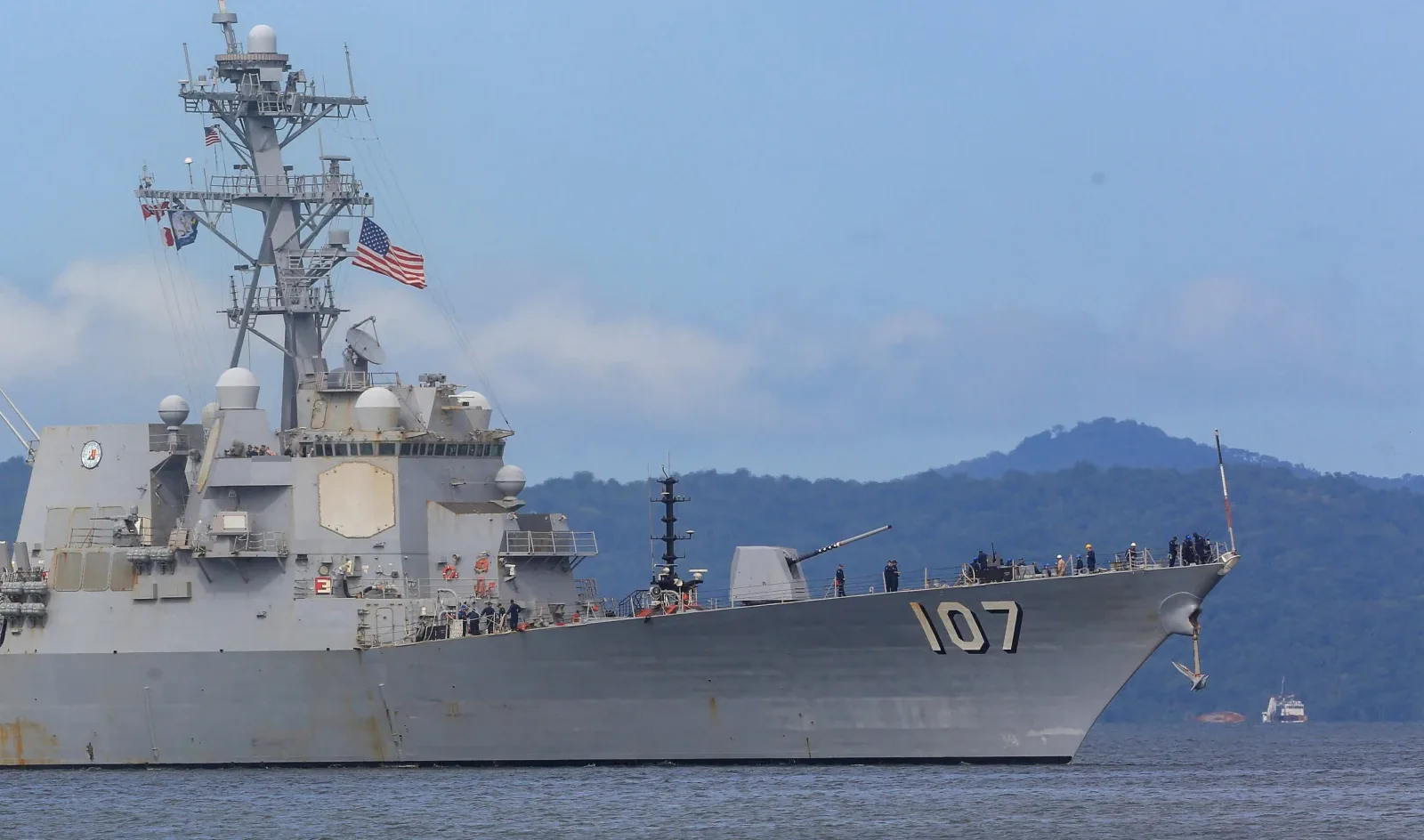
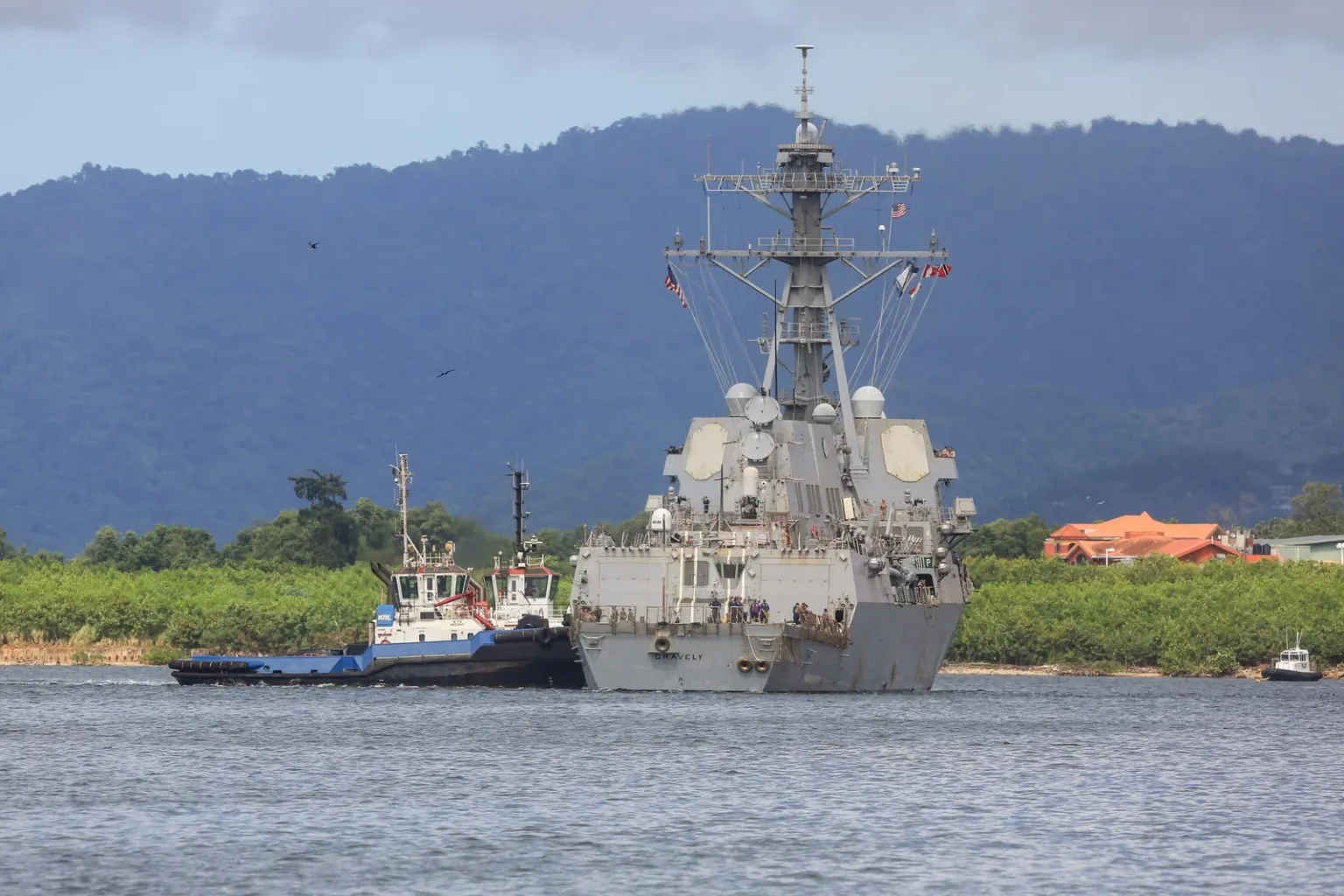
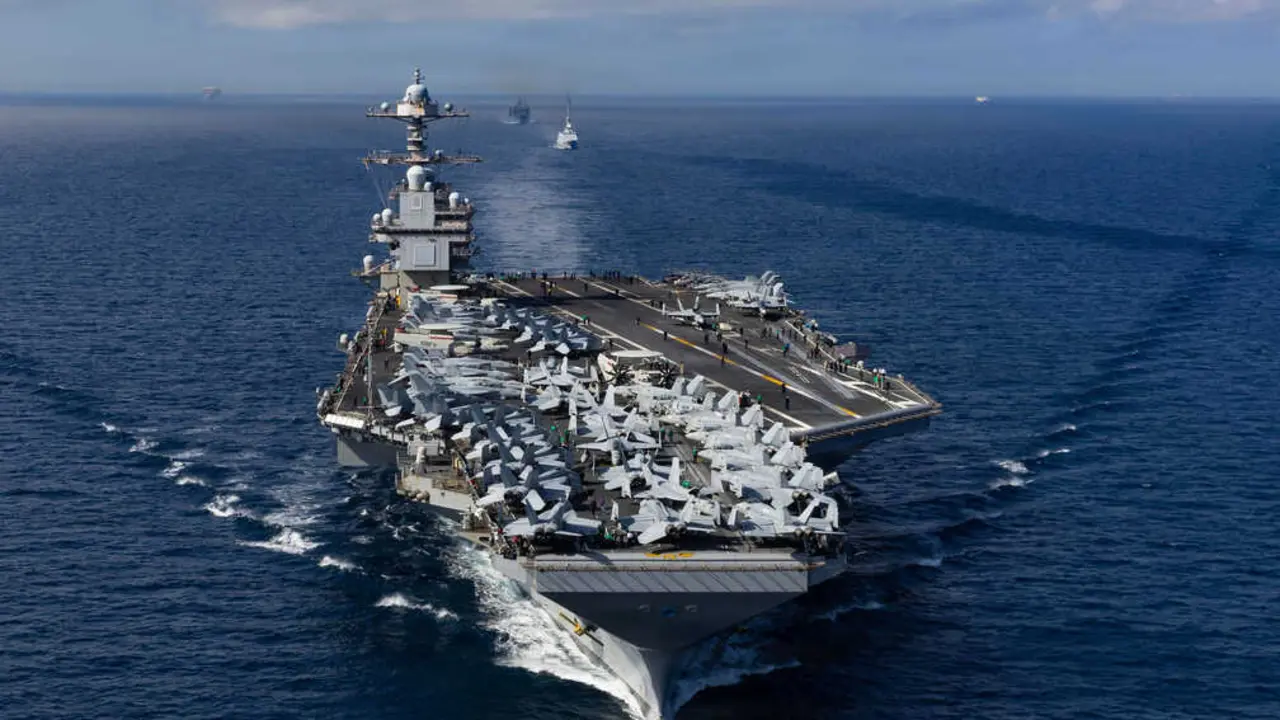
On October 16, 2025, Donald Trump’s second term ignited a reckless campaign against Venezuela, greenlighting covert CIA operations, deploying 4,000 Marines and F-35 jets to the Caribbean, and launching strikes on Venezuelan vessels that have killed more than 27 people—all framed as a fight against drugs and migration.
This is no noble mission: It is a recycled imperial plot to seize the world’s largest oil reserves, draped in fabricated threats. The U.S. narrative paints Nicolás Maduro as the mastermind of gangs like Tren de Aragua (TdA), but the CIA’s history of enabling criminal networks tells a different story.
Massive disparities in the global economy combined with selective policing contributed to these gangs’ spread, while U.S. banks launder billions in cartel cash, exposing the hypocrisy of Trump’s “security” crusade.
In 2019, Trump hesitated without a solid pretext or figurehead; now, with tailored narratives and a charismatic proxy, he is poised to strike, driven by oil lust and geopolitical games—not justice.
Source gazettengrcom
Why Trump Paused in 2019: No Pretext, No Puppet
In 2019, Trump toyed with invading Venezuela but backed off. His (now indicted) adviser John Bolton pushed hard for regime change, admitting to plotting coups globally, including in Venezuela.
Trump saw invasion as “cool,” viewing Venezuela’s 300 billion barrels of oil as practically American. So why the pause? He lacked a convincing excuse or a compelling opposition leader to justify the risks.
Source invezzcom
An invasion would have violated the UN Charter, barring force against sovereign states without Security Council approval, which Maduro’s allies Russia and China would veto.
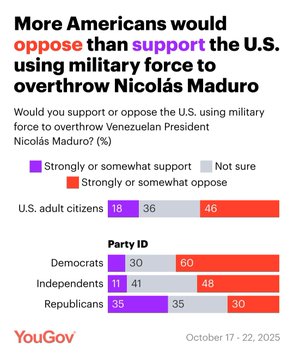
Domestically, the War Powers Resolution required congressional consent for sustained conflict, absent an imminent threat Venezuela did not pose. Regional allies in the OAS and Lima Group opposed military action, fearing refugee surges and anti-American backlash. Public support was weak—only 30% of Americans backed intervention—and Trump, eyeing 2020 re-election, could not afford a quagmire like Iraq.
The opposition’s Juan Guaidó was a dealbreaker: an unknown “interim president” with no charisma or electoral legitimacy.
Trump called him “weak,” and Guaidó’s April 2019 uprising flopped, exposing him as a flimsy U.S. proxy.
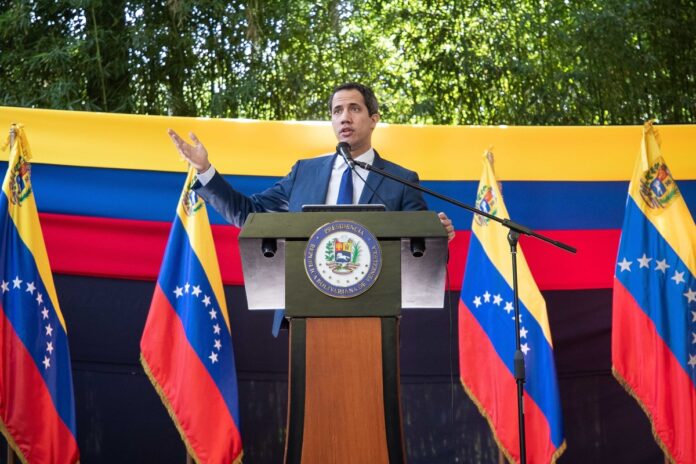
Juan Guaidó Source elnacionalcom
Without a strong pretext or a likable puppet, Trump previously relied on sanctions—economic warfare that slashed oil revenues by 99% from 2012 to 2020 and killed tens of thousands through shortages, as I noted in CovertAction Magazine, branding them “racketeer-level crimes” to destabilize Venezuela’s legitimate 2024 election.
Yet, these failed to topple Maduro, forcing Trump to wait for better optics. The hesitation revealed the fragility of U.S. strategy: Without a robust narrative to mask the aggression, intervention was politically toxic.
Sanctions became the fallback, a slow strangulation that deepened the humanitarian crisis, driving millions to flee and setting the stage for future pretexts. This era underscored how U.S. foreign policy often prioritizes resource control over human rights, using economic tools to soften targets for eventual military moves.
Trump’s first-term advisers, including military leaders, warned of logistical nightmares in Venezuela’s rugged terrain and Maduro’s loyal militias, numbering more than four million, which could turn any incursion into a protracted guerrilla war.
The lack of international coalition support further isolated the idea, as even anti-Maduro nations like Colombia balked at hosting U.S. bases for fear of regional destabilization. In essence, 2019 was a lesson in imperial overreach: Without a polished excuse and a charismatic front, the mask slips, revealing naked ambition for oil.
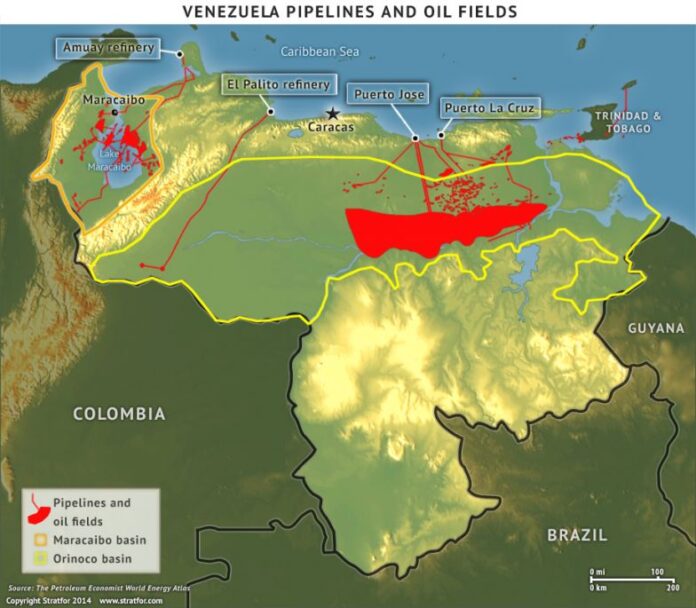
Source worldviewstratforcom
2025’s Fabricated Crisis: Migration and Gangs As Pretext
By 2025, Trump—unshackled from re-election considerations—wields a loyal cabinet and surging “America First” approval. He has authorized CIA surges across Central America and the Caribbean, openly weighing “land strikes” on Venezuelan soil. The excuse? Venezuelan migration and TdA gangs as a “national security invasion.”
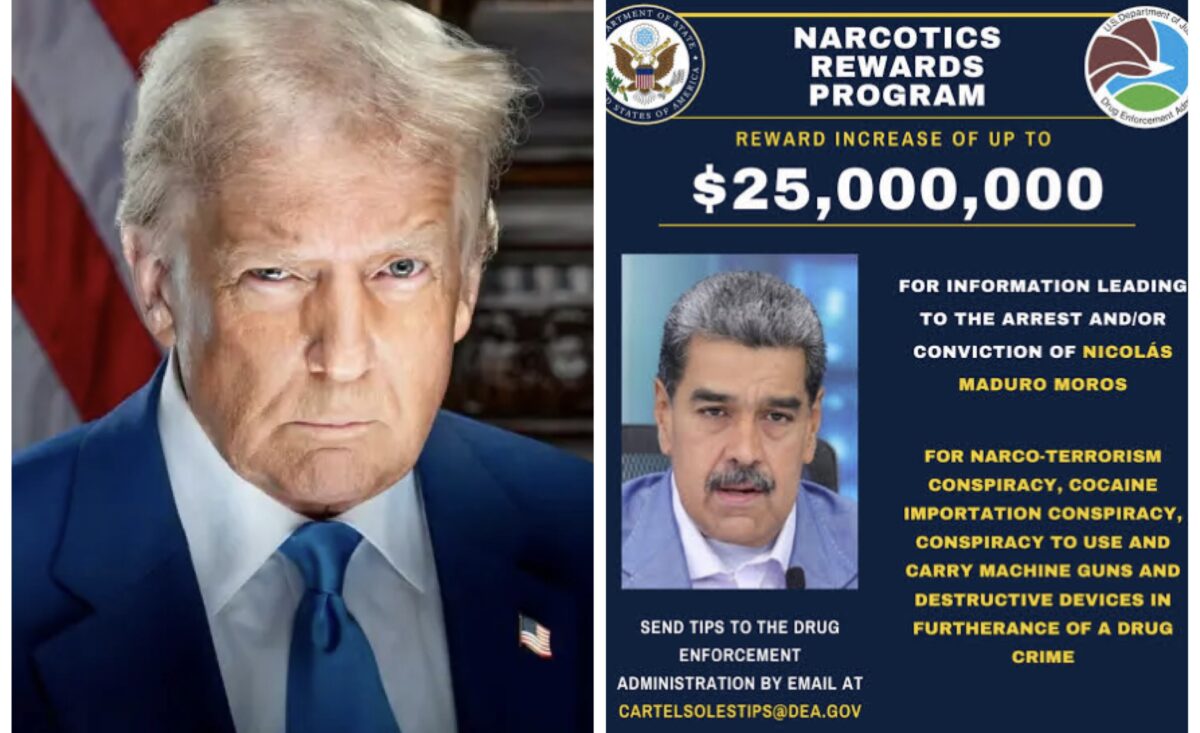
More than eight million Venezuelans have left since 2014, many entering the U.S., with TdA blamed for crime spikes. Trump labels Maduro the gang’s overlord, slapping a terrorist tag and a $50 million bounty.
This is pure fiction. U.S. intelligence memoranda admit there is “no evidence” Maduro controls TdA; his regime sees it as a rival and has targeted it aggressively.
In September 2023, Maduro deployed 11,000 troops to raid Tocorón Prison—TdA’s stronghold—dismantling a gang-run fortress with a zoo and disco.
Venezuelan forces killed members in follow-ups, proving Maduro could not eliminate them fast enough, not that he commands them.
TdA’s U.S. crimes—mostly theft and burglary—are opportunistic, not state-driven, per experts.
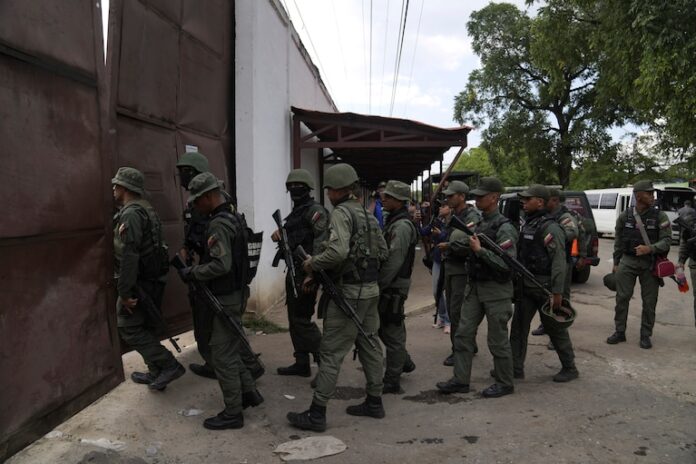
Venezuelan army officers raid Tocorón Prison a stronghold of Tren de Aragua Source washingtonpostcom
The Biden administration designated Tren de Aragua as a transnational criminal organization in 2024 though was accused by the political right of releasing suspected TdA members from custody and was attacked for allegedly allowing for “open borders, which Trump exploited to advance his political fortunes.
The right-wing narrative prevalent in the U.S. that is also ebraced by the Democratic Party ignores how sanctions exacerbated poverty in Venezuela, and pushed migration waves that created a self-fulfilling crisis.
The TdA hype amplifies fears, but experts note the gang’s fragmentation after Maduro’s raids, with U.S. incidents paling beside domestic threats like MS-13.
Feeding off biased media depictions, Trump’s rhetoric inflames nativism, tying Venezuelan refugees to “invasions,” but data show that most migrants are fleeing economic ruin wrought by U.S. pressure, not state-directed sabotage.
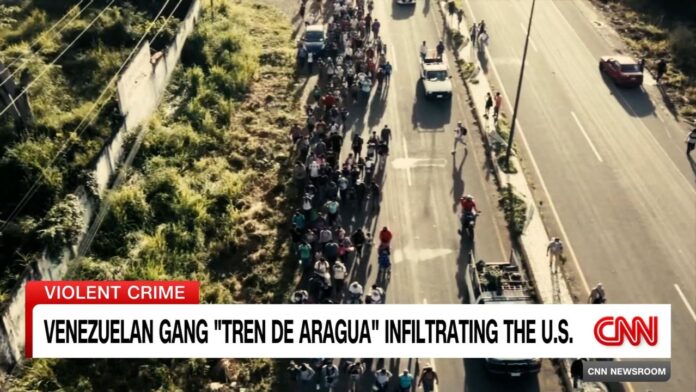
Characteristically sensational media report that arouses fears of the alien otherTren de Araguawhile obfuscating the source of migration patterns from Venezuela to the US and source of economic ruin there ie devastating US sanctions underlying the rise in gang formation Source editioncnncom
The false national security pretext allows Trump to sidestep legal hurdles like the War Powers Resolution for limited strikes, building toward regime change without full congressional debate.
The escalation’s timing, post-Biden’s term, underscores how political blame-shifting fuels foreign aggression, turning humanitarian tragedies into electoral gold.
CIA’s Shadow: Gangs As Tools, Not Maduro’s Puppets
The hypocrisy is glaring: TdA is not Maduro’s weapon—evidence points to CIA entanglements.
The agency’s history is riddled with enabling criminal networks for geopolitical gains, from Contra cocaine operations in the 1980s—about which Senate probes confirmed tolerance of smuggling to fund anti-communists—to shielding Mexican cartels for intel.
In Venezuela, a 1990 CIA sting flooded U.S. streets with cocaine via local generals. Today, speculation links TdA to CIA cutouts, echoing Nicaragua’s Contras as pretexts for intervention. Trump’s CIA authorization fuels questions: Is TdA being manipulated to justify escalation?
This is not speculation; it is precedent. The CIA backed Afghan mujahideen heroin lords and ran “guns-for-drugs” with Panama’s Noriega. In Mexico, CIA ops spare allies like Sinaloa for intel.
Source qcostaricacom
Venezuela routes just 6% of U.S.-bound cocaine, mostly from Colombia—yet Maduro’s scapegoated while the agency’s past is ignored. If gangs are the issue, why dodge the CIA’s role in fostering them?
The agency’s playbook includes turning prisons like Tocorón into breeding grounds for chaos, then blaming local leaders. Maduro’s raids disrupted this, but U.S. media amplify TdA as a “super gang” to build war fever.
This mirrors how the CIA backed Salvadoran death squads in the 1980s, labeling them “freedom fighters” while ignoring atrocities.
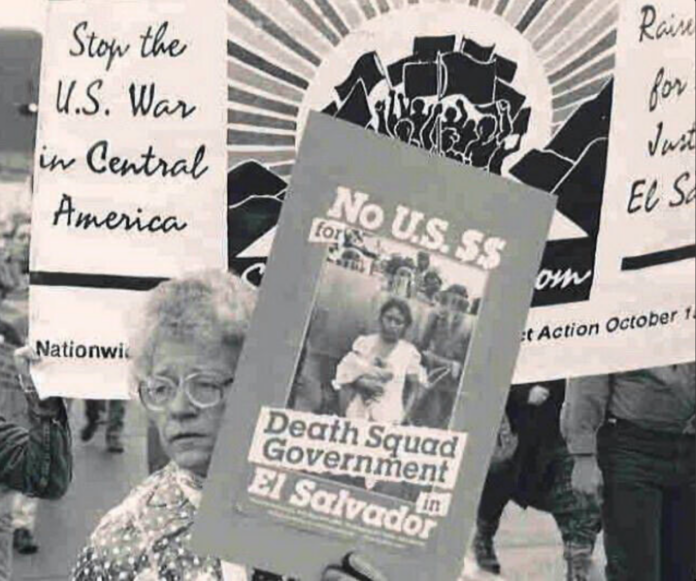
Woman protesting Reagan administrations support for death squad government in El Salvador in the 1980s Source worthpointcom
In Venezuela, the escalation risks repeating history: using gangs as casus belli for intervention, ignoring how U.S. policies—sanctions and border laxity—created the vacuum.
Trump’s CIA greenlight raises alarms of false flags, where manipulated threats justify strikes, echoing WMD lies in Iraq.
The Oil Prize and Machado’s Betrayal: Imperialism’s True Motive
The core driver is oil—300 billion barrels, more than in Saudi Arabia. Trump’s 2019 musings about seizure have hardened into 2025 rhetoric: Take it if Venezuela “collapses.” Opposition leader María Corina Machado, 2025 Nobel Prize recipient, pledges privatization, promising U.S. firms like Chevron “millions of barrels.”
Her ties to U.S. funding and calls for intervention make her the charismatic proxy Guaidó never was.
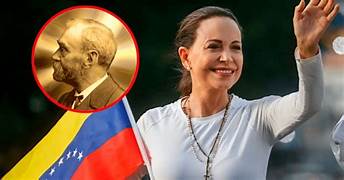
Source larepublicape
Geopolitically, Venezuela’s ties to China, Russia and Iran—oil deals and military aid—position it as a rival foothold, spurring Trump to act.
Maduro’s 2024 re-election, observed as fair by 910 international monitors with biometric safeguards and 54% machine audits, is dismissed as fraud to isolate him. This “dispute” provides cover for strikes aimed at triggering defections, not full occupation.
But Machado is not a hero; she is a traitor, selling out Venezuela’s sovereignty for U.S. applause and money. Her Nobel “peace” prize masks a neo-liberal agenda: Privatize PDVSA, handing the Orinoco Belt’s trillions to American giants like ExxonMobil.
In interviews with Trump Jr., she gushed, “U.S. companies are going to make a lot of money,” vowing to “privatize all our industry” and swap debt for investments—essentially mortgaging Venezuela’s future to Wall Street.
This reverses Hugo Chávez’s nationalization, which reclaimed oil from foreign exploiters who siphoned 80% of profits abroad. Machado’s plan would enrich Chevron while Venezuelans, battered by sanctions she endorses, would face austerity.
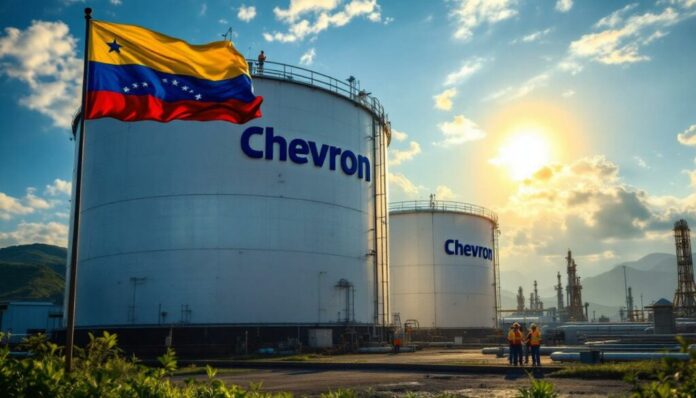
Chevron stands to make a killing from a potential US regime change in Venezuela Source discoveryalertcomau
Her betrayal runs deep. Funded by the NED—a CIA front—she co-founded Súmate in 2002 to oust Chávez via recalls, pocketing millions in “democracy” grants. She has cozied up to Bush, Rubio and Trump, dedicating her Nobel to the U.S. president amid his Caribbean build-up.
X users blast her as a “coward hiding in her cave,” plotting to “neutralize” opponents in her “first 100 hours” with U.S. troops installing her as puppet. One post sneers: “Hands up, who’s surprised that U.S./Israel puppet Maria Corina Machado promised Venezuela’s oil to the U.S.?”
Another post labels her “extreme right-wing U.S. puppet, funded by the CIA for 2 decades, plotting regime change and privatizing Venezuela’s state-owned oil company to U.S. oil corporations.”
Machado’s Nobel reeks of orchestration—nominated by U.S. Republicans, it is less peace prize than coronation for a compliant stooge.
Historian Greg Grandin calls it the “opposite of peace,” citing her backing of sanctions that starved Venezuelans and her praise for Netanyahu’s Gaza tactics as a model for “bombing” Maduro. She has cheered Trump’s boat strikes and the Alien Enemies Act for deportations, ignoring how sanctions drove the refugee crisis.
In victory speeches, she thanked Trump, vowing “freedom” with his aid—code for U.S.-backed coup followed by oil sell-off.
This is not leadership; it is treason. Venezuela’s oil, the Bolivarian Revolution’s lifeblood, funded literacy and health care for millions. Machado would trade it for foreign profits, displacing communities and gutting social programs.
Her “popular capitalism” touts LGBTQ rights and cannabis legalization, but it is a smokescreen for deregulating labor and privatizing the Guri Dam.
As X critics rage, she is “ready to sell Venezuela to the highest bidder,” a far-right ideologue barred from the 2024 race for insurrection ties, now hiding while courting Trump’s Marines.
History will judge her not as “Iron Lady,” but as the velvet glove for U.S. imperialism, peddling her people’s birthright for a Nobel and power.
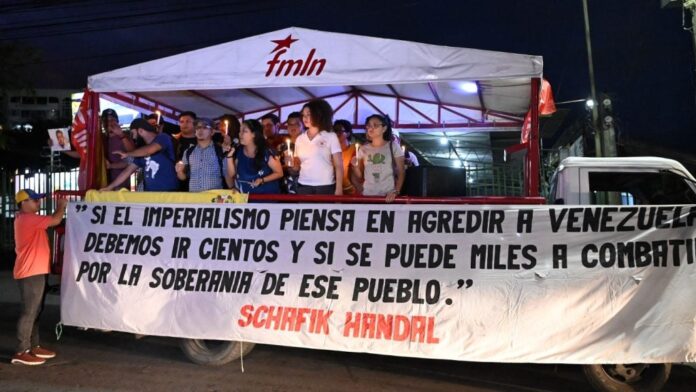
The sign reads If imperialism thinks of attacking Venezuela hundreds of us must go and if possible thousands to combat for the sovereignty of that people Source naval technologycom
Banking’s Dirty Secret: Fueling the Real Cartels
The hypocrisy peaks with U.S. banks laundering billions in cartel cash while Trump vilifies Venezuela’s “narco-terror.”
TD Bank’s $3 billion 2024 fine for $470 million in fentanyl profits is one case—Wachovia washed $390 billion for Mexican cartels (fine: $160 million), HSBC $881 million for Sinaloa (fine: $1.9 billion).
Chinese networks funneled $312 billion through U.S. banks for cartels from 2020 to 2024. Fines are business expenses—no executives face jail—enabling the trade Trump decries.
This double standard is glaring: The U.S. profits from drugs at home while bombing abroad. Sanctions, not Maduro, drove migration—yet they are the pretext for aggression.
Risks loom: a quagmire in Venezuela’s jungles, regional war, more deaths.
Analysts warn of a strong chance of engagement by year’s end. Reject the war drums—lift sanctions, probe CIA-gang ties, respect sovereignty. This crisis is made in America; end the hypocrisy before it sparks another endless war.
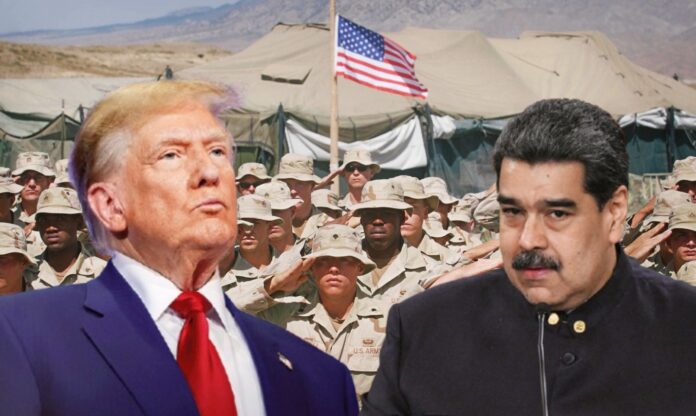
The Trump Maduro showdown could end in disaster if it escalates into a full fledged war Source msncom
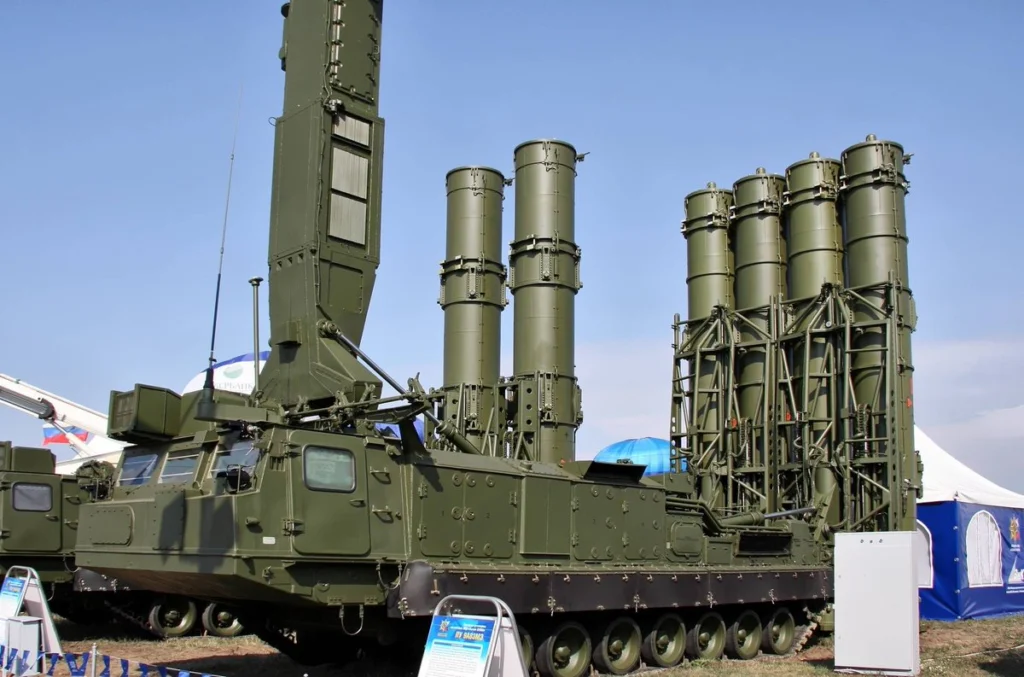
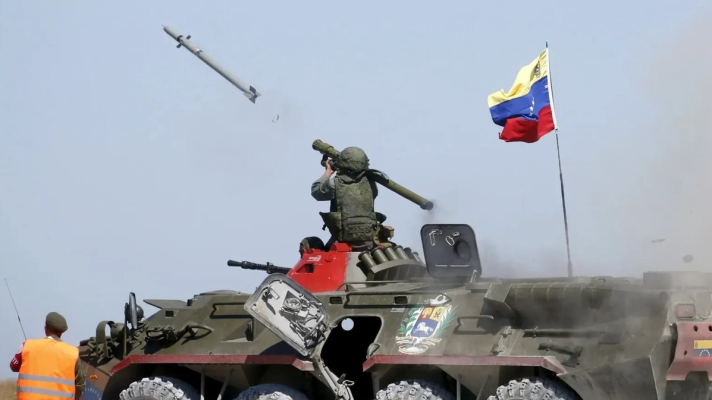
The escalation’s broader implications are chilling. Trump’s strategy—limited strikes to force defections—could ignite guerrilla resistance, drawing in Maduro’s 4.5 million militiamen and allies like Russia, which has supplied anti-air missiles and conducted joint exercises. China’s $60 billion debt stake means any U.S. move risks global economic ripples, spiking oil prices beyond $90 a barrel.
Domestically, Trump’s border-linked action masks dividing America, fueling anti-immigrant violence while ignoring root causes like sanctions’ blowback.
The cycle of blame on Democrats supposed soft policy toward immigration ignores how both parties perpetuate Latin American destabilization for profit.
Venezuela’s story is a cautionary tale: from Chávez’s oil-funded socialism to Maduro’s resilience amid siege, U.S. interference has only hardened resolve.
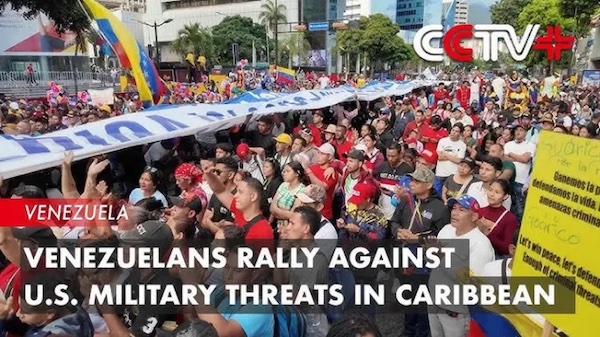
Machado’s traitor turn amplifies the danger, her Nobel a tool to legitimize plunder. Venezuelans, rallying in massive pro-Maduro demonstrations, reject her sell-out, seeing her as a colonial echo.
As one X post warns, “Machado is a traitor! Trump-backed… promises to give oil to U.S. corporations.”
The path forward? Diplomacy, not drones—lift sanctions, negotiate oil deals fairly, and end the gangster games.
Only then can Venezuela heal, and America reclaim moral ground lost to imperial greed.
https://mronline.org/2025/10/29/unmaski ... m-for-oil/
******
Inside Marco Rubio’s Push for Regime Change in Venezuela
Posted by Internationalist 360° on October 25, 2025
Ryan Grim, Saagar Enjeti, and Jack Poulson

Screenshot of a video posted by Donald Trump to Truth Social on September 15, 2025 announcing a U.S. strike on an alleged drug vessel.
Little to no fentanyl is coming from Venezuela, according to U.S. intelligence.
U.S. intelligence has assessed that little to none of the fentanyl trafficked to the United States is being produced in Venezuela, despite recent claims from the Trump administration, a senior U.S. official directly familiar with the matter tells Drop Site.
The official noted that many of the boats targeted for strikes by the Trump administration do not even have the requisite gasoline or motor capacity to reach U.S. waters, dramatically undercutting claims by Secretary of Defense Pete Hegseth. The claim is backed up by recent comments made by Sen. Rand Paul, R-Ky., who similarly noted that zero fentanyl is produced in Venezuela.
Despite the lack of intelligence linking Venezuela with fentanyl production, the Trump administration has made alleged Venezuelan drug trafficking the casus belli in its drive to overthrow the government of Nicolas Maduro. On Thursday, President Donald Trump referred to possible ground action, claiming at a press conference that the “sea drugs” coming in are “5% of what they were a year ago. So now they’re coming in by land.” “The land is going to be next,” he said, indicating he was willing to bypass congressional approval. On Friday, the U.S. announced it is sending an aircraft carrier to Latin America in a further escalation.
Two sources familiar with discussions at the White House note that Secretary of State Marco Rubio, a long time proponent of regime change in Venezuela, has been the driving force behind the aggressive military and rhetorical posture toward the Maduro regime.
Toward that end, Secretary Rubio—also in charge of the remnants of the U.S. Agency for International Development—has redirected millions of dollars in money previously allocated for “pro-democracy” measures in Venezuela and the surrounding countries, a thinly veiled effort to prep the region for war.
Rubio cycled through multiple arguments for regime change in Venezuela during the early months of the administration, largely based around human rights and election concerns, which were unconvincing to Trump. After assuming a position on the National Security Council in the spring, Rubio then presented a new argument to Trump: that Maduro was a narcoterrorist drug trafficker, based on a 2020 indictment by the Department of Justice under the first Trump administration over alleged cocaine trafficking.
The official noted Trump’s personal distaste for drugs and a campaign pledge to use the US military against Mexican drug cartels as an important impetus for Trump greenlighting recent strikes. With Trump unable so far to carry out attacks on Mexican cartels, strikes seen as political untenable, Rubio effectively steered his gaze to Maduro. The potential of access to Venezuela’s vast oil resources made the argument that much easier.
Rubio’s policy was most recently at a crossroads, after Maduro offered to turn over those oil resources to the U.S. in exchange for a cessation of hostilities. Trump acknowledged the offer in a recent appearance saying Maduro “offered everything. You know why? Because he doesn’t want to fuck around with the United States.”
Trump rejected the offer after being swayed by arguments from Rubio that the best way to secure Venezuela’s oil reserves was to facilitate regime change in Venezuela and make a better deal with a new government, the sources said. A recent U.S. government assessment of Venezuelan oil exports to China found nearly half a million barrels a day, a small fraction of the country’s total capacity which Trump is turning down in the immediate term.
The CIA and State Department did not respond to requests for comment.
Foreign policy under Trump has come to be dominated by a group known inside the administration as the Gang of Five, sources said, consisting of Rubio; Stephen Miller, the deputy chief of staff; Susie Wiles, Trump’s chief of staff; Steve Witkoff, Trump’s all-around envoy; and Vice President J.D. Vance. War Secretary Pete Hegseth, in a bid for internal relevance, has eagerly executed Rubio’s strategy, regularly striking boats he claims without evidence are carrying drugs, burning the passengers alive. On Thursday, sitting beside Trump, Hegseth promised a forever war against drugs. “Our generation spent the better part of two decades hunting Al Qaeda, hunting ISIS. As the president said, this is the ISIS, this is the Al Qaeda of the Western Hemisphere… our message to these foreign terrorist organizations is that we will treat you like we treated Al Qaeda… We will kill you.”
Heavy Combat Boats to Colombia
How exactly Rubio is spending the “pro-democracy” funds from USAID, and from which buckets, is not made clear in federal disclosures. But a flurry of contracts in neighboring countries indicates a surge of military preparation in Colombia.
Much of the U.S.-backed resistance to Maduro—including the disastrous “Operation Gideon” coup attempt in May 2020—has been based out of Colombia and Guyana. In late September, the U.S. State Department’s international law enforcement arm signed a two-year, $4.8 million “Colombia virtual shooting range” contract with the Arizona-based VirTra, Inc. There were also two foreign military sales through the U.S. Coast Guard: $1.73 million for an undisclosed number of 21-foot boats, signed on September 12, and $3.8 million for eight 25-foot “heavy combat riverine boats,” signed four days later. The Arlington branch of the international consulting firm Deloitte also received a three-year, $3 million contract with the U.S. State Department’s Bureau of Energy Resources for services in Colombia on September 30, following years of mineral advisory work in the region.
While the contracts indicate millions being poured into Colombia, the wave of funding could now be undermined by President Gustav Petro’s recent condemnation of a lethal September 15 U.S. airstrike on a fishing boat in Colombian waters.
On October 3, Maduro’s vice president, Delcy Rodriguez, accused Exxon of funding a military assault in the region. The charge came less than two weeks after the Texas-based oil company announced a $6.8 billion expansion of its work in Guyana, which is engaged in a longstanding border dispute with Venezuela regarding the Essequibo region. “Guyana has opened the doors to the American, the U.S. invader, and the military aggression against our region,” stated Rodriguez, before adding that Exxon was “financing the Guyana government” for the action. (By contrast, the Maduro government has a longstanding, friendly relationship with Exxon’s fellow Houston-area competitor Chevron, which is responsible for nearly one quarter of the country’s oil production.)
The CIA has also sought a foot in the media. The CIA’s embattled former Paris chief of station, Dale Bendler, recently retroactively registered as a foreign agent for Armando Capriles, whom he described as the CEO of Cadena Capriles, which is the former name of the parent company of the popular Venezuelan newspaper Ultimas Noticias. According to Bendler’s foreign agent registration, he attempted to recruit Capriles as an asset of an “OGA”—“Other Government Agency” – in exchange for leniency against U.S. sanctions in 2019. (It’s not clear whether he succeeded in picking up Armando as an asset.)
Public contracting records further highlight long-running U.S. special operations activities in the region. The Texas-based information warfare contractor Madison Springfield, Inc. (MSI) engaged in a one-year, $458,915 “Guyana Ghost Men assessment” study for U.S. Army Special Operations Command beginning in September 2021. Prior to the completion of the study, MSI was covertly acquired by the San Francisco-based gig-work intelligence collection firm Premise Data, which itself received a $498,701 subcontract through USAID on information collection in Venezuela 35 days prior to the failed Operation Gideon coup attempt, according to public disclosures. Following Premise’s financial failure, both companies were acquired by the Alexandria-based special operations contractor Culmen International in August.
“Democracy Promotion”
The U.S. government has attempted to overthrow the socialist government of Venezuela for decades, including through USAID’s Office of Transition Initiatives (OTI), according to a widely noted leaked U.S. diplomatic cable from 2006. The cable detailed OTI’s five-point strategy to oppose Maduro’s predecessor, Hugo Chavez, as: “1) Strengthening Democratic Institutions, 2) Penetrating Chavez’ Political Base, 3) Dividing Chavismo, 4) Protecting Vital US business, and 5) Isolating Chavez internationally.“
The U.S.’s quasi-overt international political action arm, the National Endowment for Democracy (NED), has the challenging task of funding nonprofits and journalists in a manner which, on the one hand, advances U.S. foreign policy goals, and on the other, allows grantees to still claim independence. Even President Trump’s first administration reportedly expressed frustration with a covert “democracy promotion” campaign by the CIA against Venezuelan president Nicolas Maduro in 2019 being ‘indistinguishable’ from its overt counterparts.
Before hamhandedly attempting to overthrow Maduro, NED boasted support for both an award-winning “Petrofraude” investigation into Maduro from the Bogota-based Connectas and a social media campaign supporting Maduro’s opposition, #SetThemFree. (Founded in 2012 as an offshoot of a Harvard fellowship, Connectas has prominently disclosed its NED funding dating back to at least 2013 but is less transparent about having received at least $88,000 from the U.S. State Department’s Bureau of International Narcotics and Law Enforcement Affairs, which works closely with international police agencies, including on activities such as wiretaps.)
NED again publicly noted its work with Connectas in the lead-up to Maduro’s third inauguration, highlighting the outlet’s “Operation Retweet” campaign to anonymously disseminate critical journalism through AI-powered avatars. The same press release noted that NED “swiftly deployed a three-pronged contingency plan: supporting political organizers to mobilize grassroots networks, providing emergency assistance—including relocation, safe houses, and medical and psychological services—for those at risk, and backing core civil society groups offering legal, technical, and humanitarian aid to political prisoners and their families.”
The U.S. State Department and the now-defunct USAID have for years redacted the names of political action fundees in sensitive regions from public contracting records, citing commitments to prevent harm. NED itself accelerated from retroactively deleting millions of dollars in Ukraine grants in 2022 to publicly ending its default disclosure of grant recipients through a new “duty of care” policy in April 2025.
The new Trump administration gutted the majority of USAID’s political action programs during its first months in office, with a few anti-communist programs in Cuba being partially preserved as a rare exception. A leaked list of AID program cuts published by POLITICO revealed that the “America First” cancellations included the end of a $6.2 million grant to Partners of the Americas, Inc. which promised to “Ensure a smooth transition from government-controlled food distribution system under the Maduro regime to a market-based food system under a new Venezuelan government.” Maduro’s food subsidization program, the Local Committees for Supply and Production, better known as CLAP, was aggressively targeted with U.S. sanctions during Trump’s first administration, and one of the program’s leaders was extradited to Miami.
Drop Site
https://libya360.wordpress.com/2025/10/ ... venezuela/
15 Million Venezuelans Enlist to Defend Their Country Amid U.S. Threats
Posted by Internationalist 360° on October 25, 2025
Rodrigo Durão Coelho

BdF spoke with Carlos Ron, former Venezuelan vice foreign minister and the country’s chief negotiator in Washington. – Sul 21
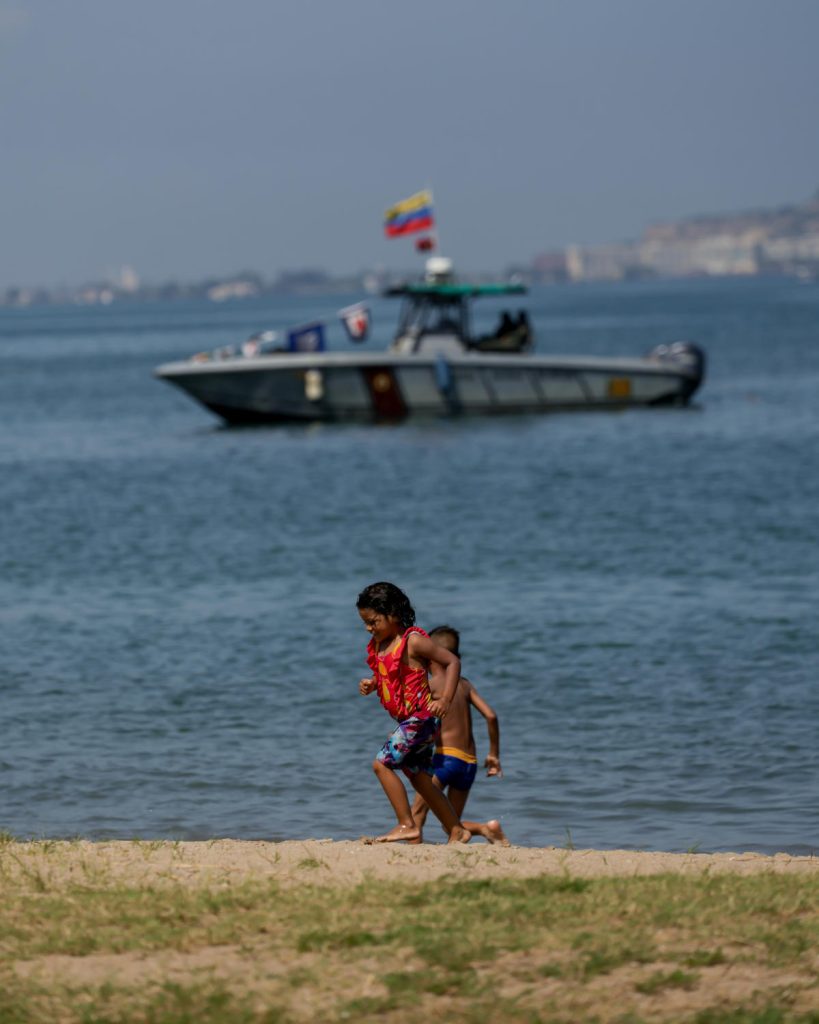
Since late August, the Caribbean Sea near Venezuela’s coast has become a stage of tension. With a significant military presence, the United States has attacked vessels navigating international waters. At least 27 people have been killed in what President Donald Trump claims are operations against drug cartels, classified by him as terrorist organizations, and he has accused Venezuelan President Nicolás Maduro of leading the drug trade.
None of these accusations have been supported by concrete evidence. Venezuela has responded by mobilizing troops along its borders and arming civilians to resist a possible U.S. advance. Caracas maintains that Washington’s real goal is to overthrow the government and install opposition figure María Corina Machado as head of state.
BdF spoke with Carlos Ron, former Venezuelan vice foreign minister and the country’s chief negotiator in Washington. He described the atmosphere in Caracas as “normal, but cautious,” and explained Venezuela’s defense plans and the likelihood of a U.S. attack.
BdF – What is the atmosphere like in Caracas amid these threats from Donald Trump?
Carlos Ron – For now, the country is functioning normally. There’s no panic in the streets; people are trying to live their daily lives, even though everyone is aware that we are under U.S. siege. Venezuelans have lived under hostility from Washington for 26 years, and we know its record of violence and intervention in Latin America.
We hope no invasion happens, but if it does, the Venezuelan people are ready to resist and defend the country. There’s no panic, this is also part of Washington’s psychological warfare, a method to spread fear and confusion. People understand well the nature of the enemy we face.
Is it possible that this is just another U.S. pressure tactic rather than a real threat? Is there still room for a negotiated solution?
We’ve seen this kind of military mobilization before. Something similar happened in Brazil in 1964 with Operation Brother Sam, when the U.S. threatened military intervention to back a coup against President João Goulart. What we’re witnessing now is a modern version of that strategy, an attempt to create the conditions for a coup from within Venezuela’s own armed forces rather than a direct invasion.
But this is unrealistic. The Venezuelan military is loyal to the Constitution and national defense, not to coup plotting. Trump today is different from the Trump of his first term: his current team, including Secretary of State Marco Rubio, is even more aggressive toward Venezuela, Cuba, and the region. Their goal remains regime change, though they still prefer to provoke internal chaos before resorting to an invasion.
How was María Corina Machado’s recent Nobel Peace Prize received in Venezuela?
It’s seen as part of a broader regime-change strategy. The Trump administration is using the so-called war on drugs as a pretext to escalate pressure on Venezuela, and giving this award to María Corina, someone who has openly called for sanctions and even foreign military intervention, fits perfectly into that plan.
She’s one of the most divisive figures in Venezuelan opposition politics, constantly undermining national dialogue and questioning the entire democratic system. Supporting someone who congratulated Netanyahu amid the genocide in Palestine and calling her a “peace” figure exposes the political nature of this prize, it’s about legitimizing a potential replacement for President Maduro.
How representative is she of the opposition? Are there anti-Bolivarian forces that still reject imperialist influence?
Absolutely. The opposition is diverse. In the last parliamentary elections, several opposition parties performed better than María Corina’s extremist faction. Some leaders have criticized Trump’s military threats and the U.S. operations in the Caribbean.
A new National Council for Peace and Sovereignty has been created, bringing together people from sports, business, media, and even opposition governors, like the one who won the most votes in the last regional elections, who reject foreign intervention. Historic opposition parties such as Acción Democrática, though anti-Bolivarian, also oppose any U.S. military action. There’s broad consensus in Venezuela that interventionism is unacceptable.
The U.S. claims its military presence in the Caribbean is to combat drug trafficking, even though most cocaine to the U.S. travels through the Pacific, not the Caribbean. How is that seen in Venezuela?
Everyone here sees it for what it is: a pretext for regime change. Venezuela doesn’t cultivate coca or produce cocaine, nor does it traffic fentanyl, as Trump claims. The attacks on civilian vessels are alarming, fishermen have been detained or harassed by U.S. forces.
This violates international law: ships are being bombed or intercepted without any due process. Many of the victims weren’t even Venezuelan, some were from Trinidad and Tobago, Colombia, or Ecuador. The narrative of “Venezuelan terrorists” or “drug traffickers” doesn’t hold up. Even the United Nations has condemned these covert U.S. operations for violating human rights and risking regional escalation.
Is Venezuela taking this issue to the UN or other diplomatic channels?
Yes. Our ambassador has already taken the matter to the UN Security Council, and several UN experts have condemned Washington’s actions as illegal and dangerous. They warned that these covert operations threaten international peace and violate the UN Charter.
There’s also domestic pushback inside the U.S., lawyers and some members of Congress are questioning Trump’s policy for breaking both U.S. and international law. President Maduro continues to advocate for dialogue, but the U.S. government has shut down communication channels.
There’s growing discomfort even within Trump’s own base, including MAGA supporters, who historically opposed endless foreign wars. International pressure, legal criticism, and calls for diplomacy could help de-escalate the situation.
Could Trump be bluffing to strengthen his negotiating position, as he often did in his first term?
Unlikely. What’s really happening is a broader geopolitical move: the U.S. is losing influence to China and Russia and wants to reassert control over Latin America, its resources, governments, and strategic alliances.
Look at the pattern: intervention in Haiti, sanctions on Brazil’s Supreme Court, the expulsion of President Petro from the UN General Assembly, and renewed hostility toward Cuba and Venezuela. It’s all part of a regional strategy to reestablish dominance over the hemisphere. That’s why dialogue is difficult right now.
We remain cautious. Not panicked, but vigilant.
What is the current state of Venezuela’s Armed Forces? How is the volunteer enlistment working?
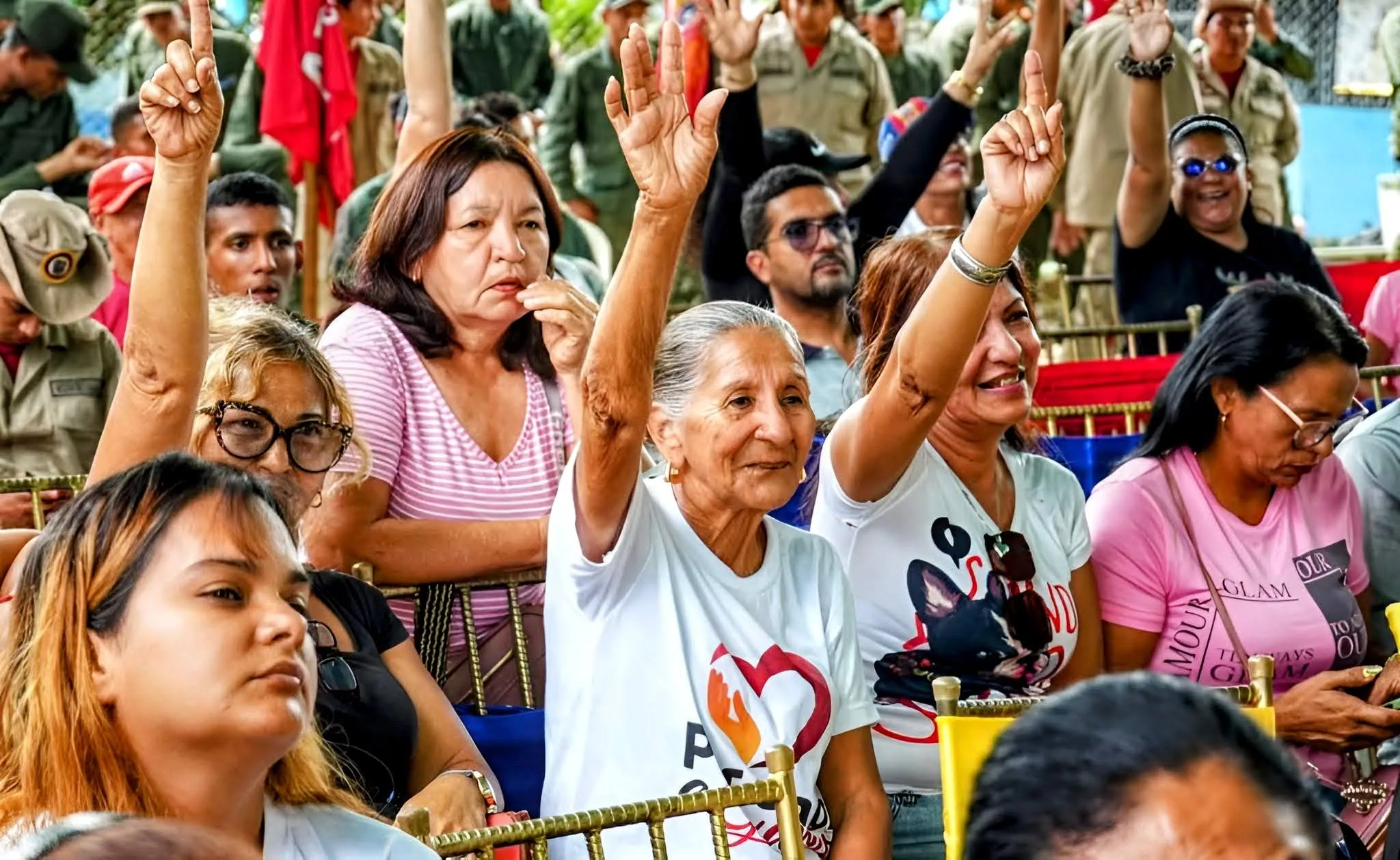
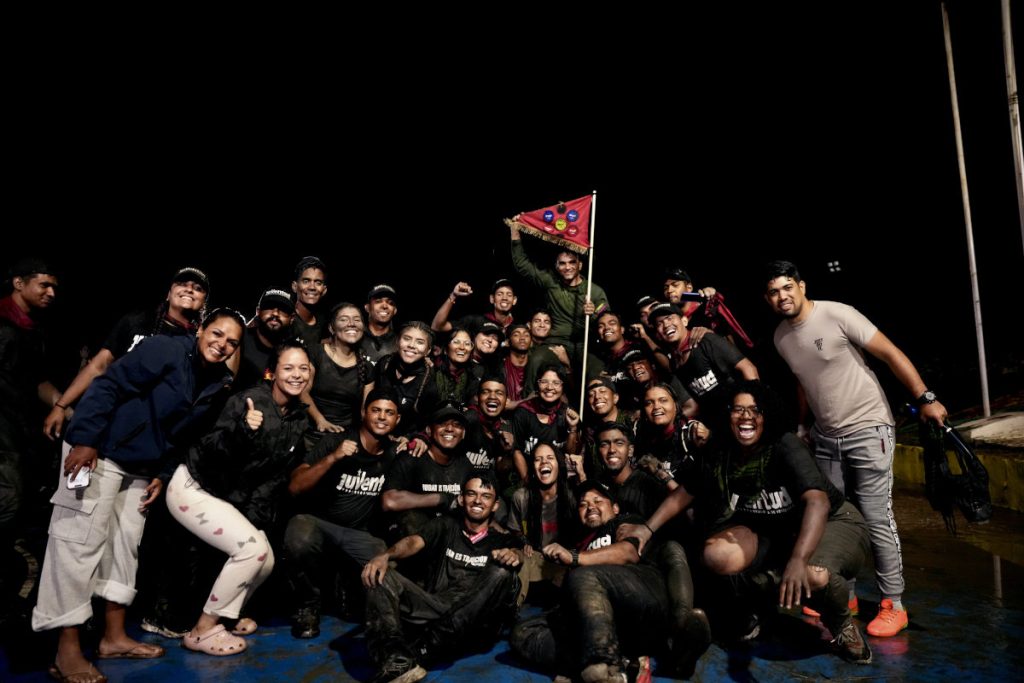
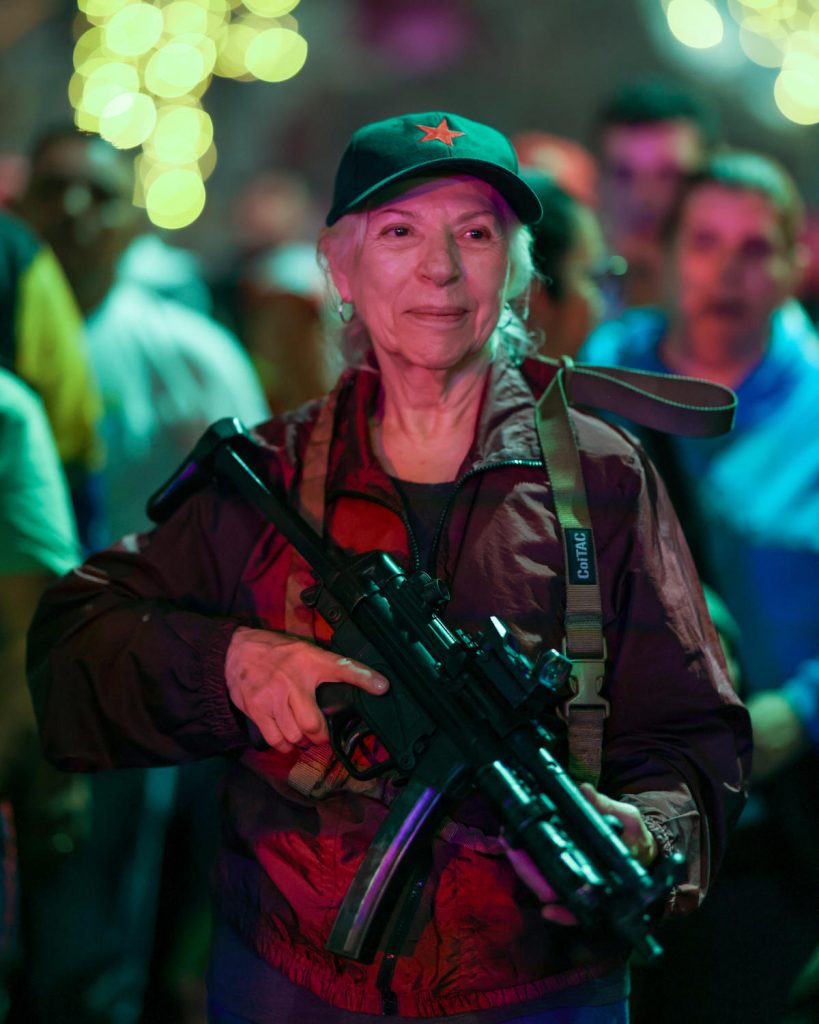
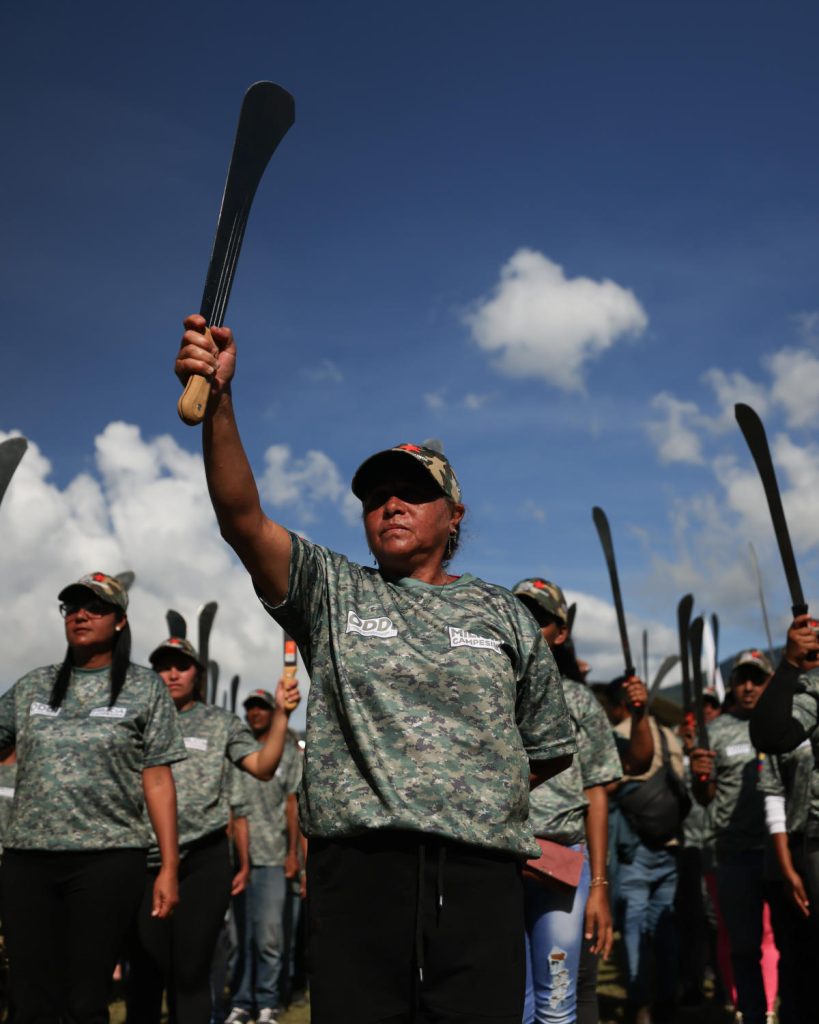
It’s not conscription, it’s voluntary. In the first round, eight million Venezuelans enlisted to join the defense forces; now that number has reached 15 million. These volunteers form a reserve militia ready to act if the nation faces external threats.
The Venezuelan army has diversified its military technology, moving away from dependence on U.S. equipment. Ours is a peaceful country with over 200 years without war, but the people are ready to defend their homeland and families.
This isn’t about defending Maduro, it’s about defending Venezuela. Internal issues are for Venezuelans to solve, not foreign armies.
How are these militias trained?
Training takes place across the country, usually on weekends, and includes basic weapons use as well as logistics and medical support. The mobilization has also fostered a sense of unity, external threats often strengthen internal cohesion.
Do Venezuelans expect stronger support from President Lula and Brazil?
Yes, many hope for a firmer stance from Lula and other Latin American leaders. So far, Brazil’s position, that Venezuela’s sovereignty must be respected and foreign intervention is unacceptable, has been important.
If the situation escalates, it will be crucial for all regional presidents to take a clear stand against U.S. intervention. Latin America must act as a united bloc to address shared challenges, but Washington will always try to sow division to maintain control over the continent.
https://libya360.wordpress.com/2025/10/ ... s-threats/
*****
Venezuela Neutralizes Narco-Jet That Violated Its Airspace
October 29, 2025
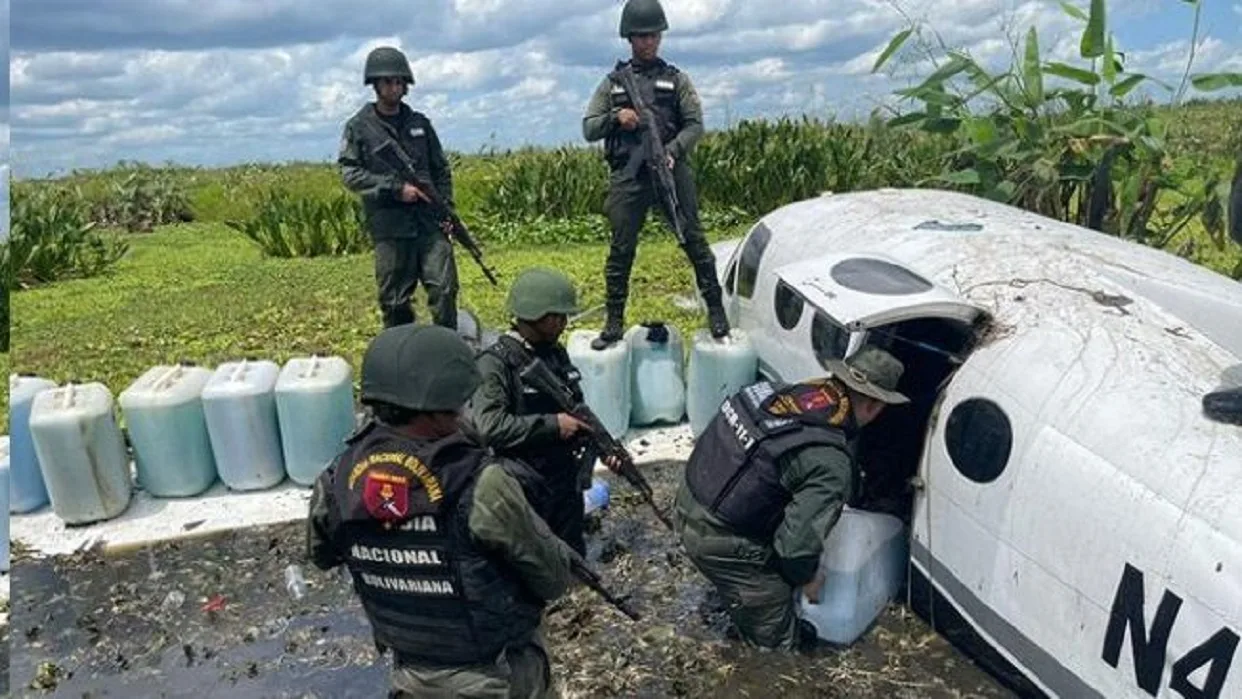
The Bolivarian National Armed Force (FANB) seizes an aircraft. Photo: File photo.
The Strategic Operational Commander of the Bolivarian National Armed Force (FANB), Maj. Gen. Domingo Hernández Lárez, reported that in the full exercise of national sovereignty, an aircraft that entered the nation’s airspace illicitly and surreptitiously—with its transponder off and without authorization—was intercepted and immobilized.
On social media, Hernández Lárez explained that, under the regional air interoperability treaty among Latin American and Caribbean countries, the military confirmed the aircraft originated from the Caribbean islands and had no flight plan as it headed toward southern Venezuela.
Once detected and declared hostile, the Cessna 310, registered as XB-RED, landed on an unauthorized border runway in Apure state. The Venezuelan Air Force immediately intercepted and disabled it in accordance with the Security and Defense Law. The XB registration prefix is assigned to Mexico.
He then stated: “Venezuela is a land of peace! We will not allow the violation of our national sovereignty. We are not a platform for transnational drug trafficking. We do not produce, process or consume narcotic or psychotropic substances!”
He added that with this operation, 21 aircraft have been disabled in 2025 and 412 since the implementation of the Airspace Control Law.
Last week, the FANB disabled three aircraft linked to drug trafficking in two areas near Colombia, military authorities reported at the time. Two planes were disabled in the municipality of Rómulo Gallegos and the third in the municipality of Autana, in Amazonas state—both bordering Colombia—said José Luis Tremont, commander of Integral Aerospace Defense.
https://orinocotribune.com/venezuela-ne ... -airspace/