The U.S. administration’s efforts behind an Israel-crafted resolution is American imperialism masquerading as a peace process.
President Donald Trump in Sharm El Sheikh, Egypt, on Oct. 13, during a summit of world leaders on ending the war between Israel and Hamas in Gaza (White House /Daniel Torok)
By Jeffrey D. Sachs and Sybil Fares
Common Dreams
The Trump administration is pushing an Israeli-crafted resolution at the U.N. Security Council (UNSC) this week aimed at eliminating the possibility of a State of Palestine.
The resolution does three things. It establishes U.S. political control over Gaza. It separates Gaza from the rest of Palestine. And it allows the U.S., and therefore Israel, to determine the timeline for Israel’s supposed withdrawal from Gaza -– which would mean: never.
This is imperialism masquerading as a peace process. In and of itself it’s no surprise. Israel runs U.S. foreign policy in the Middle East. What is a surprise is that the U.S. and Israel might just get away with this travesty unless the world speaks up with urgency and indignation.
The draft UNSC resolution would establish a U.S.-U.K.-dominated Board of Peace, chaired by none other than Donald Trump himself, and endowed with sweeping powers over Gaza’s governance, borders, reconstruction and security. This resolution would sideline the State of Palestine and condition any transfer of authority to the Palestinians on the indulgence of the Board of Peace.
This would be an overt return to the British Mandate of 100 years ago, with the only change being that the U.S. would hold the mandate rather than Britain. If it weren’t so utterly tragic, it would be laughable. As Marx said, history repeats itself, first as tragedy, then as farce. Yes, the proposal is farce, yet Israel’s genocide is not. It is tragedy of the first order.
If it weren’t so utterly tragic, it would be laughable.
Michael G. Waltz, center, U.S. ambassador to the U.N, arriving at U.N. headquarters to present his credentials credentials to U.N. Secretary-General António Guterres on Sept. 21. (UN Photo/Mark Garten)
Incredibly, according to the draft resolution, the Board of Peace would be granted sovereign powers in Gaza. Palestinian sovereignty is left to the discretion of the board, which alone would decide when Palestinians are “ready” to govern themselves — perhaps in another 100 years?
Even military security is subordinated to the board, and the envisioned forces would answer not to the U.N. Security Council or to the Palestinian people, but to the board’s “strategic guidance.”
The U.S.-Israel resolution is being put forward precisely because the rest of the world — other than Israel and the U.S. — has woken up to two facts.
First, Israel is committing genocide, a reality witnessed every day in Gaza and the West Bank, where innocent Palestinians are murdered to the satisfaction of the Israel Defense Forces and the illegal Israeli settlers in the West Bank.
Second, Palestine is a state, albeit one whose sovereignty remains obstructed by the U.S., which uses its veto in the UNSC to block Palestine’s permanent U.N. membership.
At the U.N. this past July and then again in September, the U.N. General Assembly voted overwhelmingly for Palestine’s statehood, a fact that put the Israel-U.S. Zionist lobby into overdrive, resulting in the current draft resolution.
The U.N. General Assembly adopted a resolution to endorse the New York Declaration on the Peaceful Settlement of the Question of Palestine and the Implementation of the Two-State Solution on Sept. 12. (U.N. Photo/Loey Felipe)
For Israel to accomplish its goal of Greater Israel, the U.S. is pursuing a classic divide-and-conquer strategy, squeezing Arab and Islamic states with threats and inducements. When other countries resist the U.S.-Israel demands, they are cut off from critical technologies, lose access to World Bank and IMF financing, and suffer Israeli bombing, even in countries with U.S. military bases present.
The U.S. offers no real protection; rather, it orchestrates a protection racket, extracting concessions from countries wherever U.S. leverage exists. This extortion will continue until the global community stands up to such tactics and insists upon genuine Palestinian sovereignty and U.S. and Israeli adherence to international law.
Palestine remains the endless victim of U.S. and Israeli maneuvers. The results are not just devastating for Palestine, which has suffered an outright genocide, but for the Arab world and beyond. Israel and the U.S. are currently at war, overtly or covertly, across the Horn of Africa (Libya, Sudan, Somalia), the Eastern Mediterranean (Lebanon, Syria), the Gulf region (Yemen) and Western Asia (Iraq, Iran).
If the U.N. Security Council is to provide true security in accordance with the U.N. Charter, it must not yield to U.S. pressures and instead act decisively in line with international law.
A resolution truly for peace should include four vital points.
First, it should welcome the State of Palestine as a sovereign U.N. member state, with the U.S. lifting its veto.
Second, it should safeguard the territorial integrity of the State of Palestine and Israel, according to the 1967 borders.
Third, it should establish a UNSC-mandated protection force drawn up from Muslim-majority states.
Fourth, it should include the defunding and disarmament of all belligerent non-state entities, and it should ensure the mutual security of Israel and Palestine.
The two-state solution is about true peace — not about the politicide and genocide of Palestine, or the continued attacks by militants on Israel. It’s time for both Palestinians and Israelis to be safe, and for the U.S. and Israel to give up the cruel delusion of permanently ruling over the Palestinian people.
Mysterious Gaza-to-South Africa Flight Linked to Israeli National, Raises Fears of Ethnic Cleansing Scheme
The 153 Palestinians came via Ramon Airport through Nairobi without any prior note or coordination. Photo: Palestinian Embassy in South Africa.
November 18, 2025 Hour: 5:27 am
The arrival of a chartered plane carrying 153 Palestinians from war-torn Gaza to South Africa on Thursday – many without the required travel documents – sparked activist speculation about an Israeli ethnic cleansing scheme facilitated by the unverified humanitarian organization ‘Al-Majd Europe,’ an Al-Jazeera investigation reports.
After nearly 12 hours of uncertainty, the government permitted the passengers to disembark as the charity organization Gift of the Givers offered to provide accommodations.
The Palestinians were charged a significant fee by Al-Majd, which claims on its website to coordinate ‘evacuations from conflict zones.’ Johannesburg’s intelligence services are currently investigating the incident.
On Sunday, Israeli outlet Haaretz revealed that Tomer Janar Lind, a dual Israeli-Estonian citizen, heads Al-Majd Europe. The newspaper reported that Lind had previously been involved with an Israeli military unit responsible for the forced relocation of Palestinians from Gaza, assisting in organizing several such flights. This unit, known as the Voluntary Emigration Bureau, was established in early 2025 by the Israeli Ministry of Defence to implement a policy aimed at expelling Palestinians from their homeland. Although Lind acknowledged his role in arranging these flights, he refused to provide further details.
“This is very much part of a long colonial pattern, very systematic dispossession of indigenous Palestinians that has been perpetuated by Zionist Israelis, and they want to empty the land from its indigenous people, using multi-faceted approaches,” said Oroub el-Abed, associate professor in international migration and refugee studies at Birzeit University in Ramallah.
The Al-Majd Europe website claims it was established in 2010 in Germany, and features a pop-up warning about individuals impersonating its agents, offering contact details for ‘legitimate representatives.’ However, the site provides no physical address or phone number, only listing a location in Sheikh Jarrah in occupied East Jerusalem. Despite this, Al Jazeera was unable to locate any office at that address.
The investigation reveals that the domain almajdeurope.org was only registered in February this year, and many links on the website lead to dead ends. The listed email, info@almajdeurope.org, bounces back an automated message indicating it does not exist. The domain registrar, Namecheap, has been flagged in several cybersecurity reports for facilitating online fraud due to its low-cost and easy sign-up process.
The Qatari channel has also learned that many people were told to pay via bank transfers to personal, not organisational, accounts.
Trump’s Gaza Colonization Coming To Fruition
November 18, 2025
Colonizers will take over 58 percent of Gaza, the rest will be left in ruins, writes Lee Camp.
An AI-generated image shared on social media by Donald Trump himself last February.
By Lee Camp
Lee Camp & Dangerous Ideas
In the increasingly noxious world in which we live, a country can make clear precisely how a campaign of ethnic cleansing will advance, and yet it gets barely a mention in the mainstream media.
The U.S. military’s planning documents for Gaza’s bifurcation/starvation/ degeneration/decimation are now available for all to see.
The Guardian reported:
“The US is planning for the long-term division of Gaza into a ‘green zone’ under Israeli and international military control, where reconstruction would start, and a ‘red zone’ to be left in ruins.”
The key words are “left in ruins.” And the key fact is that almost all surviving Gazans are inside this “red zone.”
So it’s not just the buildings that will be left in ruins.
It’s the healthcare systems. It’s the food systems. It’s the water systems. It’s the beautiful bodies of Gazans of every age. It’s the families. It’s the hopes and dreams.
It’s the future.
Left in ruins.
Yesterday, the U.N. Security Council unanimously voted to approve this ruinous plan with China and Russia abstaining.
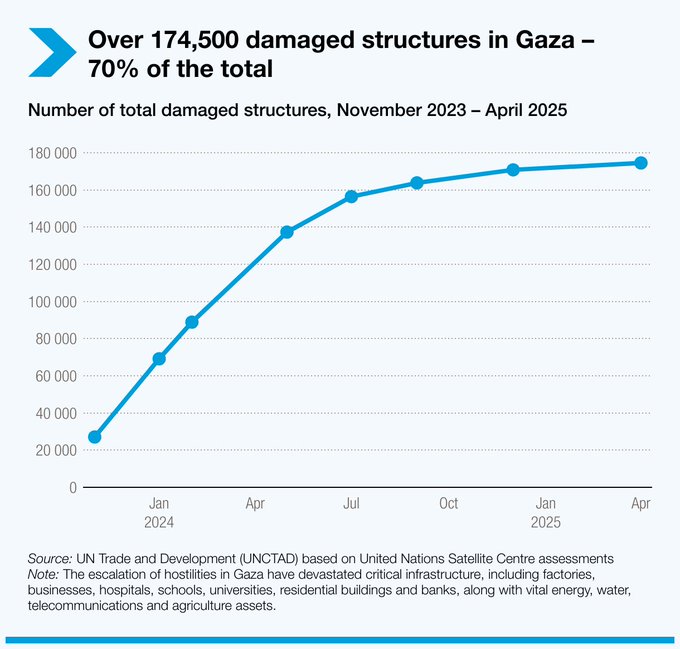
As most people now know, Gaza has been completely razed to the ground by 70,000 tons of explosives, the equivalent of six Hiroshima atomic bombs. Roughly 83 percent of all structures have been destroyed or damaged.
Israel has reduced Gaza to ruins. (UNRWA via DeclassifiedUK)
If we (or rather the ruling elite) even remotely looked at our world through a humanity-first lens, then 100 percent of Gaza wouldn’t just be allowed to rebuild, it would be the site of one of the most aggressive humanitarian aid operations the world has ever seen.
But we don’t live in that world. And our ruling elite are sociopathic parasites with hair plugs. (Is there such a thing as soul plugs™ to make it appear as if they have a soul?)
Instead, while millions are left to suffer and die just a few feet away, the U.S. military and others will rebuild the 58 percent of Gaza already stolen by the colonizers. Not just rebuild it, but transform it into a giant real estate bonanza for Trump, his family, and countless wealthy investors.
This unbridled pillage following a successful genocide is not hidden but in fact was proudly presented a couple months ago.
The above AI-vomited utopian/dystopian image might be lovely if it involved Palestinians and Palestinian sovereignty in any way, shape, or form. But it does not.
The 58 percent of Gaza that has already been stolen by the U.S. and Israel will not be owned or governed by Palestinians.
If Gazans are ever allowed into it, it will be under the most fascist surveillance system one could ever dream up. In fact, the plan calls for eight “AI-powered, smart cities” — Not because the vampiric colonizers want Gazans to have the best high-tech amenities, lounging in a life of luxury.
No, it’s because “smart city” is euphemistic propaganda-tripe-speak for the highest level of surveillance ever imagined. (Conversely I assume actual freedom and privacy would be termed “life in a dumb city.”)
I must, however, admit it’s a nice bit of honesty that they included the oil derricks in that image just off the coast. Israel has long sought to get its hands on the billions of barrels of oil in Gaza’s waters.
Hamas understandably rejected the new U.N. proposal to relinquish most of Gaza to the genocidal colonizers. They responded:
“Assigning the international force with tasks and roles inside the Gaza Strip, including disarming the resistance, strips it of its neutrality, and turns it into a party to the conflict in favour of the occupation.”
The many countries voting for and facilitating this are now parties to genocide. As I covered in a prior article, Israel’s genocide has required the willing participation of 63 countries over these two years.
But it’s possible Gazans won’t always be trapped in an open-air death camp. Trump’s plan says that they will be allowed to leave “through what it calls ‘voluntary’ departures to another country.” Ah yes, the “voluntary ethnic cleansing.”
This was once also used to describe the “choice” of the Native Americans to leave their homelands and relocate to reservations where they were less likely to be outright murdered by the invaders. For those Gazans who “choose” to leave — and who could blame them — it will be done with a literal gun to their heads.
There are no new plans. There are no fresh ideas. The language of colonization, subjugation, oppression, genocide, rape and pillaging might not be identical over hundreds of years, but it rhymes.
Hamas popularity surges in Gaza amid improved security: Poll
Polls show that security is a primary pillar of the Hamas’s renewed support, with residents pointing to a drastic drop in looting
News Desk
NOV 18, 2025
(Photo credit: IMAGO/Middle East Images)
Hamas has seen its popularity rise among Palestinians in Gaza since the ceasefire, reversing a decline that had taken hold during the US-Israeli genocide, the Wall Street Journal (WSJ) reported on 18 November.
The sharp rise in popularity has reportedly created a significant obstacle for a US-backed plan that seeks to forcibly disarm the movement and sideline it from Gaza’s future governance.
According to WSJ, this shift has emerged as Israeli forces withdrew to the so-called Yellow Line and Hamas fighters reclaimed their positions in the streets of Gaza, taking on the role of patrolling neighborhoods, targeting criminal gangs, and opposing factions backed by Israel.
Residents in Gaza, including some who do not support Hamas politically, have welcomed the restoration of basic order after months of chaos.
Speaking to WSJ, Gaza City businessman Hazem Sarour explained that “even people who don’t support Hamas want security.”
“We saw a complete breakdown, robberies, bullying, and lawlessness. No one could stop it except Hamas, and that’s why people back them,” Sarour added.
Another Gaza resident cited by WSJ shared a similar sentiment, telling the outlet, “Even those who oppose Hamas, the idea of security is something people want.”
The return of policing units has sharply reduced theft and looting, with UN agencies reporting that more than 80 percent of humanitarian aid entering Gaza was intercepted or stolen before the truce, compared to around five percent last month after Hamas’s “blue police” resumed operations.
The World Food Programme (WFP) revealed on 22 October that no aid convoys have been looted in Gaza since the ceasefire began, describing a clear break from the disorder that characterized earlier deliveries.
The Palestinian Center for Policy and Survey Research has recorded a rise in the approval of Hamas’s wartime performance from 39 percent last year to 51 percent in the most recent survey.
Most Palestinians in Gaza oppose key components of the US-backed plan to forcefully disarm the Hamas, with 55 percent rejecting it, and 52 percent opposing the deployment of an international force to carry out that disarmament.
The WSJ report noted that these trends undermine Washington’s efforts to push the plan into a second phase requiring Hamas to relinquish its weapons.
Analysts cited by WSJ say the polling indicates that Hamas has not been weakened to the degree claimed by Israeli officials. As one pollster told the outlet, “Hamas isn’t going to disappear tomorrow. We have to live with that.”
West Bank 'on verge of exploding' as Israeli violence goes unchecked: Report
Israeli officers are lamenting that the army has ‘lost authority on the ground’ due to the support extremist settlers receive from the government
News Desk
NOV 18, 2025
(Photo credit: AFP)
Israeli security officials cited in a report by Haaretz on 18 November are warning that the occupied West Bank is “on the verge of an explosion.”
"There is no one today dealing with the West Bank. Everyone understands we are on the verge of an explosion. But no one will stand up and speak,” one of the sources said.
"Commanders on the ground are genuinely afraid to raise problems or enforce the law. Because they immediately become targets for extremists who enjoy backing from ministers and Knesset members," the source added, referring to illegal settlers backed by Benjamin Netanyahu’s government.
Another source who participated in a military exercise in the West Bank last week said the territory is the “most combustible arena," despite ongoing attacks in Gaza and Lebanon.
"We are silent, but one incident could ignite all of Judea and Samaria. The whole IDF would be swallowed up in it,” the source added. Other sources revealed that “neither the government nor the defense establishment has held a strategic discussion on developments in the West Bank for months.”
The report states that although Finance Minister Bezalel Smotrich is actively pushing forward annexation plans, Defense Minister Israel Katz has “removed himself” from any involvement in West Bank matters.
“Officers and senior commanders in the West Bank have for years faced attacks by Jewish settlers, but the present moment is the most severe yet. Lawless actors who harm Palestinians and IDF troops in the West Bank are receiving support from Israeli leaders who create a permissive environment that enables them to act freely,” it added.
A former security official said the Israeli army has “lost its powers and its standing to such an extent that no one is willing to raise problems with the political leadership," adding that “at the next cabinet meeting, where commanders are invited, they will be turned into the ministers' punching bag."
The report highlights that soldiers are sent to secure farmland for illegal settler outposts, and that the military has been “weakened” to the point that it is not able to do anything about the settler violence.
Settler violence against Palestinian civilians in the occupied West Bank has surged significantly in the past few months. Palestinian farmland and crops are constantly set ablaze, and civilians are attacked on a near-daily basis.
Land-grabs and settlement expansion continue unabated. The Israeli army also remains deployed in several West Bank camps, displacing Palestinians and destroying infrastructure daily.
Jewish pogroms take place with clear army backing, and settlers face no repercussions.
Over the past two decades, about 94 percent of all investigations opened by the Israel Police into settler violence ended without indictment, according to the Israeli human rights group Yesh Din.
During the same period, just three percent of case files opened into settler violence have led to full or partial convictions.
"One act of settler violence in which several Palestinians are killed could instantly turn the West Bank into a major war zone that draws the entire IDF into it,” a senior officer told Haaretz.
On Tuesday, a stabbing operation left one Israeli dead and injured three others at the Gush Etzion Junction in the West Bank. The two Palestinians behind the operation were shot dead.
The army claimed it found explosive devices in the attackers’ vehicle and dismantled them.
South Africa probes ‘orchestrated cleansing operation’ following arrival of displaced Palestinians
A shadowy organization with ties to Israel has been facilitating the transfer of Palestinians out of Gaza via chartered flights
News Desk
NOV 18, 2025
(Photo credit: Alet Pretorius/Reuters)
South Africa has announced a probe into the mysterious arrival of Palestinians to the country last week, warning of an Israeli “agenda” to “cleanse” the Gaza Strip by displacing its residents.
“We are suspicious, as the South African government, about the circumstances of the arrival of the plane and the passengers that were on the plane,” said Foreign Minister Ronald Lamola.
“This matter is a subject of investigation,” he added. “It must be thoroughly investigated, and the South African public will know at some point. It is an issue of concern to us. It does look like it represents a broader agenda to remove Palestinians from Palestine into many different parts of the world.”
“It is a clearly orchestrated operation,” he went on to say, adding that “There are other countries” where Palestinians have been sent, not just South Africa. He also said that Pretoria does not want any more of these flights to arrive.
“We do not want any further flights to come our way because this is a clear agenda to cleanse out Palestinians out of Gaza and the West Bank and those areas, which South Africa is against.”
The Palestinians arrived in South Africa last week. They boarded a flight to Nairobi without knowing where they were going, and afterwards got on a flight operated by South African airline LIFT – landing in Johannesburg on Thursday morning.
South African authorities delayed their disembarkation for over 12 hours, saying the passengers lacked proper documentation or return tickets and had not had their passports stamped upon leaving Israel.
Following the 12-hour investigation during which the Palestinians were held on board, they were eventually allowed into the country.
South African authorities said 30 of them ended up flying elsewhere, so 123 were allowed into the country following intervention from a local charity.
South African President Cyril Ramaphosa said they were let in out of “empathy and compassion.”
According to a 16 November investigation by Haaretz newspaper, a “shadowy” group called Al-Majd Europe – run by an Israeli and claiming to be a humanitarian organization – has facilitated the departure of scores of Palestinians from the Gaza Strip.
On its website, the Al-Majd Europe group says it is a humanitarian organization “providing aid and rescue efforts to Muslim communities in conflict and war zones.”
It claims it was founded in Germany in 2010 and says it has offices in occupied East Jerusalem. However, according to Haaretz, the organization is “registered in neither place.”
The report says Palestinians are being sold seats on chartered flights to countries such as South Africa, Indonesia, and Malaysia – for about $2,000. It adds that the Israeli Defense Ministry’s Voluntary Migration Directorate “referred the organization Al-Majd to coordinate Palestinians’ departures with the Israeli army's Coordinator of Government Activities in the Territories (COGAT).”
Since May 2025, over 350 Palestinians have departed Gaza via Al-Majd Europe group.
The report highlighted that the secrecy surrounding the flights has raised concerns among human rights groups, which say it could be part of an Israeli effort to displace Palestinians from the Gaza Strip.
The Palestinians who arrived in South Africa last week had no documentation with them.
The Palestinian Embassy in South Africa said their departure from Gaza was “an unregistered and misleading organization that exploited the tragic humanitarian conditions of our people in Gaza, deceived families, collected money from them, and facilitated their travel in an irregular and irresponsible manner.”
“This entity later attempted to disown any responsibility once complications arose,” it went on to say, warning residents of Gaza, “to avoid falling prey to human trafficking networks, blood merchants, and displacement agents.”
Pretoria has been a staunch supporter of Palestinian rights, opening a genocide case against Israel at the International Court of Justice (ICJ) in late 2023.
Palestinians Will Not Let the Genocide Kill Their Hopes: The Forty-Seventh Newsletter (2025)
The Palestinian people continue to resist the inhuman Israeli occupation and genocide, turning art and culture into spaces of memory, dignity, and hope.
20 November 2025
Pablo Kalaka (Chile and Venezuela), Under the Olive Tree, 2023. [Courtesy of Utopix and Artists Against Apartheid.]
Dear friends,
Greetings from the desk of Tricontinental: Institute for Social Research.
In the United Nations’ Humanitarian Situation Update #340 on the Gaza Strip (12 November 2025), there is a section on the distress experienced by more than 1 million Palestinian children in Gaza. The most common symptoms among children reported in the assessment are ‘aggressive behaviour (93 per cent), violence toward younger children (90 per cent), sadness and withdrawal (86 per cent), sleep disturbances (79 per cent), and education avoidance (69 per cent)’. Children account for about half the population in Gaza, where the median age is 19.6 years. They will struggle for a very long time to overcome these symptoms. There is no end in sight to the concrete conditions that produce them, namely the ongoing genocide and occupation.
Children face extraordinary attacks by the Israeli forces, some of which were documented in a recent report by Defense for Children International. For instance, on 22 October 2025, sixteen-year-old Saadi Mohammad Saadi Hasanain and a group of other children went to Saadi’s destroyed home to collect some of his belongings and firewood. Israeli quadcopters opened fire on them, forcing the children to scatter. Two of the boys escaped the attack; Saadi and another boy could not. The next morning, Saadi’s family found the body of the other boy, his head crushed. Beside him they found Saadi’s phone, his shoes, and his pants. Saadi’s shirt was tied around the body of the murdered boy. There is no news of Saadi, and his family fears he has been taken by Israeli forces.
Ilga (Palestine and Chile), Palestina resiste (Palestine Resists), 2016. [Courtesy of Utopix.]
Our latest dossier, Despite Everything: Cultural Resistance for a Free Palestine, includes a powerful line from the eighteen-year-old Gazan artist Ibraheem Mohana, who came of age during the genocide: ‘They started the war to kill our hopes, but we won’t let that happen’. We won’t let that happen. That refusal is a powerful sensibility.
The title of the dossier references the words of Palestinian actor and filmmaker Mohammad Bakri – despite everything, including the genocide, Palestinian culture will endure and will flourish. Not only will Palestinian culture survive the genocide, but it is the people’s cultural resources that will help heal the children and provide them with a pathway back to some level of sanity. Art is a safe refuge, a practice that allows a people to manage trauma that cannot be assimilated into their collective life. The trauma imposed on Palestinians is not necessarily an event but a process, a total way of life. Palestinian life, in fact, is marked by trauma. Art is a refuge from such trauma. No wonder that so many children who survive war and its afflictions on the body and mind can find a measure of healing through the therapy of art.
Kael Abello (Venezuela), Símbolos de resistencia (Symbols of Resistance), 2024. [Courtesy of Utopix.]
A few years ago, in Palestine, I got into a conversation with some artists about the role of art amongst a people engaged in a struggle for freedom. The main theme of our discussion was whether all Palestinian art should be about the occupation or whether it could be about other things. The consensus among us was that Palestinians are not under any obligation either to humanise themselves to those who are complicit in the occupation or to only produce art about the occupation. ‘Why can’t the artist make art for their own pleasure or for those who enjoy the art or to show that we can survive in the face of obliteration?’, asked Omar, a young artist from Jenin.
Art can be a refusal to be erased, a testimony against imperialist narratives, and an attempt to keep historical memory alive. ‘Whatever I can use to protect myself – paintbrush, pen, gun – they are tools of self-defence’, wrote the late Palestinian novelist and militant of the Popular Front for the Liberation of Palestine Ghassan Kanafani. Palestinian artists pointed out that South Africans produced murals, music, poetry, and theatre as part of the anti-apartheid struggle (which we documented in our dossier on the Medu Art Ensemble). The imprint of the fight for human dignity is not only present on the battlefields of national liberation but equally in the hearts of the people who aspire to win their freedom, even as others seek to deny them that right. The struggle of the oppressed to win their freedom is a struggle to vitalise cultural resources into a democratic force of their own.
Aude Abou Nasr (Lebanon), Gaza, 2023. [Courtesy of Artists Against Apartheid.]
Hanan Wakeem, lead vocalist of the band Darbet Shams (Sunstroke), told Tings Chak in an interview for the dossier that in the early months of the genocide she and other Palestinians ‘were marked by total shock. Many artists couldn’t sing, move, or create’. ‘There were constant questions about the role of art in a time of genocide’, she added. ‘Is it appropriate to make music at all? If the song isn’t about the war, should it even be shared?’ Such questions linger, repeating over and over again when space and time crumble into a genocide.
Just before the genocide began, Darbet Shams released a song called ‘Raqsa’ (رَقْصة), meaning ‘dance’. The lyrics are sublime:
Feet rooted in the earth,
a head lifted to the stars.
Eyes that make sorrow sway,
a heart etched in sunlight.
Living on the breath that sustains us,
to kindle paths gone dim.
A thought shaped by people’s gaze,
a smile hiding its grief.
It stirs the story living in us
and fills it with heroes.
We breathe a melody into the earth’s ribs
and fashion a homeland that reflects who we are.
I was thinking about this song when I read the dossier, thinking about how powerfully poetic and political it remains – even anticipating a genocide that seems to be the permanent condition of the Palestinian people since 1948.
Olfer Leonardo (Peru), Sabra y Shatila (Sabra and Shatila), 2021. [Courtesy of Utopix.]
Since 7 October 2023, Israeli bombs have fallen on the sites of Palestinian social reproduction (bakeries, fishing boats, agricultural fields, homes, hospitals) and institutions of Palestinian cultural life (universities, galleries, mosques, and libraries). One of these institutions is the Edward Said Public Library in northern Gaza, which attracted dozens of visitors every day. The poet Mosab Abu Toha founded the library in 2017 and, in 2019, decided to raise money for a second branch in Gaza City which had a computer lab where children and adults could learn to use computer programmes and design websites.
In November 2023, the Israelis bombed the Gaza Municipal Library. Over the following months, they also bombed Gaza’s public universities, destroying their libraries. By April 2024, thirteen public libraries had been erased. The destruction of libraries in Gaza led to the formation of Librarians and Archivists with Palestine, which has worked to document the ruin. A few months later, the Israelis bombed the Edward Said Public Library and decimated it. In his statement, Abu Toha wrote, ‘All the dreams that I and friends in Gaza and abroad were drawing for our children have been burnt by Israel’s genocidal campaign to erase Gaza and everything that breathes of life and love’.
When we were writing The Joy of Reading, about public libraries in Kerala (India), China, and Mexico, we thought too about similar libraries in Gaza, many of them built and run by volunteers. Israel’s attack on public libraries is no accident: it destroys spaces that rescue collective life, that foster critical thinking, pride of Palestinian heritage, and a consciousness that gives the confidence to dream about the future. As Paloma Saiz Tejero of the Brigade to Read in Freedom told us for that dossier, ‘Books allow us to understand the reason that constitutes our being, our history; they raise our consciousness, expanding it beyond the space and time that ground our past and present. … Thanks to books, we learn to believe in the impossible, to distrust the obvious, to demand our rights as citizens, and to fulfil our duties’. The occupation does not want the Palestinian people to believe the impossible; just like it sets out to destroy their homes, hospitals, and lives, it sets out to destroy their ability to dream.
Tings Chak (China), Palestine Will Be Free, 2024. [Courtesy of Utopix and Artists Against Apartheid.]
Abu Toha built the Edward Said Public Library in the aftermath of the fifty-one-day bombardment of Gaza in 2014. During the bombardment, the poet Khaled Juma wrote perhaps one of the most powerful elegies for Palestinian survival:
Oh, rascal children of Gaza.
You who constantly disturbed me with your screams under my window,
You who filled every morning with rush and chaos,
You who broke my vase and stole the lonely flower on my balcony,
Come back –
And scream as you want,
And break all the vases,
Steal all the flowers.
Come back.
Just come back.
Palestinians reject U.S.–backed U.N. plan: ‘A new form of occupation’
November 18, 2025 Gary Wilson
A Palestinian child raises the flag over the ruins of his home — a reminder that no imposed plan can extinguish the struggle for self-determination.
A U.S.-drafted U.N. resolution endorsing President Donald Trump’s Gaza “peace plan” passed in the Security Council on Nov. 17.
Palestinians responded: This is not peace — it’s a blueprint for foreign control.
At the center of the plan is a new “Board of Peace” — a U.S.- and British-dominated governing body personally chaired by Trump. It would control Gaza’s borders, security, reconstruction, and political life. It alone would decide when Palestinians are “ready” to govern themselves. In other words: sovereignty by permission slip.
For Palestinians, this is not a transition. It is a takeover.
A return to colonial rule
The resolution’s structure mirrors the old colonial mandates of the 20th century — only now U.S. officials, not British ones, would decide Gaza’s future. By separating Gaza from the rest of Palestine and granting Washington and Israel power over any future “withdrawal,” the plan locks in occupation under a new administrative costume.
Palestinian organizations across the political spectrum immediately rejected the proposal. Their objections were unified and simple: This violates self-determination, transfers sovereign power to foreign hands, and tries to achieve politically what Israel failed to win through military assault.
‘Guardianship’ by another name
Hamas called the plan an “international guardianship mechanism” designed to enforce the outcome Israel could not secure through its war: the dismantling of Palestinian resistance and the political fragmentation of the Palestinian nation.
They warned that the proposed International Stabilization Force — ordered to disarm Palestinian fighters — would not be neutral. It would become an arm of the occupation.
The unified Palestinian Resistance issued a joint statement on Nov. 16, warning that the plan opens the door to “external dominance over the national decision-making.” They also condemned the idea that humanitarian aid could become a tool of pressure or control under foreign administration.
A project to erase sovereignty
Al-Haq, a leading Palestinian human rights organization, framed the resolution clearly: It is an effort to “entrench the denial of self-determination” and isolate Gaza from the rest of Palestine. Behind the language of “peace” and “transition,” Palestinians see an old imperialist strategy at work — a divide-and-conquer operation designed to prevent a unified, sovereign Palestinian state.
An answer rooted in unity
The rejection that followed the resolution’s passage was immediate, broad, and unwavering. Political factions, civil society groups, and youth movements — all answered with one voice.
Gaza does not need foreign trustees. Palestine does not need another mandate. And liberation will not come through a board chaired by Donald Trump.
Palestinians made their message unmistakable: Sovereignty cannot be outsourced, and the occupation cannot be repackaged into legitimacy. The struggle for self-determination continues — and no imperialist resolution can redefine it.
Israel commits massacre in Palestinian refugee camp in Lebanon
The deadly assault was followed by a series of deadly airstrikes in different areas in southern Lebanon.
November 19, 2025 by Aseel Saleh
Israeli massacre Ain Al-Hilweh Palestinian refugee camp. Photo: screenshot
At least 22 people were killed and dozens injured in an Israeli aerial attack on the evening of November 19. Israeli forces targeted Ain Al-Hilweh Palestinian refugee camp, in the city of Sidon, in southern Lebanon.
The Israeli Occupation Forces (IOF) alleged that it waged the assault against a Hamas-run military compound in the camp used to train operatives to attack Israel.
However, Lebanese media reports refuted the IOF’s claims, clarifying that the aerial raid targeted a car in a hangar adjacent to Khalid Ibn al-Walid Mosque inside the camp.
For its part, Hamas issued a statement on Tuesday, denouncing the aggression and denying the IOF’s claim as “pure fabrication and lie aimed at justifying a criminal assault”, and “an incitement against Palestinian refugee camps and the Palestinian people”.
The Palestinian resistance movement also confirmed that it has no military facilities in Palestinian refugee camps in Lebanon.
Israel launches a series of airstrikes across southern Lebanon after the Ain Al-Hilweh massacre
On Wednesday, November 19, the IOF targeted a vehicle in the village of Al-Tiri in Bent Jbeil municipality in southern Lebanon, killing one person and wounding 11 others, including students aboard a nearby school bus.
Later that day, Israeli warplanes launched a series of airstrikes on the towns of Deir Kifa and Shehour in the governorate of Tyre in southern Lebanon. The IOF claimed that the offensive targeted Hezbollah military infrastructure.
The Israeli escalation against Lebanon on Wednesday came one day after the United States announced that it cancelled scheduled meetings for Lebanese Army Chief General Rodolphe Haykal in Washington, hours before his departure.
No explanation for the cancellation was provided in the announcement. Yet, local and international media outlets cited unnamed Lebanese sources, who suggested that the cancellation was triggered by a statement issued by the Lebanese Army on Sunday, November 16.
The statement is believed to have provoked the anger of the Trump administration, because it accused Israel of “insisting on violating Lebanese sovereignty, causing instability and obstructing the army’s deployment” in southern Lebanon.
Furthermore, analysts argue that calling off Hakal’s visit reflects the growing US frustration over the Lebanese state’s delay in disarming Hezbollah.
Palestinians Reject US-Backed UN Plan: ‘A New Form of Occupation’
November 19, 2025
A Palestinian child raises the flag over the ruins of his home — a reminder that no imposed plan can extinguish the struggle for self-determination. Photo: Struggle La Lucha.
By Gary Wilson – Nov 18, 2025
A U.S.-drafted U.N. resolution endorsing President Donald Trump’s Gaza “peace plan” passed in the Security Council on Nov. 17.
Palestinians responded: This is not peace — it’s a blueprint for foreign control.
At the center of the plan is a new “Board of Peace” — a U.S.- and British-dominated governing body personally chaired by Trump. It would control Gaza’s borders, security, reconstruction, and political life. It alone would decide when Palestinians are “ready” to govern themselves. In other words: sovereignty by permission slip.
For Palestinians, this is not a transition. It is a takeover.
A return to colonial rule
The resolution’s structure mirrors the old colonial mandates of the 20th century — only now U.S. officials, not British ones, would decide Gaza’s future. By separating Gaza from the rest of Palestine and granting Washington and Israel power over any future “withdrawal,” the plan locks in occupation under a new administrative costume.
Palestinian organizations across the political spectrum immediately rejected the proposal. Their objections were unified and simple: This violates self-determination, transfers sovereign power to foreign hands, and tries to achieve politically what Israel failed to win through military assault.
‘Guardianship’ by another name
Hamas called the plan an “international guardianship mechanism” designed to enforce the outcome Israel could not secure through its war: the dismantling of Palestinian resistance and the political fragmentation of the Palestinian nation.
They warned that the proposed International Stabilization Force — ordered to disarm Palestinian fighters — would not be neutral. It would become an arm of the occupation.
The unified Palestinian Resistance issued a joint statement on Nov. 16, warning that the plan opens the door to “external dominance over the national decision-making.” They also condemned the idea that humanitarian aid could become a tool of pressure or control under foreign administration.
A project to erase sovereignty
Al-Haq, a leading Palestinian human rights organization, framed the resolution clearly: It is an effort to “entrench the denial of self-determination” and isolate Gaza from the rest of Palestine. Behind the language of “peace” and “transition,” Palestinians see an old imperialist strategy at work — a divide-and-conquer operation designed to prevent a unified, sovereign Palestinian state.
An answer rooted in unity
The rejection that followed the resolution’s passage was immediate, broad, and unwavering. Political factions, civil society groups, and youth movements — all answered with one voice.
Gaza does not need foreign trustees. Palestine does not need another mandate. And liberation will not come through a board chaired by Donald Trump.
Palestinians made their message unmistakable: Sovereignty cannot be outsourced, and the occupation cannot be repackaged into legitimacy. The struggle for self-determination continues — and no imperialist resolution can redefine it.
Power, Not Law, Will Free Palestine
Posted by Internationalist 360° on November 18, 2025
Rima Najja
The international system was never designed to hold Israel accountable. The recent U.S. proposal isn’t an exception to the rule — it’s the rule exposed.
The U.S. proposal confirms that Palestinians have been trapped in a system intentionally designed to keep their rights suspended.[/i]
Author’s Note: For decades, the Palestinian struggle has been fought in the language of international law and rights. The failure of this approach, exposed by recent U.S. proposals, reveals a hard truth: only a fundamental shift in power can end colonial domination.
Introduction: The Failure of a Rights-Based System
For more than seven decades, the Palestinian struggle has been framed as a quest for rights — rights to self-determination, equality, return, and dignity. Yet every major effort to secure these rights, whether through diplomacy, negotiation, or international adjudication, has failed.
The failure was never due to ambiguity in the rights themselves. It stems from a deeper structural reality: the international system was not built to enforce rights when the violator is protected by a superpower.
The United States’ recent proposal at the UN, which openly substitutes a bespoke “parallel rules-based order” for established international law, is merely the latest and clearest proof. It is so flagrantly inconsistent with existing legal opinions — from the ICJ’s 2004 Advisory Opinion to the 2024 genocide proceedings — that it lays bare a system where law is aspirational, power is operative, and Palestinian rights exist only on paper.
What Palestinians confront today is a system functioning exactly as intended: one that elevates geopolitical interest over legal obligation and protects a century of engineered Israeli exceptionalism.
A Century of Constructed Exceptionalism
The present crisis cannot be understood without tracing the century-long architecture that made Israel exempt from the rules governing every other colonial formation of the modern era. Unlike most cases of settler colonialism, Zionist settlement in Palestine was not a rogue enterprise. It was internationally sponsored from the beginning.
1917 — The Balfour Declaration: A colonial empire pledged a “Jewish national home” in a land where Jews constituted roughly 6% of the population, while explicitly denying political rights to the indigenous Christian and Moslem Arab majority.
The Mandate Era: The League of Nations transformed this pledge into binding international policy, embedding an ethnonational project into the legal framework of the Mandate itself.
1948 and its Aftermath: As hundreds of thousands of Palestinians were expelled, Western powers fast-tracked Israel’s admission to the United Nations, while Palestinian refugees — whose dispossession was central to Israel’s creation — were left in political limbo.
Post-1967: The United States consolidated this exceptionalism. Through military aid, diplomatic protection, and veto power at the Security Council, Washington created what can only be called a shield of structural impunity, ensuring Israel remained exempt from the constraints applied to every other occupying power.
Israel’s exceptionalism is not the byproduct of conflict. It is the outcome of uninterrupted external sponsorship — colonial, international, and then American — over the course of an entire century. This scaffolding has allowed Israel to operate outside the disciplinary mechanisms the international system applies elsewhere, from sanctions to accountability to basic compliance with humanitarian law.
Why Rights Fail Without Power
International law assumes something that has never existed in the Palestinian case: the ability to impose consequences on a state that violates it. Rights presuppose enforcement; without power behind them and with power against them, they become rhetorical.
Throughout the 20th century, rights-based liberation movements only prevailed when global and regional power shifted against the oppressor. The pattern is unmistakable:
Algeria — International Isolation Made Occupation Costly
France’s war in Algeria became a global scandal as reports of torture, mass internment, and scorched-earth tactics circulated widely. The United Nations condemned the occupation repeatedly, and newly independent states across Africa and Asia rallied against France. By the early 1960s, the political and economic cost of holding Algeria exceeded its strategic value.
Algeria’s rights were recognized only once France’s power advantage collapsed under international and internal pressure.
Kenya — Britain’s Detention Regime Became Unsustainable
The exposure of Britain’s detention camps — where tens of thousands of Kenyans were subjected to forced labor, starvation, and torture — provoked intense international criticism. Journalists, legal advocates, and international organizations made the abuses impossible to deny. As Britain’s global empire weakened and anti-colonial sentiment surged worldwide, maintaining the detention regime became politically toxic.
Kenyan rights were enforced only when Britain could no longer defend the cost of repression.
South Africa — Sanctions Crippled the Apartheid State
Decades of popular resistance inside South Africa converged with a global movement that imposed real material penalties: arms embargoes, cultural and academic boycotts, divestment campaigns, and eventually coordinated state sanctions. The loss of access to financial markets and international legitimacy made apartheid unsustainable.
South Africans won not because apartheid was morally indefensible — though it was — but because global and economic pressure made it unviable.
In each of these cases, rights became enforceable only when power shifted against the colonial or racial regime. The oppressor changed course not because it was persuaded by legal principles, but because continuing to violate those principles became more costly than compliance.
Israel has never encountered this dynamic. For over half a century, the United States has systematically neutralized every form of potential pressure — diplomatic, legal, economic — ensuring that Israel faces none of the consequences that forced France, Britain, or South Africa to yield.
This is the essence of geopolitical immunity:
a condition in which a state can violate international law openly because its superpower sponsor guarantees that no meaningful enforcement will follow.
This is why a rights-based approach collapses in the Palestinian case. It relies on a form of leverage that Palestinians do not possess and that the international system refuses to deploy. Under such conditions, rights do not function as rights; they remain perpetually deferred promises, acknowledged in theory and denied in practice.
The Palestinian Authority’s Lost Gamble
The Palestinian Authority (PA) spent the last decade pursuing one of the most comprehensive rights-based strategies in modern diplomatic history. It sought to transform the asymmetry of power into a battle of legal principles, believing that if it could codify Palestinian rights clearly enough, the international system would eventually enforce them.
It was an extraordinary effort:
Accession to UN conventions and treaties, positioning Palestine as a state actor with standing in global institutions.
Joining the International Criminal Court (ICC) to pursue accountability for Israeli war crimes and settlement expansion.
Requesting ICJ advisory opinions to reaffirm the illegality of occupation and apartheid structures.
Producing thousands of pages of legal documentation, mapping violations with meticulous precision.
The PA executed this strategy with rigor and discipline.
But it was a legal strategy operating in a system structurally unwilling to enforce the law when it comes to Israel.
The results speak for themselves:
The ICJ declared Israel’s wall illegal in 2004; it still stands, expanded and fortified.
The ICC opened investigations into war crimes; not a single Israeli official has been arrested, sanctioned, or restricted in travel.
Dozens of UN resolutions affirmed Palestinian rights; none changed conditions on the ground.
The problem was not the PA’s legal work. It was the basic design of the international order: a system where the United States vetoes enforcement, shields Israel from consequences, and converts Palestinian legal gains into symbolic victories with no material effect.
Having exhausted this path, the PA is now moving toward something even more damaging: alignment with U.S. proposals that explicitly undermine the very rights it fought to enshrine.
This shift signals not only exhaustion but a profound misreading of the moment. Instead of exposing the system’s hypocrisy, the PA is validating it — allowing the United States to present its parallel “rules-based order” as a legitimate alternative to international law, even as it guts Palestinian collective rights.
The Spectacle of Surrender: Aligning with the Oppressor
Having exhausted the rights-based track it spent three decades defending, the PA is now drifting toward something even more damaging: alignment with U.S. proposals that explicitly undermine the very rights it once fought to enshrine.
This turn reflects not strategy but structural exhaustion. With no diplomatic victories to show, shrinking domestic legitimacy, and the collapse of Oslo’s political horizon, the PA is clinging to any process — however hollow — that signals continued relevance.
Yet this move is also the product of deep institutional dependency: U.S. security financing, diplomatic protection, and regional pressure have created a system in which the PA’s very survival is contingent on compliance with Washington’s agenda. In this architecture, refusal becomes almost unthinkable.
The result is a third and even more consequential failure: a profound misreading of the moment. At a time when U.S. double standards are more exposed than ever — legally, morally, and geopolitically — the PA is validating them, allowing Washington to present its parallel “rules-based order” as a legitimate alternative to international law even as it guts Palestinian collective rights. Far from challenging the system’s hypocrisy, the PA is now helping to stabilize it.
Worse, the PA’s acquiescence has triggered a familiar regional cascade. Arab governments, long seeking a pretext to deepen security and economic ties with Israel, now point to the PA’s position as political cover. What follows is a choreography the Arab world has witnessed repeatedly: Arab normalization at Palestinian expense.
This pattern is not new. It is woven into the political history of the region.
Egypt at Camp David (1978):
Egypt — militarily the strongest Arab state — secured the return of Sinai but shattered Arab diplomatic unity. By removing Egypt from the military balance, Camp David allowed Israel to act with greater impunity in Lebanon, the West Bank, and Gaza.
Result: Palestine was sidelined so Egypt could recover territory and consolidate its alliance with Washington.
Jordan at Wadi Araba (1994):
Jordan formalized a peace that already existed de facto, gaining economic aid and security coordination. But in the treaty, Amman recognized Israeli water allocations and border arrangements while leaving the Palestinian question unresolved.
Result: Jordan’s normalization strengthened its state interests while Palestinian issues were deferred.
The Arab Peace Initiative (2002):
A sweeping collective offer of normalization in exchange for full Israeli withdrawal. But the API was non-binding and lacked enforcement mechanisms, reducing it to a diplomatic gesture. Israel rejected it without consequence and continued expanding settlements.
Result: Arab leverage was surrendered rhetorically with no cost imposed on Israel.
The Abraham Accords (2020):
The UAE, Bahrain, Morocco, and Sudan normalized relations with Israel absent any progress on Palestinian rights. It was the first time Arab states openly abandoned the principle that peace depended on ending occupation.
Result: Israel realized it could acquire regional legitimacy while deepening apartheid.
The same structure underlies each case: authoritarian regimes trading the Palestinian cause for state interests, U.S. favor, and internal regime security — while Israel accumulates legitimacy without conceding anything.
Today’s alignment with the new U.S. proposal is simply the latest iteration. The difference is that it occurs during a moment of immense Palestinian suffering and unprecedented global mobilization. Instead of harnessing this shift in international consciousness, the PA and its Arab allies are reinforcing a system designed to contain, not resolve, the Palestinian question.
What emerges is a political theater of surrender — a tableau in which the actors with the least democratic legitimacy endorse the plan most damaging to Palestinian national aspirations.
The U.S. Vision: Permanent Subjugation, Not Sovereignty
For Palestinians, the content of the U.S. proposal is devastatingly clear. It does not offer sovereignty, equality, or decolonization. It does not even gesture toward ending occupation. Instead, it creates the blueprint for a permanent political suspension — a system that resembles civilian administration on the surface but functions as an extension of military rule.
The design has familiar components:
Foreign oversight with Israeli veto power:
Any Palestinian governing body would be conditional, monitored, and subject to Israeli approval. Sovereignty becomes an administrative privilege, not a right.
An endless “transition period”:
A permanent waiting room where Palestinians are told they must prove their readiness for freedoms already guaranteed under international law.
Deepened securitization of Palestinian identity:
Political expression is recast as extremism; collective memory is treated as a security threat; the national cause is reframed as a “governance problem.”
Under this arrangement, even the most basic acts of identity become suspect.
Waving a flag is treated as provocation.
Memorializing the Nakba is labeled incitement.
Demands for equality are framed as existential threats to “stability.”
The logic is unmistakable: to redefine Palestinian political life as a pathology — something to be managed, reformed, corrected — rather than as a legitimate struggle for freedom.
This bureaucratic vocabulary of “capacity-building,” “reform,” and “security coordination” functions as a substitute for justice. It trains Palestinians to administer their own subordination while presenting the arrangement to the world as technocratic reform.
And it is not new. What the Trump proposal formalizes is merely the latest iteration of a logic built into Oslo itself — a framework premised on the deferral of Palestinian rights. Oslo postponed all core questions of sovereignty — Jerusalem, refugees, borders, settlements — for an initial five-year “interim period,” a period that was then extended, reinterpreted, and ultimately transformed into a permanent political holding cell.
What Trump is doing is not original; it is the completion and hardening of a structure designed, from the beginning, to prevent final resolution.
The U.S. vision does not resolve the conflict.
It institutionalizes non-sovereignty, keeping Palestinians politically suspended precisely because their true representatives — those rooted in popular struggle — remain structurally excluded from the diplomatic arena.
Because those resisting Israeli domination have no recognized international channel through which to articulate Palestinian national demands, their exclusion is misread as consent.
A Decolonial Horizon: Equality as a Historical Imperative
At this stage of the conflict, it is misleading to speak of “Palestinian demands.” There is no unified national body capable of articulating them, and those who represent the living core of resistance — popular committees, youth networks, prisoners’ movements, diaspora organizations — are excluded from diplomacy by design.
Yet the absence of a formal representative does not mean the absence of a political horizon. The direction of history is legible even when its agents are fragmented: the unavoidable movement toward a single, decolonized political order in the space between the river and the sea.
As Hegel argued, contradiction is the engine of historical transformation — conflict and incompatible claims do not stall progress; they drive it. The reality in Palestine/Israel is doing just that: propelling all actors, willingly or not, toward a single conclusion.
Two states are no longer viable — not politically, not demographically, not territorially, not morally.
The structure on the ground has already become a single polity; the only question is whether this polity will remain an apartheid state or transform into a secular democratic one.
This is the logical trajectory of a situation in which:
the land is irreversibly integrated,
populations are interdependent,
sovereignty has been hollowed out by occupation,
and the global legitimacy of ethnonational rule is collapsing.
Historical precedents follow the same arc: once a territory is unified by force — Algeria, South Africa, Zimbabwe/Rhodesia, Namibia — the eventual outcome is either permanent domination or the emergence of a shared political framework grounded in equality.
Palestine/Israel is no exception.
The apartheid model cannot stabilize itself without escalating repression indefinitely. The partition model cannot be resurrected without reversing 700,000 settlers and decades of annexation. The autonomous bantustan model offered by the U.S. cannot produce legitimacy or lasting order.
That leaves only one configuration that meets both the moral requirements of justice and the material conditions already in place: a single, democratic state with equal citizenship for all its people.
This vision is not an ideological blueprint.
It is the endpoint toward which the contradictions of the present system push all parties — even those resisting it.
It is a historical imperative shaped not by programmatic demands but by the internal logic of the conflict itself.
Conclusion: From Arguing Rights to Building Power
If the last century has shown anything, it is that arguments — even correct ones — do not liberate the oppressed. Rights do not enforce themselves, and law does not constrain those shielded by superior force. A rights-based approach failed not because Palestinians lacked legal clarity, but because the international system withheld the only thing that ever makes rights real: power.
Every anti-colonial movement that succeeded did so by shifting the balance of forces — through mass mobilization, international realignment, economic pressure, and the erosion of the oppressor’s capacity to maintain domination. In each case, law followed power, not the reverse.
The same dynamic governs Palestine today.
Palestinians already possess important sources of latent power:
a mass civil society, global solidarity unprecedented in scope, demographic centrality within the land, and a moral legitimacy reinforced — not weakened — by decades of systematic denial. What they lack is not rights or resolve, but a unified political structure capable of converting moral force into political agency.
This absence has allowed the world to treat Palestinian rights as optional and Palestinian demands as quietist or nonexistent. Meanwhile, the deeper logic of history continues to unfold. Just as Hegel argued that contradiction forces political evolution, the contradictions of the present — one land, two legal systems; sovereignty without territory; negotiations without negotiators — propel the conflict toward its only rational endpoint: a single political community based on equality.
This is not a blueprint, nor a factional platform.
It is the conclusion toward which the material and moral conditions of the conflict push all actors, regardless of intention. The question is not whether Palestinians “demand” this trajectory — formal institutions are too contained for such demands — but whether the world will continue upholding a system designed to make Palestinian rights permanently unenforceable.
That choice lies not only with states but with peoples.
And Palestinians, despite dispossession, siege, fragmentation, and abandonment, have never ceased to constitute themselves as a political people — never ceased to resist, to organize, to remember, and to imagine freedom.
To expect them to abandon that now is not only unrealistic.
It is ahistorical.
Power — not law — will bring that horizon into being.
U.S. Mercenary Firm Tied to Notorious Aid Scheme Is Recruiting for New Gaza Deployment
Posted by Internationalist 360° on November 20, 2025
Sharif Abdel Kouddous
Palestinians carrying bags return from a food distribution point run by the Gaza Humanitarian Foundation near the Netzarim corridor in the central Gaza Strip on October 5, 2025.
UG Solutions, which provided security for the Gaza Humanitarian Foundation, has been interviewing ex-soldiers for potential “robust security” operations.
UG Solutions, a leading U.S. military subcontractor that provided security for the Gaza Humanitarian Foundation (GHF), is stepping up its recruitment efforts amid possible plans for several aid distribution sites to be set up in Gaza by next month, Drop Site has learned.
A former army officer who applied for a position as an “International Humanitarian Security Officer” at UG Solutions told Drop Site that a company official told him in a job interview at the end of October that 12 to 15 sites were being planned to open in Gaza and that the company was “going to need a lot more guys.” The former army officer spoke to Drop Site on condition of anonymity, citing security concerns.
The future of Gaza is at a critical juncture following this week’s Security Council vote to approve a U.S.-sponsored resolution authorizing an international stabilization force in Gaza, which would not fall under the command of the UN, but rather a so-called Board of Peace chaired by President Donald Trump. This committee would have sweeping authority over Gaza, including overseeing reconstruction, security, economic recovery, and coordinating the distribution of humanitarian aid.
The use of private military contractors in aid distribution in Gaza first began in May with GHF opening four distribution sites in Gaza guarded by security contractors, many of whom were U.S. military veterans recruited by UG Solutions. For the four and half months that GHF operated in Gaza, more than 2,600 Palestinians seeking food were killed and over 19,000 wounded by Israeli forces or security contractors at or near aid distribution sites. The sites were dismantled after a U.S.-brokered “ceasefire” agreement went into effect in Gaza on October 10.
The UG Solutions official who conducted the phone interview, Joel Reyes, told the former officer that deployment to Gaza was expected by early to mid December with deployments lasting 90 days. The officer was told the salary would be $800 per day for a “static guard” and $1,000 per day for “mobile guard” duty, plus a $180 per diem. When asked what the job entailed, Reyes told the recruit it was “pulling security.”
In response to inquiries about whether the claims of new aid sites in Gaza with a planned deployment for December were accurate, UG Solutions senior vice president of government affairs Jennifer Counter told Drop Site in an email that “UG Solutions is preparing for a wide range of potential scenarios in Gaza, ranging from an advisory role based on our experience from January 2025 to the present day, to a robust security presence in support of humanitarian aid delivery and possible technical assistance to the International Security Force.”
There are other indications of ramped up U.S. presence being planned in Gaza. On September 25, just one day after the $30 million GHF contract officially ended, a new U.S. contract with a company called Q2IMPACT was initiated, amounting to $7 million over five years to “monitor the efficacy of humanitarian aid in Palestine and Lebanon.” Rob Jenkins, the former head of USAID’s Office of Transition Initiatives, and Sean Jones, a former USAID mission manager to Egypt, are senior advisers, according to Q2’s press releases.
The former army officer first submitted an application to UG Solutions in June. Patrick Shoaff, a former Special Forces Green Beret who is the Director of Mission Support and Integration at UG Solutions, responded in an email in late July saying the former officer’s candidacy had moved forward in the recruitment process. The former officer did not hear from UG Solutions again until the phone call from Reyes at the end of October. Four days after that call, the officer received an email from UG Solutions saying he was “prequalified for consideration in an upcoming overseas operation” in “a high-threat environment” and that a second interview would be scheduled.
During the second interview in early November, another UG Solutions official questioned the officer in more detail about his military background and deployments, and asked him to give an example of “an ethical dilemma” he faced during his military service, the officer recalled. The UG Solutions official, whose name the officer declined to disclose, said that, if accepted, there would be three to four days of training at a facility in New Bern, North Carolina. This would include training in “rules of escalation” and “humanitarian aid operations,” in addition to shooting examinations and other courses. The UG Solutions official asked if the officer would be willing to take orders from someone more junior in military rank. He also said they were looking for recruits willing to work on a long term basis for the company.
A few days later, the officer received an email from Reyes rejecting his application and informing him that the company had “received many applications for this role and the search has been very competitive.” Reyes refused to comment when contacted several times by Drop Site.
The role of GHF and private military contractors in any future aid distribution in Gaza has been highly contentious. In late August, as ceasefire negotiations were underway and Israel’s genocidal military assault was in full force, Hamas agreed to remove language that would have prevented the GHF from remaining in Gaza after the agreement went into effect in what was seen as one of several major concessions.
In response to inquiries about whether UG Solutions was in discussions about guarding aid sites in Gaza in the coming period, Counter said: “We are prepared to provide security services to humanitarian aid sites in Gaza should the Board of Peace determine that distribution locations or storage areas need our skills and expertise,” in a reference to the Trump-led body to oversee Gaza that was authorized by the Security Council resolution this week.
“UG Solutions is in on-going discussions with relevant stakeholders about the situation on the ground in Gaza, our experiences there, and ways that we can again assist the humanitarian aid system and distributions,” Counter said. “The passage of the U.S.-led U.N. Security Council resolution on 17 November 2025 will likely help bring clarity to next steps in Gaza and UG is prepared to respond rapidly should our services be requested.”
Shortly after GHF operations began in Gaza in May, UG Solutions was quickly thrust into the spotlight over its conduct. In July, videos and accounts from two UG Solutions guards obtained by the Associated Press revealed that company subcontractors were firing live ammunition, stun grenades, and other weapons at nearly every distribution in Gaza, “even if there was no threat.” Later that month, Anthony Aguilar, a UG Solutions subcontractor who was deployed to Gaza, resigned over what he described as war crimes and crimes against humanity against Palestinians seeking food at GHF aid sites, which he called “death traps.” In August, several news outlets revealed UG Solutions had hired members of a U.S. biker gang with a history of anti-Muslim hate speech to serve as security guards in Gaza.
In response to whether UG Solutions was stepping up recruitment in preparation of another deployment to Gaza, Counter told Drop Site: “Our recruitment is ongoing for Gaza and several other international projects, most of which require the same skill set that we deployed to Gaza.” She added, “Many members of our team who have spent the better part of 2025 in Gaza are eager to return to the Strip because they believe in the humanitarian mission there, built relationships with members of the community, and wish to help those suffering from the effects of war.”
Last month, the North Carolina chapter Council on American-Islamic Relations (CAIR-NC), along with other local groups, called on the North Carolina secretary of state and the state attorney general to investigate UG Solutions, which is based in Davidson, North Carolina, for its actions in Gaza. “Companies incorporated in North Carolina must not be complicit in war crimes or human rights abuses abroad,” Al Rieder, the manager of CAIR-NC, said in a statement. “The evidence that a North Carolina-based company allegedly participated in attacks on starving civilians in Gaza is horrifying. We are urging the state’s top officials to uphold the law and ensure that North Carolina is not used as a base for operations that contribute to the suffering of innocent people.”
Since the ceasefire went into effect on October 10, Israel has violated the deal by continuing to attack Gaza, killing at least 290 Palestinians, and by not allowing the agreed upon 600 aid trucks per day into Gaza—what the United Nations has said in the past is the bare minimum amount needed. In August, the world’s leading expert on food crises, the Integrated Food Security Phase Classification, declared a famine in Gaza. Over 450 Palestinians, including over 150 children, have died of starvation and malnutrition in Gaza between October 2023 and the end of September, according to the Gaza health ministry.
Israeli soldier indicted for sharing sensitive intel with Iran
The soldier carried out several tasks, including sending information about a military base to his Iranian handler
News Desk
NOV 20, 2025
(Photo credit: AFP)
An Israeli soldier has been indicted on charges of espionage for Iran, including transferring sensitive information on a military site to an Iranian handler.
The indictment reveals 22-year-old soldier Rafael Reuveni communicated with an Iranian intelligence operative via the Telegram app, according to Israeli news site Ynet.
The Iranian handler gave the soldiers a variety of missions in exchange for financial compensation. The case is being investigated by the Shin Bet security agency and an Israeli police crime unit.
Reuveni carried out several tasks, including filming a local park and bus stop near his residence, documenting activity in a shopping mall, and gathering information on it.
“Reuveni shared information about his military base, including personnel estimates and emergency procedures, and pledged to update the handler if the base entered wartime readiness. He was also asked to provide names of others who might be recruited to Iranian intelligence,” Ynet cites the indictment as saying.
In total, the soldier received about $2,700 in a digital wallet. He has been charged with communicating with a foreign agent and giving sensitive information to an enemy state.
The soldier was arrested last month in a Shin Bet and police operation. “This case is part of a series of recent incidents highlighting repeated attempts by hostile terrorist elements to recruit Israeli citizens to carry out missions intended to harm the security of the State of Israel and its citizens,” they said in a joint statement.
The news of Reuveni’s indictment comes days after Israeli media reported that prosecutors brought charges against another Israeli man, 27-year-old Shimon Azarzar, for passing along information on military and air force bases.
Azarzar was also accused of providing Tehran with information on missile impact sites during the 12-day Israel–Iran war in June.
His contact with Iranian intelligence began in October 2024 and was cut off in October 2025. He and his wife were arrested in their house afterwards. Azarzar had obtained information from her as she worked at Ramat David Air Base during her reserve duty, yet appeared to have been unaware of his activities and had not been charged alongside him.
He received payment from his Iranian handlers for his espionage, the indictment said.
Over the past two years, there have been dozens of Israelis caught and charged with espionage for Iran.
At the start of 2025, two Israeli soldiers were detained by police on charges of involvement in an Iranian espionage plot targeting sensitive military installations in Israel – including the Iron Dome missile defense system.
An Israeli police official said last year that the phenomenon of Israelis spying for the Islamic Republic had reached an unprecedented level.
The new discoveries come as Hebrew media reports that Iran is actively working to enhance its missile capabilities in preparation for a new war.
"We do not see a major effort on the part of Iran to renew their nuclear program, but we do know that the top priority for the Iranians is to restore the ballistic missile program,” Ynet cites western diplomats as saying, adding that it has become the “center of their efforts.”
“Iran has returned to producing ballistic missiles using old methods after Israel destroyed Tehran's planetary agitators. Iran will try to launch 500 or even a thousand missiles in one go in the next war with Israel, not 120. The Houthis could also increase their drone attacks fourfold and transfer the knowledge they gained in fighting Israel to Iran and the other proxy organizations,” the sources added.
During the war, heavy Israeli military censorship prevented the release of information on many of the sensitive army and intelligence sites struck by Iran.
Israel suspended the broadcasts of several international media organizations, threatening to detain anyone filming the sites of missile impacts.
After the 12-day war ended, Israel’s Channel 13 said that there “were a lot of Iranian missile hits on IDF bases, in strategic sites that we still don't report about,” adding that the lack of reporting due to heavy censorship has “created a situation where people don't realize how precise the Iranians were and how much damage they caused in many places.”
Human Rights Watch designates Israel’s West Bank expulsions of Palestinians as war crimes
Israeli security officials warn the West Bank is 'on the verge of an explosion,' as tens of thousands are displaced and settler violence escalates
News Desk
NOV 20, 2025
(Photo credit: Zain Jaafar/AFP)
Human Rights Watch (HRW) said on 20 November that Israel’s expulsion of tens of thousands of Palestinians from Jenin, Tulkarem, and Nour Shams refugee camps in early 2025 amounts to war crimes and crimes against humanity, stressing that none of the displaced families have been allowed to return months after the operation, dubbed “Iron Wall.”
The organization’s 105-page report, named ‘All My Dreams Have Been Erased,’ documents the forced removal of about 32,000 residents during “Operation Iron Wall” in January and February and the demolition of hundreds of homes.
HRW researcher Melina Ansari told Reuters that “10 months after their displacement, none of the family residents have been able to go back to their homes.”
The Israeli military said it demolished civilian infrastructure so militants could not exploit it and did not say when residents could return.
The investigation draws on interviews with 31 displaced Palestinians, satellite imagery, demolition orders, and verified videos. HRW found more than 850 structures destroyed or heavily damaged, while a UN assessment put the figure at 1,460 buildings.
Residents described soldiers storming homes, ransacking property, ordering families out via loudspeakers mounted on drones, and bulldozers razing buildings as they fled.
Families were left to crowd into relatives’ homes or seek shelter in mosques, schools, and charities.
One expelled resident from Jenin Camp told the agency that his family had “no food, no drink, no medicine, no expenses.”
HRW notes that the camps, established in the 1950s for Palestinians displaced by Israel’s founding in 1948, have housed generations of refugees. Israeli officials wrote that the operation targeted what they called “terrorist elements,” but gave no reason for the mass expulsions or the ban on return.
The group argues that the operation breaches the Geneva Conventions, which prohibit the displacement of civilians from occupied territory except temporarily for imperative military reasons or their security, and states that senior officials responsible should be prosecuted for war crimes and crimes against humanity.
A group of illegal Israeli settlers attacked Palestinian industrial and agricultural facilities on Tuesday, in the occupied West Bank, causing large fires and injuring several people. pic.twitter.com/OD5ZAhaWQU
— Al Jazeera English (@AJEnglish) November 14, 2025
HRW situates the expulsions within a wider escalation in the occupied West Bank since 7 October 2023, citing nearly 1,000 Palestinians killed by Israeli forces, expanded detention without trial, home demolitions, accelerated settlement building, and a surge in settler violence and torture of detainees.
It notes UN figures recording at least 264 settler attacks in October, the highest monthly total ever recorded since monitoring began in 2006.
Israeli settlers attack Palestinian residents and burn their vehicles in the village of Beit Led, east of Tulkarm. pic.twitter.com/toXQA7B2mv
— PALESTINE ONLINE (@OnlinePalEng) October 31, 2025
The organization calls on governments to impose targeted sanctions on Israeli officials, suspend arms sales and trade benefits, ban settlement goods, and enforce International Criminal Court (ICC) arrest warrants for Israeli Prime Minister Benjamin Netanyahu and former defense minister Yoav Gallant on charges of committing war crimes in Gaza.
A report by Haaretz says senior Israeli security officials believe the occupied West Bank is “on the verge of an explosion,” claiming that Israeli commanders are afraid to confront armed settlers backed by ministers and Knesset members.
Sources describe the territory as Israel’s “most combustible arena,” noting that neither the government nor the defense establishment has held a strategic discussion on West Bank developments for months.
Nearly a dozen children killed in overnight Israeli strikes on Gaza
The deadly wave of attacks began on the eve of World Children’s Day, killing at least 34 Palestinians
News Desk
NOV 20, 2025
(Photo credit: AFP via Getty Images)
Over 100 people were killed and injured in the Gaza Strip overnight as Israel carried out violent airstrikes on civilians in complete violation of the US-brokered ceasefire agreement reached last month.
Medical sources cited by Palestinian journalists in Gaza say 34 people were killed. Among the dead were 11 children, one of them a newborn baby. At least 77 others have been injured.
The new wave of attacks began on the eve of World Children’s Day.
Medical teams said many of the injured remain in critical condition after warplanes hit a building sheltering displaced families in Gaza City’s Al-Zaytoun neighborhood, with victims transferred to Al-Ahli Baptist Hospital.
In Khan Yunis, the Nasser Medical Complex reported seven deaths after Israeli drones struck tents in the coastal Al-Mawasi area. Artillery fire also hit the Bani Suhaila area east of the city.
The Israeli army said on Wednesday that it was responding to fire on its troops in Khan Yunis.
Army sources cited by the Times of Israel and Reuters said that Israel also targeted a meeting of senior Hamas leaders. It is unclear if the assassination attempt was successful.
“On World Children’s Day: Palestine’s children are victims of organized Zionist terrorism,” Hamas said in a statement after the strikes. “The targeting of children is part of the occupation’s policies aimed at breaking our people’s will, and that the children of Palestine in Gaza, the West Bank, Jerusalem, and the occupied interior will remain symbols of steadfastness and resilience until the end of the criminal occupation,” it added.
Qatar has condemned the new Israeli strikes and said they threaten to upend the ceasefire.
Since the agreement was reached in October, over 300 Palestinians have been killed and over 750 injured, according to Gaza’s Health Ministry.
A UN resolution was passed two days ago approving Washington’s ceasefire plan for Gaza, effectively placing the besieged strip under the control of US President Donald Trump.
The resolution includes deploying international forces to Gaza to disarm Hamas and other resistance groups.
Palestinian resistance groups condemned the passing of the UN resolution, saying Washington aims to deploy foreign forces to Gaza to carry out what Israel was not able to during the war.
“Assigning the international force with tasks and roles inside the Gaza Strip, including disarming the resistance, strips it of its neutrality, and turns it into a party to the conflict in favor of the occupation,” Hamas said in a statement. “The resolution imposes an international guardianship mechanism on the Gaza Strip, which our people and their factions reject. It also imposes a mechanism to achieve the occupation’s objectives, which it failed to accomplish through its brutal genocide,” it added.
SECURITY COUNCIL ADOPTS RESOLUTION 2803 DURING THE UN SECURITY COUNCIL MEETING ON NOVEMBER 17, 2025, APPROVING U.S. PRESIDENT DONALD TRUMP’S “PEACE PLAN” FOR GAZA. (PHOTO: UN PHOTO/LOEY FELIPE)
The UN embraces colonialism: Unpacking the Security Council’s mandate for the U.S. colonial administration of Gaza
Originally published: Mondoweiss on November 19, 2025 by Craig Mokhiber (more by Mondoweiss) | (Posted Nov 22, 2025)
More than two years into the genocide in Palestine, the UN Security Council has finally acted. But rather than acting to enforce international law, protect the victims, and hold the perpetrators accountable, it adopted a resolution that openly flouts key provisions of international law, disempowers and further punishes the victims, and rewards and empowers the perpetrators.
Most disturbingly, it hands control of Gaza and the survivors of the genocide over to the United States, a co-perpetrator of the genocide, and provides for the participation of the Israeli regime in decision making. Under the plan, Palestinians themselves are to be granted no such participation in decisions on their own rights, governance, and lives.
In adopting this resolution, the Council, in effect, has become a mechanism of U.S. oppression, an instrument for the continued unlawful occupation of Palestine, and a complicit actor in Israel’s genocide.
Not since the UN partitioned Palestine in 1947 against the will of the indigenous people, setting the stage for 80 years of Nakba, has the UN acted in such a baldly colonial (and legally ultra vires) way, and trampled so recklessly on the rights of a people.
A resolution from Hell
On Monday, 17 November, the UN Security Council adopted a U.S. proposal to hand control of Gaza over to a U.S.-led colonial body called “The Board of Peace” while deploying a proxy occupation force, also U.S.-directed, called “The International Stabilization Force.” Both will answer, ultimately, to Donald trump himself. And both will function in consultation with the Israeli regime.
In what will long be remembered as a day of shame for the UN, while both Russia and China abstained, they did not use their vetoes, and not a single member of the Security Council had the courage, principle, or respect for international law to vote against what can only be seen as a U.S. colonial outrage, a ratification of genocide, and a flagrant abdication of UN Charter principles.
The resolution implicitly rejects a series of recent findings of the International Court of Justice (ICJ), openly denies the Palestinian right to self-determination, and reinforces Israeli regime impunity, even as the genocide continues.
Despite the ICJ’s finding that the Palestinian people have a right to self-determination on their land, the resolution strips that right away, empowering hostile foreign forces to govern them.
Despite the Court’s finding that Gaza (as well as the West Bank and East Jerusalem) is illegally occupied and that the occupation must end quickly and completely, the resolution extends the Israeli occupation, endorses the indefinite presence of Israeli regime troops, and superimposes a second, U.S. led occupation on top of it.
And despite the Court’s finding that the Palestinians need not negotiate for their rights with their oppressors, and that no agreement or political process can trump those rights, the resolution nullifies those rights and assigns them to the discretion of the U.S. and its Israeli and other partners.
Even in the midst of an ongoing genocide perpetrated by an apartheid regime, nowhere in the resolution is there a single mention of the crimes of genocide, apartheid, or colonization, of the thousands of Palestinians still held in Israeli torture and death camps, or of the principles of accountability for perpetrators or redress for victims.
Nor is Israel required to meet its legal obligations of compensation and reparations, with that responsibility handed instead to international donors and international financial institutions, in what amounts to a multibillion-dollar bailout of the Israeli regime. In sum, the resolution guarantees the full impunity of the Israeli regime, in addition to advancing its normalization.
A colonial administration
The resolution even welcomes, endorses, and annexes the widely discredited Trump plan (September 29 version), and, while not citing all of its problematic provisions, it calls on all parties to implement it in its entirety.
It empowers the Trump-headed Board of Peace to serve as the transitional administration governing all of Gaza, to control all services and aid, to control the movement of people in and out of Gaza, and to control the framework, funding, and reconstruction of Gaza, and it includes the dangerously broadly formulated authorization of “any other tasks that may be required.” And it grants up-front authority to the Trump board to establish undefined “operational entities” and “transactional authorities,” at its own discretion.
The resolution even envisages a quisling body of Palestinian technocrats taking orders from and reporting to Trump’s Board Of Peace- on their own land. In clear breach of international law, it rejects Palestinian control of their own territory in Gaza until Trump and his collaborators decide that the Palestinian Authority has satisfied the reform requirements set by Trump himself and by the similarly odious “French-Saudi Proposal.” And it contains no promise whatsoever of Palestinian independence or sovereignty.
Instead, in direct contradiction to the findings of the ICJ, it sets back the cause of Palestinian freedom and self-determination with a vague, hyperqualified, and non-committal line that says that AFTER the Trump-led bodies decide that the Palestinians have met UNDEFINED “reform and development” criteria, “the conditions MAY finally be in place for a credible PATHWAY to Palestinian self-determination and statehood.”
And any shred of hope for progress left within those conditions is finally dashed with the coup de grace provision stating that any such process toward those ends is to be controlled by the U.S. itself. In other words, the UN Security Council has granted a veto over Palestinian self-determination to the U.S., the Israeli regime’s chief sponsor and co-perpetrator of the genocide.
The resolution does not even offer hope that the systematic deprivation of the Palestinian people in Gaza will end. While the ICJ has declared that restrictions on aid must cease, the resolution only “underscores the importance of” humanitarian aid. It does not demand its unfettered flow and distribution.
A proxy occupation force
The resolution also mandates an armed proxy occupation force, labeled the “International Stabilization Force,” to operate under the Trump-headed Board of Peace. This force is to have a command approved by the Trump Board, and will explicitly operate in collaboration with Israel, the perpetrator of the genocide (as well as with Egypt).
Its members are to be identified “in cooperation with” the Israeli regime, and it is to work with the regime to control the Palestinian survivors in Gaza.
It will be mandated to secure the borders (i.e., to cage the Palestinians), to stabilize the security environment of Gaza (i.e., to suppress any resistance to occupation, apartheid, or genocide), to demilitarize Gaza (but not the Israeli regime), to destroy Gaza’s military defense capacities (but not those of Israel), to decommission the weapons of the Palestinian resistance (but not those of the Israeli regime), to train the Palestinian police (in order to control the Palestinian people inside Gaza), and to work for the (nefarious) objectives of the “Comprehensive (Trump) Plan.”
The force is also mandated to “protect civilians” and assist humanitarian aid, to the extent that it is allowed by the U.S. (or inclined) to do so. But that such a force, which is to collaborate with Israel, would do nothing to stand up to Israeli aggression and attacks on civilians should by now be self-evident.
And it is to “monitor the ceasefire,” a U.S.-guaranteed ceasefire that has allowed continuous Israeli attacks on Gaza every day since it was declared (killing hundreds and causing massive destruction to civilian infrastructure) but which tolerates no retaliation by the Palestinian resistance. It is safe to assume that any ceasefire monitoring by such a force will be focused principally on the Palestinian side- not on the Israeli regime as the occupying power.
In other words, the mission of this proxy occupation force is to control, contain, and disarm the population victimized by the genocide, not the regime perpetrating it, and to ensure security not for the victims of the genocide but for its perpetrators.
In still another stunning breach of international law, the resolution authorizes Israeli regime forces to continue to (unlawfully) occupy Gaza until the U.S.-led Board of Peace and the Israeli regime forces collectively decide otherwise. And, in any event, the resolution provides that the IOF can remain in Gaza to occupy a “security perimeter” indefinitely.
Finally, both the colonial Board of Peace and its proxy occupation “stabilization force” are given a two-year mandate and the possibility of an extension in consultation with Israel (and Egypt) but not with Palestine.
The madness of colonizers
Needless to say, this resolution has been rejected by Palestinian civil society, almost all Palestinian political and resistance factions, and human rights defenders and international law experts from around the globe.
As a matter of international law, the occupation of Palestine is unlawful, the Palestinian people have a right to self-determination, and they have the right to resist foreign occupation, colonial domination, and racist regimes like Israel. Not only does this resolution seek to deny these rights, but it even goes so far as to buttress the illegal Israeli presence, and to authorize its own mechanisms of foreign occupation and colonial domination.
What’s more, the Security Council derives all its powers from the UN Charter. That Charter, as a treaty, is a part of international law- not above it. As such, the Council is bound by the rules of international law, including and especially the highest, so-called jus cogens and erga omnes rules, like self-determination and the inadmissibility of the acquisition of territory by force. Its blatant disregard for the findings of the ICJ on these matters reveals the degree to which many of the terms of this resolution are in fact unlawful and ultra vires (beyond the authority of the Council).
As such, the ramifications of this rogue action by the UN Security Council will have implications far beyond Palestine. The UN Security Council, if unconstrained by international law, becomes a dangerous instrument of repression and injustice. This is precisely what we have witnessed in this case, as the Council ignored international law and effectively turned the survivors of Gaza over to the co-perpetrators of the genocide.
And followers of the Council will be well aware that the veto has repeatedly been used in the Council to deny Palestinian rights. In this case, when it could have been used to protect Palestinian rights, the veto was nowhere to be found. In one minute of voting, the Security Council has lost all legitimacy.
A path forward
The U.S. attempt to impose a 19th Century form of colonialism on the long-suffering Palestinian people of Gaza, like the French-Saudi colonial scheme that came before it, is destined to failure. Such schemes are fundamentally flawed from the outset, as they seek to impose outcomes without legality (under international law,) without legitimacy (in their exclusion of Palestinian agency), and without any practical hope of success (given their near universal rejection both in Palestine and across the world).
The U.S. may be able to threaten and bribe enough states to support it in a UN vote, but securing sufficient troops and other personnel to implement the resolution on the ground, against the will of the indigenous people, may well be another matter. And sustaining support as the plan (inevitably) begins to unravel will be even more difficult.
In the meantime, for those committed to justice, human rights, and the rule of law, the task is clear. This plan must be opposed in every capital, and at every juncture. Governments must be pressed to end their complicity in Israeli abuses, U.S. excesses, and in this atrocious colonial scheme. The Israeli regime must be isolated. Efforts toward boycott, divestment, and sanctions must be redoubled. A military, fuel, and technology embargo must be imposed. Israeli perpetrators must face judicial prosecutions in every available tribunal. And the streets must echo with the righteous roar for Palestinian freedom of millions through demonstrations, strikes, civil disobedience, and direct action.
And when this colonial house of cards falls, another, more just solution is ready to take its place. If the global majority will rise from its knees before the emperor, and assert its collective power, acting under the UNGA Uniting For Peace mechanism to circumvent the U.S. veto, adopt accountability measures to isolate and punish the Israeli regime, and deploy real protection to Palestine, then the UN may live to fight another day. If not, it will almost certainly wither away and die, a victim of self-inflicted wounds, none deeper than the shameful resolution of November 17, 2025.
Palestinian prisoners photographed at the notorious Sde Teiman detention facility in December 2023.
‘More horrific than Abu Ghraib and Guantánamo’: The unsalvageable depravity of Israel’s prisons for Palestinians
Originally published: Antiwar.com on November 20, 2025 by Andy Worthington (more by Antiwar.com) (Posted Nov 22, 2025)
On June 19, 2024, Khaled Mahajneh, a Palestinian citizen of Israel, became the first lawyer to visit a notorious detention facility for Palestinians from the Gaza Strip, located inside the Sde Teiman military base in the Negev Desert, one of several detention facilities established after October 7, 2023 to hold Palestinians seized in Gaza.
Speaking to +972 Magazine a week after his visit, Mahanjeh drew a pertinent comparison with the treatment of Muslim prisoners in the US’s post-9/11 “war on terror”, but concluded that Israel’s behavior was even worse.
“The situation there is more horrific than anything we’ve heard about Abu Ghraib and Guantánamo”, he said, adding, “I have been visiting political and security detainees and prisoners in Israeli jails for years, including since October 7. I know that the conditions of detention have become much harsher, and that the prisoners are abused on a daily basis. But Sde Teiman was unlike anything I’ve seen or heard before.”
Mahajneh “was initially approached by Al Araby TV, which was seeking information about Muhammad Arab”, also identified as Mohammed Saber Arab, “a reporter for the network who was arrested in March while covering the Israeli siege of Al-Shifa Hospital in Gaza City.”
Muhammad Arab, photographed in Gaza before his capture and his imprisonment in Sde Teiman.
Granted permission to visit, he found Muhammad Arab, 42, “nearly unrecognizable after 100 days in the detention facility; his face, hair, and skin color had changed, and he was covered with dirt and pigeon droppings.”
The journalist told him that the prisoners were “continually blindfolded and tied up with their hands behind their backs, forced to sleep hunched over on the floor without any bedding”, kept on starvation rations, and “prevented from talking to each other, even though more than 100 people are kept to a warehouse, some of them elderly and minors,” as Mahajneh told +972 Magazine. He added, “They are not allowed to pray or even read the Qur’an.”
Muhammad Arab also told Mahajneh that sexual abuse was widespread, stating that the Israeli guards “sexually assaulted six prisoners with a stick in front of the other detainees after they had violated prison orders.” Mahanjeh told +972 Magazine, “When he talked about rapes, I asked him, ‘Muhammad, you’re a journalist, are you sure about this?’ But he said he saw it with his own eyes, and that what he was telling me was only a small part of what was happening there.”
As +972 Magazine also noted, in a video circulating on social media, a Palestinian prisoner recently released from Sde Teiman “said that he had personally witnessed multiple rapes, and cases in which Israeli soldiers made dogs sexually assault prisoners.”
Muhammad Arab also stated that, in the month before the lawyer’s visit, as +972 Magazine described it, “several prisoners were killed during violent interrogations”, while others, “who had been wounded in Gaza”, were “forced to have their limbs amputated or bullets removed from their bodies without anesthesia, and were treated by nursing students.”
Like many dozens of journalists seized in Gaza, Muhammad Arab has not been freed, and his current whereabouts appear to be unknown.
While comparisons with Abu Ghraib and Guantánamo are relevant, the main similarity is with the CIA “black sites”
Khaled Mahajneh’s comments were not the first time that Guantánamo had been mentioned in connection with Sde Teiman. On March 10, 2024, Haaretz, which had learned of the existence of the facility in December 2023, published an editorial entitled, “No to the Israeli Guantánamo Bay”, after it learned that 27 prisoners from Gaza had “died while in custody in military facilities–at the Sde Teiman base, near Be’er Sheva; at the Anatot base, near Jerusalem; and during interrogation at other facilities.”
The comparisons with Abu Ghraib and Guantánamo were certainly relevant. After 9/11 in the U.S., and after October 7 in Israel, both governments, driven by a terrifying all-consuming vengeance, by a determination that everyone they seized was a “terrorist”, and by claims that they were seeking “actionable intelligence” to target everyone responsible, shredded all protections for prisoners, with complete contempt for all international and domestic laws and treaties that were supposed to guarantee fundamental baseline protections from torture, abuse and murder.
On February 7, 2002, George W. Bush issued a notorious memorandum, “Humane Treatment of Taliban and al Qaeda Detainees”, declaring that prisoners seized in the “war on terror” were not protected by the Geneva Conventions, paving the way for them to be regarded as “enemy combatants” without any fundamental rights whatsoever. Bush also explicitly ruled out the applicability of Common Article 3 of the Conventions, even though it prohibits, under all circumstances, “violence to life and person, in particular murder of all kinds, mutilation, cruel treatment and torture.”
Just a month later, on March 4, 2002–confirming, I believe, that the Bush administration and the Israeli government were in close communication at this time–the Israeli Knesset passed the Incarceration of Unlawful Combatants Law, which was “intended to regulate the incarceration of unlawful combatants not entitled to prisoner-of-war status, in a manner conforming with the obligations of the State of Israel under the provisions of international humanitarian law.”
Under the Israeli law, as was explained in a UN thematic report, “Detention in the context of the escalation of hostilities in Gaza (October 2023-June 2024)”, published on July 31, 2024, the Chief of the General Staff of the IDF is empowered to “order administrative detention of any person he considers an unlawful combatant for as ‘long as the hostile acts… against the State of Israel have not yet ceased’”, which, “in the context of an occupation and armed hostilities that has already continued for decades, can readily amount in effect to indefinite administrative detention.”
Crucially, while the original law allowed imprisonment without an incarceration order for four days, without judicial review for 14 days, and without the right to see a lawyer for 21 days, an amendment to the law in December 2023 increased the allowed amount of time prisoners could be held without an incarceration order to 45 days, increased the judicial review threshold to 75 days, and increased the time allowed without the right to see a lawyer to 180 days, later reduced to 90.
What this meant in reality was that a system of enforced disappearance was enshrined in Israeli law, in conjunction with a regime of arbitrary detention, both of which are flagrantly illegal under international humanitarian law.
On this basis, the actions of the Israeli state in “disappearing” Palestinians into incommunicado detention are most closely analogous to the U.S. government’s program of CIA “black site” torture prisons, where those held, for up to four and a half years, from March 2002 until September 2006, were imprisoned as though they had vanished off the face of the earth.
This conclusion is also reinforced by the decision, taken in response to the October 7 attacks by Itamar Ben-Gvir, Israel’s far-right National Security Minister, who is in charge of all prison facilities, to prevent representatives of the International Committee of the Red Cross (ICRC) from visiting any prisoners anywhere in Israel’s entire sprawling prison system for Palestinians.
To understand quite how glaringly troubling this is, it is important to note that, after 9/11, the Bush administration allowed access to the ICRC to all of its prison facilities except the “black sites.”
Although torture and abuse was widespread at Guantánamo, at Abu Ghraib and other facilities in Iraq after the illegal U.S.-led invasion in March 2003, and at facilities in Afghanistan, including Bagram, where the majority of the men and boys who ended up at Guantánamo were “processed” under vile conditions most closely resembling those at Sde Teiman, ICRC representatives were allowed access to almost all the prisoners, except for a handful who were hidden off the books, delivering hundreds of thousands of messages from prisoners to their families, even if their efforts to improve conditions in the prisons appeared to be negligible.
In other words, since October 7, Ben-Gvir has transformed Israel’s entire prison system for Palestinians into the equivalent of the CIA “black sites”, where, with no scrutiny whatsoever, and under a regime obsessed with vengeance, coercive interrogations, and the collective and presumptive “guilt” of everyone detained, the “black site” program, which officially involved 119 individuals, has expanded, in Israel’s hands, to become the most monstrous system of murderous torture and abuse ever supported by the west in defence of a supposed ally.
How the brutality of the Sde Teiman facility was exposed in the west
Stories of the horrors of Sde Teiman first emerged in the western media in May 2024, following a report by Physicians for Human Rights Israel (PHRI) in April. In detailed coverage based on testimony by whistleblowers, CNN painted a gruesome picture of a monstrously sadistic facility where prisoners were permanently blindfolded and prevented from speaking to one another, and where any perceived infringement was punished with extreme violence. In the prison’s hospital, as Muhammad Arab later confirmed, prisoners’ hands and feet were often amputated after they became infected through constant handcuffing, often with zip-ties, while others were “strapped to their beds, wearing diapers and fed through straws”, and sometimes operated on, without anaesthesia, by unqualified medics.
One of the whistleblowers, who worked as a medic in the hospital, said that the beatings “were not done to gather intelligence. They were done out of revenge,” as “punishment for what they [the Palestinians] did on October 7 and punishment for behavior in the camp.”
CNN also spoke to released prisoners, including Dr. Mohammed al-Ran, a Palestinian with Bosnian citizenship, who was the head of the surgical unit at the Indonesian Hospital in northern Gaza. Seized in December 2023, outside the Al-Ahli Baptist Hospital in Gaza City, where he had just started working after fleeing the north, he, like so many of the hundreds of men held at Sde Teiman, had been randomly abducted, “stripped down to his underwear, blindfolded and his wrists tied, then dumped in the back of a truck, where, he said, the near-naked detainees were piled on top of one another as they were shuttled” to Sde Teiman.
A group of Palestinians, randomly seized by Israeli forces in Beit Lahiya, in northern Gaza, stripped to their underwear on December 7, 2023, prior to being moved to prisons and detention centres, including Sde Teiman.
Amongst the abuse endured by al-Ran was what he called “the nightly torture”, when “the guards would unleash large dogs on sleeping detainees, lobbing a sound grenade at the enclosure as troops barged in” and beat them.
In early June 2024, just before Khaled Mahajneh’s visit to Muhammad Arab, the New York Times reported that “roughly 4,000 Gazan detainees had spent up to three months in limbo at Sde Teiman”, with around 70 percent subsequently “sent to purpose-built prisons for further investigation and prosecution.” While this sounds innocuous enough, conditions in these “purpose-built prisons” are even more disturbing, as can be seen in a harrowing video posted by Israel’s Channel 13 in February 2024.
The rest of those held at Sde Teiman, at least 1,200 people in total, “had been found to be civilians and returned to Gaza, without charge, apology or compensation”, according to the Times, which also reported that 35 prisoners had died at the facility.
Noticeably, however, while these statistics would seem to indicate that Israel had some reason for continuing to hold two-thirds of these prisoners, classified Israeli military intelligence made public in September this year indicated that, in fact, “Only one in four detainees from Gaza are identified as fighters”, as the Guardian reported, “with civilians making up the vast majority of Palestinians held without charge or trial.”
As the Guardian also explained, “Those jailed for long periods without charge or trial include medical workers, teachers, civil servants, media workers, writers, sick and disabled people and children. Among the most egregious cases are those of an 82-year-old woman with Alzheimer’s jailed for six weeks and of a single mother separated from her young children. When the mother was released after 53 days she found the children begging on the streets.”
A serving soldier said that, Sde Teiman “at one point held so many sick, disabled and elderly Palestinians that they had their own hangar, dubbed ‘the geriatric pen.’”
Moreover, as the Guardian also noted, “Both rights groups and Israeli soldiers have described an even smaller ratio of fighters to civilians. When photos of Palestinians stripped and shackled [including, and as described by Dr. Mohammed al-Ran] caused international outrage in late 2023, senior officers told Haaretz newspaper that ’85 to 90 per cent’ were not Hamas members.”
The Sde Teiman rape scandal
While some of the reports mentioned above indicated that rape and other forms of sexual assault had taken place at Sde Teiman, it was not until the end of July 2024 that a truly sickening story emerged–when nine IDF soldiers, all reservists, were arrested “on suspicion of sodomizing [a] prisoner”, as Haaretz explained at the time.
A video of the brutal gang rape, of a male Palestinian prisoner, was leaked on August 8, 2024, and, although it didn’t explicitly show what the soldiers did to the prisoner, as it only showed them clustered around him, hiding their actions with their shields, Haaretz had already established that he “suffered from a ruptured bowel, a severe injury to his anus, lung damage and broken ribs”, and “was taken to a hospital for an operation.”
A screenshot from the leaked Sde Teiman rape video.
A doctor at Sde Teiman, Prof. Yoel Donchin, told Haaretz that, until he saw the man’s injuries, he “couldn’t believe an Israeli prison guard could do such a thing”, and he added, “If the state and Knesset members think there’s no limit to how much you can abuse prisoners, they should kill them themselves, like the Nazis did, or close the hospitals.” As he also explained, “If they maintain a hospital only for the sake of defending ourselves at [the International Criminal Court at] the Hague, that’s no good.”
The impact of the leaked Sde Teiman video–and the accompanying story–ought to have had the same seismic impact as the leaked photos of the abuse of prisoners by U.S. soldiers in Abu Ghraib prison in Iraq in April 2004, when the world reeled in shock at the first photographic evidence of brutality of the US’s “war on terror.”
Unforgivably, however, although there was some global outrage over the Sde Teiman rape scandal, the world soon moved on. There was no massive backlash against Israel, and no calls for an end to its ongoing genocide, in which the widespread torture and abuse of Palestinian prisoners was–and still is–such an integral part.
The lessons of Abu Ghraib were largely forgotten–that, when you dehumanize an entire population, and dispense with notions that evidence is necessary, everyone becomes guilty, and, when there are no restraints of the activities of those working in these prisons, torture, abuse and even murder have a tendency to spread.
The depraved response to the rape scandal within Israel
The silence of the west was even more inexcusable given the response to the scandal within Israel itself. Even before the video surfaced, when news of the soldiers’ arrest was announced, far-right politicians and their supporters stormed the prison in support of the soldiers, and, later, the Beit Lid military base was also broken into by far-right activists after the nine soldiers had been moved there.
Netanyahu’s two far-right ministers, Bezalel Smotrich and Itamar Ben-Gvir, praised the soldiers as “heroic warriors” and “our best heroes”, while, in the Knesset, Likud member Hanoch Milwidsky argued that it was legitimate to rape Palestinian prisoners accused of being members of Hamas’ “Nukhba” force–the special forces unit within the Al-Qassam Brigades, Hamas’ military wing. “Everything is legitimate to do”, he said, “Everything.”
What makes all of the above even more shocking is that the man in question was a civilian. Never charged with a crime, he was one of the 1,718 Palestinian hostages freed as part of the ceasefire deal agreed on October 10, although his injuries were much worse than reported.
As the political analyst Muhammad Shehada noted in a post on X on November 3, his injuries were so severe that he “underwent 20 surgical operations, including colostomy and urostomy, and is still suffering medical complications.” Shehada added that Israel “likely released him so he wouldn’t be able to testify at court against his rapists who are still at large”, adding that he “is now fearful for his life; he could be killed in any Israeli strike to cover up this atrocity.”
Although Israel screams “Nukhba” about everyone if detains and abuses, its hysteria cannot disguise the fact that, more often than not, it has no evidence to justify its claims, which, instead, only reveal the sordid depths of its racist and exterminatory hatred of all Palestinians. Israel more than doubled its prison population after October 7, 2023, from around 5,000 to over 11,000, but the majority of those held are not suspected “Nukhba” at all, just civilians rounded up, mostly arbitrarily, in Gaza or the West Bank, as discussed above.
Even with the recent releases, including 250 prisoners serving long prison sentences, Addameer, the Prisoner Support and Human Rights Association, estimates that there are still over 9,100 Palestinian prisoners in Israeli prisons, including around 50 women and 400 children, and with around 3,500 of these prisoners held without charge or trial under “administrative detention.”
Based on secret evidence that neither they nor their lawyers can challenge, and which can be indefinitely renewed every six months, “administrative detention” is not only the bedrock of Israeli detention policy; it also influenced the U.S., which has operated a form of “administrative detention” at Guantánamo from 2004 until the present day, with most prisoners only ever freed through a series of administrative review processes.
No one knows how many “Unlawful Combatants” are still detained, although Addameer believes it is at least 1,200.
After the rape scandal broke, Israel sank to new levels of depravity as the soldiers, released on bail, grotesquely became media celebrities, even as further evidence of rapes in the facility emerged, via Ibrahim Salem, seen in one of the photos furtively snapped by one of the whistleblowers who spoke to CNN. Released after nearly eight months of imprisonment without charge or trial, Salem told Middle East Eye, “Most of the prisoners will come out with rectum injuries [caused by the sexual assault],” sometimes, he said, undertaken by female soldiers.
His testimony emerged as B’Tselem, the Israeli Information Center for Human Rights in the Occupied Territories, released a devastating report, “Welcome to Hell”, detailing the transformation, since October 7, 2023, of the entire Israeli prison system for Palestinians into “a network of torture camps.”
As B’Tselem stated in their report, which featured the testimonies of 55 released prisoners from a number of detention facilities,
The prisoners’ testimonies lay bare the outcomes of a rushed process in which more than a dozen Israeli prison facilities, both military and civilian, were converted into a network of camps dedicated to the abuse of inmates. Such spaces, in which every inmate is intentionally condemned to severe, relentless pain and suffering, operate as de facto torture camps.
In October 2024, as I reported at the time in an article entitled, UN Report Condemns Unparalleled Violence, Including Torture, Rape and Murder, in Israel’s Unaccountable Prisons for Palestinians, the UN Independent International Commission of Inquiry on the Occupied Palestinian Territory, including East Jerusalem, and Israel also weighed in, issuing a hugely significant report not only about Israel’s prisons for Palestinians, but also about its war on Gaza’s hospitals.
As the Commission stated, it had “documented more than 20 cases of sexual and gender-based violence against male and female detainees in more than 10 military and Israel Prison Service facilities, in particular in Negev prison and Sde Teiman camp for male detainees and in Damon and Hasharon prisons for female detainees.”
Israel’s ever-worsening depravity
Fast-forward to now, as Israel is seeking to redeem its reputation after a U.S.-brokered ceasefire took effect on October 10–even though it continues to kill Palestinians and to starve them, while occupying 58% of the Gaza Strip and continuing to demolish homes to make Gaza unliveable–all of which ought to establish that it has no reputation to redeem.
Shamefully, as the ceasefire began, biased western reporters sought to avoid seeing the emaciated and brutalized Palestinian prisoners and hostages released in exchange for the last surviving Israeli hostages. Reports from a Palestinian perspective were rare, although +972 Magazine and WSWS both managed to pierce the wilful media silence with harrowing reports from released prisoners.
Western media also largely averted their eyes as the bodies of dead Palestinians were returned in exchange for the bodies of dead Israeli hostages.
Under the terms of the ceasefire deal, Israel was obliged to return 15 Palestinian corpses in exchange for each dead Israeli hostage. On October 20, the Guardian reported that “At least 135 mutilated bodies of Palestinians returned by Israel to Gaza” had been held in Sde Teiman. The Guardian added that some of the photos of seen by its reporters “cannot be published due to their graphic nature”, as they “show several of the victims blindfolded, their hands tied behind their backs”, with one showing “a rope fastened around a man’s neck.”
Doctors at Nasser Hospital in Khan Younis said that official examinations and field observations “clearly indicate that Israel carried out acts of murder, summary executions and systematic torture against many of the Palestinians”, with health officials noting that the documented findings included “clear signs of direct gunfire at point-blank range and bodies crushed beneath Israeli tank tracks”.
On November 11, Dr. Muneer Alboursh, the Director General of the Gaza Health Ministry provided an update, stating in a post on X,
We have received 315 bodies so far, and only 89 of them have been identified through clothing or a wedding ring or simple markings. Yesterday, we received a pure body that had been mauled by trained predatory dogs, and the marks of the attack were clearly visible. Some bodies arrived without heads, some were crushed under military bulldozers, and some were found with their hands tied and eyes blindfolded, with close-range gunshot wounds to the head and chest. There is also clear evidence of organ theft through precise surgical incisions, with the heart, liver, kidneys, and corneas removed.
He added,
We buried 182 bodies in a mass grave after taking samples as much as our limited resources allowed. We requested cooling facilities from the Red Cross, and they brought us refrigerators used for fish, which we were forced to use temporarily to preserve the dignity of the bodies and allow families time to identify them. International investigation committees must be activated to hold the occupation accountable, identify the unknown, and document these crimes in a legally recognized manner.
While Dr. Alboursh is undoubtedly correct, Israel itself is unconcerned, digging itself further into uncharted depths of depravity through renewed public celebrations of the rapists, after revelations that it was the IDF’s own Advocate General, Yifat Tomer-Yerushalmi, who leaked the rape video.
Hounded from her post and subsequently arrested, Tomer-Yerushalmi said in her resignation letter that she had leaked the video “to defuse attacks on military investigators and prosecutors working on the case to enable it to go ahead”, as WSWS reported, adding that,
In no small part, this was an attempt to protect Israeli soldiers from international prosecution and leave punishment to Israel’s sympathetic judiciary.
However, she is now a reviled figure, even though, throughout two years of genocide, she dutifully refused to investigate any other cases of alleged war crimes by the Israeli military. Nevertheless, she now faces charges of “fraud and breach of trust, abuse of office, obstruction of justice, and disclosure of official information by a public servant”, with Prime Minister Benjamin Netanyahu saying that “The incident in Sde Teiman caused immense damage to the image of the state of Israel and the IDF”, and calling it “perhaps the most severe public relations attack that the state of Israel has experienced since its establishment”, while the more unhinged defence minister Israel Katz said,
Anyone who falsely spreads blood libels against IDF soldiers and prefers the welfare of the Nukhba terrorists over theirs is not worthy of wearing the IDF uniform and belongs in prison.
Ben-Gvir’s bill for the execution of Palestinian prisoners
As Israel’s moral collapse continues, with widespread calls for the trial of the celebrated rapists to be dropped, the last cause for profound concern about the country’s increasing derangement is a bill approving the execution of Palestinian prisoners, which recently passed its first reading in the Knesset.
The bill–a long-cherished dream of Itamar Ben-Gvir, who, before the vote, posted a video of himself with bound, prone Palestinian prisoners, gloating that “there is still something we have to do; the death penalty for terrorists”–stipulates that “any person who intentionally or recklessly causes the death of an Israeli citizen or a person residing in Israel, when motivated by racism, hatred, or intent to harm Israel or the Israeli people, shall be subject to the death penalty”, and, as the Euro-Med Human Rights Monitor explained, “further stipulates that the sentence of any person who receives a final death verdict may not be commuted.”
As the Geneva-based NGO added, “The most dangerous aspect of the bill lies in its application within a judicial system that lacks any guarantees of a fair trial for Palestinians. Confessions are extracted under duress, effective legal representation is unavailable, the presumption of innocence is disregarded, and there is no right to appeal or to access documents essential for the defence.”
The conviction rate in Israel’s military courts for Palestinians is a staggeringly unbelievable 99.74%, and, to renew the analogy with the “war on terror”, it is difficult to imagine the grotesque miscarriages of justice that would have occurred in the U.S. if former Vice President Dick Cheney had prevailed in his attempts to swiftly try and execute alleged terrorists, using evidence explicitly derived through the use of torture, in the military commissions that he established at Guantánamo in November 2001.
In the U.S., the Supreme Court, in 2006, eventually ruled that, essentially, torture was incompatible with justice, forcefully reminding the Bush administration that Common Article 3 of the Geneva Conventions applies to all prisoners, without any exceptions allowed, and striking down the military commissions as illegal and unconstitutional. They were subsequently revived, but have, ever since, been mired in the unresolvable effort to successfully prosecute anyone who has been subjected to the use of torture.
Will the west ever recognize how unforgivably one-sided it is with regard to Israel and the Palestinians?
As further evidence of Israeli depravity continues to emerge, western media and western political leaders still continue, for the most part, to be silent.
An exception is a recent Guardian report about Rakefet, an underground wing of the Ramla Prison in Israel, where numerous Palestinians from Gaza are “isolated in an underground jail where they never see daylight, are deprived of adequate food and barred from receiving news of their families or the outside world.” Despite claims by Ben-Gvir that Rakefet “was being rehabilitated to hold ‘Nukhba’ fighters who led massacres inside Israel, and Hezbollah special forces fighters captured in Lebanon”, the Public Committee Against Torture in Israel has revealed that it represents two prisoners who are clearly not any kind of combatant at all–a 34-year-old [male] nurse detained while at work in a hospital in December 2023 and a teenager seized in October 2024 as he passed through an Israeli checkpoint.”
On other reports, however, silence still prevails. Just days ago, Physicians for Human Rights Israel published another compelling report, “Deaths of Palestinians in Custody: Enforced Disappearances, Systematic Killings and Cover-Ups”, with testimonies here, confirming that at least 94 Palestinian prisoners have been killed in Israeli prison facilities since October 7, 2023, although, given the number of extrajudicial disappearances, PHRI also expressed “grave concerns that the actual number of Palestinians who have died in Israeli custody is significantly higher, particularly among those detained from Gaza.”
And on November 10, the Gaza-based Palestinian Centre for Human Rights (PCHR) published four harrowing accounts of the rape of Palestinians–one woman and three men–in Israeli prisons, who were arbitrarily seized in Gaza and just as arbitrarily released after being held for up to two years without charge or trial. Their accounts only add to the growing mountain of evidence confirming what PCHR described as “an organized and systematic practice of sexual torture, including rape, forced stripping, forced filming, sexual assault using objects and dogs, in addition to deliberate psychological humiliation aimed at crushing human dignity and erasing individual identity entirely.”
Yet again, however, the entire western mainstream media has turned a blind eye, and politicians are mute, which, in conclusion, I can only read as an indictment of the deeply embedded racism in western countries regarding the Palestinians.
To understand the silence, we need to recognize that, across newsrooms in the west, editors, if they noticed this story at all, would presumably defend their refusal to report on it by claiming that they were unable to independently verify the accounts.
What they fail to understand, however, is the deep racism that permeates their decisions, based on a fundamentally biased assumption, which, in many cases, they may not even recognize–that Israeli sources are implicitly trustworthy, while Palestinians are not.
In the case of claims of rape and sexual violence, the contrast between the scepticism of the west with regard to Palestinian accounts, and the unquestioning embrace of Israeli claims could not be more marked.
On October 7, 2023, most western media leapt unquestioningly on false claims of 40 beheaded babies and mass rapes propagated by Israeli sources, plastering the lies on their front pages, and amplifying them in lurid news reports. The reports were clearly designed by Israeli propagandists to stir up hysteria to justify its coming genocide, and the west walked right into the trap.
Shamefully, not a single western media outlet has retracted its amplification of Israel’s vile claims, even though they were all patently untrue, and have all been thoroughly discredited.
As was confirmed by Israel in December 2023, through an analysis of social security figures, only 36 children in total (those under the age of 18) were killed across southern Israel on October 7, and only two were infants. At the Kfar Aza kibbutz, where the 40 beheaded babies story originated, the youngest victim was 14 years old.
As for claims of mass rapes, those too have not been substantiated with any evidence. In January this year, Israeli media reported that Moran Gez, the Israeli prosecutor responsible for cases arising from the October 7 attacks, had “not identified a single victim in which a prosecution can be brought against an alleged perpetrator of a sexual attack”, as The Electronic Intifada described it.
Gez told Ynet, “In the end, we have no complainants,” confirming the conclusion reached by Amit Schwartz, an Israeli filmmaker and former air force intelligence official, who, despite her lack of experience, was commissioned by the New York Times as the lead writer of a shameful and discredited article, “‘Screams Without Words’: How Hamas Weaponized Sexual Violence on Oct. 7”, published in December 2023.
Although the Times’ team “extensively canvassed Israeli hospitals, rape crisis centers, sexual assault hotlines and other specialized facilities”, they “could not find a single victim of a 7 October sexual attack”, as The Electronic Intifada explained, adding that, as Schwarz herself explained in an interview with Israel’s Channel 12,
No one had met a victim of sexual assault.
The west’s bias is unforgivable, and, as Israel continues its genocide, more stealthily than before its relentless bombing came to an end, it is unpardonable that its continuing depravity towards Palestinians in its network of grotesque torture prisons continues to be largely ignored.
Laith Marouf: Laith on Why the UN Put Gaza Under a US Board and Why Gulf Leaders Are Rejecting Trump’s Plan
Posted by Internationalist 360° on November 20, 2025
Connecting the Dots Podcast w/ Dr. Wilmer Leon
In this episode I speak with Laith about the U N Security Council’s decision to place Gaza under a U S led board and why Gulf states immediately backed away from Trump’s reconstruction plan once they heard the details. We examine why Mohammed bin Salman is refusing to support the proposal and what these moves reveal about shifting alliances across the Middle East. This matters because the choices made by powerful nations today will shape security, stability, and economic realities that affect ordinary people far beyond the region.
Israel's genocidal war on Gaza drained NATO's TNT reserves: Report
Rights groups say the scale of Israel’s genocide in Gaza would not have been possible without Polish-made TNT
News Desk
NOV 21, 2025
(Photo credit: Yasuyoshi Chiba/Getty Images
Polish MP Maciej Konieczny told parliament on 21 November that Europe cannot secure enough TNT for its own defense or for Ukraine because Nitro-Chem, Poland’s sole producer and the continent’s only large TNT supplier, is bound by contracts sending much of its output to the US, where the explosive is used to manufacture the MK-84 and BLU-109 bombs supplied to Israel for its Gaza assault.
He said this diversion has left Poland with barely a month’s worth of TNT for wartime needs and has pushed European militaries into a severe shortage, while raising questions over whether Israel’s bombardment is being prioritized over Europe’s security requirements.
The Telegraph also recently cited a consortium of international rights groups, including the Palestinian Youth Movement, saying Israel’s widescale bombardment of Gaza has relied heavily on TNT supplied through Poland’s state-owned Nitro-Chem plant, a dependence it links to the explosive shortage now facing NATO.
The factory provides 90 percent of the TNT imported by the US for munitions such as the MK-84 and BLU-109 “bunker buster” bombs.
Those weapons have been delivered to Israel in large quantities and linked to high-casualty strikes on densely populated areas. Nitro-Chem has also supplied TNT and RDX to Israel directly.
The report notes that Washington continued dispatching heavy bombs to Israel even as global supplies tightened, including recent shipments that preceded the company’s $310-million agreement with the US military to deliver TNT between 2027 and 2029.
It warns that western dependence on a single Polish facility has left the rest of Europe exposed to a shortage of explosives, a gap intensified by the scale of Israeli demand.
According to the findings, from October 2023 to July 2024, the US transferred at least 14,000 MK-84 bombs and 8,700 MK-82 bombs to Israel while drawing on Nitro-Chem’s output for resupply.
The report argues that “without Polish-made TNT, the unprecedented scale and intensity of aerial bombardment that has killed tens of thousands of Palestinians and destroyed the conditions of life in Gaza … would not be possible.”
It also notes that the US, UK, and other European states shut down their TNT factories years ago because of the heavy pollution associated with production, leaving Nitro-Chem as the only significant supplier available to them.
The report adds that although China and Russia still produce TNT, they are not viewed as viable options for either Washington or European capitals.
Nitro-Chem declined to address the report’s allegations, saying only that the company does not comment on matters tied to the sensitivity of its work and that its operations follow international law.
The rights groups behind the report are urging both the firm and Polish officials to stop providing the explosives used in Israeli weapons.
Ben Gvir, Smotrich join ministerial team to ‘oversee’ phase two of Gaza truce: Report
Resistance sources have told The Cradle that Israel is hoping to obstruct the second phase and keep the ceasefire process in ‘limbo’
News Desk
NOV 21, 2025
(Photo credit: Abir Sultan/EPA)
Israel’s security cabinet has voted for the formation of a ministerial team to oversee phase two of the Gaza ceasefire deal, the Israeli Broadcasting Corporation (KAN) reported on 21 November.
The team will be made up of Israeli Foreign Minister Gideon Saar, Justice Minister Yariv Levin, Finance Minister Bezalel Smotrich, and National Security Minister Itamar Ben Gvir.
The formation of the ministerial team was created late on Thursday, the report said. KAN did not include specifics on the actual ceasefire agreement.
Both Ben Gvir and Smotrich were opposed to the ceasefire agreement, which was reached last month. The two ministers repeatedly stood in the way of truce negotiations since the start of the genocide, and consistently called for the starvation and ethnic cleansing of Palestinians.
Three days ago, the UN passed a US-drafted resolution to approve the second phase of US President Donald Trump’s ceasefire plan.
The second phase aims to see an International Stabilization Force (ISF) deployed to Gaza to disarm the resistance. The international force will be overseen by a Trump-led ‘Board of Peace’ which will have the ultimate say on ceasefire matters for at least two years.
The ISF has been given powers to use “all necessary measures” to disarm all resistance factions and enforce the dismantling of all resistance infrastructure as a condition for eventual full Israeli withdrawal.
Until then, Israel will be allowed to maintain a “perimeter” presence inside Gaza.
The resolution grants broad privileges and immunities to foreign personnel, including civilian and military actors operating under the Board of Peace and ISF – which will receive legal protections and operational freedom inside Gaza.
It also says that if the Palestinian Authority (PA) reforms itself “faithfully” and Gaza's reconstruction advances, the “conditions may be in place for a credible pathway to Palestinian self-determination and statehood.”
Hamas and the Palestinian resistance factions have slammed the resolution, calling it a “new form” of occupation and an attempt to establish a “guardianship” over Gaza.
While the resolution has passed, US media has said that Washington has no clear path on how to implement the second phase.
One of the major concerns is whether the international force envisioned in the US plan can actually be deployed, according to internal documents cited by POLITICO earlier this month.
Hamas and Palestinian Islamic Jihad (PIJ) sources who spoke with The Cradle this week said Israel has no intention of moving forward with phase two.
“Advancing to the next phase would amount to acknowledging the failure of its war. Within Israel, the consensus is clear: the military campaign has not delivered. Formalizing a second phase would confirm that failure, so the political and military leadership prefers to keep the process in limbo – buying time in hopes of regaining lost leverage,” the sources said.
“Washington plays both sides. While publicly pressuring Tel Aviv to comply, it simultaneously allows the Israeli military to redefine the terms. This duplicity creates a gray zone that Tel Aviv exploits to its advantage,” they added.
The ceasefire deal calls for a withdrawal of Israeli forces from Gaza once the resistance is fully disarmed.
The sources told The Cradle that Israeli Prime Minister Benjamin Netanyahu and his government view withdrawal as “capitulation” and progress on the ceasefire threatens to split the ruling coalition.
“Tel Aviv is attempting to extract in negotiation what it failed to impose by force. It demands resistance disarmament without compromise, tunnel destruction without combat, foreign oversight without responsibility, and the permanent detachment of Gaza from the occupied West Bank – while dressing it all up as a ceasefire,” they went on to say.
Since the agreement was reached in October, over 300 Palestinians have been killed and at least 750 injured, according to Gaza’s Health Ministry.
So far, no countries have committed to troops for the International Stabilization Force to occupy and demilitarize Gaza on Israel's behalf
News Desk
NOV 23, 2025
(Photo credit: CNN)
Following the passage of a UN resolution authorizing the US plan for post-war Gaza, President Donald Trump's so-called "Board of Peace" is considering 'expropriating" land from Palestinian owners displaced from the Israeli-controlled half of the strip, Haaretz reported on 23 November.
Citing US officials and diplomats, the Israeli newspaper said the Board of Peace, headed by Trump, would be a "cornerstone" of the US plan for Gaza.
"As outlined in the United Nations Security Council resolution adopted this week, the Board of Peace will coordinate the delivery of humanitarian assistance and facilitate Gaza's development," one US official said.
The US officials said that building so-called "safe communities" for Palestinians in the Israeli-controlled part of the territory is a major US priority. Israeli forces now directly occupy the eastern half of Gaza, which is separated by the "Yellow Line" from the Hamas-controlled western part along the sea.
However, US officials say those involved with the Board of Peace are discussing who will be chosen to live in the temporary communities and on what criteria. They are discussing whether Palestinians allowed to move to them will be able to leave and "what will happen to the legal owners of the land on which they are built," Haaretz explained.
"One of the diplomats said the current US idea is to expropriate the land and compensate the owners," the newspaper wrote.
The diplomat added that the plans are "moving forward rapidly."
While US and international officials at the Civil-Military Coordinating Center (CMCC) in Israel are overseeing the project on the ground, the "decisions are made at the White House or in consultations between the US and Israeli governments," the diplomat said.
The CMCC is responsible only for "providing technical solutions" for the construction of the internment-style communities.
Palestinians have long feared that Israel would make good on their plans to forcibly displace some or all of the 2 million people in Gaza and expropriate their land to ultimately build Jewish settlements.
Due to this fear, Palestinians have sought to remain in their homes, even if destroyed, and on their lands to avoid a repeat of the 1948 Nakba, despite Israel's relentless bombing of the strip over the past two years.
If the Israeli-held half of Gaza is rebuilt, there is no assurance that Palestinians will be allowed to return. Israel could decide to enable Jewish Israeli citizens to settle in the rebuilt communities instead.
To make way for Trump's Board of Peace, the US has begun withdrawing personnel from the CMCC. Haaretz reported that some of the 200 US soldiers originally sent to Israel have left the center, which opened in Kiryat Gat in October.
At the same time, some of Trump's advisors are concerned that the president's Israeli-inspired plan for Gaza may not be achievable.
Private documents obtained by POLITICO and circulating among US officials expressed concern about whether a so-called International Stabilization Force (ISF) can really be deployed.
The ISF is meant to be staffed by international troops from a coalition of nations to "keep the peace in Gaza."
However, no countries have expressed readiness to deploy peacekeeping troops to Gaza because they would be responsible for confronting and disarming Hamas on Israel's behalf.
On Sunday, Israel Hayom reported that Azerbaijan, a close ally of Israel, had decided it would not agree to endanger the lives of its soldiers by sending them to Gaza as part of the ISF.
With Azerbaijan gone, Trump's Gaza demilitarization force faces global refusal
——
Israel Hayom reports that Donald Trump’s international plan for Gaza is unraveling as country after country refuses to contribute troops to the proposed International Stabilization Force.… pic.twitter.com/KCAoZEaqpj
— The Cradle (@TheCradleMedia) November 23, 2025
Officials in Baku and other countries say they are willing for their troops to help with the reconstruction process and to maintain calm, but not to disarm Hamas or demilitarize the strip.
If no foreign troops can be found to carry out the task for Israel, Tel Aviv will be forced to "assume the mission," Prime Minister Benjamin Netanyahu stated.
Netanyahu explained that "it's clear from all contacts that if there's no external force, we're demilitarizing."
Netanyahu demanded that the US postpone the rehabilitation of areas of Gaza under Hamas control until the resistance movement is disarmed.
"I told the Americans that they must ensure demilitarization on the ground of Hamas, before any rehabilitation," he stated.
However, another option is to use foreign mercenaries for at least some tasks.
UG Solutions, a US military subcontractor that guarded Gaza Humanitarian Foundation (GHF) aid sites, is ramping up recruitment for a new deployment as plans advance to reopen 12 to 15 distribution locations in Gaza next month, Drop Site News reported on 19 November.
Jewish settlers poison Palestinian sheep as Israeli soldiers continue West Bank raids, killings
Israel's slow ethnic cleansing of Palestinian land continues under National Security Minister Itamar Ben Gvir
News Desk
NOV 22, 2025
(Photo credit: Nati Shohat/Flas90)
Jewish settlers poisoned livestock in the Palestinian village of Al-Mughayyir near Ramallah on 22 November, amid ongoing Israeli incursions, detentions, and killings in the occupied West Bank.
During a raid of the Al-Khalail area, Jewish settlers poisoned a flock of sheep belonging to Palestinian farmer Rizq Abu Naim, killing three of them, WAFA news agency reported, citing local sources.
Settlers regularly target the village of Al-Mughayyir, including lighting cars on fire, spray-painting racist slogans, stealing agricultural equipment, and the grazing their own livestock on Palestinian land in an effort to destroy the livelihoods of its Palestinian villagers.
In a similar incident late last month, CCTV footage showed Israeli settlers slaughtering sheep during an attack on the Palestinian village of Al-Samu, near Hebron. Settlers killed and maimed 10 animals, beating them with sticks, throwing heavy cinder blocks at them, and gouging their eyes out.
Settlers also invaded a Palestinian home, used tear gas, and damaged property.
The attacks are reminiscent of operations carried out by Jewish troops against Palestinians in 1948. Pre-state Zionist militias poisoned drinking-water wells in Palestinian villages as part of a biological warfare operation known as “Cast Thy Bread,” Haaretz reported in 2022.
On Friday, Jewish settlers, accompanied by Israeli soldiers, razed dozens of dunams of Palestinian land in the village of Iraq Burin, south of Nablus, WAFA reported.
The soldiers and settlers uprooted more than 200 trees and destroyed retaining walls and water networks on land belonging to residents Fathi Ahed Faqih, Omar Talal Qaddous, and Ahmed Muhammad Qaddous.
The attacks are part of a broader effort to expel Palestinians from their lands and open the way for Jewish settlement in their place.
In a raid carried out on Saturday, Israeli soldiers beat two Palestinian brothers, Baha, 33, and Issa, 32, in their home in the town of Zatara, east of Bethlehem.
Israeli occupation forces detained and interrogated dozens of Palestinians on the same day during raids in the Hebron governorate.
Israeli soldiers also stormed several neighborhoods in the town of Beit Ummar, raided and ransacked numerous homes, and detained more than 30 Palestinians for several hours.
The men were held in the yard of a brick factory near the home of the family of Walid Sabarna, who was one of two Palestinians shot and killed on Tuesday evening near the Gush Etzion illegal settlement south of Bethlehem.
The men were killed after “a ramming and stabbing attack” that left one settler dead and three others wounded, according to Israeli sources.
On 20 November, Israeli occupation forces killed two Palestinian teenagers – Sami Ibrahim Mashaikha, 16, and Amr Khaled Al-Marboua, 18 – during an overnight raid on the town of Kfar Aqab near Ramallah.
The teenagers were shot and later died of their wounds.
Israeli soldiers took up positions in the streets and on top of the town's buildings before opening fire on residents.
A recent report from National Public Radio in the US stated that, “As the world looks to Gaza, settlers in the West Bank are seizing land and terrorizing villages with impunity.”
The report noted that since coming to power in December 2022, Israel's National Security Minister, Itamar Ben-Gvir, has handed out record numbers of arms to Jewish settlers in the occupied West Bank as part of a bid to ethnically cleanse the territory of Palestinians and annex it to Israel.
Israel commits massacre in strike on Beirut’s southern suburb
The attack, which killed five and injured dozens, targeted a senior military figure in Hezbollah
News Desk
NOV 23, 2025
The building targeted by Israel in the Haret Hreik neighborhood of Beirut's southern suburb. 23 November, 2025. (Photo credit: AP)
Israeli warplanes bombed a building in Beirut’s southern suburb on 23 November, killing at least five people in a massive escalation that follows weeks of threats and increasing attacks.
Another 25 people have been injured, according to an initial toll.
Footage on social media showed large-scale destruction surrounding the targeted building following the latest massacre.
The Israeli missiles hit the fourth and fifth floors of a ten-story building on Al-Arid Street in the Haret Hreik neighborhood of the Beirut suburb.
The Israeli army said it “carried out a targeted attack on a key terrorist operative of the Hezbollah organization in Beirut,” adding that more details will follow.
‘We struck Hezbollah’s Chief of Staff who was leading its armament operations," said the office of Israeli Prime Minister Benjamin Netanyahu.
Hebrew media reports said the target of the strike was Haitham al-Tabtabai, a top Hezbollah military leader who was said to have been serving as the group’s chief of staff.
“He was eliminated after Israel understood that he was not a restraining factor in the organization, but on the contrary – a figure who pushed Hezbollah toward renewed strengthening and actions against Israel. Tabatabai, number 2 in Hezbollah (after Secretary-General Naim Qassem) and the de facto Chief of Staff of the organization, was one of the most senior commanders in Hezbollah in recent years,” said Israeli Army Radio’s military correspondent Doron Kadosh.
Israel Hayom reported that Israel informed the US ahead of the attack. A US official cited by Hebrew news site Walla claimed Washington was only informed after the strike was carried out.
Lebanese President Joseph Aoun condemned the Israeli airstrike in a statement.
Aoun said the new attack is “further proof that Israel does not care about the repeated calls to stop its aggression against Lebanon and refuses to implement international resolutions and all the efforts and initiatives proposed to put an end to the escalation.”
The president also called for immediate intervention from the international community to stop Israel’s violations.
Hezbollah MP Ali Ammar, who visited the site of the attack, said that “Israeli aggression has been striking all of Lebanon since the ceasefire agreement sponsored by Washington. Every assault on Lebanon is a crossing of the red line, and this aggression is ingrained in an entity that targets Lebanon’s dignity, sovereignty, and the security of its citizens.”
"The resistance is acting with the highest levels of wisdom and patience, and it will determine the right moment to confront this enemy. We are in a comprehensive battle with the enemy, and our timing for the confrontation is different from the enemy’s — we will choose the moment that suits us,” Ammar added.
Israel has significantly escalated its daily ceasefire violations in Lebanon over the past two months. Tel Aviv claims Hezbollah is quickly rebuilding its forces and has made US-backed threats to open a new war on Lebanon.
Hezbollah has refused to surrender its arms. It says it is eventually willing to discuss giving its weapons to the Lebanese army as part of a national defensive strategy. Still, it refuses to hold such talks until Israel withdraws its troops from the south and stops its daily violations and attacks, which have killed at least 38 people in November alone and more than 300 since last year.
Netanyahu vows to continue striking Gaza, Lebanon as attacks escalate
Israel has killed dozens in south Lebanon and the Gaza Strip over the past 24 hours, accusing Hamas and Hezbollah of violating the ceasefire deals
News Desk
NOV 23, 2025
(Photo credit: X)
Israeli Prime Minister Benjamin Netanyahu vowed on 23 November to continue attacking both the Gaza Strip and Lebanon, despite the ceasefire agreements in both places.
“We continue to strike terrorism on several fronts,” Netanyahu said. “This weekend the IDF struck in Lebanon, and we will continue to do whatever is necessary to prevent Hezbollah from reestablishing its capacity to threaten us.”
Regarding Gaza, the premier said “Since the ceasefire, Hamas has not stopped violating it, and we are acting accordingly.”
“There were several attempts by them to infiltrate our territory beyond the Yellow Line and harm our soldiers. We thwarted these forcefully, and we responded and exacted a very heavy price. Many terrorists were eliminated, and terrorists were also captured from the tunnels in Rafah,” Netanyahu added.
“All the talk that ‘we must obtain approval’ from this or that party is simply a complete lie. We act without relying on anyone. The immediate actions to thwart attacks are carried out automatically by the IDF. As for the responses — they go through the defense minister and eventually come to me, and we decide independently of any external actor, as it should be,” he added, pushing back on the idea that Israel must receive a green light from Washington.
Netanyahu’s comments on Sunday came as Israel struck Beirut's southern suburb in a massive escalation, killing one person. Israeli reports said the attack targeted a high-profile figure in the Lebanese resistance.
Earlier the same day, an Israeli drone strike also hit the southern Lebanese town of Aita al-Shaab, killing one civilian as he was carrying out home restoration work, according to Al-Manar.
A day earlier, two people were killed in south Lebanon as Israel carried out a large wave of strikes.
Aita al-Shaab has been under Israeli bombardment since October 2023, and is among the Lebanese border villages which have suffered the most destruction.
Israel has significantly escalated its daily ceasefire violations in Lebanon over the past two months. It claims Hezbollah is quickly rebuilding its forces, and has made US-backed threats to open a new war on the country.
Hezbollah has refused to surrender its arms. It says it is eventually willing to discuss giving its weapons to the Lebanese army as part of a national defensive strategy. Still, it refuses to hold such talks until Israel withdraws its troops from the south and stops its daily violations and attacks, which have killed over 33 people in November alone and more than 300 since last year.
In Gaza, Israeli strikes killed 21 people on Saturday.
Israel claimed a Hamas fighter crossed the 'yellow line' in southern Gaza and opened fire on its troops, using the incident to justify a deadly wave of strikes.
Hamas officials accused Israel of exploiting isolated incidents to unravel the agreement and revive its assault.
Spokesman Izzat al-Rishq called on the US to pressure Israel to reveal the identity of the shooter and to stop manufacturing pretexts for daily violations of the deal.
"Earlier today (Saturday), an armed terrorist crossed the yellow line, exploiting the humanitarian road in the area through which humanitarian aid enters southern Gaza. The terrorist fired at IDF soldiers deployed in the southern Gaza Strip. No IDF injuries were reported. The soldiers eliminated the terrorist,” the Israeli army said, attaching footage of the alleged Hamas fighter wielding a rifle.
Israel also said it assassinated Alaa Hadidi, head of Hamas’s supply and equipment department, in its strikes on 22 November.
Meanwhile, the fate of a group of Hamas fighters besieged and trapped in tunnels under the city of Rafah remains unclear.
Israeli media reported over the weekend that only 80 fighters remain, down from around 200 a few weeks earlier.
Reports at the time said Washington was pushing Israel to accept a deal that would give the fighters safe passage in exchange for surrendering their weapons.
According to Israeli news site Walla’s Amir Bohbot, Israeli forces killed six Palestinian resistance fighters and detained five others in eastern Rafah. He claimed it came after around fifteen emerged from tunnel openings at two locations.
Palestinian reports denied the operation and said the Israeli claims were part of a psychological warfare campaign designed to fabricate stories of surrender or collapse to influence morale.
Hezbollah confirms assassination of chief of staff by Israel
Haitham Ali al-Tabtabai was killed alongside four other Hezbollah members in an Israeli strike on Beirut, which also injured dozens of civilians
News Desk
NOV 24, 2025
(Photo credit: Hezbollah Military Media)
Hezbollah has confirmed the assassination of its chief of staff, Haitham Ali al-Tabtabai, following the deadly Israeli airstrike on Beirut’s southern suburb on 23 November.
“With pride and honor, Hezbollah announces to the people of the resistance and our Lebanese people the great jihadi leader, the martyr Haitham Ali al-Tabtabai (Sayyid Abu Ali), who ascended as a martyr in sacrifice for Lebanon and its people following a treacherous Israeli aggression on the Haret Hreik area in the southern suburbs of Beirut,” the Lebanese resistance said on its media page on Sunday evening.
“The great leader has joined his martyred brothers after a long wait to meet God Almighty, and after a journey full of jihad, truthfulness, sincerity, steadfastness on the path of resistance, and diligent work in confronting the Israeli enemy until the last moment of his blessed life,” Hezbollah went on to say, adding that “God has bestowed upon him the high medal of martyrdom.”
Tabtabai had been a member of Hezbollah since its founding in the 1980s. He participated in numerous military operations targeting Israeli forces in south Lebanon during Israel’s 18-year occupation that began in 1982.
He led battles against the Israeli army during the 2006 Israeli war and invasion, and after the assassination of Imad Mughniya in 2008, Tabtabai participated in strengthening Hezbollah’s elite Radwan Unit.
Tabtabai also managed operations against extremist groups on the Syrian–Lebanese border and in Syria, during Hezbollah’s intervention in the conflict post-2013.
After Hezbollah opened its Gaza support front in October 2023, Tabtabai oversaw military operations against Israeli sites on the border. A year later, he helped organize the defense of south Lebanon during the 66-day war that began in September 2024.
He had reportedly survived multiple assassination attempts in previous years.
Tabtabai is said to have succeeded Fuad Shukr, the chief of Hezbollah military operations, who Israel assassinated in Beirut in July 2024.
According to the Israeli army, the resistance leader has been spearheading Hezbollah’s efforts to rebuild its fighting capabilities since the ceasefire reached in November last year.
“Due to his connections and abilities, [Haitham Ali al-Tabtabai] was a significant center of knowledge and power within Hezbollah,” the Israeli military said in its statement announcing his assassination.
Four other Hezbollah members were assassinated alongside Tabtabai in the strike on Beirut on Sunday. Twenty-eight civilians were injured, including children and women.
Israel has significantly escalated its daily ceasefire violations in Lebanon over the past two months. Tel Aviv claims Hezbollah is quickly rebuilding its forces, and has made US-backed threats to open a new war on Lebanon.
Hezbollah has refused to surrender its arms. It says it is eventually willing to discuss giving its weapons to the Lebanese army as part of a national defensive strategy. Still, it will not hold such talks until Israel withdraws its troops from the south and stops its daily violations and attacks, which have killed at least 38 people in November alone and more than 300 since last year.
According to Israeli officers cited by Hebrew news site Ynet, Tel Aviv is preparing for “preemptive” action in Lebanon.
The officers say near-daily airstrikes and ground incursions have failed to curb Hezbollah’s growing capabilities.
Israel’s Northern Command and the Air Force have been hitting Lebanese territory for months, but Hezbollah continues to strengthen its positions, particularly in villages further from the border, the report states.
The sources said the army’s Galilee Division carried out around 1,200 ground raids inside Lebanon over the past year since the ceasefire, with little to show for it.
No peace on stolen land: protesting the settler recruiting fair
November 21, 2025 PAL-Awda
Nov. 19 – Last night, New York City showed up to declare “Death to the IDF” in response to the Nefesh b’Nefesh (NBN) settler recruiting fair, which seeks to recruit American settlers to illegally occupy stolen Palestinian land. As we demonstrated, IOF warplanes were firing missiles into refugee tents in the Old Quarter of Gaza City, murdering at least 40 children, women and men, wiping out several families. It was the 394th time the IOF had violated the “ceasefire.”
As intense U.S. and IOF-backed settler violence expands in the West Bank and the Zionist entity’s murder toll in Gaza increases daily, Zionists in NYC showed up to the fair with signs reading “80,000 was not enough,” and “complete the genocide.” Our demand remains clear: our neighborhoods cannot be used for the displacement, murder, and colonization of Palestinian people and land.
Wednesday’s NBN recruiting event was a material example of the ongoing colonization of Palestine. As the United Nations Security Council voted to create a U.S.-led security force whose directive is to disarm the Palestinian resistance – echoing the pattern of colonial plans that have sought to strip away Palestinian agency for decades. Past “israeli” government-affiliated organizations like the NBN continue to facilitate the ongoing Nakba in the form of murder, land theft, and dispossession that the genocidal zionist state is built on.
U.S. President Donald Trump takes questions from the press during a meeting with Saudi Crown Prince in the Oval Office of the White House on 18 November, 2025 (AFP)
Trump is turning Gaza into a brutal colonial protection racket
By Jonathan Cook (Posted Nov 24, 2025)
Originally published: Middle East Eye on November 21, 2025 (more by Middle East Eye) |
The West has spent two years partnering Israel in its campaign of wanton destruction in Gaza.
Now the United States—with the permission of a cowed United Nations Security Council—has appointed Donald Trump to preside over the ruins.
Like a Roman emperor, the U.S. president will be able to dictate the fate of Gaza’s people with a simple gesture. Whatever he decides—whether the thumb turns up or down—it will be called “peace”.
Trump’s most likely side-kick in this depraved charade will be Tony Blair, the former British prime minister. He won his war-crime spurs more than 20 years ago, when he joined one of Trump’s predecessors, George W Bush, in launching an illegal invasion of Iraq and a subsequent, catastrophic occupation that left that country in ruins too.
Satire cannot do justice to this moment.
The eradication of Gaza could be achieved only with the complete hollowing out of international law—the legal global order that was established many decades ago to prevent a third world war and the horrors of the Holocaust.
Marking the demise of that era, the Security Council voted 13-0 this week to endorse Trump’s “peace plan” for Gaza, with only Russia and China daring to abstain.
The dissenting representatives of the crumbling legal order—from the judges of the International Criminal Court (ICC) to Francesca Albanese, the UN’s legal expert for the occupied territories—have been isolated, vilified and sanctioned by the Trump administration. No one appears to be willing to come to their defence.
Quite the contrary. Germany, whose own genocidal rampage across Europe more than 80 years ago once left it a pariah state and drove the creation of the new legal order, now confidently leads the way in flouting those very rules.
It has resumed supplying Israel with the weapons it needs to continue the slaughter, justifying the decision on the grounds that Israel is murdering fewer Palestinians during Trump’s duplicitous “ceasefire”.
On Wednesday, Israel broke the ceasefire once again, killing more than 30 people in a series of air strikes, including 20 women and children.
Even the current “peace” allows Israel to occupy some 58 percent of Gaza in a depopulated “Green Zone”, effectively partitioning the territory for the forseeable future. Daily, Israel bombs families sheltering in the wreckage of the enclave’s interior, declared a “Red Zone”. And Israel continues to block the entry of food and medicines, including the temporary housing needed as winter rains deluge the territory.
Is this what, 19 years ago, Condoleezza Rice, Bush’s secretary of state, meant when she spoke of the coming, painful “birth pangs of a new Middle East”.
Now, it seems, they have arrived in full force—and the region has never looked more terrifying.
A joint U.S.-Israeli occupation
UN Resolution 2803 makes Trump the debauched feudal overlord of Gaza. His lackeys on a so-called “Board of Peace” will “include the most powerful and respected Leaders throughout the World”, according to Trump.
They will have sovereign power over the enclave’s ruins for at least the next two years—and undoubtedly long beyond that. The Board will decide how Gaza is governed, what constitutes its borders, how or whether it is rebuilt, and what economic life is permitted.
In effect, oversight of the system of colonial control and abuse Israel has exercised over the territory since the late 1960s—which the International Court of Justice (ICJ) ruled illegal last year—will be transferred to the United States, with the Security Council’s blessing.
This is now formally a joint U.S.-Israeli occupation.
The U.S. that now holds Gaza’s fate in its hands is the same U.S. that has spent the past two years arming Israel.
Those weapons made possible the levelling of Gaza, the ethnic cleansing of 2 million people from their homes, and a mass slaughter identified by every major human rights group and international legal body as a genocide.
Trump’s “peace plan” is the international order’s equivalent of putting a convicted serial child abuser in charge of a primary school.
There will be no UN peacekeeping force in Gaza to try to protect its people. That would too readily expose the masquerade of Trump’s version of “peace”.
The UN force in Lebanon, Unifil, has reported thousands of Israeli violations of a supposed year-old “ceasefire” there. Israel is not just bombing Lebanese families, but this week shot at Unifil peacekeepers too.
Rather, the Board—meaning Trump and the Pentagon—will supervise an “International Stabilisation Force” (ISF) in Gaza, supposedly to be in place by January.
Disarming Hamas
Last year the ICJ ruled that Israel must end its occupation and pull out of all Palestinian territories “as rapidly as possible”, including Gaza. Apparently in line with that ruling, Britain and France led a handful of other western states in recognising a Palestinian state a few months ago.
But in supporting UN Resolution 2308, both have, entirely predictably, reneged on their promise. Although at the insistence of Arab states, the resolution makes a vague nod to a possible “pathway” to statehood, the “Board of Peace”—that is, the U.S. and Israel—gets to decide when, or if, that actually happens.
A precondition is that Mahmoud Abbas’ supine Palestinian Authority (PA) submits to an undefined “reform programme”. The PA already serves as Israel’s reliable security sub-contractor in the Occupied West Bank, having turned itself into a modern-day Vichy regime.
It was the PA’s endorsement of Trump’s “peace plan” that gave Russia and China the cover to abstain at the Security Council rather than scuttle the resolution with their vetoes.
The reality is that nothing the PA can do—even colluding in its own evisceration—will make Israel view it as a suitable Palestinian government. Israeli Prime Minister Benjamin Netanyhau reiterated as much this week, shortly after the resolution was passed, saying he would never allow a Palestinian state.
Instead, Israel will simply stay on in Gaza. It is not required to withdraw until the multinational force is deployed and the Israeli military agrees that it has enforced “demilitarisation milestones” in the enclave. Yet it is hard to imagine who will be willing to take on disarming Hamas.
Trump has ruled out deploying U.S. soldiers or funding Gaza’s reconstruction. “The U.S. has been very clear they want to set the vision and not pay for it,” a diplomatic source told the Guardian.
The U.S. regional military command, Centcom, initially drew up plans for thousands of British, French and German soldiers to form the core of the ISF, according to documents seen by the paper. A source described the plans as “delusional”.
No European state will wish to risk its soldiers in the Gaza hellscape, caught between Hamas’ battle-hardened guerrilla fighters and an Israeli military continuing to treat much of the enclave as an effective free-fire zone.
Instead, the White House is reported to have approached Egypt, Indonesia, Azerbaijan, Qatar, Turkey and the United Arab Emirates.
But Arab and Muslim states, having already sickened their publics by mutely colluding in the genocide, are unlikely to want to be seen being dragged into disarming the only practical resistance to that genocide.
Astonishingly, it was left to Hamas to remind the world of what international law actually requires. In a statement after the UN vote, the group noted:
Assigning the international force [ISF] with tasks and roles inside the Gaza Strip, including disarming the resistance, strips it of its neutrality, and turns it into a party to the conflict in favour of the occupation.
In the meantime, Israel will continue to fill the breach unhindered.
Ties to crime gangs
In fact, the ISF is a consolidation of Israel’s long-running campaign to oust the UN from any role in monitoring its illegal occupation of Palestine.
In that sense, it is a continuation of the same sham cooked up earlier this year by Israel and the U.S. in establishing the “Gaza Humanitarian Foundation” (GHF). That “charity”, staffed by mercenaries, forcibly replaced UN aid agencies that for decades had been responsible for distributing food.
The Foundation’s handful of “aid hubs” rapidly became killing grounds, with starving Palestinians lured into these traps like mice seeking cheese. More than 2,600 desperate Palestinians were gunned down in its queues, and at least 19,000 wounded.
UG Solutions, the military subcontractor that supplied mercenaries for the GHF, is recruiting again—this time, one of its officials told Drop Site News,
in support of humanitarian aid delivery and possible technical assistance to the International Security [Stabilisation] Force.
Previously, UG Solutions was found to have hired members of an anti-Muslim U.S. biker gang to serve as security guards in Gaza.
The job of the ISF will not be to keep Israel’s genocidal army in check. It will be to “disarm” all Palestinian resistance to Israel’s continuing—and now Security Council-approved—illegal occupation of Gaza.
While the international community is dragooned into helping Israel crush resistance to its criminal occupation, Israel will be given cover to further cultivate ties to Palestinian crime gangs.
For the past year it has armed those gangs so they could steal the trickle of aid Israel allowed into Gaza. Israel then blamed Hamas for the thefts. This self-rationalising narrative allowed Israel to conceal the fact it was the party responsible for depriving ordinary Palestinians of food while also giving it a military pretext to refuse to allow in more aid.
Mourners react as they attend the funeral of Palestinians who, according to medics, were killed in overnight Israeli strikes, at Al-Shifa Hospital in Gaza City on 20 November 2025 (Reuters)
This alliance will now grow more sophisticated. The gangs can be sheltered and trained inside the “Green Zone” before heading out on operations, backed by Israeli air power, into the ruins of the “Red Zone” to fight Hamas.
Hebrew media has already reported that the Israeli army has been “guarding” the gangs behind a “yellow line” separating the Green and Red Zones. Any other Palestinians who approach this cordon are shot on sight.
By looting aid from Gaza’s starving population, the gangs have proved they have no interest in protecting civilians—or any compunction about helping Israel to tear apart their own society.
There is already a model—if a failed one—for Israel to draw on. For years, until it was forced out in 2000, Israel protected Christian-led paramilitaries that helped enforce its illegal, brutal two-decade occupation of south Lebanon.
Behind the curtain
This week, hand-picked members of the media were given a peek behind the curtain to see who will be running Gaza.
The New York Times reported that a warehouse in the Israeli town of Kiryat Gat, north-east of Gaza, was serving as the headquarters of a new “Civil-Military Coordination Centre”.
It is filled with Israeli, U.S. and European military officials, Arab intelligence agents, diplomats and aid workers. There was, the paper noted, no one representing Palestinian interests.
The same building was used earlier to house the Gaza Humanitarian Foundation, the U.S. and Israeli-backed mercenary group that pretended to be an aid agency until it was wound up last month.
The new centre is led by Aryeh Lightstone, who served in Trump’s first term under the then U.S. ambassador to Israel, David Friedman, an outspoken, pro-Israel zealot whose main mission was to get the U.S. embassy moved—in violation of international law—to the Israeli-occupied city of Jerusalem.
Lightstone is likely to emerge as the new Paul Bremer, the hugely unqualified U.S.-appointed governor of Iraq following the illegal 2003 invasion.
Bremer gutted what was left of Iraqi national institutions and civil society after a U.S. “shock and awe” bombing campaign. The resulting lawlessness made the Iraqi population prey to sectarian death squads, while U.S. firms sought to plunder Iraq’s wealth.
The profits from untapped oil and gas now beckon off Gaza’s coast—a prize Palestinians have been denied for decades, not least by Blair when he served as the Quartet’s Middle East envoy. It is hard to imagine Trump will not now be eyeing Gaza’s riches.
So clueless are many of the centre’s officials about Gaza that it had to hold a primer for newcomers on “What is Hamas?”, according to the New York Times.
To keep things light, each day is reportedly themed on one of the catastrophes facing the people of Gaza: “Wellness Wednesdays” deal with the issues thrown up by Israel’s eradication of hospitals and schools, while “Thirsty Thursdays” concern Israel’s destruction of the enclave’s water infrastructure.
Nowhere safe
Shortly before the UN vote, the Guardian reported that the U.S. had decided only to rebuild in the “Green Zone”, the section of Gaza under Israeli control. The Red Zone is to be left in ruins for the time being.
A U.S. official told the paper of the Gaza plan:
Ideally you would want to make it all whole, right? But that’s aspirational. It’s going to take some time. It’s not going to be easy.
According to reports, the U.S. will build what are to be called “alternative safe communities”—a polite way to refer to the construction of holding pens for Palestinians—in the areas under Israeli control. There is no indication yet that these will be permanent communities.
The Green Zone is where ISF troops will be stationed too, presumably alongside the Israeli military. They are expected to man crossing points along the yellow line, the death zone separating the Green and Red Zones.
“You’re not going to leave [the Green Zone],” a U.S. official told the Guardian of the multinational force, in an all-too-obvious echo of U.S. experiences in Iraq two decades ago. Then, the U.S. had to build a giant garrison town in the centre of Baghdad called the Green Zone, from which its soldiers rarely ventured unless on military operations.
Palestinians will supposedly be permitted into these “safe communities”, but only if they can prove they or their extended families have no connections to Hamas, Gaza’s government for nearly two decades. That will necessarily exclude large chunks of the population.
Everywhere else in Gaza will presumably remain “unsafe”—meaning Israel will have a free hand to bomb it, as now, under the pretext that these areas remain Hamas strongholds.
This will play to all of Israel’s devious strengths. It will pressure Palestinian families to serve as informers and collaborators to gain an exit from the Red Zone—replicating a system of control Israel has specialised in for decades.
In pre-genocide Gaza, Israel notoriously achieved the same by tapping phone calls and blackmailing anyone who had a secret—such as their sexual orientation, an affair, or mental health issues. Israeli authorities also often demanded collaboration before they would issue a medical travel permit out of Gaza for the sick or injured.
Its recruitment of informers is primarily designed to fragment Palestinian society, and spread distrust and discord.
Via a system of patronage and privilege, these new “safe communities” will also serve to further incentivise crime gangs to collude with Israel, helping it sustain a civil war in Gaza to make the territory permanently ungovernable—and justify Israel’s refusal to countenance Palestinian statehood.
In any other context, what all of this amounts to would be clear: a protection racket now headed by the U.S. gangster-in-chief.
Living hell
The reality, however, is that Trump’s “peace plan” is never going to be meaningfully realised—and is not intended to be.
Gaza was already one of the most densely populated places on earth. How is its surviving population of two million or so to be crammed into half the space, with no homes and all its hospitals and schools either bombed into rubble or out of reach?
In truth, this is simply a way to justify prolonging a living hell for Gaza’s population under cover of a “peace plan”.
Israel had exhausted world sympathy to the point where western leaders’ complicity in the genocide had become too visible to conceal.
Now rather than having Israeli military officials on air spouting self-evident lies about only targeting Hamas fighters, we will have U.S. officials explaining—with the help of far more savvy public relations teams—how they are struggling under insuperable odds to improve the situation of Palestinians.
Anyone refused entry into the Green Zone will be presented as Hamas or an ally of Hamas. Families in the Red Zone killed with U.S.-supplied bombs will be terrorists by definition. The new “barbarians at the gate”.
The western media will finally be placated, as its genocide-complicit correspondents are ushered into Gaza—but only into the Green Zone. There, they will be guided around model “safe communities”, where they can busy themselves airing footage of afflicted Palestinians fleeing Hamas and offered respite.
Meanwhile, the vast majority of Palestinians will struggle to survive the winter without shelter and significant aid, with no hospitals and no schools for their children. All while being indiscriminately bombed by Israel.
The remaining Palestinians will be retained as grunt labor and 'domestics', what the ancients used to call 'helots'. (slaves) Little 'overhead' there!
*****
Israeli forces assassinate resistance fighter in West Bank’s Nablus after 18-month manhunt
The Palestinian resistance has warned that a third intifada is ‘closer than ever’ due to the recent escalation of Israeli army and settler violence
News Desk
NOV 25, 2025
(Photo credit: Israeli army)
Israeli forces carried out a large-scale raid into the occupied West Bank city of Nablus late on 24 November, assassinating the resistance fighter behind the killing of two Israeli soldiers last year, while displacing Palestinian residents from their homes.
Abdel-Raouf Ishtayyeh carried out a ramming operation in Nablus in May 2024, killing two Israeli soldiers. The Israeli army, Shin Bet, and Yamam Border Police besieged a building where Shtayyeh was residing on Monday evening, opening fire.
A clash ensued between the fighter and the Israeli forces, who later deployed a drone to confirm his assassination. Ishtayyeh’s body has been detained by the Israeli army.
The fighter had turned himself in to the Palestinian Authority (PA) after last year’s resistance operation, but ended up being released from custody. Israeli forces had been hunting him for a year and a half.
The Israeli raid caused extensive damage and destruction in the building where Ishtayyeh was holed up. Israeli troops used rocket-propelled grenades during the incursion.
The home that was besieged by Israeli occupation forces in eastern Nablus shows extensive damage following their withdrawal. pic.twitter.com/XxBGrQHRUD
— Quds News Network (@QudsNen) November 24, 2025
Heavy gunfire was heard throughout the raid. The Nablus Brigade of the Palestinian Islamic Jihad (PIJ) movement’s Quds Brigades said its fighters confronted invading Israeli forces, “showering them with heavy direct gunfire, anti-personnel explosives, and hand grenades, causing confirmed injuries.”
Heavy fighting between Palestinian Islamic Jihad and the Zionist enemy in Nablus now.
Dua for our fighters.
*Al Muqawamah Al Islamiyah * pic.twitter.com/pwKz9ZA00u
— Sayed Mohsin Abbas (@DajjalSlayers) November 24, 2025
According to Ishtayyeh’s will, the May 2024 operation was carried out in support of the Palestinians who were facing genocide in Gaza.
Hours later, the Israeli army also assassinated resistance fighter Sultan Nidal Abdulaziz in Mirka, Jenin. Abdulaziz had killed an Israeli security guard with a hammer at an army post outside of Nablus in August last year.
“The escalation of the occupation’s pursuit and assassination of resistance fighters reflects its state of terror due to the rise of resistance in the West Bank,” Hamas said in a statement.
The Popular Front for the Liberation of Palestine (PFLP) also made a statement mourning Shtayyeh and vowing that the “continuation of assassinations and organized raids, along with the broad escalation by settler gangs in the occupied West Bank, will not achieve the occupation’s goals.”
The late-night raid in Nablus coincided with the displacement of scores of residents from their homes on Amman Street east of the city. The Israeli army forcibly evacuated Palestinians to facilitate the entry of illegal settlers to the Joseph’s Tomb area.
Settler violence against Palestinian civilians in the occupied West Bank has surged significantly in the past few months. Palestinian farmland and crops are constantly set ablaze, and civilians are attacked on a near-daily basis.
Land-grabs and settlement expansion continue unabated. The Israeli army also remains deployed in several occupied West Bank camps, displacing Palestinians and destroying infrastructure daily.
“An explosion in the occupied West Bank is imminent and the outbreak of a comprehensive third Intifada is closer than ever,” the PFLP said last week.
Israeli security officials cited in a report by Haaretz on 18 November also warned that the occupied West Bank is “on the verge of an explosion.”
Israeli airstrikes hit south Gaza as US-backed ceasefire process stalls
Authorities in Gaza say Israeli forces have pushed past the ‘yellow line’ in complete violation of the agreement reached last month
News Desk
NOV 24, 2025
(Photo credit: Reuters)
The Israeli army continued to carry out attacks on Gaza on 24 November in complete violation of the ceasefire agreement reached last month.
Violent airstrikes hit the eastern part of Gaza’s southern city of Khan Yunis on Monday afternoon.
Earlier, Israeli army gunfire targeted several areas of the strip, including Gaza City and Khan Yunis, killing four Palestinians. Several others have been injured.
The attacks came as Israeli media revealed that the body of one of its captives was recovered in Nuseirat Camp in central Gaza. The captive had been held by the Palestinian Islamic Jihad (PIJ) movement.
The remains of only three captives are still in the resistance’s custody. Israel repeatedly accused Hamas of withholding the bodies over the past few weeks as a pretext to violate the agreement and launch airstrikes on Gaza.
Tel Aviv has recently refused to begin talks on phase two of the agreement until all the captives’ bodies are returned. Phase two includes the deployment of an international force to disarm the resistance in line with a US-drafted resolution, which has been rejected by Hamas and the other Palestinian factions.
Sources close to the resistance told The Cradle last week that Israel has no intention of moving toward phase two.
Hamas sent a high-level delegation to Cairo on Sunday to hold talks on the truce with Egyptian intelligence chief Hassan Rashad, particularly regarding Israeli violations.
“The meeting addressed developments regarding the ceasefire agreement, the general situation in the Gaza Strip, and discussed the nature of the second phase of the agreement,” Hamas said.
“The delegation affirmed the movement's commitment to implementing the first phase of the agreement, emphasizing the importance of stopping the ongoing Zionist violations that threaten to undermine the agreement, through a clear and specific mechanism under the sponsorship and follow-up of mediators,” it added.
Since the agreement was reached in October, over 300 Palestinians have been killed and at least 750 injured, according to Gaza’s Health Ministry.
Senior Hamas official Izzat al-Rishq said on 23 November that Israeli forces have pushed past the ‘yellow line’ – where Israeli troops were meant to withdraw to as part of the ceasefire.
Gaza’s Government Media Office says dozens of Palestinian families in Gaza City are now besieged due to the Israeli advancements.
Over one quarter of Israelis considering emigration, new poll finds
Young secular Jewish Israelis were the group most likely to consider leaving, heightening concerns about a deepening skill exodus
News Desk
NOV 24, 2025
(Photo credit: Gil Cohen-Magen/AFP)
A new study by the Israel Democracy Institute, published on 23 November, shows that 27 percent of Israelis are considering leaving the country, even as most respondents believe large-scale emigration would endanger the state’s future.
The survey, conducted in April among 720 Jewish Israeli respondents and 187 Palestinians with Israeli citizenship, reflects a population unsettled by more than 18 months of war on multiple fronts.
It predates both Israel’s confrontation with Iran in June and the latest Gaza ceasefire, leaving uncertainty over whether subsequent events would shift these attitudes.
Respondents overwhelmingly cited cost-of-living pressures, insecurity, political instability, and concern for their children’s future as central motivations for wanting to leave, with many describing the country’s overall direction as “bad.”
The data reveals a detailed pattern of who is most likely to consider emigration. Thirty percent of Palestinian citizens of Israel said they were thinking of leaving, compared with 26 percent of Jewish citizens.
Among Jews, non-religious Israelis accounted for the largest share (39 percent), followed by traditional but non-religious (24 percent), traditional religious (19 percent), Orthodox (14 percent), and ultra-Orthodox (four percent).
Younger secular Jewish Israelis were the most likely to consider departure at 60 percent, while the rate rose to 80 percent among high-income Israeli Jews holding a foreign passport.
Across both Jews and Palestinians with Israeli citizenship, higher education and higher income correlated with stronger emigration intentions, particularly in globally mobile professions such as high-tech, medicine, and finance.
Second citizenship also increased the likelihood of leaving, and Israeli-born citizens were more inclined to consider emigration (33 percent) than those who had immigrated to Israel (22 percent).
Among Israeli-born Jews with dual citizenship, the probability of wanting to leave rose significantly for those who had spent time living abroad.
Most respondents who were considering leaving – 69 percent of Jews and 62.5 percent of Palestinians – said they were not drawn to any specific country, only away from Israel.
The EU was noted as the most desirable destination at 43 percent of respondents, followed by the US and Canada at 27 percent.
The survey noted that family ties are the main barrier to emigration for both Jewish and Palestinian citizens, with many indicating they would have already left if close relatives had moved abroad.
A series of official data releases throughout October and November point to a sustained, years-long population outflow that the Israeli government has been unable to reverse.
An October 2025 Ynet report, based on findings from the Knesset’s Research and Information Center, detailed a steep negative migration balance between 2020 and 2024, with 145,900 more Israelis leaving than returning and record annual outflows reaching 82,800 in 2023 and 49,000 in the first eight months of 2024.
Knesset member Gilad Kariv described the phenomenon as “a tsunami,” warning that government actions preceding the war and the neglect of the civilian front had fractured society and created what he called “a real strategic threat.”
These concerns underpinned the 6 November announcement by Israeli Finance Minister Bezalel Smotrich of a two-year zero-income-tax incentive for immigrants and returning residents arriving in 2026, a measure officials framed as essential to counter an unprecedented settler exodus and attract high-skill workers, investors, and entrepreneurs.
Government figures show that despite 54,000 new immigrants since the start of Israel’s genocide in Gaza, departures have sharply outpaced arrivals; ministry data and lawmakers alike warn that eight in 10 Israelis abroad have no intention of returning.
More than 100,000 dead and life expectancy halved in Gaza after 2 years of Zionist aggression
The study warns that life expectancy in 2024 fell to nearly half of what it would have been without the zionist genocide, marking one of the sharpest recorded demographic shocks in decades. Photo: EFE.
November 26, 2025 Hour: 2:34 am
A new study estimates over 100,000 people killed in the Gaza Strip and life expectancy slashed by almost half as Israeli occupation assault continues, causing an unprecedented collapse in population survival rates.
A recent demographic analysis warns of population collapse in the Gaza Strip, where violence has led to massive mortality and a drastic reduction in life expectancy.
The analysis conducted by the Max Planck Institute for Demographic Research (MPIDR) and the Centre for Demographic Studies (CED) underscores how the relentless assault has reshaped survival patterns, leaving the population facing one of the most severe demographic shocks in modern history.
Between October 2023 and December 2024, researchers estimate that over 78,000 Palestinians lost their lives due to direct violence. By October 2025, the cumulative death toll had likely surpassed the 100,000 mark, a figure that continues to rise as the conflict drags on. This staggering number reflects not only the immediate fatalities but also the long-term erosion of population health and resilience.
NEW | Gaza Death Toll Likely Exceeds 100,000, Max-Planck Study finds at least 100,000 Palestinians have been killed in Gaza during the more than two-year-long Israeli genocide. Between October 7, 2023 – October 6, 2025, around 112,000 Palestinians were killed, including 27%…
— Ghassan Abu Sitta (@GhassanAbuSitt1) November 25, 2025
Collapse of Life Expectancy
The study highlights that life expectancy in the GazaStrip fell by nearly half compared to pre-genocide projections. In 2023, average survival dropped by 44%, and in 2024, the decline reached 47%, representing a loss of more than 34 years of life in 2023 and over 36 years in 2024.
The researchers emphasize that these figures represent only direct violent deaths. They do not account for indirect causes such as starvation, disease, or the breakdown of medical care, which often amplify mortality during a prolonged escalation of aggression, which suggests that the true scale of human loss may be even greater than current estimates.
Hospitals in Ruins
The humanitarian crisis extends far beyond mortality statistics. More than 100,000 people remain wounded, with at least 17,000 requiring immediate evacuation due to the collapse of medical services. Out of 36 hospitals, only eight are partially functional, while the rest have been destroyed or rendered inoperable before zionist attacks.
The destruction of Gaza’s health system has left doctors unable to treat the wounded, and the shortage of medicine and supplies has reached critical levels. Infrastructure across the territory has been devastated, with reports indicating that nearly 80% of Gaza are in ruins. Over a million residents have been displaced, forced to live in tents or shelters without adequate sanitation or minimum resources for survival.
A Warning to the World
The study’s authors caution that their findings should be seen as a baseline, not a final tally. The humanitarian disaster unfolding in Gaza is multidimensional, encompassing not only violent deaths but also the collapse of essential systems that sustain life. The researchers urge the international community to recognize the scale of this genocide against the Palestinean people and to act before indirect deaths surpass battlefield casualties.
The demographic collapse in Gaza is not merely a statistic—it is a profound transformation of human survival under siege, with life expectancy slashed nearly in half, hospitals destroyed, and infrastructure shattered after 2 years of Israeli attacks.
Israeli army, Shin Bet begin ‘large-scale’ operation against West Bank resistance
Hebrew media reports say resistance groups in the occupied West Bank have been working to strengthen their forces
News Desk
NOV 26, 2025
(Photo credit: AFP via Getty Images)
The Israeli army, Shin Bet security service, and border police announced the start of a broad military operation in the occupied West Bank on 26 November, aimed at rooting out “terror” across the territory.
“The IDF, Shin Bet, and Border Police forces began operating (Wednesday) as part of a large-scale operation to thwart terrorism in the northern Samaria area,” the Israeli army and Shin Bet said in a joint statement, using the biblical name for the occupied West Bank.
The statement went on to say that Tel Aviv “will not allow the establishment of terrorism in the area and [is] proactively working to thwart it,” adding that more details will be announced later.
The new Israeli operation began with a series of arrest raids near the city of Tubas and the nearby towns of Tamoun and Aqaba.
The army later sent large reinforcements toward Tubas, as helicopters flew over the area.
Clashes have erupted between the invading forces and the Palestinian resistance. “Our fighters are confronting occupation forces on several fronts … showering the enemy forces with heavy bursts of bullets and explosive devices. Our heroes also managed to detonate a number of landmines on the paths of the invading enemy vehicles, causing confirmed injuries,” the Tubas Brigade of the Palestinian Islamic Jihad (PIJ) movement’s Quds Brigades said on Wednesday.
The new Israeli assault coincides with a recent surge in resistance activity in the occupied territory.
“The operation was launched in response to efforts by Palestinian terror groups to establish a presence in the area, alongside an uptick in the number of terror incidents there,” Israeli military sources told the Times of Israel on Wednesday.
Sources told Hebrew newspaper Maariv that Israeli authorities have observed attempts by West Bank resistance groups to restructure and strengthen their forces.
Two days before the start of the operation, heavy clashes erupted between the Israeli army and the resistance in Nablus. Israeli forces carried out a destructive raid in the city and assassinated a resistance fighter who was behind the killing of two Israeli soldiers last year.
Settler violence against Palestinian civilians in the occupied West Bank has surged dramatically in the past few months. Palestinian farmland and crops are constantly set ablaze, and civilians are attacked on a near-daily basis.
Land-grabs and settlement expansion continue unabated. The Israeli army also remains deployed in several occupied West Bank camps, displacing Palestinians and destroying infrastructure daily.
Tens of thousands of Palestinians have been uprooted from their homes in the occupied West Bank since the start of the year.
Since October 2023, Israeli troops and settlers have killed over 1,000 Palestinians across the occupied territory, including over 200 minors.
Prime Minister Benjamin Netanyahu’s government also continues to advance plans for the annexation of the West Bank.
“An explosion in the occupied West Bank is imminent and the outbreak of a comprehensive third Intifada is closer than ever,” the Popular Front for the Liberation of Palestine (PFLP) said last week, stressing that the continuously escalating violence can no longer be tolerated.
“Accumulated Palestinian anger will erupt like molten lava against the occupation,” the PFLP statement added.
Last month, the Shin Bet said it thwarted an Iranian attempt to smuggle large quantities of advanced weapons for the resistance in the occupied West Bank.
Israeli army vows to 'wipe out' Palestinian fighters trapped inside Rafah tunnels
Israeli commanders have refused to consider a third-party solution to the standoff, stressing that the resistance fighters must 'surrender or be killed'
News Desk
NOV 25, 2025
(Photo credit: Sharon Aronowicz/AFP)
Israeli commanders on 24 November issued an ultimatum to the dozens of Hamas fighters trapped for months in tunnels under Rafah, vowing to kill them if they refuse to surrender.
Officers told reporters that their forces intend to “destroy or capture” the remaining fighters, who have been stuck in Al-Janina neighborhood since the collapse of a previous truce earlier in the year.
The Israeli army says the fighters are split across several tunnels and are believed to include a Hamas battalion commander and several company commanders.
Initial Israeli assessments had suggested around 200 fighters were underground, but officers now say many died after Israeli strikes, leaving what they describe as only several dozen survivors.
Israeli forces have intensified the use of combat engineers to demolish tunnels and their entrances, while repeated air and artillery strikes are being used to collapse the underground system and level dozens of buildings.
Israeli officers claim the trapped fighters have been running out of food and supplies after months underground, sometimes surfacing to search for flour dropped from aid trucks or items left behind by Israeli troops.
According to military officials, several armed men have recently attempted to flee back toward friendly areas.
Israeli troops say they killed four fighters who emerged from a tunnel last week, while another group of 17 who surfaced at two locations over the weekend were either killed or detained.
Col. Adi Gonen, the Golani Brigade commander, said forces are operating “day and night” to locate those still underground in Al-Janina, adding that “it’s simple, either they surrender or we will kill them.”
Israeli outlets had earlier claimed that Tel Aviv briefly considered allowing the trapped fighters to move into Hamas-held areas if they surrendered their weapons and the bodies of Israeli captives, before reports said Netanyahu rejected the proposal.
The Qassam Brigades publicly rejected any path involving surrender and said mediators must prevent Israel from exploiting the situation to undermine the truce.
US pressure became a central part of the discussions, with Washington described as urging Israel not to jeopardize the ceasefire over the issue and suggesting that any handover of weapons could be made to a third party such as Egypt, Qatar, or Turkiye.
Mediators cited by regional and international outlets warned that any Israeli attempt to forcibly extract the fighters could collapse the ceasefire outright, while US officials told Axios that Washington sees the Rafah crisis as a “model” or “test case” for wider disarmament of resistance forces across the Gaza Strip.
Israel continues to violate the ceasefire, carrying out strikes on Gaza City and Khan Yunis during the negotiations over the trapped fighters.
Palestinian economy records 'worst-ever collapse' since start of Gaza genocide: UN
Officials warn that harsh restrictions compounded by two years of Israel's mass killing campaign have left the occupied territories in a state of severe fiscal and social fragility
News Desk
NOV 25, 2025
(Photo credit: Shutterstock/Dave Primov)
A report by the UN Trade and Development (UNCTAD) published on 25 November states that the Palestinian economy has entered its sharpest collapse on record after two years of genocide and military onslaught, layered onto years of Israeli restrictions that have choked movement, trade, and economic activity.
The assessment describes a territory already marked by structural fragility now facing a complete reversal of decades of development, with fiscal and social pressures reaching levels the report identifies as unprecedented.
Gaza accounts for most of the physical destruction, with UN satellite analysis recording more than 174,500 damaged structures between November 2023 and April 2025 – around 70 percent of all buildings in the enclave.
Israel’s war on Gaza triggers worst economic collapse in Palestinian history, UN says
——
A report from the UN trade and development agency (UNCTAD) says Israel’s two-year war on Gaza, combined with sweeping Israeli economic and movement restrictions, has driven the Palestinian… pic.twitter.com/WSMkR3FDhf
— The Cradle (@TheCradleMedia) November 25, 2025
The losses span factories, commercial areas, hospitals, schools, universities, residential blocks, banks, and the core systems that supply electricity, water, telecommunications, and agriculture.
UNCTAD places this breakdown among the 10 worst global economic collapses since 1960, noting that Gaza’s case stands alone as the most severe.
The report says plummeting revenues and Israel’s withholding of fiscal transfers have left the Palestinian Authority (PA) government unable to maintain essential public services or invest in recovery.
This deterioration comes as the territory requires extraordinary levels of public spending to repair extensive infrastructure damage and respond to deepening environmental and social strains.
Two years of military operations and restrictions have triggered an unprecedented collapse across the Palestinian economy.
Extensive damage to infrastructure, productive assets & public services has reversed decades of socioeconomic progress.@UNCTAD
— UN Trade and Development (@UNCTAD) November 25, 2025
According to UNCTAD, the shock has pushed the economy from a long decline into near-total collapse, with consequences across every major sector.
By the end of 2024, GDP had fallen back to its 2010 level, and GDP per capita had returned to its 2003 level. Output dropped to 70 percent of what it was in 2022 and dropped to 69 percent of the 2019 peak – an erosion amounting to the loss of 22 years of progress in less than two.
Gaza’s economic contraction is described as extreme. Over 2023–2024, GDP shrank cumulatively by 87 percent to $362 million, and GDP per capita dropped to $161 – one of the lowest figures globally and just 4.6 percent of the occupied West Bank level.
The report cites restricted movement and trade, limited entry of goods and productive inputs, and recurrent military operations as drivers of this collapse. It says the entire population has fallen into multidimensional poverty, with displacement and severe disruption of education and basic services inflicting long-term damage on human capital.
UNCTAD concludes that even under substantial aid, recovery to pre-October 2023 levels may take decades.
The occupied West Bank is facing its most severe downturn on record, with illegal Israeli settlement expansion, constant settler attacks, tight movement controls, and restricted access to land, markets, and employment, undermining economic activity for more than 3.3 million people.
Since late 2023, GDP has contracted by 17 percent, and GDP per capita by 18.8 percent.
Fiscal pressures have intensified steadily. Between January 2019 and April 2025, Israel deducted or withheld $1.76 billion in Palestinian revenues – equivalent to 12.8 percent of 2024 GDP and 44 percent of total net revenues – straining the government’s ability to pay salaries and maintain essential services.
UNCTAD estimates that reconstruction and recovery in Gaza will require more than $70 billion and calls for coordinated international assistance, restored fiscal transfers, and easing of restrictions on movement and trade to prevent further deterioration.
Palestinian economy records 'worst-ever collapse' since start of Gaza genocide: UN
Officials warn that harsh restrictions compounded by two years of Israel's mass killing campaign have left the occupied territories in a state of severe fiscal and social fragility
News Desk
NOV 25, 2025
(Photo credit: Shutterstock/Dave Primov)
A report by the UN Trade and Development (UNCTAD) published on 25 November states that the Palestinian economy has entered its sharpest collapse on record after two years of genocide and military onslaught, layered onto years of Israeli restrictions that have choked movement, trade, and economic activity.
The assessment describes a territory already marked by structural fragility now facing a complete reversal of decades of development, with fiscal and social pressures reaching levels the report identifies as unprecedented.
Gaza accounts for most of the physical destruction, with UN satellite analysis recording more than 174,500 damaged structures between November 2023 and April 2025 – around 70 percent of all buildings in the enclave.
Israel’s war on Gaza triggers worst economic collapse in Palestinian history, UN says
—— A report from the UN trade and development agency (UNCTAD) says Israel’s two-year war on Gaza, combined with sweeping Israeli economic and movement restrictions, has driven the Palestinian…
— The Cradle (@TheCradleMedia) November 25, 2025
The losses span factories, commercial areas, hospitals, schools, universities, residential blocks, banks, and the core systems that supply electricity, water, telecommunications, and agriculture.
UNCTAD places this breakdown among the 10 worst global economic collapses since 1960, noting that Gaza’s case stands alone as the most severe.
The report says plummeting revenues and Israel’s withholding of fiscal transfers have left the Palestinian Authority (PA) government unable to maintain essential public services or invest in recovery.
This deterioration comes as the territory requires extraordinary levels of public spending to repair extensive infrastructure damage and respond to deepening environmental and social strains.
Two years of military operations and restrictions have triggered an unprecedented collapse across the Palestinian economy.
Extensive damage to infrastructure, productive assets & public services has reversed decades of socioeconomic progress.@UNCTAD https://t.co/s8lUBEZMD4 pic.twitter.com/vAzkey7UoR
— UN Trade and Development (@UNCTAD) November 25, 2025[/i]
According to UNCTAD, the shock has pushed the economy from a long decline into near-total collapse, with consequences across every major sector.
By the end of 2024, GDP had fallen back to its 2010 level, and GDP per capita had returned to its 2003 level. Output dropped to 70 percent of what it was in 2022 and dropped to 69 percent of the 2019 peak – an erosion amounting to the loss of 22 years of progress in less than two.
Gaza’s economic contraction is described as extreme. Over 2023–2024, GDP shrank cumulatively by 87 percent to $362 million, and GDP per capita dropped to $161 – one of the lowest figures globally and just 4.6 percent of the occupied West Bank level.
The report cites restricted movement and trade, limited entry of goods and productive inputs, and recurrent military operations as drivers of this collapse. It says the entire population has fallen into multidimensional poverty, with displacement and severe disruption of education and basic services inflicting long-term damage on human capital.
UNCTAD concludes that even under substantial aid, recovery to pre-October 2023 levels may take decades.
The occupied West Bank is facing its most severe downturn on record, with illegal Israeli settlement expansion, constant settler attacks, tight movement controls, and restricted access to land, markets, and employment, undermining economic activity for more than 3.3 million people.
Since late 2023, GDP has contracted by 17 percent, and GDP per capita by 18.8 percent.
Fiscal pressures have intensified steadily. Between January 2019 and April 2025, Israel deducted or withheld $1.76 billion in Palestinian revenues – equivalent to 12.8 percent of 2024 GDP and 44 percent of total net revenues – straining the government’s ability to pay salaries and maintain essential services.
UNCTAD estimates that reconstruction and recovery in Gaza will require more than $70 billion and calls for coordinated international assistance, restored fiscal transfers, and easing of restrictions on movement and trade to prevent further deterioration.
Knesset advances bill allowing Israelis to purchase land in occupied West Bank
The measure opens the door for Israelis to seize more occupied land while sidestepping long-standing legal constraints
News Desk
NOV 26, 2025
(Photo credit: Getty)
A Knesset committee approved on 25 November a draft law that would allow Israelis to purchase property across the occupied West Bank.
The bill was introduced by Likud MK Yuli Edelstein, Likud MK Limor Son Har-Melech of Otzma Yehudit, and Moshe Solon of the Religious Zionism Party.
According to the Knesset press office, four MKs voted in favor with no objections recorded, though it did not disclose how many committee members were present.
In Knesset committees, bills advance with a simple majority of whoever happens to be in the room. No date was given for when the legislation will move to its first reading in the plenum, the first of three required votes before becoming law.
The Knesset said the proposal would “cancel the Jordanian law regarding leasing and selling property to foreigners … and allow any person to purchase real estate” in what it calls “Judea and Samaria.”
In practice, the measure clears a path for Israelis to claim more land under occupation while bypassing long-standing legal barriers.
While the Palestinian Authority (PA) and Jordan have yet to comment on the bill’s advancement, Hamas published a statement condemning the motion, saying that Israel’s “fascist occupation government seeks to impose new facts on the ground as part of its ongoing plans to Judaize and annex the West Bank.”
Hamas called on “the Arab League, the United Nations, and its relevant institutions to act swiftly and effectively to confront these blatant violations of UN resolutions,” and pressure the Israeli government to stop its settlement expansion.
This bill marks the latest in a long series of steps that Israel is taking to push toward de facto annexation of the occupied West Bank, even as earlier annexation bills remain frozen after advancing only through preliminary readings.
Since the start of Israel's genocide of Palestinians in Gaza in October 2023, nearly 1,000 new Israeli military barriers have been erected across the occupied West Bank, cutting off towns, extending commutes, and severely restricting movement for three million Palestinians, according to the Wall and Settlement Resistance Commission.
Residents say daily life has “stopped,” as gates, concrete blocks, and earth mounds isolate communities while Israel escalates raids and settlers ramp up attacks on farmers, shepherds, and entire villages under army protection.
Over 7,000 Israeli settler attacks have been recorded since October 2023, with nearly 1,000 Palestinians murdered by Israeli soldiers. Medical access continues to collapse as Israel blocks ambulances and denies permits for treatment in occupied East Jerusalem.
On top of that, the UN Trade and Development (UNCTAD) agency warns the Palestinian economy is undergoing its worst collapse on record, with two years of Israel’s genocide in Gaza layered atop long-standing movement, trade, and land restrictions that have pushed the occupied territories into severe fiscal and social breakdown.
Israeli security officials told Haaretz that the occupied West Bank is “on the verge of an explosion,” as rampant settler violence, political backing for annexation, and the army’s growing loss of authority fuel a rapidly deteriorating situation, with officials warning that a single deadly incident could ignite a wider confrontation that engulfs the entire territory.



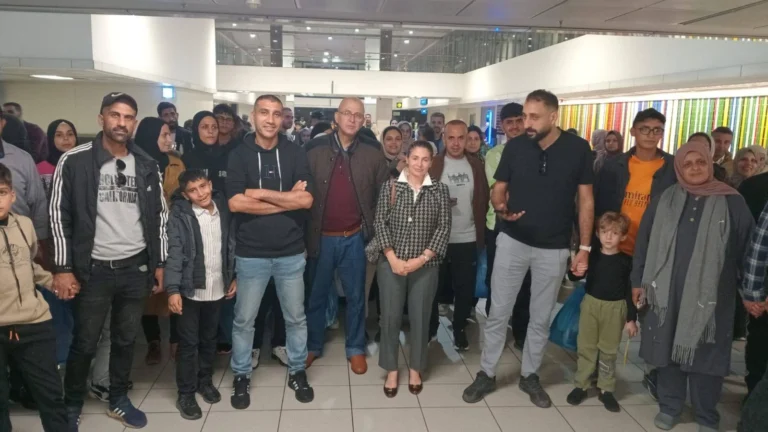

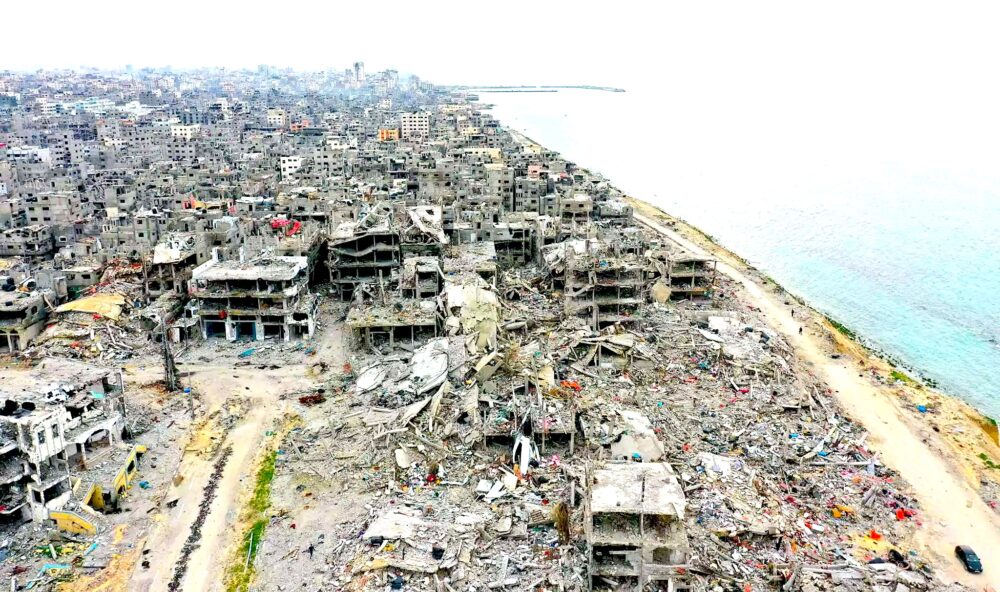

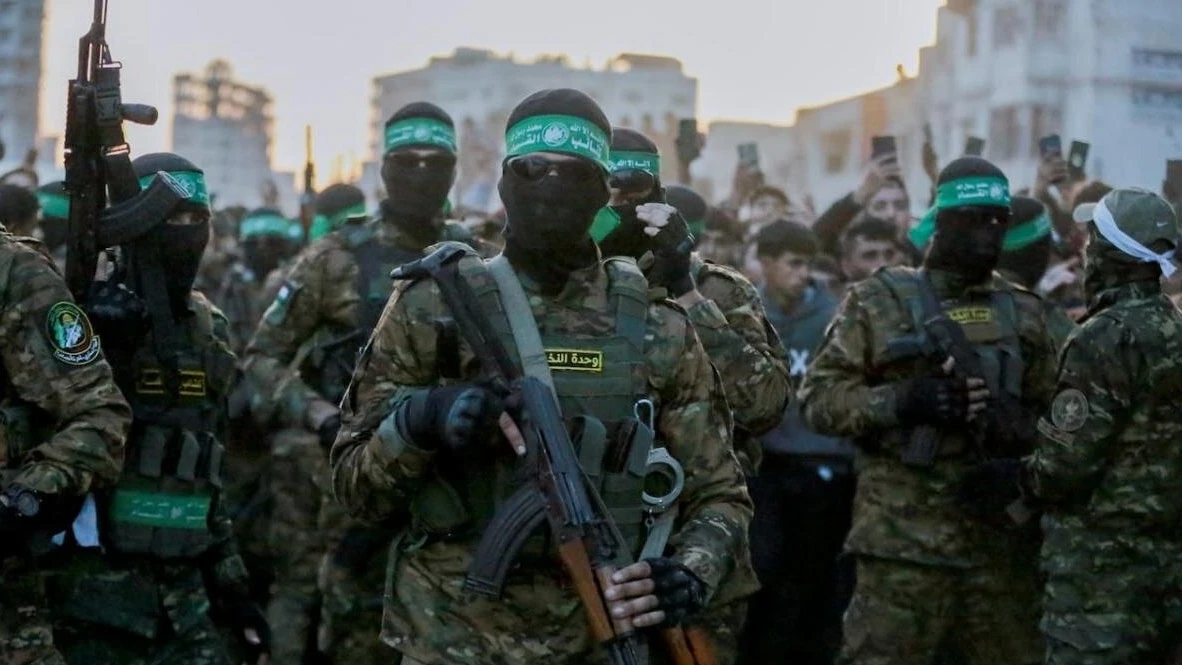
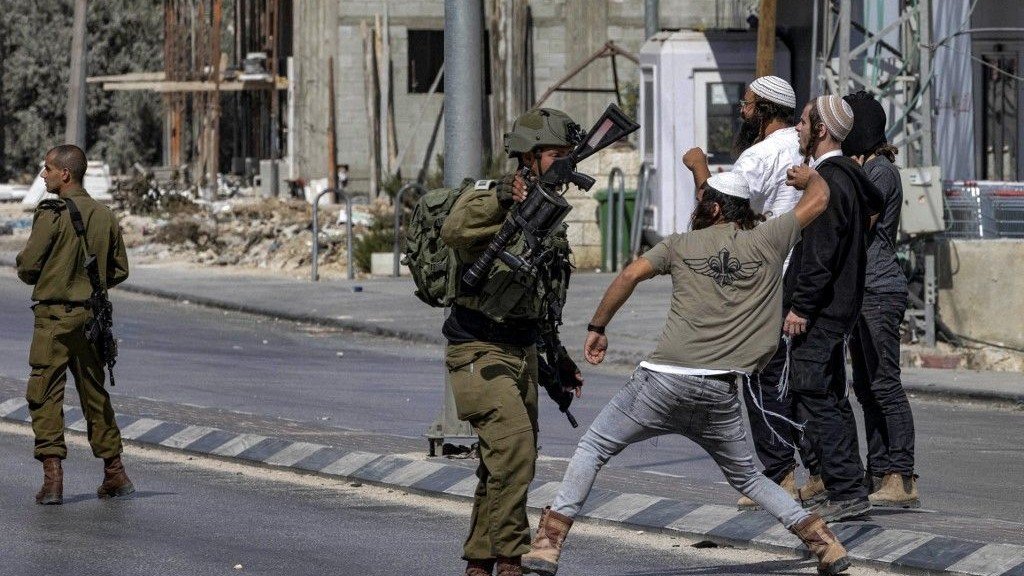
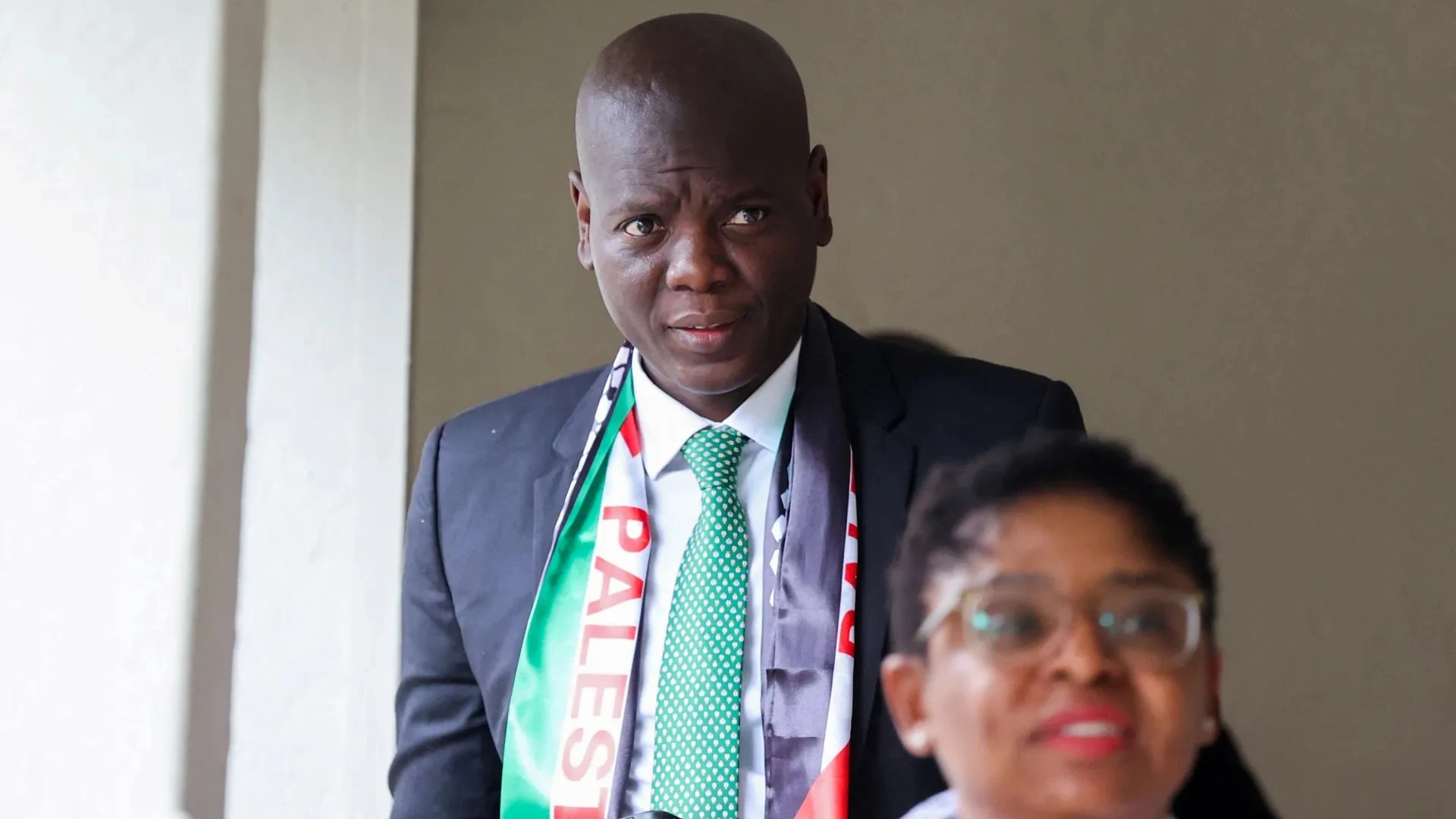







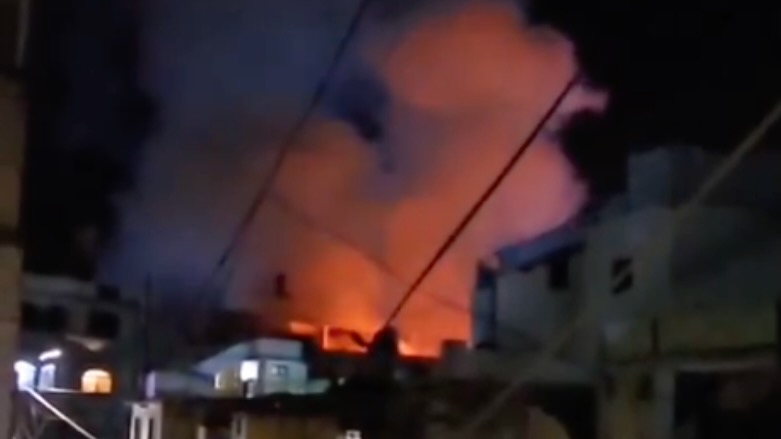
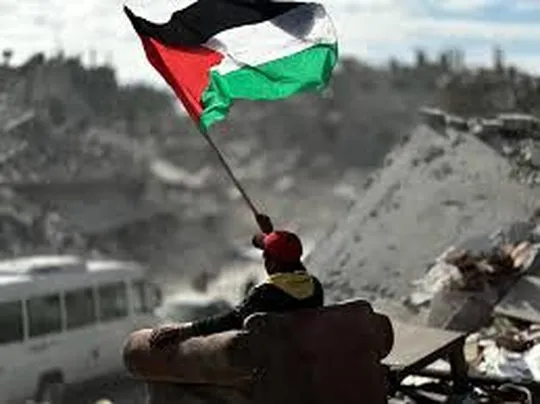

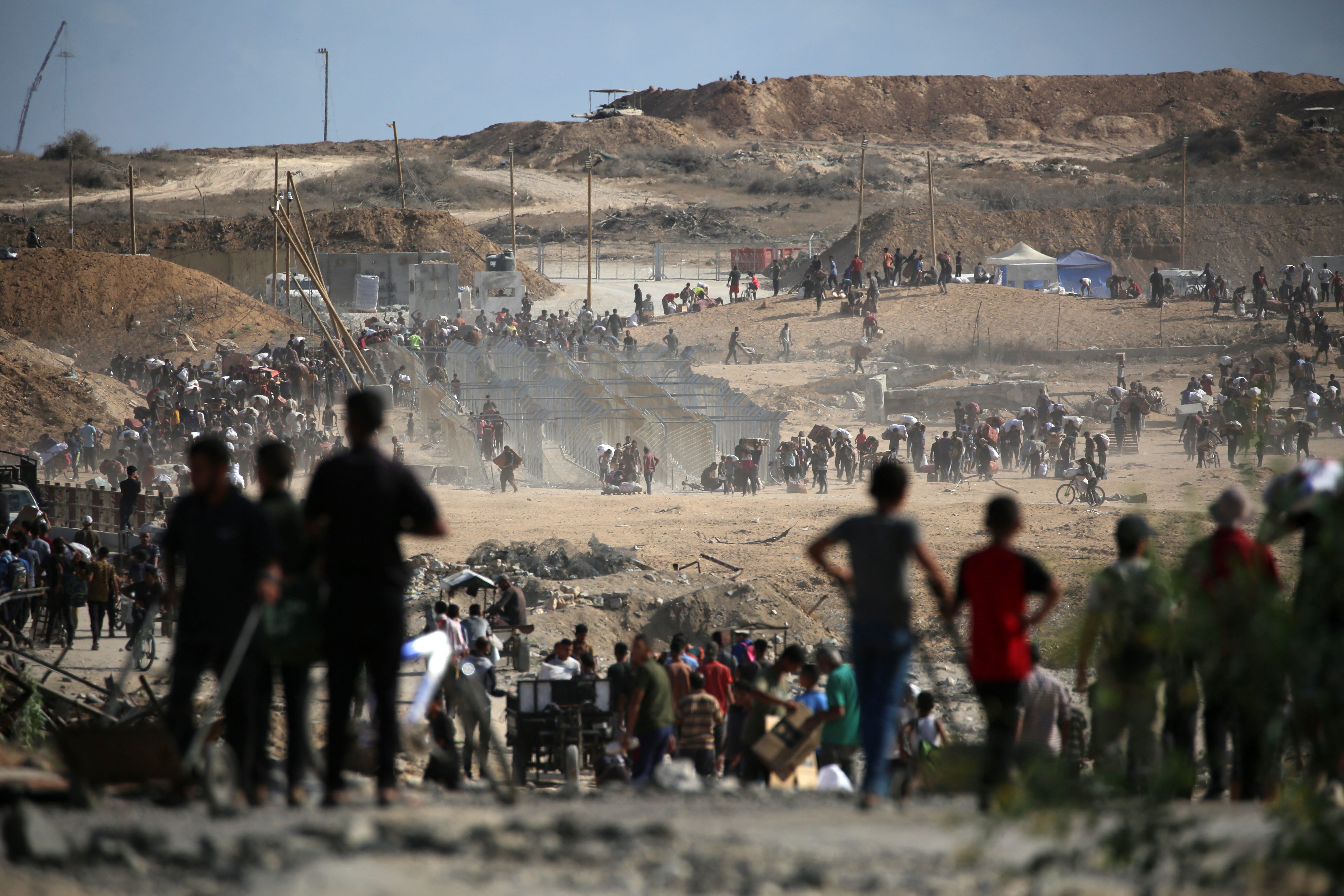
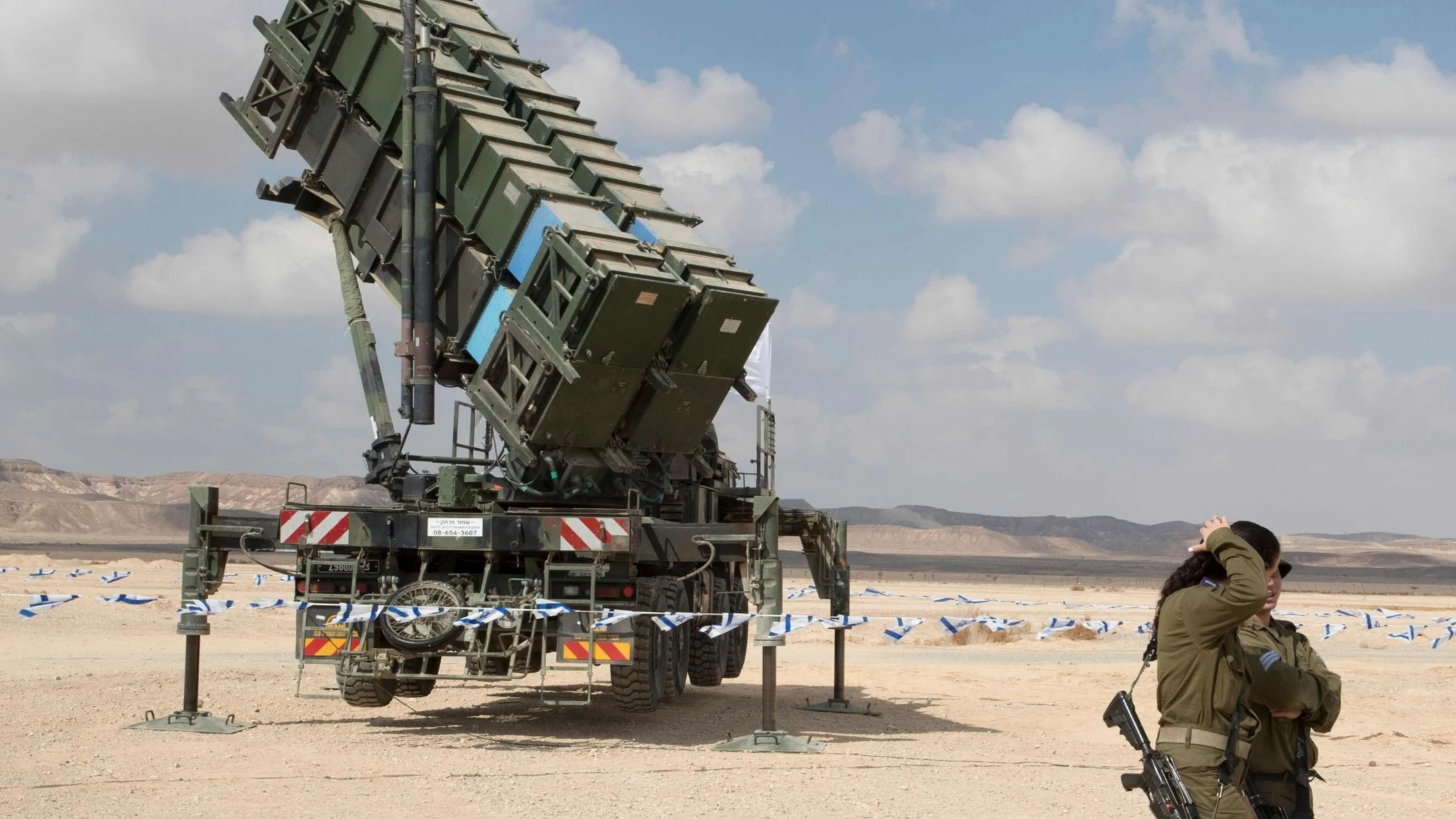
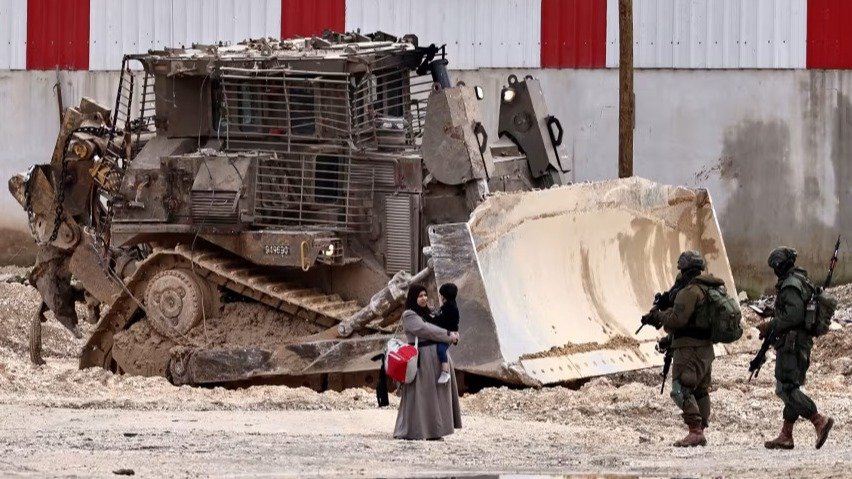
 (@OnlinePalEng) October 31, 2025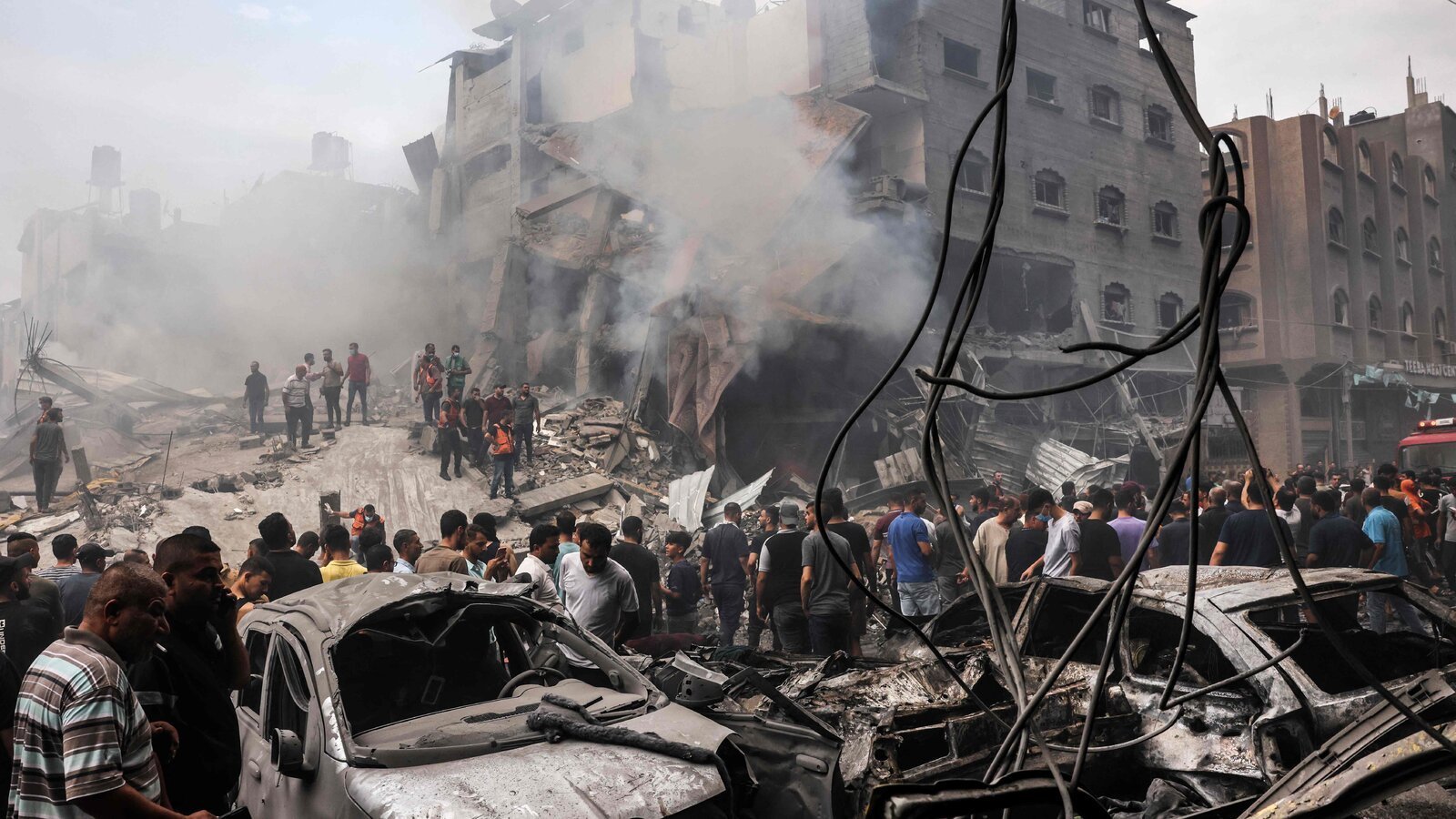

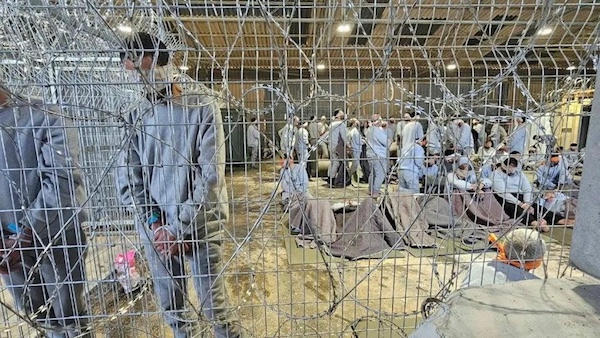


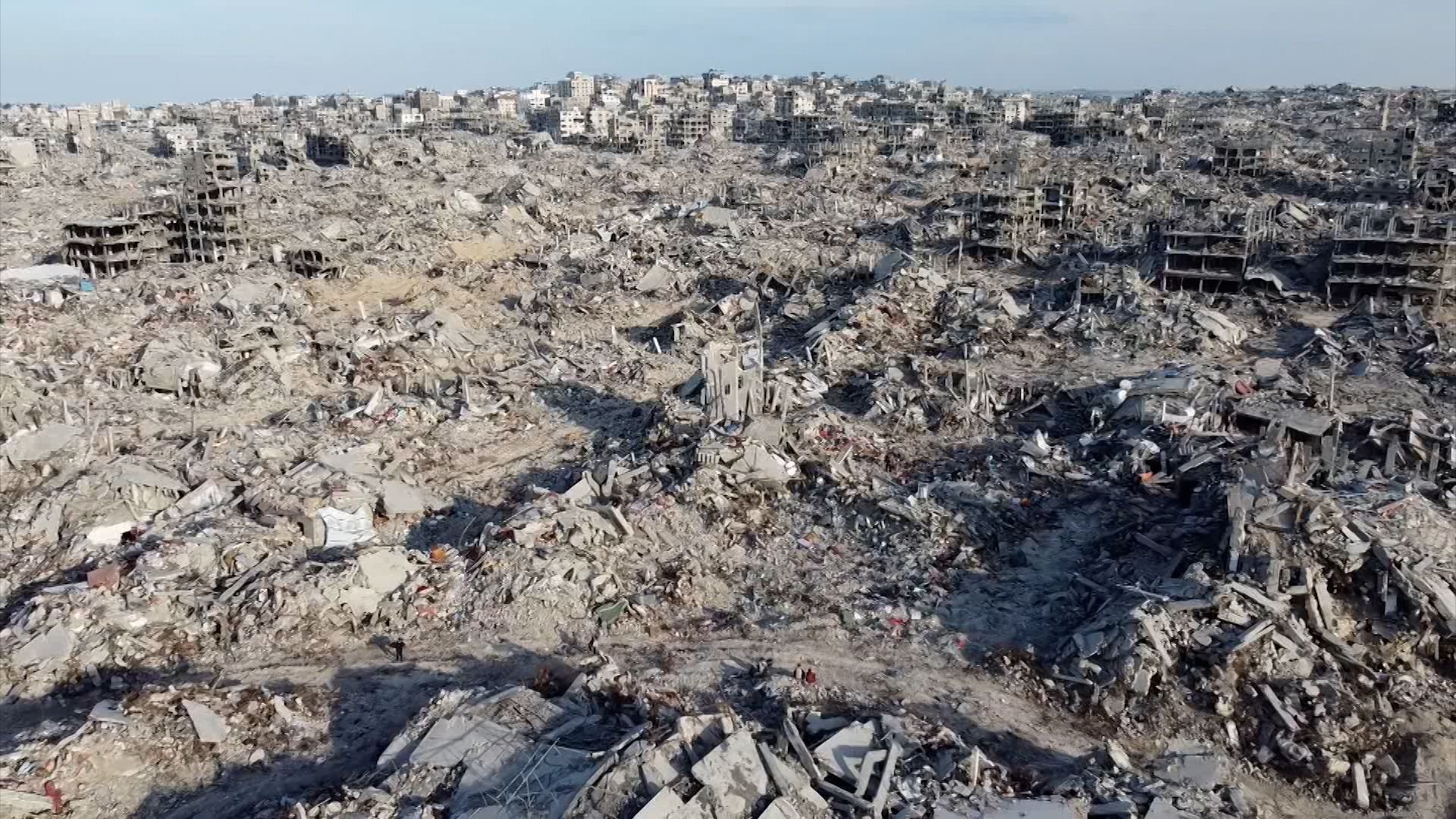
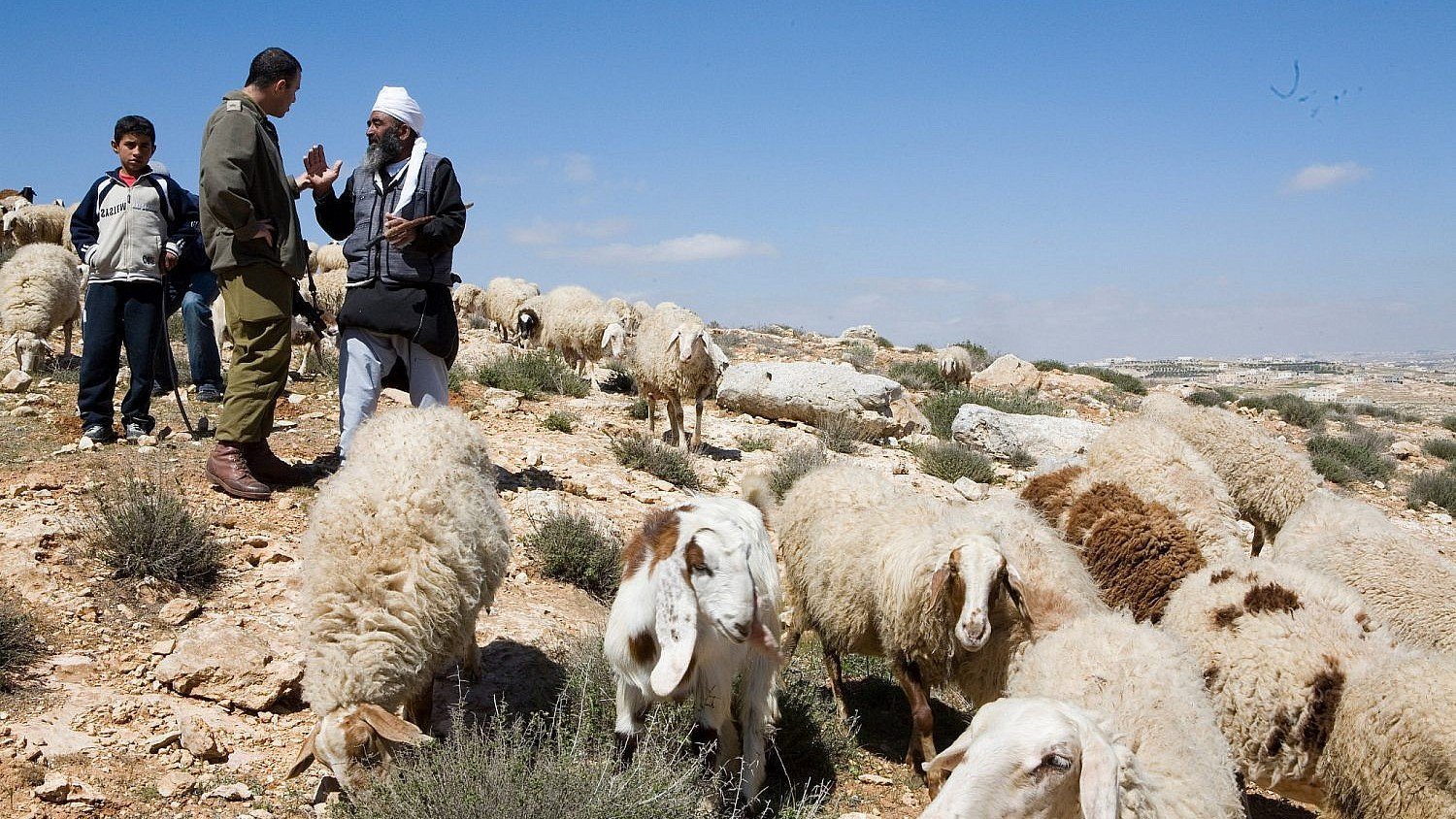
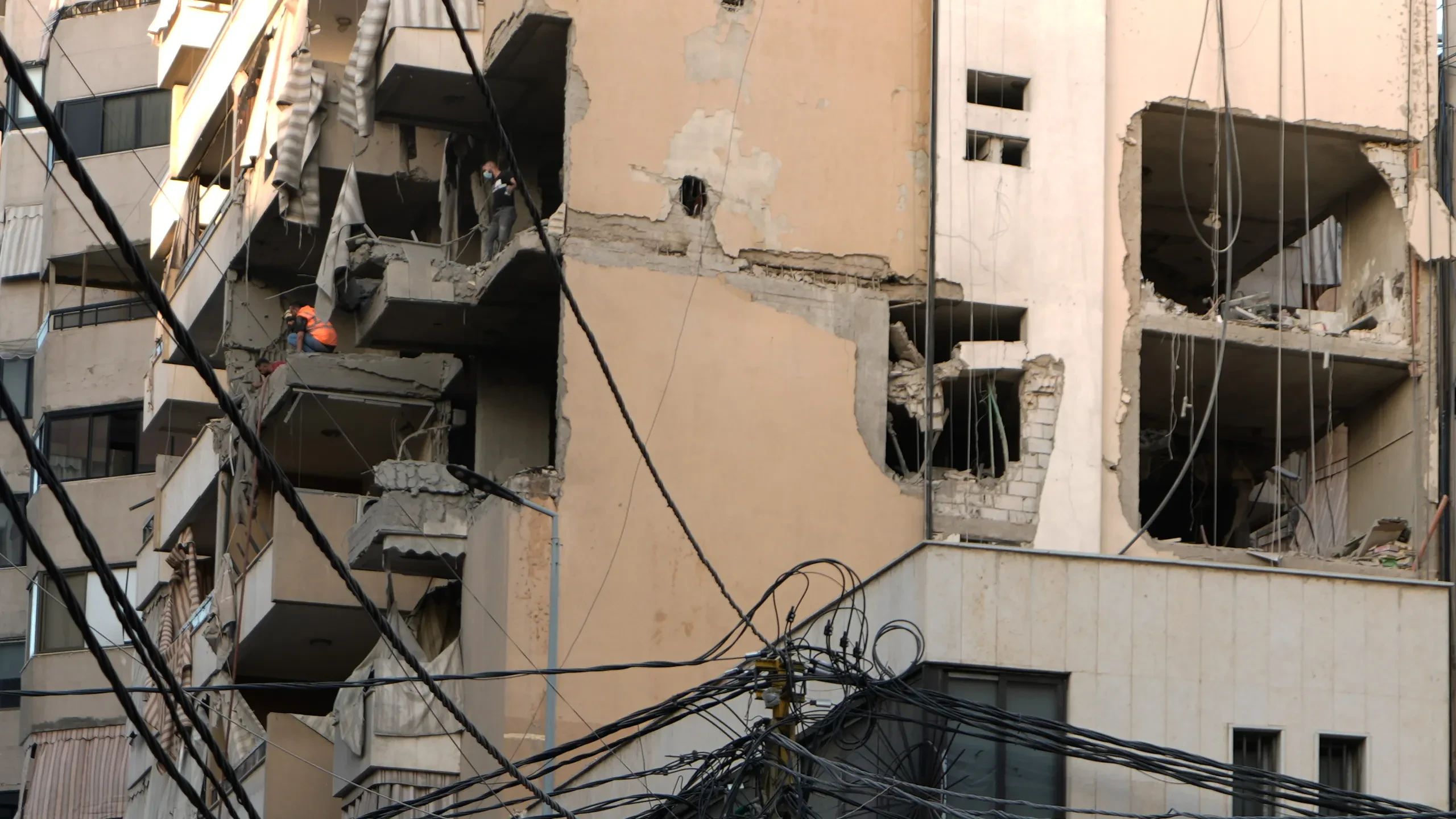
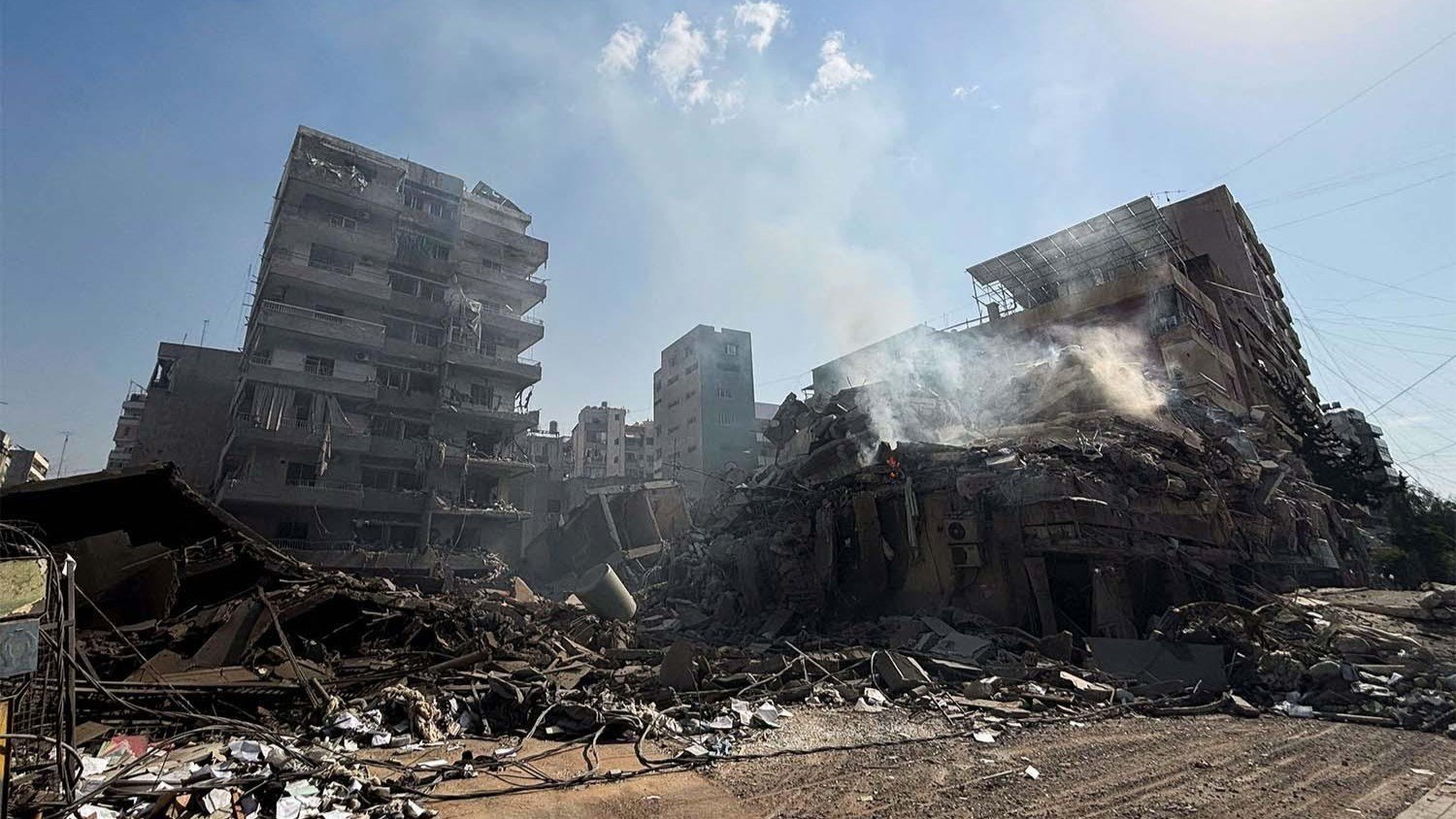
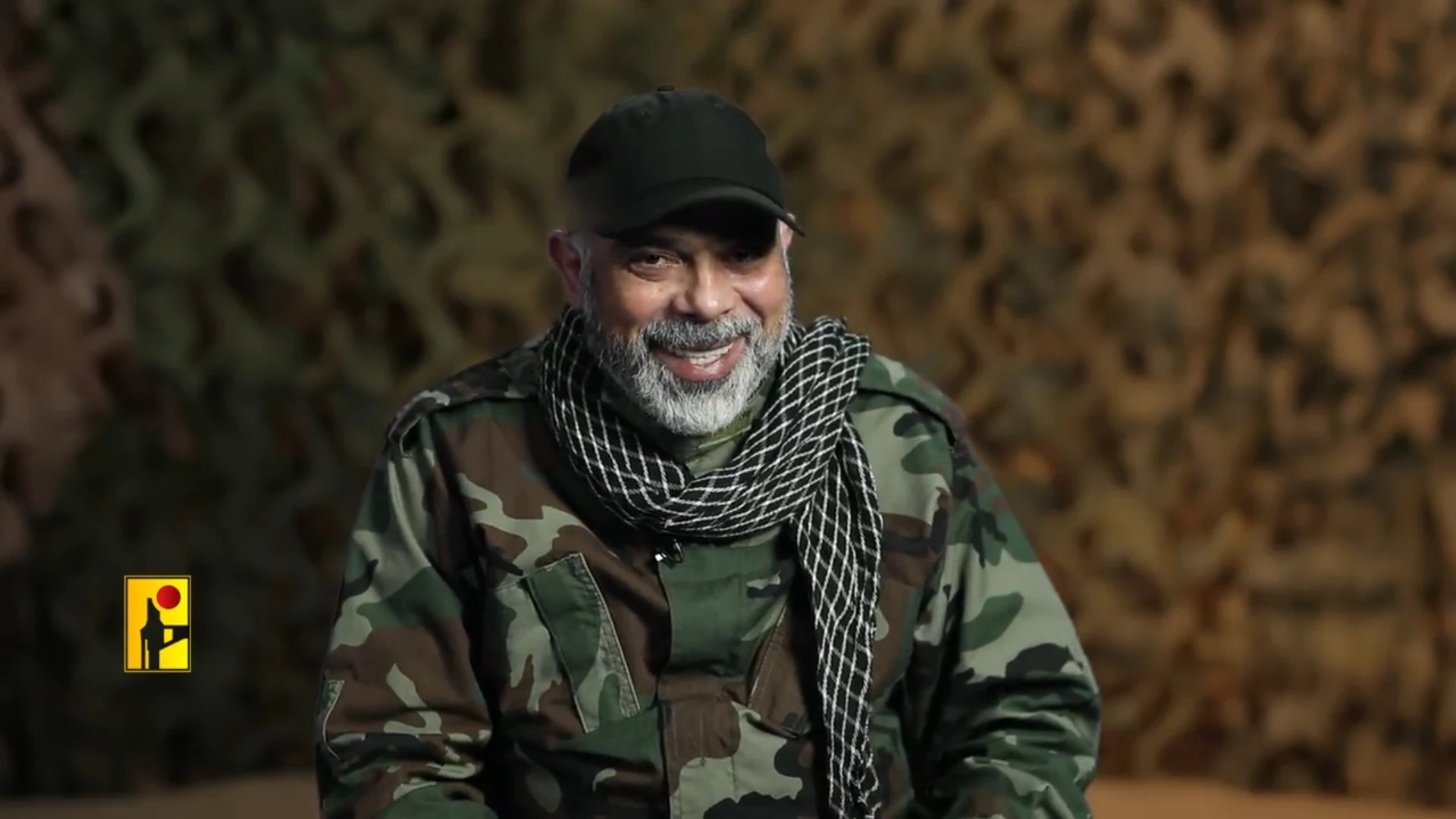



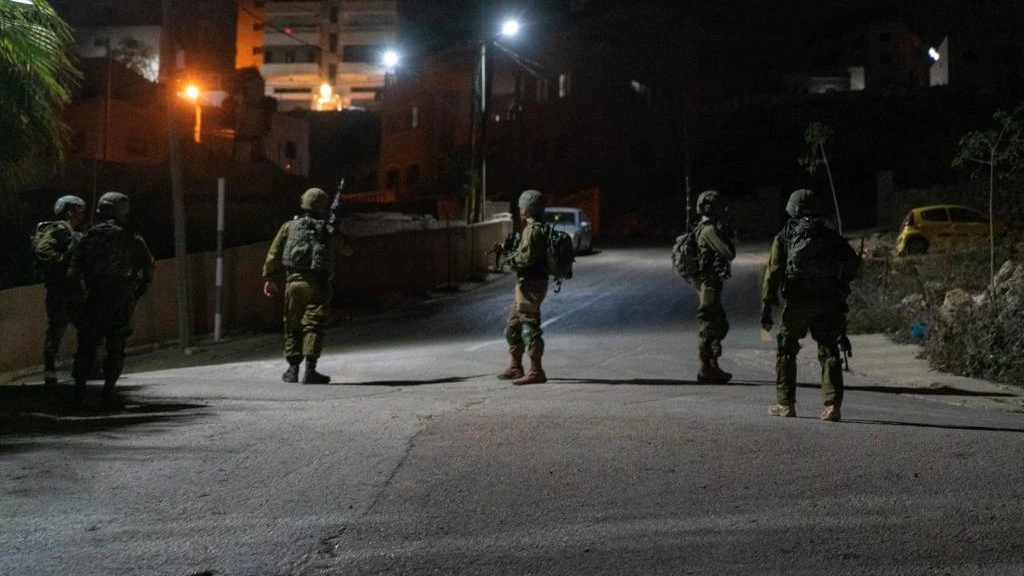
 * pic.twitter.com/pwKz9ZA00u