Stalin is trending

User avatar
blindpig
Posts: 15306
Joined: Fri Jul 14, 2017 5:44 pm
Location: Turtle Island
Contact:

Re: Stalin is trending

Post by blindpig » Thu Nov 27, 2025 2:14 pm

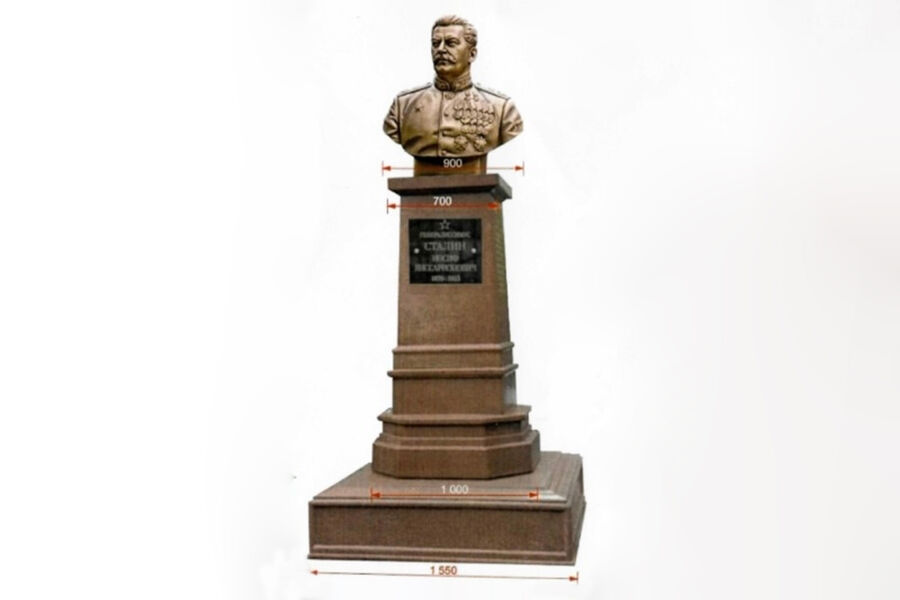
A vote on a Stalin monument will be held in Khakassa.
November 27, 8:36

Image

Khakassia Governor Konovalov announced that the republic will hold a vote on the installation of a monument to Stalin.
The monuments are planned for Victory Park in Abakan.

Khakassia will hold a public vote to decide on the installation of a monument to Soviet leader Joseph Stalin in Abakan. This was announced by the region's governor, Valentin Konovalov, on his Telegram channel. The head of the republic noted that members of the all-Russian organization "Children of War" approached the Abakan administration with the initiative to erect the monument. The monument is planned for Victory Park. "I believe this opinion is supported by the absolute majority of Khakassia residents. However, if the Abakan administration has a different position, we must consult with our residents," Konovalov wrote.
"The voice of the people will guide us. As a reminder, we have successful experience with public votes. For example, during a broad survey conducted by the Khakassia Public Chamber, our airport was named after Hero of the Soviet Union Vasily Gavrilovich Tikhonov—incidentally, a Stalinist general."


P.S. In Yekaterinburg, local authorities have postponed a decision on erecting a monument to Stalin due to resistance from the local liberal community (in this regard, Yekaterinburg has been a real hotbed of trouble since the days of the American consulate).

https://colonelcassad.livejournal.com/10211141.html

Google Translator
"There is great chaos under heaven; the situation is excellent."

User avatar
blindpig
Posts: 15306
Joined: Fri Jul 14, 2017 5:44 pm
Location: Turtle Island
Contact:

Re: Stalin is trending

Post by blindpig » Wed Dec 10, 2025 11:16 pm

Two nails for Comrade Stalin. Announcement
December 10, 7:02 PM

Image

As usual, I'm providing informational support for the "Two Carnations for Comrade Stalin" campaign. This is already the 31st such campaign. A significant amount of progress has been made since the beginning of 2010. There were, of course, a couple of absences due to valid reasons—COVID and the war—but overall, this is one of the most systematic campaigns expressing historical gratitude to Comrade Stalin for his services to our country and people.

Two Carnations for Comrade Stalin

Integrity and respect for history are important for any country and people who refuse to perish and fade into time. Our country's history spans many centuries, and throughout it, there have been not only resounding victories and grand achievements, but also setbacks and failures. However, the fabric of history is unbreakable; all these years and decades have been drenched in the sweat and blood of our ancestors, overshadowed by the tireless labor of building and strengthening the state.
No historical period can be erased from the national memory or dismissed as harmful or unnecessary. This is especially true when we are talking about the period of Russia's unprecedented rise and power—the period when, for the first time in its history, it became one of the world's two leading powers for a long time—the period of Stalin's USSR, inextricably linked with the figure of I.V. Stalin himself.

On December 21, 2025, on the anniversary of Joseph Vissarionovich Stalin's birthday, we call on everyone to honor the memory of the Leader in person by laying flowers at his grave near the Kremlin Wall in Moscow and at memorial sites in other cities of the USSR.

Some will ask why? Joseph Vissarionovich is long dead, the party he founded and led is gone, and the country he led has been gone for almost a quarter of a century. All this is history. Today is a different country, different challenges, a different reality.

We come to lay red carnations because Stalin is our national leader. How do such figures differ from historical figures, scientists, military leaders, engineers, artists, and writers?

We remember the latter for their great achievements, military or peaceful exploits. We honor them for what they personally accomplished. The fruits of their labors are right here, right next to us—a scientific discovery, a victory in battle, an immortal book or painting, or a heroic deed forever inscribed in the history of our homeland.

The memory of national leaders is somewhat different. We honor and revere them not so much for their personal achievements, but for the heights and victories we ourselves—the people and the country—achieved under their leadership.

Alexander Nevsky, Dmitry Donskoy, Ivan III, Peter the Great—all of them compelled the Russian people not simply to respond to the challenges of the times, but to mobilize and defend their right to independence. And even among them, the figure of I.V. Stalin stands out.
He stands out for the accomplishments we, the Russian people (in alliance with the other peoples of the USSR), have achieved in all areas of human development.

Under Stalin, the USSR developed at a pace unmatched by the world, achieving a historically unprecedented breakthrough in just 20 years, defeating the fascist scourge that had gathered the economic and military potential of almost all of Europe under its banner. Under Stalin, the foundation for our nuclear missile defense and our breakthrough into space was laid. Under Stalin, the cult of knowledge and work compelled us to strive for science and make global discoveries and breakthroughs. Under Stalin, just two years after the war, rationing was abolished and annual price reductions began. Under Stalin, our country and our people enjoyed worldwide recognition and respect.
It was under Stalin, on the ruins of the Reichstag, that we showed the world who truly were superhuman!

That is why his memory is so dear to us, and we call on everyone to come and honor this great man on December 21, 2025, by laying two red carnations at the leader's grave or at other places in your area associated with his name.

The "Two Carnations for Comrade Stalin" event will be held for the 31st time as a private initiative of a group of comrades.

The goal of the event is to honor the memory of the Leader on December 21, 2025, by laying flowers at his grave on Red Square in Moscow. Anyone can participate, either individually or as part of our group.

For our comrades living outside the Moscow region and unable to participate in person, we ask that you organize a voluntary fundraising campaign to purchase flowers, purchase flowers, and lay them in Moscow in their name on Red Square at Comrade Stalin's grave on December 21, 2025.

Details can be found on this page.

The event is subject to mandatory approval by the authorities.

Sberbank card:
5336 6901 3535 0538
Roman Viktorovich F.

Support for the event by reposting, distributing on other social networks, and participating individually are welcome.

https://colonelcassad.livejournal.com/10237954.html

Google Translator
"There is great chaos under heaven; the situation is excellent."

User avatar
blindpig
Posts: 15306
Joined: Fri Jul 14, 2017 5:44 pm
Location: Turtle Island
Contact:

Re: Stalin is trending

Post by blindpig » Fri Dec 12, 2025 4:01 pm

Stalin's calendars for 2026
December 11, 4:55 PM

Image

Stalinist calendars for 2026.

The first is dedicated to the theme of building sovereignty and strengthening the state.

Image

Image

You can order it here: https://ruszamir.ru/catalog/ezhednevnik ... irovannyj/

The second is dedicated to the Great Construction Projects of Communism.

Image

Image

You can order it here: https://ruszamir.ru/catalog/staryj-kale ... -na-2026g/

(More images at link.)

https://colonelcassad.livejournal.com/10239951.html

Google Translator

******

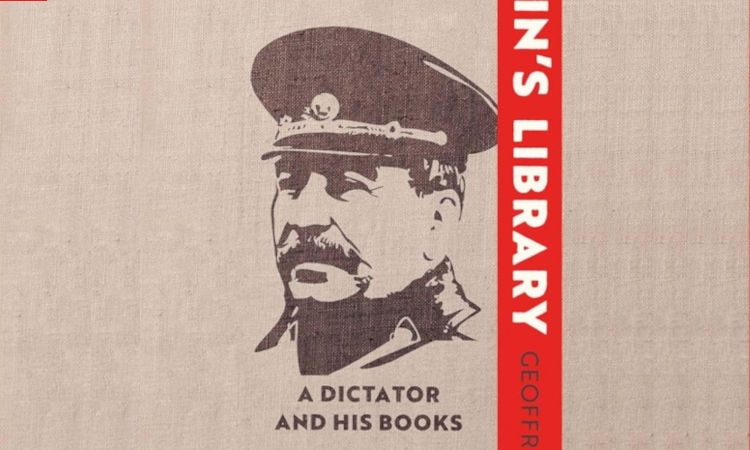
Stalin’s Library by Geoffrey Roberts – a resumé and review, pt 5

Stalin assiduously studied the writings of revolutionaries and counter-revolutionaries, but his one true role model and hero was VI Lenin.
Harpal Brar

Saturday 1 November 2025

Image
Contrary to the myths peddled by Khrushchev and Trotsky and repeated endlessly by anticommunist historians, Josef Stalin was a selfless, modest and devoted revolutionary, and a lifelong student of Marxist-Leninist science.
Read part one, part two, part three and part four of this series.

Stalin’s pometki (annotations)
Josef Stalin was in the habit of writing in the margins of books he read, as well as underlining some sentences or paragraphs. Among his expressions of disapproval or disdain were expressions such as “haha”, “gibberish”, “nonsense”, “rubbish”, “fool”, “scumbag”, “scoundrel”, etc.

He could also be effusive in his praise, writing “yes, yes”, “agreed”, “good”, “spot on”, “that’s right”. At times his annotations were full of the choicest abuse, such as “swine”, “liar”, “fool”.

If he was sceptical about the text he simply marked it “m_da” (meaning more or less “really?”).

As is the case with VI Lenin, his most frequent annotation was NB, in Latin or its Russian equivalent.

Stalin’s pometki (markings, annotations) were “usually informational and highly structured and disciplined”. While he read principally to learn something new, “he also read many of his own writings. One example is his February 1946 election speech.

“In a pamphlet that reproduced the text of his speech, Stalin marked the opening paragraphs in which he had said the war was not an accident or a function of personalities, it had been the inevitable result of a fundamental crisis of the capitalist system. He also marked the paragraphs in which he stated that the war had demonstrated the superiority of the Soviet social system and the viability of its multinational character.

“He went on to highlight the role of the Communist party in securing victory, and how crucial it had been to industrialise the country before the war. The final paragraph that he marked was one at the very end of the speech in which he pointed out that the communists were contesting the elections to the Supreme Soviet as part of a bloc with non-party members.” (p99)

Stalin never used speechwriters, he composed his own speeches. He read and marked a pamphlet containing Andrei Zhdanov’s September 1947 speech ‘On the international situation’, delivered at the inaugural conference of the Cominform. It was, in effect, the Soviet response to the cold war initiated by Anglo-American imperialism. Zhdanov told the delegates from the European communist parties that the postwar world had split into two polarised camps – the camp of imperialism, reaction and war; and a camp of socialism, democracy and peace.

While knowing the speech very well, since Zhdanov had extensively consulted him about its contents, still he made quite a few marks in the pamphlet. One theme was the efforts of imperialism past and present to destroy the Soviet Union. Another was the growing power and influence of US imperialism following the war, and that the United States was heading in the direction of a policy of military adventurism.

Those markings of Stalin proved to be “dangerous genre for scholars searching the library for smoking gun marginalia that would substantiate their various theories of Stalin’s psychology and motivation. One example is the graphic annotation of a couple of pages of a Russian translation of Anatole France’s Under the Rose (1926), a series of humanist dialogues about the existence and meaning of God. But it turned out that these were made by Svetlana, not Stalin.” (p100)

Some of the annotations have been misinterpreted by some writers as evidence that Stalin regarded Ivan the Terrible as his teacher and exemplar, but Stalin had no time for Ivan the Terrible. “He looked down on all the tsars, even the greats such as Peter and Catherine. His one and only true hero and role model was Lenin.” (p101)

Stalin absolutely revered Lenin, whom he first met in December 1905 at a party conference in Tampere, Finland, then an autonomous province of tsarist Russia. At a memorial meeting for the recently deceased founder of the Soviet state, Stalin recalled that what had captivated him about Lenin was the “irresistible force of logic” in his speeches; “no whining over defeat”, “no boasting in victory”; “fidelity to principle”; “faith in the masses”; and “the insight of genius, the ability to rapidly grasp and divine the inner meaning of impending events”. (Lenin, speech delivered at a memorial meeting in the Kremlin Military school, 28 January 1924)

When Stalin devised his library classification plan in May 1925, although Leon Trotsky had emerged as his fiercest opponent, yet Stalin placed Trotsky sixth in the list of Marxist authors and his own writings were placed in the seventh place, after Marx, Engels, Lenin, Kautsky, Plekhanov and Trotsky. More than “forty of Trotsky’s books and pamphlets … may be found among the remnants of Stalin’s library, but he was particularly interested in [Trotsky’s] factional polemics – ‘The new cause’ (1923) and ‘The lessons of October’ (1924).

“Stalin combed through these and other writing seeking ammunition for his critique of Trotsky and Trotskyism. His withering attacks on Trotsky’s views made his name as a top polemicist and consolidated his authority as the party’s general secretary. At the 15th party conference in November 1926, he was scathing in his criticism of Trotsky’s statement in ‘The new course’ that ‘Leninism, as a system of revolutionary action, presumes a revolutionary instinct trained by reflection and experience which, in the social sphere, is equivalent to muscular sensation in physical labour.’

“Stalin commented ‘Leninism as “muscular sensation in physical labour”. New and original and very profound, is it not? Can you make head of tail of it?’ (Laughter)” (p103)

In all his much-touted brilliance as an intellectual, Trotsky was no match for Stalin. He had a history, going back to 1903, of attacking Lenin and the Bolsheviks, and only joined them in the summer of 1917. Stalin reminded the party of Trotsky’s past behaviour:

“He was particularly fond of quoting Trotsky’s 1915 attack on Lenin’s view that proletarian revolution and socialism were possible in a single country, even in culturally backward and economically underdeveloped peasant Russia.”

By the by, Roberts told us earlier that socialism in one country was a new doctrine fashioned by Stalin (p64). Now, however, 40 pages later, it has, quite correctly, become Lenin’s view. Trotsky’s view, which he never departed from, was that without a European proletarian revolution, revolutionary Russia could not survive, let alone build socialism. The overwhelming majority of the party agreed with the Leninist thesis and went on to construct socialism, with its world-historic achievements.

Reverting to Stalin’s annotations, “Lenin was Stalin’s most-read author. In Stalin’s own collected writings there are many more references to Lenin than any other person. Stalin was renowned as the master of the Lenin quote …

“In a book about reasons for Bolshevik victory in the civil war, Stalin simply highlighted all the quotes from Lenin: the Bolsheviks had won because of international working-class solidarity, because they were united whereas their opponents were divided, and because soldiers had refused to fight against Soviet government. Lenin’s reference to the failure of Winston Churchill’s prediction that the allies would take Petrograd in September 1919 and Moscow by December was double-lined in the margin.” (p102)

In his annotations there is no hint at all of a critical comment by Stalin on either Marx or Lenin, although there was the odd critical remark on Engels. All the same, he was very respectful towards Engels. “Only idiots can doubt.” he said, “that Engels was and remains our teacher. But it does not follow from this at all that we must cover up Engels’ shortcomings.” (Letter to the Politburo, 5 August 1934, see Roberts p102)

Stalin’s marked books in his library reveal that Stalin kept on reading Marx, Engels and Lenin until the very end of his life.

Stalin’s toast to scientists at a reception for higher education workers in May 1938 is one of several fulsome tributes to Lenin:

“In the course of its development, science has known not a few courageous men who were able to break down the old and create the new … such scientists as Galileo, Darwin … I should like to dwell on one of these eminent men of science, one who at the same time was the greatest man of modern times. I am referring to Lenin, our teacher, our tutor. (Applause)

“Remember 1917. A scientific analysis of the social development of Russia and of the international situation brought Lenin to the conclusion that the only way out of the situation lay in the victory of socialism in Russia. This conclusion came as a complete surprise to many men of science … Scientists of all kinds set up a howl that Lenin was destroying science. But Lenin was not afraid to go against the current, against the force of routine. And Lenin won. (Applause)” (pp102-3)

Stalin also demolished what he called the ‘legend’ of Trotsky’s special role in 1917:

“Let us now pass to the legend about Trotsky’s special role in the October uprising. The Trotskyites are vigorously spreading rumours that Trotsky inspired and was the sole leader of the October uprising. These rumours are being spread with exceptional zeal by the so-called editor of Trotsky’s works, Lentsner.

“Trotsky himself, by consistently avoiding mention of the party, the central committee and the Petrograd committee of the party, by saying nothing about the leading role of these organisations in the uprising and vigorously pushing himself forward as the central figure in the October uprising, voluntarily or involuntarily helps to spread the rumours about the special role he is supposed to have played in the uprising.

“I am far from denying Trotsky’s undoubtedly important role in the uprising. I must say, however, that Trotsky did not play any special role in the October uprising, nor could he do so; being chairman of the Petrograd Soviet, he merely carried out the will of the appropriate party bodies, which directed every step that Trotsky took.” (Trotskyism or Leninism?, November 1924)

The most important difference between Trotsky and the Bolshevik party led by Stalin was on the question of building socialism in the USSR. Given Trotsky’s persistence in his wrong stance, the differences on this question escalated into an existential struggle for the soul of the Bolshevik party.

Trotsky, unable to get much support within the party, went down the path of factional activity and was expelled from the party after organising an anti-party demonstration on the tenth anniversary of the October Revolution, and he was also sent into exile. He was the author of his own misfortune.

“It was Trotsky who launched the ‘history’ wars about who had done what during the revolution. In 1923, it was Trotsky who broke the unity of the Politburo leadership collective that had assumed control when Lenin was stricken by a series of strokes … he proposed acceleration of socialist industrialisation and modification of the New Economic Policy (NEP) strategy …

“Piling pressure on his leadership colleagues, Trotsky organised a campaign within the party that accused the Politburo majority, headed by the triumvirate of Stalin, Grigory Zinoviev and Lev Kamenev, of constituting a ‘factional dictatorship’. It was this campaign that led to the publication of the ‘New Course’. However, the matter was settled by a resounding victory for the triumvirate at the 13th party conference in January 1924.

“Trotsky’s next move was an opportunist and ill-advised alliance with Kamenev and Zinoviev who, now much more left-wing than they were in 1917, had fallen out with Stalin over NEP and socialism in one country. Like Trotsky’s left opposition of 1923, the united opposition of Kamenev, Trotsky and Zinoviev attempted to rally support within the party but was overwhelmed by the power and popularity of Stalin …

“In October 1926, Trotsky was removed from the Politburo, and a year later from the central committee, as were Kamenev and Zinoviev. In November 1927, Trotsky and Zinoviev were expelled from the party and the rout was completed by the 15th congress in December 1927, which excluded 75 oppositionists, including Kamenev, from its ranks.” (pp109-10)

Kamenev and Zinoviev, along with many of their supporters, soon recanted their opposition to the majority line and were readmitted into the party. Trotsky persisted with his opposition, declaring that the party, “like the French Revolution in 1794, had been captured by counter-revolutionary ‘Thermidorian forces’. In January 1928, he was exiled to Alma-Ata in Kazakhstan.” (Ibid)

The opposition to the party was correctly characterised as a deviation and reflection of the insidious influence of class enemies.

Initially, the dissenting oppositionists were regarded as a petty-bourgeois deviation that was objectively, though not knowingly, counter-revolutionary. Over time, the opposition became knowingly and actively counter-revolutionary and were condemned as such.

Though exiled to Alma-Ata for counter-revolutionary activities, Trotsky carried on with his factional activities by post. Following that, he was exiled to Turkey in 1929, and finally deprived of his Soviet citizenship in 1932.

Stalin’s alleged terror
Trotsky and his followers chattered about the “degeneration” of the Soviet regime, about “Thermidor”, about the “inevitable victory” of Trotskyism, Stalin told the delegates to the 16th party congress in June 1930. “But actually, what happened? What happened was the collapse, the end of Trotskyism.”

In a 1931 letter to Proletarskaya Gazeta, Stalin showed considerable concern, not about the strength of Trotskyism, but about its misidentification as a faction of communism, when in fact “Trotskyism is the advanced detachment of the counter-revolutionary bourgeoisie.”

He told Emile Ludwig in November 1931 that Trotsky had by and large been forgotten by Soviet workers, and that if they remembered him it was “with bitterness, with exasperation, with hatred”. At the 17th party congress in January 1934, the Congress of Victors (soon after the successful completion of the first five-year plan, with its spectacular results), Stalin said that the anti-Leninist group of Trotskyists had been smashed and scattered; that its “organisers are to be found in the backyards of bourgeois parties abroad”.

Stalin and his comrades were shocked by the murder in December 1936 of Sergei M Kirov, Leningrad party secretary. The murderer, Leonid Nikolaev, as was to turn out later, was not a lone assassin who gunned down Kirov outside his office because of some personal grudge, as is asserted by bourgeois historians (Roberts included), who even go to the length of spreading the calumny (not Roberts) that Stalin was behind this foul crime against a very dear friend and comrade of his. To his credit, Roberts says that not even Trotsky thought Stalin guilty of the crime.

On 16 December, Kamenev and Zinoviev were arrested for abetting the murder, while on 29 December, Nikolaev and his 13 associates were executed.

Further investigation revealed that Kamenev, Zinoviev and Trotsky were all actively involved in the organisation of Kirov’s murder, as well as in plotting on Stalin’s life. This evidence led to the public trial of Kamenev, Zinoviev and 14 others, accused of being the leaders of a “united Trotskyite-Zinovievite centre” that had been responsible for the murder of Kirov and had plotted to assassinate other Soviet leaders.

The trial took place in Moscow in August 1936, the first of three Moscow trials. All 16 confessed to the crimes that they were charged with and were executed. Trotsky and his son Lev Sedov were sentenced to death in absentia.

The investigations leading to the first Moscow trial uncovered the existence of an “Anti-Soviet parallel Trotskyist centre” – meant to be a reserve network in the event of the exposure of the Trotskyist-Zinovievite centre.

The main defendants in this second Moscow trial were the former deputy commissar for heavy industry Georgy Pyatakov, former Izvestia editor Karl Radek, and Grigory Sokolnikov, the former deputy commissar for foreign affairs. Along with 14 others they were accused of treason, espionage and wrecking, their ultimate aim being to capture power and restore capitalism in the Soviet Union after, as they hoped, the Soviet Union had been defeated in a military conflict by Germany and Japan. Mainly former Trotskyists, following their confessions, the great majority were sentenced to death.

The accused in the second trial implicated the leaders of the right opposition – Nikolai Bukharin and former prime minister Alexei Rykov. They were expelled from the party in March 1937, leading to their arrest and their being tried a year later in the third, and final, Moscow trial of the “Bloc of Rights and Trotskyists”.

Bukharin and Rykov confessed to conspiring with foreign powers to overthrow Soviet power and, together with most of the co-defendants, were given death sentences and executed. Some mindless bourgeois historians have made the assertion that Bukharin was falsely induced to confess to being an enemy of the Soviet state “to serve Stalin” – as absurd an assertion as ever there was – and that Bukharin was prepared to play his prescribed role in order to safeguard the Soviet system!

Many bourgeois scribblers, and following them the imperialist ‘left’, assert that the Moscow trials were “show trials”, part of the “great terror” unleashed by Stalin against his political opponents. Far from it. The Moscow trials showed that hitherto the Soviet Union had underestimated the dangers confronting it in the conditions of capitalist encirclement, especially the penetration of the Soviet Union by countless imperialist agents, wreckers, spies, diversionists and killers.

“Pretending to be loyal communists, the oppositionists had deceived the Soviet people, abused confidence, wrecked on the sly, and revealed our state secrets to the enemies of the Soviet Union.” (Defects in party work and measures for liquidating Trotskyite and other double-dealers, report to the central committee, 3 March 1937)

If the Soviet state had not dealt with the perpetrators of the crimes committed by the accused with the iron fist of Soviet law, its fate would have been the same as that of the Paris Commune, following which the counter-revolutionaries would have unleashed an orgy of murder and mass slaughter, compared with which the Moscow trials would have been an insignificant side show.

Anyone desiring to know more about the Moscow trials and their critics is requested to refer to Harpal Brar’s book Trotskyism or Leninism? Even better, he is advised to access the verbatim transcripts of these trials, which reveal the depth of the degeneration of the accused who, considering their high influential positions in the party, had become rotten to the extent shown by these trials.

There was also the trial in May 1937 of Marshal N Tukhachevsky and seven other generals accused of a fascist plot to overthrow the Soviet government. Following this trial, they were found guilty and executed.

Roberts asserts that, after several attempts, “the NKVD did finally manage to assassinate Trotksy, in Mexico in August 1940”. But the Soviet secret service had nothing to do with Trotsky’s assassination. He was murdered by a disgruntled follower of his who was incensed on discovering that the man he had worshipped as a deity was nothing but a charlatan. The Mexican authorities and the US intelligence service tried to get him to say that he had been sent by Stalin to kill Trotsky, in return for which he would be set free. He refused and served many years in a Mexican jail.

“Pravda announced the news of Trotsky’s demise in an article headlined ‘Death of an international spy’. The article ended with the words: “Trotsky was a victim of his own intrigues, treachery and treason. Thus ended ingloriously the life of this despicable person, who went to his grave with ‘international spy’ stamped on his forehead.” (24 August 1940)

To be continued …

https://thecommunists.org/2025/11/01/ne ... eview-pt5/
"There is great chaos under heaven; the situation is excellent."

User avatar
blindpig
Posts: 15306
Joined: Fri Jul 14, 2017 5:44 pm
Location: Turtle Island
Contact:

Re: Stalin is trending

Post by blindpig » Fri Dec 19, 2025 2:54 pm

A monument to Stalin was unveiled in Smolensk.
December 18, 9:02 PM

Image

A monument to Stalin was unveiled in Smolensk.
(
In Smolensk, a monument (a bust on a pedestal) to the leader of the people was unveiled for Stalin's birthday. It was erected on private property by the director of the Smolensk Frontier Historical Park.

Stalin visited Smolensk in 1919 on business for the Western Front during the war with the White Poles.

The appearance of new monuments to Stalin in Russia has now become commonplace, with only Felix Edmundovich Dzerzhinsky rivaling him in the number of new monuments and busts.

A donation is now open for carnations for the traditional "Two Carnations for Comrade Stalin" campaign. Those interested can contribute either financially or in person. The event will take place on December 21st in Red Square near the Kremlin Wall.

https://colonelcassad.livejournal.com/10253420.html

Google Translator
"There is great chaos under heaven; the situation is excellent."

User avatar
blindpig
Posts: 15306
Joined: Fri Jul 14, 2017 5:44 pm
Location: Turtle Island
Contact:

Re: Stalin is trending

Post by blindpig » Sun Dec 21, 2025 6:30 pm

2 carnations for Comrade Stalin. December 21, 2025.
December 21, 5:51 PM

Image

The traditional "Two Carnations for Comrade Stalin" event took place in Moscow's Red Square near the Kremlin Wall ( https://t.me/kom_mir/12241 and https://vk.com/2gvozdiki ). As usual, the event was coordinated with the Kremlin Commandant's Office. 4,400 red carnations, purchased with donations from concerned citizens, were laid.
Flowers were also laid at the graves of prominent figures of the Soviet era.

Image

Image

Thank you to everyone who supported us financially, informationally, and in person!

Happy birthday, Comrade Stalin.

https://colonelcassad.livejournal.com/10258565.html

Google Translator
"There is great chaos under heaven; the situation is excellent."

User avatar
blindpig
Posts: 15306
Joined: Fri Jul 14, 2017 5:44 pm
Location: Turtle Island
Contact:

Re: Stalin is trending

Post by blindpig » Fri Dec 26, 2025 3:24 pm

Stalin: A great servant of mankind who belongs to the ages

Truly, his name and his works will live on through the centuries.
Andrew Rothstein

Monday 6 March 2023

Image

The following article, written by a prominent leader of the then-revolutionary CPGB, was published in the Daily Worker on 6 March 1953.

*****

Josef Vissarionivich Djugashvili (Stalin) was born in the little Georgian town of Gori on 21 December 1879.

His father was a shoemaker, who put him to the local church school in 1888, and to the theological seminary at Tbilisi (Tiflis) in 1894.

After studying in secret Marxist groups (formed by students and Russian Marxists in exile), Stalin joined the first Georgian social-democratic organisation in 1898, and helped to set up illegal Marxist groups among railway shopmen, writing leaflets and organising strikes.

In 1899 he was expelled from the seminary, on hints from the police, and began earning his living by giving lessons and taking readings at the Tiflis observatory, while continuing intense secret activity among the workers.

As leader of the revolutionary minority in the Georgian social-democratic organisation, Stalin came into conflict with the majority, who wished to confine its activities to propaganda; and in December 1900, directly Lenin’s Russian paper Iskra began to appear (illegally), Stalin became its ardent supporter.

After March 1901, however, he had to go ‘underground’, organising a May Day demonstration at Tbilisi in defiance of the police, starting the first Marxist illegal paper in Georgian (Brdzola) and being elected to the Tbilisi committee of the Social-Democratic party.

Loyal to Marxist principles
In 1902, at the Black Sea port of Batum, he organised a secret printing press, wrote leaflets, led strikes, and marched at the head of a workers’ political demonstration – the most dangerous action possible in tsarist Russia. On 5 April 1902 came his first arrest.

By this time, Stalin was already widely known for his irreconcilable loyalty to Marxist principle, his powers of theoretical analysis, his blunt, close-grained logic, his energy and tirelessness.

At the very dawn of his activity, in an article, The Russian Social-Democratic party and its immediate tasks the 22-year-old Stalin wrote (of the years 1895-96):

“The struggle began to reduce the working day, abolish fines, raise wages, etc. The social democrats knew well that the development of the working-class movement was not confined to these petty demands, that the aim of the movement was not these demands, that they were but a means to the end.

“These demands may be petty, the workers themselves in various towns and districts may be fighting disunited today: this struggle itself will teach the workers that final victory will be achieved only when the entire working class goes forward to storm its enemy as a single, strong, organised force.

“The same struggle will show the workers that, in addition to their direct enemy the capitalist, they have another, still more vigilant, enemy – the organised strength of the entire bourgeois class, the present capitalist state with its troops, courts, police, prisons, gendarmes.” (November-December 1901)

Stalin’s next 15 years were rarely paralleled, even in Russian revolutionary annals. Prison in Georgian jails for 18 months was followed by exile in eastern Siberia until January 1904. He escaped. A year of publication of illegal newspapers, writing pamphlets, propaganda among workers, culminated in leadership of the great three weeks strike of Baku oil workers (December 1904). It ended in the first collective agreement in Russian industrial history.

Ending national barriers
Stalin enjoyed three more years of ‘freedom’ – underground – in which he took a full part, by Lenin’s side, in the great 1905 revolution, in fighting anarchism in Georgia (1906) and in winning over the entire Baku working class from the Mensheviks (1907-8). Stalin’s, remarkable theoretical writings of these years – on the national question (1904) on dialectical materialism and the state (1906-7) – were in Georgian, and only became generally available 40 years later.

On the national question, he wrote in 1904: “The proletariat of Russia has long begun to talk of struggle. As you know, the aim of every struggle is victory. But for the victory of the proletariat the uniting of all the workers without distinction of nationality is necessary.

“Clearly, the breaking down of national barriers and the close gathering together of the Russian, Georgian, Armenian, Polish, jewish, and other proletarians is a necessary condition for the victory of the proletariat of Russia. Such are the interests of the proletariat of Russia.

“But the Russian autocracy … persecutes the ‘alien’ nationalities of Russia. The autocracy deprives them of essential civil rights, oppresses them on all sides, sows distrust and hostility between them in Pharisee fashion, incites them to bloody conflicts, showing thereby that the sole aim of the Russian autocracy is to promote quarrels among the nations inhabiting Russia, sharpen national dissensions among them … and thus dig a grave for the class-consciousness of the workers, their class unity …

“It is clear that the interests of the Russian proletariat, sooner or later, inevitably had to clash with the reactionary policy of the tsarist autocracy.”

In Anarchism or Socialism, after a brilliant exposition of dialectical and historical materialism developed by him 30 years later (in Chapter IV of the History of the CPSU), Stalin went on to show how the class struggle of the workers cannot, if it is victorious, but lead to the establishment of the political supremacy of the proletariat over the capitalist class.

He continued: “The socialist dictatorship of the proletariat is needed so that with its help the proletariat could expropriate the bourgeoisie, confiscate the land, forests, factories and works, machines, railways, etc from all the bourgeoisie. The expropriation of the bourgeoisie – that is what the socialist revolution must lead to.”

And what of the socialist society for which such a revolution would be the foundation? Stalin wrote: “There will be neither capitalists nor proletarians: consequently there will be no exploitation. There will be only collectively working people … There will be no place for buyers and sellers of labour-power, hirers and hired …

“All private property in the implements and means of production will be abolished, there will be neither poor proletarians nor rich capitalists but only working people, collectively possessing all the land and its resources, all the forests, all the factories and works, all the railways, etc.”

Thus he gave a picture of the Soviet Union 30 years ahead.

Organised first issue of Pravda
Then followed a long series of arrests and escapes:

– March 1908 – arrest and exile to the Vologda province, in Northern Russia;

– Escape in June 1909, re-arrest in Baku (March 1910) and exile to Vologda again;

– Escape (September 1911) and re-arrest the same month in St Petersburg, to be sent a third time to Vologda;

– Escape once more (February 1912).

He made a tour through Russia on behalf of the central committee of the Bolshevik party (to which he had been elected in absence at the famous Prague conference of the party in January).

Then he organised the first issue of Pravda (5 May). He was re-arrested that same day and exiled to Narym, in a remote district of Siberia.

He escaped once more (September 1912) and directed the Bolshevik party’s election campaign for the fourth duma (including several lightning appearances to speak at meetings in the factories).

He made two visits to Lenin at Cracow, but once again was re-arrested (February 1913). This was followed by four years exile in uttermost Siberia, near the Arctic Circle. This final political test ended only when tsardom fell in March 1917.

But these 15 years meant far more in Stalin’s life than his terrific battle with the tsarist authorities. They were the years of his struggle, as Lenin’s disciple and supporter, for the Bolshevik party.

After the second congress of the Social-Democratic party in 1903, he sided irrevocably with Lenin against the opportunist Mensheviks.

Revolutionary use of parliament
In the 1905 revolution, he tirelessly advocated armed insurrection, and fought for Lenin’s conception of the working class taking the lead in this essentially democratic, non-socialist revolution, in order to ensure that it would be carried through to the bitter end and clear the way to the struggle for socialism.

In December that year, at the first all-Russian conference held by the Bolsheviks at Tammerfors, in Finland, Stalin had his first meeting with Lenin.

He combated the Mensheviks at the subsequent fourth Social-Democratic congress (Stockholm) in 1906, up and down Georgia in 1906-7, at the fifth congress (London) in 1907, and thereafter at Baku, as already mentioned. “My second revolutionary baptism,” Stalin called this period later on.

Throughout these and succeeding years, in jail or out of it, Stalin stood for Bolshevism against the Mensheviks and their off-shoot, Trotsky.

He was against the tendencies to ‘liquidate’ the illegal party during the years of reaction (1908-10), or to drown it in an unprincipled all-in bloc of everyone calling themselves social democrats, as Trotsky proposed in 1912.

He stood for revolutionary use of parliament by the workers, and for socialist principles in the question of subject nationalities during the years of working-class revival (1911-14).

He stood for revolutionary opposition to imperialist war (1914-17).

After the overthrow of tsardom, he was the first to back Lenin in the fight for Soviet power and the socialist revolution.

Stalin’s outstanding writings in these years – his Instructions to a Social-Democrat MP (adopted at workers’ meetings in the election campaigns of 1907 and 1912), his Notes of a delegate (1907) and Letters from the Caucasus (1909) directed against the Mensheviks, and his Marxism and the National Question (1913) – take their place among the finest socialist writing of all time.

In the 1907 election campaign, the instructions adopted by the Baku assembly of worker electoral delegates (the workers were not allowed to vote directly for their candidate, like the landowners and rich merchants) declared, on Stalin’s suggestion:

“The main task of the Social-Democratic group in the state duma is to promote the class education and class struggle of the proletariat, both for the liberation of the working people from capitalist exploitation, and to play their part as political leaders.”

The Instructions of 1912 – adopted at mass meetings of the workers in the largest factories of St Petersburg – proclaimed:

“We send our deputy to the duma, instructing him and the whole Social-Democratic group of the fourth duma to spread our demands far and wide from the duma tribune, and not to engage in empty play at legislation in the bosses’ duma.

“We would like the Social-Democratic group of the fourth duma, and our deputy in particular, to bear high the banner of the working class in the hostile camp of the black duma.

“We would like the voices of the members of the Social-Democratic group to resound from the duma tribune on the ultimate aims of the proletariat, on the full and undiminished demands of 1905, on the Russian working class as the leader of the people’s movement, on the peasantry as the most reliable ally of the working class, on the liberal bourgeoisie as the betrayer of national liberty.”

Stalin’s work, Marxism and the National Question, which was highly praised by Lenin, contains many passages of the highest importance for socialists.

Voice of brotherhood and unity
On the duty of the working-class movement in a period of reaction (at that time the Marxists called themselves Social Democrats), he wrote:

“At this difficult time a high mission fell to the social democrats – to give a rebuff to nationalism, protect the masses from the general ‘trend’. For only social democracy could do this, opposing nationalism with the tried weapon of internationalism, the unity and indivisibility of the class struggle: and the more strongly the wave of nationalism advances, the more loudly should be heard the voice of the social democrats for the brotherhood and unity of the proletarians of all the nationalities of Russia.”

On the definition of a nation:

“A nation is a historically evolved stable community of people which has arisen on the basis of community of language, territory, economic life and psychological make-up, manifesting itself in community of culture … Only the presence of all the features, taken together, gives us a nation.”

On the attitude of Marxists to the rights of nations:

“Social-democratic parties in all countries proclaim the right of nations to self-determination. The right of self-determination means that only the nation itself has the right to determine its destiny, that no one has the right forcibly to interfere in the life of the nation, to destroy its schools and other institutions, to violate its habits and customs, to repress its language or curtail its rights.

“This is what essentially distinguishes the policy of the class-conscious proletariat from the policy of the bourgeoisie, which attempts to aggravate and fan the national struggle.”

In August 1917 came his historic declaration at the sixth party congress:

“The possibility is not excluded that Russia will be the very country that will pave the way to socialism. No country has hitherto enjoyed such freedom as there has been in Russia, no country has tried to adopt workers’ control of production.

“Moreover, the base of our revolution is broader than in western Europe, where the proletariat stands utterly alone, face to face with the bourgeoisie. Here the workers are supported by the poorer strata of the peasantry.

“Lastly, in Germany, the machinery of state power works incomparably better than the imperfect machinery of our bourgeoisie, which itself is a tributary of capitalist Europe. We must abandon the antiquated idea that only Europe can show us the way. There is dogmatic Marxism and creative Marxism. I stand by the latter.”

Won victories in every field
Directly he returned to Petrograd on the overthrow of the tsar, in March, Stalin had been put in charge of the reborn Pravda. In May, he was elected by the central committee of the Bolshevik party to its newly formed political bureau.

In October, he was leader of the ‘party centre’, appointed to organise the workers’, sailors’ and soldiers’ insurrection of 6-7 November, which overthrew the power of capitalism in Russia and transferred power to the Councils of Workers’ and Soldiers’ Deputies (Soviets).

After November 1917, Stalin’s history was the history of the Communist party and of the Soviet state. His official posts can soon be listed:

– People’s Commissar for Nationalities (1917-23);

– People’s Commissar for State Control – later called Workers’ and Peasants’ Inspection (1919-22);

– Member of the political bureau of the party from May 1917, and General Secretary from 1922;

– Chairman of the Council of People’s Commissars (prime minister) from 1941 onwards;

– Chairman of the State Committee for Defence (war cabinet), and Supreme Commander-in-chief during the second world war;

– Leader of the presidium of the central committee elected at the 19th party congress last October [1952].

But even more significant is the record of political, economic and military leadership which brought Stalin to the front rank of history.

In the civil war (1918-20), the Communist party again and again sent him to reorganise and gain victories, where treason or incompetence had brought catastrophe.

It was to commemorate one such victory that Tsaritsyn was renamed Stalingrad. It was Stalin’s historic plan for a breakthrough to the working-class areas of the Donetz coalfield and the port of Rostov, adopted by the party leadership in preference to Trotsky’s treacherous scheme for an advance through kulak territory, that defeated the White armies of Denikin.

In 1921, at the tenth party congress, Stalin made a memorable report on the national question. His work in this sphere ever since 1904, unique in any country, made him the natural reporter, at the two Soviet congresses in December 1922, on the formation of the Union of Soviet Socialist Republics, which was there decided.

The speeches on this occasion, included with other works; make his well-known Marxism and the National and Colonial Question, the greatest contribution to socialist theory and practice in this field.

Preserved party from disruption
Stalin fought, when Lenin’s active life ended, for preservation of the party against disruption by Trotsky and his following (1923-24), by the Zinoviev-Kamenev group (1925-26), and by the amalgamated opposition bloc (1926-27).

It was an integral part of the fight to build up a socialist large-scale industry, capable of transforming the whole economy of the USSR and making it independent of the capitalist world which went on in those years.

It developed into the fight for the famous five-year plans after 1927-28.

Here of no less historic significance was his fight against the right opposition (Bukharin, Rykov, Tomsky) from 1928 onwards – for collective farming, the liquidation of the kulaks (rich peasants) as a class, and the fulfilment of the five-year plans.

Stalin inspired and organised the great wave of socialist emulation which began in 1929 and reached a new height in the Stakhanov movement (1935). Stalin, in his address to a conference of the first Stakhanovites at once pointed out the significance of this movement as a step toward future communist society.

His speeches and writings during these years are collected in his fundamental work, Problems of Leninism.

At the 17th congress of the Communist party (January 1934), a year after Hitler’s advent to power, Stalin made a challenging remark on Marxism, which went straight to the roots of his own magnificent steadfastness:

“It is said that in some countries in the west Marxism has already been destroyed. It is said that it has been destroyed by the bourgeois-nationialist trend known as fascism.

“That is nonsense, of course. Only people who are ignorant of history can say such things. Marxism is the scientific expression of the fundamental interests of the working class. If Marxism is to be destroyed, the working class must be destroyed. And it is impossible to destroy the working class.

“More than 80 years have passed since Marxism came into the arena. During this time scores and hundreds of bourgeois governments have tried to destroy Marxism. But what has been the upshot? Bourgeois governments have come and gone, but Marxism still goes on.

“Moreover, Marxism has achieved complete victory on one-sixth of the globe.”

Socialist democracy in constitution
The vast economic and social transformations by now accomplished made it possible to effect the further advance to a full socialist democracy in the constitution associated with Stalin’s name, and written under his guidance (1936).

In the course of his speech on the new Soviet constitution, Stalin drew a brilliant contrast between capitalist and socialist countries, of amazing importance today:

“Bourgeois constitutions tacitly proceed from the premise that society consists of antagonistic classes, of classes which own wealth and classes which do not own wealth; that no matter what party comes into power, the guidance of society by the state (the dictatorship) must be in the hands of the bourgeoisie; that a constitution is needed for the purpose of consolidating a social order desired by and beneficial to the propertied classes.

“Unlike bourgeois constitutions, the draft of the new constitution of the USSR proceeds from the fact that there are no longer any antagonistic classes in society; that society consists of two friendly classes, of workers and peasants; that it is these classes, the labouring classes, that are in power; that the guidance of society by the state (the dictatorship) is in the hands of the working class, the most advanced class in society, that a constitution is needed for the purpose of consolidating a social order desired by and beneficial to the working people.”

The History of the Communist Party of the Soviet Union, written under his editorship and with his own distinctive chapter on Dialectical and Historical Materialism (1938), was an outstanding development of socialist theory, already greatly enriched by the speeches and writings previously mentioned.

Combined theory with practice
Stalin was indeed, from first to last, an exponent of the Marxist art of combining theory with practice at the level of genius.

This genius displayed itself to the full when, at the eighteenth party congress (March 1939), Stalin put before the party and the Soviet peoples the practical economic problems involved in going forward from Socialist society – now solidly founded and fast developing – to communism, the form of the society in which each would contribute according to ability and would receive according to need.

Stalin said on this occasion: “As regards technique of production and rate of growth of our industry, we have already overtaken and outstripped the principal capitalist countries.

“In what respect are we lagging? We are still lagging economically, that is, as regards the volume of our industrial output per head of population … We must outstrip them economically as well. We can do it, and we must do it.

“Only if we outstrip the principal capitalist countries economically can we reckon upon our country being fully saturated with consumers’ goods, on having an abundance of products, and on being able to make the transition from the first phase of communism to its second phase.”

But the USSR had little opportunity to put Stalin’s stirring programme immediately into effect.

During the second world war, Stalin’s military strategy on fronts of unprecedented length and depth, combined with the solution of gigantic economic and political problems, ranged his name above that of the greatest captains of all time. His wartime speeches and orders of the day were a prime political factor in winning the war.

His far-sighted and consistent diplomacy, displayed at the Moscow and Teheran conferences (1943), the settlement with Poland and the armistice agreements with Finland, Rumania and Bulgaria (1944), and at the Crimea and Potsdam conferences (1945), laid the real foundations of the United Nations.

Post-war plan of reconstruction
Then came the difficult years of making good the terrible destruction caused by the war – a problem made far worse by the increasingly open hostility of the rulers of Britain and the USA (behind the scenes it had made itself felt long before), and by a great drought in 1946 of which they took full advantage to try political and economic blackmail against the USSR.

Stalin, true to his lifelong principle, took the bold course of trusting the workers. His election speech of 9 February 1946 was a programme of reconstruction, and a call to complete it and resume the advance to communism.

“The main tasks of the new five-year plan are to restore the afflicted districts of the country, to restore industry and agriculture to their prewar level and then to exceed this level to a more or less considerable degree …

“As to plans for a longer period, our party intends to organise a new powerful upsurge of the national economy which would enable us, for instance, to raise the level of our industry threefold as compared with the prewar level …

“Only under such conditions can we regard our country as guaranteed against any accidents. This will require perhaps three new five-year plans, if not more. But this task can be accomplished, and we must accomplish it.”

It rallied the entire Soviet people as no other single statement could have done, and they responded by the triumphant over-fulfilment of the postwar five-year plan of reconstruction in 1950.

In 1946, also, began the series of Stalin’s postwar statements of peace policy, addressed directly to the people of the world, which played a leading part in exposing the lying campaign of the warmongers in the USA and in Britain and in rallying the peoples to the defence of peace.

In 1946 and 1947 came his replies to questions put by the Sunday Times’ Moscow correspondent, the president of the United Press of America, Elliott Roosevelt, son of the late president, and Harold Stassen, the Republican politician.

In these, he underlined that conditions for peaceful cooperation between the USA, the USSR and Great Britain.

He emphasised the necessity of prohibiting the atom bomb; putting the use of atomic energy under strict international supervision; rooting out fascism in Germany and re-establishing Germany’s unity as a democratic state; and meetings between the heads of the three great powers.

The latter point – first made in December 1946 – was repeated by Stalin (in answer to American correspondents) no fewer than four times.

The fact that all of them were left without a response only illustrated the stubborn optimism of ‘the man in the taxi-driver’s cap’ – as the soldiers of the British eighth army called him in the war years.

At the same time, Stalin replied trenchantly to blatant falsehoods about the Soviet Union’s alleged war preparations. His stinging rejoinder to Clement Attlee in this respect (February 1951) will long be remembered.

New contributions to Marxism
Stalin’s last years were also notable for their new and distinctive contributions to Marxist theory.

In July and August 1950, came his writings on the Soviet discussions regarding the science of linguistics. They discussed a field far wider than that of the special subject which had made them necessary – the question of the economic basis of society and its superstructure, the history of nations, and other important questions which affected a number of other studies, notably history, philosophy and economics.

But undoubtedly the greatest contribution of all came on the very eve of the end, Economic Problems of Socialism in the USSR, written during 1951 and the early part of 1952, was published on the eve of the 19th congress of the Communist Party of the Soviet Union, last October.

At the end of a long life of unsurpassed service to the working class and to humanity as a whole, Stalin saw his youthful dreams of a socialist society fulfilled, socialism in the USSR going ahead with giant strides, rising at great speed in the peoples’ democracies of Europe and coming well within the perspectives of People’s China.

The problems involved in the advance to the higher stage of socialism – communism – which Stalin had already touched on in the prewar years, now required deeper treatment.

Handbook for the new generation
Summoning together all his vast experience and knowledge of the working of a socialist society and all his wonderful gifts as a creative Marxist, Stalin brought them to bear on these problems. He produced a guide and handbook for the new generation that is determined to build and work in a communist society.

From the many passages of importance in this work, one is the statement of the prerequisites for communism which is likely to serve as the signpost for years to come:

“It is necessary, in the first place, to ensure a continuous expansion of all social production, with a relatively higher rate of expansion of the production of means of production …

“It is necessary, in the second place, by means of gradual transitions carried out to the advantage of the collective farms, and hence of all society, to raise collective-farm property to the level of public property, and – also by means of gradual transitions – to replace commodity circulation by a system of products exchange, under which the central government, or some other social-economic centre, might control the whole product of social production in the interests of society …

“It is necessary, in the third place, to ensure such a cultural advancement of society as will secure for all members of society the all-round development of their physical and mental abilities …

“For this it is necessary, first of all, to shorten the working day at least to six, and subsequently to five hours … It is necessary, further, to introduce universal compulsory polytechnical education, which is required in order that the members of society might be able freely to choose their occupations, and not be tied to some one occupation all their lives.

“It is likewise necessary that housing conditions should be radically improved, and that real wages of workers and employees should be at least doubled, if not more.”

This great book, analysing both the today and the tomorrow of the peoples already living in socialist society – and, indeed, of those who will yet exchange capitalist wage-slavery and exploitation for socialist freedom – was, as it were, Stalin’s bequest to the international working class.

Sixty years’ service to mankind
Thus ended a great and heroic life, seeking to the last to make its nearly 60 years of revolutionary service to the cause of mankind’s emancipation a source of practical guidance to those who came after.

In the same way Stalin himself had drawn strength and guidance from the man whom he always called his master – VI Lenin – and from the teachings and experience of Karl Marx and Friedrich Engels.

Of this gigantic figure in world history we may say what Engels said at Marx’s graveside in Highgate 70 years ago: “His name and his works will live on through the centuries.”

https://thecommunists.org/2023/03/06/ne ... rothstein/

"There is great chaos under heaven; the situation is excellent."

User avatar
blindpig
Posts: 15306
Joined: Fri Jul 14, 2017 5:44 pm
Location: Turtle Island
Contact:

Re: Stalin is trending

Post by blindpig » Fri Jan 02, 2026 3:40 pm

An oldie but goodie:

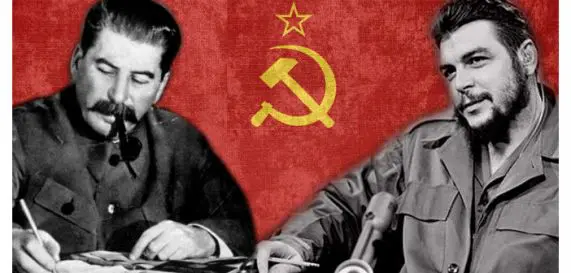
Che Guevara: “I Came to Communism Because of Stalin”
October 11, 2019

Image

Editorial note: We do not publish outdated opinion pieces but sometimes we make exceptions. This piece was initially published in April 2016 and we consider it relevant this week when the world honors Che on the 52nd anniversary of his assassination.

By Nikos Mottas

Ernesto Che Guevara is undoubtedly a historical figure of the 20th century’s communist movement who attracts the interest of people from a vast range of political ideologies. The years followed his cowardly assassination in Bolivia, Che became a revolutionary symbol for a variety of Marxist-oriented, leftist and progressive parties and organizations- from Trotskyists to militant Leninist and from Social Democrats to anarcho-libertarians. A significant number of those who admire the Argentine revolutionary identify themselves as “anti-Stalinist”, hate and curse Stalin while they often refer to the so-called “crimes” of Stalin’s era. What is a contradiction and an irony of history is the following: Che Guevara himself was an admirer of Joseph Stalin.

On the occasion of the 63 years since the death of the great Soviet leader, let us remember what Che thought about Joseph Stalin, taking into account Guevara’s own writings and letters.

In 1953, in Guatemala, the 25 years old then Che noted in his letter to aunt Beatriz: “Along the way, I had the opportunity to pass through the dominions of the United Fruit, convincing me once again of just how terrible these capitalist octopuses are. I have sworn before a picture of the old and mourned comrade Stalin that I won’t rest until I see these capitalist octopuses annihilated” (Jon Lee Anderson, Che Guevara: A Revolutionary Life, 1997).

A few years after his letter from Guatemala- in the midst of the revolutionary process in Cuba- Guevara would re-affirm his position towards Stalin:

“In the so called mistakes of Stalin lies the difference between a revolutionary attitude and a revisionist attitude. You have to look at Stalin in the historical context in which he moves, you don’t have to look at him as some kind of brute, but in that particular historical context. I have come to communism because of daddy Stalin and nobody must come and tell me that I mustn’t read Stalin. I read him when it was very bad to read him. That was another time. And because I’m not very bright, and a hard-headed person, I keep on reading him. Especially in this new period, now that it is worse to read him. Then, as well as now, I still find a Series of things that are very good.”

While praising Stalin’s leadership, Che was always pointing out the counter-revolutionary role of Trotsky, blaming him for “hidden motives” and “fundamental errors”. In one of his writings he was underlining: “I think that the fundamental stuff that Trotsky was based upon was erroneous and that his ulterior behavior was wrong and his last years were even dark. The Trotskyites have not contributed anything whatsoever to the revolutionary movement; where they did most was in Peru, but they finally failed there because their methods are bad” (Comments on ‘Critical Notes on Political Economy’ by Che Guevara, Revolutionary Democracy Journal, 2007).

Ernesto Guevara, a prolific reader with a developed knowledge of Marxist philosophy, was including Stalin’s writings in the classical Marxist-leninist readings. This is what he wrote in a letter to Armando Hart Dávalos, a Trotskyite and prominent member of the Cuban Revolution:

“In Cuba there is nothing published, if one excludes the Soviet bricks, which bring the inconvenience that they do not let you think; the party did it for you and you should digest it. It would be necessary to publish the complete works of Marx, Engels, Lenin, Stalin [underlined by Che in the original] and other great Marxists. Here would come to the great revisionists (if you want you can add here Khrushchev), well analyzed, more profoundly than any others and also your friend Trotsky, who existed and apparently wrote something” (Contracorriente, No.9, Sept.1997).

The revisionist route that the Soviet leadership followed after the CPSU 20th Congress became a source of intense concern for Che. The policy of the so-called “De-Stalinization” and the erroneous, opportunist perceptions about the process of building socialism that the Khrushchev leadership introduced after 1956 had their own critical impact on Guevara’s view on Revolution and Socialism.

One of Guevara’s biographers, the Mexican politician Jorge Castañeda wrote (adding an anti-communist flavor): “Guevara became a Stalinist at a time when thousands were becoming disillusioned with official “Communism”. He rejected Khrushchev’s speech in 1956 denouncing the crimes of Stalin as “imperialist propaganda” and defended the Russian invasion of Hungary that crushed the workers’ uprising there in the same year” (J. Castañeda, Compañero: The Life and Death of Che Guevara, 1997).

Image

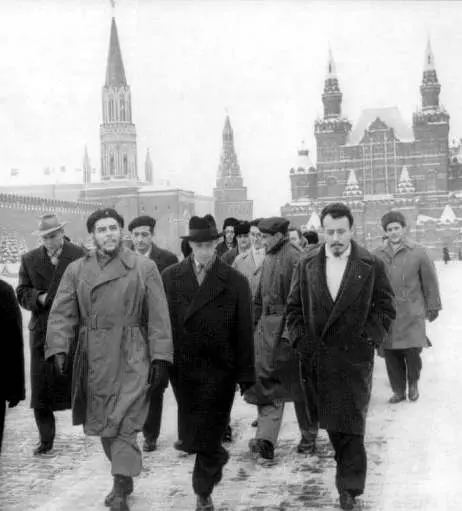
Four years after the beginning of Khrushchev’s “de-stalinization”, on November 1960, Ernesto Che Guevara was visiting Moscow as an official representative of the Cuban government. Against the advise of the then Cuban ambassador to avoid such an action, Che insisted on visiting and depositing a floral tribute at Stalin’s tomb at the Kremlin necropolis.

Che had a deep admiration for Joseph Stalin and his contribution in building Socialism. And that is because, as Che himself said, “ You have to look at Stalin in the historical context in which he moves […] in that particular historical context”. That historical context and the extremely adverse and difficult social, economic and political environment in which Stalin led the Soviet Union are muted by the votaries of antistalinism. They hush up and deliberately ignore the fact that the process of building Socialism in the Soviet Union was taking place within a frame of fierce class-struggle, with numerous – internal and external (imperialist encirclement)- threats, while the massive effort of industrialization faced reactions and extensive sabotages (the collectivization process, for example, faced the negative stance of Kulaks).

Joseph Stalin, as a personality and leader, was the product of the action of the masses within a specific historical context. And it was Stalin who guided the Bolsheviks’ Party (AUCP-B) and the Soviet people for 30 years, based on Lenin’s solid ideological heritage. As a real communist, a true revolutionary- in theory and in practice- Ernesto Che Guevara would inevitably recognize and appreciate that historical reality.

Source URL: In Defense of Communism

https://orinocotribune.com/che-guevara- ... of-stalin/

******

Happy New Year!


******

Stalin secretly sought out firing ranges
January 2, 1:17 PM

Image

Stalin secretly sought out firing ranges

In Yekaterinburg, liberals have thrown a fit over the planned installation of yet another bust of Comrade Stalin, of which 15-20 are currently being erected each year in Russian cities and villages.
A "repression victims' organization" has surfaced (https://reporters.live/news/stalinu-tut-ne-mesto/ ), demanding "no monument to Stalin" because of "repressions, the Gulag, the horror-horror."

This is a bit of a late bloomer, as the issue of erecting monuments to Stalin has long been normalized. And the liberals' hatred of the supreme commander-in-chief is also quite understandable.
It's also understandable why this is happening in Yekaterinburg, which for a long time was one of the epicenters of the domestic fifth column.

Of course, a monument to Stalin will appear in Yekaterinburg. If not now, then a little later. For the appearance of monuments to Stalin in Russia is historically inevitable.

https://colonelcassad.livejournal.com/10282938.html

Google Translator
"There is great chaos under heaven; the situation is excellent."

User avatar
blindpig
Posts: 15306
Joined: Fri Jul 14, 2017 5:44 pm
Location: Turtle Island
Contact:

Re: Stalin is trending

Post by blindpig » Tue Jan 06, 2026 3:42 pm

Stalin monument in North Ossetia
January 5, 11:00 PM

Image

Stalin monument in North Ossetia

Image

Image

Image

Image

Image

And the entire alley with the Victory Marshals looks great.

Photo by a channel reader.

https://colonelcassad.livejournal.com/10289147.html

Google Translator
"There is great chaos under heaven; the situation is excellent."

User avatar
blindpig
Posts: 15306
Joined: Fri Jul 14, 2017 5:44 pm
Location: Turtle Island
Contact:

Re: Stalin is trending

Post by blindpig » Tue Jan 20, 2026 4:23 pm

Theses on „Stalin’s repressions”

Translated by Ekaterina Smirnova

I. The repressive policy of the dictatorship of the working class in the USSR was science-based, had a defensive character, being a form of social protection of the gains of the revolution in the class struggle.

II. State coercion in the USSR was used in accordance with the existing legal framework, socialist legality and revolutionary expediency. Any violation of socialist legality committed by the use of state coercion was a crime and was punished accordingly under the Soviet laws, damaging the authority and power of the working class. The concepts of “distortions”, of “acceptable mass victims” (“if you hew trees the chips must fly”) have nothing to do with the state policy of the USSR.

III. The system of state coercion in the USSR was the most humane state violence in the history of mankind, including the functioning of correctional labor institutions and the applicable penalties. Any seeming cruelty of the Soviet punitive system is reasoned by the false facts or incorrect comparison of different historical and socio-political conditions. The state of any bourgeois country of that time and in similar conditions was more repressive and tougher than the USSR.

IV. The so-called Stalin’s repressions are a myth. All historiography and its serving institutions were created by the forces of imperialism for the largest falsification in history in order to discredit communism. Since the first Five-Year plans the world oligarchy essentially had nothing to oppose communism in theory and practice, so it was forced to use the myths created by Trotsky and Khrushchev, to frame up the relevant documentary, pseudoscientific, literary and artistic base in order to have a reliable ideological and political weapon in their hands. Detailed examination of any element or aspect of the theory of “Stalin’s repressions” (national operations, NKVD Order No. 0047, about 650 thousand death sentences for 16 months of 1937 — 1938, etc.) reveals its complete failure and falsity of the proposed facts. All the theorists of Stalin’s repressions, including Zemskov, are the falsifiers of history.

V. Along with the myth of “Stalin’s repressions”, anti-communist historiography is extremely rich in other various anti-scientific interpretations, up to the most raving. But the main thing in it is a number of “generally recognized” myths, which are based on false documents and other falsified sources. The most popular among them, in addition to “Stalin’s repressions”, are “genocide of the peasants” (“Holodomor”), “huge losses of the USSR in the war with Finland”, “secret agreements between Stalin and Hitler” (“secret protocol” to the Soviet-German Treaty of Non-Aggression), “Katyn shooting of the NKVD”, “huge losses of the USSR in the Great Patriotic war”. These historical “facts” based on fakes are included in the history textbooks of all bourgeois countries and have become the core of bourgeois historical science, the basis of modern anti-communism. Modern anti-communism = anti-Stalinism.

https://prorivists.org/eng_stalins-repressions/
"There is great chaos under heaven; the situation is excellent."

User avatar
blindpig
Posts: 15306
Joined: Fri Jul 14, 2017 5:44 pm
Location: Turtle Island
Contact:

Re: Stalin is trending

Post by blindpig » Fri Jan 23, 2026 3:32 pm

The roots of "Poseidon" and "Stormpetrel"
January 23, 9:07

Image

Mikhail Kovalchuk, President of the Kurchatov Institute National Research Center and Chairman of the Scientific Advisory Council of the Marine Board, stated that the Poseidon and Burevestnik projects trace their roots back to Stalin's time.

"Today, we have Burevestnik and Poseidon only because back then, almost 80 years ago, we were conducting this work." (c) Kovalchuk.

So to speak, we are still using Stalin's legacy, which is the foundation upon which our country's nuclear and missile programs are built.
This foundation is being recalled more and more often, especially since the demise of international law.

https://colonelcassad.livejournal.com/10322408.html

Google Translator
"There is great chaos under heaven; the situation is excellent."

Post Reply