'Living hell': B’Tselem documents systemic torture, rape, and starvation of Palestinians in Israeli prisons
Released prisoners from Gaza described details of their torture, which has become the 'accepted norm,' to the Israeli rights group
News Desk
JAN 22, 2026
(Photo credit: APA Images)
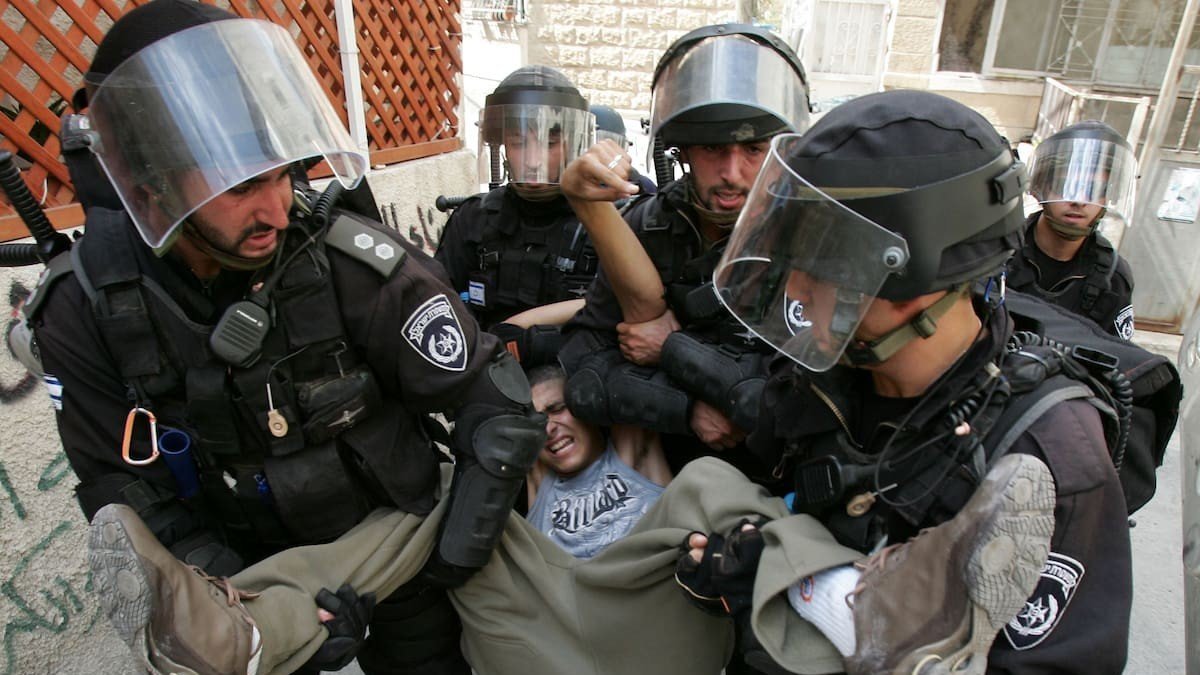
Israeli human rights organization B'Tselem published a new report entitled “Living Hell” on 22 January, documenting the torture of Palestinians in Israeli security prisons.
Based on testimony from released prisoners, the report documents torture carried out by prison guards, soldiers, and Shin Bet personnel, including sexual violence, starvation, mistreatment, harsh living conditions, and the denial of medical care.
The sexual violence included “forced stripping, beatings to the genitals that caused severe injuries, setting dogs on prisoners and forced anal penetration with various objects,” the report stated.
Thirty-five-year-old Muhammad Abu Tawilah from Gaza said that during his interrogation, soldiers put out cigarettes on his body, poured hydrochloric acid on him, and burned him with a lighter. “Because of the burns, I lost sight in my left eye,” he said.
Another prisoner stated that “For six days, I was given only a bottle cap of water a day to drink, and to eat only one cucumber and a piece of rotten bread that the soldier stepped on before giving it to me. I was beaten nonstop and occasionally given electric shocks.”
“I sat on a metal chair from morning until night. Outside the room, there was a huge loudspeaker that played songs in Hebrew at an unbearable volume. My eardrum ruptured, and my ear bled. There was no bathroom in the room, so I peed in my clothes,” he added.
Israel Prison Service facilities hold about 9,000 Palestinian security prisoners. Most have never received a trial, including administrative detainees who are held for six-month periods that are regularly renewed, often for years.
Israel holds others without trial as “unlawful combatants,” an Israeli legal designation not recognized under international law. Israeli newspaper Haaretz observed that Israel uses this designation for detainees abducted from Gaza to avoid giving them the rights afforded to criminal detainees or prisoners of war.
B'Tselem report details systematic abuse and torture of Palestinians in Israeli prisons
——
Rights group B’Tselem has released a report, Living Hell, documenting widespread abuse of Palestinian prisoners. Based on interviews with 21 released detainees, the report details violence,… pic.twitter.com/lBi5KYnWwC
— The Cradle (@TheCradleMedia) January 20, 2026
Since the start of Israel's genocide in Gaza in October 2023, Israeli forces have detained large numbers of Palestinians from the strip, claiming they are Hamas members.
Since that time, 84 Palestinians have died, including one minor, while imprisoned. Israel continued to withhold the bodies of 80 of them, Haaretz noted.
When Israel returns the bodies of Palestinians detained or killed in Gaza, they are often unidentifiable. Some bodies have severed parts, while others have long-stitched incisions.
“This has led families to suspect that vital organs or body parts were taken while their relatives were in Israeli custody,” Middle East Eye (MEE) reported in December.
According to the B'Tselem report, the Rakefet wing at Ayalon Prison is considered the worst wing in the Prison Service. It is located entirely underground, leaving inmates with no exposure to daylight.
Israel has also barred the International Committee of the Red Cross (ICRC) from visiting prisons.
Tamer Qarmut, a 41-year-old resident of Beit Lahia, testified that during his detention, the handcuffs were fastened so tightly and for so long that they wore through his skin and flesh down to the bone.
“It was sharp pain all the time,” he says. “When my condition got worse, the soldiers took me to a place where a female doctor treated me. It took her a whole day to drain a lot of infected blood and blood clots from my fingers, using only the most basic medical equipment. The treatment lasted three days in a row.”
Yuli Novak, executive director of B'Tselem, said that anyone entering the prison network “is condemned to deliberate, severe and unrelenting pain and suffering, functions de facto as a torture camp.”
“Torture of Palestinian prisoners, all of whom are labeled ‘terrorists’ by the Israeli media, has become an accepted norm.”
https://thecradle.co/articles/living-he ... li-prisons.
Trump, Kushner reveal Gaza ‘master plan’ during Board of Peace launch
Some EU states, including France, have rejected joining the board, and say Trump aims to create a body to rival the UN
News Desk
JAN 22, 2026
(Photo credit: X)
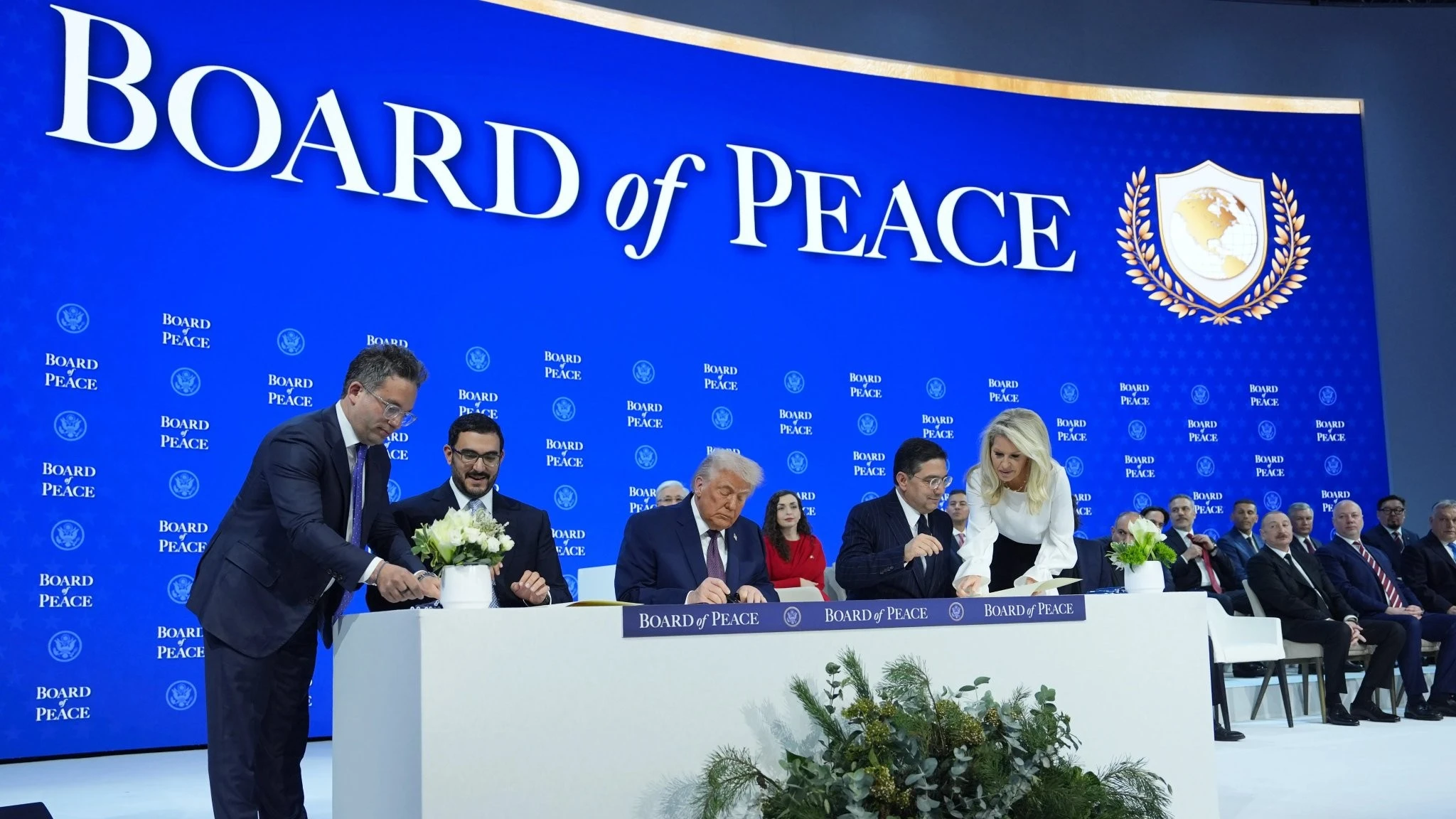
US President Donald Trump officially launched his Gaza ‘Board of Peace’ on 22 January during a signing ceremony in Davos, Switzerland – attended by over 20 world leaders who signed onto Washington’s ‘peace plan’ for the war-ravaged strip.
“Once this board is completely formed, we can do pretty much whatever we want to do. And we'll do it in conjunction with the UN,” Trump said during the ceremony, adding that the UN had great potential that was never utilized.
“There's tremendous potential with the UN, and I think the combination of the Board of Peace with the kind of people we have here ... could be something very, very unique for the world,” he added.
Trump had said a day earlier in Davos that he wished “the UN could do more. I wish we didn’t need a Board of Peace. The UN just hasn’t been very helpful … I’m a big fan of the UN’s potential, but it has never lived up to its potential.”
US Secretary of State Marco Rubio also spoke at the ceremony on Wednesday. He said that the board’s aim is “first and foremost” ensuring “this peace deal in Gaza becomes enduring.”
The US president “will give it everything he has to make sure this is successful,” Rubio added, calling the body a “board of action” that will “serve as an example of what’s possible in other parts of the world without losing focus on what’s before us right now.”
Representatives of Bahrain and Morocco – who normalized relations with Israel in 2020 – were the first to sign the charter in Davos.
Officials from Argentina, Hungary, Saudi Arabia, Jordan, Indonesia, Qatar, the UAE, Kazakhstan, Bahrain, Armenia, Azerbaijan, Uzbekistan, Kosovo, and Paraguay also signed.
The UK, Italy, Russia, and Canada have not confirmed participation, and most European states remain undecided.
France, Denmark, Norway, Sweden, and Slovenia have officially refused. Europe has criticized the Trump plan. It views the charter’s language as suggesting that Trump aims to create a rival to the UN through the ‘Board of Peace.’
During the ceremony, Trump’s son-in-law and advisor Jared Kushner unveiled what he called a “master plan” for Gaza.
Kushner said the plan’s next phase would focus on Hamas’s “demilitarization.” He added that Trump’s vision will bring “free market economy” to Gaza. He also said there is “no plan B.”
“If Hamas doesn't demilitarize, that would be what holds this plan back.”
“The next 100 days we're going to continue to just be heads down and focused on making sure this is implemented. We continue to be focused on humanitarian aid, humanitarian shelter, but then creating the conditions to move forward,” he went on to say.
He also claimed Israel would withdraw further from the ‘Yellow Line’ as Hamas’s disarmament begins.
Kushner unveiled a presentation detailing what the “new Gaza” will look like. It includes over 100,000 permanent housing units, over 200 education centers, over 180 religious and cultural centers, and more than 75 medical facilities.
A slide showing images of skyscrapers and oil rigs calls for the establishment of “coastal tourism” and energy infrastructure in Gaza.
“This really gives the Gazan people an opportunity to live their aspirations. But it all starts with security and it all starts with governance.” Trump has previously expressed his intention of taking over Gaza and transforming it into a “Riviera.”
The advisor also revealed a plan to provide Hamas fighters with amnesty in exchange for handing over their weapons.
How all this will be implemented remains unclear. Israel has expanded its presence inside the strip in violation of the ceasefire agreement, and continues deadly attacks against Gaza on a daily basis.
Eleven people have been killed in the last 24 hours alone. Hundreds of people have been killed since the truce was reached in October, and Israel has set up over a dozen new permanent outposts.
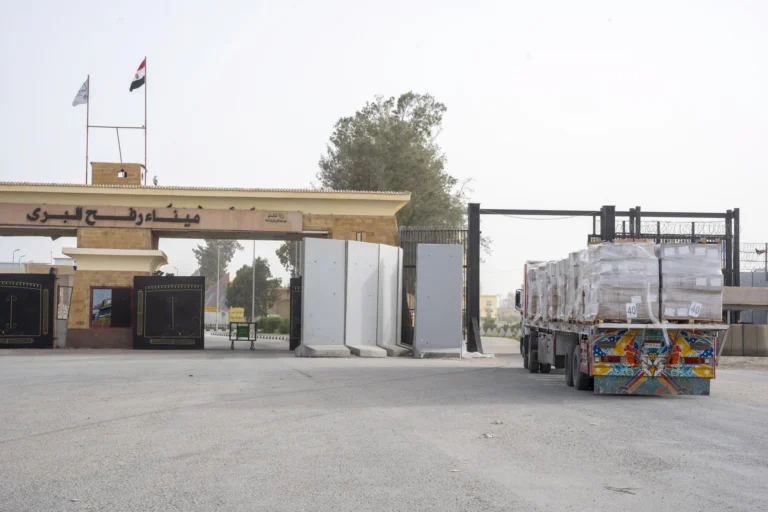
Israel recently barred the Palestinian technocratic committee, which will administer Gaza under the Board of Peace, from entering the strip. The team is supposed to enter and assume its responsibilities once the Rafah crossing opens.
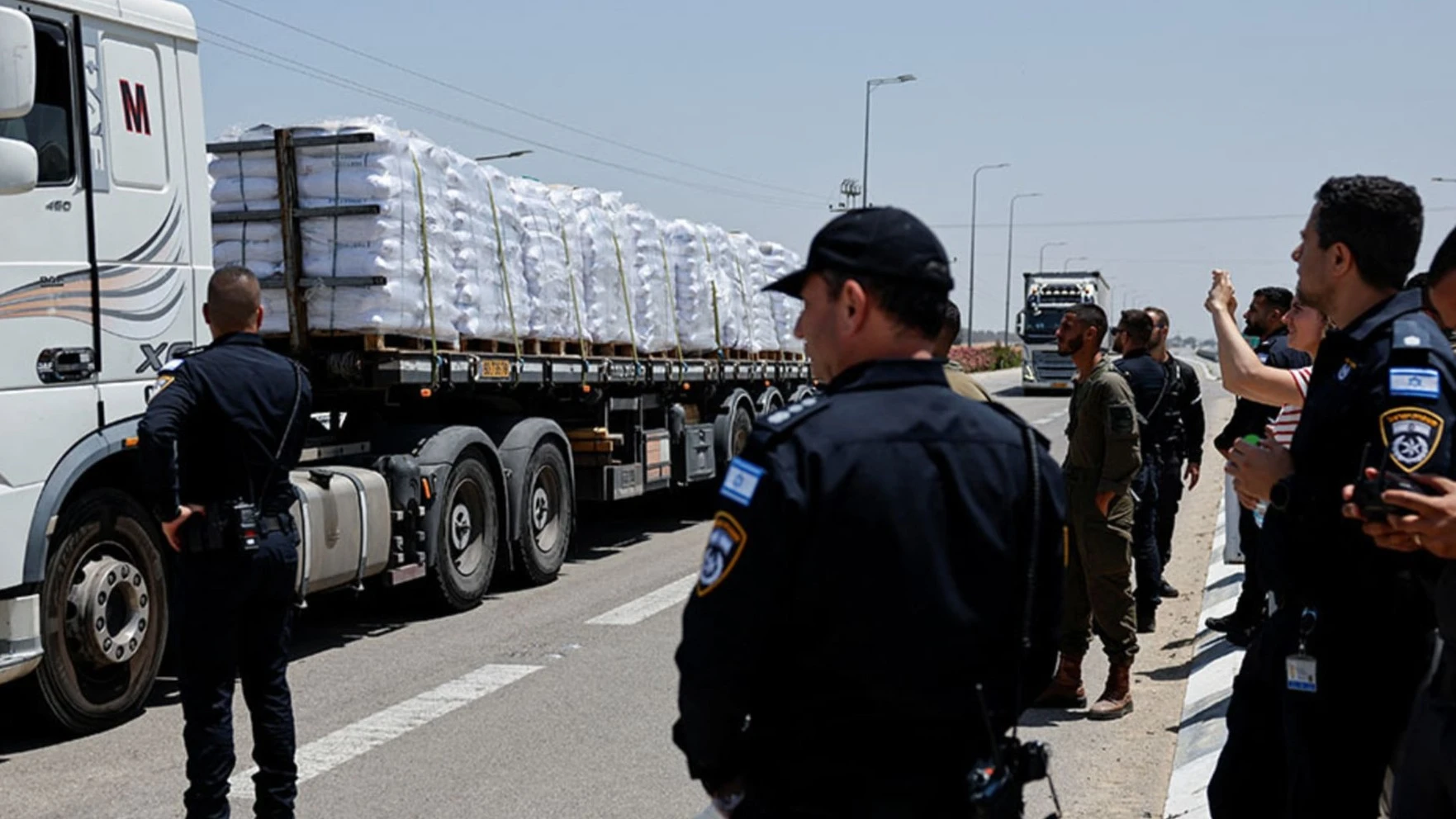
Tel Aviv has been repeatedly delaying the crossing’s opening, and continues to prevent adequate amounts of aid from entering Gaza.
Members of the committee are affiliated with Fatah and the Palestinian Authority (PA), something Israel had previously rejected.
Details about the Hamas disarmament process and the deployment of the International Stabilization Force (ISF) also remain murky.
Hamas has signaled its willingness to hand over governance to the technocratic team. The group rejects disarmament until Palestinian statehood is achieved, but has shown some willingness for a potential “freeze” of its weapons for a period of time.
https://thecradle.co/articles/trump-kus ... ace-launch
******
“Planned Community” in Rafah Would Force Palestinians Into Israeli Panopticon
Posted by Internationalist 360° on January 21, 2026
Sharif Abdel Kouddous
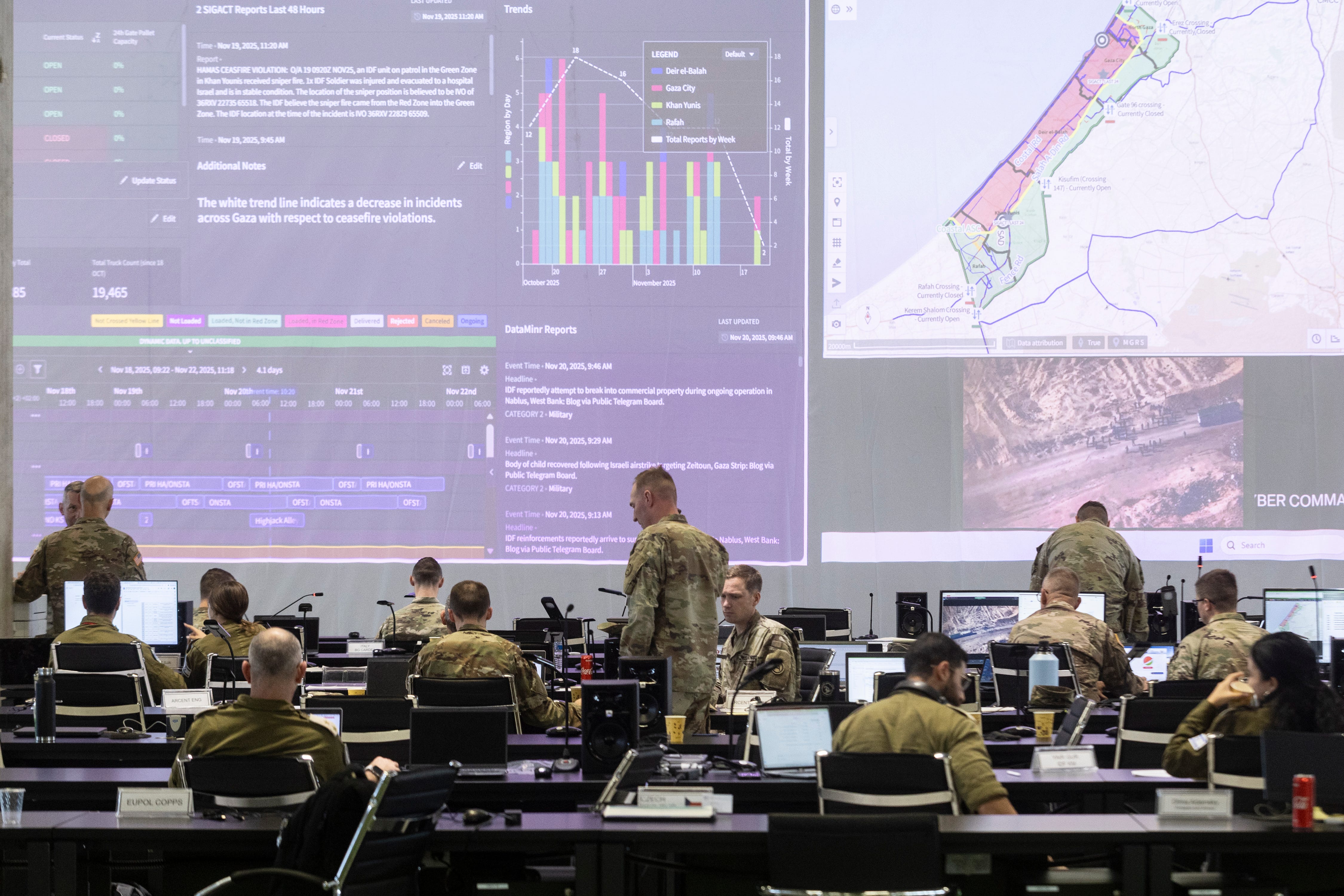 U.S. Army personnel, Israeli military personnel and others international officials monitor screens displaying maps and imagery of the Gaza Strip during a media tour inside the Civil-Military Coordination Center (CMCC) on November 20, 2025 in Kiryat Gat, Israel. (Photo by Amir Levy/Getty Images)
The U.S.-led Civil-Military Coordination Center is proposing a residential zone in Gaza with biometric surveillance, checkpoints, and educational programs promoting normalization with Israel.
The U.S. military-led group supporting “stabilization efforts” in Gaza has put forward plans for a housing block for Palestinians in Gaza in an area under full Israel military control. According to materials circulated by the Civil-Military Coordination Center (CMCC) and obtained by Drop Site News, the “planned community,” if developed, would contain and control its residents through biometric surveillance, checkpoints, monitoring of purchases, and educational programs promoting normalization with Israel.
The CMCC was established by U.S. Central Command (CENTCOM) on October 17, one week after Hamas and Israel agreed to an exchange of captives and a ceasefire was supposed to go into effect. The center, which is based in a large warehouse-style building in Kiryat Gat in southern Israel and involves dozens of countries and organizations, is supposed to “monitor implementation of the ceasefire” and “help facilitate the flow of humanitarian, logistical, and security assistance from international counterparts into Gaza,” according to CENTCOM.
The CMCC is led by U.S. Army Lieutenant General Patrick D. Frank and includes both U.S. and Israeli military officials along with personnel from dozens of countries, including France, Britain, Germany, the United Arab Emirates, and Egypt. The CMCC was a key feature of President Trump’s “ceasefire” plan, though it is unclear where exactly it will operate within the new structures being created after Trump announced Phase Two of the plan last week, including the formation of a so-called “Board of Peace” to oversee Gaza with a Founding Executive Board beneath it and a Gaza Executive Board of Palestinian technocrats beneath that.
In November, news first emerged that the Trump administration was planning the construction of a number of residential compounds, dubbed “Alternative Safe Communities” to house Palestinians in Gaza east of the yellow line, an area occupied and controlled by the Israeli military. Analysis of satellite imagery by Forensic Architecture suggests the first of these so-called communities is being prepared on a 1-square-kilometer plot of land in Rafah in southern Gaza at the intersection of two military corridors.
“Plans are rapidly accelerating for what U.S. officials last week cynically referred to as the ‘Gaza first planned community,’ previously known as ‘alternative safe communities,’” Jonathan Whittall, a senior UN official in Palestine between 2022 and 2025 and the executive Director of KEYS Initiative, a political affairs and strategic advisory organization, said after reviewing a transcript of the materials obtained by Drop Site. “This is the next phase in the weaponization of aid.”
Last week, a presentation was given at CMCC headquarters about the “Gaza First Planned Community” that is being built to house up to 25,000 Palestinians.
Palestinians would have to pass through a checkpoint to access the zone. “Residents will be able to enter and exit the neighborhood freely, subject to security checks to prevent the introduction of weapons and hostile elements,” the materials state. “All entering residents will be registered with biometric documentation to enable identification for movement and civil services.”
“The registry will be based on Palestinian ID numbers issued by the authorities in coordination with COGAT,” a reference to the Coordinator of Government Activities in the Territories—the branch of the Israeli military that oversees Palestinian civilian affairs in the occupation of the West Bank and Gaza—giving the Israeli military even more surveillance control over Palestinians housed in the zone.
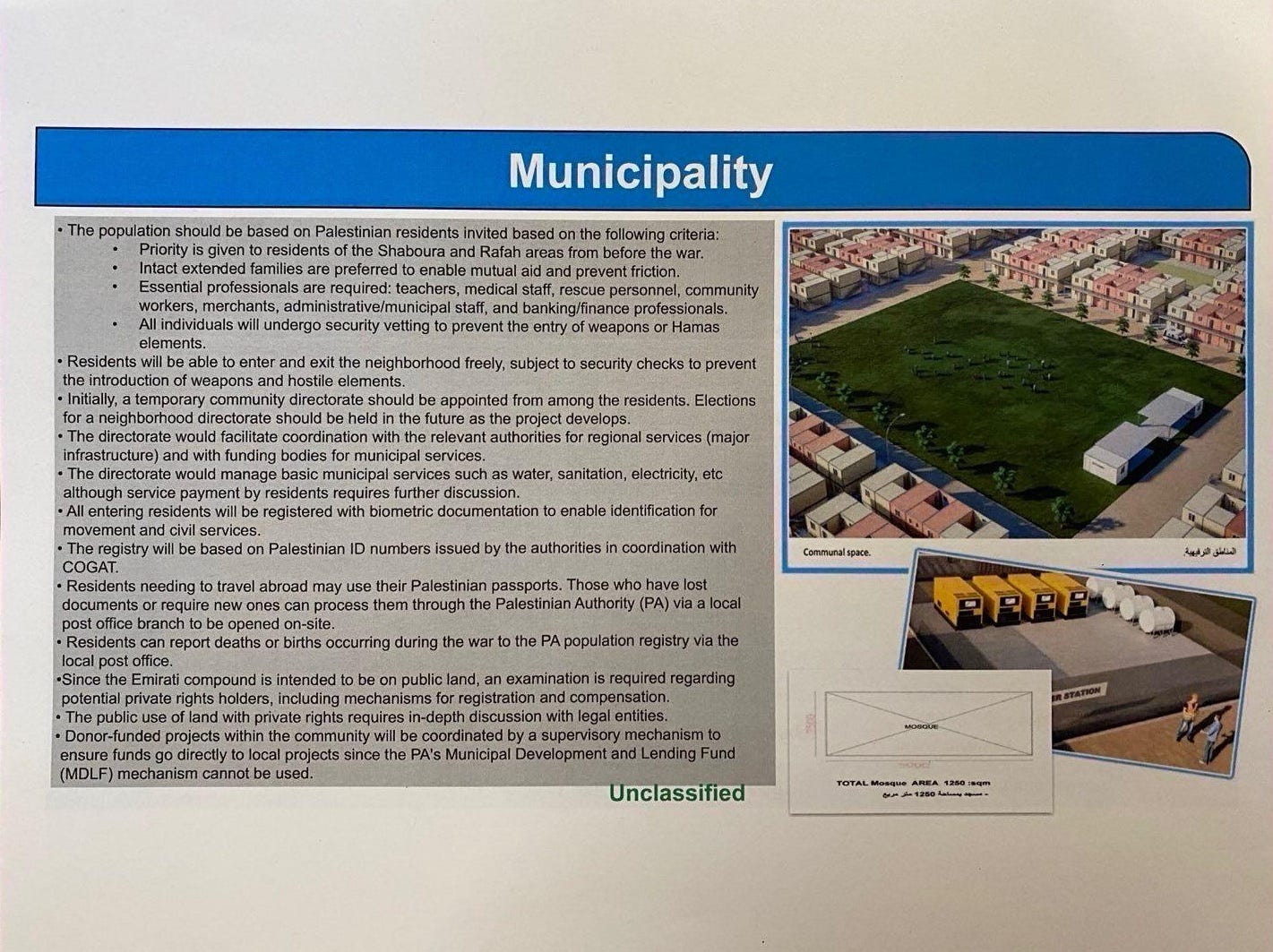
Part of the CMCC presentation for a “Gaza First Planned Community” on January 14, 2026.
The presentation does not specify who would be selecting Palestinians to live in the zone, though all security checks for Palestinians in Gaza in the past (for example to be allowed to enter or exit the enclave) have ultimately gone through COGAT. It does, however, provide a set of criteria for deciding which Palestinians should be “invited” to live there:
The population should be based on Palestinian residents invited based on the following criteria:
Priority is given to residents of the Shaboura and Rafah areas from before the war.
Intact extended families are preferred to enable mutual aid and prevent friction.
Essential professionals are required: teachers, medical staff, rescue personnel, community workers, merchants, administrative/municipal staff, and banking/finance professionals.
All individuals will undergo security vetting to prevent the entry of weapons or Hamas elements.
As for Palestinians who may have lived there or have a legal claim to the land, the presentation notes that “an examination is required regarding potential private rights holders, including mechanisms for registration and compensation.”
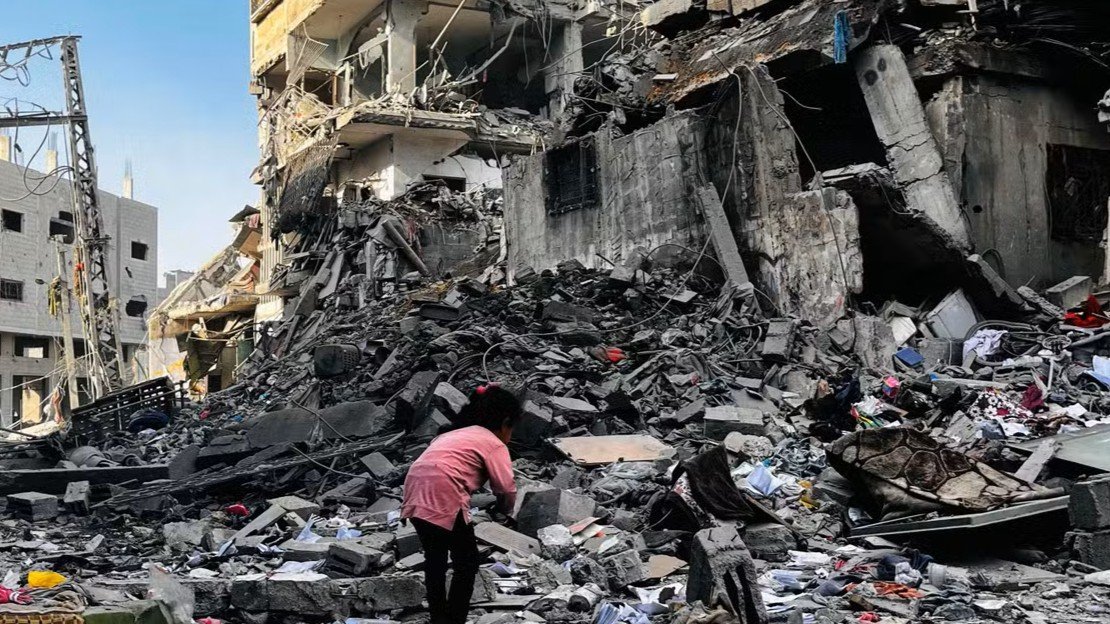
The promise of compensation to private land owners is striking in the face of the reality in Gaza after over two years of Israel’s genocidal assault, where most of the housing and civilian infrastructure in the enclave has been reduced to rubble, nearly the entire Palestinian population have been displaced from their homes, and Israeli troops occupy over half of the territory.
The disparity between CMCC’s plans and Israel’s actions on the ground is reportedly leading several European countries to consider reducing their presence at the center or to stop sending personnel altogether, according to Reuters, citing concerns that CMCC has failed to increase the delivery of aid into Gaza.
The proposed residential zone is referred to in the CMCC presentation as “the Emirati compound.” While it is unclear why that name was chosen, the Emirati field hospital, which is funded by the UAE, is nearby in Rafah. The UAE established formal relations with Israel in September 2020, as part of the Abraham Accords brokered by the first Trump administration that included other countries, including Bahrain, Morocco. Since then, the UAE has normalized relations with Israel more than any other Arab country, with robust trade, tourism, and defense cooperation. On Tuesday, the UAE accepted Trump’s invitation to join the “Board of Peace” that will oversee Gaza, becoming one of the first countries to do so.
Part of the CMCC’s proposals regarding schooling in the planned residential zone seem aimed at promoting an Emirati-inspired reeducation program. It states that “Temporary ‘Emergency Studies’ can expedite a curriculum framework to resume classrooms. The curriculum will not be Hamas-based but will follow ‘Culture of Peace’ principles, e,g., modeled after the UAE.” The text of the normalization agreement between the UAE and Israel says both countries will “undertake to foster mutual understanding, respect, co-existence and a culture of peace between their societies.” The UAE embassy in Washington, D.C. did not respond to inquiries from Drop Site.
The CMCC presentation also states that “educational programs can prevent diversion of an uneducated and unoccupied population to misaligned activities.” Despite Israel’s brutal occupation, Palestinians in Gaza and the West Bank have had one of the highest literacy rates in the world, reaching over 97 percent in 2020, with high rates of enrollment in secondary and higher education.
The plan would also bring economic transactions under Israeli surveillance, replacing Gaza’s largely cash-based economy with “Electronic Shekel wallets” which would be used as “primary modes of commerce as they are secure and mitigate diversion of goods and funds to the Hamas financial channels.”
The CMCC also proposes that “residents should be permitted to import products into the Gaza Strip to facilitate and encourage commerce and economic growth” but that “products would be subject to security restrictions and checks at crossings.” The presentation makes no mention of the fact that Israel, which controls all of the crossings into Gaza, has severely restricted the entry of goods for nearly 20 years.
“This community being established in Rafah will form the blueprint for how Israeli control could be deepened and rolled out further,” Whittall told Drop Site. “After Gaza was razed, starved, and deliberately blockaded over the past years, these ‘new’ communities built on the rubble of peoples homes are not only governance labs to test ultimate control and subjugation, but they are also the reincarnation of refugee camps. They are designed to contain a new generation of dispossessed Palestinians, effectively screened and corralled into shrinking Israeli-controlled zones in exchange for survival. Meanwhile, the so-called ‘red-zones’ remain under assault, increasingly cut off from a humanitarian system that is being deliberately obstructed.”
To enforce the CMCC’s restrictive vision, which would corral selected Palestinians into a zone where Israel and outside forces have complete economic, social, and security control, a police force would be installed that would operate under an international security force. “Civil policing will operate on-site to maintain public order, operating under the ISF,” the presentation states, referring to the International Stabilization Force that has yet to be formed but will be led by Major General Jasper Jeffries, the commander of U.S. Special Operations Command Central. The presentation adds, “Security-sector reform requires updated police and civil defense laws, strong oversight and accountability, people-centered security approaches, and measures to prevent radicalization.”
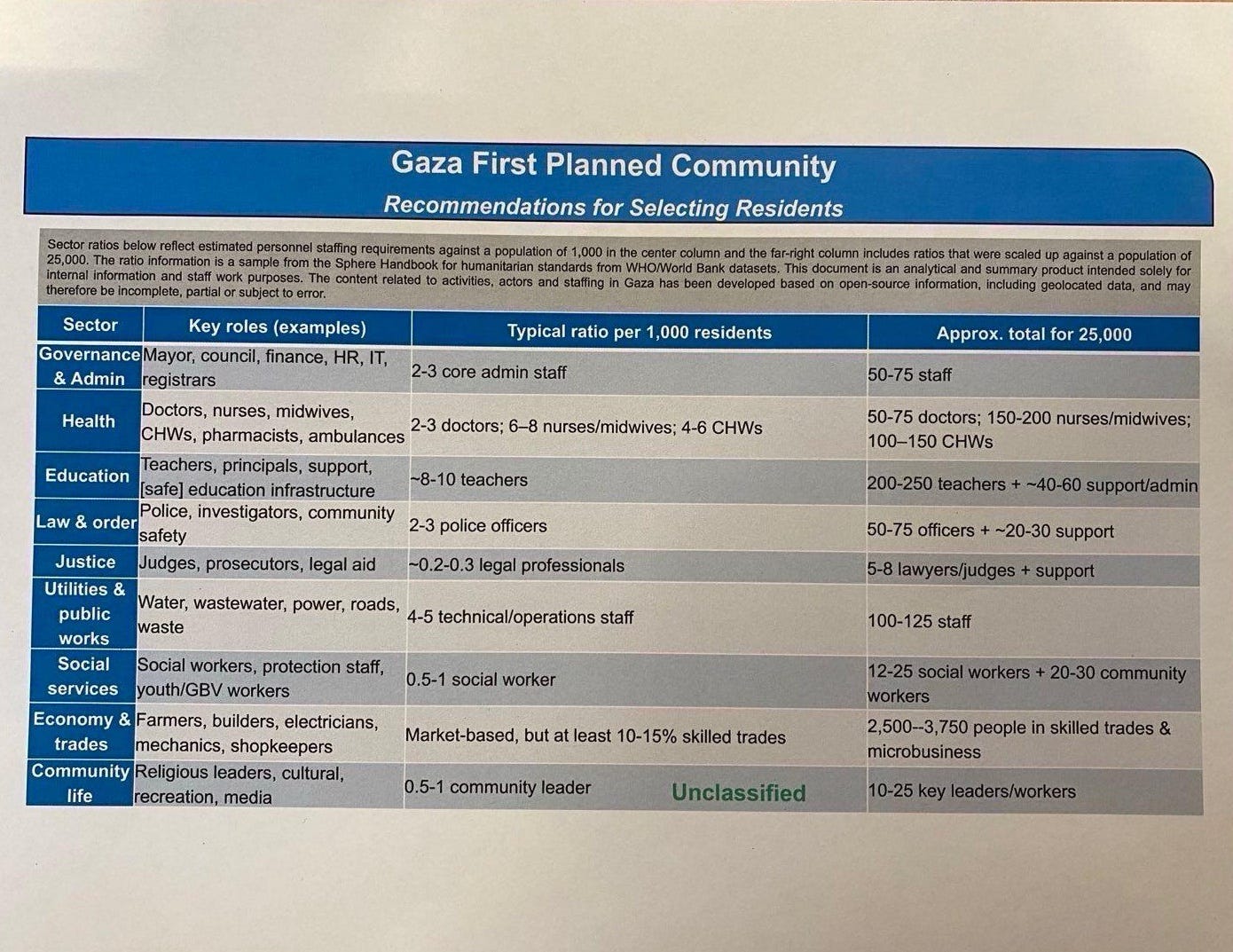
Part of the CMCC presentation for a “Gaza First Planned Community” on January 14, 2026
Text of the Presentation Delivered at the CMCC in Southern Israel on January 14, 2026
Municipality
The population should be based on Palestinian residents invited based on the following criteria:
Priority is given to residents of the Shaboura and Rafah areas from before the war.
Intact extended families are preferred to enable mutual aid and prevent friction.
Essential professionals are required: teachers, medical staff, rescue personnel, community workers, merchants, administrative/municipal staff, and banking/finance professionals.
All individuals will undergo security vetting to prevent the entry of weapons or Hamas elements.
Residents will be able to enter and exit the neighborhood freely, subject to security checks to prevent the introduction of weapons and hostile elements.
Initially, a temporary community directorate should be appointed from among the residents. Elections for a neighborhood directorate should be held in the future as the project develops.
The directorate would facilitate coordination with the relevant authorities for regional services (major infrastructure) and with funding bodies for municipal services.
The directorate would manage basic municipal services such as water, sanitation, electricity, etc although service payment by residents requires further discussion.
All entering residents will be registered with biometric documentation to enable identification for movement and civil services.
The registry will be based on Palestinian ID numbers issued by the authorities in coordination with COGAT.
Residents needing to travel abroad may use their Palestinian passports. Those who have lost documents or require new ones can process them through the Palestinian Authority (PA) via a local post office branch to be opened on-site.
Residents can report deaths or births occurring during the war to the PA population registry via the local post office
Since the Emirati compound is intended to be on public land, an examination is required regarding potential private rights holders, including mechanisms for registration and compensation.
The public use of land with private rights requires in-depth discussion with legal entities.
Donor-funded projects within the community will be coordinated by a supervisory mechanism to ensure funds go directly to local projects since the PA’s Municipal Development and Lending Fund (MDLF) [mechanism cannot] be used.
Economy
The Israeli Shekel will remain legal tender, as it is in the rest of Gaza and the West Bank.
Electronic Shekel wallets should be primary modes of commerce as they are secure and mitigate diversion of goods and funds to the Hamas financial channels.
A Bank of Palestine branch in the community would provide secure and transparent commerce.
Private sector shops and markets should be prioritized to promote productive economic initiatives.
Efforts should be made to promote paid employment for the maximum number of residents. Employment will be based on essential professions, public services, and unskilled labor for the public good and managed through an established employment bureau.
Intensive agriculture in the outskirts of the community promotes options for employment outside the neighborhood (in non-Hamas controlled areas) will be examined, prioritizing labor-intensive farming.
Residents should be permitted to import products into the Gaza Strip to facilitate and encourage commerce and economic growth. Products would be subject to security restrictions and checks at crossings.
Health
Community medical centers must be established to provide services as independently as possible.
Specific analysis is needed regarding service scope, referrals for severe cases, physician specialties, support staff (nurses, para-medical), and facility requirements (pharmacies).
Health services should reflect the needs of the population and be tailored accordingly.
As available without interruption of existing population needs, relocate local medical services and staff from surrounding areas to include durable medical equipment and supplies such as the Emirate hospital in Rafah.
Rebuild immunization and cold-chain systems.
Expand nutrition programs and therapeutic feeding for mothers and children.
Strengthen community-based prenatal and postnatal care.
Recommend exploration of options for critical medical service not available in the new community.
Education
Accurate assessment is needed to determine the number of classrooms and staff needed to include teachers, support staff (assistants, psychologists, special education), and administration.
Temporary “Emergency Studies” can expedite a curriculum framework to resume classrooms. The curriculum will not be Hamas-based but will follow “Culture of Peace” principles, e,g., modeled after the UAE.
Schools could serve as protected environments providing food, sanitation, health services, and mental health support.
Education should be treated as a life-saving humanitarian priority alongside food and health to prevent a lost generation and restore social stability. Educational programs can prevent diversion of an uneducated and unoccupied population to misaligned activities.
The education framework can focus on three overlapping priorities:
Setup (Immediate – 18 months): Establishing safe temporary learning spaces and restoring routine.
Catch-Up (6 – 24 months): Accelerated learning to restore literacy/numeracy and bridge students back to the formal system.
Pathways (12 months+): Restarting formal education, exams, and workforce development as governance and security allow.
Justice: Law and Public Order
Law and order will be regulated according to the legislation existing in the area prior to 2007.
The framework outlines a post-conflict justice system for a new Rafah-area community, prioritizing rapid restoration of judicial functions, legal order, and public trust.
The legal landscape includes shared Palestinian Authority laws but divergent penal codes in Gaza and the West Bank, underscoring the need for long-term legislative harmonization.
Digitization of justice services is necessary to restore records, improve efficiency, and expand access.
Civil policing will operate on-site to maintain public order, operating under the ISF.
Immediate capacity building is required for judges, prosecutors, and justice personnel, focusing on case management, courtroom administration, legal drafting, evidence handling, investigative oversight, and digital literacy.
Training must address post-war realities: destroyed infrastructure, missing records, trauma, displacement, and the need for restorative justice. European partners can support initial training for 20 judges and 20 prosecutors, with long-term institutionalization through a judicial diploma program.
Women’s access to justice requires survivor-centered procedures given heightened risks, vulnerabilities, and loss of documentation.
Corrections reform includes constructing detention facilities that meet international standards, vetting and training staff. Emphasis is placed on procedural and dynamic security, rehabilitation, classification, and alternatives to incarceration.
Security-sector reform requires updated police and civil defense laws, strong oversight and accountability, people-centered security approaches, and measures to prevent radicalization.
Source: Drop Site
https://libya360.wordpress.com/2026/01/ ... anopticon/
******
Foreign Press Condemns Israeli Attack That Killed Three Palestinian Photojournalists
X/ @Alicia1374173
January 23, 2026 Hour: 10:46 am
The FPA renews Israeli Supreme Court petition for independent media access to the besieged enclave.
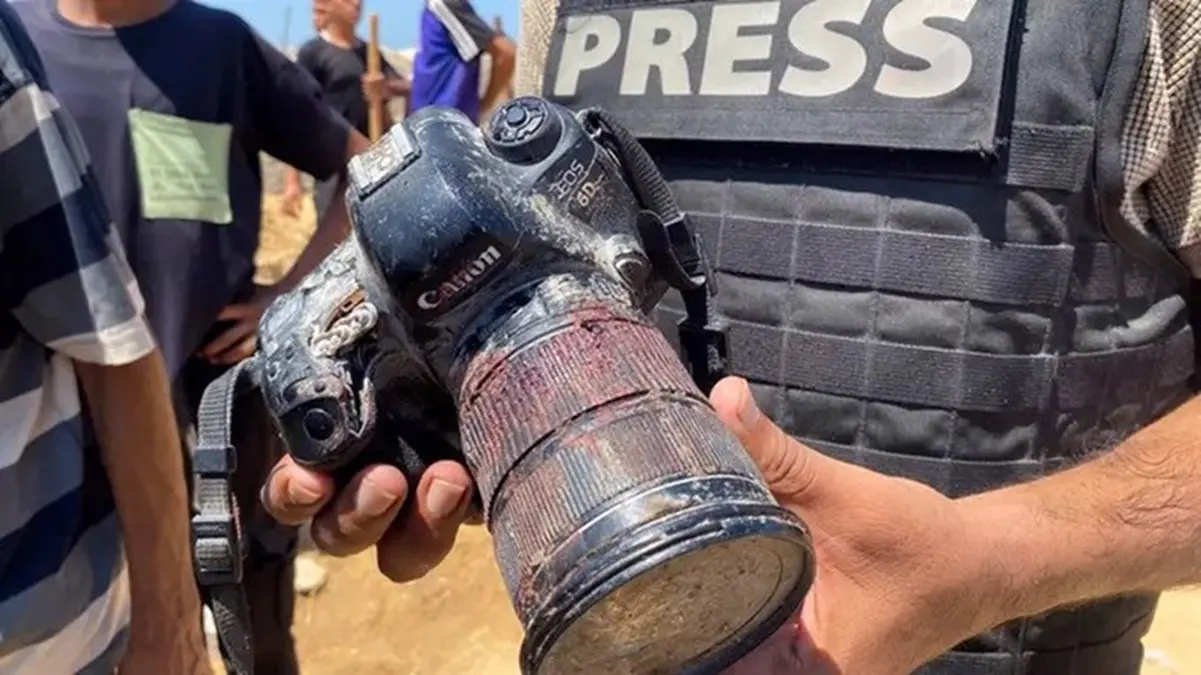
On Friday, the Foreign Press Association (FPA) condemned the killing of three Palestinian photojournalists in central Gaza by the Israeli occupation forces.
“Once again, journalists were killed by Israeli military attacks while carrying out their professional duties,” the FPA stated in its message.
On Wednesday, in the Netzarim corridor, a vehicle belonging to the Egyptian Committee for Gaza’s Reconstruction, carrying the three photojournalists, was struck by Israeli drones. The slain photojournalists are Mohammad Salah Qashta, Anas Ghanem and Abdul Raouf Samir Shaat.
The Israeli military commented on the incident, stating as it routinely does without providing evidence that it “identified several suspects operating a drone affiliated with the Hamas terrorist organization” and attacked them because they posed a “threat” to its troops.
“The FPA joins AFP in calling for a full, swift and transparent investigation and urges Israel to stop attacks on journalists. Too many journalists in Gaza have been killed without justification, while Israel continues to deny independent international news media access to the territory,” the Foreign Press Association stated.
On Jan. 26, the FPA will file a new petition with the Israeli Supreme Court requesting independent press access to Gaza, a position it has maintained since September 2024 amid continuous obstacles at various levels by the Israeli government.
Since the start of the Israeli offensive in October 2023, no journalist has been able to enter the Gaza Strip unless embedded – without freedom of movement – with the Israeli occupation forces and only to areas where there are no Palestinian civilians.
Since 2004, the FPA has been petitioning the Supreme Court for reporters to enter Gaza. The Israeli high court denied the petition that year, citing security reasons and the possibility that operational details of troop movements could be revealed.
With a truce in Gaza in effect since Oct. 10, 2025, the Israeli prosecutor’s office maintains its refusal, arguing that “while the actual situation has changed, this does not alter the conclusion that, even at this time, entry into the Gaza Strip should not be permitted without escort.”
According to Reporters Without Borders, nearly 220 journalists have been killed since October 2023. “We mourn the loss of all journalists in this conflict and renew our call for media to have free and independent access to Gaza,” the FPA concluded.
https://www.telesurenglish.net/foreign- ... urnalists/







 (@2laa_kamal) February 1, 2026






 Israel withholding at least 766 Palestinian bodies in morgues and 'cemeteries of numbers'