The Nature of Foxes

User avatar
blindpig
Posts: 15306
Joined: Fri Jul 14, 2017 5:44 pm
Location: Turtle Island
Contact:

Re: The Nature of Foxes

Post by blindpig » Mon Jan 12, 2026 3:47 pm

Chris Hedges: Grand Illusion
January 12, 2026

In the end, with weary citizens yearning for extinction, empires light their own funeral pyre.

Image
Made in the USSA – by Mr. Fish.

By Chris Hedges
ScheerPost

“We live in a world in which you can talk all you want about international niceties and everything else, but we live in a world, in the real world, Jake, that is governed by strength, that is governed by force, that is governed by power. These are the iron laws of the world that have existed since the beginning of time.”

— Stephen Miller to Jake Tapper on CNN, Jan. 5

“He who would live must fight. He who does not wish to fight in this world, where permanent struggle is the law of life, has not the right to exist. Such a saying may sound hard; but, after all, that’s how it is.”

— Adolf Hitler in Mein Kampf

“The Fascist State expresses the will to exercise power and to command. Here the Roman tradition is embodied in a conception of strength. Imperial power, as understood by the Fascist doctrine, is not only territorial, or military, or commercial; it is also spiritual and ethical … Fascism sees in the imperialistic spirit — i.e., in the tendency of nations to expand — a manifestation of their vitality.”

— Benito Mussolini in The Doctrine of Fascism

All empires, when they are dying, worship the idol of war.

War will save the empire. War will resurrect past glory. War will teach an unruly world to obey.

But those who bow down before the idol of war, blinded by hypermasculinity and hubris, are unaware that while idols begin by calling for the sacrifice of others, they end by demanding self-sacrifice.

Ekpyrosis, the inevitable conflagration that destroys the world according to the ancient Stoics, is part of the cyclical nature of time. There is no escape.

Fortuna. There is a time for individual death. There is a time for collective death. In the end, with weary citizens yearning for extinction, empires light their own funeral pyre.

Our high priests of war, Donald Trump, Marco Rubio, Pete Hegseth, Stephen Miller and the Joint Chiefs of Staff Chairman Gen. Dan “Razin” Caine, are no different from the fools and charlatans who snuffed out empires of the past — the haughty leaders of the Austro-Hungarian Empire, the militarists in imperial Germany and the hapless court of Tsarist Russia in World War I.

They were followed by the fascists in Italy under Benito Mussolini, Germany under Adolf Hitler and the military rulers of imperial Japan in World War II.

These political entities committed collective suicide.

They drank the same fatal elixir Miller and those in the Trump White House imbibe. They too tried to use industrial violence to reshape the universe.

They too considered themselves to be omnipotent. They too saw themselves in the face of the idol of war. They too demanded to be obeyed and worshiped.

Destruction to them is creation. Dissent is sedition. The world is one-dimensional. The strong versus the weak. Only our nation is great. Other nations, even allies, are dismissed with contempt.

These architects of imperial folly are buffoons and killer clowns. They are ridiculed and hated by those rooted in a reality-based world. They are followed slavishly by the desperate and the disenfranchised.

The simplicity of the message is its appeal. A magic incantation will bring back the lost world, the golden age, however mythic. Reality is viewed exclusively through the lens of ultranationalism.

The flip side of ultranationalism is racism.

“The nationalist is by definition an ignoramus,” wrote Yugoslav-Serbian novelist Danilo Kiš.

“Nationalism is the line of least resistance, the easy way. The nationalist is untroubled, he knows or thinks he knows what his values are, his, that’s to say national, that’s to say the values of the nation he belongs to, ethical and political; he is not interested in others, they are no concern of his, hell — it’s other people (other nations, other tribes). They don’t even need investigating. The nationalist sees other people in his own image — as nationalists.”

These stunted human beings are unable to read others. They threaten. They terrorize. They kill.

The art of power politics between nations or individuals is far beyond their tiny imaginations.

They lack the intelligence — emotional and intellectual — to cope with the complex, ever-shifting sands of old and new alliances. They cannot see themselves as the world sees them.

Diplomacy is often a dark and deceptive art. It is by its nature manipulative. But it requires an understanding of other cultures and traditions. It requires getting inside the heads of adversaries and allies.

For Trump and his minions, this is an impossibility.

Image
C.I.A. Director John Ratcliffe, Trump, Rubio and Miller monitoring U.S. military operations in Venezuela, from Mar-a-Lago Club in Palm Beach, Florida, on Jan. 3. (White House /Molly Riley)

Skillful diplomats, such as Prince Klemens von Metternich, the Austrian Empire’s foreign minister who dominated European politics after the defeat of Napoleon, do so by crafting agreements and treaties such as the Concert of Europe and the Congress of Vienna.

Metternich, no friend of liberalism, adroitly kept Europe stable until the revolutions of 1848.

I reported on Richard Holbrooke, the assistant secretary of state, as he negotiated an end to the war in Bosnia. He was bombastic and enthralled with his own celebrity.

But he played the Balkan warlords off each other in the former Yugoslavia until they acquiesced to stop the fighting — with some help from NATO warplanes that pounded Serb positions on the hills around Sarajevo — and signed the Dayton Peace Accords.

Holbrooke had little regard for the diplomats who diddled in conference halls in Geneva while 100,000 people died or disappeared in Bosnia, an estimated 900,000 became refugees and 1.3 million were internally displaced.

He had a loathing for military commanders who refused to take risks. He detested the Croatian, Serbian and Muslim leaders he had to corral into signing the peace accord.

Holbrooke, whose blustering style and volcanic eruptions were legendary, left bruised egos and slighted, embittered colleagues in his wake. But he knew how to cajole and mold his adversaries to his will.

He was likened, in a not very flattering comparison, to Jules Cardinal Mazarin, the crafty 17th-century prelate and statesman who solidified France’s supremacy among the European powers.

“He flatters, he lies, he humiliates: he is a sort of brutal and schizophrenic Mazarin,” a French diplomat told Le Figaro, of Holbrooke, during the Dayton talks.

True.

But Holbrooke, however mercurial, understood the interplay between force and diplomacy. This understanding is essential. It is why nations have diplomats. It is why great diplomats are as important as great generals.

Image
Holbrooke, left, in Ancona, Italy, on the way to peace talks in Sarajevo, Bosnia and Herzegovina, March 10, 1995. (U.S. National Archives/No known restrictions)

Gangster states have no need of diplomacy.

Trump and Rubio, for this reason, have gutted the State Department, along with other forms of “soft” power that achieve influence without resorting to force, including the U.S. role in the United Nations, the U.S. Agency of International Development, the U.S. Institute for Peace — renamed Donald J. Trump Institute of Peace after most of the board and staff were fired — and Voice of America.

Diplomats in gangster states are reduced to the role of errand boys. Hitler’s Foreign Minister, Joachim von Ribbentrop, whose primary experience in foreign affairs before 1933 was selling fake German champagne in Britain, appointed party hacks from the SA or Brownshirts — the paramilitary wing of the party — to diplomatic posts abroad.

Benito Mussolini’s foreign minister was his son-in-law, Galeazzo Ciano. Mussolini — who believed that “war is to man what maternity is to woman” — later executed Ciano for disloyalty.

Trump’s special envoy to the Middle East, Steven Charles Witkoff, is a real estate developer, often accompanied on diplomatic missions by Trump’s feckless son-in-law Jared Kushner.

The Italian philosopher Benedetto Croce quipped that fascism had created a fourth form of government, “onagrocracy,” a government by braying asses, to add to Aristotle’s traditional triumvirate of tyranny, oligarchy and democracy.

Our ruling class, Democrats and Republicans, piece by piece, dismantled democracy. In Germany and Italy, the constitutional state, as well, collapsed long before the arrival of fascism.

Trump, who is the symptom, not the disease, inherited the corpse. He is making good use of it.

“I believe that to maintain our empire abroad requires resources and commitments that will inevitably undercut our domestic democracy and in the end produce a military dictatorship or its civilian equivalent,” Chalmers Johnson wrote two decades ago in his book, Nemesis: The Last Days of the American Republic.

He warned:

“The founders of our nation understood this well and tried to create a form of government — a republic — that would prevent this from occurring. But the combination of huge standing armies, almost continuous wars, military Keynesianism, and ruinous military expenses have destroyed our republican structure in favor of an imperial presidency.

We are on the cusp of losing our democracy for the sake of keeping our empire. Once a nation is started down that path, the dynamics that apply to all empires come into play — isolation, overstretch, the uniting of forces opposed to imperialism, and bankruptcy. Nemesis stalks our life as a free nation.”


The American Empire, defeated in Iraq and Afghanistan — as it was at the Bay of Pigs and in Vietnam — learns nothing. It leaps into each new military fiasco as if the previous military fiascos did not happen. It believes it needs no allies. It will rule the world.

If occupying Greenland blows up NATO, so what?

If funding and arming Israel to carry out genocide and bombing Iran and Yemen alienates huge swaths of the Global South and enrages the Muslim world, who cares?

If invading and kidnapping the president of Venezuela stinks of Yankee imperialism, tough! No one else matters.

Nations that stomp around the globe like King Kong infect themselves with a fatal virus.

Johnson warned that if we continue to cling to our empire, as the Roman Republic did, we will “lose our democracy and grimly await the eventual blowback that imperialism generates.”

Blowback is next and with it the collapse of the crumbling edifice of the American Empire. It is an old story.

Although to us, and the cabal of misfits ensconced in our version of Ubu Roi’s court, it will come as a terrible shock.

https://consortiumnews.com/2026/01/12/c ... -illusion/


All of this handwringing....you knew it was capitalism, didn't you?
"There is great chaos under heaven; the situation is excellent."

User avatar
blindpig
Posts: 15306
Joined: Fri Jul 14, 2017 5:44 pm
Location: Turtle Island
Contact:

Re: The Nature of Foxes

Post by blindpig » Tue Jan 13, 2026 3:02 pm

When Push Comes to Shove…Who Will Finally – and Together – Shove Back?
Posted by Internationalist 360° on January 11, 2026
Nora Hoppe

Image
The pretence has been shed – the “clothing” of constitution, diplomacy, propriety, and law. Even the veneer of humanity is discarded. (Al Mayadeen English; Illustrated by Zeinab el-Hajj)

The dawn of this new year was pierced by brutal lucidity. The lid has been lifted from the Deep State of the Barbarian Empire, revealing not a fathomless conspiracy, but something far more dangerous: a shallow, patent reality no longer in need of concealment. Those hoodwinked into believing the rogue would “drain the swamp” now face the truth: he has merely claimed it as his own.

The Emperor stands naked; so too does the Empire and its agenda. The pretence has been shed – the “clothing” of constitution, diplomacy, propriety, and law. Even the veneer of humanity is discarded. This is the raw predatory urge for appropriation… the time to let it all hang out and grab it all. Western colonialism, in its terminal phase, accelerates toward its climax.

The Barbarians of the administration have dispensed with subtlety. The invasion of Venezuela and the kidnapping of its legitimate president, Nicolás Maduro, is but the first instalment in a planned series of depredations. The roster is brazenly drafted: Cuba, Nicaragua, Bolivia, Mexico, even Greenland – and those are only the “starters”. It is a prospectus for plunder.

Though revealing nothing new, the conservative commentator Glenn Beck laid bare the imperial primal instinct when he hailed the Venezuelan operation as, “The most ‘America First‘ thing I have ever seen.” His admission is succinct and perfect. For this is the true agenda: not merely the takeover of a hemisphere, but the securing of total planetary primacy. The trajectory is clear: cripple Iran, contain China, fracture Russia, and destroy the BRICS as a rival constellation. Venezuela is not an anomaly; it is the prototype.

Western Imperialism and its sidekick Zionism – itself a colonial project birthed and armed by the West

Owning the Western Hemisphere is but an initial phase. Western Asia must also be seized, and Iran is envisioned as the grand, final prize. The Zionese Twin “non-entity”, implacable in its ambition to foment a “Bellum Judaica” has already scored significant victories: securing the hollow normalization of the “Abraham Accords” and fostering the geopolitical fantasy of Somaliland – a cloudcuckooland existing solely to fracture the Horn of Africa.

Barbaria operates not only beyond borders but within. As recent revelations have confirmed, the Emperor’s own domestic militia, ICE, functions as a Zionese-Twin undercover operation. Overseen by the ADL, its mandate extends beyond migration to specifically target anti-“Israel” activists within Barbaria itself, with hundreds of IDF soldiers embedded as its agents. The internal security apparatus has been conscripted into a foreign campaign.

The mask has fallen because it must. Barbaria chokes under a debt that grows like a cosmological calamity, a financial black hole threatening to consume its own foundations. Simultaneously, it gags on the undeniable, sovereign rise of China and Russia, and on the global spectacle of states breaking their colonial yokes. The year 2026 thus finds the Empire at its critical juncture, cornered by its own decay and the world’s awakening. The calculation, now naked and desperate, is binary: All or Nothing.

The Great Conundrum: Containing a raging psychopath

Confronted with this blueprint for imminent global capture, a terrible question hangs over the world: how to organize an effective geopolitical counteroffensive without triggering a nuclear Armageddon? This is the precise and paralysing predicament now ensnaring the principal oppositional powers, Russia and China. The cost of action and the cost of inaction are both potentially apocalyptic.

Within alternative forums, condemnation echoes against their perceived hesitation. Where is the immediate, decisive response to the brazenness in Venezuela? Yet this critique, however understandable, overlooks the abyss. Would a conventional retaliation – a naval blockade met with a blockade, a seized diplomat met in kind – not be the very spark the Empire, in its death-throes arrogance, seeks to justify a final escalation? Is the wiser, if more agonising, strategy to let the flailing, moribund Empire continue its frantic lunge, exhausting itself into implosion?

The statesmen in Moscow and Beijing are not mere observers; they are tightrope-walkers suspended over the void, where every movement must be calculated to millimetric precision against a foe that revels in shaking the wire. Their required balancing act has reached a historical extreme. They must project unwavering deterrence while offering avenues for de-escalation; they must strengthen the sinews of the multipolar world – BRICS, the SCO, strategic partnerships – without providing a pretext for preemptive war. It is a grand and dreadful game of chicken, played with civilisations as the stakes.

The ‘Axis of Resistance’: Global or bust

In a June 2022 interview, Venezuelan President Nicolás Maduro articulated its foundational creed: “All of us who fight to decolonize our minds and our people, are part of the Axis of Resistance that stands against the methods of the imperialists for imposing hegemony on the world.” He declared the 21st century as the century of liberated peoples, of justice and truth, insisting, “Empires are in decline, and people’s projects for well-being, development and greatness have just begun.”

This vision was affirmed in Tehran, where Ayatollah Khamenei identified resistance as the sole counter to American hybrid warfare. That was 2022. Since then, cooperation among targeted states has deepened, and more nations have cast off the colonial yoke. The world has witnessed staggering, soul-forging courage: in the rubble of Gaza, the trenches of Donbass, the mountains of Yemen, and the fields of the Special Military Operation. This resistance inspires, yet the decisive, systemic counterpunch against the Empire remains suspended, held in a terrible limbo.

Why this suspension? The United Nations stands exposed as a theatre of the impotent. A cohesive global alternative is not yet born. BRICS+, for all its promise, is riven by internal conflicts and members – like the UAE – whose allegiances lie with capital, not cause. In other nations, populations of fierce resolve are betrayed by comprador elites. And as established, the great power guardians of multipolarity, Russia and China, are trapped in a bind where the wrong move could mean the Apocalypse.

The institutional pathways are blocked. The diplomatic avenues are mined. So what is left?

The solution, it now appears, does not lie with statesmen or institutions. It lies with the only force the Empire cannot finally corral or corrupt: the People themselves. The global People. For the true, existential enemy of the Imperial elite is not a rival state, but the awakened multitude whose labour they exploit and whose sovereignty they deny. The leaderships are either tied or complicit. The People are not.

It was a People’s Resistance that expelled the empire from Vietnam. It is a People’s Resistance that remains unbowed in Gaza, unyielding in Yemen, and rising across the Sahel. Their power does not stem from stealth fighters or financial sanctions. Their weapons are more profound, more durable, and ultimately ineradicable. And what are these powerful weapons?

The revolutionary optimism of a Ho Chi Minh was neither naivety nor mere sentiment. It was a disciplined force, forged in a profound belief in the people, in national unity, and in the global anti-colonial struggle. It viewed hardship as temporary, victory as inevitable through perseverance, and drew its power from a deep moral dedication – a willingness to live simply and sacrifice personally for a collective ideal. This optimism also possessed a spiritual dimension: a unifying belief in something nobler than material supremacy and individual gratification, the very antithesis of the aggressor’s creed.

Today, the struggle has escalated to a planetary scale. The threat is no longer merely colonial subjugation, but potential annihilation. As Colombian President Gustavo Petro declared, the moment demands action over words, insisting that the genocidal logic unleashed on Gaza and the Caribbean targets “all of humanity that demands freedom.” The need is no longer for national liberation alone, but for a global uprising – a coordinated defence of the Global Majority.

This forces upon us the ultimate question: how is such an international front to be built? Leaders must arise organically from the People. Networks must be woven—between local activists, anti-imperialist movements, independent journalists, and alternative media—transcending borders to form a new digital and moral geography. The weapons are at hand: solidarity, non-cooperation, general strikes, and the relentless truth-telling that shatters imperial narratives.

Yet, the great unknown remains. How far can the world be pushed before fragmentation yields to fusion? How can Peoples, isolated by design, weave their separate strands of resistance into an unbreakable collective front? The Axis of Resistance must become global, or it will cease to be. The imperative is clear. The path to its realization is written not here, but in the courage yet to be forged. The final question hangs in the air, awaiting its answer in history: When push comes to shove, who will finally – and together – shove back?

https://libya360.wordpress.com/2026/01/ ... hove-back/
"There is great chaos under heaven; the situation is excellent."

User avatar
blindpig
Posts: 15306
Joined: Fri Jul 14, 2017 5:44 pm
Location: Turtle Island
Contact:

Re: The Nature of Foxes

Post by blindpig » Wed Jan 14, 2026 3:34 pm

The US debt bubble is growing
January 14, 9:09

Image

The US debt bubble is growing

The US national debt crisis continues to worsen: government interest payments reached a record $1.47 trillion in a year. Federal interest payments increased by 5% year-on-year to $1.2 trillion, a historic high. Federal

interest expenditures have doubled over the past four years. Meanwhile, interest payments to state and local governments fell by 3% year-on-year to $270 billion, the lowest level since early 2023. However, this amount is still $80 billion higher than the 2007 level, before the 2008 financial crisis. As a result, interest expenditures at all levels of government – ​​federal, state, and local – as a percentage of GDP have risen to 4.7%, close to a 27-year high. The national debt crisis is no longer just a threat, but a reality.

@banksta - zinc.

This explains Trump's battle with the Fed leadership (they are trying to oust Fed Chairman Powell through a criminal investigation into the overspending on the Fed building's renovations). Trump wants to install his own people there and rev up the printing press. The globalists are digging in their heels and refusing to give up control of the Fed.
Robbing neighboring countries and extorting them through tariff wars is also part of an attempt to solve the growing problems of the national debt.
Musk himself has openly stated that the policy of further increasing government spending against the backdrop of a colossal debt and rising interest payments will lead the US economy to disaster.
But in the end, instead of the promised spending cuts (for which, among other things, Musk's department for cutting government spending was created), Trump has actually increased government spending, and next year he plans to increase the Pentagon budget from $1 trillion to $1.5 trillion. All this is essentially on credit. As a result, the bubble continues to inflate, and everyone understands that the US has no intention of repaying it.

https://colonelcassad.livejournal.com/10304864.html

Google Translator

This 'globalist' jive is of a piece with 'neoliberal, 'neoconservative', ad nauseum. It's all capitalism and differentiating between bad and worse capitalists just confuses things. Yes there are factions among the ruling class but I guess that many Russians can only see what affects them. For an avowed communist like Boris to continually mouth US right wing talking points is a bad look. "Both are worse".
"There is great chaos under heaven; the situation is excellent."

User avatar
blindpig
Posts: 15306
Joined: Fri Jul 14, 2017 5:44 pm
Location: Turtle Island
Contact:

Re: The Nature of Foxes

Post by blindpig » Thu Jan 15, 2026 2:16 pm

Hyper-Imperialism on Hyper-Drive: The Third Newsletter (2026)

The US bombing of Venezuela and kidnapping of its president and first lady showcased the current hyper-imperialist stage of the world order. Although a new mood has emerged in the Global South, it is not yet a developed challenge to the collective West.

15 January 2026

Image
Dagoberto Nolasco (El Salvador), Premio de ganadores (Winners’ Prize), 1990.

Dear friends,

Greetings from the desk of Tricontinental: Institute for Social Research.

In 2024, our institute published two important texts – the study Hyper-Imperialism: A Dangerous Decadent New Stage and dossier no. 72, The Churning of the World Order. Taken together, they offer five key observations:

US-led imperialism has entered a new, more aggressive stage, which we call hyper-imperialism. Since the Second World War, the global order has been marked by US dominance, visible in its network of more than 900 foreign military bases; in the concept of ‘Global NATO’ and the use of US-NATO military strikes to solve political disputes outside the North Atlantic; and in hybrid forms of power projection, including unilateral coercive measures, information warfare, new forms of surveillance, and the use of lawfare to delegitimise dissent. This hyper-imperialism is driven, we argue, by the relative economic and political decline of the Global North.
The United States remains the central hegemonic power within a unified imperial bloc that we describe as the Global North. Rather than a multipolar, inter-imperialist rivalry between Western powers, we argue that the US dominates a militarily, politically, and economically integrated NATO+ bloc that has subordinated other Western powers. This US-led bloc seeks to contain what it sees as challenges – such as the rise of China – to its control over the Global South.
The hyper-imperialist bloc aims to maintain its neocolonial control over the Global South and secure strategic dominance over the rising powers in Eurasia (China and Russia). Through the NATO+ bloc and its control over major financial institutions such as the International Monetary Fund (IMF), the United States seeks to repress national sovereignty and resist any challenge to its interests – as seen in the war in Ukraine and the genocide in Gaza. We also see this in the US’s withdrawal from any multilateral agreements that constrain its power, including key arms-control treaties such as the Anti-Ballistic Missile Treaty (2002) and the Intermediate-Range Nuclear Forces Treaty (2019), as well as the United Nations Framework Convention on Climate Change (2026).
For the US-led NATO+ bloc, the rise of China and the shift of the centre of the world’s economy from the North Atlantic to Asia must be reversed. Our research highlights how the Global South – led by China and other emerging economies – has overtaken the Global North in gross domestic product (GDP) in purchasing power parity (PPP) terms and therefore represents a credible threat to Western economic hegemony. We show that control over raw materials, science, technology, and finance is being contested by these rising powers. This has provoked a strategic response from the NATO+ bloc. While the Global South wants to privilege peace and development, the Global North wants to impose war on the world.
This current phase of imperialism intensifies the possibility of conflict and poses a danger to global stability. With the erosion of US economic and political power, military force and hybrid methods have become central for Washington to try and maintain its global influence. This increases the risk of widespread violence and confrontation that imperil the possibility of global peace, accelerate the climate catastrophe, and threaten the sovereignty of the peoples of the Global South.
The concept of hyper-imperialism is central for our work. What we are seeing now is hyper-imperialism on hyper-drive.

Image
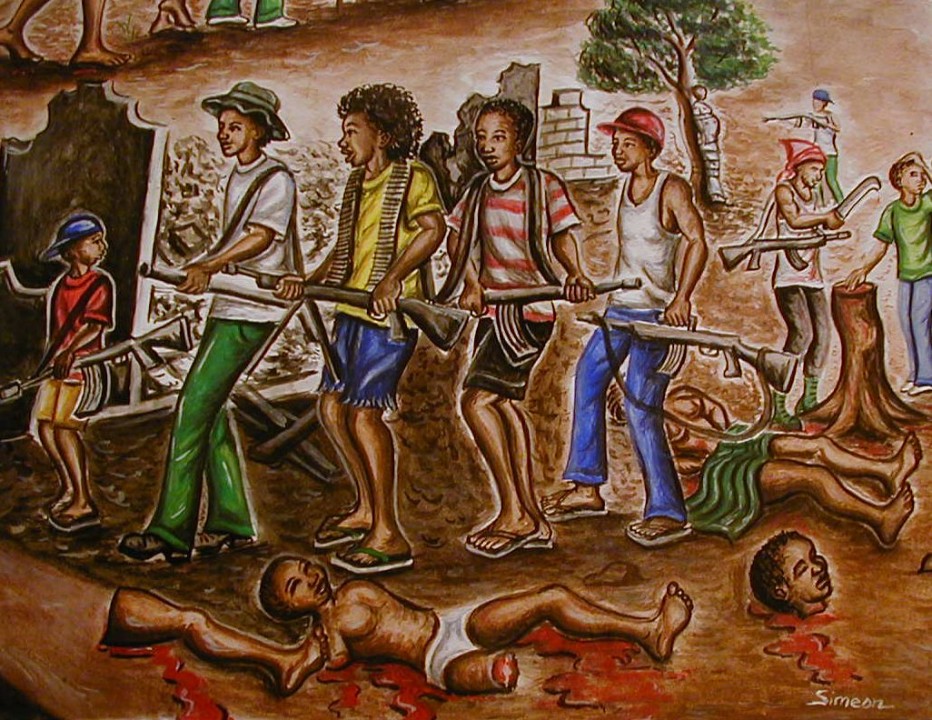
Simeon Benedict Sesay (Sierra Leone), Handiworks of Child Combatants, 2000.

The US attack on Venezuela on 3 January 2026 came on the same day as French and UK jets bombed an underground facility in the mountains near Palmyra (Syria) and just a few weeks after the US bombed villages in the Nigerian state of Sokoto. None of these attacks – all carried out under the pretence of fighting some form of ‘terrorism’ – had authorisation from the United Nations Security Council, making them violations of international law. These are all illustrations of the danger and decadence of this sulphurous hyper-imperialism. These are nothing more than instances of the NATO+ bloc demonstrating its power over the Global South through lethal military actions for which there is no defence.

Annual global military spending reached $2.7 trillion in 2024, with projections that it could reach between $4.7 trillion and $6.6 trillion by 2035 – the higher number nearly five times the level at the end of the Cold War and two and a half times the level spent in 2024. The same report estimates that it would take between $2.3 trillion and $2.8 trillion over ten years to eliminate extreme poverty globally. Over 80% of this military spending is done by NATO+ countries, with the United States far and away the largest military spender in the world. You do not spend so much on weapons of destruction without being able to destroy the world. No other country comes close to the ability of countries in the NATO+ bloc to intimidate by armed force.

Image
Kirubel Melke (Ethiopia), The Bookshelf 2, 2019.

The second key concept that our institute has developed over the past few years is the new mood in the Global South. We have argued that due to the economic rebalancing of the last period, space has opened for countries in Africa and Asia – in particular – to assert their sovereignty after several decades of suffocation. We saw this, for example, in the Sahel region with the creation of the Alliance of Sahel States (AES) by Burkina Faso, Mali, and Niger; in the reaction of several countries to the South African case in the International Court of Justice against Israel’s genocide; and in the attempt by countries from Indonesia to the Democratic Republic of the Congo to add value to their raw materials rather than exporting them unprocessed. These instances show how the countries of the Global South, led by China, have begun to test their ability to assert themselves against NATO+ authority across various institutions. But the key word here for us is ‘mood’: a new sensibility that is being tested but is not yet a developed challenge to the collective West.

Image
Obie Platon (Romania), Contemporary War, 2015.

A few hours before the attack on Venezuela, President Maduro met with Qiu Xiaoqi, China’s special envoy for Latin America, in Caracas. They discussed China’s third Policy Paper on Latin America (released 10 December 2025), in which the Chinese government affirmed: ‘As a developing country and a member of the Global South, China has always stood in solidarity through thick and thin with the Global South, including Latin America and the Caribbean’. They reviewed the 600 joint development projects between China and Venezuela and the roughly $70 billion in Chinese investment in Venezuela. Maduro and Qiu chatted and then took photographs which were posted widely on social media and broadcast on Venezuelan television. Qiu then left the meeting with the Chinese ambassador to Venezuela, Lan Hu, and the directors of the Ministry of Foreign Affairs’ Latin America and the Caribbean Department, Liu Bo and Wang Hao. Within hours, Caracas was bombed.

Shortly after the attack, the spokesperson for the Chinese Foreign Ministry said, ‘Such hegemonic acts of the US seriously violate international law and Venezuelan sovereignty and threaten peace and security in Latin America and the Caribbean region. China firmly opposes it’. Beyond that, little could be done. China does not have the capacity to roll back the savagery of US hyper-imperialism through military force. China and Russia have considerable military capacity, including nuclear weapons, but they do not have the global military footprint of the United States – whose military spending is more than double that of these two nations combined – and are therefore mainly defensive powers (that is to say, they are mainly able to defend their borders).

These recent events are a sign of the weakness of the new mood in the Global South at present, but not the vanquishing of that mood. Across the Global South, condemnations of the US violation of the UN Charter came thick and fast. The new mood remains, but it has its limitations.

Image
Aboudia (Côte d’Ivoire), Untitled, 2018.

The third key concept that our institute has developed is the far right of a special type. This far right has made a swift entrance into the halls of government in most continents, but it has done so with even greater speed in Latin America and the Caribbean. We argue that it has emerged for several reasons, including:

The failure of social democrats to solve deep crises of unemployment, social anomie, and crime due to their commitment to IMF-imposed fiscal prudence and cruel austerity.
The collapse of commodity prices that had allowed the social democratic forces to ride a ‘pink tide’ based on redistribution of increased national incomes and on modest social welfare policies that tackled the most urgent problems facing the population, including hunger and poverty. Part of the far right’s animosity has been directed at such income-redistribution schemes, which it claims are unfair to the middle class.
The failure of social democrats – or even of the left when they have come to local power – to address the rise of criminality, partly associated with the drug trade, that has gripped working-class neighbourhoods across the Western hemisphere.
The weaponisation of the discourse of corruption by the far right of a special type to systematically delegitimise centre-left and social democratic political figures. This system of lawfare has created a highly moralised anti-politics that elevates an authoritarian desire for order and punitive justice without any structural reform.
The emergence of a politics of fear in response to a manufactured civilisational crisis that is exemplified by the spectre of ‘gender ideology’, the racialised portrayal of Black youth in urban centres as a threat (so that police violence against them came to be treated as normal and expected), the land claims of Indigenous peoples, and environmentalist demands. The far right of a special type captured the imagination of enough of the population around the defence of their traditions and the need to restore their way of life, as if it was the feminists and the communists who had eroded society and not the fires of neoliberal destruction.
The injection of massive amounts of money from the Global North into the Global South through transnational right-wing platforms (such as Spain’s Foro Madrid) to fuel evangelical networks and new digital disinformation ecosystems.
The direct interference of the United States in the Global South through its dominance over financial institutions like the IMF and the World Bank, through global financial systems like SWIFT, and through direct military force and intimidation.
The far right of a special type in Latin America and the Caribbean was the imperial antidote to the return of the ideas of sovereignty articulated by Simón Bolívar and taken up by Hugo Chávez, which found expression in the pink tide. As the pink tide receded, an angry tide surged: we moved from leaders such as Chávez (Venezuela), Evo Morales (Bolivia), and Néstor Kirchner (Argentina) to Jair Bolsonaro (Brazil), Javier Milei (Argentina), Daniel Noboa (Ecuador), José Antonio Kast (Chile), and Nayib Bukele (El Salvador).

Image
Pech Song (Cambodia), 7 Makara Maha Jog Jay (7 January Victory Day), 1980–1985.

The fourth key concept that our institute has developed, which helps us shape our thinking, is the future – not only as socialism, the objective, but as hope, the sensibility for such a future: the idea that we must not allow our thinking to be constrained by an eternal, ugly present, but instead orient it toward the possibilities that are inherent in our history and our struggles for a better world. The far right of a special type pretends, through the theology of prosperity, that it represents the future, when in reality it offers only a permanent present of austerity and war and portrays the left as the past. Nothing could be further from the truth. Our 100th dossier (May 2026) will explore this concept. We look forward to sharing it with you.

As Kwame Nkrumah used to say, ‘forward ever, backward never’.

Warmly,

Vijay

https://thetricontinental.org/newslette ... per-drive/
"There is great chaos under heaven; the situation is excellent."

User avatar
blindpig
Posts: 15306
Joined: Fri Jul 14, 2017 5:44 pm
Location: Turtle Island
Contact:

Re: The Nature of Foxes

Post by blindpig » Mon Jan 19, 2026 2:59 pm

Image
“Ensuring American Space Superiority”

America’s new space superiority order is a threat to global human security

On December 18, 2025, the White House issued an executive order titled “Ensuring American Space Superiority.” Framed as a roadmap for exploration and innovation, it rapid expansion of U.S. military, commercial, and technological capabilities in space. I have always found the language of “superiority” troubling–in space or anywhere else. In a world that depends on multilateral cooperation, this unilateral push risks destabilizing the domain of space and signals a shift from shared stewardship to strategic competition. The order is already under implementation, with federal agencies preparing plans that could entrench this militarized trajectory for years to come.

Space has never been an abstract playground for power. Satellites underpin global communications, climate monitoring, disaster response, navigation, food security, and humanitarian relief. These systems quietly sustain everyday life for billions. Drawing them into military planning transforms critical infrastructure into potential points of conflict. Miscalculation, debris‑generating incidents, or escalation in orbit could disrupt services on which entire societies depend, with civilians bearing the heaviest burden.

International law was designed to prevent this trajectory. The Outer Space Treaty of January 27, 1967 established space as a global commons, prohibiting nuclear weapons in orbit and rejecting national appropriation of celestial bodies. Its preventive logic is clear: security is best protected through restraint before rivalry hardens into confrontation. Yet this executive order, even framed as defensive, normalizes military preparedness in space, encouraging other states to respond in kind. History shows where such unilateralism leads–arms racing, mistrust, and shrinking margins for error.

The dangers are not only strategic but human. Proposals to deploy nuclear reactors in orbit or on the Moon create environmental and safety risks that cannot be contained within national borders. An accident in space would affect all who rely on these shared systems. Militarizing space is thus not merely a sovereign choice; it is a collective risk imposed on humanity.

There is also the question of priorities. The programs outlined by this order will require hundreds of billions of dollars over the coming decade, resources that could otherwise strengthen public health, education, climate resilience, or rebuild societies torn apart by war and inequality. At a moment of overlapping global crises, prioritizing space dominance over human needs reflects a narrow definition of security–one that values power over people.

Having worked for many years on humanitarian disarmament and broader human‑security issues, I have seen how treaties such as the Mine Ban Treaty and the Treaty on the Prohibition of Nuclear Weapons emerged from a shared recognition that weapons causing indiscriminate harm ultimately undermine everyone’s security. These agreements did not arise from idealism alone; they were forged from experience, evidence, and the voices of affected communities. Their preventive, human‑centered logic is urgently needed in the governance of space.

Rather than racing unilaterally upward, states should strengthen multilateral stewardship. This means recommitting to the peaceful purposes enshrined in existing space law, advancing binding norms against the weaponization of space, and ensuring that emerging technologies beyond Earth are assessed through humanitarian, environmental, and human‑security lenses. The United Nations remains the legitimate forum for this work, where restraint can be negotiated collectively rather than imposed competitively.

Space has long symbolized humanity’s capacity to imagine a future beyond conflict–a place where cooperation, curiosity, and shared purpose prevail. Allowing it to become another battlefield would signal a failure not of technology, but of vision.

A nation may dominate space, but only humanity can keep it peaceful.

Reference
White House. “Ensuring American Space Superiority.” Presidential Actions, December 18, 2025.

https://www.whitehouse.gov/presidential ... uperiority

https://mronline.org/2026/01/17/america ... -security/

There will be nuke reactors in space, that's a done deal.
"There is great chaos under heaven; the situation is excellent."

User avatar
blindpig
Posts: 15306
Joined: Fri Jul 14, 2017 5:44 pm
Location: Turtle Island
Contact:

Re: The Nature of Foxes

Post by blindpig » Tue Jan 20, 2026 2:47 pm

Trump’s national security strategy, a blueprint for hegemony

How the US imperialists plan to make good on their longstanding aim of ‘pivoting to Asia’.
Carlos Martinez

Thursday 1 January 2026
Image
A pivot to the western hemisphere does not, as some wishful thinkers have suggested, reflect an acceptance of China’s rise and the inevitability of a multipolar world order. On the contrary, the purpose of aiming to achieve hemispheric hegemony is to establish a stronger base from which to confront China – and Russia, and Iran, and the DPRK, and any other state that seriously pursues sovereignty and independence.

The Trump administration’s new National Security Strategy (NSS) document, released in late November 2025, has inspired widespread comment and a diverse array of interpretations.

The most striking feature of the document is its explicit reassertion of the Monroe Doctrine, shifting the focus of US military strategy towards “defending our hemisphere”, with “more troops, bases and military operations” in the Americas. Hegemony over the western hemisphere is, of course, a constant of US foreign policy, but previous administrations have at least made some pretence at multilateralism and respect for international law.

The NSS does away with any such niceties: “After years of neglect, the United States will reassert and enforce the Monroe Doctrine to restore American preeminence in the western hemisphere, and to protect our homeland and our access to key geographies throughout the region. We will deny non-hemispheric competitors the ability to position forces or other threatening capabilities, or to own or control strategically vital assets, in our hemisphere.”

Such language implies that the current reckless – and entirely illegal – aggression against Venezuela is only the beginning of a broader strategy to re-establish Washington’s naked imperial domination of the American supercontinent. The White House, the State Department and the Pentagon are committing to an escalation of their hybrid war against all those Latin-American and Caribbean countries that resist US domination and enjoy close relations with China and other supposed ‘enemies’ of the USA.

The text states that “non-hemispheric competitors have made major inroads into our hemisphere, both to disadvantage us economically in the present, and in ways that may harm us strategically in the future”. Thereby, the USA has committed to a policy of disrupting the close trade and diplomatic relations that exist between Latin America and China, Russia, Iran and others.

Europe spurned
Running parallel to this hemispheric pivot is the document’s hostile posture towards Europe, which is portrayed as a declining civilisation beset by demographic crisis, economic stagnation and political fragmentation.

Trump’s cold shoulder is fomenting considerable anxiety in European capitals. The cold war consensus that bound western Europe to US leadership is coming to an end. That consensus emerged after the second world war under very specific historical conditions. The Soviet Union, having borne the brunt of the fight against nazism, emerged with enormous prestige. Socialism was gaining ground across Europe and Asia, winning real gains for working-class and oppressed peoples.

In this context, the imperialist powers of western Europe sacrificed a considerable portion of their sovereignty in exchange for US military protection, economic reconstruction under American leadership, and the Nato security umbrella.

That ‘cold war’ world no longer exists. The central strategic challenge facing Washington today is China: a rising socialist power that is already overtaking the USA in key areas of science, technology and industrial capacity; which is the largest trading partner of around two-thirds of the world’s countries; and which is playing an indispensable role in constructing a multipolar world order based on sovereign equality, mutual benefit and peaceful cooperation.

By any definition, this is a serious threat to the US-led imperialist system and likely an insurmountable obstacle to any Project for a New American Century.

Europe is not on the frontline against China in the same way that it was against the Soviet Union. The US ruling class no longer sees Europe as its primary strategic partner, but rather as a potential liability.

The NSS outlines the USA’s vision for Europe’s role in the coming period.

First, the USA wants European countries massively to increase their military spending. The document repeats calls for Nato members to spend five percent of GDP on militarisation – a staggering transfer of public wealth from European taxpayers to the US military-industrial complex, dovetailing neatly with Washington’s domestic reindustrialisation strategy:

“America requires a national mobilisation to innovate powerful defences at low cost, to produce the most capable and modern systems and munitions at scale, and to reshore our defence industrial supply chains. In particular, we must provide our warfighters with the full range of capabilities, ranging from low-cost weapons that can defeat most adversaries up to the most capable high-end systems necessary for a conflict with a sophisticated enemy.”

Second, the document demands an even deeper level of geopolitical subservience, sacrificing Europe’s needs for those of the USA: fully aligning with US sanctions regimes, technology controls and anti-China containment efforts – even though these will have (indeed, are having) a disastrous impact on European industry and living standards.

The countries that toe the line will be rewarded with preferential trade treatment, most obviously lower tariffs. Those that refuse to comply will be punished. If the ‘centrists’ currently in power in London, Paris and Berlin get out of line, the Trump administration and its backers are busily cultivating far-right nationalist alternatives that can ‘correct’ Europe’s current trajectory.

Target China
A pivot to the western hemisphere does not, as some wishful thinkers have suggested, reflect an acceptance of China’s rise and the inevitability of a multipolar world order.

On the contrary, the purpose of building up hemispheric hegemony is to establish a stronger base from which to confront China – and Russia, and Iran. As Cameron Harrison and CJ Atkins put it in a recent article, any strategic reorientation is designed to “crush rival powers, slow China’s growing international influence, and maintain US global hegemony”. (Trump’s National Security Strategy: ‘America First’ doctrine aims for global domination, People’s World, 9 December 2025)

We don’t have to read between the lines; the NSS is blunt about its objectives: “to ensure that America remains the world’s strongest, richest, most powerful and most successful country for decades to come”.

The NSS makes relatively few direct references to China, but its strategic intent is nonetheless clear. The USA is preparing for a long-term confrontation with China, seeking to mobilise its allies to isolate Beijing economically, technologically and militarily.

This is not limited to allies in Europe and Latin America; the document emphasises the importance of “keeping the Indo-Pacific free and open, preserving freedom of navigation in all crucial sea lanes, and maintaining secure and reliable supply chains and access to critical materials”. It further calls on Japan, south Korea and Australia to increase their military spending in order to help the US “deter adversaries and protect the First Island Chain” (ie, Japan, Taiwan, Philippines and Borneo).

Meanwhile, the USA will “harden and strengthen our military presence in the western Pacific” and “build a military capable of denying aggression anywhere in the First Island Chain”. The US military will work closely with separatist forces in Taiwan province, “partly because of Taiwan’s dominance of semiconductor production, but mostly because Taiwan provides direct access to the Second Island Chain [ie, Bonin islands, Marianas/Guam, Palau and New Guinea] and splits northeast and southeast Asia into two distinct theatres”.

All of which is a reiteration of, and doubling down on, the USA’s longstanding strategy of containment and encirclement of China, which has been a constant of US foreign policy since the founding of the People’s Republic in 1949.

To conclude, Trump’s National Security Strategy lays bare the imperialist ambitions of the US ruling class. While it includes some demagogic rhetoric about the need to avoid “forever wars”, in reality it commits the USA and its allies to the continued pursuit of precisely a forever war to maintain US hegemony, to counter the rise of China, and to prevent the emergence of a multipolar system of international relations in which all countries can assert their independence and define their own development path.

https://thecommunists.org/2026/01/01/ne ... -hegemony/

******

Drone attack in Russia, hybrid war in Iran, presidential kidnapping in Venezuela, and the grand strategy of the United States

Mauricio Metri

January 20, 2026

They are all directly or indirectly linked to the new Grand Strategy, whose main challenge is China.

Three serious events dominated the international news at the turn of the year. First, in the early hours of December 29, 2025, the Ukrainian government attacked with 91 drones on the residence of President Vladimir Putin in the Novgorod region, according to the Russian defense minister. The national defense system intercepted all the drones. One of them was hit in the tail, preserving the information from its navigation system. The Kremlin shared the collected data with the US authorities. Kiev denies the accusations.

The attack occurred shortly after Donald Trump indicated “that the Ukraine peace process was nearing its conclusion, following his meeting with Vladimir Zelensky and a phone call with Putin on Sunday.” According to Russian authorities, the attack was not limited to an assassination attempt on the Russian president, but “against President Trump’s efforts to facilitate a peaceful resolution of the Ukraine conflict.” As Belarusian President Lukashenko stated, Kiev did not act alone. London also has responsibility for the attacks.

Second, in Southwest Asia, also at the end of December 2025, due to devaluations of the Iranian currency and significant inflationary effects, amid a severe economic crisis in Iran that has dragged on for years because of sanctions imposed by the United States, merchants in Tehran began peaceful demonstrations. To the surprise of analysts and the Iranian government, these quickly turned into a wave of highly violent protests across the country.

Openly, the Israeli intelligence agency, Mossad, admitted involvement, applauded the events, and “claimed it has agents embedded with the protesting crowds.” Tehran acknowledged that foreign forces seek to transform legitimate protests into violent urban battles. In turn, on January 2, 2026, Donald Trump announced on his social media that the United States was ready to act at any moment to defend the protesters. On the same day, Tehran responded by threatening all US positions in the region in reaction to “any potential adventurism.” The strong offensive capability of Iran anchored this position, developed by the country, based on hypersonic missiles, whose destructive power came out in the Twelve-Day War against Israel and the United States. As reported by Israeli Channel 12, in response, Tel Aviv is considering launching a simultaneous war against Iran, Lebanon, and the West Bank.

Third, in the early morning of January 3, 2026, a United States aircraft violated Venezuelan airspace and carried out a significant attack on different points in the capital, Caracas. Their main target was the military base where President Maduro and his wife were located. They were kidnapped and taken to New York and, in practice, became prisoners of war. In this operation, more than 100 people died, including 32 Cubans who were part of the Venezuelan president’s personal guard. Subsequently, Trump demanded full access to Venezuelan oil, in addition to stating that the US would govern Venezuela until a proper transition was implemented. The following day, he broadened the scope of his targets. He made direct threats to three other countries, Mexico, Cuba, and Colombia, which, along with Brazil, condemned the US action, denouncing it as a violation of international law and a threat to regional stability.

In response to the US violence, on January 4, the Venezuelan Supreme Court recognized Vice President Delcy Rodriguez as interim president to guarantee the continuity of the government in the face of the kidnapping and imprisonment of President Maduro. Delcy is an essential figure in Chavismo. She was Minister of Communication and Information, Minister of Foreign Affairs, and, most recently, Minister of Economy and Petroleum.

These three serious events of the current situation, concentrated in time but dispersed across the global space, must be interpreted in light of the new US geo-strategy, whose parameters had already been indicated by Donald Trump during the 2024 election process; made explicit at the beginning of his new term through some pronouncements and actions; and finally, systematized in the latest National Security Strategy (NSS), published in December 2025.

As described in another article, there is an ongoing attempt to redesign Grand Strategy of the United States by redefining its most important challenge in the international arena. In detriment of Russia, the United States has come to view China as the main threat to its security and global interests and, consequently, seeks to create distance between Russia and China. It is an effort to reconfigure the central core of the great powers.

Pursuant to the NSS 2025, the United States’ failure to address Chinese projection over the past few decades, due to excessive preoccupation with Russia, constitutes a historical error. “President Trump single-handedly reversed more than three decades of mistaken American assumptions about China (…) China got rich and powerful, and used its wealth and power to its considerable advantage. American elites – over four successive administrations of both political parties – were either willing enablers of China’s strategy or in denial.” (NSS 2025, p. 19).

In practice, the Trump administration is not inventing anything new. It is reviving a vision structured by Nixon-Kissinger in the context of Triangular Diplomacy, inaugurated in 1969, when they took advantage of the radical Chinese initiative to redefine the main threat to their society, from the United States to the Soviet Union, in the midst of the Cold War. It was in this context that Washington pursued a policy of strategic rapprochement with Beijing to pressure Moscow to advance its agenda and to reinforce divisions within the communist bloc.

What is generally overlooked is that, in 1972, Kissinger himself warned Nixon of the need to reverse the equation from Washington’s perspective: to get closer to Moscow to bring Beijing into line. “I think, in a historical period, they [the Chinese] are more formidable than the Russians. And I think in 20 years, your successor, if he is as wise as you, will wind up leaning towards the Russians against the Chinese. For the next 15 years, we have to lean towards the Chinese against the Russians. We have to play this balance of power game totally unemotionally. Right now, we need the Chinese to correct the Russians and to discipline the Russians.”

The 2025 NSS is moving in the direction the former Secretary of State suggested. When addressing the Asian chessboard, the main threat to the United States becomes clearer. It identifies China as its greatest geopolitical and geo-economic challenge. “Indo-Pacific is already and will continue to be among the next century’s key economic and geopolitical battlegrounds. To thrive at home, we must successfully compete there – and we are.” (NSS, 2025, p. 19). As will be seen, this is the point that effectively organizes and conditions what the United States intends in other continents, therefore giving meaning to the most recent events in Russia, Iran, and Venezuela.

From a military standpoint, the NSS reinforces the longstanding concept of a Chinese sea blockade, structured around island chains, formulated during the Korean War by John Foster Dulles, Secretary of State in the Eisenhower administration. It consists of two belts of military bases surrounding China, with the power to prevent its maritime access. It is for this reason that Taiwan is the central point of contention. “Taiwan provides direct access to the Second Island Chain and splits Northeast and Southeast Asia into two distinct theaters. Given that one-third of global shipping passes through the South China Sea each year, this has major implications for the US economy. Hence, deterring a conflict over Taiwan, ideally by preserving military overmatch, is a priority. We will also maintain our longstanding declaratory policy on Taiwan, meaning that the United States does not support any unilateral change to the status quo in the Taiwan Strait.” (NSS 2025, p. 23).

In addition, the new NSS reinforces the need to militarize the South China Sea by strengthening the first island chain. “We will build a military capable of denying aggression anywhere in the First Island Chain. (…) America’s diplomatic efforts should focus on pressing our First Island Chain allies and partners to allow the US military greater access to their ports and other facilities, to spend more on their own defense, and most importantly to invest in capabilities aimed at deterring aggression.” (NSS 2025, p. 24). Finally, the document compels the militarization of the region’s strongest allies, Japan and South Korea, to deter adversaries and defend the island chains.

From an economic standpoint, the NSS 2025 confirms, on the one hand, China’s recent and significant projection onto much of the world and, on the other, the current need for the US to guarantee access to critical supply chains and materials. Combining these two points, the result for the United States becomes, first, to remove and obstruct Chinese access to strategic regions and, second, to build privileged, unlimited, monopolistic insertions. In effect, it proposes a redesign of China’s relations with other countries and territories. “(…) the United States must protect and defend our economy and our people from harm, from any country or source. This means ending (among other things): threats against our supply chains that risk US access to critical resources, including minerals and rare earth elements.” (NSS 2025, p. 21).

For Europe, the document follows the direction Kissinger suggested in 1972, of rapprochement with the Russians to pursue Chinese isolation. This aim, however, necessarily involves the reintegration of Russia into the international system; in other words, the end of both the Ukrainian War and NATO’s expansion policy, therefore the recognition of Moscow’s victory on the battlefield and, in effect, the need to negotiate a peace treaty according to Russian interests. It, in turn, implies, among other things, the neutrality of Ukraine, its demilitarization and denazification, the recognition of the Russian conquest of Crimea, and the independence or annexation of the Donetsk, Lugansk, Zaporozhye, and Kherson regions by Russia.

It is surprising that this proposal, radical from the perspective of US foreign policy tradition, appears explicitly in the NSS 2025. “As a result of Russia’s war in Ukraine, European relations with Russia are now deeply attenuated, and many Europeans regard Russia as an existential threat. Managing European relations with Russia will require significant US diplomatic engagement, both to reestablish conditions of strategic stability across the Eurasian landmass, and to mitigate the risk of conflict between Russia and European states. It is a core interest of the United States to negotiate an expeditious cessation of hostilities in Ukraine, in order to stabilize European economies, prevent unintended escalation or expansion of the war, and reestablish strategic stability with Russia (…).” (NSS 2025, p. 25).

It is clear that, from the United States’ point of view, the core of the problem is not exactly “making deals with the Russians,” as the star player Garrincha of the Brazilian national team would say in the 1958 World Cup, but rather making deals with its main European partners. The possibility of reinserting Russia in these terms constitutes a bomb of tectonic proportions for Europe, especially for England, France, and Germany. It is because: the US threatens to undermine NATO, weakening Europe; Europe, tutored for decades by the US via NATO, has low capacity for initiative in the military field; Russia has defeated NATO’s armaments on the battlefield and enjoys a significant strategic advantage; and there is no common threat among Russians, Americans, Chinese, and Europeans that dilutes their rivalries, apprehensions, and fears.

It is in this context that it should analyze the drone attacks on Putin’s residence in the Novgorod region. The continuation of the war in Ukraine, the collapse of peace negotiations between Moscow and Kiev, mediated by Washington, and even the military escalation on Ukrainian territory, are of particular interest to the British, French, and Germans to keep the United States trapped in the war effort against the Russians. Therefore, the accusations made by President Lukashenko of Belarus, based on Russian intelligence, pointing to London as sharing responsibility for the attempted assassination of the Russian president, make sense.

Similarly, regarding the Americas, Washington’s policy is conditioned by the Chinese challenge. In this sense, the NSS could not be more explicit. “After years of neglect, the United States will reassert and enforce the Monroe Doctrine to restore American preeminence in the Western Hemisphere, and to protect our homeland and our access to key geographies throughout the region. We will deny non-Hemispheric competitors [China] the ability to position forces or other threatening capabilities, or to own or control strategically vital assets, in our Hemisphere. This “Trump Corollary” to the Monroe Doctrine is a common-sense and potent restoration of American power and priorities, consistent with American security interests.” (NSS 2025, p. 15).

In general terms, the United States conceives its global projection from a position of hemispheric insularity. Dominating the American continent, especially the Greater Caribbean and its interoceanic connection – a key condition for the integration of its Pacific and Atlantic navies – is the pillar upon which it expands globally, particularly towards the fringes of the Eurasian continental landmass, the famous Rimland mentioned by Spykman. One could say this is an expansion, on a continental scale, of the old English strategy, when, in the historian Fernand Braudel’s words, England became an island after its defeat in the Hundred Years’ War in 1453. Since then, the English have embraced the insularity of the British Isles as the basis of their global projection.

What is most important to understand in this type of geostrategic conception, structured on an insular vision, is the implication for other peoples and countries present in the same fundamental spaces from which the maritime power projects itself. It is because any autonomous insertion of a country or an alliance of countries compromises the capacity of the insular powers for global expansion. Here is the primary reason, for example, for the centuries-long British violence against the Irish and Scots, as well as the various interventions and coups by the United States in Latin American countries. These spaces cannot rival or serve as a “bridgehead” for global geopolitical adversaries. It is not a matter of political-ideological, ethno-religious, or economic issues per se, but geopolitical ones. Ultimately, one could say that Fidel Castro in the Cuban Revolution (1953-59), in the heart of the “Greater Caribbean,” and Michael Collins in the Irish War of Independence (1919-21), in the heart of the “British Inland Sea,” fought and were successful against violence of a similar nature.

Beyond natural resources, it is in this sense that the rationale behind some of the US threats to countries in the region can also be understood, such as Venezuela, Cuba, Colombia, Mexico, and Brazil, due to their non-aligned foreign policies, and Canada and Greenland (Denmark), due to their relevant geographical positions.

In the case of Venezuela, in addition to being in the “Greater Caribbean,” the country holds the world’s largest oil reserves, 303 billion barrels, surpassing Saudi Arabia (267 billion). Additionally, following the expansion of sanctions in 2019, China became the leading importer of oil, displacing the United States. In 2023, the Chinese accounted for 68% of the country’s crude oil exports, and the Americans, 23%.

Furthermore, Venezuela has been drawing closer to Iran, Russia, and China on sensitive issues. For example, according to the Washington Post, in October 2025, Venezuela requested military assistance from Russia, China, and Iran to improve its defense systems. Caracas requested radar detectors from Beijing; radar jamming equipment and drones capable of flying up to 1,000 km from Tehran; and new missiles, as well as assistance for Su-30MK2 fighter jets and radar systems already acquired, from Moscow. A week earlier, Russia had ratified the strategic partnership treaty with Venezuela, negotiated in May of the same year, and at that time also expressed support for Venezuela’s national sovereignty and a commitment to help “overcome any threats, regardless of their origin.”

It is not difficult to see that, in addition to Chinese projection over Venezuelan oil, Caracas had been trying to develop significant defensive and deterrent military capabilities with the support of the United States’ main adversaries in other arenas. In any case, the kidnapping of President Maduro revealed the country’s vulnerability and backwardness to violence from foreign powers.

In the Middle East, the 2025 National Security Plan points to the same issue: ensuring that oil and gas reserves are available to the West and off-limits to its enemies. It also expresses concern about access to the Strait of Hormuz. “America will always have core interests in ensuring that Gulf energy supplies do not fall into the hands of an outright enemy, that the Strait of Hormuz remain open, that the Red Sea remain navigable (…).” (NSS 2025, p. 28).

Like Caracas, Tehran’s rapprochement with Beijing and Moscow is quite delicate. In addition to possessing the second-largest gas reserves and the fourth-largest oil reserves, Iran joined the Shanghai Cooperation Organisation in 2023; the BRICS in 2024; signed a strategic partnership with Russia in 2025; and had its diplomatic relations reactivated with Saudi Arabia in 2023 through Chinese mediation. Furthermore, Iran is structuring the axis of resistance in Southwest Asia against US and Israeli violence (Hezbollah in Lebanon, Houthis in Yemen, the Iraqi Resistance, and Hamas in Palestine). Therefore, promoting a hybrid war against Iran to overthrow the government is a priority for the United States. Not surprisingly, the award-winning and well-informed journalist Seymour Hersh recently wrote that: “The next target [after Venezuela], I have been told, will be Iran, another purveyor to China whose crude oil reserves are the world’s fourth largest.”

Therefore, drone strikes, hybrid warfare, and the presidential kidnapping are directly or indirectly linked to the new Grand Strategy, whose main challenge is China. What the general public has not yet realized is that, throughout the history of the United States, every time a president has attempted a policy of non-confrontation with Russia, it has not lasted long – Woodrow Wilson, Franklin Roosevelt, and John F. Kennedy. Something courageously pointed out by filmmaker Oliver Stone in an interview with the excellent journalist Abby Martin. Perhaps, for Trump, his main threat is not just China but the blowback of his policy of reintegrating Russia, victorious in the war, into the international system.

https://strategic-culture.su/news/2026/ ... ed-states/

"There is great chaos under heaven; the situation is excellent."

User avatar
blindpig
Posts: 15306
Joined: Fri Jul 14, 2017 5:44 pm
Location: Turtle Island
Contact:

Re: The Nature of Foxes

Post by blindpig » Sat Jan 24, 2026 1:30 pm

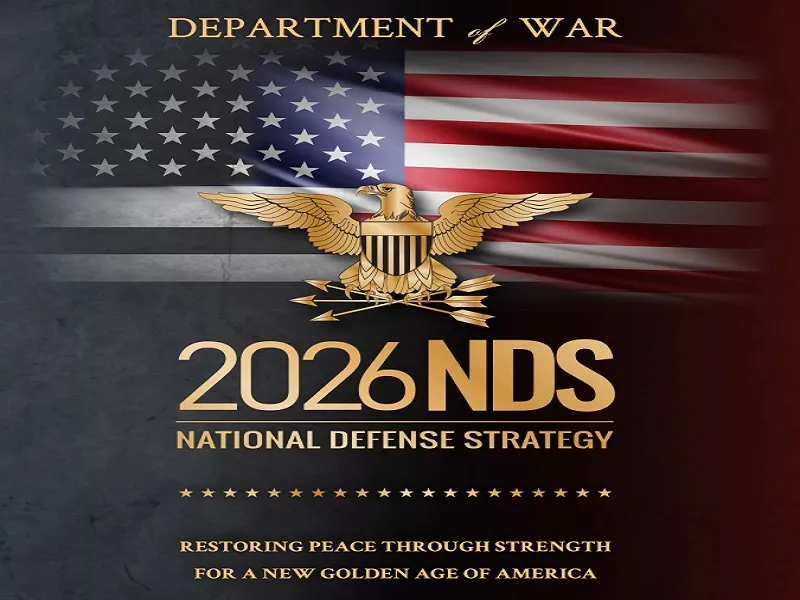
The Pentagon has updated its national defense strategy.
January 24, 12:58

Image

The Pentagon has published a new US national defense strategy.

Russia has been called a "permanent threat" to NATO's eastern flank;

Responsibility for a settlement in Ukraine lies largely with Europe;

US priorities will be containing China and protecting its own territory, not Europe;

The US course towards China does not imply regime change or open warfare;

The US will not allow Tehran to acquire nuclear weapons;

The priority of the new strategy is to protect US interests in the Western Hemisphere;

South Korea, US allies in Europe and the Middle East must defend themselves;

The US will focus on its own security and the Indo-Pacific region;

The Pentagon will develop counter-drone systems as part of the new strategy.

https://t.me/tass_agency/358181 - zinc

The document logically complements the updated US national security strategy, which endorses an updated Monroe Doctrine to ensure American hegemony in the Western Hemisphere and remote conflict management in Eurasia while minimizing direct involvement in order to increase profits and protect American interests.

https://colonelcassad.livejournal.com/10324515.html

Google Translator

******

The US’ New National Defense Strategy Calls For A World War-Like Military Build-Up
Andrew Korybko
Jan 24, 2026

Image

This final “Line of Effort” underpins the preceding three regarding the Western Hemisphere, the Indo-Pacific, and burden-sharing, all of which are being pursued in furtherance of Trump 2.0’s grand strategic goal of restoring the US’ predominant position over the world, including over China and Russia.

Trump 2.0 just released its National Defense Strategy (NDS) two months after its National Security Strategy (NSS), and as could be expected, they each preach the need to prioritize the Western Hemisphere. The “Trump Doctrine” that’s discernable within both, which was analyzed here, aims to restore the US’ predominant position (unipolarity) over the Americas and then the rest of the world. “Flexible, practical realism” will explicitly guide the implementation of this grand strategic goal.

Instead of redundantly pointing out all the similarities between the NDS and the NSS, the present piece will draw attention to how the administration envisages applying the aforesaid realist approach. Four “Lines of Effort” (LOEs) are enumerated: 1) “Defend the U.S. Homeland”; 2) Deter China in the Indo-Pacific Through Strength, Not Confrontation”; 3) Increase Burden-Sharing with U.S. Allies and Partners”; and 4) “Supercharge the U.S. Defense Industrial Base”. They’ll now be briefly described in order.

The Department of War’s (DOW) primary tasks in the Western Hemisphere are defending the US’ borders, countering (Islamic and narco-) terrorists, building the “Golden Dome”, and ensuring military and commercial access to key terrain like Greenland, the Gulf of America, and the Panama Canal. The last-mentioned task is the essence of the “Trump Corollary to the Monroe Doctrine”. The DOW’s explicit goal in this LOE is described as “restor[ing] American military dominance in the Western Hemisphere”.

By way of comparison, its explicit goal in the Indo-Pacific LOE is “peace through strength”, which the DOW plans to pursue through “strong denial defense” in the First Island Chain. This will be carried out together with the US’ regional allies, which can be described as the AUKUS+ network, although that terminology isn’t used in the NDS. The authors expect that this will create a favorable “balance of power” for achieving a “decent peace” that allows for mutually beneficial coexistence with China.

The third LOE embraces the “Lead From Behind” (LFB) concept that was described here in 2015 by incentivizing partners to do more to advance their shared regional interests with the US. The NDS earlier described Russia as a “persistent but manageable threat” in the sense that “European NATO dwarfs Russia in economic scale, population, and, thus, latent military power.” The aforesaid just have to be fully unleashed through US incentives and strategic guidance in order to more effectively contain Russia.

The last LOE underpins the preceding ones. Without “Supercharg[ing] the U.S. Defense Industrial Base”, the US cannot “restore American military dominance in the Western Hemisphere”, practice a “strong denial defense” in the First Island Chain, or LFB to contain shared adversaries like China (described as “the most powerful state relative to us since the 19th century”), Russia, Iran, and North Korea. This part ends with a call for military-industrial production comparable to the two World Wars and Cold War.

Therein lies the top takeaway from the NDS, namely that the US will resume World War-like levels of military-industrial production in furtherance of Trump 2.0’s grand strategic goal of restoring the US’ predominant position (unipolarity) over the world. Although the US will try to avoid Great Power conflict with China and Russia, this will be very difficult to do given its attempt to establish strategic superiority over them through this new undeclared arms race, which risks a war breaking out by miscalculation.

https://korybko.substack.com/p/the-us-n ... e-strategy
"There is great chaos under heaven; the situation is excellent."

User avatar
blindpig
Posts: 15306
Joined: Fri Jul 14, 2017 5:44 pm
Location: Turtle Island
Contact:

Re: The Nature of Foxes

Post by blindpig » Mon Jan 26, 2026 4:08 pm

2026 US National Defense Strategy

Roger Boyd
Jan 25, 2026

After the earlier publishing of the US National Security Strategy in 2025, the US National Defense Strategy has been published. Its’ main points:

Defend the U.S. Homeland.

Deter China in the Indo-Pacific Through Strength. Not Confrontation.

Increase Burden Sharing with US Allies and Partners.

Supercharge the U.S. Defense Industrial Base.

Under the title “Security Environment”
This Strategy is fundamentally different from the grandiose strategies of the past post–Cold War administrations, untethered as they were from a concrete focus on Americans’ practical interests. It does not conflate Americans’ interests with those of the rest of the world—that a threat to a person halfway around the world is the same as to an American. Nor does it see implanting our way of life by force as necessary. It does not seek to solve all the world’s problems. Rather, it focuses in practical ways on real, credible threats to Americans’ security, freedom, and prosperity. As it does so, it recognizes that some threats—like to our Homeland—are more direct and visceral than others. Yet it also acknowledges that even those that may feel distant—like the importance of maintaining U.S. access to the Indo-Pacific, the world’s largest market area—still have exceptionally real—indeed, fundamental—implications for our nation’s vital interests.
The Donroe Doctrine is detailed under the sub-heading “Homeland & Hemisphere”. Under the heading “China”:
the NSS directs DoW to maintain a favorable balance of military power in the IndoPacific. Not for purposes of dominating, humiliating, or strangling China. To the contrary, our goal is far more scoped and reasonable than that: It is simply to ensure that neither China nor anyone else can dominate us or our allies. This does not require regime change or some other existential struggle. Rather, a decent peace, on terms favorable to Americans but that China can also accept and live under, is possible. That is the wise premise of President Trump’s visionary and realistic approach to diplomacy with Beijing. At the same time, the Department’s efforts will provide the undergirding strength for this approach.
This is an acceptance of the strength of China, which the US oligarchy can no longer even dream of subjugating, and the need to co-exist somewhat amicably with it. Under the heading “Russia”:
the Department will ensure that U.S. forces are prepared to defend against Russian threats to the U.S. Homeland. The Department will also continue to play a vital role in NATO itself, even as we calibrate U.S. force posture and activities in the European theater to better account for the Russian threat to American interests as well as our allies’ own capabilities. Moscow is in no position to make a bid for European hegemony. European NATO dwarfs Russia in economic scale, population, and, thus, latent military power. At the same time, although Europe remains important, it has a smaller and decreasing share of global economic power. It follows that, although we are and will remain engaged in Europe, we must—and will—prioritize defending the U.S. Homeland and deterring China.
Placing the opposition to Russia firmly in the hands of the European vassals as the US focuses on China. Under the heading “Iran”,
Yet there are significant opportunities before us as well. Israel has long demonstrated that it is both willing and able to defend itself with critical but limited support from the United States. Israel is a model ally, and we have an opportunity now to further empower it to defend itself and promote our shared interests, building on President Trump’s historic efforts to secure peace in theMiddle East. Likewise, in the Gulf, U.S. partners are increasingly willing and able to do more to defend themselves against Iran and its proxies, including by acquiring and fielding a variety of U.S. military systems. This creates even more opportunities for us to enable individual partners to do more for their defense. It will also enable us to foster integration between regional partners, so that they can do even more together.
Yes, the utterly genocidal, supremacist, racist, and militarily aggressive Zionist regime is a “model ally”. Even here though, the US seeks to dump more and more responsibility onto Israel and the "“U.S. partners” in the region. Another acceptance of the shrinking relative strength of the US globally, and its inability to fund its previous expansive “global policeman” role. Under the heading “Democratic People’s Republic of Korea (DPRK)”:
The DPRK poses a direct military threat to the Republic of Korea (ROK) as well as to Japan, both of which are U.S. treaty allies. Although many of North Korea’s large conventional forces are aged or poorly maintained, South Korea must stay vigilant against the threat of a North Korean invasion. North Korea’s missile forces are also capable of striking targets in the ROK and Japan with conventional and nuclear weapons as well as other weapons of mass destruction. At the same time, the DPRK’s nuclear forces are increasingly capable of threatening the U.S. Homeland. These forces are growing in size and sophistication, and they present a clear and present danger of nuclear attack on the American Homeland.
The U.S. understands that it cannot attack North Korea because it actually has nuclear weapons (unlike Iran) and long range missile delivery systems. Also, both Russia and China are now integrating North Korea into BRINCISTAN. Accepting that the US is no longer able to fight wars in different theatres simultaneously, the section “The Simultaneity Problem And Implications for Allied Burden-Sharing”:
As President Trump has made clear, our allies and partners must shoulder their fair share of the burden of our collective defense. This is the right thing for them to do, especially after decades of the United States subsidizing their defense. But it is also vital from a strategic perspective—both for us and for them. And thanks to President Trump’s leadership, since January 2025, we have seen our allies beginning to step up, especially in Europe and South Korea.
In the next section “Strategy”, the sub-section “Defend The U.S. Homeland” lists these priorities:

Secure Our Border

Counter Narco-Terrorists in the Hemisphere

Yeah that’s why Trump pardoned one of the biggest narco-terrorists! The CIA is heavily involved as are some of Trump’s favourite leaders such as Noboa of Ecuador. More an excuse to interfere in other nation’s internal affairs.

Secure Key Terrain in the Western Hemisphere - i.e. Donroe Doctrine
Even as the Department works to secure America’s borders, we recognize that threats to those borders must also be addressed deeper in the hemisphere. We will therefore help to develop partners’ ability to degrade narcoterrorist organizations across the Americas and support them as they do, while also
maintaining our ability to take decisive action unilaterally. But if our partners cannot or will do not do their part, then we will be prepared to act decisively on our own, as the Joint Force demonstrated in Operation ABSOLUTE RESOLVE.

Defend America’s Skies with President Trump’s Golden Dome for America and Other, Drone-Specific Measures.

A new massive big trough for the Military Industrial Complex and Silicon Valley

Modernize and Adapt U.S. Nuclear Forces

Also a new big trough for the MIC etc.

Deter and Defend Against Cyber Threats.

Also a new big trough for the MIC etc.

Counter Islamic Terrorists.

What about Zionist terrorists, Christian terrorists etc? Aren’t these “Muslim” terrorists really creations of Western security services, Mossad, or really freedom fighters fighting against foreign aggression?

In the sub-section “Deter China in the Indo-Pacific Through Strength, Not Confrontation”:
We will not lose sight, however, of President Trump’s most important direction for the Department—peace through strength. Recognizing this, it is our essential responsibility at DoW to ensure that President Trump is always able to negotiate from a position of strength in order to sustain peace in the Indo-Pacific. To that end, as the NSS directs, we will build, posture, and sustain a strong denial defense along the FIC. We will also work closely with our allies and partners in the region to incentivize and enable them to do more for our collective defense, especially in ways that are relevant to an effective denial defense. Through these efforts, we will make clear that any attempt at aggression against U.S. interests will fail and is therefore not worth attempting in the first place. That is the essence of deterrence by denial.
This is the yapping of a smaller dog trying to show that it is bigger and stronger than it really is, an acceptance that the US will lose a war with China in the South China and Philippine seas.

In the sub-section “Increase Burden-Sharing with U.S. Allies and Partners” are a whole bunch of points talking about the U.S. dumping more responsibility for the maintenance of the US empire upon its vassals.

In the sub-section “Supercharge the U.S. Defense Industrial Base”, a whole bunch of B.S. covering up the throwing of gobs more money at the deeply corrupt, inefficient, incompetent, and profiteering U.S. MIC. And in the final conclusion section (my strikethroughs and replacements):
In doing so—as President Trump has so memorably emphasized—our purpose will not be aggression or perpetual war. Rather, our goal is peace a more affordable attempt to subjugate as much of the world as possible to U.S. oligarch profiteering. Peace U.S. oligarch dominance is the highest good. But not a peace U.S. oligarch dominance that sacrifices our other people’s security, freedoms, and prosperity. Rather, a peace U.S. oligarch dominance that Americans my oligarch masters deserve—a noble and proud peace. Fortunately, this peace is compatible with the interests of our potential opponents, if they keep their demands reasonable and cabined accept U.S. oligarch profiteering. We do not demand their humiliation or submission, as we nearly bankrupted the U.S. trying that. Rather, we demand only that they respect our reasonably conceived oligarch profiteering interests and some of those of our allies and partners vassals who stand stoutly with us. If we all can acknowledge this, we can achieve a flexible and sustainable balance of power among us, and peace accepting U.S. oligarch profiteering.
https://rogerboyd.substack.com/p/2026-u ... e-strategy

italics = replacement, red = strikethrough
"There is great chaos under heaven; the situation is excellent."

User avatar
blindpig
Posts: 15306
Joined: Fri Jul 14, 2017 5:44 pm
Location: Turtle Island
Contact:

Re: The Nature of Foxes

Post by blindpig » Tue Jan 27, 2026 3:07 pm

A Very American Execution

Nate Bear
Jan 27, 2026

Image

The execution of Alex Pretti, shot ten times in Minneapolis by a Border Patrol agent while on his knees, came just weeks after an ICE agent murdered Renee Good in the same city and just one day after US security forces extrajudicially executed two men in the Eastern Pacific.

These extrajudicial executions at sea were the continuation of a months-long campaign of extrajudicial executions which have seen dozens of people executed, without rights or trial, by security forces of the US government.

The at-sea executions preceded a burst of on-land violence which saw agents of the US security state execute numerous Venezuelans in the process of kidnapping their leader, Nicholas Maduro.

All of these recent executions by US security forces come a few months after American mercenaries executed Palestinians in Gaza at so-called humanitarian aid sites, killings which came a decade or so after the execution of civilians in Iraq and Afghanistan.

These executions of innocent Iraqis and Afghans came three decades after the execution of thousands of Vietnamese civilians, executions which had followed those in Korea less than a decade earlier and came two centuries after US forces murdered thousands of native Americans on their own soil.

These executions, committed by relatively newly-minted Americans, had followed the execution of thousands of native Americans by wannabee Americans in the European colonial period.

And in between all of these mass execution events are numerous other executions, of civilians, journalists and politicians the world over and at home by US regime security forces, including the mass execution in 1970 of student protestors at Kent State University.

Image
Mary Ann Vecchio screams over the body of murdered student Jeffrey Miller at Kent State University in 1970

The execution of Alex Pretti, as shocking, cowardly and barbaric as it was, is just the latest in a very long list of extrajudicial executions committed by agents loyal to the US regime.

The US carries violence in its soul.

There was much talk on social media after the murder of Alex Pretti that this was an example of the ‘imperial boomerang,’ the idea that what the US does in other countries eventually comes home.

But in reality there is no boomerang.

There is only a perfect circle of American violence, a continuous, forever-flowing river of blood.

The executions in Minneapolis would be, as Chris Hedges wrote, unsurprising to the residents of Fallujah or Helmand Province. They would also be unsurprising to Venezuelans, Palestinians, Cubans, the Vietnamese, the Cheyenne and Arapaho and the Sioux. They would be unsurprising to the residents of Minneapolis itself, where US forces have murdered numerous people in recent years, including of course, George Floyd, in 2020.

The killings that shock are the ones captured on camera or video.

But so many are not.

The US has some of the highest rate of police murders and deaths in custody of any country in the world. The government’s own figures put the number of deaths in the high hundreds, but independent investigations believe these numbers to be an undercount, with the data subject to serious manipulation in order to cover-up murders committed by police forces.

For every George Floyd or Alex Pretti caught on tape, hundreds of people are murdered in the dark corners of the American carceral state, a state that imprisons more people per capita than any other in the world. A state that imprisons people for profit then constructs a system that funnels penal labour to the brand names of American capitalism.

And for every leaked video of an American war crime, for every known execution of another person in another land, millions lie dead in the shadows, their deaths mere collateral to the imperial project, the savage consequence of American supremacy.

Which is why Barack Obama’s response to Pretti’s death was grotesque, dripping with the dishonesty you’d expect from the leading political charlatan of our time.

Image

Obama said the “core values” of the US are increasingly under assault.

If the structural foundations of the US are built atop blood, guts and stolen treasure, its social foundations are constructed on myth and fairytale.

Extrajudicial execution is a core American value. Pretti and Good’s murders are not anomalies, as many want to believe, but a long-held American standard.

You’ll also notice that even in his weak condemnation, Obama can’t help but simp for empire, claiming immigration agents have a tough job. Because terrorising the weakest in society, murdering people in cold blood, with impunity and with the full backing of the state, is such a tough job.

But then he is hardly likely to be overly critical of a monster he helped create.

It was Obama who inherited ICE as a fledgling agency and proceeded to increase its budget 300%. It was under Obama that ICE established a nationwide network of detention centres and expanded the 'secure communities' enforcement program from 14 counties to all 3,181 legal jurisdictions in America.

It was Obama who first hired Thomas Homan, now Trump’s border czar.

It was Obama who awarded Homan a presidential rank award, the highest civil service award in the US, given to him for ‘extraordinary results,’ which included record-high deportations.

It was Obama who expanded and normalised ICE, handing Trump the tools for a domestic terror force.

It was under Obama that the use of special Pentagon programs facilitating the transfer of military weapons to domestic security forces massively accelerated, going from around $80 million worth of equipment in 2007 to nearly half a billion dollars by 2015.

Which is why the responses to events in Minneapolis laying everything at the feet of Trump are so fraudulent, so full of denial and wishful thinking.

The murders of Good and Pretti can be traced back directly to Obama and the architecture of domestic terror he played a central role in establishing.

The murders of Good and Pretti can be traced back to Venezuela, Palestine, Iraq, Afghanistan, Vietnam, to every imperial assault of the last seventy years.

Their murders can be traced back to a military-security state that spends over a trillion dollars every year on weapons of mass murder, to a state that has dissolved the distinction between its military and domestic forces.

Their murders can be traced back to the plains, to Colorado, to the hundreds of Cheyenne and Arapaho women and children executed at Sand Creek, to the slaughter of the Lakota Sioux at Wounded Knee, to the Shoshone and the mass murder of women and children at Bear River.

America is violence.

It was born in it, is soaked through with it, revels in it and is sustained by it.

Pretti is the latest casualty.

And until the US breaks free from two-party oligarchy, while empire and imperialism remain its true core values, there will be many more.

Because American violence, and the military-security state that it flows effortlessly from, is a joint political project.

https://www.donotpanic.news/p/a-very-am ... dium=email
"There is great chaos under heaven; the situation is excellent."

User avatar
blindpig
Posts: 15306
Joined: Fri Jul 14, 2017 5:44 pm
Location: Turtle Island
Contact:

Re: The Nature of Foxes

Post by blindpig » Fri Jan 30, 2026 3:30 pm

Jeffrey Sachs: Engineering Iran’s Unrest
January 30, 2026

It’s certainly not diplomacy and it’s not coercion. It is war conducted by economic means, all designed to produce an economic crisis and social unrest leading to a fall of the government.

Image
President Donald Trump delivers remarks at the World Economic Forum in Davos, Switzerland on Wednesday, January 21, 2026, at the Davos Congress Center. (Official White House Photo by Daniel Torok / Public Domain)

By Jeffrey D. Sachs and Sybil Fares
Common Dreams

John Maynard Keynes famously wrote in The Economic Consequences of the Peace (1919):

“There is no subtler, no surer means of overturning the existing basis of Society than to debauch the currency. The process engages all the hidden forces of economic law on the side of destruction and does it in a manner which not one man in a million is able to diagnose.”

The United States mastered this art of destruction by weaponizing the dollar and using economic sanctions and financial policies to cause the currencies of targeted countries to collapse. On Jan. 19, we published “The US–Israel Hybrid War Against Iran,” describing how the United States and Israel are waging hybrid wars on Venezuela and Iran through a coordinated strategy of economic sanctions, financial coercion, cyber operations, political subversion, and information warfare.

This hybrid war has been designed to break the currencies of Iran and Venezuela in order to provoke internal unrest and ultimately regime change.

On Jan. 20, just one day after our article, U.S. Treasury Secretary Scott Bessent publicly confirmed, without qualification, apology, or ambiguity, that our description is indeed the official U.S. policy.

“It is high time that the world’s nations face up to America’s rogue economic behavior… This lawlessness is illegal, reckless, harmful, destabilizing, and ultimately ineffective in achieving America’s own goals, much less global objectives.”

In an interview at Davos, Secretary Bessent explained in detail how U.S. Treasury sanctions were deliberately designed to drive Iran’s currency to collapse, cripple its banking system, and drive Iran’s population into the streets. This is the “maximum pressure” campaign to deny Iran access to international finance, trade, and payment systems.

Bessent explained:

“President Trump ordered Treasury and our OFAC division, Office of Foreign Asset Control, to put maximum pressure on Iran. And it’s worked, because in December, their economy collapsed. We saw a major bank go under; the central bank has started to print money. There is dollar shortage. They are not able to get imports, and this is why the people took to the street.”

This is the explicit causal chain whereby U.S. sanctions caused the currency to collapse and the banking system to fail.

Image
Official 2025 portrait of Scott Bessent. (United States Department of the Treasury / Wikimedia Commons / Public Domain)

This monetary instability led to import shortages and economic suffering, causing the unrest. Bessent concluded by characterizing the U.S.’ actions as “economic statecraft,” and Iran’s economic collapse as a “positive” development:

“So, this is economic statecraft, no shots fired, and things are moving in a very positive way here.”

What Secretary Bessent describes is of course not “economic statecraft” in a traditional sense. It is war conducted by economic means, all designed to produce an economic crisis and social unrest leading to a fall of the government. This is proudly hailed as “economic statecraft.”

The human suffering caused by outright war and crushing economic sanctions is not so different as one might think. Economic collapse produces shortages of food, medicine, and fuel, while also destroying savings, pensions, wages, and public services.

Deliberate economic collapse drives people into poverty, malnutrition, and premature death, just as outright war does.

This pattern of suffering as the result of U.S. sanctions is well documented. A landmark study in The Lancet by Francisco Rodríguez and colleagues shows that sanctions are significantly associated with sharp increases in mortality, with the strongest effects found for unilateral, economic, and U.S. sanctions, and an overall death toll comparable to that of armed conflict.

Economic warfare of this kind violates the foundational principles of international law and the U.N. Charter. Unilateral sanctions imposed outside the authority of the U.N. Security Council, especially when designed to cause civilian hardship, are illegal.

Hybrid warfare does not evade international law by avoiding bombing (though the U.S. and Israel have also illegally bombed Iran, of course.) The illegality of U.S. “economic statecraft” applies not only to Iran and Venezuela, but to dozens more countries being harmed by U.S. sanctions.

“While the U.S. sanctions work in the short run to create misery, their incessant use is rapidly encouraging other economies to decouple from the U.S. financial stranglehold.”[/i]

Europe has perhaps begun to learn that being complicit in America’s economic crimes is no salvation, since Trump’s government is now turning on Europe in the same way, albeit with tariffs rather than sanctions.

Trump has threatened Europe with tariffs for not turning over Greenland to the U.S., though he rescinded that threat at least temporarily. When Trump “invited” France to join Trump’s Board of Peace, he threatened to impose a 200 percent tariff on French wine if France declined the invitation. And on and on.

The United States can wage this kind of comprehensive economic warfare because the dollar is the key currency in the global financial system.

If third countries don’t comply with U.S. sanctions on Iran and Venezuela, the U.S. threatens to impose sanctions on the banks of those third countries, specifically to cut them out of dollar-based settlements (known as the SWIFT system).

In this way, the U.S. enforces its sanctions on countries that otherwise would be happy to continue trading with the countries that the U.S. is trying to drive to economic collapse.

While the U.S. sanctions work in the short run to create misery, their incessant use is rapidly encouraging other economies to decouple from the U.S. financial stranglehold.

The BRICS nations, and many others, are expanding the conduct of international trade in their own currencies, thereby building alternatives to the use of the U.S. dollar and thus avoiding these sanctions. The U.S. ability to impose its financial and trade sanctions on other countries will decline soon, probably precipitously in the coming years.

It is high time that the world’s nations face up to America’s rogue economic behavior. The U.S. has been waging economic warfare with increasing intensity, all the while calling it “economic statecraft.”

This lawlessness is illegal, reckless, harmful, destabilizing, and ultimately ineffective in achieving America’s own goals, much less global objectives.

Europe has been looking the other way until now. Perhaps now that Europe too is under threat, it will wake up and join the rest of the world to put a stop to America’s brazen and illegal behavior.

https://consortiumnews.com/2026/01/30/j ... ns-unrest/
"There is great chaos under heaven; the situation is excellent."

Post Reply