
BRICS Will Fail to Deliver Anti-imperialism
Multipolarity-- the idea that there are more than one decisive economic actors in the global economy-- is an important fact. More than anything else, the rise of the People's Republic of China demonstrates that fact. The size and rate of growth, along with the expansive Belt and Road Initiative, establishes that the PRC functions somewhat independently of the world’s most powerful player in the global market-- the US. While the PRC spurns the language of rivalry, characterizing its desired relationship with the US as one of cooperation or partnership, the mere fact that the US rejects that relationship creates another competitive pole in the global economy, centered on the PRC.
Similarly, the US ruling class has sought to absorb the post-Soviet world-- Russia, Eastern Europe, and other former Soviet collaborators-- into the US-dominated economic order. The US demands that they play the same game and by the same rules or be banished from participation. When they object or defy accepting these terms, they, too, necessarily become alternative poles.
As other formerly minor or compliant participants-- Brazil, India, etc.-- have risen in economic stature, they can also represent counters to US unipolarity.
The tendency away from the US’s complete dominance of the international market economy is a reality of our time. No rational person can dispute this fact (though the tendency could easily reverse).
Since the origin of international trade, there have been conflicting tendencies and counter-tendencies toward concentration and diversity, toward monopoly and competition, and toward unipolarity and multipolarity. It is the very nature, the very essence of market exchange that a privileged trader will arise to dominate, only to be challenged by rivals who subsequently share or dominate the market, with the process repeating or reversing. As Friedrich Engels insisted: “In short, competition passes over into monopoly. On the other hand, monopoly cannot stem the tide of competition-- indeed, it itself breeds competition.”
History shows many empires or countries rising to dominate an arena of commerce or trade over its trading “partners”: Venetian dominance in the Mediterranean, Dutch dominance in European trade with the Spice Islands, successive European empires’ dominance of the trading in slaves, British dominance of the opium trade with China, etc. In nearly all cases, other empires or nations challenge and often prevail.
With the rise of the Cold War, the immensely powerful US assumed and maintained the leading role in ruling and protecting the capitalist order, then over half of the world’s population. After the fall of the Soviet Union, US leaders sought to extend their dominance over the entire world, envisioning a new order codifying and guaranteeing the existing inequalities and the established uneven development. Of course, this status privileges US interests.
If this state of affairs constitutes what people consider to be unipolarity, then it is clear that it is not sustainable. Competitors unfailingly will rise to challenge US dominance. Rivals will strive to break the US economic reign, through innovation, deception, trickery, market manipulation, alliances, and even open conflict. That is the way of capitalism.
And that is what is happening.
Thus, the alternating tendencies toward multipolarity and unipolarity are inevitable consequences of market exchange in a world of private ownership and national self-interest.
It should be noted that-- everything else remaining the same-- this dynamic will guarantee neither that working people will benefit nor be disadvantaged by changes in existing poles. Changes in the relative economic position of nation-states in the global economy is neutral with regard to the fate of those living in class societies. A worker or peasant may gain little from a trend from unipolarity to multipolarity-- any gain will be determined by other factors.
*****
There is, however, an entirely different understanding of multipolarity, unrelated to the factual tendency of competition to drive the global economy toward a unipolar or multipolar world. Since the time of Karl Kautsky, leftists have invested in multipolarity as a moral response to imperialism, an antidote to economic exploitation, as anti-imperialism. Nation-states were and are believed to rationally accept a stable order based on common interests and fair and equitable relations (if only the predators were tamed!). Lenin mocked this view and World War I crushed it.
But it doesn’t go away! The illusion of a brotherhood of capitalist powers accepting fair and equitable relations stubbornly persists!
Liberals and social democrats invested heavily in the League of Nations, a reset of the rules of international politics and economics after the disaster of World War I. Both little nations and big nations were expected to live amicably under its umbrella. The League promised to stifle the aggression and domination of great powers. Within two decades World War was again on the agenda.
Once again, after World War II, a new “multipolar” institution came into being-- the United Nations. Dominated by capitalist powers (most also beholden puppets of the US ruling class), the promise of diverse poles ensuring peace, harmony, and fairness gave way to manipulation, indecision, and-- on the best day-- impotence. The UN-- today, a multipolar institution governing capitalist-oriented nation-states-- is a modern-day farce.
Now, we have BRICS-- an alliance of a motley assortment of states with different ideologies, different modes of governance, different economies, different levels of development, and different commitments to social justice, but a common interest in finding some benefit from rearranging the existing world order. Centrists and leftists of every stripe have adopted BRICS and BRICS+ as an anti-imperialist front. With little reflection on history, with little appreciation of diversity, and especially with little understanding of market-based economies, they imagine that nation-states driven by self interest will somehow construct a common organization governed by mutual interest. Kautsky would embrace this shallow hope. Lenin would summarily dismiss it.
Persistently and consistently, I have challenged this misguided concept of anti-imperialism. BRICS is no more an answer to imperialism than an alliance of corporations is an answer to capitalist exploitation.
And that is the tragedy of the BRICS solution to imperialism. It fails to address the foundation of imperialism: the capitalist mode of production. It distracts social justice warriors, and even some Marxists, from the root cause of growing inequality within and between nations. Through ignorance or frustration, it creates the false hope of tempering exploitation without confronting capitalism.
*****
Where theoretical arguments fail, I have proposed a practical test of multipolarity and, specifically, BRICS. If BRICS is an anti-imperialist alternative, then it-- or its most committed members-- must stand tall against the most glaring, most egregious acts of imperialism. I have suggested that the response of BRICS members to the atrocities in Gaza are a litmus test of commitment to anti-imperialism, a test which BRICS has failed abysmally.
One might think that the recent UN Security Council vote on the US/Israeli plan to further maintain Gaza as a semi-colony-- brazenly ruled as brutally as the old Belgian Congo-- might have ignited a resistance from the “anti-imperialism” of BRICS. Instead, BRICS’s most vocal friends of Gaza choose to abstain from the vote.
And, yes, one would think that these scandalous abstentions would cause many multipolaristas to pause, and rethink their delusion of an anti-imperialist BRICS.
And many on the left have recoiled from this plan and criticized the Russian and Chinese abstentions. The Palestinian Communist Party denounced the vote, as did other Communist and Workers parties.
In an article entitled “BRICS Are the New Defenders of Free Trade, the WTO, the IMF and the World Bank” and Support Genocide by Continuing to Trade with Israel, Yves Smith of Naked Capitalism vigorously challenges BRICS on Gaza, and cites others, including left podcaster Fiorella Isabel and left journalist Vanessa Beeley’s similar critiques.
Nonetheless, apologists like the Friends of Socialist China defend China and Russia’s abstention. They argue bizarrely that: “For China, or Russia, to have exercised the veto would only have weakened their position vis-à-vis the Arab and Islamic nations and correspondingly further strengthened that of the United States.” As though voting against the Security Council resolution would have cost them friendship with some of the backstabbers of the Palestinian cause and defying the US plan would have somehow strengthened the already compliant US relationship with these same traitors to Gaza’s fate.
Since the Gaza resolution, the US has launched an offensive against Venezuelan sovereignty. US military might is staged in waters offshore from Venezuela, insisting that the Venezuelan people bow to US pressure. The threat is real and accompanied by the disgusting demonstration of US power by the murderous killing of boats’ crews in international waters, killings that have no established legitimacy.
How have the PRC and Russia-- the “spear” of BRICS anti-imperialism-- responded?
Kejal Vyas and James T. Areddy, writing in The Wall Street Journal, state smugly: “For two decades, Venezuela cultivated anti-American allies across the globe, from Russia and China to Cuba and Iran, in the hope of forming a new world order that could stand up to Washington. It isn’t working.” They understand that Cuba and Iran are in no position economically to help Venezuela. As for Russia and China, the authors conclude: “Both countries are trying to negotiate major diplomatic and trade deals with Trump now, giving them little incentive to waste political capital on Venezuela.”
It should be clearly understood that Russia, the PRC, and other BRICS states have the sovereign right to forge their own or an independent collective foreign policy, regardless of what others might want. Sadly, unlike in the throes of the Cold War against socialist states, no great power or alliance is willing to risk confrontation with other great powers, where willingness to do so is historically the measure of authentic anti-imperialism.
It should be equally clear that those who elevate the BRICs countries to the status of anti-imperialist icons are doing the left a disservice. However well-meaning some of the BRICS leaders may be, they fall far short of constituting an anti-imperialist bloc. To continue the fantasy that rallying around BRICS is the basis for an anti-imperialist front only deflects the left from attacking the foundation of imperialism: capitalism.
Greg Godels
zzsblogml@gmail.com
http://zzs-blg.blogspot.com/2025/12/bri ... -anti.html
This is a proper Leninist view which I have long held. The downfall of US hegemony will lead to a revival of inter-state capitalist competition. China, as the 'first of equals'('Augustinian', eh?) may well be accepted by most if it continues with it's 'more carrot than stick' approach and we can hope keep a lid on things even as it executes it's planetary sustainability efforts.
Ideology
Re: Ideology
"There is great chaos under heaven; the situation is excellent."
Re: Ideology
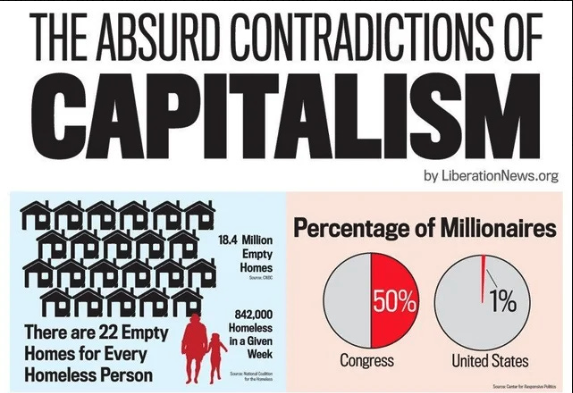
Myth debunked: Communism works in theory…
This article was published in Historic.ly on December 16, 2025 by Esha.
Talking Point: “Communism/socialism sounds good on paper, but it doesn’t work in the real world. It goes against human nature. It’s a nice theory that always fails in practice.”
Summary: This is perhaps the single-most common dismissal used by capitalists against socialist governments. This is repeated ubiquitously against across all capitalist and conservative sources as an Axiom. This aphorism appears in countless forms but rarely with specific attribution—it’s treated as received wisdom that needs no justification. The argument implies that:
The theory is internally consistent and appealing,
BUT human nature or practical realities make it impossible,
Every attempt has failed, proving it can’t work,
Advocates are naive idealists ignoring reality.
Variants:
“Real communism has never been tried” (mockery of defenders)
“It’s utopian thinking”
“Sounds good, doesn’t work”
“Nice idea, wrong species”
“Human nature makes it impossible”
“You can’t change human nature”
The rhetorical function allows the person making the argument seem reasonable (”I understand the appeal…”) while dismissing the actual counterpoint entirely. Positions capitalism as “realistic” and “practical” vs. socialism as “idealistic” and “theoretical.” It frames issue as settled empirical fact rather than debatable question and it functions as a thought-stopping cliché that ends discussion before it begins.
Sources:
Pervasive across Cato Institute, Mises Institute, TPUSA, PragerU materials
Repeated by Milton Friedman, Thomas Sowell, and other prominent conservatives
Standard conservative talking point found in political discourse, social media, and casual conversation
Hoover Institution: “The False Appeal of Socialism” (2020)
Frequently cited without attribution as “common knowledge”
The genius (and weakness) of this argument is that it’s designed to be unattributable—it masquerades as universal wisdom rather than ideological propaganda.
Rebuttal
CAPITALISM DOESN’T EVEN WORK IN THEORY!
This argument is designed to masquerade as universal wisdom instead of an ideological propaganda. “It’s repeated everywhere precisely because it’s a thought-stopping cliché, not an actual analysis.” Everyone who makes this argument always advocate for another system: Capitalism.
It is meant to paint defenders of socialism and communism as idealists living in a utopian society while defenders of capitalism are painted as “realists” who understand the inner workings of the real world. However, nothing can be further from the truth.
While these anti-communists do concede to the fact that communism works in theory, they seem to forget that capitalism, doesn’t even work in theory, let alone in practice.
Why Capitalism Fails in Theory:
Contrary to popular belief, capitalism isn’t when people sell “things” or commodities, which is basically a thing of value that can be traded. Traditionally, people used money to buy commodities such as sugar or rice, and the majority would then consume most of it. However, around the 1600s something changed:industrialization. Commodities that were locally produced and sold, were now produced on a mass scale and sold non-locally in mass quantities. People who were already wealthy were able to use their money in order to trade for commodities in large quantities, not to use or acquire these commodities, but to resell it in order to acquire surplus value. Marx labeled this process the M-C-M’ cycle:
For example, if someone invests €100,000 to buy five cars and register them for ride-sharing services like Uber, the cars are not purchased for personal transportation, rather they are bought as capital. Drivers are hired to operated them. The cars are kept on the roads as much as possible. After a year, the entrepreneur has earned €160,000 in fares and commissions. This is the classic M—C—M′ cycle in modern form:
M (Money): €100,000 capital outlay
C (Commodity): Cars, app registrations, and labor time
M′ (More Money): €160,000–the original sum plus surplus value extracted through the drivers’ work
The point isn’t that society gains more mobility–the cars’ use-value — but that money has returned to its owner augmented. The drivers’ labor and the vehicles’ wear are just the intermediaries through which money begets more money.
In Marx’s analysis, this raised a crucial question: where does that “more money” actually come from? It cannot come from the mere act of exchange, since every trade in a market swaps equivalents–€1,000 worth of goods for €1,000 in cash. The capitalist doesn’t create new value by buying and selling alone. To find the source of profit, Marx followed the chain backward and found it in the one place where something new is produced: the worker’s labor. The capitalist purchases labor power for less than the value it creates. The difference between what the worker is paid and the value their labor adds to the final product is the surplus value–and this, Marx argued, is where exploitation truly begins.
Which begets the first contradiction of capitalism: there’s only so much you can squeeze workers’ wages before the system begins to undermine itself. The more labor is exploited to maximize profit, the fewer people there are with the purchasing power to buy what capitalism produces. In other words, by impoverishing its own consumers, capital saws off the very branch it sits on. This creates a crisis of underconsumption. Capitalism ends up undermining its own market base.

The second way capitalism fails theoretically is that if there are multiple firms that produce the same commodity, each firm must expand their output to flush the competition out of business. But, when all the firms end up doing that simultaneously, the market becomes saturated and the price of the goods drop exponentially. This leads to periodic cycles of bankruptcies, layoffs and and boom and bust cycles. Many of which, we have witnessed in our lifetimes (depending on our age).
During these recurring crises, weaker firms collapse while stronger ones buy up their competitors. This process leads to the consolidation of ownership–both horizontally, when companies absorb rivals within the same industry, and vertically, when they expand control up and down the supply chain. Over time, this turns competitive markets into a handful of monopolies and cartels, exactly as Lenin described in Imperialism, the Highest Stage of Capitalism. What begins as a system of competition ends as a hierarchy of concentrated power.
As Lenin demonstrated in Imperialism: The Highest Stage of Capitalism, by 1907 just 0.9% of German enterprises controlled over half of all industrial workers and the majority of total output. What Marx had theorized as the concentration of capital had already become measurable reality.
Unfortunately, the contradictions and pitfalls don’t end there. As a handful of cartels and monopolies dominate production, their need for profit and raw materials grows insatiable. To keep their factories running and capital expanding, they must look beyond their own borders. Hence begins the drive to colonize the world–to seize new territories, control resources, and secure cheap labor. To keep their factories running and profits rising, they expand outward–colonizing the world. Colonialism reconfigured entire societies for extraction: in India, the British East India Company replaced food crops with tea, opium, and indigo; in Cuba, only sugar could be grown; in Rwanda, fertile farmland was seized for industrial coffee under German and Belgian rule. The result was the same everywhere–famine, dependence, and the destruction of local industry. Colonies that had once fed themselves were forced to import basic food from the imperial core, enriching the same corporations that had robbed them.
As Lenin explained in Imperialism: The Highest Stage of Capitalism, German enterprises entered the colonial race late. By the early 20th century, Britain and France had already divided most of the globe into their own spheres of exploitation. To secure access to raw materials and markets essential for its survival, German capital had only one option left–to seize colonies by force. Thus, imperial rivalry transformed into military conflict, culminating in the First World War: a struggle not of nations, but of capitalist powers fighting over a world that had already been divided.
Capitalism Fails in Practice
When the First World War ended, the map of empire changed, but its logic remained. The victors didn’t simply punish Germany for aggression–they neutralized an economic competitor. The Treaty of Versailles makes perfect sense when viewed through the lens of capitalist rivalry, not morality. France and Britain sought to permanently weaken Germany’s industrial base, which by 1914 had already surpassed both in steel production, chemical research, and machine manufacturing.
By stripping Germany of its colonies, restricting its military, seizing patents, and imposing astronomical reparations, the Allies ensured that German capital could not re-enter global markets as an equal competitor. Versailles wasn’t about peace; it was about market control. It froze the world’s hierarchy of production–guaranteeing that France and Britain would continue extracting from their colonies while German capital was deliberately handicapped.

Treaty of Versailles as Explained by a Satirical Cartoon of the time
The tragedy of Weimar Germany was not that fascism overpowered democracy, but that centrism surrendered to it. The ruling class, terrified of socialism and unwilling to sacrifice profits, preferred to dismantle democracy rather than risk redistribution. By the early 1930s, parliament had already hollowed itself out through emergency decrees, wage cuts, and deference to capital. Hitler did not overthrow the system; he inherited it.
As I wrote in The Economy of Evil, fascism did not emerge from chaos or irrationality. It was a rational response of a ruling class cornered by its own contradictions. When capitalism could no longer rule by consent, it ruled by coercion. Fascism became the mechanism through which industrialists preserved their property, destroyed unions, and restructured production under the guise of national renewal.
Parenti called it “capitalism in extremis”–the system defending itself with violence when ideology and markets fail. What began as economic crisis under Hindenburg and Brüning matured into political extermination under Hitler. Capital’s contradictions had finally produced their ultimate form: a state that openly fuses corporate, military, and nationalist power to annihilate class opposition.
In the end, the familiar refrain that “communism works only in theory but fails in practice” collapses under scrutiny, because capitalism has failed on both counts. Its theoretical foundations–competition, equilibrium, self-regulation–implode the moment they are practiced. Each stage of capitalist “progress” has revealed a deeper contradiction: the wage squeeze that undermines consumption, the overproduction that destroys markets, the imperial expansion that breeds world wars, and finally, the fascist synthesis that fuses capital with the state. These are not accidents of mismanagement but the logical outcomes of a system that can sustain itself only through crisis, conquest, and coercion. History’s lesson is not that communism failed to live up to its ideals–it is that capitalism inevitably lives down to its own.
Check out all the other arguments as I build the talking points:
ANTI-COMMUNIST TALKING POINTS DEBUNKED
Victims of Communism—A comedy in the making

https://mronline.org/2025/12/18/myth-de ... in-theory/
"There is great chaos under heaven; the situation is excellent."
Re: Ideology
A Young Worker Discovers Marxism
Posted by Chris Townsend | Dec 21, 2025
A Young Worker Discovers Marxism

By Chris Townsend
December 18, 2025
The holiday season around Christmas always reminds me of my own path into the socialist and labor movements. It was a gradual process of discovery and learning, one stage building upon the others. A psychological freedom from idealism and religion came first; a political understanding of the wage-slave system and the materialist reality of the conditions of life for an ordinary worker came second. As a young kid growing up in the State of Pennsylvania in the 1960s and 1970s, one was never far from the omnipresent religious domination of virtually all civic culture and administration. Marxism and materialism became the roadmap for my escape from the mind-numbing ignorance of too many working people.
Although I attended public schools, practically all of the students were avowed Christians. Several dozen denominations were represented. Many were “mainstream” or name-brand churches, some were quite arcane, some evangelical, and all co-existed in the predominantly agricultural district. Many traced their lineage to refugees who had sought the religious freedom offered in the New World Pennsylvania colony established by William Penn, a Quaker.
“Christianity” in my experience was also accompanied by a deep seated political reaction, a near unconditional and fanatic opposition to all things modern, scientific, and politically liberal. Small doses of anti-Semitic and bigoted anti-Roman Catholic views were interwoven quietly into this soup of religious dogma. And there could be no mention of “socialism”, “communism” or “Marxism” without the obligatory qualifier that all of it was “godless atheism.” Special wrath was reserved for the communist barbarians. To many of these sects this justified U.S. imperialism and its non-stop anti-communist bloodbath being visited on Vietnam. These were not people who merely disagreed with us. Or who had any right to disagree; they were evil.
A Little Magazine Ignites the Believers
Christian churches and organizations in my home region conducted a vigorous and at times frantic competition with each other to establish the primacy of their often traditional, but frequently unhinged beliefs. Winning new recruits and “saving souls” was an entire industry. Proselytizing ran riot where I grew up, and even as a kid I recognized that it often reached baffling or even absurd levels. If there were “reasonable” or “normal” believers in my midst they kept a very low profile so far as I could tell. As the Vietnam War and its U.S.-sponsored genocide ground on in the late 1960s and early 1970s the attentions of the pro-war Christian fanatics became fixed on my school’s librarian. She was discovered to have had the audacious and brazen temerity to display – in full public view for students – the one and only copy of “Soviet Life” magazine, received once per month by our school library.
The furor spilled into the School Board meetings as throngs of crazed Christians howled and shrieked that our offending librarian must be fired immediately. No investigation was necessary. And of course, she must be banned from her profession for such an offense against God. This glossy magazine, with cover to cover color photos of normal life in the Soviet Union, was published and distributed as part of a bilateral agreement between our country and the USSR. Each month, in both countries, a set number of copies of a magazine written and produced by the other was distributed with no great fanfare. Cooler heads apparently reasoned that if we could show each other that we were just normal people, as we read each other’s “up with people” magazine, then it might lessen the risk of nuclear annihilation.
Also singled out by the enraged clerics and their followers in this anti-communist frenzy were books found in our school library explaining the scientific basis of evolution. Books detailing the long history of earth and the growth of its life forms were denounced. Various scientific textbooks revealing the development of scientific methodology, techniques, and drugs to cure deadly diseases were singled-out. Even books on mathematics, basic chemistry and physics were deplored as “Satanic manuals”.
A Young Worker Seeks Answers
This reactionary tempest did, thankfully, run its course. The crescendo of the religious zealotry came in one of several School Board meetings when Sports Illustrated magazine was held up as “evidence” that the end of Christian civilization was near. Why? On account of the several long-distance photos of U.S. Olympic swim team women clad only in modest swimsuits. Our elected School Board was battered – and all regretted that they had ever gotten involved in entry level politics – but they held their ground and refused to ban the offending literature or our head librarian. Her steadfast defense of her conduct, her profession, and for science was memorable.
From that point on in my school, Soviet Life magazine could only be reviewed by a student at a special desk placed in front of the librarian’s station. Some pious students were given to scrawl graffiti on the pages, destroy pages, or even abscond with an entire issue if not closely monitored. I took my turn at some point and thumbed through the magazine, finding it to be somewhat bland. In many ways it was like an oversized travel brochure. What about this, I thought, would give rise to such religious tantrums and histrionics? Over a magazine that few read anyway, and several science books that even fewer understood. My young opinions regarding religion and religiosity were not improved by these events. But my interest in science and political science were strengthened tenfold.
Heavy Watermelons and A Hot Day
In summertime I worked in a local farmer’s market run and dominated by fundamentalist Christians, I worked unloading produce and bulk items from trucks and wagons. It was one of the few kinds of paying work available to a young worker not old enough to work officially. Several of us were detailed on a blazing hot day to unload one-by-one a gigantic truck trailer full of big and heavy watermelons. The owner, as he watched us struggle with the task, offered his motivational opinion; “God gives you all winter to save up your sins. Thank Him when he gives you summer to sweat them out.” I was unimpressed. His three dollars for a backbreaking 12-hour day of unloading – and then reloading what didn’t sell – did nothing to further my interest in reading any of the numerous bible tracts that he freely distributed to us. Lots of his little booklets emphasized the fiery and hellish end you would face if you didn’t fully believe in his God when you finally met your end. One of the older boys told me that the reason the owner paid us three dollars was actually because grown men – even derelicts – would demand at least five bucks for such backbreaking labor. I pondered that equation frequently as the summer days dragged on.
Marxism and Materialism Discovered
While not a great conventional school student I was always an avid reader. I enjoyed the sciences, and learned early that the scientific method was devised to enable one to gather information as part of a process that would lead to the solving of problems and riddles. The one and only used bookseller in the same huge farm market complex where I labored had a small and mysterious section listed as “Parents Approval Needed”. In it I found a dusty volume of collected political writings, which in the opinion of the publisher all had somehow “changed the course of history”. I was familiar to the owner as I would purchase an occasional book to read while we waited in between jobs. Not wanting to miss a sale he dutifully placed the old volume in a paper bag as if it was pornography, or liquor, and I was on my way. It was in this threadbare collection where I first read “The Communist Manifesto”, by Karl Marx and Frederick Engels: https://www.marxists.org/archive/marx/w ... manifesto/ Also included was VIadimir Lenin’s article from 1913 entitled, “The Three Sources and Three Component Parts of Marxism.” The short article was written by Lenin for a Swiss encyclopedia, presumably to advertise Marxism via a mainstream outlet and likely to allow him to earn some much needed income.
I have read this article too many times to count since I first saw it in that old book more than 50 years ago. Lenin demystified the events and experiences in my young life, and pointed his flashlight to light a way forward for me: …“The philosophy of Marxism is materialism. Throughout the modern history of Europe, and especially at the end of the eighteenth century in France, where a resolute struggle was conducted against every kind of medieval rubbish, against serfdom in institutions and ideas, materialism has proved to be the only philosophy that is consistent, true to all the teachings of natural science and hostile to superstition, cant and so forth. The enemies of democracy have, therefore, always exerted all their efforts to “refute”, undermine and defame materialism, and have advocated various forms of philosophical idealism, which always, in one way or another, amounts to the defense or support of religion.”….
…”When feudalism was overthrown and “free” capitalist society appeared in the world, it at once became apparent that this freedom meant a new system of oppression and exploitation of the working people. Various socialist doctrines immediately emerged as a reflection of and protest against this oppression. Early socialism, however, was utopian socialism. It criticized capitalist society, it condemned and damned it, it dreamed of its destruction, it had visions of a better order and endeavored to convince the rich of the immorality of exploitation. But utopian socialism could not indicate the real solution. It could not explain the real nature of wage-slavery under capitalism, it could not reveal the laws of capitalist development, or show what social force is capable of becoming the creator of a new society.”…
…” Not a single victory of political freedom over the feudal class was won except against desperate resistance. Not a single capitalist country evolved on a more or less free and democratic basis except by a life-and-death struggle between the various classes of capitalist society. The genius of Marx lies in his having been the first to deduce from this the lesson world history teaches, and to apply that lesson consistently. The deduction he made is the doctrine of the class struggle.”… https://www.marxists.org/archive/lenin/ ... ar/x01.htm
No Progress Without Marxism
I continue to commend this short article by Lenin to hundreds of young workers, and some not so young. And I smile every time that I think that I found the little book in that sea of anti-communism and reaction in Ephrata, Pennsylvania so long ago. I have gone on to an entire career in our labor movement, battling bosses, corporations, and politicians across half of our gigantic country – and Canada. I have organized thousands of workers in dozens of industries, always against the furious opposition of the employers and the old order. And I can attest, contrary to those who continue to deny materialism, or who have abandoned it, that the class struggle is indeed quite alive. I have also discovered many other things along the way, including the fact that some religious believers can – and do – make enormous contributions to the workers struggle. That my experiences as a youth were not absolutely shared by all. And I am reminded daily in my current work that the competition between utopian and scientific methods of work is no competition at all. That our movement’s addiction to utopian approaches, while resisting Marxist and scientific methods, continues to undermine and impede nearly everything we do.
Trumpist Era of Religious Extremism
The first year of Trump’s second term has been filled to overflowing with daily expressions of his embrace of the most reactionary variants of U.S. evangelical Christianity. Rightist, fascist, and militarist Christians remain the most loyal sections of support for his rancid MAGA movement. And while not a laughing matter at all, I chuckle constantly when I recall the conservative Christians of my youth denouncing their prototypical arch enemies – “wicked men.” As news reports also now reveal the bulk of the Christians living in the region of my youth have loyally voted for him, and are lined up en masse to kiss the ring of our new Roman despot.
Trump’s growing embrace of fanatic reactionary Christian values – comingled with his own self-serving and toxic thinking – is only part of a larger story. A recent Gallup poll reveals the largest-ever drop in religious adherence by U.S. people. Just one poll among polls, but striking in its findings: …“The 17-point drop in the percentage of U.S. adults who say religion is an important part of their daily life — from 66% in 2015 to 49% today — ranks among the largest Gallup has recorded in any country over any 10-year period since 2007.” See: https://news.gallup.com/poll/697676/dro ... world.aspx A poll like this means many things, but with the Marxist movement at a momentary low ebb in the United States this poll no doubt is exposing other forces at work causing the church fall-away. Virtually unreported, this poll would indicate that huge sections of Trump’s ideological base may be dramatically weakening.
Our Responsibility
The question of the defense and promotion of philosophical materialism, and Marxism, is more than just a struggle to combat the most excessive, offensive, or dangerous aspects of religious influence run amok. More than just opposition to the deep-seated alliance of reactionary political forces, corporations, police, military, and religious organizations. It is a defense and promotion of science; a redoubling of scientific approaches to problem solving and decision making, and recognition that our movement must adopt and abide by scientific, not utopian methods if we are to have any chance of forward progress. Let alone any chance of success. It is also a reminder that scientific outcomes that only serve the ruling and private elites, and are appropriated exclusively by these parasitic elements, are rightly the property of a more broad society. But lacking a coherent political machinery to seize these proceeds of capitalist robbery, misery and want will continue – and deepen.
Across the globe entire regions have been cleansed of secular forces and expressions, with those not liquidated driven underground. One of the main aims of U.S. imperialism and its murderous military detachments. Here in the United States, religious zealotry, anti-communism, militarism, and a frontal assault on all human rights going back to the Enlightenment – expands dramatically and goes virtually unchallenged on any philosophic basis. There is wide space for materialism and Marxism to be revived, to fill the gaps and win large numbers of new supporters – if there is any desire on the part of class conscious forces to fill this void.
My path to socialism as a young worker was simple, unremarkable, but made possible by the availability of the basic texts of our movement, supported only by my own curiosity. My questioning, confronting, and then abandoning religious thinking was followed by an embrace of materialism and Marxism. Others will follow different routes, but in every case it must represent a break from the past and an embrace of a new way of thinking. As Lenin described it in that little encyclopedia article, …“The Marxist doctrine is omnipotent because it is true. It is comprehensive and harmonious, and provides men with an integral world outlook irreconcilable with any form of superstition, reaction, or defense of bourgeois oppression. It is the legitimate successor to the best that man produced in the nineteenth century, as represented by German philosophy, English political economy and French socialism.”
Wishing all readers of Marxism-Leninism Today a very Happy New Year, and success in your many struggles.
https://mltoday.com/a-young-worker-discovers-marxism/
Posted by Chris Townsend | Dec 21, 2025
A Young Worker Discovers Marxism
By Chris Townsend
December 18, 2025
The holiday season around Christmas always reminds me of my own path into the socialist and labor movements. It was a gradual process of discovery and learning, one stage building upon the others. A psychological freedom from idealism and religion came first; a political understanding of the wage-slave system and the materialist reality of the conditions of life for an ordinary worker came second. As a young kid growing up in the State of Pennsylvania in the 1960s and 1970s, one was never far from the omnipresent religious domination of virtually all civic culture and administration. Marxism and materialism became the roadmap for my escape from the mind-numbing ignorance of too many working people.
Although I attended public schools, practically all of the students were avowed Christians. Several dozen denominations were represented. Many were “mainstream” or name-brand churches, some were quite arcane, some evangelical, and all co-existed in the predominantly agricultural district. Many traced their lineage to refugees who had sought the religious freedom offered in the New World Pennsylvania colony established by William Penn, a Quaker.
“Christianity” in my experience was also accompanied by a deep seated political reaction, a near unconditional and fanatic opposition to all things modern, scientific, and politically liberal. Small doses of anti-Semitic and bigoted anti-Roman Catholic views were interwoven quietly into this soup of religious dogma. And there could be no mention of “socialism”, “communism” or “Marxism” without the obligatory qualifier that all of it was “godless atheism.” Special wrath was reserved for the communist barbarians. To many of these sects this justified U.S. imperialism and its non-stop anti-communist bloodbath being visited on Vietnam. These were not people who merely disagreed with us. Or who had any right to disagree; they were evil.
A Little Magazine Ignites the Believers
Christian churches and organizations in my home region conducted a vigorous and at times frantic competition with each other to establish the primacy of their often traditional, but frequently unhinged beliefs. Winning new recruits and “saving souls” was an entire industry. Proselytizing ran riot where I grew up, and even as a kid I recognized that it often reached baffling or even absurd levels. If there were “reasonable” or “normal” believers in my midst they kept a very low profile so far as I could tell. As the Vietnam War and its U.S.-sponsored genocide ground on in the late 1960s and early 1970s the attentions of the pro-war Christian fanatics became fixed on my school’s librarian. She was discovered to have had the audacious and brazen temerity to display – in full public view for students – the one and only copy of “Soviet Life” magazine, received once per month by our school library.
The furor spilled into the School Board meetings as throngs of crazed Christians howled and shrieked that our offending librarian must be fired immediately. No investigation was necessary. And of course, she must be banned from her profession for such an offense against God. This glossy magazine, with cover to cover color photos of normal life in the Soviet Union, was published and distributed as part of a bilateral agreement between our country and the USSR. Each month, in both countries, a set number of copies of a magazine written and produced by the other was distributed with no great fanfare. Cooler heads apparently reasoned that if we could show each other that we were just normal people, as we read each other’s “up with people” magazine, then it might lessen the risk of nuclear annihilation.
Also singled out by the enraged clerics and their followers in this anti-communist frenzy were books found in our school library explaining the scientific basis of evolution. Books detailing the long history of earth and the growth of its life forms were denounced. Various scientific textbooks revealing the development of scientific methodology, techniques, and drugs to cure deadly diseases were singled-out. Even books on mathematics, basic chemistry and physics were deplored as “Satanic manuals”.
A Young Worker Seeks Answers
This reactionary tempest did, thankfully, run its course. The crescendo of the religious zealotry came in one of several School Board meetings when Sports Illustrated magazine was held up as “evidence” that the end of Christian civilization was near. Why? On account of the several long-distance photos of U.S. Olympic swim team women clad only in modest swimsuits. Our elected School Board was battered – and all regretted that they had ever gotten involved in entry level politics – but they held their ground and refused to ban the offending literature or our head librarian. Her steadfast defense of her conduct, her profession, and for science was memorable.
From that point on in my school, Soviet Life magazine could only be reviewed by a student at a special desk placed in front of the librarian’s station. Some pious students were given to scrawl graffiti on the pages, destroy pages, or even abscond with an entire issue if not closely monitored. I took my turn at some point and thumbed through the magazine, finding it to be somewhat bland. In many ways it was like an oversized travel brochure. What about this, I thought, would give rise to such religious tantrums and histrionics? Over a magazine that few read anyway, and several science books that even fewer understood. My young opinions regarding religion and religiosity were not improved by these events. But my interest in science and political science were strengthened tenfold.
Heavy Watermelons and A Hot Day
In summertime I worked in a local farmer’s market run and dominated by fundamentalist Christians, I worked unloading produce and bulk items from trucks and wagons. It was one of the few kinds of paying work available to a young worker not old enough to work officially. Several of us were detailed on a blazing hot day to unload one-by-one a gigantic truck trailer full of big and heavy watermelons. The owner, as he watched us struggle with the task, offered his motivational opinion; “God gives you all winter to save up your sins. Thank Him when he gives you summer to sweat them out.” I was unimpressed. His three dollars for a backbreaking 12-hour day of unloading – and then reloading what didn’t sell – did nothing to further my interest in reading any of the numerous bible tracts that he freely distributed to us. Lots of his little booklets emphasized the fiery and hellish end you would face if you didn’t fully believe in his God when you finally met your end. One of the older boys told me that the reason the owner paid us three dollars was actually because grown men – even derelicts – would demand at least five bucks for such backbreaking labor. I pondered that equation frequently as the summer days dragged on.
Marxism and Materialism Discovered
While not a great conventional school student I was always an avid reader. I enjoyed the sciences, and learned early that the scientific method was devised to enable one to gather information as part of a process that would lead to the solving of problems and riddles. The one and only used bookseller in the same huge farm market complex where I labored had a small and mysterious section listed as “Parents Approval Needed”. In it I found a dusty volume of collected political writings, which in the opinion of the publisher all had somehow “changed the course of history”. I was familiar to the owner as I would purchase an occasional book to read while we waited in between jobs. Not wanting to miss a sale he dutifully placed the old volume in a paper bag as if it was pornography, or liquor, and I was on my way. It was in this threadbare collection where I first read “The Communist Manifesto”, by Karl Marx and Frederick Engels: https://www.marxists.org/archive/marx/w ... manifesto/ Also included was VIadimir Lenin’s article from 1913 entitled, “The Three Sources and Three Component Parts of Marxism.” The short article was written by Lenin for a Swiss encyclopedia, presumably to advertise Marxism via a mainstream outlet and likely to allow him to earn some much needed income.
I have read this article too many times to count since I first saw it in that old book more than 50 years ago. Lenin demystified the events and experiences in my young life, and pointed his flashlight to light a way forward for me: …“The philosophy of Marxism is materialism. Throughout the modern history of Europe, and especially at the end of the eighteenth century in France, where a resolute struggle was conducted against every kind of medieval rubbish, against serfdom in institutions and ideas, materialism has proved to be the only philosophy that is consistent, true to all the teachings of natural science and hostile to superstition, cant and so forth. The enemies of democracy have, therefore, always exerted all their efforts to “refute”, undermine and defame materialism, and have advocated various forms of philosophical idealism, which always, in one way or another, amounts to the defense or support of religion.”….
…”When feudalism was overthrown and “free” capitalist society appeared in the world, it at once became apparent that this freedom meant a new system of oppression and exploitation of the working people. Various socialist doctrines immediately emerged as a reflection of and protest against this oppression. Early socialism, however, was utopian socialism. It criticized capitalist society, it condemned and damned it, it dreamed of its destruction, it had visions of a better order and endeavored to convince the rich of the immorality of exploitation. But utopian socialism could not indicate the real solution. It could not explain the real nature of wage-slavery under capitalism, it could not reveal the laws of capitalist development, or show what social force is capable of becoming the creator of a new society.”…
…” Not a single victory of political freedom over the feudal class was won except against desperate resistance. Not a single capitalist country evolved on a more or less free and democratic basis except by a life-and-death struggle between the various classes of capitalist society. The genius of Marx lies in his having been the first to deduce from this the lesson world history teaches, and to apply that lesson consistently. The deduction he made is the doctrine of the class struggle.”… https://www.marxists.org/archive/lenin/ ... ar/x01.htm
No Progress Without Marxism
I continue to commend this short article by Lenin to hundreds of young workers, and some not so young. And I smile every time that I think that I found the little book in that sea of anti-communism and reaction in Ephrata, Pennsylvania so long ago. I have gone on to an entire career in our labor movement, battling bosses, corporations, and politicians across half of our gigantic country – and Canada. I have organized thousands of workers in dozens of industries, always against the furious opposition of the employers and the old order. And I can attest, contrary to those who continue to deny materialism, or who have abandoned it, that the class struggle is indeed quite alive. I have also discovered many other things along the way, including the fact that some religious believers can – and do – make enormous contributions to the workers struggle. That my experiences as a youth were not absolutely shared by all. And I am reminded daily in my current work that the competition between utopian and scientific methods of work is no competition at all. That our movement’s addiction to utopian approaches, while resisting Marxist and scientific methods, continues to undermine and impede nearly everything we do.
Trumpist Era of Religious Extremism
The first year of Trump’s second term has been filled to overflowing with daily expressions of his embrace of the most reactionary variants of U.S. evangelical Christianity. Rightist, fascist, and militarist Christians remain the most loyal sections of support for his rancid MAGA movement. And while not a laughing matter at all, I chuckle constantly when I recall the conservative Christians of my youth denouncing their prototypical arch enemies – “wicked men.” As news reports also now reveal the bulk of the Christians living in the region of my youth have loyally voted for him, and are lined up en masse to kiss the ring of our new Roman despot.
Trump’s growing embrace of fanatic reactionary Christian values – comingled with his own self-serving and toxic thinking – is only part of a larger story. A recent Gallup poll reveals the largest-ever drop in religious adherence by U.S. people. Just one poll among polls, but striking in its findings: …“The 17-point drop in the percentage of U.S. adults who say religion is an important part of their daily life — from 66% in 2015 to 49% today — ranks among the largest Gallup has recorded in any country over any 10-year period since 2007.” See: https://news.gallup.com/poll/697676/dro ... world.aspx A poll like this means many things, but with the Marxist movement at a momentary low ebb in the United States this poll no doubt is exposing other forces at work causing the church fall-away. Virtually unreported, this poll would indicate that huge sections of Trump’s ideological base may be dramatically weakening.
Our Responsibility
The question of the defense and promotion of philosophical materialism, and Marxism, is more than just a struggle to combat the most excessive, offensive, or dangerous aspects of religious influence run amok. More than just opposition to the deep-seated alliance of reactionary political forces, corporations, police, military, and religious organizations. It is a defense and promotion of science; a redoubling of scientific approaches to problem solving and decision making, and recognition that our movement must adopt and abide by scientific, not utopian methods if we are to have any chance of forward progress. Let alone any chance of success. It is also a reminder that scientific outcomes that only serve the ruling and private elites, and are appropriated exclusively by these parasitic elements, are rightly the property of a more broad society. But lacking a coherent political machinery to seize these proceeds of capitalist robbery, misery and want will continue – and deepen.
Across the globe entire regions have been cleansed of secular forces and expressions, with those not liquidated driven underground. One of the main aims of U.S. imperialism and its murderous military detachments. Here in the United States, religious zealotry, anti-communism, militarism, and a frontal assault on all human rights going back to the Enlightenment – expands dramatically and goes virtually unchallenged on any philosophic basis. There is wide space for materialism and Marxism to be revived, to fill the gaps and win large numbers of new supporters – if there is any desire on the part of class conscious forces to fill this void.
My path to socialism as a young worker was simple, unremarkable, but made possible by the availability of the basic texts of our movement, supported only by my own curiosity. My questioning, confronting, and then abandoning religious thinking was followed by an embrace of materialism and Marxism. Others will follow different routes, but in every case it must represent a break from the past and an embrace of a new way of thinking. As Lenin described it in that little encyclopedia article, …“The Marxist doctrine is omnipotent because it is true. It is comprehensive and harmonious, and provides men with an integral world outlook irreconcilable with any form of superstition, reaction, or defense of bourgeois oppression. It is the legitimate successor to the best that man produced in the nineteenth century, as represented by German philosophy, English political economy and French socialism.”
Wishing all readers of Marxism-Leninism Today a very Happy New Year, and success in your many struggles.
https://mltoday.com/a-young-worker-discovers-marxism/
"There is great chaos under heaven; the situation is excellent."
Re: Ideology
Imperialism Rampant
January 27, 9:03 PM

Imperialism Rampant
As noted earlier, US imperialism—the worst enemy of humanity, the main class enemy of communism—consistently pursues a policy of military and political pressure on socialist China. Support for socialist countries and sympathy for countries with a socialist orientation are as important today as they were during the Soviet era. Many leftists arrogantly forget this.
In a 1995 article, V.A. Podguzov stated:
"Currently, the population of China, as well as the Democratic People's Republic of Korea, Cuba, and Vietnam—that is, more than a billion people—is in the first, lowest phase of COMMUNISM, which is commonly referred to as socialism. Moreover, despite the temporary difficulties experienced by communists, there are virtually no parts of the world or countries left on the planet where communist parties of varying degrees of maturity are not active. In other words, communism has transformed from a EUROPEAN GHOST into a GLOBAL REALITY, taken into account in the most substantive manner by all politicians and governments without exception."
Today, that is, 30 years after these lines were written, communism as a global reality has become so established and strengthened that the most powerful imperialist state is forced to urgently mobilize in the form of Trumpism—that is, aggressive militarism and the final shedding of masks on the international stage.
Trumpism is as unscientific a term as Hitlerism, Yeltsinism, or globalism. But it is quite suitable for journalism, as it vividly highlights the ongoing mobilization of imperialism.
Trump is Hitler today. The difference is that Hitler was, after all, a political figure of some sort, while Trump is an ordinary businessman, whose ambition is being exploited by America's ruling circles to implement a program of preparation for a world war. But objectively, he is playing the role of Hitler. The politics embodied by Trump is the most complete and vivid embodiment of liberal democracy in its cannibalistic essence.
From the period "on the threshold" of a new world war, the world is now entering the first stage of active preparation. The military budgets of America and Europe, along with large-scale military-industrial projects, scream this.
After the publication of the new "security strategy" in the United States, even the most inveterate geopoliticians have realized who the true enemy of the American oligarchs is and who poses the real threat to their existence. It is the People's Republic of China. In other words, capitalism remains threatened by communism. It withstood the initial blow, but fundamental change doesn't happen overnight.
Moreover, China, unlike the USSR, does not directly threaten the United States, the capitalist countries of Asia, and especially Europe. The aggression and mobilization of American imperialism are linked to the fact that Western capitalists are losing market competition to the Chinese communists. China has crushed the West in production, is crushing it in the growth of productive forces, and will soon crush it in technology. Naturally, this prospect does not suit the oligarchs, who until 2002 were receiving increasing profits, and since then, they are receiving decreasing profits. But most importantly, China is setting a contagious example for peoples around the world.
It should also be remembered that, against the backdrop of rivalry with China, contradictions within the imperialist camp are intensifying. America and Europe have split and are preparing for hostility. For now, inertia is strong, but in five years, Europe will inevitably emerge from under the American heel and remilitarize for another war to redivided the world. The military-political dwarf is already consuming growth hormones, and US influence has been reduced to that of a secret service. European military leadership is fading: NATO is declining, and US military bases and resources in Europe are moving closer to China's borders. So Europe shouldn't be written off. Europe is the birthplace of imperialism; it's in its blood.
Also, regarding European "civilization." Some are surprised, for example, by the number and severity of armed conflicts in Africa. The average person might think that underdeveloped blacks are extremely warlike, only able to fight each other. In fact, blacks are a million times more peaceful than Europeans. Europeans, with African levels of development, have beaten each other up in ways no Africans could ever dream of. It seems that even if today's standard of living in Europe were to fall to African levels, the veneer of civilization would quickly peel off the burghers and bourgeois.
Trumpism, a modern-day version of Hitlerism, is born of the fear of communism, of a communist state with a gigantic population becoming the leading and most developed country in the world. Everything else is secondary.
Communism as a global reality is embodied in the policies of the Workers' Party of Korea (WPK) in the DPRK and specifically in the leader of the Korean people, Kim Jong-un. He has proven himself not only an outstanding leader worthy of his mentors, Kim Il-sung and Kim Jong-il, but also the wisest and most far-sighted politician of our time. Kim Jong-un has provided his country with an independent nuclear shield, a nuclear umbrella from Russia, even though the DPRK is protected by a treaty with China. Given current events, there is no doubt that North Korea appears to be the most prepared for the hysterical aggression of American imperialism.
Bolshevism is the science of victory. Kim Jong-un has proven himself to be quite proficient in this art.
In contrast to countries with communists in power, Assad and the Ba'ath Party in Syria fell pathetically, while Maduro in Venezuela fell into ignominious captivity. Weakness in theory breeds weakness in practice, even though both leaders are relatively progressive and represent anti-imperialist national liberation movements. But without Marxism, progressivity sooner or later degenerates or is crushed by imperialism.
The propaganda value of spreading the thesis that communism is a global reality cannot be overstated. The strategic U-turn in US foreign policy
unfolding before our eyes is the hysteria of enraged imperialism, not a deeply thought-out and well-founded plan. American imperialists have many plans, but no effective action options. The most important thing—time—has been lost. The most important thing—production—has declined.
A trade war against the entire world, the seizure of Canada, Greenland, Panama, Mexico, Cuba, Nicaragua, and so on—all of this is essentially due to impotence. It's all an attempt to muster strength. Just like, incidentally, the exit from the civil war in Ukraine.
It's possible that the empire could ultimately strike back, taking up the doomsday cudgel.
The American people, unfortunately, remain silent, reveling in tales of their exceptionalism and American greatness. American communists have not yet earned the public's attention. Just as in our country, primarily because they do not represent a strong Bolshevik-type organization ready to seize power, even in the foreseeable future.
Today, the question of defending Cuba is pressing. And this is very serious, as the Island of Freedom is not only a symbol of resistance to American imperialism but could also become a strategic base for military deterrence. The Chavistas have not yet lost; the Cubans are ready to fight.
Peaceful coexistence, which was never truly peaceful, will no longer exist.
All of this should once again prompt the reader to consider a diligent study of Marxist theory.
(c) A. Redin
https://t.me/prorivists/6499 - zinc
https://colonelcassad.livejournal.com/10331613.html
Google Translator
January 27, 9:03 PM
Imperialism Rampant
As noted earlier, US imperialism—the worst enemy of humanity, the main class enemy of communism—consistently pursues a policy of military and political pressure on socialist China. Support for socialist countries and sympathy for countries with a socialist orientation are as important today as they were during the Soviet era. Many leftists arrogantly forget this.
In a 1995 article, V.A. Podguzov stated:
"Currently, the population of China, as well as the Democratic People's Republic of Korea, Cuba, and Vietnam—that is, more than a billion people—is in the first, lowest phase of COMMUNISM, which is commonly referred to as socialism. Moreover, despite the temporary difficulties experienced by communists, there are virtually no parts of the world or countries left on the planet where communist parties of varying degrees of maturity are not active. In other words, communism has transformed from a EUROPEAN GHOST into a GLOBAL REALITY, taken into account in the most substantive manner by all politicians and governments without exception."
Today, that is, 30 years after these lines were written, communism as a global reality has become so established and strengthened that the most powerful imperialist state is forced to urgently mobilize in the form of Trumpism—that is, aggressive militarism and the final shedding of masks on the international stage.
Trumpism is as unscientific a term as Hitlerism, Yeltsinism, or globalism. But it is quite suitable for journalism, as it vividly highlights the ongoing mobilization of imperialism.
Trump is Hitler today. The difference is that Hitler was, after all, a political figure of some sort, while Trump is an ordinary businessman, whose ambition is being exploited by America's ruling circles to implement a program of preparation for a world war. But objectively, he is playing the role of Hitler. The politics embodied by Trump is the most complete and vivid embodiment of liberal democracy in its cannibalistic essence.
From the period "on the threshold" of a new world war, the world is now entering the first stage of active preparation. The military budgets of America and Europe, along with large-scale military-industrial projects, scream this.
After the publication of the new "security strategy" in the United States, even the most inveterate geopoliticians have realized who the true enemy of the American oligarchs is and who poses the real threat to their existence. It is the People's Republic of China. In other words, capitalism remains threatened by communism. It withstood the initial blow, but fundamental change doesn't happen overnight.
Moreover, China, unlike the USSR, does not directly threaten the United States, the capitalist countries of Asia, and especially Europe. The aggression and mobilization of American imperialism are linked to the fact that Western capitalists are losing market competition to the Chinese communists. China has crushed the West in production, is crushing it in the growth of productive forces, and will soon crush it in technology. Naturally, this prospect does not suit the oligarchs, who until 2002 were receiving increasing profits, and since then, they are receiving decreasing profits. But most importantly, China is setting a contagious example for peoples around the world.
It should also be remembered that, against the backdrop of rivalry with China, contradictions within the imperialist camp are intensifying. America and Europe have split and are preparing for hostility. For now, inertia is strong, but in five years, Europe will inevitably emerge from under the American heel and remilitarize for another war to redivided the world. The military-political dwarf is already consuming growth hormones, and US influence has been reduced to that of a secret service. European military leadership is fading: NATO is declining, and US military bases and resources in Europe are moving closer to China's borders. So Europe shouldn't be written off. Europe is the birthplace of imperialism; it's in its blood.
Also, regarding European "civilization." Some are surprised, for example, by the number and severity of armed conflicts in Africa. The average person might think that underdeveloped blacks are extremely warlike, only able to fight each other. In fact, blacks are a million times more peaceful than Europeans. Europeans, with African levels of development, have beaten each other up in ways no Africans could ever dream of. It seems that even if today's standard of living in Europe were to fall to African levels, the veneer of civilization would quickly peel off the burghers and bourgeois.
Trumpism, a modern-day version of Hitlerism, is born of the fear of communism, of a communist state with a gigantic population becoming the leading and most developed country in the world. Everything else is secondary.
Communism as a global reality is embodied in the policies of the Workers' Party of Korea (WPK) in the DPRK and specifically in the leader of the Korean people, Kim Jong-un. He has proven himself not only an outstanding leader worthy of his mentors, Kim Il-sung and Kim Jong-il, but also the wisest and most far-sighted politician of our time. Kim Jong-un has provided his country with an independent nuclear shield, a nuclear umbrella from Russia, even though the DPRK is protected by a treaty with China. Given current events, there is no doubt that North Korea appears to be the most prepared for the hysterical aggression of American imperialism.
Bolshevism is the science of victory. Kim Jong-un has proven himself to be quite proficient in this art.
In contrast to countries with communists in power, Assad and the Ba'ath Party in Syria fell pathetically, while Maduro in Venezuela fell into ignominious captivity. Weakness in theory breeds weakness in practice, even though both leaders are relatively progressive and represent anti-imperialist national liberation movements. But without Marxism, progressivity sooner or later degenerates or is crushed by imperialism.
The propaganda value of spreading the thesis that communism is a global reality cannot be overstated. The strategic U-turn in US foreign policy
unfolding before our eyes is the hysteria of enraged imperialism, not a deeply thought-out and well-founded plan. American imperialists have many plans, but no effective action options. The most important thing—time—has been lost. The most important thing—production—has declined.
A trade war against the entire world, the seizure of Canada, Greenland, Panama, Mexico, Cuba, Nicaragua, and so on—all of this is essentially due to impotence. It's all an attempt to muster strength. Just like, incidentally, the exit from the civil war in Ukraine.
It's possible that the empire could ultimately strike back, taking up the doomsday cudgel.
The American people, unfortunately, remain silent, reveling in tales of their exceptionalism and American greatness. American communists have not yet earned the public's attention. Just as in our country, primarily because they do not represent a strong Bolshevik-type organization ready to seize power, even in the foreseeable future.
Today, the question of defending Cuba is pressing. And this is very serious, as the Island of Freedom is not only a symbol of resistance to American imperialism but could also become a strategic base for military deterrence. The Chavistas have not yet lost; the Cubans are ready to fight.
Peaceful coexistence, which was never truly peaceful, will no longer exist.
All of this should once again prompt the reader to consider a diligent study of Marxist theory.
(c) A. Redin
https://t.me/prorivists/6499 - zinc
https://colonelcassad.livejournal.com/10331613.html
Google Translator
"There is great chaos under heaven; the situation is excellent."
Re: Ideology
On the proletariat, value and its production

Some individual clarifications on key concepts of Marxism.
I. The term "proletariat" refers to hired workers, that is, those who sell their labor power. Typically, mentally healthy people are forced to sell their abilities for primitive labor due to the lack of other means of survival. A proletarian, if one strips their consciousness to its purest proletarianism, is a slave, at heart a parasite, working under the duress of the situation.
II. A proletarian engaged in the sale of his mental abilities is usually called an intellectual of various specializations. Due to the socio-political significance of these proletarians, they are distinguished as a separate stratum in political theory.
III. Teachers, doctors, and other highly skilled professionals are also motivated to work, not only by hunger and cold, but also by the specific nature of their socially significant activities, which manifests itself in exploitative societies in the inalienability of the results of their labor. While the results of a worker's or employee's labor do not belong to them and are alienated from them, the results of the labor of a doctor, teacher, sometimes a scientist, and, to some extent, creative people are inalienable. This, therefore, motivates people, creating a certain reserve of enthusiasm and dedication. Well-trained or well-educated students forever remain the merit of the teacher. A living patient is a living patient. High-quality dramatic performance forever and inalienably belongs to the actor's talent. And so on.
IV. Therefore, "proletariat" does not equal producer of value. Being a proletarian means selling the commodity "labor power," exchanging it for money.
V. Does a factory worker produce value? Of course. But the most important thing to understand is that value is not a thing, it is not a quality of a thing, it is not "inherent" in things, it does not float in the air of "services." Value cannot be produced by labor, like, for example, a chair or a scientific hypothesis. Strictly speaking, value is not directly connected to labor at all; it is rather a piling up of social atavisms over the pure "body" of labor. When a reader creates something for themselves or for loved ones, with love, in good conscience, that has consumer value, this is labor in its purest form. But value is such a "thing" that it confuses everything, turning labor into hard labor. Value is a specific relationship between people. A special kind of production relationship. Of a strictly defined quality. Therefore, everything related to value must be perceived only through the prism of this understanding. "Value" per se doesn't exist in real life, because it represents a form of relationship between people arising from the quantity of abstract labor (that is, appearing as a commodity PROPORTION) contained in the goods being exchanged. In modern society, it's commonplace for the parties to bargain, attempting to exchange a greater quantity of another commodity owner for a smaller quantity of their own abstract labor. Exchange relations that result in a violation of the proportions of abstract labor contained in the goods being exchanged are called unequal exchange and violate the law of value. Someone who deceives their neighbor on this indicator during bargaining and exchange is considered enterprising, intelligent, and even hardworking. Someone who agrees to exchange a greater quantity of their abstract labor for a smaller one is considered in modern society not kind, but stupid—that is, a sucker.
VI. Does a truck driver or train engineer produce value? Of course. Their labor is an essential, necessary component of the production process.
VII. Finally, does the manager, the administrator who organizes the work, produce value? Of course, he too produces value through his labor, as a necessary element of the production process.
VIII. Does the secretary produce value? No, she doesn't, but her "labor" (=work time or ability to work) does have value.
IX. Does the cleaning lady produce value? Yes, her labor restores the "depreciation" of the surrounding conditions; it is necessary.
X. Does a housekeeper produce value? No, she doesn't. But she does sell the commodity "labor power."
XI. Does a programmer create value? Yes, they do, if their work is part of the production process. That is, if they're a system administrator in an office, then yes, but if they're installing Windows at home, then no.
XII. In short, whether labor produces value depends on whether its results are included in the process of creating the final good. Roughly speaking, whether the relationship that gives rise to exchange is productive or not. The very ability to labor is a commodity for any proletarian. A prostitute also sells a commodity. But not all labor produces value, and this in no way affects the "status" of the proletarian.
XIII. And even so: not every commodity contains value! Can a person's conscience be bought? Experience shows, yes. But does conscience have value? No. That is, anything can be sold as a commodity.
XIV. And most importantly: is a service a commodity? Of course it is. Does every service have value? No, not every service does. Generally speaking, a service is nothing more than the useful action of a commodity or labor, but some services are merely a commodity, having no value.
XV. What is the essence of this relationship between people, "value"? Roughly speaking, it is that in a society lacking abundance, in a society lacking the means of subsistence, and with the division of labor, the distribution of vital factors (indicating that these relations are economic or productive), figuratively speaking, the ability to exist, occurs through the exchange of activities (or, one might say, services), and the relations surrounding this exchange constitute value. This appears as the proportion of one "thing" expressed in another "thing," given that "things" are elements or results of the process of social reproduction, both material and spiritual.
XVI. The differences between the working class and the proletariat are discussed in detail in the articles " What is the Working Class? " and " On the Fundamental Problems of the Proletarian Movement in Russia ."
https://teletype.in/@prorivists/proletariat_value
Google Translator
(One might ask where are the women in that picture...)
Some individual clarifications on key concepts of Marxism.
I. The term "proletariat" refers to hired workers, that is, those who sell their labor power. Typically, mentally healthy people are forced to sell their abilities for primitive labor due to the lack of other means of survival. A proletarian, if one strips their consciousness to its purest proletarianism, is a slave, at heart a parasite, working under the duress of the situation.
II. A proletarian engaged in the sale of his mental abilities is usually called an intellectual of various specializations. Due to the socio-political significance of these proletarians, they are distinguished as a separate stratum in political theory.
III. Teachers, doctors, and other highly skilled professionals are also motivated to work, not only by hunger and cold, but also by the specific nature of their socially significant activities, which manifests itself in exploitative societies in the inalienability of the results of their labor. While the results of a worker's or employee's labor do not belong to them and are alienated from them, the results of the labor of a doctor, teacher, sometimes a scientist, and, to some extent, creative people are inalienable. This, therefore, motivates people, creating a certain reserve of enthusiasm and dedication. Well-trained or well-educated students forever remain the merit of the teacher. A living patient is a living patient. High-quality dramatic performance forever and inalienably belongs to the actor's talent. And so on.
IV. Therefore, "proletariat" does not equal producer of value. Being a proletarian means selling the commodity "labor power," exchanging it for money.
V. Does a factory worker produce value? Of course. But the most important thing to understand is that value is not a thing, it is not a quality of a thing, it is not "inherent" in things, it does not float in the air of "services." Value cannot be produced by labor, like, for example, a chair or a scientific hypothesis. Strictly speaking, value is not directly connected to labor at all; it is rather a piling up of social atavisms over the pure "body" of labor. When a reader creates something for themselves or for loved ones, with love, in good conscience, that has consumer value, this is labor in its purest form. But value is such a "thing" that it confuses everything, turning labor into hard labor. Value is a specific relationship between people. A special kind of production relationship. Of a strictly defined quality. Therefore, everything related to value must be perceived only through the prism of this understanding. "Value" per se doesn't exist in real life, because it represents a form of relationship between people arising from the quantity of abstract labor (that is, appearing as a commodity PROPORTION) contained in the goods being exchanged. In modern society, it's commonplace for the parties to bargain, attempting to exchange a greater quantity of another commodity owner for a smaller quantity of their own abstract labor. Exchange relations that result in a violation of the proportions of abstract labor contained in the goods being exchanged are called unequal exchange and violate the law of value. Someone who deceives their neighbor on this indicator during bargaining and exchange is considered enterprising, intelligent, and even hardworking. Someone who agrees to exchange a greater quantity of their abstract labor for a smaller one is considered in modern society not kind, but stupid—that is, a sucker.
VI. Does a truck driver or train engineer produce value? Of course. Their labor is an essential, necessary component of the production process.
VII. Finally, does the manager, the administrator who organizes the work, produce value? Of course, he too produces value through his labor, as a necessary element of the production process.
VIII. Does the secretary produce value? No, she doesn't, but her "labor" (=work time or ability to work) does have value.
IX. Does the cleaning lady produce value? Yes, her labor restores the "depreciation" of the surrounding conditions; it is necessary.
X. Does a housekeeper produce value? No, she doesn't. But she does sell the commodity "labor power."
XI. Does a programmer create value? Yes, they do, if their work is part of the production process. That is, if they're a system administrator in an office, then yes, but if they're installing Windows at home, then no.
XII. In short, whether labor produces value depends on whether its results are included in the process of creating the final good. Roughly speaking, whether the relationship that gives rise to exchange is productive or not. The very ability to labor is a commodity for any proletarian. A prostitute also sells a commodity. But not all labor produces value, and this in no way affects the "status" of the proletarian.
XIII. And even so: not every commodity contains value! Can a person's conscience be bought? Experience shows, yes. But does conscience have value? No. That is, anything can be sold as a commodity.
XIV. And most importantly: is a service a commodity? Of course it is. Does every service have value? No, not every service does. Generally speaking, a service is nothing more than the useful action of a commodity or labor, but some services are merely a commodity, having no value.
XV. What is the essence of this relationship between people, "value"? Roughly speaking, it is that in a society lacking abundance, in a society lacking the means of subsistence, and with the division of labor, the distribution of vital factors (indicating that these relations are economic or productive), figuratively speaking, the ability to exist, occurs through the exchange of activities (or, one might say, services), and the relations surrounding this exchange constitute value. This appears as the proportion of one "thing" expressed in another "thing," given that "things" are elements or results of the process of social reproduction, both material and spiritual.
XVI. The differences between the working class and the proletariat are discussed in detail in the articles " What is the Working Class? " and " On the Fundamental Problems of the Proletarian Movement in Russia ."
https://teletype.in/@prorivists/proletariat_value
Google Translator
(One might ask where are the women in that picture...)
"There is great chaos under heaven; the situation is excellent."
Re: Ideology
February 2026 Volume 77 Number 8 MR Online
Notes From The Editors: February 2026 (Volume 77, Number 8)
By Monthly Review (Posted Feb 02, 2026)
On October 21, 2025, four British newspapers headlined the same story, claiming that a Cambridge study had shown that Frederick Engels was grossly mistaken on the class divisions in Manchester in The Condition of the Working Class in England, published in 1845. The Times ran the headline: “Why Engels Was Wrong to Say Manchester Typified ‘Cruelty of Capitalism.’” The Guardian (formerly the Manchester Guardian) announced no less critically: “Engels ‘Took Creative Liberties’ with the Description of Class Divides in Manchester.” The Manchester Evening Newsreferred to: “The Slums of Manchester Where Wealthy Doctors and Engineers Lived: The Data Was Described as ‘a Big Surprise’ by Researcher.” The Daily Mail blared: “The Inventor of Communism ‘Exaggerated’ Class Divides in Victorian Britain Before Condemning the ‘Cruelty’ of Capitalism, Study Finds.”
Engels’s The Condition of the Working Class in England, written when he was 24 years old, has long been regarded by historians as the most systematic and thoroughgoing analysis of the deplorable conditions of the industrial working class in early Victorian England available from the times. Nevertheless, given the role that Engels’s book played in the development of historical materialism, there have been continual attempts in the reigning ideology to prove his analysis wrong, all of which have failed dismally. One such attempt, in 1958, was a systematic attack, including retranslation, of Engels’s book by University of Manchester historians W. O. Henderson and W. H. Chaloner, of which the esteemed historian Eric Hobsbawm wrote: “The two editors have clearly worked for years checking every reference of Engels, discovering every slip and error, not to mention some that are not there. Rarely has a book been subjected to such systematic and painstakingly hostile cross-examination. It can be said quite categorically that he comes out of it with flying colours; much better, in fact, than one might have expected” (Friedrich Engels, The Condition of the Working Class in England, trans. W. O. Henderson and W. H. Chaloner [Stanford: Stanford University Press, 1958]; Eric Hobsbawm, Labouring Men [New York: Anchor, 1964], 134–35).
The newest attack on Engels’s book arises from an article published in The Historical Journal in October 2025, written by Emily Chung of the Cambridge Group for the History of Population and Social Structure, University of Cambridge. Chung’s analysis purports to prove that Engels had exaggerated the level of class segregation in early Victorian Manchester. Her criticism focuses on Engels’s use of a single word in a single sentence on one page of his book—a book over three hundred pages long aimed at every aspect of working-class conditions. There Engels had written that, “With the exception of [the central] commercial district, all Manchester proper, all Alford and Hulme, a great part of Pendleton and Chorlton, two-thirds of Ardwick, and single stretches of Cheetham Hill and Broughton are all unmixed working-people’s quarters, stretching like a girdle, averaging a mile and a half in breadth, around the commercial district.” Extracting his three-word phrase, Chung indicates that for Engels, Manchester, outside of its central commercial district, was characterized by “unmixed working-class” populations. This would have applied, she says, especially to Ancoats, described by Engels as a working-class slum, which at the time of the 1851 census was the most densely populated area in all Britain. The average age of a laborer in Ancoats at the time Engels was writing was just 17. It was estimated that half the population living in Ancoats in 1851 consisted of poorly paid Irish immigrants. In the infamous “Little Ireland” area, 4,000 Irish lived in just 200 houses in some of the very worst slum conditions. On Parliament Street in 1832, there was only a single privy for 380 people. Ancoats was at the center of the typhus epidemics of 1824 and 1849–1851 and the cholera epidemics in the city in 1832, 1849, and 1854. Ancoats occupies a special place in Chung’s criticism of Engels. Her data is organized on the basis of separate registration subdistricts used in the census that did not exist in Engels’s day. Ancoats was not made into a registration subdistrict until the 1930s. Yet, it gives Chung a close match between Engels’s analysis of a working-class district and the census data (Emily Chung, “Proximity and Segregation in Industrial Manchester,” The Historical Journal [2025]: 5, 9; Karl Marx and Frederick Engels, Collected Works [New York: International Publishers, 1975], vol. 4, 348; “The Ancoats District of Manchester c. 1790 to the Present Day,” Eduqas GCSE History Factsheet, wjec.co.uk).
Chung claims that, as part of the Cambridge project of digital mapping, using the 1851 census, she is able to determine the class position of individuals and families and combine that with other sources indicating where people lived, thus enabling her to map individuals from various classes to specific buildings with a success rate “above 75 percent” (though this average referred to the official censuses up to 1901, and not just 1851, where the match was likely to have been far lower). Individual residences, she points out, were not all “unmixed” in the working-class areas of Manchester, but rather some were “mixed,” with a small part of the population consisting of professionals such as doctors and teachers, military officers, news agents, clerical employees, and small shopkeepers, frequently living in the same buildings as workers. Chung’s analysis thus suggested that the conditions in the working-class districts of Manchester were considerably better than Engels and other commentators at the time had suggested (Chung, “Proximity and Segregation in Industrial Agriculture,” 8–10; Chung, “Granular Georeferencing in Industrial Manchester, 1851–1901,” Cambridge Working Paper in Economic and Social History, April 2025, 4).
In her research, Chung divides the population into six classes, with middle-class professionals and tradespeople in the top two rungs, referred to as the “wealthier employed classes” (the bourgeoisie, as Engels explained, lived in the suburbs outside the city and do not enter into Chung’s analysis). Chung defines class simply in terms of occupation. In doing so, she does not provide detailed information on how the various occupations are sorted by class. Indeed, there is no discussion of the full variety of occupations she considers. Instead, a few select occupations, primarily in the top two tiers, are referred to in order to make her case. Ironically, one of the main historical studies that Chung says influenced her occupational approach to class—T. H. C. Stevenson’s classic 1928 article in the Journal of the Royal Statistical Society—actually claimed that it was impossible to determine class by occupation reliably before 1921 because census designations were often assigned by trade or type of manufacture rather than specific occupations, meaning that owners, managers, and workers, were not distinguished (Chung, “Proximity and Segregation in Industrial Agriculture,” 8–10; Chung, “Granular Georeferencing in Industrial Manchester, 1851–1901,” 4, 15–16; T. H. C. Stevenson, “The Vital Statistics of Wealth and Property,” Journal of the Royal Statistical Society 91, no. 2 [1928]: 211).
For these and other reasons, it is logical to be skeptical about Chung’s method, which claims that the use of digitalized techniques to map individuals by class and residences on a “granular” level are far superior to all on-the-ground investigations of the time—that of Engels and numerous other careful contemporary witnesses. But even assuming that these new techniques allow us to obtain more granular information in this area, what do they teach us? It turns out, according to Chung’s own analysis, that upwards of 7 percent of the residents of Ancoats were included in the two top rungs (the “wealthier employed classes”) of her six-class scheme, consisting of professionals, semiprofessionals, and those employed in trade, many of whom were in fact wage workers and dismally poor. Conversely, more than 92 percent of the population in Ancoats, and in some areas “95–100 percent,” were classified in her research as working class. Based on this, Chung oddly concludes that Engels had exercised “creative liberties” in seeing Ancoats as an “unmixed working-class” area (Chung, “Granular Georeferencing in Industrial Manchester, 1851–1901,” 18–19; Chung “Proximity and Segregation in Industrial Manchester,” 5, 9).
Throughout her analysis, Chung’s main point is that petty bourgeois/lower middle-class individuals sometimes occupied the same buildings with workers, creating a “mixed” environment. Nevertheless, she is forced to acknowledge that in those cases where workers in the bottom four rungs of her occupational-class ladder resided in the same house as individuals in the wealthier employed classes, it was the former who occupied the uninhabitable cellars and the attics of the buildings (Chung, “Proximity and Segregation in Industrial Manchester,” 11–12).
The truth is that, rather than demonstrating that Engels had exaggerated in referring to “unmixed working-class” sectors of Manchester, her actual findings strongly reinforce Engels’s overall account, which, as Hobsbawm had said, passes with “flying colours” here as well. Even according to Chung’s research, as noted, there were sections of Ancoats where the working class made up “95–100 percent” of the population (Chung, “Proximity and Segregation in Industrial Manchester,” 9; Margaret Hewitt, Wives and Mothers in Victorian Industry [London: Rockliff, 1958], 106–10).
There is to be found in the targeting of Engels’s The Condition of the Working Class in England in Chung’s work, and even more in the eagerness of the British newspapers to exploit her conclusions, a kind of desperation aimed at disproving Engels’s analysis. All this shows that the class struggle over the history of capitalism is not simply confined to the past but is also part of the present as history.
https://mronline.org/2026/02/02/notes-f ... -number-8/
Notes From The Editors: February 2026 (Volume 77, Number 8)
By Monthly Review (Posted Feb 02, 2026)
On October 21, 2025, four British newspapers headlined the same story, claiming that a Cambridge study had shown that Frederick Engels was grossly mistaken on the class divisions in Manchester in The Condition of the Working Class in England, published in 1845. The Times ran the headline: “Why Engels Was Wrong to Say Manchester Typified ‘Cruelty of Capitalism.’” The Guardian (formerly the Manchester Guardian) announced no less critically: “Engels ‘Took Creative Liberties’ with the Description of Class Divides in Manchester.” The Manchester Evening Newsreferred to: “The Slums of Manchester Where Wealthy Doctors and Engineers Lived: The Data Was Described as ‘a Big Surprise’ by Researcher.” The Daily Mail blared: “The Inventor of Communism ‘Exaggerated’ Class Divides in Victorian Britain Before Condemning the ‘Cruelty’ of Capitalism, Study Finds.”
Engels’s The Condition of the Working Class in England, written when he was 24 years old, has long been regarded by historians as the most systematic and thoroughgoing analysis of the deplorable conditions of the industrial working class in early Victorian England available from the times. Nevertheless, given the role that Engels’s book played in the development of historical materialism, there have been continual attempts in the reigning ideology to prove his analysis wrong, all of which have failed dismally. One such attempt, in 1958, was a systematic attack, including retranslation, of Engels’s book by University of Manchester historians W. O. Henderson and W. H. Chaloner, of which the esteemed historian Eric Hobsbawm wrote: “The two editors have clearly worked for years checking every reference of Engels, discovering every slip and error, not to mention some that are not there. Rarely has a book been subjected to such systematic and painstakingly hostile cross-examination. It can be said quite categorically that he comes out of it with flying colours; much better, in fact, than one might have expected” (Friedrich Engels, The Condition of the Working Class in England, trans. W. O. Henderson and W. H. Chaloner [Stanford: Stanford University Press, 1958]; Eric Hobsbawm, Labouring Men [New York: Anchor, 1964], 134–35).
The newest attack on Engels’s book arises from an article published in The Historical Journal in October 2025, written by Emily Chung of the Cambridge Group for the History of Population and Social Structure, University of Cambridge. Chung’s analysis purports to prove that Engels had exaggerated the level of class segregation in early Victorian Manchester. Her criticism focuses on Engels’s use of a single word in a single sentence on one page of his book—a book over three hundred pages long aimed at every aspect of working-class conditions. There Engels had written that, “With the exception of [the central] commercial district, all Manchester proper, all Alford and Hulme, a great part of Pendleton and Chorlton, two-thirds of Ardwick, and single stretches of Cheetham Hill and Broughton are all unmixed working-people’s quarters, stretching like a girdle, averaging a mile and a half in breadth, around the commercial district.” Extracting his three-word phrase, Chung indicates that for Engels, Manchester, outside of its central commercial district, was characterized by “unmixed working-class” populations. This would have applied, she says, especially to Ancoats, described by Engels as a working-class slum, which at the time of the 1851 census was the most densely populated area in all Britain. The average age of a laborer in Ancoats at the time Engels was writing was just 17. It was estimated that half the population living in Ancoats in 1851 consisted of poorly paid Irish immigrants. In the infamous “Little Ireland” area, 4,000 Irish lived in just 200 houses in some of the very worst slum conditions. On Parliament Street in 1832, there was only a single privy for 380 people. Ancoats was at the center of the typhus epidemics of 1824 and 1849–1851 and the cholera epidemics in the city in 1832, 1849, and 1854. Ancoats occupies a special place in Chung’s criticism of Engels. Her data is organized on the basis of separate registration subdistricts used in the census that did not exist in Engels’s day. Ancoats was not made into a registration subdistrict until the 1930s. Yet, it gives Chung a close match between Engels’s analysis of a working-class district and the census data (Emily Chung, “Proximity and Segregation in Industrial Manchester,” The Historical Journal [2025]: 5, 9; Karl Marx and Frederick Engels, Collected Works [New York: International Publishers, 1975], vol. 4, 348; “The Ancoats District of Manchester c. 1790 to the Present Day,” Eduqas GCSE History Factsheet, wjec.co.uk).
Chung claims that, as part of the Cambridge project of digital mapping, using the 1851 census, she is able to determine the class position of individuals and families and combine that with other sources indicating where people lived, thus enabling her to map individuals from various classes to specific buildings with a success rate “above 75 percent” (though this average referred to the official censuses up to 1901, and not just 1851, where the match was likely to have been far lower). Individual residences, she points out, were not all “unmixed” in the working-class areas of Manchester, but rather some were “mixed,” with a small part of the population consisting of professionals such as doctors and teachers, military officers, news agents, clerical employees, and small shopkeepers, frequently living in the same buildings as workers. Chung’s analysis thus suggested that the conditions in the working-class districts of Manchester were considerably better than Engels and other commentators at the time had suggested (Chung, “Proximity and Segregation in Industrial Agriculture,” 8–10; Chung, “Granular Georeferencing in Industrial Manchester, 1851–1901,” Cambridge Working Paper in Economic and Social History, April 2025, 4).
In her research, Chung divides the population into six classes, with middle-class professionals and tradespeople in the top two rungs, referred to as the “wealthier employed classes” (the bourgeoisie, as Engels explained, lived in the suburbs outside the city and do not enter into Chung’s analysis). Chung defines class simply in terms of occupation. In doing so, she does not provide detailed information on how the various occupations are sorted by class. Indeed, there is no discussion of the full variety of occupations she considers. Instead, a few select occupations, primarily in the top two tiers, are referred to in order to make her case. Ironically, one of the main historical studies that Chung says influenced her occupational approach to class—T. H. C. Stevenson’s classic 1928 article in the Journal of the Royal Statistical Society—actually claimed that it was impossible to determine class by occupation reliably before 1921 because census designations were often assigned by trade or type of manufacture rather than specific occupations, meaning that owners, managers, and workers, were not distinguished (Chung, “Proximity and Segregation in Industrial Agriculture,” 8–10; Chung, “Granular Georeferencing in Industrial Manchester, 1851–1901,” 4, 15–16; T. H. C. Stevenson, “The Vital Statistics of Wealth and Property,” Journal of the Royal Statistical Society 91, no. 2 [1928]: 211).
For these and other reasons, it is logical to be skeptical about Chung’s method, which claims that the use of digitalized techniques to map individuals by class and residences on a “granular” level are far superior to all on-the-ground investigations of the time—that of Engels and numerous other careful contemporary witnesses. But even assuming that these new techniques allow us to obtain more granular information in this area, what do they teach us? It turns out, according to Chung’s own analysis, that upwards of 7 percent of the residents of Ancoats were included in the two top rungs (the “wealthier employed classes”) of her six-class scheme, consisting of professionals, semiprofessionals, and those employed in trade, many of whom were in fact wage workers and dismally poor. Conversely, more than 92 percent of the population in Ancoats, and in some areas “95–100 percent,” were classified in her research as working class. Based on this, Chung oddly concludes that Engels had exercised “creative liberties” in seeing Ancoats as an “unmixed working-class” area (Chung, “Granular Georeferencing in Industrial Manchester, 1851–1901,” 18–19; Chung “Proximity and Segregation in Industrial Manchester,” 5, 9).
Throughout her analysis, Chung’s main point is that petty bourgeois/lower middle-class individuals sometimes occupied the same buildings with workers, creating a “mixed” environment. Nevertheless, she is forced to acknowledge that in those cases where workers in the bottom four rungs of her occupational-class ladder resided in the same house as individuals in the wealthier employed classes, it was the former who occupied the uninhabitable cellars and the attics of the buildings (Chung, “Proximity and Segregation in Industrial Manchester,” 11–12).
The truth is that, rather than demonstrating that Engels had exaggerated in referring to “unmixed working-class” sectors of Manchester, her actual findings strongly reinforce Engels’s overall account, which, as Hobsbawm had said, passes with “flying colours” here as well. Even according to Chung’s research, as noted, there were sections of Ancoats where the working class made up “95–100 percent” of the population (Chung, “Proximity and Segregation in Industrial Manchester,” 9; Margaret Hewitt, Wives and Mothers in Victorian Industry [London: Rockliff, 1958], 106–10).
There is to be found in the targeting of Engels’s The Condition of the Working Class in England in Chung’s work, and even more in the eagerness of the British newspapers to exploit her conclusions, a kind of desperation aimed at disproving Engels’s analysis. All this shows that the class struggle over the history of capitalism is not simply confined to the past but is also part of the present as history.
https://mronline.org/2026/02/02/notes-f ... -number-8/
"There is great chaos under heaven; the situation is excellent."
Re: Ideology
From the Classics: Clara Zetkin’s Interview with Lenin on the Woman Question, 1920
Posted by MLT Editors | Feb 2, 2026

By Clara Zetkin
Lenin on the Women’s Question
From “My Memorandum Book”
Clara Zetkin (1857-1933) was a leading German Marxist and socialist feminist of the early 20th century.
Comrade Lenin frequently spoke to me about the women’s question. Social equality for women was, of course, a principle needing no discussion for communists. It was in Lenin’s large study in the Kremlin in the autumn of 1920 that we had our first long conversation on the subject.
“We must create a powerful international women’s movement, on a clear theoretical basis”, Lenin began. “There is no good practice without Marxist theory, that is clear. The greatest clarity of principle is necessary for us communists in this question. There must be a sharp distinction between ourselves and all other Parties. Unfortunately, our Second World Congress did not deal with this question. It was brought forward, but no decision arrived at. The matter is still in commission, which should draw up a resolution, theses, directions. Up to the present, however, they haven’t got very far. You will have to help.”
I was already acquainted with what Lenin said and expressed my astonishment at the state of affairs. I was filled with enthusiasm about the work done by Russian women in the revolution and still being done by them in its defence and further development. And as for the position and activities of women comrades in the Bolshevik Party, that seemed to me a model Party. It alone formed an international communist women’s movement of useful, trained and experienced forces and a historical example.
Movement of Working Women
“That is right, that is all very true and fine”, said Lenin, with a quiet smile. “In Petrograd, here in Moscow, in other towns and industrial centres the women workers acted splendidly during the revolution. Without them we should not have been victorious. Or scarcely so. That is my opinion. How brave they were, how brave they still are! Think of all the suffering and deprivations they bore. And they are carrying on because they want freedom, want communism. Yes, our proletarian women are excellent class fighters. They deserve admiration and love. Besides, you must remember that even the ladies of the ‘constitutional democracy’ in Petrograd proved more courageous against us than did the junkers. That is true. We have in the Party reliable, capable and untiringly active women comrades. We can assign them to many important posts in the Soviet and Executive Committees, in the People’s Commissariats and public services of every kind. Many of them work day and night in the Party or among the masses of the proletariat, the peasants, the Red Army. That is of very great value to us. It is also important for women all over the world. It shows the capacity of women, the great value their work has in society. The first proletarian dictatorship is a real pioneer in establishing social equality for women. It is clearing away more prejudices than could volumes of feminist literature. But even with all that we still have no international communist women’s movement, and that we must have. We must start at once to create it. Without that the work of our International and of its Parties is not complete work, can never be complete. But our work for the revolution must be complete. Tell me how communist work is going on abroad.”
Lenin listened attentively, his body inclined forward slightly, following, without a trace of boredom, impatience or weariness, even in incidental matters.
“Not bad, not at all bad”, said Lenin. “The energy, willingness and enthusiasm of women comrades, their courage and wisdom in times of illegality or semi-legality indicate good prospects for the development of our work. They are valuable factors in extending the Party and increasing its strength, in winning the masses and carrying on our activities. But what about the training and clarity of principle of these men and women comrades? It is of fundamental importance for work among the masses. It is of great influence on what closely concerns the masses, how they can be won, how made enthusiastic. I forget for the moment who said: ‘One must be enthusiastic to accomplish great things.’ We and the toilers of the whole world have really great things to accomplish. So what makes your comrades, the proletarian women of Germany, enthusiastic? What about their proletarian class-consciousness; are their interests, their activities concentrated on immediate political demands? What is the mainspring of their ideas?
“I have heard some peculiar things on this matter from Russian and German comrades. I must tell you. I was told that a talented woman communist in Hamburg is publishing a paper for prostitutes and that she wants to organise them for the revolutionary fight. Rosa acted and felt as a communist when in an article she championed the cause of the prostitutes who were imprisoned for any transgression of police regulations in carrying on their dreary trade. They are, unfortunately, doubly sacrificed by bourgeois society. First, by its accursed property system, and, secondly, by its accursed moral hypocrisy. That is obvious. Only he who is brutal or short-sighted can forget it. But still, that is not at all the same thing as considering prostitutes – how shall I put it? – to be a special revolutionary militant section, as organising them and publishing a factory paper for them. Aren’t there really any other working women in Germany to organise, for whom a paper can be issued, who must be drawn into your struggles? The other is only a diseased excrescence. It reminds me of the literary fashion of painting every prostitute as a sweet Madonna. The origin of that was healthy, too: social sympathy, rebellion against the virtuous hypocrisy of the respectable bourgeois. But the healthy part became corrupted and degenerate.
“Besides, the question of prostitutes will give rise to many serious problems here. Take them back to productive work, bring them into the social economy. That is what we must do. But it is difficult and a complicated task to carry out in the present conditions of our economic life and in all the prevailing circumstances. There you have one aspect of the women’s problem which, after the seizure of power by the proletariat, looms large before us and demands a practical solution. It will give us a great deal of work here in Soviet Russia. But to go back to your position in Germany. The Party must not in any circumstances calmly stand by and watch such mischievous conduct on the part of its members. It creates confusion and divides the forces. And you yourself, what have you done against it?”
Sex and Marriage
Before I could answer, Lenin continued: “Your list of sins, Clara, is still longer. I was told that questions of sex and marriage are the main subjects dealt with in the reading and discussion evenings of women comrades. They are the chief subject of interest, of political instruction and education. I could scarcely believe my ears when I heard it. The first country of proletarian dictatorship surrounded by the counter-revolutionaries of the whole world, the situation in Germany itself requires the greatest possible concentration of all proletarian, revolutionary forces to defeat the ever-growing and ever-increasing counter-revolution. But working women comrades discuss sexual problems and the question of forms of marriage in the past, present and future. They think it their most important duty to enlighten proletarian women on these subjects. The most widely read brochure is, I believe, the pamphlet of a young Viennese woman comrade on the sexual problem. What a waste! What truth there is in it the workers have already read in Bebel, long ago. Only not so boringly, not so heavily written as in the pamphlet, but written strongly, bitterly, aggressively, against bourgeois society.
“The extension of Freudian hypotheses seems ‘educated’, even scientific, but it is ignorant, bungling. Freudian theory is the modern fashion. I mistrust the sexual theories of the articles, dissertations, pamphlets, etc., in short, of that particular kind of literature which flourishes luxuriantly in the dirty soil of bourgeois society. I mistrust those who are always contemplating the several questions, like the Indian saint his navel. It seems to me that these flourishing sexual theories which are mainly hypothetical, and often quite arbitrary hypotheses, arise from the personal need to justify personal abnormality or hypertrophy in sexual life before bourgeois morality, and to entreat its patience. This masked respect for bourgeois morality seems to me just as repulsive as poking about in sexual matters. However wild and revolutionary the behaviour may be, it is still really quite bourgeois. It is, mainly, a hobby of the intellectuals and of the sections nearest them. There is no place for it in the Party, in the class-conscious, fighting proletariat.”
I interrupted here, saying that the questions of sex and marriage, in a bourgeois society of private property, involve many problems, conflicts and much suffering for women of all social classes and ranks. The war and its consequences had greatly accentuated the conflicts and sufferings of women in sexual matters, had brought to light problems which were formerly hidden from them. To that were added the effects of the revolution. The old world of feeling and thought had begun to totter. Old social ties are entangling and breaking, there are the tendencies towards new ideological relationships between man and woman. The interest shown in these questions is an expression of the need for enlightenment and reorientation. It also indicates a reaction against the falseness and hypocrisy of bourgeois society. Forms of marriage and of the family, in their historical development and dependence upon economic life, are calculated to destroy the superstition existing in the minds of working women concerning the eternal character of bourgeois society. A critical, historical attitude to those problems must lead to a ruthless examination of bourgeois society, to a disclosure of its real nature and effects, including condemnation of its sexual morality and falseness. All roads lead to Rome. And every real Marxist analysis of any important section of the ideological superstructure of society, of a predominating social phenomenon, must lead to an analysis of bourgeois society and of its property basis, must end in the realisation, “this must be destroyed”.
Lenin nodded laughingly. “There we have it! You are defending counsel for your women comrades and your Party. Of course, what you say is right. But it only excuses the mistakes made in Germany; it does not justify them. They are, and remain, mistakes. Can you really seriously assure me that the questions of sex and marriage were discussed from the standpoint of a mature, living, historical materialism? Deep and many-sided knowledge is necessary for that, the dearest Marxist mastery of a great amount of material. Where can you get the forces for that now? If they existed, then pamphlets like the one I mentioned would not be used as material for study in the reading and discussion circles. They are distributed and recommended, instead of being criticised. And what is the result of this futile, un-Marxist dealing with the question? That questions of sex and marriage are understood not as part of the large social question? No, worse! The great social question appears as an adjunct, a part, of sexual problems. The main thing becomes a subsidiary matter. That not only endangers clarity on that question itself, it muddles the thoughts, the class-consciousness of proletarian women generally.
“Last and not least. Even the wise Solomon said that everything has its time. I ask you: Is now the time to amuse proletarian women with discussions on how one loves and is loved, how one marries and is married? Of course, in the past, present and future, and among different nations-what is proudly called historical materialism! Now all the thoughts of women comrades, of the women of the working people, must be directed towards the proletarian revolution. It creates the basis for a real renovation in marriage and sexual relations. At the moment other problems are more urgent than the marriage forms of Maoris or incest in olden times. The question of Soviets is still on the agenda for the German proletariat. The Versailles Treaty and its effect on the life of the working woman – unemployment, falling wages, taxes, and a great deal more. In short, I maintain that this kind of political, social education for proletarian women is false, quite, quite false. How could you be silent about it. You must use your authority against it.”
Sexual Morality
I have not failed to criticise and remonstrate with leading women comrades in the separate districts, I told him. By my criticism I had laid myself open to the charge of “strong survivals of social democratic ideology and old-fashioned philistinism”.
“I know, I know”, he said. “I have also been accused by many people of philistinism in this matter, although that is repulsive to me. There is so much hypocrisy and narrow-mindedness in it. Well, I’m bearing it calmly! The little yellow-beaked birds who have just broken from the egg of bourgeois ideas are always frightfully clever. We shall have to let that go. The youth movement, too, is attacked with the disease of modernity in its attitude towards sexual questions and in being exaggeratedly concerned with them.” Lenin gave an ironic emphasis to the word modernity and grimaced as he did so. “I have been told that sexual questions are the favourite study of your youth organisations, too. There is sup posed to be a lack of sufficient speakers on the subject. Such misconceptions are particularly harmful, particularly dangerous in the youth movement. They can very easily contribute towards over-excitement and exaggeration in the sexual life of some of them, to a waste of youthful health and strength. You must fight against that, too. There are not a few points of contact between the women’s and youth movements. Our women comrades must work together systematically with the youth. That is a continuation, an extension and exaltation of motherliness from the individual to the social sphere. And all the awakening social life and activity of women must be encouraged, so that they can discard the limitations of their philistine individualist home and family psychology. But we’ll come to that later.
“With us, too, a large part of the youth is keen on ‘revising bourgeois conceptions and morality’ concerning sexual questions. And, I must add, a large part of our best, our most promising young people. What you said before is true. In the conditions created by the war and the revolution the old ideological values disappeared or lost their binding force. The new values are crystallising slowly, in struggle. In relations between man and man, between man and woman, feelings and thoughts are becoming revolutionised. New boundaries are being set up between the rights of the individual and the rights of the whole, in the duties of individuals. The matter is still in a complete chaotic ferment. The direction, the forces of development in the various contradictory tendencies are not yet clearly defined. It is a slow and often a very painful process of decay and growth. And particularly in the sphere of sexual relationships, of marriage and the family. The decay, the corruption, the filth of bourgeois marriage, with its difficult divorce, its freedom for the man, its enslavement for the woman, the repulsive hypocrisy of sexual morality and relations fill the most active minded and best people with deep disgust.
“The constraint of bourgeois marriage and the family laws of bourgeois states accentuate these evils and conflicts. It is the force of ‘holy property’. It sanctifies venality, degradation, filth. And the conventional hypocrisy of honest bourgeois society does the rest. People are beginning to protest against the prevailing rottenness and falseness, and the feelings of an individual change rapidly. The desire and urge to enjoyment easily attain unbridled force at a time when powerful empires are tottering, old forms of rule breaking down, when a whole social world is beginning to disappear. Sex and marriage forms, in their bourgeois sense, are unsatisfactory. A revolution in sex and marriage is approaching, corresponding to the proletarian revolution. It is easily comprehensible that the very involved complex of problems brought into existence should occupy the mind of the youth, as well as of women. They suffer particularly under present-day sexual grievances. They are rebelling with all the impetuosity of their years. We can understand that. Nothing could be more false than to preach monkish asceticism and the sanctity of dirty bourgeois morality to the youth. It is particularly serious if sex becomes the main mental concern during those years when it is physically most obvious. What fatal effects that has!
“The changed attitude of the young people to questions of sexual life is of course based on a ‘principle’ and a theory. Many of them call their attitude ‘revolutionary’ and ‘communist’. And they honestly believe that it is so. That does not impress us old people. Although I am nothing but a gloomy ascetic, the so-called ‘new sexual life’ of the youth – and sometimes of the old – often seems to me to be purely bourgeois, an extension of bourgeois brothels. That has nothing whatever in common with freedom of love as we communists understand it. You must be aware of the famous theory that in communist society the satisfaction of sexual desires, of love, will be as simple and unimportant as drinking a glass of water. This glass of water theory has made our young people mad, quite mad. It has proved fatal to many young boys and girls. Its adherents maintain that it is Marxist. But thanks for such Marxism which directly and immediately attributes all phenomena and changes in the ideological superstructure of society to its economic basis! Matters aren’t quite as simple as that. A certain Frederick Engels pointed that out a long time ago with regard to historical materialism.
“I think this glass of water theory is completely un-Marxist, and, moreover, anti-social. In sexual life there is not only simple nature to be considered, but also cultural characteristics, whether they are of a high or low order. In his Origin of the Family Engels showed how significant is the development and refinement of the general sex urge into individual sex love. The relations of the sexes to each other are not simply an expression of the play of forces between the economics of society and a physical need, isolated in thought, by study, from the physiological aspect. It is rationalism, and not Marxism, to want to trace changes in these relations directly, and dissociated from their connections with ideology as a whole, to the economic foundations of society. Of course, thirst must be satisfied. But will the normal person in normal circumstances lie down in the gutter and drink out of a puddle, or out of a glass with a rim greasy from many lips? But the social aspect is most important of all. Drinking water is, of course, an individual affair. But in love two lives are concerned, and a third, a new life, arises, it is that which gives it its social interest, which gives rise to a duty towards the community.
“As a communist I have not the least sympathy for the glass of water theory, although it bears the fine title ‘satisfaction of love’. In any case, this liberation of love is neither new, nor communist. You will remember that about the middle of the last century it was preached as the ‘emancipation of the heart’ in romantic literature. In bourgeois practice it became the emancipation of the flesh. At that time the preaching was more talented than it is today, and as for the practice, I cannot judge. I don’t mean to preach asceticism by my criticism. Not in the least. Communism will not bring asceticism, but joy of life, power of life, and a satisfied love life will help to do that. But in my opinion the present widespread hypertrophy in sexual matters does not give joy and force to life, but takes it away. In the age of revolution that is bad, very bad.
“Young people, particularly, need the joy and force of life. Healthy sport, swimming, racing, walking, bodily exercises of every kind, and many-sided intellectual interests. Learning, studying, inquiry, as far as possible in common. That will give young people more than eternal theories and discussions about sexual problems and the so-called ‘living to the full’. Healthy bodies, healthy minds I Neither monk nor Don Juan, nor the intermediate attitude of the German philistines. You know, young comrade –– ? A splendid boy, and highly talented. And yet I fear that nothing good will come out of him. He reels and staggers from one love affair to the next. That won’t do for the political struggle, for the revolution. And I wouldn’t bet on the reliability, the endurance in struggle of those women who confuse their personal romances with politics. Nor on the men who run petticoat and get entrapped by every young woman. That does not square with the revolution.
“The revolution demands concentration, increase of forces. From the masses, from individuals. It cannot tolerate orgiastic conditions, such as are normal for the decadent heroes and heroines of D’Annunzio. Dissoluteness in sexual life is bourgeois, is a phenomenon of decay. The proletariat is a rising class. It doesn’t need intoxication as a narcotic or a stimulus. Intoxication as little by sexual exaggeration as by alcohol. It must not and shall not forget, forget the shame, the filth, the savagery of capitalism. It receives the strongest urge to fight from a class situation, from the communist ideal. It needs clarity, clarity and again clarity. And so I repeat, no weakening, no waste, no destruction of forces. Self-control, self-discipline is not slavery, not even in love. But forgive me, Clara, I have wandered far from the starting point of our conversation. Why didn’t you call me to order. My tongue has run away with me. I am deeply concerned about the future of our youth. It is a part of the revolution. And if harmful tendencies are appearing, creeping over from bourgeois society into the world of revolution – as the roots of many weeds spread – it is better to combat them early. Such questions are part of the women question.”
Principles of Organisation
Lenin glanced at the clock. “Half of the time I had set aside for you has already gone”, he said. “I have been chattering. You will draw up proposals for communist work among women. away. What sort of proposals have you in mind?”
I gave a concise account of them. Lenin nodded repeatedly in agreement without interrupting me. When I had finished, I looked at him questioningly.
“Agreed”, said he. “I only want to dwell on a few main points, in which I fully share your attitude. They seem to me to be important for our current agitation and propaganda work, if that work is to lead to action and successful struggles.
“The thesis must clearly point out that real freedom for women is possible only through communism. The inseparable connection between the social and human position of the woman, and private property in the means of production, must be strongly brought out. That will draw a clear and ineradicable line of distinction between our policy and feminism. And it will also supply the basis for regarding the woman question as a part of the social question, of the workers’ problem, and so bind it firmly to the proletarian class struggle and the revolution. The communist women’s movement must itself be a mass movement, a part of the general mass movement. Not only of the proletariat, but of all the exploited and oppressed, all the victims of capitalism or any other mastery. In that lies its significance for the class struggles of the proletariat and for its historical creation communist society. We can rightly be proud of the fact that in the Party, in the Communist International, we have the flower of revolutionary woman kind. But that is not enough. We must win over to our side the millions of working women in the towns and villages. Win them for our struggles and in particular for the communist transformation of society. There can be no real mass movement without women.
“Our ideological conceptions give rise to principles of organisation. No special organisations for women. A woman communist is a member of the Party just as a man communist, with equal rights and duties. There can be no difference of opinion on that score. Nevertheless, we must not close our eyes to the fact that the Party must have bodies, working groups, commissions, committees, bureaus or whatever you like, whose particular duty it is to arouse the masses of women workers, to bring them into contact with the Party, and to keep them under Its influence. That, of course, involves systematic work among them. We must train those whom we arouse and win, and equip them for the proletarian class struggle under the leadership of the Communist Party. I am thinking not only of proletarian women, whether they work in the factory or at home. The poor peasant women, the petty bourgeois – they, too, are the prey of capitalism, and more so than ever since the war. The unpolitical, unsocial, backward psychology of these women, their isolated sphere of activity, the entire manner of their life – these are facts. It would be absurd to overlook them, absolutely absurd. We need appropriate bodies to carry on work amongst them, special methods of agitation and forms of organisation. That is not feminism, that is practical, revolutionary expediency.”
I told Lenin that his words encouraged me greatly. Many comrades, and good comrades at that, strongly combated the idea that the Party should have special bodies for systematic work among women.
“That is neither new nor proof”, said Lenin. “You must not be misled by that. Why have we never had as many women as men in the Party – not at any time in Soviet Russia? Why is the number of women workers organised in trade unions so small? Facts give food for thought. The rejection of the necessity for separate bodies for our work among the women masses is a conception allied to those of our highly principled and most radical friends of the Communist Labour Party. According to them there must be only one form of organisation, workers’ unions. I know them. Many revolutionary but confused minds appeal to principle ‘whenever ideas are lacking’. That is, when the mind is closed to the sober facts, which must be considered. How do such guardians of ‘pure principle’ square their ideas with the necessities of the revolutionary policy historically forced upon us? All that sort of talk breaks down before inexorable necessity. Unless millions of women are with us we cannot exercise the proletarian dictatorship, cannot construct on communist lines. We must find our way to them, we must study and try to find that way.
Immediate Demands
“That is why it is right for us to put forward demands favourable to women. That is not a minimum, a reform programme in the sense of the Social Democrats, of the Second International. It is not a recognition that we believe in the eternal character, or even in the long duration of the rule of the bourgeoisie and their state. It is not an attempt to appease women by reforms and to divert them from the path of revolutionary struggle. It is not that nor any other reformist swindle. Our demands are practical conclusions which we have drawn from the burning needs, the shameful humiliation of women, in bourgeois society, defenceless and without rights. We demonstrate thereby that we recognise these needs, and are sensible of the humiliation of the woman, the privileges of the man. That we hate, yes, hate everything, and will abolish everything which tortures and oppresses the woman worker, the housewife, the peasant woman, the wife of the petty trader, yes, and in many cases the women of the possessing classes. The rights and social regulations which we demand for women from bourgeois society show that we understand the position and interests of women, and will have consideration for them under the proletarian dictatorship. Not of course, as the reformists do, lulling them to inaction and keeping them in leading strings. No, of course not; but as revolutionaries who call upon the women to work as equals in transforming the old economy and ideology.”
I assured Lenin that I shared his views, but that they would certainly meet with resistance. Nor could it be denied that our immediate demands for women could be wrongly drawn up and expressed.
“Nonsense!” said Lenin, almost bad temperedly. “That danger is present in everything that we do and say. If we were to be deterred by fear of that from doing what is correct and necessary, we might as well become Indian Stylites. Don’t move, don’t move, we can contemplate our principles from a high pillar! Of course, we are concerned not only with the contents of our demands, but with the manner in which we present them. I thought I had made that clear enough. Of course we shan’t put forward our demands for women as though we were mechanically counting our beads. No, according to the prevailing circumstances, we must fight now for this, now for that. And, of course, always in connection with the general interests of the proletariat.
“Every such struggle brings us in opposition to respectable bourgeois relationships, and to their not less respectable reformist admirers whom it compels, either to fight together with us under our leadership – which they don’t want to do – or to be shown up in their true colours. That is, the struggle clearly brings out the differences between us and other Parties, brings out our communism. It wins us the confidence of the masses of women who feel themselves exploited, enslaved, suppressed, by the domination of the man, by the power of the employer, by the whole of bourgeois society. Betrayed and deserted by all, the working women will recognise that they must fight together with us.
“Must I again swear to you, or let you swear, that the struggles for our demands for women must be bound up with the object of seizing power, of establishing the proletarian dictatorship? That is our Alpha and Omega at the present time. That is clear, quite clear. But the women of the working people will not feel irresistibly driven into sharing our struggles for the state power if we only and always put forward that one demand, though it were with the trumpets of Jericho. No, no! The women must be made conscious of the political connection between our demands and their own suffering, needs, and wishes. They must realise what the proletarian dictatorship means for them: complete equality with man in law and practice, in the family, in the state, in society; an end to the power of the bourgeoisie.”
“Soviet Russia shows that”, I interrupted.
“That will be the great example in our teaching”, Lenin continued. “Soviet Russia puts our demands for women in a new light. Under the proletarian dictatorship those demands are not objects of struggle between the proletariat and the bourgeoisie. They are part of the structure of communist society. That indicates to women in other countries the decisive importance of the winning of power by the proletariat. The difference must be sharply emphasised, so as to get the women into the revolutionary class struggle of the proletariat. It is essential for the Communist Parties, and for their triumph, to rally them on a clear understanding of principle and a firm organisational basis. But don’t let us deceive ourselves. Our national sections still lack a correct understanding of this matter. They are standing idly by while there is this task of creating a mass movement of working women under communist leadership. They don’t understand that the development and management of such a mass movement is an important part of entire Party activity, indeed, a half of general Party work. Their occasional recognition of the necessity and value of a powerful, clear-headed communist women’s movement is a platonic verbal recognition, not the constant care and obligation of the Party.”
What About the Men?
“Agitation and propaganda work among women, their awakening and revolutionisation, is regarded as an incidental matter, as an affair which only concerns women comrades. They alone are reproached because work in that direction does not proceed more quickly and more vigorously. That is wrong, quite wrong! Real separatism and as the French say, feminism à la rebours, feminism upside down! What is at the basis of the incorrect attitude of our national sections? In the final analysis it is nothing but an under-estimation of woman and her work. Yes, indeed! Unfortunately it is still true to say of many of our comrades, ‘scratch a communist and find a philistine’. 0f course, you must scratch the sensitive spot, their mentality as regards women. Could there be a more damning proof of this than the calm acquiescence of men who see how women grow worn out In petty, monotonous household work, their strength and time dissipated and wasted, their minds growing narrow and stale, their hearts beating slowly, their will weakened! Of course, I am not speaking of the ladies of the bourgeoisie who shove on to servants the responsibility for all household work, including the care of children. What I am saying applies to the overwhelming majority of women, to the wives of workers and to those who stand all day in a factory.
“So few men – even among the proletariat – realise how much effort and trouble they could save women, even quite do away with, if they were to lend a hand in ‘women’s work’. But no, that is contrary to the ‘rights and dignity of a man’. They want their peace and comfort. The home life of the woman is a daily sacrifice to a thousand unimportant trivialities. The old master right of the man still lives in secret. His slave takes her revenge, also secretly. The backwardness of women, their lack of understanding for the revolutionary ideals of the man decrease his joy and determination in fighting. They are like little worms which, unseen, slowly but surely, rot and corrode. I know the life of the worker, and not only from books. Our communist work among the women, our political work, embraces a great deal of educational work among men. We must root out the old ‘master’ idea to its last and smallest root, in the Party and among the masses. That is one of our political tasks, just as is the urgently necessary task of forming a staff of men and women comrades, well trained in theory and practice, to carry on Party activity among working women.”
Millions Building New Life
To my question about the conditions in Soviet Russia on this point, Lenin replied:
“The Government of the proletarian dictatorship, together with the Communist Party and trade unions, is of course leaving no stone unturned in the effort to overcome the backward ideas of men and women, to destroy the old un-communist psychology. In law there is naturally complete equality of rights for men and women. And everywhere there is evidence of a sincere wish to put this equality into practice. We are bringing the women into the social economy, into legislation and government. All educational institutions are open to them, so that they can increase their professional and social capacities. We are establishing communal kitchens and public eating-houses, laundries and repairing shops, nurseries, kindergartens, children’s homes, educational institutes of all kinds. In short, we are seriously carrying out the demand in our programme for the transference of the economic and educational functions of the separate household to society. That will mean freedom for the woman from the old household drudgery and dependence on man. That enables her to exercise to the full her talents and her inclinations. The children are brought up under more favourable conditions than at home. We have the most advanced protective laws for women workers in the world, and the officials of the organised workers carry them out. We are establishing maternity hospitals, homes for mothers and children, mothercraft clinics, organising lecture courses on child care, exhibitions teaching mothers how to look after themselves and their children, and similar things. We are making the most serious efforts to maintain women who are unemployed and unprovided for.
“We realise clearly that that is not very much, in comparison with the needs of the working women, that it is far from being all that is required for their real freedom. But still it is tremendous progress, as against conditions in tsarist-capitalist Russia. It is even a great deal compared with conditions in countries where capitalism still has a free hand. It is a good beginning in the right direction, and we shall develop it further. With all our energy, you may believe that. For every day of the existence of the Soviet State proves more clearly that we cannot go forward without the women.”
https://mltoday.com/from-the-classics-c ... tion-1920/
Posted by MLT Editors | Feb 2, 2026
By Clara Zetkin
Lenin on the Women’s Question
From “My Memorandum Book”
Clara Zetkin (1857-1933) was a leading German Marxist and socialist feminist of the early 20th century.
Comrade Lenin frequently spoke to me about the women’s question. Social equality for women was, of course, a principle needing no discussion for communists. It was in Lenin’s large study in the Kremlin in the autumn of 1920 that we had our first long conversation on the subject.
“We must create a powerful international women’s movement, on a clear theoretical basis”, Lenin began. “There is no good practice without Marxist theory, that is clear. The greatest clarity of principle is necessary for us communists in this question. There must be a sharp distinction between ourselves and all other Parties. Unfortunately, our Second World Congress did not deal with this question. It was brought forward, but no decision arrived at. The matter is still in commission, which should draw up a resolution, theses, directions. Up to the present, however, they haven’t got very far. You will have to help.”
I was already acquainted with what Lenin said and expressed my astonishment at the state of affairs. I was filled with enthusiasm about the work done by Russian women in the revolution and still being done by them in its defence and further development. And as for the position and activities of women comrades in the Bolshevik Party, that seemed to me a model Party. It alone formed an international communist women’s movement of useful, trained and experienced forces and a historical example.
Movement of Working Women
“That is right, that is all very true and fine”, said Lenin, with a quiet smile. “In Petrograd, here in Moscow, in other towns and industrial centres the women workers acted splendidly during the revolution. Without them we should not have been victorious. Or scarcely so. That is my opinion. How brave they were, how brave they still are! Think of all the suffering and deprivations they bore. And they are carrying on because they want freedom, want communism. Yes, our proletarian women are excellent class fighters. They deserve admiration and love. Besides, you must remember that even the ladies of the ‘constitutional democracy’ in Petrograd proved more courageous against us than did the junkers. That is true. We have in the Party reliable, capable and untiringly active women comrades. We can assign them to many important posts in the Soviet and Executive Committees, in the People’s Commissariats and public services of every kind. Many of them work day and night in the Party or among the masses of the proletariat, the peasants, the Red Army. That is of very great value to us. It is also important for women all over the world. It shows the capacity of women, the great value their work has in society. The first proletarian dictatorship is a real pioneer in establishing social equality for women. It is clearing away more prejudices than could volumes of feminist literature. But even with all that we still have no international communist women’s movement, and that we must have. We must start at once to create it. Without that the work of our International and of its Parties is not complete work, can never be complete. But our work for the revolution must be complete. Tell me how communist work is going on abroad.”
Lenin listened attentively, his body inclined forward slightly, following, without a trace of boredom, impatience or weariness, even in incidental matters.
“Not bad, not at all bad”, said Lenin. “The energy, willingness and enthusiasm of women comrades, their courage and wisdom in times of illegality or semi-legality indicate good prospects for the development of our work. They are valuable factors in extending the Party and increasing its strength, in winning the masses and carrying on our activities. But what about the training and clarity of principle of these men and women comrades? It is of fundamental importance for work among the masses. It is of great influence on what closely concerns the masses, how they can be won, how made enthusiastic. I forget for the moment who said: ‘One must be enthusiastic to accomplish great things.’ We and the toilers of the whole world have really great things to accomplish. So what makes your comrades, the proletarian women of Germany, enthusiastic? What about their proletarian class-consciousness; are their interests, their activities concentrated on immediate political demands? What is the mainspring of their ideas?
“I have heard some peculiar things on this matter from Russian and German comrades. I must tell you. I was told that a talented woman communist in Hamburg is publishing a paper for prostitutes and that she wants to organise them for the revolutionary fight. Rosa acted and felt as a communist when in an article she championed the cause of the prostitutes who were imprisoned for any transgression of police regulations in carrying on their dreary trade. They are, unfortunately, doubly sacrificed by bourgeois society. First, by its accursed property system, and, secondly, by its accursed moral hypocrisy. That is obvious. Only he who is brutal or short-sighted can forget it. But still, that is not at all the same thing as considering prostitutes – how shall I put it? – to be a special revolutionary militant section, as organising them and publishing a factory paper for them. Aren’t there really any other working women in Germany to organise, for whom a paper can be issued, who must be drawn into your struggles? The other is only a diseased excrescence. It reminds me of the literary fashion of painting every prostitute as a sweet Madonna. The origin of that was healthy, too: social sympathy, rebellion against the virtuous hypocrisy of the respectable bourgeois. But the healthy part became corrupted and degenerate.
“Besides, the question of prostitutes will give rise to many serious problems here. Take them back to productive work, bring them into the social economy. That is what we must do. But it is difficult and a complicated task to carry out in the present conditions of our economic life and in all the prevailing circumstances. There you have one aspect of the women’s problem which, after the seizure of power by the proletariat, looms large before us and demands a practical solution. It will give us a great deal of work here in Soviet Russia. But to go back to your position in Germany. The Party must not in any circumstances calmly stand by and watch such mischievous conduct on the part of its members. It creates confusion and divides the forces. And you yourself, what have you done against it?”
Sex and Marriage
Before I could answer, Lenin continued: “Your list of sins, Clara, is still longer. I was told that questions of sex and marriage are the main subjects dealt with in the reading and discussion evenings of women comrades. They are the chief subject of interest, of political instruction and education. I could scarcely believe my ears when I heard it. The first country of proletarian dictatorship surrounded by the counter-revolutionaries of the whole world, the situation in Germany itself requires the greatest possible concentration of all proletarian, revolutionary forces to defeat the ever-growing and ever-increasing counter-revolution. But working women comrades discuss sexual problems and the question of forms of marriage in the past, present and future. They think it their most important duty to enlighten proletarian women on these subjects. The most widely read brochure is, I believe, the pamphlet of a young Viennese woman comrade on the sexual problem. What a waste! What truth there is in it the workers have already read in Bebel, long ago. Only not so boringly, not so heavily written as in the pamphlet, but written strongly, bitterly, aggressively, against bourgeois society.
“The extension of Freudian hypotheses seems ‘educated’, even scientific, but it is ignorant, bungling. Freudian theory is the modern fashion. I mistrust the sexual theories of the articles, dissertations, pamphlets, etc., in short, of that particular kind of literature which flourishes luxuriantly in the dirty soil of bourgeois society. I mistrust those who are always contemplating the several questions, like the Indian saint his navel. It seems to me that these flourishing sexual theories which are mainly hypothetical, and often quite arbitrary hypotheses, arise from the personal need to justify personal abnormality or hypertrophy in sexual life before bourgeois morality, and to entreat its patience. This masked respect for bourgeois morality seems to me just as repulsive as poking about in sexual matters. However wild and revolutionary the behaviour may be, it is still really quite bourgeois. It is, mainly, a hobby of the intellectuals and of the sections nearest them. There is no place for it in the Party, in the class-conscious, fighting proletariat.”
I interrupted here, saying that the questions of sex and marriage, in a bourgeois society of private property, involve many problems, conflicts and much suffering for women of all social classes and ranks. The war and its consequences had greatly accentuated the conflicts and sufferings of women in sexual matters, had brought to light problems which were formerly hidden from them. To that were added the effects of the revolution. The old world of feeling and thought had begun to totter. Old social ties are entangling and breaking, there are the tendencies towards new ideological relationships between man and woman. The interest shown in these questions is an expression of the need for enlightenment and reorientation. It also indicates a reaction against the falseness and hypocrisy of bourgeois society. Forms of marriage and of the family, in their historical development and dependence upon economic life, are calculated to destroy the superstition existing in the minds of working women concerning the eternal character of bourgeois society. A critical, historical attitude to those problems must lead to a ruthless examination of bourgeois society, to a disclosure of its real nature and effects, including condemnation of its sexual morality and falseness. All roads lead to Rome. And every real Marxist analysis of any important section of the ideological superstructure of society, of a predominating social phenomenon, must lead to an analysis of bourgeois society and of its property basis, must end in the realisation, “this must be destroyed”.
Lenin nodded laughingly. “There we have it! You are defending counsel for your women comrades and your Party. Of course, what you say is right. But it only excuses the mistakes made in Germany; it does not justify them. They are, and remain, mistakes. Can you really seriously assure me that the questions of sex and marriage were discussed from the standpoint of a mature, living, historical materialism? Deep and many-sided knowledge is necessary for that, the dearest Marxist mastery of a great amount of material. Where can you get the forces for that now? If they existed, then pamphlets like the one I mentioned would not be used as material for study in the reading and discussion circles. They are distributed and recommended, instead of being criticised. And what is the result of this futile, un-Marxist dealing with the question? That questions of sex and marriage are understood not as part of the large social question? No, worse! The great social question appears as an adjunct, a part, of sexual problems. The main thing becomes a subsidiary matter. That not only endangers clarity on that question itself, it muddles the thoughts, the class-consciousness of proletarian women generally.
“Last and not least. Even the wise Solomon said that everything has its time. I ask you: Is now the time to amuse proletarian women with discussions on how one loves and is loved, how one marries and is married? Of course, in the past, present and future, and among different nations-what is proudly called historical materialism! Now all the thoughts of women comrades, of the women of the working people, must be directed towards the proletarian revolution. It creates the basis for a real renovation in marriage and sexual relations. At the moment other problems are more urgent than the marriage forms of Maoris or incest in olden times. The question of Soviets is still on the agenda for the German proletariat. The Versailles Treaty and its effect on the life of the working woman – unemployment, falling wages, taxes, and a great deal more. In short, I maintain that this kind of political, social education for proletarian women is false, quite, quite false. How could you be silent about it. You must use your authority against it.”
Sexual Morality
I have not failed to criticise and remonstrate with leading women comrades in the separate districts, I told him. By my criticism I had laid myself open to the charge of “strong survivals of social democratic ideology and old-fashioned philistinism”.
“I know, I know”, he said. “I have also been accused by many people of philistinism in this matter, although that is repulsive to me. There is so much hypocrisy and narrow-mindedness in it. Well, I’m bearing it calmly! The little yellow-beaked birds who have just broken from the egg of bourgeois ideas are always frightfully clever. We shall have to let that go. The youth movement, too, is attacked with the disease of modernity in its attitude towards sexual questions and in being exaggeratedly concerned with them.” Lenin gave an ironic emphasis to the word modernity and grimaced as he did so. “I have been told that sexual questions are the favourite study of your youth organisations, too. There is sup posed to be a lack of sufficient speakers on the subject. Such misconceptions are particularly harmful, particularly dangerous in the youth movement. They can very easily contribute towards over-excitement and exaggeration in the sexual life of some of them, to a waste of youthful health and strength. You must fight against that, too. There are not a few points of contact between the women’s and youth movements. Our women comrades must work together systematically with the youth. That is a continuation, an extension and exaltation of motherliness from the individual to the social sphere. And all the awakening social life and activity of women must be encouraged, so that they can discard the limitations of their philistine individualist home and family psychology. But we’ll come to that later.
“With us, too, a large part of the youth is keen on ‘revising bourgeois conceptions and morality’ concerning sexual questions. And, I must add, a large part of our best, our most promising young people. What you said before is true. In the conditions created by the war and the revolution the old ideological values disappeared or lost their binding force. The new values are crystallising slowly, in struggle. In relations between man and man, between man and woman, feelings and thoughts are becoming revolutionised. New boundaries are being set up between the rights of the individual and the rights of the whole, in the duties of individuals. The matter is still in a complete chaotic ferment. The direction, the forces of development in the various contradictory tendencies are not yet clearly defined. It is a slow and often a very painful process of decay and growth. And particularly in the sphere of sexual relationships, of marriage and the family. The decay, the corruption, the filth of bourgeois marriage, with its difficult divorce, its freedom for the man, its enslavement for the woman, the repulsive hypocrisy of sexual morality and relations fill the most active minded and best people with deep disgust.
“The constraint of bourgeois marriage and the family laws of bourgeois states accentuate these evils and conflicts. It is the force of ‘holy property’. It sanctifies venality, degradation, filth. And the conventional hypocrisy of honest bourgeois society does the rest. People are beginning to protest against the prevailing rottenness and falseness, and the feelings of an individual change rapidly. The desire and urge to enjoyment easily attain unbridled force at a time when powerful empires are tottering, old forms of rule breaking down, when a whole social world is beginning to disappear. Sex and marriage forms, in their bourgeois sense, are unsatisfactory. A revolution in sex and marriage is approaching, corresponding to the proletarian revolution. It is easily comprehensible that the very involved complex of problems brought into existence should occupy the mind of the youth, as well as of women. They suffer particularly under present-day sexual grievances. They are rebelling with all the impetuosity of their years. We can understand that. Nothing could be more false than to preach monkish asceticism and the sanctity of dirty bourgeois morality to the youth. It is particularly serious if sex becomes the main mental concern during those years when it is physically most obvious. What fatal effects that has!
“The changed attitude of the young people to questions of sexual life is of course based on a ‘principle’ and a theory. Many of them call their attitude ‘revolutionary’ and ‘communist’. And they honestly believe that it is so. That does not impress us old people. Although I am nothing but a gloomy ascetic, the so-called ‘new sexual life’ of the youth – and sometimes of the old – often seems to me to be purely bourgeois, an extension of bourgeois brothels. That has nothing whatever in common with freedom of love as we communists understand it. You must be aware of the famous theory that in communist society the satisfaction of sexual desires, of love, will be as simple and unimportant as drinking a glass of water. This glass of water theory has made our young people mad, quite mad. It has proved fatal to many young boys and girls. Its adherents maintain that it is Marxist. But thanks for such Marxism which directly and immediately attributes all phenomena and changes in the ideological superstructure of society to its economic basis! Matters aren’t quite as simple as that. A certain Frederick Engels pointed that out a long time ago with regard to historical materialism.
“I think this glass of water theory is completely un-Marxist, and, moreover, anti-social. In sexual life there is not only simple nature to be considered, but also cultural characteristics, whether they are of a high or low order. In his Origin of the Family Engels showed how significant is the development and refinement of the general sex urge into individual sex love. The relations of the sexes to each other are not simply an expression of the play of forces between the economics of society and a physical need, isolated in thought, by study, from the physiological aspect. It is rationalism, and not Marxism, to want to trace changes in these relations directly, and dissociated from their connections with ideology as a whole, to the economic foundations of society. Of course, thirst must be satisfied. But will the normal person in normal circumstances lie down in the gutter and drink out of a puddle, or out of a glass with a rim greasy from many lips? But the social aspect is most important of all. Drinking water is, of course, an individual affair. But in love two lives are concerned, and a third, a new life, arises, it is that which gives it its social interest, which gives rise to a duty towards the community.
“As a communist I have not the least sympathy for the glass of water theory, although it bears the fine title ‘satisfaction of love’. In any case, this liberation of love is neither new, nor communist. You will remember that about the middle of the last century it was preached as the ‘emancipation of the heart’ in romantic literature. In bourgeois practice it became the emancipation of the flesh. At that time the preaching was more talented than it is today, and as for the practice, I cannot judge. I don’t mean to preach asceticism by my criticism. Not in the least. Communism will not bring asceticism, but joy of life, power of life, and a satisfied love life will help to do that. But in my opinion the present widespread hypertrophy in sexual matters does not give joy and force to life, but takes it away. In the age of revolution that is bad, very bad.
“Young people, particularly, need the joy and force of life. Healthy sport, swimming, racing, walking, bodily exercises of every kind, and many-sided intellectual interests. Learning, studying, inquiry, as far as possible in common. That will give young people more than eternal theories and discussions about sexual problems and the so-called ‘living to the full’. Healthy bodies, healthy minds I Neither monk nor Don Juan, nor the intermediate attitude of the German philistines. You know, young comrade –– ? A splendid boy, and highly talented. And yet I fear that nothing good will come out of him. He reels and staggers from one love affair to the next. That won’t do for the political struggle, for the revolution. And I wouldn’t bet on the reliability, the endurance in struggle of those women who confuse their personal romances with politics. Nor on the men who run petticoat and get entrapped by every young woman. That does not square with the revolution.
“The revolution demands concentration, increase of forces. From the masses, from individuals. It cannot tolerate orgiastic conditions, such as are normal for the decadent heroes and heroines of D’Annunzio. Dissoluteness in sexual life is bourgeois, is a phenomenon of decay. The proletariat is a rising class. It doesn’t need intoxication as a narcotic or a stimulus. Intoxication as little by sexual exaggeration as by alcohol. It must not and shall not forget, forget the shame, the filth, the savagery of capitalism. It receives the strongest urge to fight from a class situation, from the communist ideal. It needs clarity, clarity and again clarity. And so I repeat, no weakening, no waste, no destruction of forces. Self-control, self-discipline is not slavery, not even in love. But forgive me, Clara, I have wandered far from the starting point of our conversation. Why didn’t you call me to order. My tongue has run away with me. I am deeply concerned about the future of our youth. It is a part of the revolution. And if harmful tendencies are appearing, creeping over from bourgeois society into the world of revolution – as the roots of many weeds spread – it is better to combat them early. Such questions are part of the women question.”
Principles of Organisation
Lenin glanced at the clock. “Half of the time I had set aside for you has already gone”, he said. “I have been chattering. You will draw up proposals for communist work among women. away. What sort of proposals have you in mind?”
I gave a concise account of them. Lenin nodded repeatedly in agreement without interrupting me. When I had finished, I looked at him questioningly.
“Agreed”, said he. “I only want to dwell on a few main points, in which I fully share your attitude. They seem to me to be important for our current agitation and propaganda work, if that work is to lead to action and successful struggles.
“The thesis must clearly point out that real freedom for women is possible only through communism. The inseparable connection between the social and human position of the woman, and private property in the means of production, must be strongly brought out. That will draw a clear and ineradicable line of distinction between our policy and feminism. And it will also supply the basis for regarding the woman question as a part of the social question, of the workers’ problem, and so bind it firmly to the proletarian class struggle and the revolution. The communist women’s movement must itself be a mass movement, a part of the general mass movement. Not only of the proletariat, but of all the exploited and oppressed, all the victims of capitalism or any other mastery. In that lies its significance for the class struggles of the proletariat and for its historical creation communist society. We can rightly be proud of the fact that in the Party, in the Communist International, we have the flower of revolutionary woman kind. But that is not enough. We must win over to our side the millions of working women in the towns and villages. Win them for our struggles and in particular for the communist transformation of society. There can be no real mass movement without women.
“Our ideological conceptions give rise to principles of organisation. No special organisations for women. A woman communist is a member of the Party just as a man communist, with equal rights and duties. There can be no difference of opinion on that score. Nevertheless, we must not close our eyes to the fact that the Party must have bodies, working groups, commissions, committees, bureaus or whatever you like, whose particular duty it is to arouse the masses of women workers, to bring them into contact with the Party, and to keep them under Its influence. That, of course, involves systematic work among them. We must train those whom we arouse and win, and equip them for the proletarian class struggle under the leadership of the Communist Party. I am thinking not only of proletarian women, whether they work in the factory or at home. The poor peasant women, the petty bourgeois – they, too, are the prey of capitalism, and more so than ever since the war. The unpolitical, unsocial, backward psychology of these women, their isolated sphere of activity, the entire manner of their life – these are facts. It would be absurd to overlook them, absolutely absurd. We need appropriate bodies to carry on work amongst them, special methods of agitation and forms of organisation. That is not feminism, that is practical, revolutionary expediency.”
I told Lenin that his words encouraged me greatly. Many comrades, and good comrades at that, strongly combated the idea that the Party should have special bodies for systematic work among women.
“That is neither new nor proof”, said Lenin. “You must not be misled by that. Why have we never had as many women as men in the Party – not at any time in Soviet Russia? Why is the number of women workers organised in trade unions so small? Facts give food for thought. The rejection of the necessity for separate bodies for our work among the women masses is a conception allied to those of our highly principled and most radical friends of the Communist Labour Party. According to them there must be only one form of organisation, workers’ unions. I know them. Many revolutionary but confused minds appeal to principle ‘whenever ideas are lacking’. That is, when the mind is closed to the sober facts, which must be considered. How do such guardians of ‘pure principle’ square their ideas with the necessities of the revolutionary policy historically forced upon us? All that sort of talk breaks down before inexorable necessity. Unless millions of women are with us we cannot exercise the proletarian dictatorship, cannot construct on communist lines. We must find our way to them, we must study and try to find that way.
Immediate Demands
“That is why it is right for us to put forward demands favourable to women. That is not a minimum, a reform programme in the sense of the Social Democrats, of the Second International. It is not a recognition that we believe in the eternal character, or even in the long duration of the rule of the bourgeoisie and their state. It is not an attempt to appease women by reforms and to divert them from the path of revolutionary struggle. It is not that nor any other reformist swindle. Our demands are practical conclusions which we have drawn from the burning needs, the shameful humiliation of women, in bourgeois society, defenceless and without rights. We demonstrate thereby that we recognise these needs, and are sensible of the humiliation of the woman, the privileges of the man. That we hate, yes, hate everything, and will abolish everything which tortures and oppresses the woman worker, the housewife, the peasant woman, the wife of the petty trader, yes, and in many cases the women of the possessing classes. The rights and social regulations which we demand for women from bourgeois society show that we understand the position and interests of women, and will have consideration for them under the proletarian dictatorship. Not of course, as the reformists do, lulling them to inaction and keeping them in leading strings. No, of course not; but as revolutionaries who call upon the women to work as equals in transforming the old economy and ideology.”
I assured Lenin that I shared his views, but that they would certainly meet with resistance. Nor could it be denied that our immediate demands for women could be wrongly drawn up and expressed.
“Nonsense!” said Lenin, almost bad temperedly. “That danger is present in everything that we do and say. If we were to be deterred by fear of that from doing what is correct and necessary, we might as well become Indian Stylites. Don’t move, don’t move, we can contemplate our principles from a high pillar! Of course, we are concerned not only with the contents of our demands, but with the manner in which we present them. I thought I had made that clear enough. Of course we shan’t put forward our demands for women as though we were mechanically counting our beads. No, according to the prevailing circumstances, we must fight now for this, now for that. And, of course, always in connection with the general interests of the proletariat.
“Every such struggle brings us in opposition to respectable bourgeois relationships, and to their not less respectable reformist admirers whom it compels, either to fight together with us under our leadership – which they don’t want to do – or to be shown up in their true colours. That is, the struggle clearly brings out the differences between us and other Parties, brings out our communism. It wins us the confidence of the masses of women who feel themselves exploited, enslaved, suppressed, by the domination of the man, by the power of the employer, by the whole of bourgeois society. Betrayed and deserted by all, the working women will recognise that they must fight together with us.
“Must I again swear to you, or let you swear, that the struggles for our demands for women must be bound up with the object of seizing power, of establishing the proletarian dictatorship? That is our Alpha and Omega at the present time. That is clear, quite clear. But the women of the working people will not feel irresistibly driven into sharing our struggles for the state power if we only and always put forward that one demand, though it were with the trumpets of Jericho. No, no! The women must be made conscious of the political connection between our demands and their own suffering, needs, and wishes. They must realise what the proletarian dictatorship means for them: complete equality with man in law and practice, in the family, in the state, in society; an end to the power of the bourgeoisie.”
“Soviet Russia shows that”, I interrupted.
“That will be the great example in our teaching”, Lenin continued. “Soviet Russia puts our demands for women in a new light. Under the proletarian dictatorship those demands are not objects of struggle between the proletariat and the bourgeoisie. They are part of the structure of communist society. That indicates to women in other countries the decisive importance of the winning of power by the proletariat. The difference must be sharply emphasised, so as to get the women into the revolutionary class struggle of the proletariat. It is essential for the Communist Parties, and for their triumph, to rally them on a clear understanding of principle and a firm organisational basis. But don’t let us deceive ourselves. Our national sections still lack a correct understanding of this matter. They are standing idly by while there is this task of creating a mass movement of working women under communist leadership. They don’t understand that the development and management of such a mass movement is an important part of entire Party activity, indeed, a half of general Party work. Their occasional recognition of the necessity and value of a powerful, clear-headed communist women’s movement is a platonic verbal recognition, not the constant care and obligation of the Party.”
What About the Men?
“Agitation and propaganda work among women, their awakening and revolutionisation, is regarded as an incidental matter, as an affair which only concerns women comrades. They alone are reproached because work in that direction does not proceed more quickly and more vigorously. That is wrong, quite wrong! Real separatism and as the French say, feminism à la rebours, feminism upside down! What is at the basis of the incorrect attitude of our national sections? In the final analysis it is nothing but an under-estimation of woman and her work. Yes, indeed! Unfortunately it is still true to say of many of our comrades, ‘scratch a communist and find a philistine’. 0f course, you must scratch the sensitive spot, their mentality as regards women. Could there be a more damning proof of this than the calm acquiescence of men who see how women grow worn out In petty, monotonous household work, their strength and time dissipated and wasted, their minds growing narrow and stale, their hearts beating slowly, their will weakened! Of course, I am not speaking of the ladies of the bourgeoisie who shove on to servants the responsibility for all household work, including the care of children. What I am saying applies to the overwhelming majority of women, to the wives of workers and to those who stand all day in a factory.
“So few men – even among the proletariat – realise how much effort and trouble they could save women, even quite do away with, if they were to lend a hand in ‘women’s work’. But no, that is contrary to the ‘rights and dignity of a man’. They want their peace and comfort. The home life of the woman is a daily sacrifice to a thousand unimportant trivialities. The old master right of the man still lives in secret. His slave takes her revenge, also secretly. The backwardness of women, their lack of understanding for the revolutionary ideals of the man decrease his joy and determination in fighting. They are like little worms which, unseen, slowly but surely, rot and corrode. I know the life of the worker, and not only from books. Our communist work among the women, our political work, embraces a great deal of educational work among men. We must root out the old ‘master’ idea to its last and smallest root, in the Party and among the masses. That is one of our political tasks, just as is the urgently necessary task of forming a staff of men and women comrades, well trained in theory and practice, to carry on Party activity among working women.”
Millions Building New Life
To my question about the conditions in Soviet Russia on this point, Lenin replied:
“The Government of the proletarian dictatorship, together with the Communist Party and trade unions, is of course leaving no stone unturned in the effort to overcome the backward ideas of men and women, to destroy the old un-communist psychology. In law there is naturally complete equality of rights for men and women. And everywhere there is evidence of a sincere wish to put this equality into practice. We are bringing the women into the social economy, into legislation and government. All educational institutions are open to them, so that they can increase their professional and social capacities. We are establishing communal kitchens and public eating-houses, laundries and repairing shops, nurseries, kindergartens, children’s homes, educational institutes of all kinds. In short, we are seriously carrying out the demand in our programme for the transference of the economic and educational functions of the separate household to society. That will mean freedom for the woman from the old household drudgery and dependence on man. That enables her to exercise to the full her talents and her inclinations. The children are brought up under more favourable conditions than at home. We have the most advanced protective laws for women workers in the world, and the officials of the organised workers carry them out. We are establishing maternity hospitals, homes for mothers and children, mothercraft clinics, organising lecture courses on child care, exhibitions teaching mothers how to look after themselves and their children, and similar things. We are making the most serious efforts to maintain women who are unemployed and unprovided for.
“We realise clearly that that is not very much, in comparison with the needs of the working women, that it is far from being all that is required for their real freedom. But still it is tremendous progress, as against conditions in tsarist-capitalist Russia. It is even a great deal compared with conditions in countries where capitalism still has a free hand. It is a good beginning in the right direction, and we shall develop it further. With all our energy, you may believe that. For every day of the existence of the Soviet State proves more clearly that we cannot go forward without the women.”
https://mltoday.com/from-the-classics-c ... tion-1920/
"There is great chaos under heaven; the situation is excellent."
Re: Ideology
From the Breakthrough Telegram account:
Breakthrough
#politics #history
The essence of international politics in the era of imperialism lies in the struggle for the redistribution of the world, property, and markets by the largest groups of oligarchs who determine the policies of their aggressive, militarized states. International politics has always been a struggle between exploiting classes. Three main types of such struggle should be distinguished, which are determined by the specific historical approach to historical events and in relation to their scientific examination, that is, from the perspective of progress. We will outline the variants in the extreme form of military confrontation.
In the first case, this is the imperialist expansion of a state with a more developed economic system into the territory of a state with a less developed economic system. In other words, this is a policy of expansion that civilizes. However, it must be understood that every military victory ultimately belongs to the stronger side, and therefore to the strongest, permanent military factor—the strength of the rear economy. Therefore, one cannot judge a less or more developed economic system in terms of a less or more effective war economy. Economic system is determined primarily by the mode of production. Consequently, we are talking about different socio-economic formations or significant remnants of older formations in the annexed territory. A vast number of such examples are associated with the destruction of tribal society and, in particular, with the destruction of feudal vestiges. Thus, imperialism should be considered progressive if it aims to destroy the feudal system in favor of developing a capitalist market.
Moreover, all imperialism until the mid-20th century always and everywhere slid into merciless exploitation and attempts to assimilate the population. This, therefore, inevitably gave rise to a national liberation movement, usually led by the local bourgeoisie, that is, without reliance on old feudal elements and without a return to the old feudal order. This type of international policy should be considered relatively fair. First of all, because such imperialism creates more favorable socio-economic consequences for revolution and communism.
But such a progressive side to imperialism has been completely absent from the second half of the 20th century, making it more of a historical phenomenon. This is due to the fact that in virtually all modern countries of interest to the oligarchy, capitalist relations have become dominant and have largely destroyed feudal vestiges. Moreover, since the fundamental condition for the diversity of forms of exploitation is uneven economic development, it is natural that postcolonial imperialism largely preserves and adapts pre-capitalist forms of labor exploitation, including classical slavery.
However, there is one exception to modern imperialist aggression: a situation in which the bourgeois political regime of the victim country represses communist activity, making social progress in that state strategically impossible. Therefore, it is clear that the destruction of such a political regime is a progressive act, even if accomplished amidst all the other calamities of imperialist aggression.
In the second case, it is a response by a weaker imperialist or group of imperialists to a stronger imperialist, and a mutual war between groups of imperialists of roughly equal strength. In this case, we are talking about pure competition, a policy of conquest, etc. This kind of redistribution of land, peoples, and wealth is destructive and cannot play any progressive role in principle. This kind of international policy should be considered unjust.
Read more - https://teletype.in/@prorivists/imperia ... culiaritys
https://t.me/s/prorivists
Google Translator
******
Political Maturity Is Realizing The Commies Were Correct
No group’s criticisms of the current status quo world order are more incisive and accurate than theirs.
Caitlin Johnstone
February 5, 2026
Political maturity is finally admitting to yourself that the angriest, most disconcerting communist you’ve ever met was pretty much right about everything.
If you learn enough, stay humble enough, and pay close enough attention, eventually that’s what happens. You realize that, generally speaking, the really high-octane commies have the most lucid understanding of the world out of any group out there, and the only reason this wasn’t always obvious to you was because you live under a capitalist power structure which aggressively indoctrinates its populace from birth into believing that communism is No No Bad Bad.
They have the most lucid and correct understanding of capitalism. They have the most lucid and correct understanding of imperialist extraction. They have the most lucid and correct understanding of western warmongering, global power dynamics, white supremacy, institutional racism and misogyny. That’s why they keep being proven right, about everything from US military actions to the fascism of the far right to the abusive nature of the so-called “moderate” liberal to the moral depravity of billionaires and the capitalist class.
it’s frustrating seeing the non-materialist understanding of how epstein came about because it’s all just useless schizobabble instead of the obvious conclusion that in a system built and sustained on exploitation of the vulnerable the worst people alive will float to the top
It’s still an open question how best to give rise to their vision for the world, because it would be a world that has never existed before, and because all their efforts to build that world have consistently been aggressively assaulted and sabotaged by the capitalist empire. But no group’s criticisms of the current status quo world order are more incisive and accurate than theirs.
If you’ve spent your life moving in sufficiently diverse and interesting circles, you’ve encountered outspoken Marxists in the past. What they said may have made you uncomfortable at the time, either because you were still too indoctrinated into the worldview of the capitalist empire or because you were still too interested in youthful frivolity to grapple with the serious subjects they were discussing. And eventually you realize that the discomfort you were experiencing is called cognitive dissonance, which is what being wrong feels like.
Maybe you got annoyed because they took their politics way too seriously and made it their whole thing, constantly pointing out the injustices and abuses in whatever subject came up when you were just trying to relax and enjoy life. And eventually you realize that the only reason you were able to just drift along without thinking about politics too much was because your worldview was sufficiently aligned with the political status quo to keep you from noticing all the exploitation, oppression, injustice and propaganda which pervades every aspect of our society. You didn’t notice it because it didn’t clash with your understanding of the world at the time.
Every story communists have ever told about the depravity of the capitalist ruling class is true.
If you keep your mind open, keep learning about the world, stay humble enough to see your errors and course-correct accordingly, you eventually see through all those distortions and understand that you had the commies all wrong.
There are still individual communists who get things wrong of course, and like most people in this psychologically disordered world a lot of them are emotional train wrecks who still need to do a lot of inner healing. But there’s no group which perceives the abusive dynamics of this civilization with a greater degree of intellectual clarity as a whole.
https://caitlinjohnstone.com.au/2026/02 ... e-correct/
I would send this to everyone I know, none of whom are communists, but it would only alienate them from me worse I fear. Sucks being a crazy uncle.
Breakthrough
#politics #history
The essence of international politics in the era of imperialism lies in the struggle for the redistribution of the world, property, and markets by the largest groups of oligarchs who determine the policies of their aggressive, militarized states. International politics has always been a struggle between exploiting classes. Three main types of such struggle should be distinguished, which are determined by the specific historical approach to historical events and in relation to their scientific examination, that is, from the perspective of progress. We will outline the variants in the extreme form of military confrontation.
In the first case, this is the imperialist expansion of a state with a more developed economic system into the territory of a state with a less developed economic system. In other words, this is a policy of expansion that civilizes. However, it must be understood that every military victory ultimately belongs to the stronger side, and therefore to the strongest, permanent military factor—the strength of the rear economy. Therefore, one cannot judge a less or more developed economic system in terms of a less or more effective war economy. Economic system is determined primarily by the mode of production. Consequently, we are talking about different socio-economic formations or significant remnants of older formations in the annexed territory. A vast number of such examples are associated with the destruction of tribal society and, in particular, with the destruction of feudal vestiges. Thus, imperialism should be considered progressive if it aims to destroy the feudal system in favor of developing a capitalist market.
Moreover, all imperialism until the mid-20th century always and everywhere slid into merciless exploitation and attempts to assimilate the population. This, therefore, inevitably gave rise to a national liberation movement, usually led by the local bourgeoisie, that is, without reliance on old feudal elements and without a return to the old feudal order. This type of international policy should be considered relatively fair. First of all, because such imperialism creates more favorable socio-economic consequences for revolution and communism.
But such a progressive side to imperialism has been completely absent from the second half of the 20th century, making it more of a historical phenomenon. This is due to the fact that in virtually all modern countries of interest to the oligarchy, capitalist relations have become dominant and have largely destroyed feudal vestiges. Moreover, since the fundamental condition for the diversity of forms of exploitation is uneven economic development, it is natural that postcolonial imperialism largely preserves and adapts pre-capitalist forms of labor exploitation, including classical slavery.
However, there is one exception to modern imperialist aggression: a situation in which the bourgeois political regime of the victim country represses communist activity, making social progress in that state strategically impossible. Therefore, it is clear that the destruction of such a political regime is a progressive act, even if accomplished amidst all the other calamities of imperialist aggression.
In the second case, it is a response by a weaker imperialist or group of imperialists to a stronger imperialist, and a mutual war between groups of imperialists of roughly equal strength. In this case, we are talking about pure competition, a policy of conquest, etc. This kind of redistribution of land, peoples, and wealth is destructive and cannot play any progressive role in principle. This kind of international policy should be considered unjust.
Read more - https://teletype.in/@prorivists/imperia ... culiaritys
https://t.me/s/prorivists
Google Translator
******
Political Maturity Is Realizing The Commies Were Correct
No group’s criticisms of the current status quo world order are more incisive and accurate than theirs.
Caitlin Johnstone
February 5, 2026
Political maturity is finally admitting to yourself that the angriest, most disconcerting communist you’ve ever met was pretty much right about everything.
If you learn enough, stay humble enough, and pay close enough attention, eventually that’s what happens. You realize that, generally speaking, the really high-octane commies have the most lucid understanding of the world out of any group out there, and the only reason this wasn’t always obvious to you was because you live under a capitalist power structure which aggressively indoctrinates its populace from birth into believing that communism is No No Bad Bad.
They have the most lucid and correct understanding of capitalism. They have the most lucid and correct understanding of imperialist extraction. They have the most lucid and correct understanding of western warmongering, global power dynamics, white supremacy, institutional racism and misogyny. That’s why they keep being proven right, about everything from US military actions to the fascism of the far right to the abusive nature of the so-called “moderate” liberal to the moral depravity of billionaires and the capitalist class.
it’s frustrating seeing the non-materialist understanding of how epstein came about because it’s all just useless schizobabble instead of the obvious conclusion that in a system built and sustained on exploitation of the vulnerable the worst people alive will float to the top
It’s still an open question how best to give rise to their vision for the world, because it would be a world that has never existed before, and because all their efforts to build that world have consistently been aggressively assaulted and sabotaged by the capitalist empire. But no group’s criticisms of the current status quo world order are more incisive and accurate than theirs.
If you’ve spent your life moving in sufficiently diverse and interesting circles, you’ve encountered outspoken Marxists in the past. What they said may have made you uncomfortable at the time, either because you were still too indoctrinated into the worldview of the capitalist empire or because you were still too interested in youthful frivolity to grapple with the serious subjects they were discussing. And eventually you realize that the discomfort you were experiencing is called cognitive dissonance, which is what being wrong feels like.
Maybe you got annoyed because they took their politics way too seriously and made it their whole thing, constantly pointing out the injustices and abuses in whatever subject came up when you were just trying to relax and enjoy life. And eventually you realize that the only reason you were able to just drift along without thinking about politics too much was because your worldview was sufficiently aligned with the political status quo to keep you from noticing all the exploitation, oppression, injustice and propaganda which pervades every aspect of our society. You didn’t notice it because it didn’t clash with your understanding of the world at the time.
Every story communists have ever told about the depravity of the capitalist ruling class is true.
If you keep your mind open, keep learning about the world, stay humble enough to see your errors and course-correct accordingly, you eventually see through all those distortions and understand that you had the commies all wrong.
There are still individual communists who get things wrong of course, and like most people in this psychologically disordered world a lot of them are emotional train wrecks who still need to do a lot of inner healing. But there’s no group which perceives the abusive dynamics of this civilization with a greater degree of intellectual clarity as a whole.
https://caitlinjohnstone.com.au/2026/02 ... e-correct/
I would send this to everyone I know, none of whom are communists, but it would only alienate them from me worse I fear. Sucks being a crazy uncle.
"There is great chaos under heaven; the situation is excellent."