China

The fightback
User avatar
blindpig
Posts: 15306
Joined: Fri Jul 14, 2017 5:44 pm
Location: Turtle Island
Contact:

Re: China

Post by blindpig » Sat Jan 03, 2026 2:54 pm

(So far not a peep out of China regarding the US act of war against Venezuela. Seeing as just yesterday China was reassuring Pres. Maduro of their support this cannot but be seen as a shot across the bow of China and Russia. The credibility of both are already suffering in the Global South due to their lack of action in West Asia. What can they do? Well there's those US treasuries...)

******

Image

China brokers peace between Thailand and Cambodia
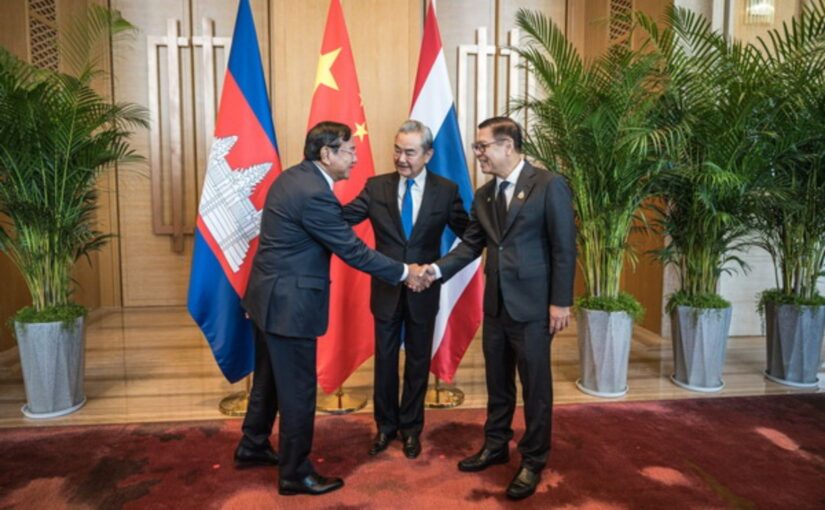
Intensive diplomatic efforts by China to halt the resumed armed conflict between Thailand and Cambodia and to address its underlying causes scored a significant success with a December 29, 2025, trilateral meeting of the foreign ministers of China, Cambodia, and Thailand, held in Yuxi, Yunnan Province.

Chinese Foreign Minister Wang Yi stated that since the outbreak of the border conflict between Cambodia and Thailand, China has upheld the spirit of the Global Security Initiative put forth by President Xi Jinping, actively mediating and using its good offices. Chinese leaders have maintained friendly communication with the leaders of Cambodia and Thailand, and the foreign ministers have held multiple phone conversations. The Chinese special envoy has made four shuttle visits for the important objective of listening to the two sides, accommodating their legitimate concerns, and seeking a path to resolve differences through dialogue and negotiation. Thanks to the joint efforts of all parties, the militaries of Cambodia and Thailand recently reached a ceasefire agreement, and China is pleased to see this progress.

Wang said that the trilateral meeting is timely. The three parties have held multiple bilateral talks here, and especially, the diplomatic and military departments of Cambodia and Thailand have engaged in face-to-face, in-depth exchanges. The discussions among the three parties were beneficial and constructive, leading to important consensus that:

It is necessary to look forward and move ahead together. The ceasefire agreement is hard-won and must not stagnate or be derailed halfway, let alone allow conflict to be reignited. This is not what the people want, nor what China hopes for.
Both sides should proceed step by step without stopping. The implementation of the ceasefire arrangement requires continuous communication and consultation. The restoration of bilateral relations should be gradually advanced. But as long as both sides maintain confidence and engage in equal dialogue, the goals will surely be achieved.
Rebuilding mutual trust is paramount. The conflict has led to a loss of trust, but Cambodia and Thailand are eternal neighbours with a long history of friendly exchanges. This gathering by the Fuxian Lake is intended to heal the wounds caused by the conflict, dispel the estrangement between the two sides, and truly restore friendly relations. This serves the interests of the Cambodian and Thai peoples and is the shared expectation of all parties. China will always be a promoter of the development of Cambodia-Thailand relations and is willing to provide all necessary assistance and support, including ceasefire monitoring, humanitarian aid, and demining cooperation.
After the trilateral meeting, a press release was issued, specifying five areas where Cambodia and Thailand will further strengthen communication and enhance understanding:

The immediate priority is to consolidate the ceasefire and ensure full and effective implementation of the Joint Statement. China supports the commitment of Cambodia and Thailand in this regard through mutual efforts with a view to ensuring that it is comprehensive and lasting, and laying the foundation for rebuilding peace.
The next key step is to work towards resuming normal exchanges. China welcomes the efforts of Cambodia and Thailand to endeavour to resume exchanges and communication in all areas and at all levels, with a view to restoring exchanges and cooperation, and restoring the livelihood of the displaced people in the border areas. China is ready to provide humanitarian assistance immediately for livelihood needs of the displaced people in the affected border areas. 
Cambodia and Thailand will work to rebuild political mutual trust. China welcomes the efforts of Cambodia and Thailand to rebuild engagement through diplomatic channels and to promote contact between the two Foreign Ministers.
The long-term goal is to improve Cambodia-Thailand bilateral relations. China encourages Cambodia and Thailand to create conditions for resuming normal diplomatic relations step by step.
The shared responsibility is to safeguard regional stability. Cambodia and Thailand express their commitment to settling disputes by peaceful means, and to making concerted efforts with regional countries to address common risks and challenges, in accordance with the United Nations Charter, the ASEAN [Association of South East Asian Nations] Charter, and the Treaty of Amity and Cooperation in Southeast Asia.
Wang Yi also held separate bilateral meetings with his two counterparts.

Meeting with Deputy Prime Minister and Minister of Foreign Affairs and International Cooperation of Cambodia Prak Sokhonn, Wang Yi said that the ironclad friendship between China and Cambodia has withstood the test of the changing international landscape, remaining rock-solid and growing stronger over time. China is following closely the tensions on the Cambodia-Thailand border and has been committed to promoting talks for peace. The ceasefire fully aligns with the shared aspirations of the Cambodian and Thai peoples and meets the common expectations of countries in the region, and it is believed to be welcomed and supported by all parties.

He added that the ceasefire marks the beginning of the process of rebuilding peace. The two sides should proceed with a phased and measured approach to promote a comprehensive and lasting ceasefire, restore normal interactions, rebuild mutual trust, turn around bilateral relations, and safeguard regional peace and stability. The two countries can make good use of this face-to-face opportunity for representatives of their diplomatic and military departments to engage in dialogue and communication in a flexible manner, enhance understanding and build mutual trust.

Prak Sokhonn said that Cambodia highly appreciates China’s positive role in mediating the conflict, including the meeting among the foreign ministers of Cambodia, China, and Thailand, as well as the Chinese special envoy’s shuttle mediation.

Both sides also exchanged views on China-Cambodia relations and agreed that under the strategic guidance of the leaders of both countries, positive progress has been made in building an all-weather China-Cambodia community with a shared future in the new era. The Cambodian side expressed gratitude for China’s support and assistance in Cambodia’s development, considering China as the most reliable and trustworthy partner.

Even as the discussions were still proceeding in Yunnan, the first batch of China’s humanitarian aid was already arriving in Cambodia.

On December 28, Chinese Ambassador to Cambodia Wang Wenbin announced on his social media that to help displaced civilians affected by the border conflict, the Chinese government has decided to provide RMB 20 million-worth of emergency humanitarian aid to the Cambodian government. “Today,” he continued, “the first batch of Chinese aid arrives in Cambodia, which includes, among others, tents, blankets, and food.”

Wang noted that ever since the outbreak of the Cambodia-Thailand border conflict, China is the first country to provide assistance to Cambodia, and also the one that has provided the most assistance, testifying to the profound friendship between China and Cambodia.

Meeting with Minister of Foreign Affairs of Thailand Sihasak Phuangketkeow, Wang Yi said that China will continue to make efforts to rebuild peace between Thailand and Cambodia and is willing to offer humanitarian assistance to people in need in both countries.

As a friendly neighbour of both countries, China wants least to see Thailand and Cambodia come to war and hopes most to see the two countries restore their friendship. It is believed that as long as Thailand and Cambodia communicate on an equal footing and move forward together, there will be no insurmountable obstacles.

Sihasak spoke highly of China’s active efforts in mediating the Thailand-Cambodia conflict in an Asian way, noting that the ceasefire agreement newly signed by Thailand and Cambodia marks a fresh start.

With regards to bilateral relations, Wang requested Sihasak to convey Chinese President Xi Jinping’s sincere greetings and New Year’s wishes to Thai King Maha Vajiralongkorn Phra Vajiraklaochaoyuhua, stating that this year marks the 50th anniversary of the establishment of diplomatic relations between China and Thailand. The Thai King successfully paid his first historic state visit to China. Xi and the Thai monarch reached important consensus on promoting the building of a China-Thailand community with a shared future, which has drawn a blueprint for the development of bilateral relations.

Sihasak requested Wang to convey the king’s sincere greetings to President Xi. He said that Thailand and China have shared a time-honoured history of exchanges. In recent years, the comprehensive strategic cooperative partnership between the two countries has grown increasingly close, with mutually beneficial and win-win cooperation deepening across various fields, making significant contributions to safeguarding regional peace and stability.

The following articles were originally published on the website of the Chinese Foreign Ministry and by Agence Kampuchea Presse and the Xinhua News Agency.
Foreign Ministers of China, Cambodia, and Thailand Hold Trilateral Meeting

December 29 (MFA) – On December 29, 2025, the trilateral meeting of the foreign ministers of China, Cambodia, and Thailand was successfully held in Yuxi, Yunnan Province. Member of the Political Bureau of the CPC Central Committee and Foreign Minister Wang Yi, Cambodian Deputy Prime Minister and Minister of Foreign Affairs and International Cooperation Prak Sokhonn, Thai Foreign Minister Sihasak Phuangketkeow, and senior military officials from the three countries attended the meeting.

Wang Yi stated that since the outbreak of the border conflict between Cambodia and Thailand, China has upheld the spirit of the Global Security Initiative put forth by President Xi Jinping, actively mediating and playing good offices. Chinese leaders have maintained friendly communication with the leaders of Cambodia and Thailand, and the foreign ministers have held multiple phone conversations. The Chinese special envoy has made four shuttle visits for the important objective of listening to the two sides, accommodating their legitimate concerns, and seeking a path to resolve differences through dialogue and negotiation. Thanks to the joint efforts of all parties, the militaries of Cambodia and Thailand recently reached a ceasefire agreement, and China is pleased to see this progress.

Wang Yi stated that the trilateral meeting is timely. The three parties have held multiple bilateral talks here, and especially, the diplomatic and military departments of Cambodia and Thailand have engaged in face-to-face, in-depth exchanges, all demonstrating a positive and open attitude. Both sides are committed to easing tensions and are willing to improve bilateral relations on the basis of the ceasefire. The discussions among the three parties were beneficial and constructive, leading to important consensus. First, it is necessary to look forward and move ahead together. The ceasefire agreement is hard-won and must not stagnate or be derailed halfway, let alone allow conflict to be reignited. This is not what the people want, nor what China hopes for. Second, both sides should proceed step by step without stopping. The implementation of the ceasefire arrangement requires continuous communication and consultation. The restoration of bilateral relations should be gradually advanced. But as long as both sides maintain confidence and engage in equal dialogue, the goals will surely be achieved. Third, rebuilding mutual trust is paramount. The conflict has led to a loss of trust, but Cambodia and Thailand are eternal neighbors with a long history of friendly exchanges. This gathering by the Fuxian Lake is intended to heal the wounds caused by the conflict, dispel the estrangement between the two sides, and truly restore friendly relations. This serves the interests of the Cambodian and Thai peoples and is the shared expectation of all parties. China will always be a promoter of the development of Cambodia-Thailand relations and is willing to provide all necessary assistance and support, including ceasefire monitoring, humanitarian aid, de-mining cooperation, and other aspects. China looks forward to, and believes in, the early return of Cambodia-Thailand relations to the right track.

The foreign ministers of Cambodia and Thailand expressed their gratitude to China for providing the platform for dialogue and highly appreciated China’s constructive role in resolving the conflict, easing tensions, and promoting dialogue. Both sides emphasized the value of peace and expressed their willingness to actively implement the ceasefire agreement, make good use of dialogue mechanisms at all levels, jointly manage, control and resolve disputes, and work together to safeguard peace and stability in the border areas between the two countries.

After the trilateral meeting, a press release was issued, specifying five aspects where Cambodia and Thailand will further strengthen communication and enhance understanding, namely, gradually consolidate the ceasefire, resume exchanges, rebuild political mutual trust, achieve a turnaround in bilateral relations, and safeguard regional peace.

Press Release of China-Cambodia-Thailand Fuxian Meeting

December 29 (MFA) – On 28 and 29 December 2025, Foreign Ministers and senior military officials of China, Cambodia and Thailand held a meeting by the Fuxian Lake, Yunnan Province of China. China welcomed the Joint Statement of the 3rd Special General Border Committee (GBC) Meeting signed between Cambodia and Thailand on 27 December 2025. The three sides stressed that the Joint Statement serves the fundamental and long-term interests of the people of the two countries. It sends out a positive signal, and is conducive to peace and stability of the region. It fully demonstrates that dialogue and consultation is a practical and effective way to resolve complex disputes. 

The three sides had in-depth exchanges on consolidating ceasefire and working step by step through mutual efforts to resume normal exchanges, rebuild political mutual trust, improve Cambodia-Thailand bilateral relations, and safeguard regional stability, with the key outcomes as follows: 

1.The immediate priority is to consolidate the ceasefire, and ensure full and effective implementation of the Joint Statement. China supports the commitment of Cambodia and Thailand in this regard through mutual efforts with a view to ensuring that it is comprehensive and lasting, and laying the foundation for rebuilding peace. In this connection, the three sides support the Joint Boundary Commission in accordance with the Joint Statement of the 3rd Special GBC Meeting on 27 December 2025.China is ready to provide all necessary support to Cambodia and Thailand in advancing humanitarian de-mining through the Joint Coordinating Task Force and bilateral arrangements, and to provide substantive assistance for the ASEAN Observer Team (AOT) to ensure its effective functioning. The Chinese military will maintain contact with the Cambodian and Thai militaries to provide support for the consolidation of ceasefire, when necessary and upon request by both Cambodia and Thailand. 

2.The next key step is to work towards resuming normal exchanges. China welcomes the efforts of Cambodia and Thailand to endeavour to resume exchanges and communication in all areas and all levels, with a view to restoring exchanges and cooperation, and restoring livelihood of the displaced people in the border areas in accordance with the Joint Statement of the 3rd Special GBC Meeting on 27 December 2025.China is ready to provide humanitarian assistance immediately for livelihood needs of the displaced people in the affected border areas. 

3.Cambodia and Thailand will work to rebuild political mutual trust. China welcomes the efforts of Cambodia and Thailand to rebuild engagement through diplomatic channels, and to promote contact between the two Foreign Ministers. Cambodia and Thailand agree to foster a sound atmosphere for the planned Fifth Lancang-Mekong Cooperation Leaders’ Meeting to be held in Thailand at appropriate time, and ensure its success.

The long-term goal is to improve Cambodia-Thailand bilateral relations. China encourages Cambodia and Thailand to create conditions for resuming normal diplomatic relations step by step. China is willing to provide platform,when necessary, for the two sides to conduct more comprehensive and effective communication. 
5.The shared responsibility is to safeguard regional stability. Cambodia and Thailand express their commitment to settling disputes by peaceful means, and to making concerted efforts with regional countries to address common risks and challenges, in accordance with the United Nations Charter, the ASEAN Charter, and the Treaty of Amity and Cooperation in Southeast Asia. The three countries agree to take more effective measures to combat transboundary crimes such as telecom and online scams, to protect the life and property of the people in the region. 

Cambodia and Thailand appreciate China’s strong support in promoting talks between the two countries, taking into account the comfort levels of both sides. In the spirit of the Anning Outcome, China will continue to play a constructive role in facilitating the rebuilding of trust and achieving lasting peace between Cambodia and Thailand in the Asian way, with the aim of building a community with a shared future with neighbouring countries.

Wang Yi Meets with Deputy Prime Minister and Minister of Foreign Affairs and International Cooperation of Cambodia Prak Sokhonn

December 28 (MFA) – On December 28, 2025, Member of the Political Bureau of the CPC Central Committee and Foreign Minister Wang Yi met with Deputy Prime Minister and Minister of Foreign Affairs and International Cooperation of Cambodia Prak Sokhonn in Yuxi, Yunnan Province.

Wang Yi said that the ironclad friendship between China and Cambodia has withstood the test of the changing international landscape, remaining rock-solid and growing stronger over time. China is following closely the tensions on the Cambodia-Thailand border and has been committed to promoting talks for peace. With the concerted efforts of all parties, the two militaries of Cambodia and Thailand have reached a ceasefire agreement, marking an important step toward restoring peace. China congratulates both countries on this progress. The ceasefire fully aligns with the shared aspirations of the Cambodian and Thai peoples and meets the common expectations of countries in the region, and it is believed to be welcomed and supported by all parties.

Wang Yi stated that the ceasefire marks the beginning of the process of rebuilding peace. The two sides should proceed in a phased and measured approach to promote a comprehensive and lasting ceasefire, restore normal interactions, rebuild mutual trust, turn around bilateral relations, and safeguard regional peace and stability. The two countries can make good use of this face-to-face opportunity for representatives of their diplomatic and military departments to engage in dialogue and communication in a flexible manner, enhance understanding and build mutual trust. Wang Yi expressed the expectation that the three parties will send out a message of peace from Yunnan, reach a consensus on peace, and showcase the prospects for peace. China supports ASEAN in playing its due role and stands ready to assist the ASEAN observer team in monitoring the ceasefire, and provide humanitarian supplies to Cambodia for the settlement of displaced people in border areas. Wang Yi expressed the hope that Cambodia will continue to enhance the protection of Chinese citizens and projects in the country.

Prak Sokhonn said that Cambodia highly appreciates China’s positive role in mediating the conflict, including the meeting among the foreign ministers of Cambodia, China, and Thailand in Anning, as well as the Chinese special envoy’s shuttle mediation. Thanks to the joint efforts of China and all parties, Cambodia and Thailand held a meeting of the General Border Committee, and the two militaries signed a ceasefire agreement. Moving forward, Cambodia is willing to work with Thailand to fully implement the ceasefire agreement, make effective use of various dialogue mechanisms, and continuously enhance mutual trust between the two countries and their militaries. This is crucial for restoring bilateral exchanges, normalizing relations, and resolving the border issue at an early date. Cambodia looks forward to the early arrival of the dawn of peace and hopes that this trilateral meeting will contribute to rebuilding lasting peace.

Both sides also exchanged views on China-Cambodia relations and agreed that under the strategic guidance of the leaders of both countries, positive progress has been made in building an all-weather China-Cambodia community with a shared future in the new era. The Cambodian side expressed gratitude for China’s support and assistance in Cambodia’s development, considering China as the most reliable and trustworthy partner. Cambodia will firmly abide by the one-China principle, oppose “Taiwan independence”, and support China’s cause of reunification.

China to Continue Playing a Positive and Constructive Role in Ceasefire Consolidation
Phnom Penh, December 28 (AKP) – China will continue to play a positive and constructive role in consolidating the ceasefire between Cambodia and Thailand, reaffirmed H.E. Wang Wenbin, Chinese Ambassador to Cambodia, upon the arrival of the first batch of Chinese aid to Cambodia on Sunday.

On his social media platform this afternoon, H.E. Wang Wenbin stated that to help displaced civilians affected by the Cambodia-Thailand border conflicts, the Chinese government has decided to provide RMB 20 million-worth of emergency humanitarian aid to the Cambodian government.

Today, he continued, the first batch of Chinese aid arrives in Cambodia, which includes, among others, tents, blankets, and food. Hopefully, these supplies will be timely assistance for the Cambodian people affected by the conflict to improve living conditions and overcome the current difficulties.

According to H.E. Ambassador, ever since the outbreak of the Cambodia-Thailand border conflicts, China is the first country to provide assistance to Cambodia, and also the one that has provided the most assistance, testifying the profound friendship between China and Cambodia.

“Peace is a shared aspiration of both Cambodian and Thai people, and also China’s unremitting pursuit,” he underlined, adding that currently, Member of the Political Bureau of the CPC Central Committee and Chinese Minister of Foreign Affairs Wang Yi is meeting with Cambodian and Thai foreign ministers in Yunnan Province, with the participation of military representatives from the three countries.

“We welcome the ceasefire announcement by Cambodia and Thailand, and will continue to play a positive and constructive role in consolidating the ceasefire, rebuilding mutual trust, and establishing lasting peace,” H.E. Wang Wenbin emphasised.

China will continue to make efforts to rebuild peace between Thailand and Cambodia: Chinese FM
KUNMING, Dec. 28 (Xinhua) — China will continue to make efforts to rebuild peace between Thailand and Cambodia and is willing to offer humanitarian assistance to people in need in both countries, said Chinese Foreign Minister Wang Yi in Yuxi City, southwest China’s Yunnan Province on Sunday.

Wang, also a member of the Political Bureau of the Communist Party of China Central Committee, made the remarks when meeting with Minister of Foreign Affairs of Thailand Sihasak Phuangketkeow.

Following the signing of a joint statement agreeing to a ceasefire, Cambodian and Thai foreign ministers are leading delegations to meet in Yunnan from Dec. 28 to 29 at the invitation of Wang.

Wang said as a friendly neighbor of both countries, China wants least to see Thailand and Cambodia come to war and hopes most to see the two countries restore their friendship. It is believed that as long as Thailand and Cambodia communicate on an equal footing and move forward together, there will be no insurmountable obstacles.

China will continue to support ASEAN in playing its due role, is willing to provide assistance to the ASEAN observation mission in monitoring the ceasefire.

Sihasak spoke highly of China’s active efforts in mediating the Thailand-Cambodia conflict in an Asian way, noting that the ceasefire agreement newly signed by Thailand and Cambodia marks a fresh start.

Resorting to force is never Thailand’s choice when it comes to disputes with neighboring countries, Sihasak said, adding that Thailand is committed to achieving a sustainable ceasefire and pursuing genuine peace.

“We are willing to look forward and move ahead, strengthen communication with Cambodia through bilateral channels, and in a sincere manner, gradually resume exchanges, rebuild mutual trust, repair bilateral relations, and safeguard the peace and tranquility of the borders between the two countries and the region,” the foreign minister said.

With regards to bilateral relations, Wang requested Sihasak to convey Chinese President Xi Jinping’s sincere greetings and New Year’s wishes to Thai King Maha Vajiralongkorn Phra Vajiraklaochaoyuhua, stating that this year marks the 50th anniversary of the establishment of diplomatic relations between China and Thailand. The Thai king successfully paid his first historic state visit to China. Xi and the Thai king reached important consensus on promoting the building of a China-Thailand community with a shared future, which has drawn a blueprint for the development of bilateral relations.

Thailand has recently reiterated its firm commitment to the one-China principle and its opposition to “Taiwan independence,” demonstrating strong support for China’s efforts to safeguard national sovereignty and territorial integrity, said Wang, adding that China appreciates this stance.

China is willing to work with Thailand to implement the important consensus reached by the two heads of state, jointly open up a new golden 50 years of China-Thailand friendship, Wang added.

Sihasak requested Wang to convey Thai king’s sincere greetings to President Xi. He said that Thailand and China have shared a time-honored history of exchanges. In recent years, the comprehensive strategic cooperative partnership between the two countries has grown increasingly close, with mutually beneficial and win-win cooperation deepening across various fields, making significant contributions to safeguarding regional peace and stability.

Sihasak said Thailand will, as always, firmly adhere to the one-China policy.

https://socialistchina.org/2026/01/02/c ... -cambodia/
Image

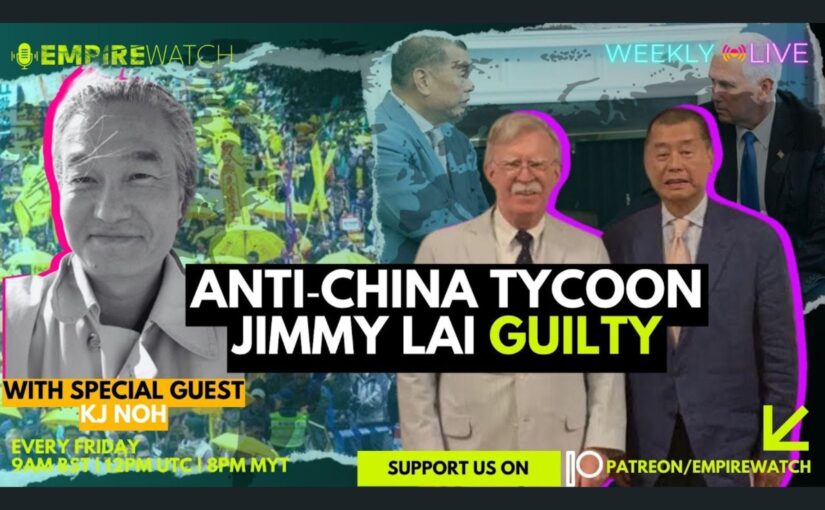
Jimmy Lai convicted: the truth behind Hong Kong’s US‑backed colour revolution

In the clip embedded below, Ileana Chan of Empire Watch interviews KJ Noh about the recent conviction of Hong Kong media tycoon Jimmy Lai, which Western outlets have framed as an attack on press freedom. KJ notes that Jimmy Lai was found guilty on two counts of collusion with foreign forces and one count of sedition under Hong Kong’s national security laws following a 156-day trial.

Discussing the political context of the trial, KJ explains that the 2019 Hong Kong riots evolved into an attempted “colour revolution”, backed by the US, and observes that Lai used his media influence and resources to coordinate and publicise this movement. KJ also observes that Lai actively lobbied US officials to apply sanctions against China.

As such, KJ argues that Lai received a fair trial within Hong Kong’s legal system and that his conviction was justified given his involvement in sedition.

The interview expands into a discussion of Hong Kong’s colonial past, with KJ pointing out that Hong Kong under British control was not the model of liberal democracy it is sometimes painted as, but rather an apartheid colony.


https://socialistchina.org/2026/01/02/j ... evolution/

*******

China's attack bulk carriers
January 2, 7:05 PM

Image

China's attack bulk carriers

China is actively experimenting with converting conventional dry cargo ships into military vessels.
Dry cargo ships are being fitted with standard containers concealing cruise missile launchers, anti-aircraft systems, radars, catapults for drone launches, and so on. The line between military and civilian navies is steadily blurring.

Image

Image

Image

Image

Image

Image

These quasi-attack ships can also launch smaller drones—from reconnaissance aircraft to loitering munitions—as well as surface and underwater unmanned aerial vehicles.

https://colonelcassad.livejournal.com/10283610.html

Google Translator

Might as well considering that the USA has gone full on pirate.
"There is great chaos under heaven; the situation is excellent."

User avatar
blindpig
Posts: 15306
Joined: Fri Jul 14, 2017 5:44 pm
Location: Turtle Island
Contact:

Re: China

Post by blindpig » Sun Jan 04, 2026 5:09 pm

China Urges Maduro’s Release, Calls for Negotiated Resolution

China demanded the immediate release of Venezuela’s president and urged dialogue, while Japan said it would work with G7 partners to “restore democracy” amid the crisis.

Image
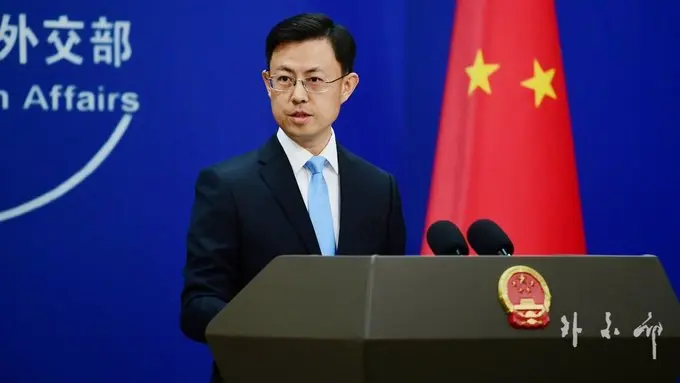
China Foreign Ministry Spokesperson Guo Jiakun announced that China urges the United States to immediately release of Venezuela’s president and his wife, calling for a negotiated solution. @IrnaEnglish

January 4, 2026 Hour: 5:56 am

China on Sunday voiced “grave concern” over the capture of Venezuelan President Nicolás Maduro and his wife, Cilia Flores, by the United States, demanded their “immediate release,” and called for the crisis to be resolved through “dialogue and negotiation,” according to a statement from the Chinese Ministry of Foreign Affairs.

Beijing said it was “gravely concerned” that Washington had “seized by force” the Venezuelan head of state and his spouse and transferred them outside the country. The ministry’s spokesperson stated that U.S. actions “clearly violate international law and the basic norms governing international relations,” and contravene “the purposes and principles of the Charter of the United Nations,” while undermining Venezuela’s sovereignty.

China urged Washington to “guarantee the personal safety” of Maduro and Flores, to “release them immediately,” to “stop undermining the Venezuelan government,” and to “resolve the issue through dialogue and negotiation.” The statement did not announce additional measures.


The remarks followed an announcement by U.S. President Donald Trump that Maduro and Flores had been captured in Caracas and transferred to the United States. The Venezuelan president spent his first night at the Metropolitan Detention Center in Brooklyn. In Caracas, Vice President Delcy Rodríguez assumed interim leadership of the executive branch by order of Venezuela’s Supreme Court of Justice.

China maintains close diplomatic and economic relations with Venezuela, strengthened during the administrations of Chinese President Xi Jinping and Maduro, and has consistently defended the principles of state sovereignty and non-interference in international forums. Earlier, Beijing issued a consular advisory discouraging its citizens from traveling to Venezuela due to deteriorating security conditions, without offering political assessments of the U.S. operation.

Separately, Japan’s Ministry of Foreign Affairs said it is “closely monitoring” the situation in Venezuela following the U.S. military operation and stated it would work to “restore democracy” in the country. “The Government of Japan is closely monitoring the situation and giving the highest priority to the safety of Japanese citizens” residing in Venezuela, the ministry said.


Tokyo said it would coordinate with “relevant countries including those of the G7,” a group that includes its main ally, the United States, to “promote diplomatic efforts aimed at restoring democracy and stabilizing the situation in Venezuela.” Japan’s foreign ministry emphasized respect for international law while reiterating its position on “the importance of restoring democracy in Venezuela as soon as possible.”

https://www.telesurenglish.net/china-ur ... esolution/

(This is weak. But I cannot think of what China might do...)

******

"There is great chaos under heaven; the situation is excellent."

User avatar
blindpig
Posts: 15306
Joined: Fri Jul 14, 2017 5:44 pm
Location: Turtle Island
Contact:

Re: China

Post by blindpig » Sat Jan 10, 2026 3:33 pm

Outlaw US Empire's Hegemonic Spasms: A Chinese View

A long important read
Karl Sanchez
Jan 08, 2026

Image

Events are happening on close to a daily basis as the Outlaw US Empire tries to mask its decline by using what remains of its ability to project power. Many know of the recent illegal seizure of a Russian flagged vessel in international waters by the Trump Gang. Russia’s MFA issued a statement that I translated and posted here that’s very legalistic serving as a message to the Global Majority on the grounds Russia stands on when the next attempted seizure occurs. One other important note; I discovered that the Novgorod area the Outlaw US Empire attacked using Ukraine as a mask wasn’t just the location of a nuclear command bunker and adjacent presidential residence, but is also the area where Putin’s family resides (yes, he does have extended kin), which is an old Mafia tactic to attack one’s family to obtain compliance. Since that attack, the Kremlin has been silent except for Putin’s New Year’s and Christmas messages to Russians. The same can be said for almost all other areas of the Russian government. The negotiation kabuki theatre has ended, and we’re back to the Biden Era stand-off.

All that aside, I came across what IMO is a good evaluation of the situation from a Chinese academic writing under his pen name Bao Shaoshan that was posted at Guancha. Here’s my translation of its title: “When a Hegemon Declines, It Turns to Its Waning Military Strength, Thus Proving Its Decline:”
Late at night on January 3, 2026, the United States launched an airstrike on Venezuela and forcibly took President Nicolas Maduro and his spouse from his residence with special forces. The Trump administration described the operation as a “law enforcement operation” against so-called drug trafficking, but it was undoubtedly a military attack that was a flagrant violation of international law. The operation was not only accompanied by bombing, but also the blatant abduction of the Venezuelan president and his spouse to the U.S. amphibious assault ship USS Iwo Jima on the high seas.

This act is not only a blatant violation of international law, but also a clear reflection of the reality of the continued decline of the United States. The international reaction further highlighted the waning of U.S. hegemony when Venezuelan Vice President Delci Rodríguez denounced the move as a kidnapping aimed at plundering the country’s oil resources. Instead of demonstrating unshakable strength, the operation revealed how a superpower turned to naked aggression and coercion at a time of decline in influence.

The abduction of a sovereign leader of a country in the absence of any international authorization or due process is contrary to the fundamental principles of the post-World War II international order. Article 2, paragraph 4, of the UN Charter expressly prohibits the use of force or the threat of force to violate the territorial integrity and political independence of States, and the airstrikes and the kidnapping of the Venezuelan president to New York for trial are a violation of that principle.

UN Special Rapporteur Ben Saul characterized it as “illegal aggression” and echoed widespread condemnation in Latin America and beyond. Within the United States, voices, including Rep. Delia Ramirez, have accused it of being a “war crime” and linking it to a series of U.S. histories of intervention in the region. These interventions have left a legacy of poverty, displacement, and long-term instability.

Trump’s claim that the United States will “regulate” Venezuela until a “suitable transition” occurs unabashedly reveals its true intentions: U.S. operations in Venezuela are not anti-narcotics, but resource control grabs similar to those in Iraq or Syria. In a world where hegemony is no longer stable, such behavior does not send a signal that the strength of the United States is still the same, but reveals traces of hegemonic despair.

Emanuel Wallerstein pointed out in his book The Decline of American Power (2003) that American hegemony peaked between 1945 and 1970, and then gradually declined driven by structural factors such as the rise of economic competitors, the trauma of the Vietnam War, the process of decolonization, and the ideological shock of 1968.

By the beginning of the 21st century, military superiority was still the main pillar of its influence, but its excessive use of this tool exacerbated the vulnerability of its hegemony. As a summary of its argument: the more the United States openly abuses its remnants of military might, the weaker its actual power becomes.

The case of Venezuela vividly illustrates this mechanism. The unilateral nature of the operation highlights the boundaries of its power: it alienates partners and stimulates a backlash from opponents. Putin’s warning about a potential global escalation is a reflection of this backlash. From Mexico to Brazil, Latin American countries are mobilizing diplomatically and economically to resist this neocolonial practice.

In his 2006 book The American Power Curve, Wallerstein pointed out how unilateralism after 9/11 transformed an otherwise slow decline into a more violent and rapid decline: foreign intervention aimed at reaffirming hegemony not only fails to consolidate dominance, but instead consumes resources, erodes the foundation of alliances, and gives rise to broader resistance.

This is mutually confirmed by the recurring history: the Bay of Pigs, the invasion of Grenada, the invasion of Panama, and the Iraq War, almost all of which ended in backlash and continued to accumulate resentment in local society. In Venezuela, where prolonged sanctions and external interventions have weakened economic fundamentals and driven population exodus, the Maduro regime has been able to maintain its resilience through ties with countries such as Russia, China and Iran.

Today, the kidnapping could trigger an escalation at the proxy level and even a broader regional conflict; The Venezuelan leadership has publicly vowed to resist. According to Wallerstein’s judgment, countries in the late stages of hegemony often turn to “military strength” when their economic and cultural dominance declines.

This approach usually frustrates the hegemonic state, which in turn accelerates the process of multipolarization. In this context, when more hidden, sophisticated and institutionalized control methods fail, violent coercion is grasped by the declining hegemon and becomes a last resort and a tool of last resort.

If we want to understand the essence of the decline of the United States reflected behind the US invasion of Venezuela, we must go back to the deeper roots of economic imperialism. This is the path that Washington has relied on for more than a century. Venezuela has the world’s largest oil reserves, a structural resource advantage that has long made it a key target for external powers, especially the United States.

As early as the 19th century, Washington intervened in Venezuela’s affairs; The discovery of oil in the early 20th century further strengthened this involvement. During the reign of dictator Juan Vicente Gómez, the ruler, known for his corruption, amassed a fortune equivalent to billions of dollars today via lucrative concessions for U.S. oil companies such as Standard Oil, as well as Royal Dutch Shell.

Romulo Betancourt, an important figure in Venezuela’s mid-20th-century democratic politics, once described Gomez as “a tool for foreign powers to control the Venezuelan economy, an ally and servant of powerful external interests.”

This exploitative structure did not end in subsequent regime changes. The United States has supported the repressive dictatorship of Marcos Perez Jimenez: its security forces have tortured, killing thousands of people, but at the same time offering extremely favorable conditions to multinational corporations. Washington awarded Jimenez the “Legion of Merit” and assisted its NSA in suppressing dissent.

Even after the fall of Jimenez in 1958, when a nominal democracy was established, American influence continued and solidified its influence through economic leverage and support for anti-leftist forces. Its policy logic is clear: the U.S. strategy toward Venezuela prioritizes access to oil resources and related interest arrangements over Venezuela’s sovereignty claims or human rights situation.

By the end of the 20th century, this economic domination continued to accumulate and induce systemic crises, paving the way for the rise of the Bolivarian Revolution. In the 80s and 90s of the 20th century, Venezuela promoted neoliberal policies under pressure from U.S.-backed institutions such as the International Monetary Fund, which often focused on austerity measures and severely damaged the living standards of the general public.

Under these policies, Venezuela’s domestic poverty rate soared from less than 20% in 1979 to more than 50% in 1999, causing large-scale unrest, such as the 1989 Caracasso riots, in which security forces killed hundreds of people in protests against rising prices.

Spreading corruption, rising inequality, and growing alienation from the political system controlled by the elite all combine to create fertile ground for change. Hugo Chavez drew on Simón Bolívar’s ideals of independence, anti-imperialism and social justice, winning the 1998 elections and promising to redirect oil wealth to the people.

The “Bolivarian Revolution” promoted the nationalization of key industries, funded social programs such as education, health care and poverty alleviation, and significantly reduced inequality, with the Gini coefficient falling from nearly 0.5 to 0.39 between 1999 and 2011.

The U.S. response was swift and punitive. Washington immediately saw Chavez’s resource nationalism as a dual threat to corporate interests and ideological hegemony and escalated its intervention. The United States provided tacit support for a coup in 2002 that briefly overthrew Chavez. Sanctions against Venezuela were officially launched in 2006 in the form of an arms embargo on the grounds that Venezuela “does not cooperate” in counter-terrorism and counter-narcotics.

During the Trump presidency, sanctions were further extended to financial restrictions (2017 E.O. 13808 prohibits U.S. involvement in Venezuelan debt and Venezuelan National Oil Company PdVSA-related transactions), oil sector bans, and sub-sanctions against third parties. The Biden administration proposed a temporary relief mechanism linked to election concessions, but it has regained weight in the 2024 election dispute. These measures hit Venezuela’s economy hard, exacerbating shortages and migration, but failed to achieve the goal of overthrowing the government until military intervention in 2026. This intervention became the “logical end” after decades of accumulating economic wars and regime change demands.

This narrative in Venezuela is also embedded in the broader history of regime change in Latin America. Stephen Kinzer examines this in his 2006 book, Overthrow: America’s Century of Regime Change from Hawaii to Iraq. Kinzer pointed out that for more than a century, the United States has instigated and overthrew 14 governments around the world, often driven by economic interests, supplemented by ideological and security narratives as justifications.

In Latin America, this pattern dates back to the imperial era: the United States intervened in Cuba, Puerto Rico, the Philippines, Nicaragua and Honduras, and the U.S. military or its agents took over key matters to secure access to resources and markets. [Many interventions aren’t mentioned nor is the “imperial era” over.]

During the Cold War, “anti-communism” further amplified and institutionalized these actions: the 1954 CIA-orchestrated Guatemalan coup that overthrew President Jacobo Arbenz was directly triggered by land reforms that touched the interests of the United Fruit Company, culminating in a civil war that lasted decades and killed tens of thousands of people.

In Chile, the United States supported the 1973 coup d’état that overthrew Salvador Allende and supported Augusto Pinochet to establish a dictatorship, resulting in the killing of more than 3,000 people and the torture of tens of thousands. Kinzer defined Grenada (1983) and Panama (1989) as typical examples of the “era of invasion”: direct military operations in the name of democracy or anti-narcotics, overthrowing incumbent leaders, but whose real intentions were often to obscure deeper objectives such as resource grabbing or strategic control.

Kinzer’s analysis further reveals the recurring motivational structures in these actions: protecting the interests of multinational corporations, curbing nationalist demands, and suppressing perceived threats from the left. However, such interventions rarely deliver on their public commitments. Original triumphalist narratives such as George W. George W. Bush under the banner “Mission Accomplished” in Iraq. It was soon replaced by a more chaotic reality: chronic instability, human rights violations, and a backlash of anti-American sentiment.

In Guatemala, the coup induced guerrilla warfare and eventually turned into genocide against indigenous peoples; The Pinochet era in Chile solidified inequality and oppressive rule, which in turn fueled regional resentment; The failure of the Bay of Pigs invasion in Cuba (1961) not only lost face to the United States, but also consolidated the Castro regime and inspired revolutionaries throughout Latin America. In Nicaragua, U.S.-backed “rebels” waged a decade-long war against the Sandinists, causing widespread atrocities without lasting regime change.

Even seemingly “successful” cases like Panama’s “Just Cause” overthrow of Manuel Noriega where the operation also brought short-term confusion and long-term deep doubts about U.S. intentions. According to Kinzer, these interventions often sow seeds of instability, erode U.S. credibility, and breed the threats it claims to eliminate.

Antonio Gramsci’s insight in “Notes from Prison” in the 30s of the 20th century is particularly enlightening here: “The crisis lies precisely in the fact that the old is dying, and the new cannot be born; During this ‘gap period’, there will be all kinds of pathological symptoms.”

Ninety-five years later, we seem to be walking in a similar gap. The unipolar era is collapsing under the multiple squeezes of continuous conflicts, economic shocks and the rise of emerging forces. The future contours of the multipolar or “multi-node” era are still uncertain. The future direction of the world is still an open question, and its direction depends on the evolution of events, not some inevitable fate.

Gramsci’s so-called “pathological symptoms” are particularly concentrated in the eerie repertoire of a hegemonic country kidnapping the leader of another country in the name of law: it puts on the cloak of so-called legitimacy while avoiding its own responsibility in global scourges such as drug proliferation or rights violations. This transitional phase is also more prone to confusion. The emergence of roles in the Trump cabinet, such as Marco Rubio, who advocate regime change, is a concrete manifestation of this decay.

Rubio portrayed raids as routine law enforcement, almost unbelievable; That’s nothing more than a modern warfare version of old gunboat diplomacy. Meanwhile, the Global South is exploring alternative options such as China’s Belt and Road Initiative or BRICS, which promise aid without an invasion, but these arrangements also create feedback loops in their own ways, triggering and amplifying Washington’s anger.

The United Nations, originally conceived as a bulwark against aggression, is now more like a decorative relic of 1945 optimism: it has become an arena for speeches with collective security as its institutional goal. The Security Council is subject to the veto mechanism, and its resolutions have been repeatedly ignored by the powerful.

The rapporteur’s weak condemnation of the Venezuelan events underscores this institutional incompetence: neither the ability to urgently convene a meeting nor the substantive punishment of the provocateurs. In the face of systemic destruction, there are only words left. The ICC presents a similar dilemma: it hunts down the weak while ignoring the centers of power. Wallerstein foresaw the delegitimization process of such institutions in the process of hegemonic decline, which would eventually become a relic of the previous era.

The uncertainty of this gap period will also further amplify systemic risks. Multipolarity can produce collaborative equilibrium, such as de-dollarization, regional integration, innovation-driven partnerships; It may also dissolve the world into opposing camps.

China’s rise, Russia’s resilience, and India’s growth all suggest that there is no longer a single arbiter in a decentralized order. However, the actions of the United States in Venezuela have objectively promoted division and camping. Europe’s mild-mannered reaction to the Venezuelan attack encapsulates this sense of fluidity and disorder. The United Nations and all its subsidiary devices are more like a façade. With the end of “peace under American rule” and the gap period unfolding, the “age of monsters” has indeed arrived.

Liberalism is de facto over; it has been abandoned by the United States, reduced to an organizational idea, or reduced to a smoke bomb. It remains to be seen what kind of “post-liberal” system and structure will emerge. What is certain is that the current liquidity has increased significantly compared with the previous period. Moreover, there is far more than one possible form of “postliberalism”.

As for the United Nations itself, although China and Russia have always been firm in their support, at least formally, for the United Nations and its subsidiary organizations, it is becoming increasingly difficult for Russia to believe that this framework will be maintained for a long time as the situation progresses. Only the naïve will believe that real governance can happen within the United Nations at this moment. The cloak of liberalism has been torn apart by the United States. And above the multipolar horizon, it is full of uncertainty, and perhaps even grotesque, terrifying trajectories.

Expanding the horizon to a broader historical picture will make the above judgment more profound. After 1945, the American empire thrived on reconstruction aid and cultural exports. But the oil embargo and inflation in the 70s of the 20th century have exposed its structural cracks. Reagan used policies and narratives to cover up industrial hollowing out in the 80s of the 20th century. The unipolar self-confidence of the 90s gave birth to excessive complacency, which eventually gave birth to endless overseas intervention after 9/11.

The Afghanistan collapse in 2021 and the continued defeat of Ukraine reflect the backlash mechanism revealed by Wallerstein that is working. Venezuela adds another to the list: a resource-rich target is once again locked in as U.S. energy anxiety rises.

The specter of Gramsci also hovers in the United States: deepening domestic political divisions, income disparities, and a political logic of diverting attention from domestic decline through external adventures. Trump’s “return” combines isolationism and aggressiveness to reflect the paradox of the gap period: the new order is struggling to draw strength and try to break through the ground, while vested interests such as the energy cartel, the combination of the military industry and nostalgic imperialism continue to stall its evolution.

This uncertainty means that there is no predetermined trajectory ahead, but the general trend seems to be more inclined towards escalation rather than relief. In the next decade, the spillover and amplification of violence may be even more pronounced: not only in conventional warfare, but also in “invisible wars” - cyber infiltration, economic siege and influence infiltration operations.

Aggression in the “gray zone” that can circumvent open conflict may become the norm. At the same time, unstable dirty wars and terrorist acts may increase in various places. This is not a probability or advocacy, but a probabilistic judgment made during a transitional period without a leader: the power vacuum often induces opportunism.

However, there are also opportunities in this liquidity. The openness of multipolarity provides space for diverse political and development expressions: Africa’s claim to resource sovereignty, Asia’s technological leap, and Latin America’s progressive alliances. Venezuela’s resistance may coalesce broader anti-hegemonic solidarity, and its role can be compared to the catalytic effect played by Vietnam in a sense. The plasticity of this era is summoning a variety of “post-liberal” forms, allowing people to transcend existing and increasingly outdated structures.

Presenting the task as “being a good midwife of multipolarity” aptly captures the challenge of the moment: to support in a prudent way in the throes of labor, so that the new order can grow, rather than forcefully presuppose and shape its results. The reader may naturally infer that stability should take precedence over turmoil, but the focus here is on the fragile openness of the moment rather than the proposal of normative initiatives. Diplomats can certainly push for de-escalation, advance reform of a fairer forum, and facilitate the replacement of force with dialogue. But these are only possibilities after all, not imperative inevitability.

For Donald Trump, 2025 was supposed to herald a triumphant return: a second term would be marked by a “America First” victory narrative, border walls strengthened, trade agreements renegotiated, and global respect regained through a more aggressive posture.

However, the reality is presented as a series of retreats, failures and embarrassments. Economic headwinds persist: inflation remains lingering after promises of rapid relief. Supply chain disruptions reveal structural vulnerabilities in a changing world. As BRICS accelerates its de-dollarization efforts, the dominance of the US dollar is also weakening.

At the domestic level, political stalemate deepens, with congressional infighting blocking infrastructure bills and culture wars distracting from rising inequality and the hollowing out of the middle class. Trump’s signature policies have also suffered setbacks: the tariff war with China has brought the nickname “TACO”; The immigration crackdown has overwhelmed the court system but failed to curb cross-border movements; Foreign alliances were further broken.

Venezuela’s move on the node of U.S. action can be called a symbol of desperate hegemony that punches externally at a time of internal weakness. Narcissistic arrogance aside, the bad year ended in a raid on Venezuela – a high-stakes bet to show toughness and deflect domestic woes.

But as Wallerstein might remind, this high-stakes game itself is a classic symptom of a declining power: when the economic and political situation deteriorates, the declining powers respond to external suspicion with overexpansion, which only exacerbates the downward spiral. Such actions also show that the United States has not adapted to the economic realities of the post-unipolar era, and still clings to outdated tools of coercion, rather than institutional and technological innovation for multipolar markets.

Once upon a time, American companies dominated the global value chain. Today, competitors from other parts of the world are outpacing in areas such as technology and renewable energy. Whether in domestic education and infrastructure investments or embracing multilateral trade, the vulnerability of empires is exposed. In this context, military adventures become expensive distractions to mask the structural decay of their countries.

And historical experience shows that plunging Latin America into turmoil often creates a power vacuum that echoes northward in a vicious feedback loop. Instead of ensuring access to resources or achieving the goal of curbing drugs, U.S. intervention in Venezuela could amplify the crises that Trump has vowed to address.

Historically, there have been regime changes in the region, with Guatemala, Chile, and Nicaragua all having flows of refugees fleeing violence and poverty, which has increased immigration pressure at the U.S. border. Today, Venezuela is a source of millions of migrants. Further disruption could lead to larger cross-border flows, crushing an already strained immigration system and intensifying a domestic political backlash.

At the same time, drug networks that are adept at exploiting volatile environments may be more rampant in the lawlessness that ensues. At a time when regional governance capacity is weakened, they may deliver cheaper and deadlier drugs to the streets of the United States. These are not abstract threats, but more like imperial boomerangs: external intervention will eventually return in the form of internal risks.

Some observers have seen the Venezuelan action as an indirect attack on the broader BRICS ecosystem. Although Caracas is not a key member of the bloc, its alliance with the anti-hegemonic network, its oil, its resistance to sanctions, and its symbolic adherence to anti-American domination in Latin America make it an important node to be reckoned with. Both China and Russia have strongly condemned the intervention: Beijing has accused it of being an “act of hegemony” and Moscow has called it “armed aggression,” but there are very few retaliatory measures that China and Russia can take.

Therefore, China and Russia are more likely to choose to wait for the dust to settle and use this incident to alert the “Global South” to the continuation of Washington’s (and the groveling European Union) colonial reflex, as well as the possible backlash of instability in northern Latin America to the United States. This is a kind of strategic patience in the gap: low-cost, high-leverage, turning the overreach of the United States into a self-devouring fire. The more Washington tries to compensate for its decline with a punch at the outside world, the more it is accelerating the process of multipolarity it fears.

The U.S. invasion of Venezuela is not a dominant expansion, but more like a spasm of a low tide colossus. While unipolarity subsides, the dawn of multipolarity is still full of uncertainty. There are many shadows on it, and possible ghosts lurk. The old order is dying. The shape of the new order depends on how we respond to the uncertainties of the transitional period. And the arrogance of the empire will eventually lead it to decline and become an irrelevant actor.
Much discussion at Moon of Alabama echoes the above content, particularly in these two threads chronologically ordered here and here, although there are many distractions within them. The signs of imperial decline of the Collective Western Empire have existed since the end of WW2 until we now have the waning of the Outlaw US Empire. Ridding the world of Imperialism, hegemony and the gross atrocities they generate, some of which were described above, will be a boon for Humanity. However, we must consider what drives those behaviors to which there are several schools of thought, which I won’t go into here. The great irony is the Outlaw US Empire is responsible for its own downfall via its Neoliberal and Neocon policy dogmas, the results of which cannot be undone. It might be possible for an America First policy to succeed, but it’s impossible to Make America Great Again because the foundation of its greatness was offshored and will not return. It’s the latter reality that all too many are denying. And that denial drives Trump’s pleonexia and megalomania that are at the root of his narcissism and the behavior we see.

Yes, there’s little Russia and China can do to enforce the law that’s being continually broken—again, the problem of dealing with a nuclear armed outlaw. IMO, the best the world can do is to arm itself with the types of weapons that will deter the very limited ability of the Outlaw to project power—the very first step is to replace all US related electronic equipment with Chinese or Russian equivalents since all US gear have backdoors that can be controlled by CIA/NSA. Yes, that will take time, but the “gap” period we’re in may last several decades and there’re too many examples of what can be done via that control as was just demonstrated in Venezuela. Even if Trump were to die tomorrow, Vance is just as bad, and the rest of the Gang remains. And remember, the Ds were little better as they’re controlled by the same Donor Class.

https://karlof1.substack.com/p/outlaw-u ... nic-spasms

******

Why China Increasing Its Imports Will Only Integrate Asia Even More

Making The West Even Less Relevant
Roger Boyd
Jan 09, 2026

There has been a continual bleating from Western politicians and commentators that the Chinese population under consumes, a view that I have shown is substantially based upon faulty measurements, and that Chinese growth must be more based on consumption as against developing the productive forces. This bleating has increased over the past few years as the Chinese Party-State redirected lending from the property bubble to investment in the productive forces; in response to the 2017 and onwards US technology sanctions designed to knee cap the future development of the Chinese economy.

The success of this reorientation has been phenomenal as the housing bubble has been placed into a controlled deflation that has seen house prices fall about one third as real incomes kept rising, and Chinese companies in one industry after another have established strong domestic and international brands. Backed up by a rapidly expanding academic research infrastructure that now dominates the international research rankings. One result has been a large increase in the Chinese trade surplus to over US$1 trillion, even as exports to the US have fallen; showing a diversification away from reliance upon the US market.


The big question that the Western politicians and commentators are not asking themselves is that of where will the extra imports that will be the result of increased domestic consumption come from. With China rapidly extending the electrification of transport and the use of renewables in the production of electricity, there will be a fall rather than a rise in fossil fuel imports; most especially of seaborne imports given the talk of Western blockades. With the Party-State extremely cognizant of the Western weaponization of high technology it will also not be of such things as semiconductors and aircraft; with the Comac C919 and C929 showing China’s focus on removing high dependence upon foreign technology products with which it can be bullied and blackmailed.

With food security an important concern, it will also not be of agricultural products from Western countries. With the Chinese education system now outstripping that of the West, and anti-Chinese xenophobia ramped up in countries such as the US and Australia, there may also be be less rather than more Chinese students studying in Western nations. The US especially will not be a major beneficiary of an increase in Chinese imports, so where will those increased imports come from?

Predominantly South East Asia, cementing the integration of the ASEAN economies with China, and further weakening a US presence already impacted by the Trump administration’s unequal trade treaties and ongoing support for the Gazan genocide. Also, from the rest of mainland Asia such as Russia, Mongolia, North Korea and Kazakhstan; further integrating the Asian continent. Europe has very little that China needs, mostly the luxury goods from France and Italy, given Chinese advances in areas such as machine tools, complex engineering, and automobiles. With such things as the Dutch government’s seizure of the Netherlands operations of the Chinese Nexperia, the UK government’s forcing of JAC Group to sell its majority share in a Scottish chip maker, and the foot dragging on the certification of the Comac C919, China will also be wary of becoming too dependent upon inputs from Western Europe. Hence its opening of foreign factories in countries such as Turkey, Algeria, Hungary and even Spain rather in Western European nations.

The EU had a US$350 billion trade deficit with China in 2024, exporting only US$240 billion to China whilst China exported USS$590 billion to the EU. Notably, German trade with China was relatively balanced in 2020 but then deteriorated as Chinese imports surged and German exports to China fell; reflecting the Chinese advance in the very industries (automobile, machine tools, complex engineering and chemicals) that Germany had previous competitive advantage in. Total German foreign direct investment in China rose to US$80 billion in 2024, more than twice that of Chinese FDI in Germany; reflecting the decisions of German corporations viewing China as a better production base than Germany. Without the reversal of the self-harming anti-Russia sanctions, a full-blown society-wide industrial policy (as against military Keynesianism), and a reining in of the financialization of German society, the German trade balance with China will only deteriorate further. Pushing protectionism in that country and across the EU in general. The recent purchase of Airbus planes by China can be seen as a short-term amelioration of the trade issues with Europe, part of an ongoing process of keeping the issue on a low simmer rather than boiling over. As with the Chinese car plants in Hungary, Turkey, Algeria and Spain; with both Hungary and Spain being members of the EU.

South East Asia
The extremely unequal trade treaties that the Trump administration is bullying ASEAN countries into is incentivizing them to reorient their exports, and trade in general, away from the US. And especially in the Moslem nations of Malaysia and Indonesia the USA brand has been severely impacted by the continuing support for the Zionist genocide. All the while, China is practising free trade and making extensive investments in these nations productive forces and infrastructure; while practising non-interference in other nation’s internal politics. The development of South Korea was heavily kick-started by Japanese firms moving their lower value-added activities offshore, a trend that we may increasingly see with respect to China and the ASEAN countries. With all of the Western aggression and talk of blockades, it makes sense for China to see South East Asian nations as a safer option for production activities and a source of critical imports.

What is not properly understood in the West is how relatively wealthy many of the ASEAN countries are, with highly undervalued exchange rates masking how well off their populations have become. Below, I list the GDP per capita in US$ at current exchange rates and in US$ at purchasing power parity (PPP).

Cambodia (popn 17.9 million): nominal US$2,870; PPP US$8,650

Laos (7.9 million): US$2,170; PPP US$10,210

Philippines (112 million); US$4,000; US$12,935

Vietnam (100 million): US$4,740; US$17,690

Indonesia (280 million): US$5,335; US$18,000

Thailand (72 million): US$7,942; US$26,360

Malaysia (36 million): US$14,423; US$49,000

The IMF estimate Canada’s GDP per capita at PPP to be US$65,500, Greece at US$45,000, Portugal at around US$50,000, Spain at US$59,000, Italy at US$63,000, UK US$64,000, France at US$66,000, and Germany at US$73,500. The PPP for the US is calculated at US$90,000 but the statistical games played by the US state since the 1990s (under representing inflation, counting costs and value added activities etc.) place that number in severe question, with the US probably being much closer to the levels of Canada and Western Europe.

Trade between China and Malaysia hit US$212 billion (Malaysia 2023 US$15 billion deficit) in 2024, growing at 11.4% per annum. Malaysian trade with the US was only US$80 billion (Malaysia 2024 US$25 billion surplus). China is also heavily investing in Malaysia, focused on high-tech manufacturing including EVs (Geely owns the Malaysian Proton), infrastructure and digital technologies. Malaysian GDP is growing at a rate of over 4% per year, with a population growing at 2%; GDP per capita increasing at about 2% per year. Malaysia is already richer than Greece and as rich as Portugal and could near the level of Spain, Italy and the UK in the 2030s.


The Malaysian high speed rail network is now completed between Padang Besar at its northern border with Thailand, through Kuala Lumpur and onto Johor Bahru at its southern border with Singapore. This will connect with the Thai high speed network in the mid 2030s, providing a direct high speed route between Kunming in China and Singapore - integrating China, Laos, Thailand, Malaysia and Singapore.


Trade between China and Thailand hit US$116 billion in 2024 (Thai 2024 US$45 billion deficit), growing at 6% a year. Chinese companies, especially car manufacturers, are heavily investing in manufacturing plants in Thailand. This will aid the Thai trade position, as there will be less imports from China (sourced from Chinese factories in Thailand) and more exports (Thailand is becoming an export hub for Chinese manufacturers). Trade with the US was US$88.4 billion (Thai 2024 US$45 billion surplus), growing at over 10%. Thailand’s population is stable while the economy is growing at over 2%; GDP per capita growing at about the same rate as Malaysia. By the early 2030s, Thailand will be integrated with China through a high speed rail line that links the port of Trat on the Gulf of Thailand, to Bangkok and then through Laos to Kunming in China. Greatly facilitating trade between the two countries which will be overland rather than by sea. In the mid to late 2030’s the high speed network will be expanded from Bangkok to the second biggest city of Chiang Mai.


Trade between China and Indonesia hit US$148 billion in 2024 (Indonesia 2024 US$11.4 billion deficit), growing at a rate of 18% in 2025. Chinese FDI flows into Indonesia are very large, focused on such areas as nickel processing (Indonesia banned the export of unprocessed nickel), the EV supply chain, mining, logistics, construction and digital technology.


Indonesian trade with the US totalled US$40 billion in 2024 (Indonesia US$18 billion trade surplus), growing at 5% per year. Indonesian population growth is under 1%, while GDP growth is around 5%; resulting in a 4% per year GDP per capita growth rate, doubling every 18 years.

Vietnam’s trade with China totalled over US$200 billion in 2024 (Vietnamese trade deficit of US$83 billion with China), growing at over 20% per annum. China is a major source of FDI for Vietnam, especially within the manufacturing sector. Trade with the US was US$150 billion in 2024 (Vietnam trade surplus of US$124 billion), with China heavily involved in Vietnam’s growth as an export hub. Vietnamese population growth is only about 0.5% per year, while GDP is growing at about 7%; doubling GDP per capita in just over a decade. Vietnam is the economic powerhouse that could outstrip Thailand in GDP per capita within a decade and approach the current level of Turkey. Vietnam has much delayed its plans for a high speed rail network linking Hanoi with Ho Chi Minh City, and also Hanoi with Kunming. Construction will not start until 2028-2030 and will not complete until the mid 2030s, but will revolutionize passenger transport and logistics and will integrate Vietnam more tightly with China.

Chinese bilateral trade with the Philippines exceeded US$64 billion annually in 2024 with a growth rate of nearly 20% (Filipino trade deficit of US$40 billion). The population growth rate is 0.8% while GDP growth has been 5%; increasing GDP per capita by over 4% per year. Filipino bilateral trade with the US totalled US$37 billion (Filipino trade surplus of US$5 billion), growing at 5% per annum. The Filipino government under “Bong Bong” Marcus has reversed the positive momentum of relations with China under Duterte, but cannot risk fully endangering relations with a China that is its largest trading partner and a significant source of FDI. The unequal trade treaty with the US (zero Filipino tariffs on US goods, 19% tariff on Filipino goods) will act to limit further development of Filipino exports to the US. The Philippines very much displays a “Stockholm Syndrome” with its previous colonial and neo-colonial US ruler, while maintaining a negative view of China; supported by the teaching of English in schools and the whitewashing of the brutal US subjugation and occupation.

China’s bilateral trade with Laos has recently boomed to US$8.23 billion, increasing at above 15% per year with a Lao trade surplus of about US$1 billion, with the new Laos-China railway facilitating trade and rapidly increasing levels of Chinese FDI. Lao trade with the US is only US$1.2 billion, with a Lao US$400 million trade surplus. The Lao population is 7.9 million, growing at about 1% per year. With GDP increasing between 4% and 5% per year, GDP per capita is increasing at around 3.5% per year. The new railway has transformed the access of Lao resources for China, facilitating a more rapid development of the country’s raw material and agricultural resources. (Video at link.)

Cambodia’s trade with China totalled US$18 billion in 2024 (Cambodia trade deficit of US$12 billion), growing at over 20%, while trade with the US was US$13 billion (Cambodia trade surplus of US$12 billion). China is also the dominant source of FDI, in such areas as the manufacturing, energy, infrastructure and tourism. Population growth is only 1% per year, with GDP growth at 5%; GDP per capita growth of 4% per year. The final part of an integrated China-Laos-Vietnam-Thailand-Malaysia-Singapore integrated high speed rail network will be the building of a Cambodian high speed network linking the capitol Phnom Penh with Ho Chi Minh City in Vietnam and Bangkok in Thailand. Discussions between China and Cambodia are ongoing, and no formal project currently exists; such a network would drive trade between these nations, and China and between these nations. Helping to provide a single integrated market in mainland South East Asia.


For all the above countries, visa free travel arrangements facilitate a rapid growth in Chinese tourism, with Western aggression and xenophobia leading to a 60% drop in Chinese tourism to Western nations compared to pre-pandemic levels. Recent policy changes by the US can only lead to a further fall in Chinese tourists visiting that country. With so many of the ASEAN countries so integrated into Chinese trade and investment flows, an increase in Chinese imports would be expected to favour ASEAN exports; further integrating those nations with China. China’s membership in the RCEP free trade agreement (ASEAN, Australia, Japan, South Korea and New Zealand) will only aid growth in trade between South East Asia and China. The development of relations with Myanmar will have to wait for a cessation of the civil war, with China being even-handed in its relations with different factions.

In late December, China reduced tariffs on 935 specific items to below Most Favoured Nation Levels. These reductions were focused in three areas of critical inputs required for technological self-sufficiency from the West, and to drive technology upgrading by Chinese companies.

The list of 935 items reveals a preoccupation with three pillars: technological self-sufficiency, the green transition and public health. Notable additions to the tariff subheadings include “intelligent bionic robots” and “bio-aviation kerosene.” …

By lowering the cost of importing the foundational components for these (bionic robot) systems, the government is effectively subsidizing the modernization of its factory floors [signalling] a state-led effort to address the demographic reality of a shrinking workforce through rapid automation …

By facilitating the import of advanced materials and “black mass” for battery recycling, Beijing is attempting to move its industries up the value chain. The goal is to transform China from a volume-driven manufacturing hub into a high-value innovation center …

The reduction of tariffs on artificial blood vessels and diagnostic kits for infectious diseases aligns with this mandate. As the Chinese population ages, healthcare is no longer just a social issue; it is a strategic industrial sector.


China also maintains its zero tariffs for 43 least developed nations, and the preferential rates for 34 nations under such agreements as the RCEP. The Chinese 15th five year plan very specifically targets “high quality development”, which will require the off-loading of lower value added and less technologically complex manufacturing to other nations. The greatest beneficiary will be the neutral mainland ASEAN which is being integrated with China through ever-increasing transport corridors and Chinese investments.

Russia
The extensive Western sanctions upon Russia have driven a rapid increase in China-Russia trade, equalling US$245 billion in 2024 (more than double that of 2020 and relatively balanced) as the Western nations cut themselves off from the domestic Russian market and from Russian fossil fuels, other raw material and agricultural exports. Russian GDP per capita at PPP is US$50,000, putting it on a par with Portugal. With a population of 145 million, with a slightly declining trend. GDP growth of about 1-2% going forward will feed directly into increased GDP per capita. Recent Russian visa-free policies for Chinese citizens also promise to accelerate the significant growth in Chinese tourism to the country.


North Korea
North Korea has been under extensive Western sanctions for many, many years. China is its main trading partner and economic lifeline, providing 90% of the nation’s imports and taking in most of its exports; total trade was about US$2.5 billion in 2024. With the opening up of relations between China and North Korea recently, for example with the recent Xi-Kim Jong-un summit, economic relations between the two countries could blossom. Partially driven by geopolitical considerations, as China works to strengthen an ally which protects part of its border in the face of Western, and especially recent Japanese, aggressive stances. North Korea has a population of 26.6 million, growing at only 0.3% per year. Its GDP per capita may be around US$2,000 at PPP, with a true opening up between China and North Korea promising to lead to rapid economic development; with North Korea becoming a source of skilled cheap labour for Chinese enterprises.

Kazakhstan
Trade between Kazakhstan and China is booming, with total trade equalling US$43 billion in 2024 that is relatively balanced and growing at 7% per year. Kazakh trade with the US is only US$4 billion. With major Chinese investments, especially in the energy sector. Kazakhstan has strategic importance to China, as a source of overland fossil fuel and other raw material imports, as a protector of its north west border areas and as a major presence in Central Asia. Multiple rail corridors are being developed through Kazakhstan to link China to Central Asia, Iran and Europe which will further integrate the two economies. There are also critical oil and gas pipelines that run between China and Kazakhstan.

It has a population of 20 million, growing at 1.5% annually. Its GDP per capita at PPP is nearly US$45,000 (vs. US$14,700 nominal) placing it on a par with Greece, with GDP growth of about 5% per annum driving GDP per capita growth of 3.5% per annum.

Mongolia
China is Mongolia’s dominant trading partner, taking in over 90% of Mongolia’s exports. Total trade was US$19 billion in 2024, with Mongolia running a sizeable trade surplus. As with Kazakhstan, Mongolia has strategic significance to China as it sits on China’s northern border and is a source of overland imports. It population is only 3.5 million, with a GDP per capita at PPP of US$20,000 (vs. US$7,000 nominal). Its GDP is growing at over 5% per year, which feeds into rapid growth in GDP per capita with population growth of only about 1% per year.

Bangladesh
China’s trade with Bangladesh reached US$23 billion in 2024, with a Bangladeshi trade deficit of US$22 billion, growing at about 10% per annum. China has also been a significant provider of FDI, growing rapidly in recent years and focused in infrastructure, textiles and telecom. Bangladesh’s trade with the US was US$12.4 billion in 2024, with Bangladesh enjoying a trade surplus of US$6.1 billion, growing at 3% per annum. The country has a GDP per capita at PPP of US$10,270 (US$2,730 nominal) and with a population of 176 million (growing at 1% annually) is becoming a significant target of Chinese FDI looking for cheap labour. GDP growth is above 4%, leading to ongoing increases in GDP per capita; with a 23% manufacturing share of GDP.

India
India’s trade with China has greatly expanded but is also extremely one sided, with India running a US$106 billion trade deficit with China on a total bilateral trade of US$141 billion. Relations with the US have been significantly damaged through the US attempted tariff bullying to stop India buying oil from Russia, and its attempts to lock the Indian military into the US MIC. Indian trade with the US was US$129 billion, with India enjoying a US$46 billion goods trade surplus. India and the US also have a large bilateral services trade of about US$80 billion, which is relatively balanced. The reality is that India has little that China needs, sees China as a strategic competitor and has heavily restricted Chinese FDI. Its GDP growth statistics have recently become highly questionable, as its population continues to grow at about 1% per annum. It is a country with falling levels of industrialization and a GDP per capita at PPP of only US$12,100 (nominal US$2,900). With a manufacturing share of GDP of only 15%, a level that has not improved for decades.

Pakistan
China’s trade with Pakistan is growing rapidly, reaching US$23 billion in 2024 (Pakistan 2024 trade deficit of US$18 billion), at a rate of 11% per annum. Pakistan has a GDP per capita of US$7,000 at PPP (US$1,700 nominal) and a population of 251 million growing at about 2% annually. With GDP growth hardly faster than population growth. The two nations consider the other to be key strategic allies, with considerable Chinese FDI in the country. Pakistan is of significant geopolitical importance to China, as well as China being its major trading partner. Trade between Pakistan and the US is only US$7.3 billion, with Pakistan running a US$3 billion surplus. China and Pakistan enjoy a free trade agreement, while the Trump administration has slapped a 19% tariff on Pakistani imports.

Chinese infrastructure investments include the upgrading of the Karakoram Highway that links Pakistan with Xinjiang in China, the upgrading of Pakistan’s main railway line and connection with the Chinese Xinjiang railway, and the development of the Gwadar port that facilitates the bypassing of the Strait of Malacca chokepoint. BYD is also opening a CKD car plant near Karachi, opening in mid 2026.

Mainland Asia (Excluding South Korea and India) As China’s Safe Space
China is at the stage of development where it can offshore lower value added production that cannot be fully automated to other nations. With over a US$1 trillion trade surplus and a future of lowered fossil fuel imports, China has a significant ability to allow its currency to appreciate to increase its imports and to also reduce the cost of outgoing FDI. With Mainland Asia seen as the safe space away from the aggression and interference of the Western nations. The seizing of the Russian foreign exchange reserves did irreparable damage to the perceived trustworthiness of the Western nations with respect to foreign assets, and actions such as that taken by the Dutch government toward Nexperia have only reduced such trust further. The technology sanctions and US tariff war have also oriented the Chinese Party-State toward removing dependencies upon foreign technology, and sourcing inputs from non-Western sources, most especially the Eurasian safe space.

Africa
Chinese FDI in Africa exceeded that of the US between 2012 and 2022, before the US regained the lead in 2023 and 2024. The Trump administration’s cut backs in foreign aid lead to a 42% drop in the first half of 2025 though. China’s investments have previously tended to being in resource extraction and infrastructure rather than manufacturing.

In 2024 South Africa’s trade with China totalled US$34.2 billion (South Africa US$9.4 billion deficit with China), while South Africa’s trade with the US was US$26.2 billion (SA US$8.9 billion surplus). South Africa’s main exports to China are raw material and agricultural products. Chinese FDI has been substantial, with some directed toward electronics (Hisense), car plants (BAIC, FAW) and solar (Seraphim Solar) and construction materials.

Even with the US vassal Egypt, trade with China is twice the level of trade with the US. China has invested in manufacturing plants for fibreglass (Jushi), home appliances (Heier, Midea), textiles and food processing.

China is also Algeria’s largest trading partner (US$12.5 billion with an Algerian US$11 billion trade deficit) and there has been a recent surge in FDI in areas of energy extraction, car plants (Chery, Geely, JAC), solar glass manufacturing (Kibing), steel (Jingdong), and tyres (Double Star). The steel and car plants will take advantage of the exploitation of Algerian iron ore deposits facilitated by China. Algeria may become a significant base for exports from Chinese factories.

Guinea will become a critical supplier to China, with the exploitation of its iron ore reserves being facilitated by Chinese investment through the Simandou project of which Chinese firms own 75%; the world’s largest untapped high quality reserve of iron ore. Chinese imports of Guinean iron ore will reduce such imports from Australia.

The integration of mainland Asia, and even Africa, will continue apace, driven by both increasing Chinese imports and the off-shoring of Chinese low value added activities. The West may get what they are asking for, and wish that they had not got it.

https://rogerboyd.substack.com/p/why-ch ... ts-imports

******

The Pentagon on China's military potential
January 9, 3:04 PM

Image

Key findings from the Pentagon report ( https://t.me/poisk_mil/9949 ) regarding China's military potential.

Forced Unification.

By the end of 2027, the PLA expects to be capable of waging and winning a war against Taiwan by focusing on three strategic pillars: "strategic decisive victory" over Taiwan, "strategic counterweight" to the United States, and "strategic deterrence and control" in the region.

Nuclear Expansion.

By 2024, China's nuclear warhead inventory reached just over 600. By 2030, this stockpile will exceed 1,000 warheads, and by 2035, it will reach 1,500.

Vulnerability of the US Homeland.

The DF-27 ICBM is considered a deployed system. With a range of 5,000-8,000 km, it can reach the continental US and is China's longest-range anti-ship ballistic missile.

Naval Buildup.

China's naval forces remain the largest in the world. Beijing plans to build six more aircraft carriers by 2035, bringing its total to nine.

Artificial Intelligence.

China has significantly closed the gap with the United States in generative AI and large-scale language models.

Cyber ​​Operations.

China will seek to create disruptive and destructive effects through cyberattacks to influence decision-making and disrupt US military operations.

Global Presence.

In addition to the base in Djibouti, a joint logistics and training center is already operational at the Ream Naval Base in Cambodia.

Military Budget.

The PLA's official budget for 2025 was 1.78 trillion yuan (about $246 billion). However, the Pentagon estimates actual spending to be 60% higher.

@poisk_mil - zinc

https://colonelcassad.livejournal.com/10296027.html

China will provide any assistance to the Iranian government
January 10, 1:09 PM

Image

"China will not sit idly by while the sovereignty of the great Iranian nation is violated by foreign-backed bandits and criminals. Whatever the Iranian government needs in terms of financial, technical, intelligence, or military assistance, China is ready to provide it." (c) China

China has woken up to the realization that, following Venezuela, the United States could launch a serious attack on Iran again.
This would lead to the loss of Iranian oil and trade corridors through Iran from Chinese economic plans, after which the entire "One Belt, One Road" strategy could come to an end. We'll see what the Chinese support translates into beyond threatening statements.
Unrest, fueled by China, continues in a number of Iranian cities.

P.S. Russia continues to supply Iran with various weapons without further comment. Recently, following the delivery of air defense systems and aircraft, Mi-28 attack helicopters were also delivered to Iran.

https://colonelcassad.livejournal.com/10297358.html

Google Translator
"There is great chaos under heaven; the situation is excellent."

User avatar
blindpig
Posts: 15306
Joined: Fri Jul 14, 2017 5:44 pm
Location: Turtle Island
Contact:

Re: China

Post by blindpig » Mon Jan 19, 2026 3:30 pm

Oliver Boyd-Barrett: Blockading China for US Supremacy
January 12, 2026
By Oliver Boyd-Barrett, Substack, 1/1/26

Berletic in his latest article and podcast (Berletic) argues that the US bid for supremacy is accelerating; there is no “retreat” to the Western hemisphere; there is no process of “adaptation” to multipolarism. To the contrary, the US has launched a war against multipolarism. The US continues its proxy war against Russia (I think we should consider it a CIA-led war), persists in its encirclement of China, and, in the Middle East, once again threatens Iran (now enfeebled by domestic dissension and protests as well as by existential problems of drought and pollution).

The US obsession with Greenland, he argues, is far from being a signal of a US wish to retreat to the Western hemisphere (as if that excused such a blatant violation of international law in any case, any more than the ongoing US menacing of Venezuela). The US acquiring or exerting control over Greenland is in fact the US moving closer to Western Russia, where most of Russia’s big centers of population are, including Moscow, threatening Russia to a greater degree, even, than it already does. Alaska is close to Russia but it only close to eastern Russia.

US commanders are currently running the war in Ukraine from Germany; the logistical support for Ukraine is coming from other US proxies Poland and Romania. Greenland will offer an alternative location for rear command of the war as it is undertaken by US’ European proxies, giving the appearance of an “abandonment” of Ukraine by the US, while in fact it prepares a global blockade of Russian, Chinese and Iranian maritime shipping.

As Ukraine collapses, the US will push other US proxies in Europe to come forward to fill the gap left by Ukraine’s collapse of fighting capability, Seizure of Greenland would assist the evolving maritime blockade and in continuing the war against Russia in Ukraine. US military bases in Greenland would be closer to Russia than military bases in Europe, including Turkiye and Great Britain. In February 2025, US Secretary of State for War, Pete Hegseth, told Europe to double down on support of Ukraine, investing in its arms industry capability, increasing military expenditure on NATO from 2% to 5% of GDP, and establishing a division of labor between the US and Europe, with Europe taking responsibility for Ukraine while the US focuses on China.

In Europe the US will position itself in the rear, in Greenland, from which it can supervise the activity of its European proxies in their struggle against Russia and supply the necessary reconnaissance and intelligence. The idea is to pin Russia down and depleted. US proxies will pay the full costs of the conflict with Russia while the US reaps the full benefits. The fall of Syria is an example. Proxies fought the war, the US benefits geopolitically from its collapse.

From 1992, US foreign policy (the Wolfowitz doctine, later refined as the Bush doctrine in 2003) has been driven by the ambition to suppress all actual and potential rivals to US supremacy, everywhere. Even though the latest US strategy paper says that the US policy of supremacy was wrong, it spends most of the time talking about what it must do to stop emergent rivals to US power, even regionally. Nothing in the US will change this; the only source of change can come from without. Such a challenge is most likely to come from China.

A 2018 US naval War College review paper advocated a maritime oil blockade against China and sought to identify ways in which limitations on the possibility of such a blockade could be circumvented. It talked not about blockading ports but about blockading choke-points well beyond the range of most of China’s weapons: e.g. the Malacca Strait (between Malaysia’s Malay Peninsula and Indonesia’s Sumatra, connecting the Indian Ocean – via the Andaman Sea – to the South China Sea) which forms a vital, heavily trafficked global shipping route for energy, goods, and components, rich in history, commerce, and strategic importance, with Singapore located at its southern gateway.

The US marine force has an anti-shipping division that can relocate to such sensitive chokepoint areas to interdict Chinese shipping or other shipping headed for, or from, China. US strategies anticipate how China might evade US actions in relation to such choke points and seek to blunt their efficacy. Destruction of the Myanmar oil pipeline is envisaged as a way to interrupt the flow of energy to China, given China’s limited capacity to control what happens within Myanmar. Since the 2018 paper, US-backed militants have already begun to physically attack the Myanmar pipeline. There are areas along the pipeline that the Myanmar government has had to abandon. If any part of the pipeline is compromised, the whole project is useless.

Here and elsewhere, the US seeking to sabotage China’s Belt and Road initiative. The US is manipulating Cambodia to destabilize pro-Chinese initiatives in Thailand. In Pakistan there is another transport and trading corridor in which China has been investing heavily but where the US backs local militant attackjs, while the US also tries to destabilize the Pakistani regime. The same is true of Balochistan, where Pakistan had allowed China a development area and which the US is now tyring, through proxy rebels, to dismantle. So far as China’s long shared border with Russia, across which China it imports Russian energy is concerned, US aggression against Russia over Ukraine targets Russian energy facilities that in turn affects Russian capacity to supply energy to China if continued for long enough. New York Times articles on the secret war against Russia over Ukraine notes how the CIA has supported drone attacks on Russian shipping and energy facilities in Sebastopol, the Black Sea, and Russian energy facilities in the Caspian, Mediterranean and off the coast of Africa. This reduces Russian ability to come to China’s assistance in the event that the US launches a maritime blockade of China.

US interventions against the flows of oil to China from Iran and from Venezuela, and Marco Rubio’s assertion in January 2025 that US control of Greenland would enable it to control energy flows enhanced by growing navigability of shipping lanes through the Arctic – similar to US attempts to interfere with shipping lanes in the South China Sea – are all indications of an evolving US policy of containment by blockade. All are examples of US pressure on choke-points in the flow of energy and trade to and from China that otherwise might reduce the efficacy of a US maritime blockade of China.

https://natyliesbaldwin.com/2026/01/oli ... supremacy/

******

What China Will and Will Not Do Regarding Venezuela and Iran
Posted by Internationalist 360° on January 16, 2026
Orçun Göktürk

Image

Interests, possibilities and limits to Beijing’s actions.

In recent times, some texts spreading rapidly on social media claim that China is waging a “silent but devastating” economic and geopolitical war against the US through Venezuela and Iran. In these narratives, China is presented as an actor that paralyzes global finance within a few hours, halts US ports, sends oil prices skyrocketing in a single day, and effectively declares a multipolar world. The problem is that this picture does not help in understanding real Chinese foreign policy; on the contrary, it places it in a completely wrong context.

China is a powerful actor today, but it is not unlimited. The steps it specifically refrains from taking are far more instructive for understanding Beijing’s strategic mind than the steps it actually takes.

A Brief Historical Framework

From 1949 until the late 1970s, China engaged in high-risk foreign policy moves driven by ideological motivations. This line was abandoned with the “Reform and Opening Up” post-1978. During the Deng Xiaoping era, China adopted a strategy centered on economic development and avoiding direct conflict with major powers. This approach is summarized by the principle of “hide your light and bide your time” (韬光养晦). In the Xi Jinping era, China has become more visible, but this fundamental risk calculation has not disappeared.

Today, the Venezuela and Iran issues are handled within this framework.

What Does Venezuela Represent for China?

Venezuela is important for China for three reasons: energy supply, political and economic presence in Latin America, and a principled stance against the US’s practice of unilateral sanctions.

However, this importance does not make Venezuela a “strategic red line” for China. Venezuela is not an irreplaceable country in China’s global energy basket. China can procure its oil from West Asia, Russia, and Gulf countries. The Chinese presence in Latin America is growing, but this region is not a military or security-centered priority area for Beijing.

For this reason, China does not turn the crises in Venezuela into a direct arm-wrestling match with the US. It provides diplomatic support, maintains commercial relations, and raises principled objections to sanctions, but it specifically avoids moves that would create military, financial, or logistical shocks.

This can be read as a weakness, or as a conscious drawing of boundaries…

China’s Incapabilities and Limitations

The narratives circulating on social media claim that China could, within a few hours, stop all transactions with American defense companies, lock down US ports, cut off oil shipments to spike prices, and paralyze the global financial system. Almost all of these claims contradict China’s own interest structure.

First, the Chinese economy is still deeply integrated into the global trade system. Bypassing US ports would hit Chinese exporters and large capital groups within China, not just the US. Much of China’s maritime trade is built on mutual dependence. Severing this bond in one day would mean a severe economic shock for China.

Second, the energy issue. China is not in a position to use oil as a weapon. China is a major energy consumer, and global price fluctuations directly affect the Chinese economy. A sharp rise in oil prices would create pressure on inflation, production costs, and growth in China before it hits the US.

Third, the financial system. It is true that China is developing alternative mechanisms to SWIFT. However, these systems are not mature enough to replace SWIFT on a global scale. Even China itself conducts a significant portion of its foreign trade in dollars. The idea of dozens of countries switching to the Chinese system within a few days does not align with today’s financial reality.

Fourth, rare earth elements. China is a powerful actor in this field, but using this power suddenly and harshly would accelerate supply chain diversification processes against China rather than the US. Beijing prefers to keep this card controlled and limited.

The Iran Issue: More Sensitive, More Limited

Iran is a more strategic country for China compared to Venezuela. It holds a more central position in terms of energy, Middle Eastern balances, and Belt and Road connections. Despite this, China does not take the path of direct conflict with the US regarding Iran.

China continues its trade with Iran, uses mechanisms that stretch sanctions, and provides diplomatic support. However, it avoids military or harsh financial moves that would challenge the US via Iran. The reason is simple: an uncontrolled escalation in the Middle East would risk China’s energy security and global trade routes.

So, What Is China Doing?

China’s real strategy is not to create sudden shocks but to build long-term balance.

In the examples of Venezuela and Iran, China does the following:

It diplomatically opposes regime change attempts.
It maintains commercial relations without breaking them, and Beijing knows that it is difficult to be replaced in this regard.
It establishes bilateral and regional mechanisms that limit the absolute impact of sanctions.
It does not legitimize the US’s unilateral moves on multilateral platforms. Of course, against a rogue, increasingly lawless hegemon state, these remain insufficient—at least for now.

But it does (and can) NOT do the following:

It does not come face-to-face with the US in the Western Hemisphere or anywhere far from its own territory.
It does not consciously sabotage global trade.
It does not openly escalate crises with military or financial shocks.

Conclusion: A Rising but Cautious Actor

China’s Venezuela and Iran policy is neither as aggressive as some anti-imperialist narratives on social media suggest, nor as passive as it might seem from the outside. China is an actor aware of the limits of its power. Considering the US military budget, its global network of bases, and its dominance over maritime trade, open conflict is still not rational for Beijing today.

Therefore, China focuses on gaining time, keeping costs low, and long-term power accumulation. The “world-changing China in one move” narratives circulating on social media do not explain reality. On the contrary, they miss the most critical feature of Chinese foreign policy.

China is a rising power today, but it is still a power that calculates, knows its limits, and prefers to delay if conflict is inevitable.

https://libya360.wordpress.com/2026/01/ ... -and-iran/

******

The "dirty power" debate: is China's electrification actually green?

A fact check of Mr. Robin Brooks' recent comments about China's green transition
Yuzhe HE and David Fishman
Jan 08, 2026

This piece respectfully responds to Mr. Robin Brooks' recent comments about the hype concerning China's green transition.

Robin Brooks is a senior fellow in the Global Economy and Development program at the Brookings Institution. His research focuses on global growth and inflation dynamics, capital flows to emerging and frontier markets, as well as Western sanctions policy and the G7 oil price cap on Russia.

Mr. Brooks wrote on his twitter/X on Dec. 26, 2025 that:

One thing I'll regret about 2025 is how many nonsense meetings I had to sit through on how China is becoming the world's "green" super power. Two-thirds of electricity generation in China is from thermal power plants (blue). That's coal. Give me a break...
Robin J Brooks
China's Electrification Mirage
At any point in time, there’s various themes in markets. Those are often based in fact, but markets invariably tend to get ahead of themselves. It feels that way with artificial intelligence, where I’ll temper my enthusiasm until the autocomplete function on my iPhone stops making rudimentary mistakes. It also feels like some of this is going on with al…
Read more
a month ago · 44 likes · 9 comments · Robin J Brooks
He linked to his Dec. 7, 2025 article, titled "China's Electrification Mirage," in which he said:

….There's no doubt that China in recent years built impressive transmission infrastructure, but what matters at the end of the day is power generation, which still overwhelmingly comes from fossil fuels. All the power lines in the world don't make you sustainable or energy independent if you're still having to import and burn tons of fossil fuels. To my mind, the hype far exceeds reality where China electrification is concerned.

Image

Mr. Brooks presented the chart above and added:

It's true that solar and wind are growing in importance, but let's keep things in perspective. Their shares in total electricity generation were five and nine percent, respectively, in October 2025 versus 67 percent from thermal power. Maybe China is electrifying, but what matters is where this power comes from and that's still overwhelmingly from fossil fuels.

Image

He further noted:

There does look to be a ramp up in electricity generation in the last few months of data, but even that is mostly from thermal power plants and not wind or solar. The chart above shows the growth contributions of various power sources on a quarter-over-quarter basis. Much of the ramp up in electricity production is due to thermal and isn't based on renewable energy. I don’t mean to diminish the extensive build out of China's transmission infrastructure. But - in the end - what matters is where the electricity comes from and it’s from the same old fossil fuels as before.

Mr. David Fishman has offered a detailed response to Mr. Brooks' comment. Mr. Fishman works at the Lantau Group, specializing in China's power sector. His work spans solar, wind, coal, nuclear, hydro, transmission, and power markets, with a particular focus on renewable energy policies and market forecasting. He holds a joint MA in International Relations and Energy Policy from Johns Hopkins SAIS and Nanjing University, and is fluent in Mandarin.

With his permission, I am sharing an adapted version of his response below, in the hope of contributing to a more comprehensive and balanced debate. Please note this is not a word-for-word quotation. I have slightly edited the wording and formatting for clarity.

(Much more at link with many graphs.)

https://substack.com/home/post/p-183423486
"There is great chaos under heaven; the situation is excellent."

User avatar
blindpig
Posts: 15306
Joined: Fri Jul 14, 2017 5:44 pm
Location: Turtle Island
Contact:

Re: China

Post by blindpig » Sat Jan 24, 2026 3:31 pm

Image
China strengthens its cooperation with Cuba through a new round of humanitarian and energy assistance valued at 80 million dollars and 60,000 tons of rice, in response to the emergencies arising from the U.S. blockade. (Photo: Cuban Presidency)

China pledges $80 million, 60,000 tons of rice to Cuba
Originally published: teleSUR English on January 21, 2026 by Laura V. Mor (Sourced: Cubadebate / Cuban Presidency) (more by teleSUR English) | (Posted Jan 23, 2026)

Beijing approved a new round of assistance for Havana, including $80 million in emergency financial aid for electrical equipment and 60,000 tons of rice.

Chinese Ambassador Hua Xin announced the support on January, 20 during a meeting with Cuban President Miguel Diaz-Canel Bermudez, emphasizing the aid responds to Cuba’s economic and energy challenges exacerbated by the blockade imposed by the U.S.

Ambassador Hua Xin conveyed that the decision stemmed from direct instructions from Chinese President Xi Jinping.

“This assistance responds to the economic situation and the state of the national electro-energetic system that Cuba faces today due to the blockade”, Hua Xin stated, detailing his recent discussions with high-ranking Cuban officials, including the ministers of Foreign Trade and Energy and Mines, to identify cooperation priorities.

https://twitter.com/PresidenciaCuba/sta ... ce-cuba%2F

Text reads: “Received by the President @DiazCanelB China’s ambassador, Hua Xin. The diplomat reported on the delivery to the island of an emerging financial assistance valued at 80 million dollars and a donation of 60,000 tons of rice.”

Energy Cooperation Adjustments
Beyond immediate aid, China disclosed modifications to previous energy cooperation projects. Adjustments were made to the 200 MW solar energy donation and the delivery of 5,000 photovoltaic solar panel modules intended for isolated homes.

The ambassador explained that “it has been determined, in agreement with the Ministry of Foreign Trade and Foreign Investment, to designate an executing company.”

President Diaz-Canel expressed gratitude for China’s solidarity, highlighting the advanced state of bilateral ties, particularly the ongoing development of the Fourth Phase of the digital transformation program with Chinese backing.

https://mronline.org/2026/01/23/china-p ... e-to-cuba/

*****

China Extracts Lithium From Salt Lakes

Image
Xi Taijnar Lake in China. Photo: Xinhua

January 23, 2026 Hour: 11:44 am

This breakthrough provides a model for greener, smarter, and larger-scale operations.
On Thrusday, the People’s Daily reported that China has achieved a major industrial breakthrough in extracting lithium, a critical metal for electric vehicle batteries, by launching the world’s first 20,000-tonne production line that uses novel technology to extract lithium from salt lake brine.

The facility, built by Qinghai CITIC Guoan Technology Development Co., Ltd. in northwest China’s Qinghai Province, has begun operating at target capacity.

The successful operation of this production line will markedly enhance the comprehensive utilization rate of China’s salt lake lithium resources and extend their viable development lifespan. It provides a crucial model for the industry’s upgrade towards greener, smarter, and larger-scale operations.

Lithium, often called “white gold,” is a fundamental component for rechargeable lithium-ion batteries that power electric vehicles (EVs), consumer electronics, and large-scale energy storage systems.

This breakthrough is seen as a pivotal step in building a more self-reliant and secure lithium supply chain for China, underpinning the strategic security of its booming new energy sector.

China's Battery Boom is driving lithium prices UP

▪️The US spent 365 days struggling to build ~50 GWh of grid storage.
▪️China smashed that number in just 31 days this December.

They are rewriting the global energy map pic.twitter.com/Jq9gEjc2rD

— Katusa Research (@KatusaResearch) January 20, 2026
The core technology raised the lithium recovery rate from the salt pan stage, where industry averages were below 50 percent, to over 78 percent. Furthermore, the overall lithium recovery rate across the entire production workshop surged from 75.38 percent to 90.41 percent.

The new production line represents a major advancement in processing lithium from salt lakes, a type of resource abundant in China but historically challenging to exploit efficiently due to high loss rates during traditional solar evaporation in salt pans.

Beyond improving yield, the new method significantly shortens the average production cycle for battery-grade lithium carbonate and drastically reduces lithium loss compared to traditional evaporation processes.

The technique also ensures the comprehensive utilization of associated resources like potassium and boron remains unaffected, promoting synergies between resource efficiency, economic benefit, and environmental sustainability.

https://www.telesurenglish.net/china-ex ... alt-lakes/

*****

Image

Storming the heavens – A masterful Marxist study of China’s revolution
In the following article, which was originally published in the Morning Star, Ben Chacko acclaims Jenny Clegg’s recently published, ‘Storming the Heavens: Peasants and Revolution in China, 1925-1949 Viewed Through a Marxist Lens’ as a “a masterful analysis that puts class struggle back at the heart of our understanding of China’s revolution.”

Ben begins by noting that: “China’s revolution is arguably the most enduringly significant of the great 20th-century revolutions. Not simply because the Russian Revolution, whose impact on socialist thinking across the West is greater, ended in counterrevolution from 1989-91 — but because the Chinese people ‘standing up,’ to use Mao Zedong’s phrase, set the country on a path which is today shifting the global balance of power, and bringing an end to almost five centuries in which Europe and its settler-colonial offshoots have come to dominate the world.”

This he notes was a revolution in which the peasantry were the main revolutionary force, something that upended most traditional Marxist assessments. This, Ben argues, is “significant in ways an internationalist left needs to understand because the current transformation of the world seems, again, to have more to do with a Third World that’s ‘standing up’ than with workers’ revolution in the capitalist core.”

The review notes how Jenny demonstrates Mao’s careful assessment of class contradictions in the countryside from the 1920s on, and the way, over time, that the Communist Party of China (CPC’s) handling of them changed, both through experience gained by trial and error, summing up, adjustment and rectification, as well as in response to changed conditions, not least Japanese aggression and the ensuing nationwide war of resistance.

According to Ben: “The book tells the history of particular developments in China and makes no claim to impart lessons for British socialists today: given the utterly different social and economic conditions, that might seem ambitious (the slogan ‘to everyone land, a house and a horse’ might not address a modern British worker’s most pressing needs).”

Certainly, the vast differences in social and economic conditions speak for themselves. Although the right to a secure, decent and warm home and the adequate provision of safe, affordable, accessible and environmentally friendly public transport might well be welcomed by many workers in all parts of Britain.

Indeed, Ben goes straight on to note that: “The left here, though, has repeatedly failed to build a winning alliance that unites a majority who are all working class, but within which there are significant gradations of income and assets, against an elite enriched by its control of capital. The Chinese Communist approach of testing policies that cement unity within a class despite differences is certainly worth emulating.”

In concluding, Ben explains how Jenny introduces the reader to a “many-sided, long-running debate on the nature of China’s revolution and the character of its ‘new democracy’, built on an alliance of different social classes. China’s story emerges on its own terms, where many Western socialists have tried to interpret it in light of their attitudes to Russia’s. People will still debate, for example, whether Stalin or Trotsky was right about Chinese communist policy in the 1920s: Clegg establishes that — understandably — neither had as strong a grasp on Chinese realities as Mao.

“Mao himself emerges from the book as a brilliant strategist and Marxist, not because Clegg particularly praises him but because his rigorous class analysis and tactical flexibility is shown in his responses to dilemmas thrown up over a 25-year revolutionary process.”

It is, in summary, a “superb contribution to China studies that deepens our understanding of a revolution that is still reshaping the world.”

Friends of Socialist China is organising a book launch at 3pm on Saturday February 14, both online and in person at the Marx Memorial Library. You can register for the event here. You can also order the book from the publisher, Manifesto Press.
China’s revolution is arguably the most enduringly significant of the great 20th-century revolutions.

Not simply because the Russian Revolution, whose impact on socialist thinking across the West is greater, ended in counterrevolution from 1989-91 — but because the Chinese people “standing up,” to use Mao Zedong’s phrase, set the country on a path which is today shifting the global balance of power, and bringing an end to almost five centuries in which Europe and its settler-colonial offshoots have come to dominate the world.

China’s revolution was led by a Communist Party. Yet it was not a proletarian revolution as envisaged by Marx but one in which peasants not only participated (as they had done in Russia) but were the main revolutionary force.

This upended most traditional Marxist assessments of the peasantry: that peasants “cannot represent themselves [but] must be represented” (Marx), that they tended to be vacillating allies of the urban workers at best, and indeed were often a bastion of economic and social conservatism. And this is significant in ways an internationalist left needs to understand because the current transformation of the world seems, again, to have more to do with a Third World that’s “standing up” than with workers’ revolution in the capitalist core.

Jenny Clegg’s masterful analysis helps us to do so. Storming the Heavens is a work of meticulous scholarship that puts class struggle back at the heart of our understanding of China’s revolution. A necessary move, since not all historians agree on this — some seeing it as a primarily nationalist phenomenon directed against Western imperialist encroachment and above all Japanese invasion.

Clegg demonstrates Mao’s careful assessment of class contradictions in the countryside from the 1920s on, and the way, over time, that the Communist Party of China (CPC’s) handling of them changed.

This helps explain why the CPC was able to succeed where previous peasant-dominated uprisings, such as the 19th-century Taiping Revolt, did not: it identified feudal landlords as the key obstacle to peasant liberation and worked to build a sustainable alliance of other social forces against them.

This was a lengthy trial-and-error process. Sometimes the party adopted “leftist” positions pushing absolute egalitarianism and the confiscation of better-off peasants’ land: but this “poor peasant line” could alienate the sizeable social layer of “middle peasants” who could then be drawn into reactionary alliances with rich peasants and landlords.

Clegg considers debates within the party, such as between Mao and Liu Shaoqi, in detail, and also studies of land reform in specific places, such as David and Isabel Crook’s Ten Mile Inn and William Hinton’s Fanshen, revealing Communist Party policy as both pragmatic (continuously learning from experiences) and strategic, proceeding in phases toward egalitarian land reform but not at a pace that fragmented peasant unity against the landlords.

The book tells the history of particular developments in China, and makes no claim to impart lessons for British socialists today: given the utterly different social and economic conditions, that might seem ambitious (the slogan “to everyone land, a house and a horse” might not address a modern British worker’s most pressing needs).

The left here, though, has repeatedly failed to build a winning alliance that unites a majority who are all working class, but within which there are significant gradations of income and assets, against an elite enriched by its control of capital. The Chinese Communist approach of testing policies that cement unity within a class despite differences is certainly worth emulating, though the policies concerned could hardly be the same.

Clegg’s study investigates subjects that have vexed Marxists for decades — the differences between Chinese and European feudalism; whether Western imperialism put China on a path of capitalist development; whether Mao’s “mass line” politics genuinely empowered the peasantry.

At each stage she weighs the contributions of previous scholars, introducing the reader to a many-sided, long-running debate on the nature of China’s revolution and the character of its “new democracy”, built on an alliance of different social classes. China’s story emerges on its own terms, where many Western socialists have tried to interpret it in light of their attitudes to Russia’s. People will still debate, for example, whether Stalin or Trotsky was right about Chinese communist policy in the 1920s: Clegg establishes that — understandably — neither had as strong a grasp on Chinese realities as Mao.

Mao himself emerges from the book as a brilliant strategist and Marxist, not because Clegg particularly praises him but because his rigorous class analysis and tactical flexibility is shown in his responses to dilemmas thrown up over a 25-year revolutionary process.

A superb contribution to China studies that deepens our understanding of a revolution that is still reshaping the world.

https://socialistchina.org/2026/01/20/s ... evolution/

******

China’s Silent, Tough Response to Washington’s Kidnapping of the Maduros
January 23, 2026

Image

By Larry C Johnson – Jan 22, 2026

Just because the Western press does not report on China’s impressive response to the US abduction of Venezuela’s President Nicholas Maduro and his wife does not mean it did not happen. I find the following article posted on RT (i.e., Russia Today) shocking:

China strongly condemned the kidnapping and violation of Venezuela’s sovereignty. Without large-scale gestures in the style of Trump or Macron, the country has taken steps because it has come to the conclusion that the U.S. is making control of Venezuelan oil a tool to curb China’s presence in South America and hinder its rapid, irreversible development. . . .

Just hours after the kidnapping of President Nicolás Maduro became known, Xi Jinping convened an urgent meeting of the Politburo Standing Committee, which lasted exactly 120 minutes. There were no communiqués or diplomatic threats, but only the silence before the storm, because this meeting activated what Chinese strategists call an “integrated asymmetric response” to respond to aggression against the partners in the Western Hemisphere, with Venezuela being the landing head for Latin America in the “backyard of the US.”

The first phase of the Chinese reaction set at 9:15 a.m. on the 4th. January, when the People’s Bank of China discreetly announced the temporary suspension of all transactions in US dollars with companies that have ties to the US defense sector. Boeing, Lockheed Martin, Raytheon and General Dynamics awoke with the news that all their transactions with China had been frozen without notice.

At 11:43 a.m. the same day, the State Grid Corporation of China, which controls the world’s largest power grid, announced the technical review of all of its contracts with U.S. suppliers of electrical equipment, implying that China is disconnecting from American technology.

At 2:17 p.m., China National Petroleum Corporation, the world’s largest state-owned oil company, announced the strategic reorganization of its global supply routes. That means the energy weapon has been re-activated, which in turn means the lifting of oil supply contracts with US refineries worth 47 billion dollars a year. This oil, previously delivered to the east coast of the US, has now been diverted to India, Brazil, South Africa and other partners in the Global South. This caused oil prices to skyrocket by 23 percent in a single trading session. . . .

In another train, the China Ocean Shipping Company, which controls about 40 percent of global maritime transport capabilities, conducted a so-called optimization of operational routes, meaning Chinese cargo ships have begun to avoid the use of American ports: Long Beach, Los Angeles, New York and Miami, which relies on Chinese maritime logistics for their supply chains, suddenly lost 35 percent of their normal container traffic – a disaster for Walmart, Amazon, Target, and others. These companies, which rely on Chinese ships for the import of products manufactured in China into American ports, saw their supply chains partially collapse within a few hours.

I am assuming the report is accurate. If true, this shows that China is very well prepared to play hardball with the US while retaining a calm facade. There is one more paragraph I want to share:

The coronation came on 5. January, when Beijing activated the financial weapon: The Chinese cross-border interbank payment system (CIPS) announced that it would expand its operational capacity to include any global transaction that the Washington-controlled SWIFT system wants to circumvent. That means China has provided a fully functional alternative to the Western financial system for the world. . . . The reaction was immediate and massive: in the first 48 hours after commissioning, transactions worth 89 billion dollars were settled. Central banks from 34 countries opened operational accounts in the Chinese system, which means an accelerated de-dollarization of one of the most important sources of funding in the US.

CIPS is a potentially very powerful new tool in the BRICS financial infrastructure that is developing before our eyes. The fact that SWIFT is relying on ancient technology — i.e., ancient in the sense that it is non-digital and is nothing more that an out-dated closed email system that was relevant in the 1990s but is now being eclipsed by the digital age.

The US attempt to use tariffs as a political bludgeon to coerce countries to change their politics is enabling the more rapid development of financial infrastructure that the US cannot control. Trump and his dinosaur advisors are still laboring under the delusional that the US and the dollar reserve system are irreplaceable. There are several facts that most in the US fail to grasp: 1)more countries are dumping dollars and buying precious metals while doing trade in their respective currencies, 2) the US is over leveraged as its debt spirals out of control and no quick solution to re-industrialize the US.

https://orinocotribune.com/chinas-silen ... e-maduros/
"There is great chaos under heaven; the situation is excellent."

User avatar
blindpig
Posts: 15306
Joined: Fri Jul 14, 2017 5:44 pm
Location: Turtle Island
Contact:

Re: China

Post by blindpig » Sat Jan 31, 2026 1:40 pm

Chinese Liberals: Japan's Useful Idiots Since 1937
Dec 13
Written By Ziwu (子午)
TranslatED by Sun fY

Image

English-language Chinese media plays an important role in building an understanding of China. But many internal debates and discussions are often less visible without delving into native Chinese content. We are therefore pleased to publish an original translation by Sun FY of a Chinese-language piece by Ziwu (子午) on the communist internet forum Utopia, analyzing the phenomenon of self-hating, Japanophile Chinese liberalism through the lens of Dead to Rights.

Editor’s Note
On this day 88 years ago, December 13, 1937, the Imperial Japanese Army entered China’s pre-war capital of Nanjing. Over the ensuing six weeks, occupying troops unleashed an unspeakably brutal paroxysm of ritualistic mass slaughter and rape on the city’s defenseless civilian population. By the time it drew to a close, the Nanjing Massacre had claimed some 300,000 Chinese lives. It was arguably the single worst atrocity of the untold thousands perpetrated by Japan across China and the broader Asia-Pacific region during its 1931-45 wars of colonial conquest (preceded by its occupation of Ryukyu from 1879, Taiwan from 1895, and Korea from 1910 onwards).

In August 2025, a film dramatizing these events titled 南京照相馆 (lit. “Nanjing Photo Studio,” marketed in English as Dead to Rights) took the Chinese box office by storm. Its harrowing depiction of Imperial Japanese atrocities represented, in truth, just the tip of the iceberg of human depravity on display during the Nanjing Massacre – particularly when it came to sexual violence. The film nonetheless became a cultural centerpiece in China’s commemorations of the 80th anniversary of victory in the War of Resistance Against Japanese Aggression. Its overwhelming popular reception complemented the official spectacle of the September 3 Victory Day parade as well as the PRC’s first-ever formal celebration of Taiwan Retrocession Day on October 25.

These acts of historical remembrance have become exceptionally charged with the recent appointment of Sanae Takaichi as Prime Minister of Japan. Hailing from the far-right wing of the ruling Liberal Democratic Party, she has built her career on denying the country’s wartime atrocities and campaigning for remilitarization. In early November she asserted that Taiwan’s reunification with mainland China would represent a “survival-threatening contingency” for Japan, potentially justifying military intervention. These comments have triggered the worst diplomatic crisis between Japan and China in well over a decade.

One of China’s most high-profile countermeasures has been to issue multiple travel advisories regarding Japan, precipitating a wave of flight cancellations that threatens to wipe out some $1.2 billion in tourism revenue this year alone. The reason this constitutes such a potent threat is that mainland Chinese tourists account for a whopping 24% of foreign visitors to Japan. Outside observers may wonder at the seeming contradiction between the country’s popularity as a travel destination and the fraught memory of its wartime atrocities. The explanation boils down to class, as noted in the article we translate below. For Chinese liberals, traveling to Japan is a marker of class distinction, conspicuous consumption, and ostentatious “cosmopolitanism” in contrast to the narrow nationalism supposedly instilled by Dead to Rights and official commemorations of the War of Resistance.

English-language Chinese media plays an important role in building an understanding of China. But many internal debates and discussions are often less visible without delving into native Chinese content. This article by Ziwu (子午) is an illuminating take on the state of Chinese liberalism and its disdain for productions such as Dead to Rights. It is difficult to imagine anyone who would find a film about one of the worst war crimes of World War II objectionable, other than outright fascists and historical revisionists. But this is the position that many Chinese liberals find themselves in today. Originally published in August 2025 in Utopia (乌有之乡), a Chinese internet forum notable for its communist and occasionally Maoist leaning ideology, Ziwu’s critique links the Chinese liberal’s viewpoint to their class position, providing insight into the holistic Chinese liberal worldview.

Article Translation
Recently, with the release of films such as Dead to Rights, some netizens have been creating and circulating memes like: “Rich people’s kids go to Japan for summer vacation, poor people’s kids watch Dead to Rights for summer vacation.”

Image

There’s also certain elements who ask in various Zhihu threads ”Did you take your child to see Dead to Rights?” as a form of loosely organized trolling.

It’s hard to believe the Japanese Ministry of Foreign Affairs isn’t spending money behind the scenes to generate this kind of “collective action.”The current Japanese right-wing government and its Foreign Ministry, as well as certain Japanese nationals who style themselves “anti-defeat”, are making a very elementary mistake in their propaganda: in their effort to spread these narratives, they are unconsciously claiming for themselves the monstrous crimes of Japanese militarism, further rallying hatred against themselves.

Although the storyline of Dead to Rights is an artistic interpretation, the atrocities of Japanese imperialism in massacring the Chinese people were real and far more brutal than any film portrayal—whether or not you choose to watch the movie.

Instead of working hard to sever ties with the crimes of Japanese militarism, the Japanese government is deceiving itself into thinking it can whitewash these crimes." This will only make the Chinese people question your present-day motives.

A few days ago, there was an “Old Beijinger” who came out angrily denouncing Dead to Rights, declaring that he wouldn’t watch it “even for ten thousand yuan.”

Image

In his other videos, you find that he calls the Israeli butchers slaughtering defenseless Palestinian women and children “a great nation”, while urging the Chinese not to harbor “hatred or prejudice” toward the Japanese executioners who slaughtered their own compatriots. It’s clear where his true allegiances lie. At the same time, he heaps praise upon the corrupt, feeble Qing dynasty that let foreign powers trample China, while sneering at the other dynasties in Chinese history.

Could such a “Sino-Japanese friendship ambassador” really fool the Chinese people?

This is why I wrote in the title of this piece that Japan’s Ministry of Foreign Affairs is spending its money in the wrong places. It has backed a group of bad and foolish people to stir the pot—because the ministry itself is both bad and foolish.

Professor Dai Jinhua once said: “Discussing war history with Japanese scholars will turn me into a nationalist.”

Image

Caption: Professor Dai Jinhua shares her perspective on discussing war history with Japanese scholars and explains that “it’s because most of those so-called first-class Japanese ‘left wing’ academics refuse to discuss the crimes of Japan against China during the war. If you even mention the Rape of Nanjing, they will talk about Hiroshima and Nagasaki to claim the mantle of victim.”

I am not a nationalist. In fact, in earlier writings I opened myself to heavy criticism by highlighting the history of Japan’s anti-war movement, pointing out that ordinary Japanese people were also victims of war. Back then, I could not quite empathize with Professor Dai Jinhua’s words.

But today, seeing so many of the Foreign Ministry’s mercenaries stirring up trouble, I finally understood. I now despise not only these hired propagandists (including the unpaid “volunteers”), but the Japanese government and its Ministry of Foreign Affairs themselves.

Originally, my hatred was only for historical Japanese militarism. But through their actions today, they have succeeded in bringing that hatred upon themselves. Yet we must not fall into the trap set by today’s neo-fascists, allowing hatred to blind us.

Even though I already knew much about the Nanjing Massacre, when I saw those blood-red images on the screen, my heart was pierced with pain. It only strengthened my resolve that such tragedies must never be allowed to happen again, and I believe most kind-hearted Chinese people feel the same.

For the average Japanese person today, it is only by facing history honestly, empathizing with the suffering inflicted upon the Chinese, and thoroughly reflecting on the monstrous crimes of their forebears that they can avoid falling prey once again to the poison of new militarist forces and once again becoming tools of war.

Returning to that meme pushed by these propagandists — “Rich people’s kids go to Japan for summer vacation, poor people’s kids watch Dead to Rights for summer vacation.” — deeper problems emerge.

On one hand, it reflects a certain truth: there are indeed social differences and conflicts between the classes of “rich” and “poor.” Yet its conception of the “rich” is laughably shallow: the real “rich” are already investing in Japanese real estate and preparing to emigrate. On the other hand, it muddles the focus: instead of confronting the monstrous crimes of Japanese militarism—a fundamental moral question—it reduces everything to class envy.

This kind of conceptual sleight-of-hand reveals the petty-bourgeoisie’s extreme selfishness, arrogance, and prejudice against the poor. They link poverty with “low cognition, ignorance, even criminality”, similar to how they mock others with “The poorer you are, the more you care about national affairs,” or “The poorer you are, the more likely you are to be blinded by nationalist hatred and used as cannon fodder.” In doing so, they obscure the real cause-and-effect at play: “the rich” receive reward without labor while “the poor” labor without reward. And they also obscure the real roots of war, which lie in the actions of “the rich,” who incite and launch conflicts for their own gain.

Regarding the roots of war in the capitalist era, Marxism-Leninism has already given us a profound answer: the contradiction between the socialization of production and private ownership of the means of production inevitably leads to crises. Monopoly capitalism intensifies and deepens these crises. Severe economic crises exacerbate internal contradictions within imperialist states. To deflect from these crises and ease domestic contradictions, monopoly capitalists and their governments often resort to expansionism and military adventurism: seeking external markets, plundering resources, and launching wars as outlets for surplus capital and commodities.

Today, we are still in the era of global capitalism, and global economic crises have reached a new critical point. History’s tragedies could very well recur.

To prevent them, we must face history squarely, understand clearly the immense suffering war inflicted on the people, and grasp the roots of war so that we can solve the problem at its source.

Forget empty slogans like “Face history, cherish peace,” — the rallying cry “Workers of the world, unite!” is the one that has both truth and power.

Ziwu (子午)

https://www.qiaocollective.com/articles ... ful-idiots

******

Image

China is the threat of a good example
In the following article, republished from Dissident Voice, Gary Olson argues that the much-discussed “China threat” is not based on military or security considerations, but is ideological in nature: China’s existence as a thriving, socialist, non-Western development model challenges the global dominance of neoliberal capitalism.

Drawing on Sven Beckert’s Capitalism: A Global History, Gary notes that ever since the Russian Revolution, capitalist ideologists have existed in a state of constant fear of the systemic alternative offered by socialism. While the collapse of the Soviet Union and the European people’s democracies injected oxygen into the dominant anticommunist narrative, China’s extraordinary – and increasingly undeniable – progress means that the socialist spectre is once again haunting Western capitals.

The author highlights the Chinese innovation of the socialist market economy, which has enabled decades of rapid growth while maintaining the political control of the working class alongside state ownership of the commanding heights of the economy. Although Beckert treats China largely as part of global capitalism, Gary criticises him for failing to seriously engage with the argument that China’s state remains an instrument of socialist transformation rather than capitalist accumulation.

The article frames modern Chinese history as three phases of socialist development, culminating in the current “Socialism 3.0” under President Xi Jinping. This phase endures ongoing contradictions – inequality, private wealth and integration into global value chains – but the author insists these reflect a necessary and transitional stage rather than any abandonment of socialist objectives. He opines that China’s push toward qualitative development, expanded social welfare and socialist modernisation represents a credible alternative path – one that unsettles Western elites precisely because it suggests capitalism is not the only route to prosperity.

The article concludes:

The “China threat” is the existence of an alternative model, a people-centred, non-Western model of how social progress might be achieved. Is it plausible to suggest that not only are people across the Global South seeking to engage with and emulate China, but that ordinary European and American citizens will begin asking themselves if they’ve been well served by actually existing capitalism?
“Chinese-style modernization presents itself as a possible alternative path to the Western capitalist model, especially important for Global South countries that are seeking to break free from the shackles of colonization and imperialism.
– The Editors, Monthly Review[/i]

China will join hands with all countries to explore ways to reform and improved global governance, working together to forge a bright future of peace, prosperity and progress.”
– President Xi Jinping announcing China’s Global Governance Initiative (GGI) on September 1, 2025[ii]

“The Chinese threat is that it exists. China exists; it will not follow U.S. orders… China can’t be intimidated, unlike others.”
– Noam Chomsky, Democracy Now![iii]

In his recent monumental narrative, Capitalism: A Global History, which spans 1,000 years in 1807 pages, plus 155 pages of Notes, Harvard historian Sven Beckert recounts that on October 25, 1917, Lenin proclaimed, “In Russia we must now set about building a proletarian socialist state.” For the first time in its 1,000-year history, a “society explicitly declared itself a socialist society and dedicated itself to destroying capitalism.” From that point onward, “… a fear of the Russian Revolution and all forms of socialism would become the polestar of politics in capitalist societies all the way to 1991.”[iv] Then, suddenly, the communist world imploded in what became known as neoliberal “shock therapy” and “crony capitalism.” As another astute analyst wrote, the USSR and Eastern Europe made “a great leap backward,” and since 1917, revolutionary struggles have been limited to the Global South — and brutally repressed.[v]

What about China? Concurrently, a transformation was occurring in Beijing. Neoliberal reforms were rejected, but the market was given a larger role, albeit under state control. As Deng Xiaoping said in 1984, “Developing a market economy does not mean practicing capitalism. While maintaining a planned economy can be the mainstream of our economic system, we are also introducing a market economy. But it is a socialist market economy.”

China’s approach generated a spectacular growth rate of 10 percent per year over two decades, and Beckert notes that while “observers disagreed about whether this was a way station on the path to communism or a form of capitalism or perhaps both, it was clear that China was a political economy radically at odds with the neoliberal experiment unfolding elsewhere.”[vi]

I might be wrong, but after careful reading and watching several interviews with Beckert, it’s my sense that he does not accord China the same explicit commitment to transcending capitalism or to being a similar “threat” to capitalism as he did for the Russian Revolution. In a footnote, he writes that China’s economic development “follows a logic of governance that is distinct from neoliberalism.”[vii] However, in keeping with his overall thesis, he situates today’s China as a site of global capitalism and on the global trajectory of capitalism. (Some on the left maintain that the CPC has abandoned socialism and the “capitalist roaders” are in charge).

Beckert’s book is also a political history that stresses the conjunction between state power and capitalism. Capitalism is state-centric and “is conceptually unimaginable without the state.” Further, he asserts that capitalism’s future will be determined by political forces. However, he offers no parallel attempt to engage the argument that the state in China is the driver of socialism. I found this a disappointing shortcoming in Beckert’s otherwise magisterial, bold, and highly readable chronicling of 1,000 years of global capitalism. In the brief comments that follow, I’ll suggest that a strong case can be made that China is indeed on the path toward socialism.

The history of modern China can best be understood by dividing it into three major stages, sometimes referred to as the “three miracles.”

Socialism 1.0 (1949 – 1976/80): Marked by the liberation struggle, the initial shaping of the socialist path, the ‘Great Leap Forward,’ and the Cultural Revolution. Socialism 2.0 (1978 – 2012/14): Shaped by Deng Xiaoping’s reforms and opening to the outside as a source of investment and technology. As Ken Hammond has noted, the Communist Party of China (CPC) made a gamble in 1978 that the state could manage the economy in such a way that the country would not slip back into neocolonial status.[viii]

Socialism 3.0 (2012 – to the present): Characterized by renewed but unavoidable contradictions; expansion of the social system, and the end of the first phase of socialist construction. By 2035, China will have achieved basic modernization. The evidence suggests that in 2049, with a population of 1.3 billion, China will rank among the “top countries” and at the forefront of the world economic system.[ix]

Here, it must be asked whether mistakes were made during these three phases. Without question, others will occur in the future. Do social inequalities, wealth disparities, market mechanisms, foreign investors, corrupt party officials, and billionaires exist in China? Yes. But this does not mean that China is “state capitalist” or a capitalist country. What it means is that Phase 3.0 is a transitional stage. How could it be otherwise when the “third miracle” remains incomplete and contradictions remain.

What needs to be understood is that the CPC is open about the need to resolve the primary contradiction in Chinese society: the gap between growing aspirations for a better life and the realities of unbalanced, insufficient development. I’m suggesting that the key question should be whether the state is consciously acting as an “instrument of socialist relations.” Does the CPC retain centralized control over all strategic sectors of the economy?

What about foreign investments? Perhaps because of their failure to engage in basic due diligence or simply their hubris, foreign investors refused to believe that the CPC’s welcome to the outside was always within the context of the party’s commitment to using markets on behalf of deeply held socialist objectives. They harbored the comforting illusion that China would surely adopt a capitalist system and a Western liberal-style government.[x] As such, foreign firms and even domestic ones have been stunned by anti-espionage investigations, detention of staff, and tech sector CEOs vanishing from sight or fleeing the country, perhaps to locales like Seattle.

In September 2025, a Shanghai court sentenced Luo Baoning, former Party Chief of the island province of Hainan, to 15 years in prison and fined him more than 113 million yuan ($16 million). During his nearly three-decade career in various party positions, he accepted bribes worth more than 113 million yuan. Luo,73, joined the party in 1971. According to the court, he used his position to help individuals and corporations obtain government contracts, bank loans, and business deals.

I specifically highlight the island province of Hainan because in December 2025, China declared it the “world’s largest free trade zone, a move consonant with Xi Jinping’s New Era policy. This time, at least one prospective foreign investor/consultant was suspicious, saying that Hainan has a “strong whiff of bait and switch.”[xi]

Further evidence of state-centric control began in 2017, when the CDC began acquiring “special management shares” or “golden shares” in the internet news sector, and subsequently extended the practice to major tech firms. These shares can be as small as 1% and give the state special veto rights over decisions, hiring, and control over the corporation’s strategic direction. Notably, Tencent and Alibaba have “voluntarily” pledged multibillion-dollar sums on behalf of Xi’s “common prosperity” goal for China.

Another promising turn is that Xi has made boosting domestic consumption a political priority and has said that, “The most fundamental way to expand consumption is to promote employment, improve social security, optimize the distribution structure and expand the middle-income group.” It’s sometimes forgotten that prior to COVID, consumption accounted for 64% of China’s GDP growth. Families have accumulated massive sums of savings but lack confidence, and this suggests that when confidence slowly returns, a considerable spending rebound is there for the world’s fastest-growing consumer market.[xii]

Finally, one highly influential examination of Xi Jinping’s New Era concludes that the political and economic strategy of the CPC remains to gradually overcome capitalist elements and create a modern, developed socialist mode of production. This process is explicitly characterized by a shift from a “quantitative” development strategy to a “qualitative” one, corresponding to a higher stage of socialist development. Thus, socialist principles and a non-Western path to modernization will be evident in increased investment in education, health, and other sectors vital to lifting human capital. This means significant progress toward socialist modernization by 2035 and building a ‘modern socialist society’ by the 100th anniversary of the People’s Republic.[xiii]

I’ll conclude by noting that our mainstream media constantly regales us with disparaging commentaries about China, often replete with at least implicit messages about the “Chinese threat” to our “national security.” In truth, the “threat” is the existence of an alternative model, a people-centered, non-Western model of how social progress might be achieved.[xiv] Is it plausible to suggest that not only are people across the Global South seeking to engage with and emulate China, but that ordinary European and American citizens will begin asking themselves if they’ve been well served by actually existing capitalism?

ENDNOTES:

The Editors, “Chinese-style Modernization: Revolution and the Worker Peasant Alliances,” Monthly Review, Vol. 76, No.09 (February 2025). ↩︎

[ii] Haris Bilal Malik, “Issue Brief on ‘Global Governance Initiative (GGI): Strengthening Global Governance,” October 21, 2025. The GGI has been endorsed by 150 countries and organizations. ↩︎

[iii] Noam Chomsky, Interview with Omid Memarian, DAWN, January 6, 2022. ↩︎

[iv] Sven Beckert, Capitalism: A Global History (New York: Penguin, 2025), p.74. ↩︎

[v] Bernard D’Mello, “The Great Struggle to Escape Capitalism,” Monthly Review, Vol.69, No 03 (July-August 2017). ↩︎

[vi] Beckert, p. 1028-29. ↩︎

[vii] Beckert, p.1246, n202. ↩︎

[viii] Ken Hammond, China’s Revolution and the Quest for a Socialist Future. (New York: 1804 Books, 2023), pp. X-XI. ↩︎

[ix] Extensive discussion of all three stages are found in “On Socialism in China,” KRITIKPUNKET, Dec. 22, 2025; Also, Cheng Enfu, “Seventy-Five Years of Socialist Economic Construction in the New China,” Science & Society, Vol.89, No.4 (October 2025); Gary Olson, “The Proof is in the Pudding: A Few Comments on Socialism with Chinese Characteristics,” Dissident Voice, December 22, 2025. ↩︎

[x] Verna Yu, “‘We Were Blinded,’: China Crackdown on Business Has Maoist Roots,” The Guardian, May 21, 2023. ↩︎

[xi] Richard McGregor of Australia’s Lowy Institute, quoted in Andrew Higgins, China Promotes Duty-Free Island, Amid $1 Trillion Trade Surplus,” NYTimes, January 10, 2026. ↩︎

[xii] Andy Rothman, “The Return of the Chinese Consumer,” SINICA, Jan 9, 2025. ↩︎

[xiii] KRITIKPUNKET; Enfu, Olson; and Youping Cui, “The Leadership of the Communist Party of China in Modernization: Capabilities and Lessons,” Science & Society, October 2025. ↩︎

[xiv] For an extensive analysis of Chinese modernization, including striking visuals about the Belt and Road Initiative, see “Path of Prosperity,” a 10-part documentary on CGTV, 2015. ↩︎

https://socialistchina.org/2026/01/30/c ... d-example/
"There is great chaos under heaven; the situation is excellent."

User avatar
blindpig
Posts: 15306
Joined: Fri Jul 14, 2017 5:44 pm
Location: Turtle Island
Contact:

Re: China

Post by blindpig » Tue Feb 03, 2026 3:47 pm

Beyond materialism: China’s principles and the harmony of a shared future

Lorenzo Maria Pacini

February 3, 2026

Sooner or later, the West will have to recognize that the new multipolar order was not created to compete with the West, but to stop its race that risked dragging the world into the abyss.

From the beginning

Chinese historians define contemporary China as a “civilization-state,” that is, the result of a long historical process based on centuries of interaction between regions characterized by different ethnicities and cultural traditions. Each of these has contributed to the formation of a shared political, legal, and administrative culture, as well as to the development of a common spiritual and artistic dimension.

This historical path ultimately prevailed over the centrifugal forces that had generated conflicts and wars between different areas of the territory, finally leading them, in the 2nd century BC, to accept the existence of a single political and administrative center. This unification took place around a particularly advanced legal system, developed by the region that at that time imposed itself on the others: the kingdom of the Qin dynasty, which had already structured a highly centralized state model.

Under the Qin dynasty, the writing system was also standardized, making it possible to collect and systematize the main philosophical and religious currents that had developed in previous centuries, in particular Confucianism and Taoism. These traditions provided the ideal framework for imperial unity. Despite subsequent phases of political fragmentation, this conceptual framework made it possible to rebuild the state-civilization with which modern China still identifies today.

During the 20th century, under Maoism, the Chinese state underwent an evolution that was in some ways similar to that experienced by Russia under the Soviet regime. In both cases, the attempt to replace ancient spiritual roots with a materialistic vision, aimed at highlighting the contradictions and social inequalities inherited from feudal structures, led to the experience of socialism.

In hindsight, however, it is clear that this experience was also the product of an ideological grafting carried out in Russia by circles that, as early as the late 18th century, aimed to dismantle national sovereignties. The result was a system fraught with contradictions, largely serving the geopolitical interests of a West dominated by oligarchic elites, whose objectives had fueled the colonial expansion of the British Empire.

Subsequently, both in Russia and China, the crisis of this social organization, based essentially on the Marxist conception of historical materialism, became apparent. This crisis was due to the inability of this paradigm to prevent phenomena such as corruption and hyper-bureaucratization, which end up alienating citizens from the state and giving officials and administrative apparatuses disproportionate power, often exercised to the detriment of the collective interest.

Civilization, what else?

In the absence of a civilization understood as a shared ethical and philosophical heritage, without a spiritual background that recognizes the individual as a center endowed with a sovereign personality and capable of conceiving, in ethical terms, one’s own good and that of others, any political system is doomed to decline.

A social group that aims to reform the structure of society and the state in a positive sense, once it has achieved its objectives, cannot preserve the cohesion necessary to build a stable community if it does not have a solid ethical-philosophical foundation. It is for this reason that materialism, on an ontological level, is incapable of guaranteeing such cohesion.

The shift undertaken by Vladimir Putin and Xi Jinping is precisely an attempt to correct this distortion. Both have recognized the need to restore to their respective national communities the original spirit that shaped their civilization, the inspiring principle that made it a resource not only for themselves but for all of humanity.

It is in this context that the question of soft power emerges. Many Western analysts tend to interpret China’s traditionalist orientation as a tool for global projection aimed at competing with Anglo-American hegemony. From this perspective, the recovery of an ethical dimension to politics, including in international relations, would be motivated solely by calculations of convenience.

The same observers, however, recognize that Confucianism, being historically and anthropologically well defined, would be ineffective as a tool of global soft power, as it is unable to transcend the boundaries of identity that Anglo-Saxon soft power manages to overcome through cancel culture and woke ideology.

This apparent contradiction actually confirms the authenticity of the change undertaken, aimed primarily at resolving the internal tensions generated by the Chinese model of market socialism. At the same time, it reinforces the idea of a genuine desire for international cooperation, in which the concept of a “shared destiny” is not simply a propaganda slogan, but a concrete principle on which to build equal and mutually beneficial relationships based on a win-win logic.

Sooner or later, the West will have to recognize that the new multipolar order was not created to compete with the West, but to stop its race that risked dragging the world into the abyss.

https://strategic-culture.su/news/2026/ ... ed-future/

*****

Global smartphone market 2025
February 3, 11:10

Image

The global smartphone market in 2025.
More than half of the market belongs to the Chinese, who are slowly squeezing out their competitors, although Samsung and Apple still maintain their leadership.
But it was once undisputed.

https://colonelcassad.livejournal.com/10342400.html

Google Translator
"There is great chaos under heaven; the situation is excellent."

User avatar
blindpig
Posts: 15306
Joined: Fri Jul 14, 2017 5:44 pm
Location: Turtle Island
Contact:

Re: China

Post by blindpig » Sat Feb 07, 2026 3:40 pm

Xi Jinping on the Chinese Financial System

Image

<snip>
Xi Jinping: “Take the road of financial development with Chinese characteristics and build a financial power:” One:

Since the 18th National Congress of the Communist Party of China [2012], we have actively explored the laws of financial development in the new era, continuously deepened our understanding of the essence of socialist finance with Chinese characteristics, continuously promoted financial practice innovation, theoretical innovation and institutional innovation, accumulated valuable experience, and gradually embarked on a road of financial development with Chinese characteristics.

First, adhere to the centralized and unified leadership of the Party Central Committee over financial work. The party’s leadership is the most essential feature of the road to financial development with Chinese characteristics, and it is the greatest political and institutional advantage of our country’s financial development. The major achievements in our country’s financial development have always been achieved under the leadership of the Party. The root cause of many problems in the financial system lies in the ineffective implementation of the decisions and arrangements of the Party Central Committee by many units in the financial field, the lack of awareness and weakening of the implementation of the party’s leadership, the weak political construction of the party, and the construction of party style and clean government are not tightly grasped. Therefore, it is necessary to adhere to the centralized and unified leadership of the Party Central Committee over financial work, give full play to the party’s core leadership role in overseeing the overall situation and coordinating all parties, and ensure that financial work always moves in the right direction.

Second, adhere to the people-centered value orientation. The financial undertaking led by our party is to benefit the people in the final analysis, which is completely different from the essence of some countries’ finance serving capital and serving a few rich people. In the new era and new journey, financial work should stand firm on the people’s position, enhance the diversity, inclusiveness and accessibility of services, and better protect the rights and interests of financial consumers.

Third, adhere to the fundamental purpose of financial services for the real economy. The real economy is the foundation of finance, finance is the blood of the real economy, and serving the real economy is the duty of finance. If you are keen on self-circulation and self-expansion, finance will become a source of water and a tree without roots, and sooner or later it will cause a crisis. our country’s finance must keep its duty of serving the real economy and promote high-quality development.

Fourth, adhere to risk prevention and control as the eternal theme of financial work. Finance has both the functions of managing and diversifying risks but also has its own risk genes. The size and complexity of our country’s finance are not what they used to be, and the systemic correlation of risks has been greatly enhanced. It is necessary to enhance the awareness of dangers, do a good job in risk prevention and control, and enhance the resilience of the financial system.

Fifth, adhere to the promotion of financial innovation and development on the track of marketization and rule of law. Financial security depends on the system, vitality in the market, and order on the rule of law. Financial transactions involve complex and diverse rights and obligations, with information asymmetry and very high credit requirements, and must have a sound regulatory system. It is necessary to establish a sound system of financial laws and market rules and prohibit and prosecute violations to ensure the healthy operation of the financial market.

Sixth, persist in deepening the structural reform of the financial supply side. An important feature and advantage of our country’s financial system is that state-owned financial institutions are the main body, but there are problems such as the high proportion of indirect financing and debt financing, the lack of inclusiveness of financial services, and there are also financial generalization, arbitrary financial management, and a large number of illegal financial activities. In response to these problems, it is necessary to deepen the structural reform of the financial supply side, straighten out the relationship between indirect financing and direct financing, equity financing and debt financing, optimize the structure of the financial system, improve financial infrastructure, and improve the quality and efficiency of financial services.

Seventh, adhere to the overall planning of financial openness and security. Financial opening up must ensure national financial and economic security, not only to prevent the risks brought about by opening up itself, but also to prevent risks deliberately created by game opponents. It is necessary to grasp the rhythm and intensity of opening up, effectively improve financial supervision capabilities, and ensure a higher level of financial openness with a higher level of risk prevention and control.

Eighth, adhere to the general tone of seeking progress while maintaining stability. Financial work should adhere to the principle of seeking progress while maintaining stability, promoting stability through progress, and establishing first and then breaking down. It is necessary to stabilize the work, macroeconomic regulation, financial development, financial reform, financial supervision, risk disposal, etc., and the collection and release of financial policies should not be too hasty to prevent big ups and downs. At the same time, we must be proactive and enterprising, grasp what should be established, and continue to solve problems and move forward while stabilizing our position and basic situation. It is necessary to adhere to the soundness of monetary policy and flexibly use a variety of policy tools to promote stable and healthy macroeconomic development.

The above points clarify how to see and do financial work in the new era and new journey, which is an organic whole that reflects the basic position, views and methods of financial development with Chinese characteristics. The road of financial development with Chinese characteristics not only follows the objective laws of modern financial development, but also has distinctive characteristics suitable for our country’s national conditions, which is fundamentally different from the Western financial model. We must strengthen our self-confidence and continue to explore and improve in practice, so that this road will become wider and wider.

Two

At the Central Financial Work Conference, I put forward the goal of accelerating the construction of a financial power. What is a financial powerhouse? It should be based on a strong economic foundation, with world-leading economic strength, scientific and technological strength and comprehensive national strength, and a series of key core financial elements. First, it has a strong currency, which is widely used in international trade and investment and foreign exchange markets, and has the status of a global reserve currency. Second, it has a strong central bank with the ability to do a good job in monetary policy regulation and macroprudential management and prevent and resolve systemic risks in a timely and effective manner. Third, it has a strong financial institution with high operational efficiency, strong anti-risk ability, complete categories, global layout capabilities and international competitiveness. Fourth, it has a strong international financial center, which can attract global investors and influence the international pricing system. Fifth, it has strong financial supervision, sound financial rule of law, and has a strong voice and influence in the formulation of international financial rules. Sixth, it has a strong financial talent team. Although our country is already a financial power, the world’s largest in terms of bank volume and foreign exchange reserves, the second largest in the world in terms of bond market and stock market, and the scale of insurance is also among the best, but overall it is large but not strong. Building a financial power requires long-term vision and long-term efforts.

To build a financial power, we must accelerate the construction of a modern financial system with Chinese characteristics.

The first is a scientific and stable financial regulation and control system. It is necessary to build a modern central bank system, improve the framework of modern monetary policy with Chinese characteristics, improve the mechanism for regulating base currency and money supply, give full play to the total amount and structural functions of monetary and credit policy tools, and effectively maintain the value of the RMB and economic and financial stability.

The second is a well-structured financial market system. It is necessary to accelerate the construction of a safe, standardized, transparent, open, dynamic and resilient capital market. Develop a multi-level equity market, improve the quality of listed companies, and deepen the normalized delisting mechanism. Give full play to the role of venture capital and private equity investment in supporting scientific and technological innovation, and strengthen the functions of the bond market, money market, and foreign exchange market.

The third is the financial institution system with division of labor and cooperation. The key to our country’s financial institutions is to develop in a diversity that can complement each other’s advantages, and to perform their duties and show their strengths in serving the real economy. All types of financial institutions should stick to their original intentions, return to their roots, effectively enhance their competitiveness and service capabilities, and meet the diversified financial service needs of the real economy and the people at many levels.

Fourth, a complete and effective financial supervision system. Comprehensively strengthen financial supervision, strengthen institutional supervision, behavioral supervision, functional supervision, penetrating supervision, and continuous supervision, achieve full coverage of supervision, effectively improve the forward-looking, accurate, collaborative and effective supervision of supervision, and build a financial safety net.

Fifth, diversified and professional financial products and service systems. Strengthen high-quality financial services for major strategies, key areas, and weak links, do a good job in five major articles: science and technology finance, green finance, inclusive finance, pension finance, and digital finance, and accelerate the digital and intelligent transformation of finance.

Sixth, an independent, controllable, safe and efficient financial infrastructure system. Strengthen overall planning, improve market access, regulatory standards and operational requirements, and improve the level of autonomy of key financial infrastructure and the security and reliability of software and hardware.

Three

To promote high-quality financial development and build a financial power, we must adhere to the combination of the rule of law and moral governance, vigorously carry forward the excellent traditional Chinese culture, and actively cultivate a financial culture with Chinese characteristics.

First, we must be honest and trustworthy, and do not cross the bottom line. The excellent traditional Chinese culture emphasizes keeping promises. The financial industry is based on credit, and it is necessary to adhere to the spirit of contract and abide by market rules and professional ethics. It is necessary to carry forward the tradition of “iron abacus, iron ledger, and iron rules” and never make false accounts. Insist on repaying debts, cherish reputation, and don’t be lazy. It is necessary to strengthen industry self-discipline and ban seriously untrustworthy people for life.

Second, it is necessary to seek profit with righteousness, not just profit. The excellent traditional Chinese culture emphasizes that “righteousness before profit is honored, and profit before righteousness is humiliated”. Finance has the dual attributes of functionality and profitability, and profitability must be subordinated to the function. The financial industry should fulfill its social responsibilities and achieve symbiosis and co-prosperity between finance and the economy, society and the environment.

Third, we must be prudent and not rush for quick success. The excellent traditional Chinese culture emphasizes that “if you want to be fast, you will not achieve it, and if you see small benefits, you will not achieve great things”. The most important secret of some financial institutions in the world can become century-old stores and everlasting foundations is prudence. The financial industry should establish a correct view of operation, performance and risk, operate steadily and prudently, look at the present and the long term, not be greedy for short-term profits, not be impatient and rush, and do not take excessive risks beyond the capacity of the people.

Fourth, we must be upright and innovative, and do not deviate from the real to the virtual. The key is to solve the problem of who finance serves and why it innovates, and closely focus on better serving the real economy and facilitating the people to promote innovation.

Fifth, we must comply with the law and not act recklessly. Financial operations pay special attention to legal compliance. Financial institutions and practitioners should strictly abide by discipline and law, abide by financial regulatory requirements, consciously operate in accordance with the law within the scope of regulatory permission, and cannot rely on exploiting loopholes in laws and systems and circumventing supervision to pursue profits, let alone hit red lines, rush to the bottom line, and wander outside the law.
https://karlof1.substack.com/p/xi-jinpi ... -financial

(More at link.)

(PS _ Hudson is a trot wanker; there's a lot more wrong with capitalism than usury.)

*****

US hosts over 50 states for talks on mineral ‘trade bloc’ against China

Chinese restrictions on rare earth mineral exports are due to take effect in November of this year

News Desk

FEB 4, 2026

Image
(Photo credit: AP)

The US hosted representatives from over 50 states on 4 February for discussions on forming a “critical minerals trade bloc” to weaken China's grip over the industry, days after US President Donald Trump launched a major minerals project titled Project Vault.

South Korea, India, Thailand, Japan, Germany, Australia, and the Democratic Republic of Congo (DRC) were among the countries represented.

"We want to eliminate that problem of people flooding into our markets with cheap critical minerals to undercut our domestic manufacturers," US Vice President JD Vance told ministers on Wednesday.


"We will establish reference prices for critical minerals at each stage of production, pricing that reflects real-world fair market value, and for members of the preferential zone, these reference prices will operate as a floor maintained through adjustable tariffs to uphold pricing integrity," he added.

He also called for a “trading bloc among allies and partners” that ensures US access and “expanding production across the entire zone."

Secretary of State Marco Rubio said at the meeting that proposed frameworks will act as "platforms for coordinating policies" to ensure states have access to critical minerals.

He also said the minerals were “heavily concentrated in the hands of one country,” referring to China.

Last year, China decided to expand its restrictions on the export of rare earth minerals that are essential to the US military industry.

Following a meeting between Donald Trump and China’s President Xi Jinping, Beijing agreed to delay the restrictions. They are due to be imposed in November 2026.

The US reduced tariffs on China in exchange for the delay, yet tensions remain high.


Scott Kennedy, who leads the Chinese business and economics program at the Washington-based Center for Strategic and International Studies, told Reuters that the trade bloc talks are “a recognition by the US that it must act in concert with others to reduce its vulnerability in areas where China has supply dominance."

Washington’s new National Security Strategy has been described as seeking to corner China economically and militarily.

“The United States must be preeminent in the Western Hemisphere as a condition of our security and prosperity – a condition that allows us to assert ourselves confidently where and when we need to in the region,” the document states.

https://thecradle.co/articles/us-hosts- ... inst-china

******

China Getting Real With Iran At Last?
Roger Boyd
Feb 06, 2026

Iran is the southwestern pivot of Central Asia, an Iran defeated and subjugated by the US and Israel opens up the underbelly of Russia, provides entrance into the “Stans”, delivers utter dominance of the Straits of Hormuz, and even a border with Pakistan. So much more than the West lost when it left Afghanistan. Such a subjugation and defeat would be a disaster for both Russia and China. The latter invested money in Iran, and buys Iranian oil, but it has not flexed its military and security service muscles to make Iran strong enough to deter US aggression.

The 12-day war and the ability of Mossad and the CIA to so successfully get inside Iranian systems and Iranian institutions seems to have woken up China somewhat to the peril that Iran faces. Both Russia and China need to be to Iran what the West is to Ukraine; suppliers of financial resources, weaponry, secure systems and intelligence. Iran is more important to both Russia and China than Ukraine is to the West. As Navroop Singh surmises “Israeli Intelligence Breakthroughs in Iran Triggered a Chinese Strategic Pivot”. He goes on to state:

What initially appeared as an Iranian failure was reclassified by China as a regional destabilizer with direct consequences for Chinese strategic, economic, and logistical interests … This realization triggered a decisive expansion of Chinese technical cooperation with Iran, focused on sealing intelligence gaps rather than merely upgrading conventional defenses.

One of the most visible outcomes of this shift was Iran’s decision to transition fully to China’s BeiDou platform, abandoning reliance on U.S. and Western GPS networks … [and China] advising Iran to purge American- and Israeli-origin software from sensitive state and military systems and replace them with closed, Chinese-built architectures designed to frustrate both Mossad and the CIA.

In parallel, the start of a deeper military alliance with China which supplied the materials needed to rebuild Iran’s missile batteries while also “making its missile forces more resilient to electronic sabotage and pre-launch neutralization”. Iran has also requested China’s more advanced radar platforms.

China is fundamentally reassessing its relationship with Israel, seeing Israel as the Western tool being utilized to undermine BRINCISTAN that it is. China has banned new investment in Israel, and is removing all Israeli (and other Western) software from state offices, while also enforcing strict export regulations around the export of dual-use items to Israel.

China and Russia have also placed their military vessels in the region, which will obviously be sharing intelligence information with the Iranians while acting as somewhat of a deterrence. The ability to monitor US forces during any attack will also be invaluable to the Chinese military in developing counter measures and calibrating their weapons.

Another step would be to inform the US that any attack upon Iran would be immediately met with an absolute ban on the export of rare earths and other critical materials and components to the US and any other nation involved in the attack. China has the US by the proverbials and needs to squeeze now and again to remind the US to behave itself.

China has made itself invulnerable to US attack, it now needs to do the same for its Central Asian heartland.

https://rogerboyd.substack.com/p/china- ... an-at-last

******

Attack on China's energy sector
February 6, 6:57 PM

Image

An attack on China's energy sector.

A drone carrying a pig became entangled in power lines, causing power outages in the affected area.
The drone revolution continues.

https://colonelcassad.livejournal.com/10349586.html

Google Translator
"There is great chaos under heaven; the situation is excellent."

Post Reply