Africa

User avatar
blindpig
Posts: 15306
Joined: Fri Jul 14, 2017 5:44 pm
Location: Turtle Island
Contact:

Re: Africa

Post by blindpig » Fri Dec 26, 2025 3:14 pm

The Alliance of Sahel States launches unified military force and strengthens regional security

A historic turning point in Sahelian sovereignty, as Burkina Faso, Mali, and Niger bolstered their regional security through a unified military force and in the same week held its second AES summit.

December 24, 2025 by Nicholas Mwangi

Image
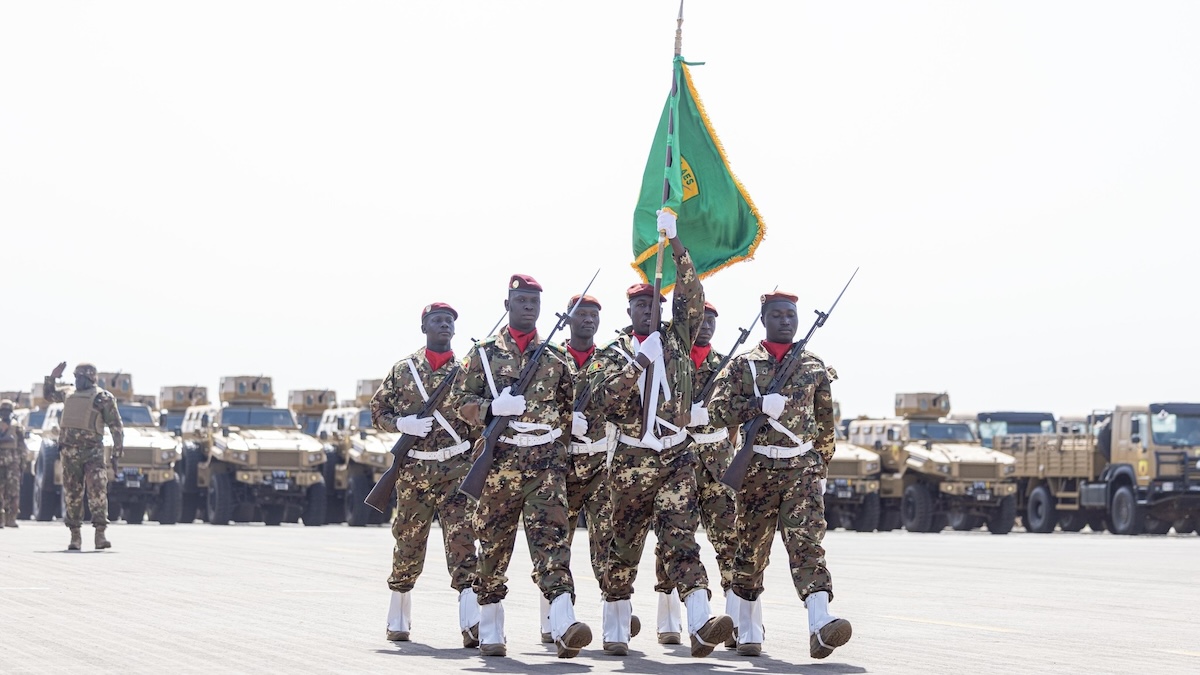
Official launch of the joint military force of the Alliance of the Sahel States in Bamako, Mali. Photo: Presidence Mali / Facebook

The Alliance of Sahel States (AES) has taken a decisive step toward regional self defense after officially launching a joint military force aimed at combating Islamist insurgency and terrorism across the Sahel. The force was inaugurated on December 20, 2025, during a ceremony held at an air base in Bamako, Mali’s capital.

The ceremony was presided over by Mali’s Transitional President, Head of State, Supreme Chief of the Armed Forces, and outgoing President of the AES, Army General Assimi Goïta. The event was the formal handover of the Unified Force of the AES banner, marking the operationalization of a long-declared commitment by Burkina Faso, Mali, and Niger to jointly secure their territories’ sovereignty.

The newly established force, known as the FU AES, brings together approximately 5,000 troops drawn from the three member states. It is designed to integrate air power, intelligence sharing, and coordinated ground operations to confront armed groups that have destabilized large parts of the Sahel for over a decade.

Addressing the gathering, Malian General Aliou Boï Diarra delivered a deeply symbolic and emotional speech, underscoring the historical and moral significance of the banner. He described the banner as far more than a ceremonial object.

“The standard that you are presenting to the unified AES force represents a memory, a will, an irreversible commitment. It profoundly affirms a certainty now deeply engraved in the hearts of our beloved peoples. This is indeed a truly historic and momentous act,” General Diarra said.

Diarra declared that the banner embodied sacrifice and struggle rather than decoration: “This sacred standard is not merely a decorative symbol. It is the profound and enduring result of precious blood bravely shed, immense courage valiantly embraced, and fundamental truth profoundly rediscovered.”

Paying tribute to the fallen, he added:

“To our cherished martyrs, to all innocent civilians, and to the brave soldiers who have fallen in battle, I humbly pay a solemn and heartfelt tribute beneath the eternal snow. They did not die in vain.”

Mali’s leader, General Goïta, in his own address, described the launch as a historic turning point for the Sahel. He began by saluting the defense leadership and troops of the region.

“On this significant occasion, I would like to extend my sincere congratulations and profoundly salute the exceptional courage, unwavering professionalism, steadfast commitment, and resolute determination of the ministers of defense, the chiefs of general staff, and especially all the brave defense and security forces of the AES area for the remarkable achievements they have made in their relentless fight against armed terrorist groups,” he said.

Image
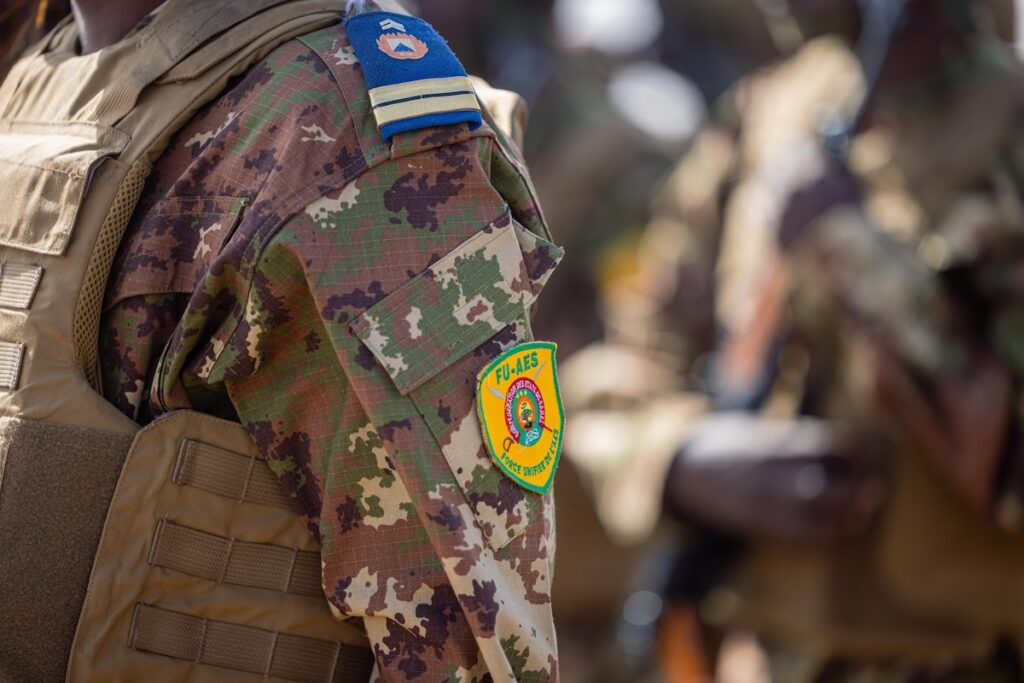
Detail of AES Joint Military Force, FU AES, uniform. Photo: Presidence Mali / Facebook

The AES president recalled that since the Niamey Mutual Initiative (NMI) declaration of July 6, 2024, joint military operations have already been underway, noting that they resulted in the neutralization of several terrorist leaders and the destruction of multiple insurgent sanctuaries.

According to Goïta, “All these positive results were achieved thanks to meticulous planning, timely and effective intelligence sharing, and above all the comprehensive pooling of our collective efforts and resources.”

He further announced key institutional steps consolidating the unified force, including the appointment of a new commander, the establishment of a central command post in the strategic city of Niamey, and the assignment of specialized battalions fully dedicated to AES operations. He stressed that the task ahead would require adaptability to the evolving tactics of armed groups.

“It is now critically important for the new commander not only to anticipate the increasingly complex operating methods of terrorist groups, but above all to resolutely continue this crucial fight to secure the entire Sahel region and ensure lasting peace and stability.”

General Goïta added that the conflict confronting the Sahel is multidimensional, “This war is not only military. It is also political, economic, and informational.”

He identified what he described as three major threats facing Sahelian states: armed terrorist violence, economic terrorism, and media terrorism. In response, he noted that the confederation has adopted a comprehensive strategy that goes beyond battlefield operations.

“We have taken measures to counter these threats not only by establishing this unified force, but also by creating AES Television, AES Radio, and AES print media,” he said, framing these platforms as tools to counter disinformation and psychological warfare.

The military launch follows a series of symbolic and political moves that underline the bloc’s growing autonomy. Earlier in the year, the AES unveiled a new flag, representing the confederation’s shared identity and its intention to redefine political, economic, and security cooperation outside the shadow of French imperialism and Western neoliberal frameworks. Leaders of the bloc have repeatedly criticized past military partnerships with France and other Western powers, arguing that foreign interventions failed to bring peace while undermining national sovereignty.

The AES summit
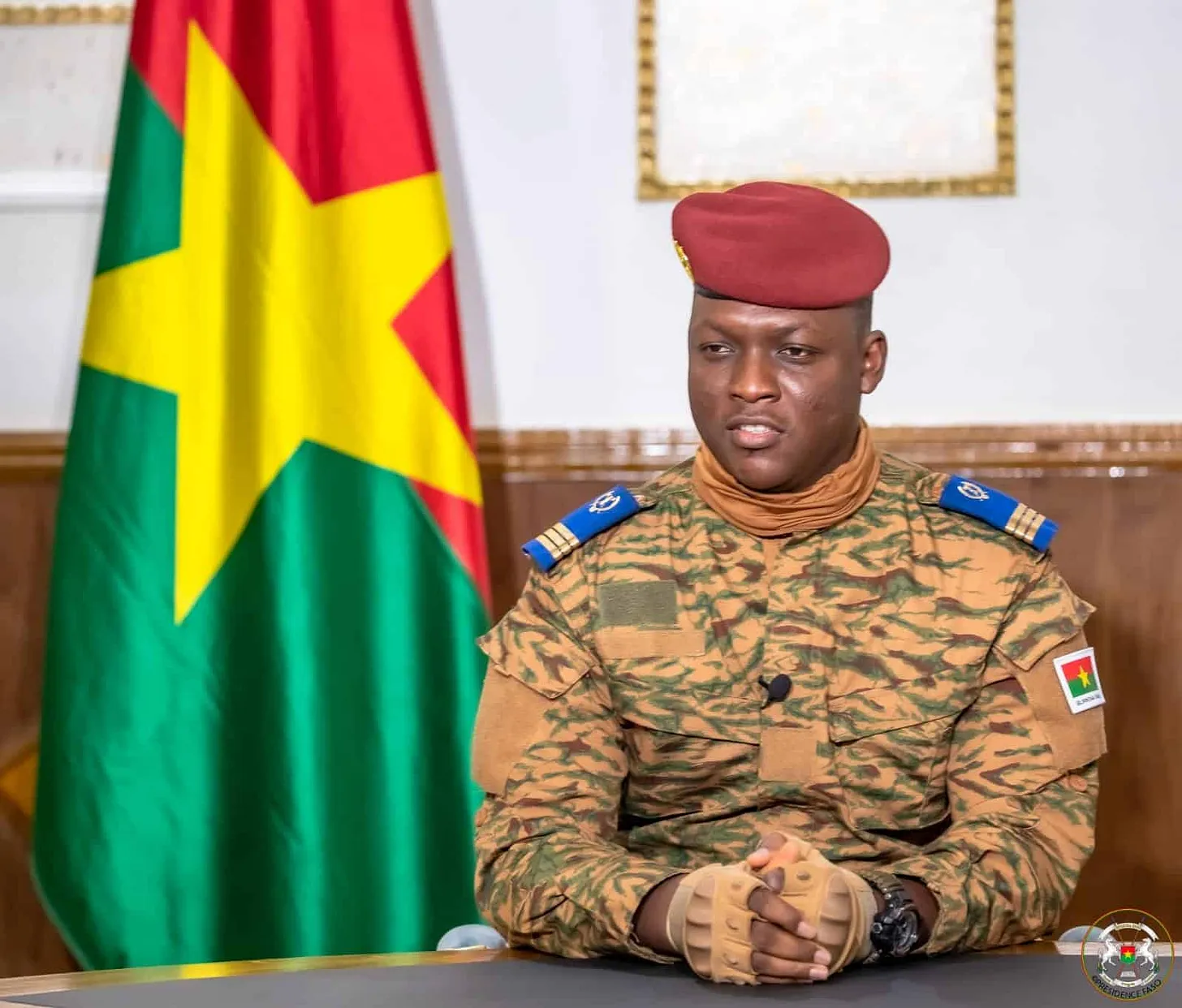
Mali hosted a summit of the Alliance of Sahel States in the same week, which concluded on Tuesday, December 23. During the summit, Burkina Faso’s leader, Captain Ibrahim Traoré, was appointed as the new head of the Alliance of Sahel States. Following the meeting, the Alliance announced that the summit would be followed by a large-scale military operation.

Image
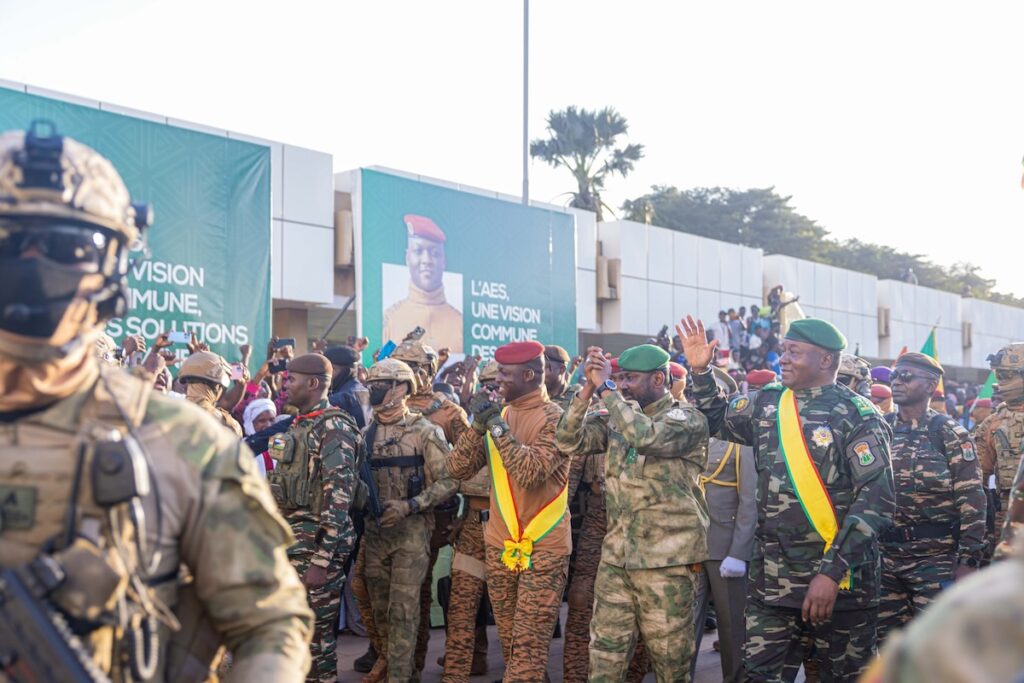
Leaders of the AES, Burkina Faso’s Ibrahim Traoré, Mali’s Assimi Goïta, and Niger’s Abdourahamane Tchiani at the AES Heads of State Summit in Bamako, Mali. Photo: Presidence Mali / Facebook

Earlier this year, the three countries also introduced a joint AES passport, a major step toward deeper integration. This move came after Burkina Faso, Mali, and Niger formally withdrew from the Economic Community of West African States (ECOWAS), an organization they now openly describe as hostile.

The launch of the unified force also takes place amid rising regional tensions. Nigeria and Côte d’Ivoire, both influential ECOWAS members, have been criticized by AES leaders and their supporters for what they see as counter revolutionary postures. In official and popular discourse within the Sahel, these countries are increasingly portrayed as attempting to contain or reverse the radical political shifts unfolding in Bamako, Ouagadougou, and Niamey.

What is clear is that Burkina Faso, Mali, and Niger are charting a new path, one that is redefining power, alliances, and resistance in the heart of West Africa.

https://peoplesdispatch.org/2025/12/24/ ... -security/
******

Ghana Reforms Domestic Gold Purchase Program

Image
X/ @abogadobitcoin

December 26, 2025 Hour: 10:13 am

Changes approved for 2026 aim to boost macroeconomic efficiency and gains.
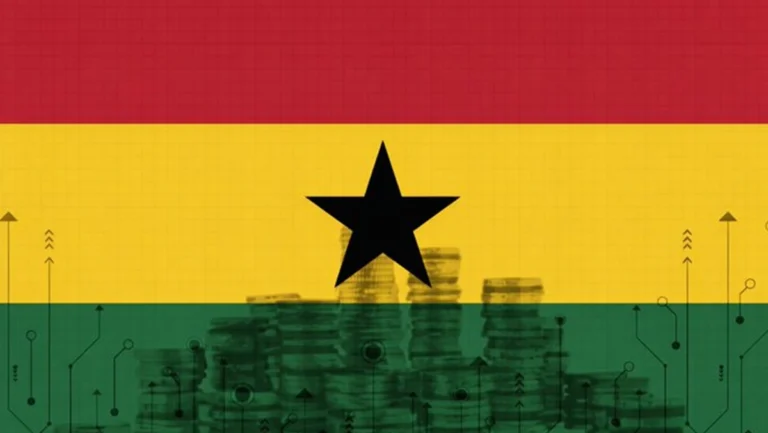
On Thursday, the Bank of Ghana pledged to reform the country’s Domestic Gold Purchase Program (DGPP) to boost its macroeconomic benefits.

The board of the Bank of Ghana approved the reforms to be rolled out from January 2026, in line with budgetary provisions made in the 2026 budget to fully resource the Ghana Gold Board (GoldBod), ensuring the sustainability of its operations.

“Recognizing both the macroeconomic benefits and fiscal costs of the DGPP, the board recently approved reforms to improve pricing and operational efficiency in the downstream segment of the program,” the Bank of Ghana stated.

The reforms aim to reduce intermediation fees, improve cost-efficiency, and achieve competitive yet economically sound buying prices, with benefits for both the sector and the broader economy.

Africa has the resources, the youth, and the potential.
Africa can be the center of the world
if it breaks free from centuries of foreign domination and imposed systems

📊 Fun Fact
★ Africa has ~30% of the world’s mineral reserves
★ 40% of global gold
★ 90% of platinum &… https://t.co/zEmoyq4pc7 pic.twitter.com/QxPtd0bel4

— NeoGuru (@neoguru111) December 25, 2025


The DGPP is a policy tool that has helped shore up Ghana’s international reserves, supported currency stability, and enabled access to large volumes of foreign exchange without incurring new debt.

“The operational role of GoldBod as an aggregator has been important in channeling gold-based inflows from the small-scale mining sector into the official market. This collaborative structure between the Bank and GoldBod has ensured that the DGPP remains anchored in public policy objectives,” it added.

Currently, both inside and outside Africa, countries are increasingly buying gold primarily as a hedge against high inflation, rising interest rates, and concerns about global debt levels.

Another key reason for the ongoing tendency to incorporate gold into central banks’ monetary reserves is the desire to reduce dependence on the U.S. dollar and the global financial system dominated by Western institutions.

In recent years, geopolitical tensions, U.S. sanctions, and the freezing of foreign exchange reserves have highlighted the vulnerability of holding reserves in foreign currencies. By increasing gold holdings, countries can diversify their reserves and protect themselves from political or financial pressure.

https://www.telesurenglish.net/ghana-re ... e-program/
"There is great chaos under heaven; the situation is excellent."

User avatar
blindpig
Posts: 15306
Joined: Fri Jul 14, 2017 5:44 pm
Location: Turtle Island
Contact:

Re: Africa

Post by blindpig » Tue Dec 30, 2025 1:54 pm

The war in Sudan is “between two wings of a comprador parasitic capitalist class”

The war in Sudan is not simply “between two generals, but between two wings of a comprador parasitic capitalist class,” fighting each other against the backdrop of a regional and global contest over Sudan’s land, resources, and geostrategic location on the Red Sea, argues Sidgi Kaballo of the Sudanese Communist Party (SCP).

December 28, 2025 by Pavan Kulkarni
Image
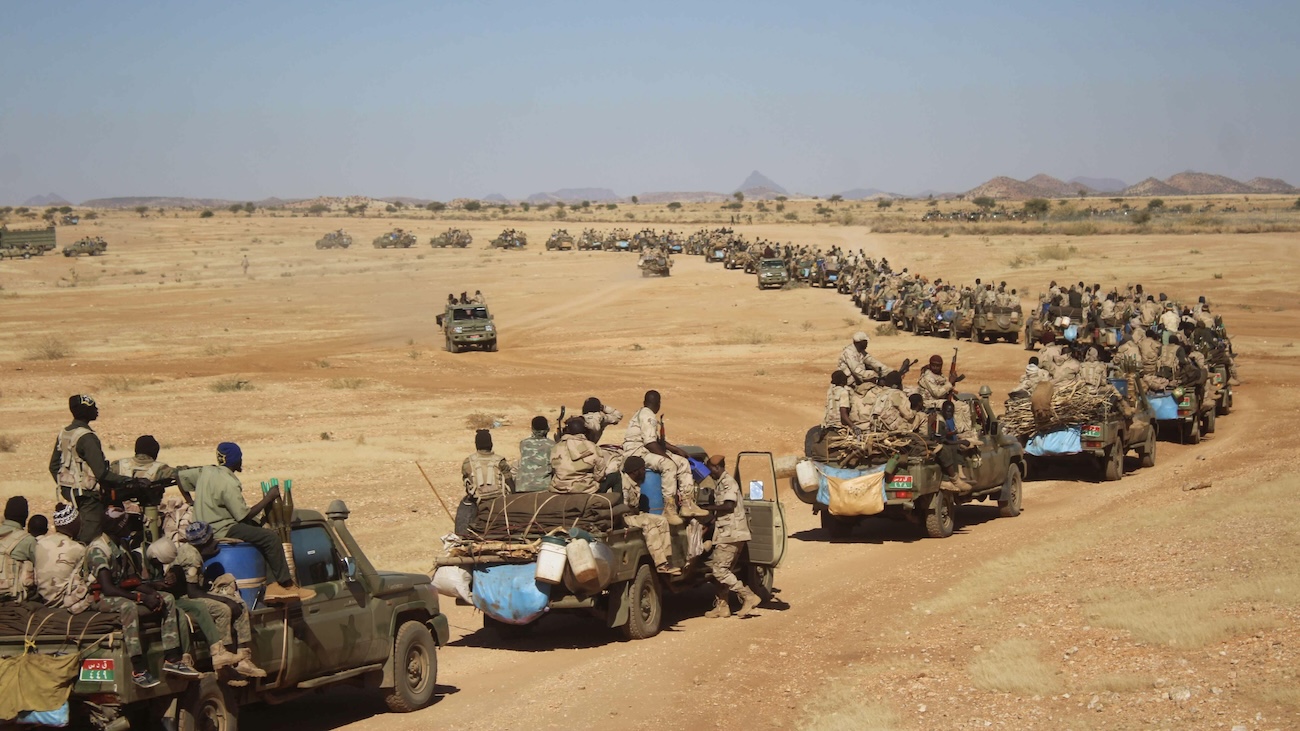
Rapid Support Forces (RSF) on a patrol as part of "border protection". Photo: RSF Website

As the war in Sudan that has unleashed the world’s worst humanitarian crisis nears a thousand days, “a cessation of hostilities, a humanitarian truce going into the new year” is an “immediate goal” of the US, said its State Secretary, Marco Rubio, in his year-end press conference.

Donald Trump, he insisted before the US cabinet earlier this month, is “the only leader in the world capable of resolving the Sudan crisis.”

But only two weeks before, Trump himself had explained that he had no understanding of the war. “I thought it was just something that was crazy and out of control,” he said in his address to the US–Saudi Investment Forum in Washington on November 19. “I viewed it as being just sort of a freelance, no government, no this, no that,” he went on to articulate.

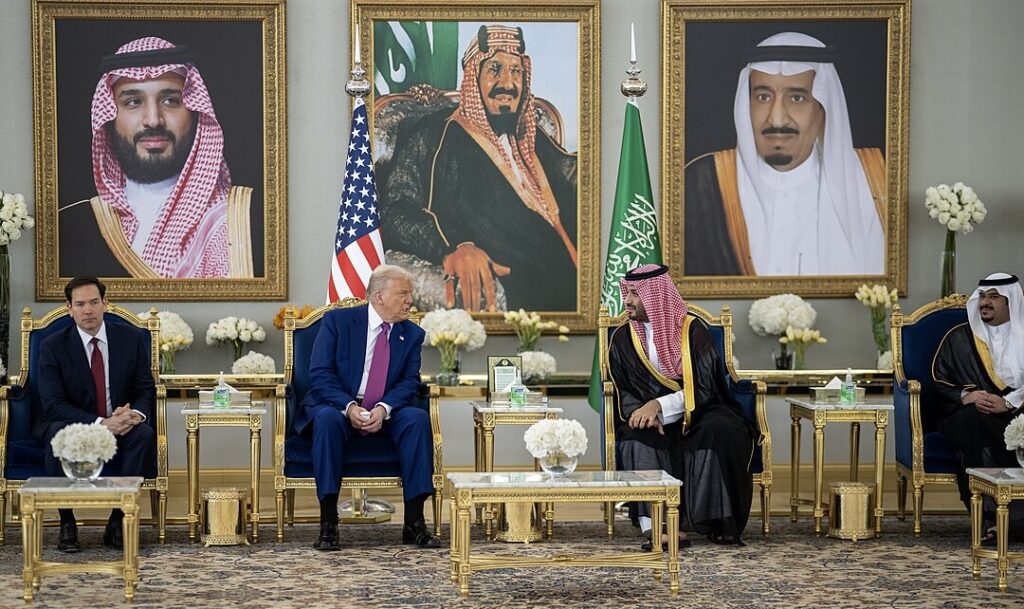
But Saudi Arabia’s crown prince, Mohammed bin Salman (MBS), “explained the whole culture and the whole history,” to Trump on the sidelines of an investment summit, “and it was very interesting to hear, really amazing.”

Over 150,000 have been killed in the over two and a half years of this war that has hurled half the population into “extreme levels of hunger”, as parts of the country are in the throes of the world’s first officially declared famine since 2020. Deadly diseases like cholera stalk the population weakened by hunger, especially the Internally Displaced People (IDPs) who crowd in camps with no sanitation.

Even after more than three million people forced to flee amid the war recently returned to their homes, over 9.3 million people remain displaced within Sudan, while an additional 4.3 million refugees have fled to neighboring countries – the largest displacement crisis in the world.

“Sir, you’re talking about a lot of wars, but there’s a place on earth called Sudan, and it’s horrible what’s happening,” Trump recalled MBS telling him. To stop this war “would be the greatest thing you can do,” greater even “than what you’ve already done.”

Goaded by the flattery, Trump committed to work for peace in Sudan, because “I just see how important that is to you, and to a lot of your friends in the room,” he told MBS and wealthy Saudi investors attending the forum.

But until MBS told him “there’s a place on earth called Sudan” and gave him a history and culture lesson during this forum, Trump claimed that Sudan “was not on my charts.”
Image
US President Donald Trump on a state visit to Saudi Arabia in May 2025. Photo: The White House

A long history of US involvement in Sudan
It may well not have been on Trump’s chart, but the US state has been involved in Sudan for over half a century, starting with the military coup in 1958, only two years after independence.

It was a part of the Cold War efforts to entrench itself in Sudan to use its territory against the northern neighbor, Egypt, whose government, then led by Gamal Abdel Nasser, had tilted toward the Soviet Union. Nasser, at the time, had “entered into an agreement with Russia to build the high dam – a project the US and World Bank” were eyeing, explained Sidgi Kaballo, a prominent Sudanese academic and central committee member of the Sudanese Communist Party (SCP).

After Nasser died in 1970, the new Egyptian regime, firmly on the side of the US, joined its tripartite military exercises in northern Sudan. These exercises, meant to train US troops in the hot desert conditions to ready them for a potential invasion in the Gulf, continued for nearly a decade from the mid-70s to 80s, under the military rule of Gaafar Nimeiry.

After Islamists came to power under Omar al-Bashir after the 1989 coup, the US designated Sudan as a “state sponsor of terror” in 1993. However, after Sudan began cooperating with the US intelligence and assisting its counterterror operations in the aftermath of 9/11, the US State Department’s Country Reports on Terrorism described Sudan as “a strong partner in the War on Terror.”

However, Sudan remained on the “state sponsor of terror” list until it signed the Abraham Accords in 2020, normalizing ties with Israel after cutting off diplomatic relations with Iran earlier in 2016, aligning with the US-Saudi-UAE axis in foreign policy.

“The US interests in Sudan have been mainly geopolitical,” Kaballo said, adding, even today, it is invested in stopping Russia from securing a military base in eastern Sudan on the Red Sea coast and blocking China’s Belt and Road Initiative from passing through the country.

Land grab under the cover of Liberalization
But the US allies in the region – namely Egypt, Saudi Arabia, and the UAE, which together have formed the Quad that has taken charge of negotiating an end to the ongoing war – have a direct economic stake in Sudan.

The food processing plants in northern neighbor Egypt depend on Sudan’s agricultural produce, especially meat and oil seeds like sesame and groundnuts, not mainly for food, but for export, Kaballo said, adding, it is crucial “for its balance of trade.” Cultivation of export crops and fodder “is a waste of land and water that should be used for producing food crops” to feed the Sudanese people, argued Kaballo.

The scramble is not only for the produce, but for the agricultural land itself. Watered by the Nile, the North African country has the largest acreage of arable land on the continent.

Vast tracts were handed over to foreign countries under the IMF-prescribed neoliberal restructuring, even as the UN Food and Agriculture Organization (FAO) was warning about “worsening hunger and malnutrition crisis.”

Egypt was allocated at least 100,000 acres of Sudanese land for direct cultivation in 2014.

Egypt’s ambition over Sudanese land, however, was dwarfed by the Gulf members of the Quad. Saudi Arabia, which had already acquired over 100,000 acres in 2010, was granted over a million more acres on a cheap lease for 99 years in 2016. Earlier in 2015, the UAE’s Al-Dahra Holding had expressed interest in acquiring 2.4 million acres of land.

December Revolution
However, before completing these large transfers, the dictatorship of Omar al-Bashir was toppled by the December Revolution. What started as protests against the tripling of bread prices on December 19, 2018, snowballed into a mass pro-democracy protest across the country. Sustaining for months despite violent repression, the mass movement forced the ouster of Bashir in April 2019.

Removing him in a coup, his confidants, Abdel Fattah al-Burhan, head of the Sudanese Armed Forces (SAF), and Muhammad Hamdan Dagalo, aka Hemeti, head of the paramilitary Rapid Support Forces (RSF), formed a military junta together.

Refusing to relent, demanding the handover of power to a civilian government, protesters continued to occupy streets and squares. The center of the protest movement was the mass sit-in demonstration by hundreds of thousands occupying the square outside the army HQ through the days and nights for months.

Then, on June 3, 2019, the RSF was deployed to disperse the sit-in. The notorious paramilitary force was formed in 2013 by coalescing the Janjaweed militias used by Bashir’s regime to commit mass atrocities on civilians with SAF’s support during the Darfur civil war in the 2000s.

The US had accused Sudan of committing genocide in Darfur at the time. While disputing the “genocide” accusation, the European Union (EU) had maintained, nevertheless, “it is clear there is widespread, silent and slow killing and village burning of a fairly large scale.”

Nevertheless, in 2015, the very militias committing these atrocities, then organized as the RSF, were deployed on the EU’s behalf to intercept African asylum seekers en route to Europe as part of a USD 200 million migration deal it had entered with Sudan.

The RSF further enriched itself from the three billion dollars payment by Saudi Arabia and the UAE for the deployment of 40,000 of its fighters between 2016 and 2017 for their US-backed war on Yemen, alongside a small contingent of the SAF troops.

This battle-hardened force, notorious for its atrocities on civilians, was then deployed in the country’s capital to evict the protesters outside the SAF’s HQ.

Surrounding their sit-in demonstration, the RSF wounded over 500 and killed over a hundred, opening fire, hacking with machetes, raping, and then dumping scores of bodies, weighed down by the tied rocks, into a stream of the Nile flowing nearby.

The New Arab reported that the massacre was unleashed “shortly” after the top generals of the SAF and the RSF visited Saudi Arabia, the UAE, and Egypt, whose interests had been derailed by the December Revolution. Several observers had argued this meant the junta had “received a green light from the three powerful Arab states” to commit this massacre.

Nevertheless, the December Revolution continued, then taking the form of a general strike, with thousands of workers staying home, bringing the junta-led state to a halt. They called for a reorganization of the economy to free the industries from the stranglehold of the military elite to benefit the masses of workers and consumers.

The movement also insisted on the dissolution of the RSF and the formation of a single professional national army, subjugated to a civilian government. It further called for the withdrawal of Sudanese troops from Yemen, and a re-orientation of its foreign policy, away from the US-Saudi-UAE axis, and in line with the interests of the Sudanese people.
Image
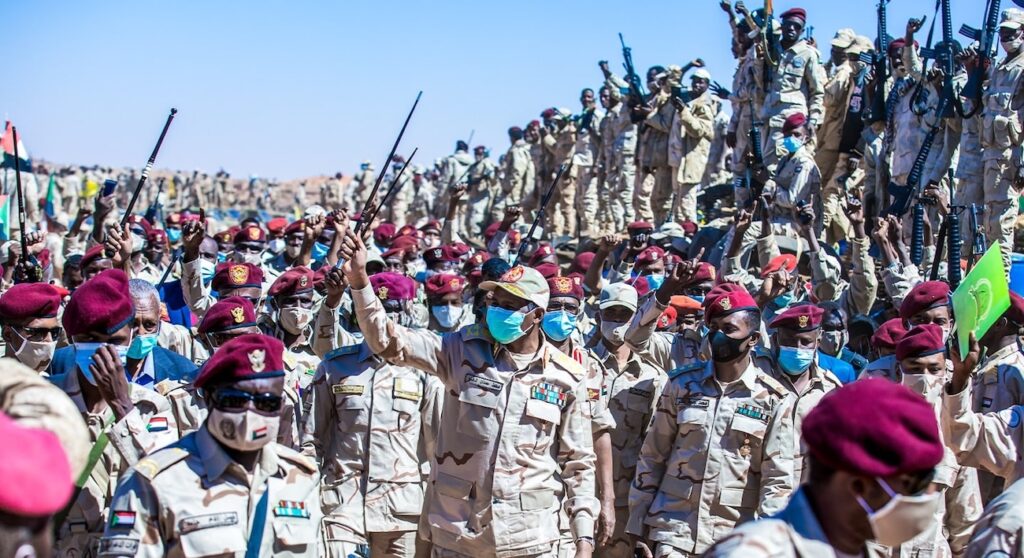
Members of the Rapid Support Forces with Mohamed Hamdan Dagalo at the center. Photo: RSF Website

Undermining these demands, radical for the Sudanese conjuncture, the US and the UK maneuvered diplomatically behind the scenes of the Ethiopia-led negotiations to coalesce together a ‘joint civilian-military transitional government’ in August 2019.

Its civilian component consisted mainly of technocrats backed by centrist and right-wing parties of the Forces of Freedom and Change (FFC), a broad-based civilian coalition formed during the Revolution. Protesting against their compromise with the military junta, the SCP, which had played a key role in the December Revolution, broke away from FFC.

The new government, in which FFC shared power with the junta, was quick to resume dealing in Sudanese land with Gulf powers. Less than a year after its formation, it ceded 100,000 acres to the UAE’s largest publicly traded firm, the International Holding Company (IHC). It was also negotiating a deal to hand over the management of the South Port Container Terminal of Port Sudan to the logistics giant, Dubai Ports World.

Red Sea access
Located on the Red Sea with Saudi Arabia across the water body to its east and a coastline that runs north into Egypt, it is a geopolitically sensitive coastline. UAE, which is further away from Sudan to the east of Saudi Arabia, has a lesser direct geopolitical stake. But, for commercial reasons, it is actively seeking Sudanese Red Sea ports in Africa, explained Kaballo.

However, the government was unable to hand over the terminal of Sudan’s national port in the face of opposition by the trade unions. Resisting privatization under Bashir, the trade unions were a well-organized force in the country and had spearheaded the December Revolution.

Although the civilian face of the government had placated sections of the protest movement, the December Revolution was still a force to be reconciled with on the streets, able to draw hundreds of thousands to demonstrations.

With “the revolutionary forces and the trade unions” standing in the way, the government was forced to retreat, recalled Kaballo. However, the section of the government that was more susceptible to pressure from the streets – the civilian component – was removed in late 2021 in a coup as the SAF chief Burhan and the RSF chief Hemeti concentrated all power in the junta again.

A year later, in December 2022, the junta signed away a vast stretch of coastal land, about 200 km north of Port Sudan, to a UAE-based consortium including its state-owned Abu Dhabi Ports Group and Invictus Investment to develop the Abu Amama port.

The six billion dollar project was envisioned to have an airport, over 400,000 acres of agricultural land, a free trade zone, with a 450 km long road west to the UAE’s vast agricultural project in the River Nile state of Sudan.

Effectively, it was to lay down an infrastructure for a more seamless extraction of Sudan’s agricultural produce to the UAE, while almost a quarter of the Sudanese population was suffering acute hunger at the time.

UAE agribusinesses are also heavily invested in other African countries, including Chad, Cameroon, Central Africa, and South Sudan, added Kaballo. The new port in Sudan was also to serve as the exit point from the continent for the produce extracted from these countries.

Civil war
However, the project could not take off. Only months after signing this agreement, in April 2023, the power struggle brewing within the junta between the Burhan and Hemeti erupted into a civil war with the SAF and RSF turning on each other, unleashing the world’s worst humanitarian crisis in Sudan.

But “this is not simply a war between two generals, but between two wings of a comprador parasitic capitalist class,” fighting each other against the backdrop of a regional and global contest over Sudan’s resources and geostrategic location, argues Kaballo.

Later in November 2024, the SAF-led government, based in Port Sudan after shifting its administrative seat from the capital Khartoum in the early days of the war, scrapped the port deal with the UAE, complaining of its support for the RSF.

But then, the RSF had overrun SAF bases in Darfur, taking over most of the region, except North Darfur state’s capital, El Fasher. Laying siege in May 2024, RSF tightened the noose around the city by building a wall by mid-2025, starving it of food supply, before breaking through its defenses in late-October.

What followed was a depopulation of the city, with the RSF massacring its civilians in likely tens of thousands. British weapons sold to the UAE were found to be in use by the RSF in its El Fasher campaign.

After thus consolidating its control over Darfur, the westernmost region of Sudan, its troops are now advancing east into the Kordofan region, where the center of the fighting has now shifted.

The Gold Rush
Gold illegally mined from Darfur and smuggled to the UAE is a key source of RSF’s income, weapons, and vehicles. Although the largest buyer of Sudanese gold since 2010, the gold from Sudan is not the UAE’s main interest, clarified Kaballo. It adds up to only a “small percent of the UAE’s overall gold trade.”

He added further that the “SAF generals are also big traders and exporters of gold.” The Ministry of Minerals of the SAF-controlled de facto government started talks with the Saudi Gold Mining Refinery amid the fighting earlier in August this year.

“The emerging war economy has seen an increased dependence on the production, smuggling, and exportation of the mineral sector – mainly gold to the Gulf – which is extracted from both SAF- and RSF-controlled territories,” reported S-RM, a global corporate intelligence and cyber security consultant.

The country’s gold production has almost doubled since the start of the war. While the Darfur region, under RSF’s control, “is a significant gold-producing region, the Red Sea State,” under SAF’s control, “stands out as the largest gold producer in the country,” the Swissaid reported.

“Egypt is also interested in Gold,” said Kaballo, adding that unprecedented quantities of gold were exported from Sudan to Egypt amid this war, during which its Central Bank increased its gold reserves.

Sudan is also endowed with copper, uranium, manganese, and rare earth minerals, which the US is trying to acquire from Africa.

Under the cover of peace process
It is these economic and geopolitical interests of the US and its three regional allies that the Quad is trying to ensure, under the cover of the peace process it has initiated, maintains Kaballo. There are competitive and conflicting interests within the Quad. It is these intra-block contradictions that the Quad is taking time to resolve, essentially to reach an agreement amongst themselves on “how to divide the cake,” he argued.

“Since the outbreak of the war, the US administration has not stopped issuing successive statements and holding rounds of negotiations – from Jeddah to Switzerland, and finally to the Quad meetings in New York – in a series of maneuvers that do not conceal their essence: managing the crisis rather than solving it, and controlling its trajectories in a way that serves the American strategy in the region. The farce reached its peak when the US president claimed he would ‘take care of’ the Sudanese crisis based on what he described as the ‘inputs’ and ‘appeals’ of the Saudi Crown Prince,” read an editorial in the SCP’s newspaper, Al Maydan.

“After more than two years since the outbreak of war,” SCP maintains, “it is no longer hidden that the Quad’s initiative is not a serious attempt to end the crisis, but rather an effort to contain its outcomes and re-balance influence in the region.”

Pointing out that “all the principal supporters of the warring parties in Sudan are” US allies, it added, “Washington’s [own] track record in dealing with Sudan proves that” the Quad’s peace process is aimed at “sustaining dependency and facilitating the extraction of resources”.

Nevertheless, the SCP will welcome any ceasefire that might result from the Quad’s initiative, added Kaballo. It is necessary to stop more deaths and supply life-saving aid for civilians in both the SAF and the RSF-controlled territories.
Image
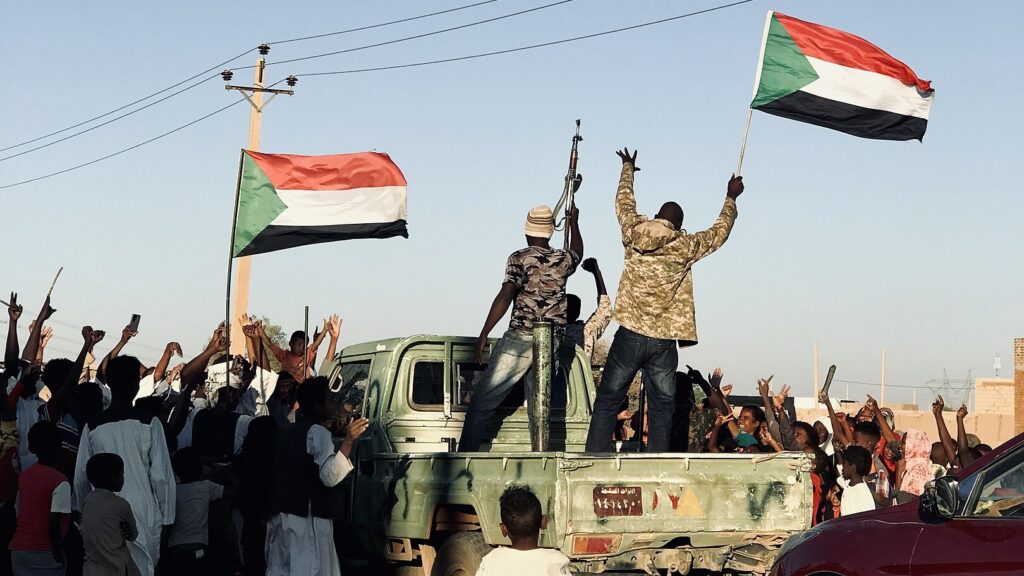
People in the northern rural villages of Omdurman celebrating upon hearing about the liberation of a part of Khartoum by the Sudanese army. Photo: Wikimedia Commons

Moreover, an end to the fighting “will allow” the popular forces of the December Revolution to mobilize once again and take the streets “to defend the interests of the Sudanese people and shape its future.”

War as counter-revolution
Enduring massacres and machinations of a technocratic government with a civilian face, the December Revolution had continued even after the 2021 coup in which the SAF and the RSF consolidated power and intensified repression.

Under the leadership of the Resistance Committees, a decentralized network of activists organized in neighborhoods across the country, hundreds of thousands took to the streets after this coup on a near-weekly basis, facing bullets, batons, tear gas, arrests, and torture. The mass demonstrations continued right up until April 2023, when the SAF and the RSF turned on each other, hurling the country into civil war.

The war proved to be a counter-revolution so fierce that the popular forces could no longer exert power on the streets. The Resistance Committees, which had led the protests, then occupied themselves with organizing relief and rescue for civilians, with survival becoming the central task amid this cataclysm.

Although the Quad cannot bring peace to Sudan, Kaballo is emphatic that any ceasefire to silence guns will provide an opening for the popular forces to resume mass actions to assert the radical path envisioned by the December Revolution to address the structural causes of the war.

However, the forces vested against the December Revolution are many and mighty. “Aborting the path of radical change in Sudan” is a central objective of “American imperialism”, uniting Saudi Arabia, Egypt, and the UAE, despite the conflicting interests amongst themselves, argued the SCP.

To accomplish this abortion, the Quad is resorting to “its old project: a fragile ceasefire, top-down settlements, and a nominal civilian government arranged outside the will of the Sudanese.”

Jockeying at the Quad-led negotiations for their share in this government are the same centrist and right-wing political parties that had entered into a power-sharing agreement with the military junta back in 2019, forming the “joint civilian-military government” that unraveled two years later.

Today, they are positioning themselves to be part of what the SCP describes as an externally propped-up “subordinate civilian regime that guarantees American interests and, after that, the interests of” the regimes in Egypt, Saudi Arabia, and the UAE.

Effectively, it will mean the continuation of the extraction of Sudanese resources, the grabbing of its agricultural land, and geopolitical exploitation to serve US interests.

“In this decisive moment, the real wager remains on the power of the masses and their ability to impose their will and wrest their future from the hands of those attempting to engineer it on their behalf.”

“The path out of the crisis” cannot “be drafted in the rooms of the Quartet, nor in the deals of hesitant civilian groups, but only through a national democratic project grounded in the radical” vision of the December Revolution.

https://peoplesdispatch.org/2025/12/28/ ... ist-class/

******

“The Black Winter Is Coming”: Burkina Faso’s Traore Warns of ‘Cold and Bloody’ War
Posted by Internationalist 360° on December 24, 2025

[youtube]http://youtu.be/f9QUQo7IFRA[/yutube]

Burkina Faso President Captain Ibrahim Traore warned on Tuesday that “war is moving to West Africa,” accusing what he called “imperialists” of working to destabilize the region. Speaking during a summit of the Confederation of Sahel States (AES) in Bamako, Traore said a “black winter” was approaching — one he described as cold, bloody and murderous.

Drawing comparisons to the Arab Spring, Traore cautioned that externally driven political disruption could plunge West Africa into chaos if countries fail to unite. He also criticized African leaders, media figures and social media users for fueling internal divisions.

Despite acknowledging challenges, Traore insisted the alliance between Burkina Faso, Mali and Niger remains strong and irreversible, pledging that the AES would overcome terrorism, develop economically and assert its place on the global stage.

https://libya360.wordpress.com/2025/12/ ... loody-war/
"There is great chaos under heaven; the situation is excellent."

User avatar
blindpig
Posts: 15306
Joined: Fri Jul 14, 2017 5:44 pm
Location: Turtle Island
Contact:

Re: Africa

Post by blindpig » Mon Jan 05, 2026 3:16 pm

The economy of dependency and the oppression of the Beninese people

As long as the comprador rulers continue to serve the interests of French imperialism, the people will remain impoverished and enslaved.
K Diallo

Thursday 1 January 2026

Image
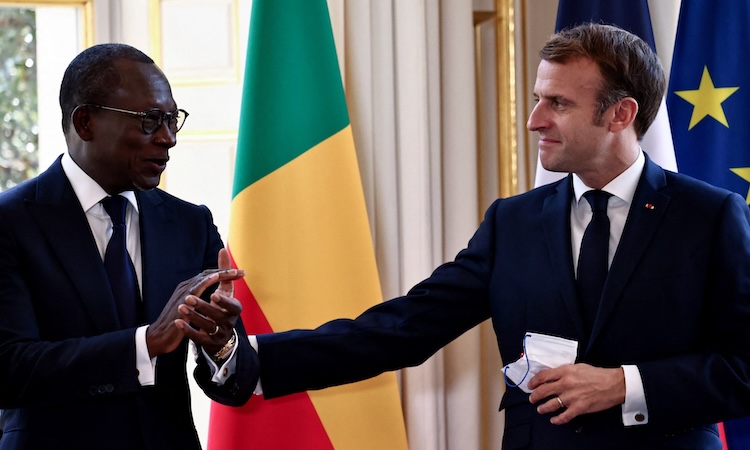
French troops have already been ejected from neighbouring Burkina Faso, cutting off access to vital resources the imperialists consider to be theirs by right. With the French economy on the rocks, Emmanuel Macron’s regime is heightening authoritarian measures in colonial heartlands like Benin the better to plunder, pillage and protect the interests of Paris-based monopolies. Meanwhile, the use of Nigerian forces to quash a military coup in Benin will only lead to the further destabilisation of both countries’ pro-imperialist regimes.

The following article is reproduced from K Diallo’s Twitter with thanks.

*****

Since coming to power in 2016, Benin’s president Patrice Talon has pursued an authoritarian neoliberal agenda, reshaping the state and economy in a way that deepens dependence on foreign powers and subjects the masses to the laws of the market and monopolies.

The social reality faced by youth, women and farmers is not merely a series of temporary crises, but the result of a deeply entrenched economic structure deliberately designed to concentrate wealth in the hands of local compradors connected to foreign corporations, while the productive classes are crushed by poverty, unemployment and the absence of justice and equality.

The youth, who are among the most affected, graduate from universities, training centers and workshops with degrees, only to immediately join the ranks of the unemployed. This is not just technical unemployment, but a manifestation of what Karl Marx referred to as the industrial reserve army, a vast pool of labour kept on the sidelines by capitalism in order to exert a downward pressure on labour conditions and wages.

In Benin, where no real productive project exists, this army becomes a permanently unemployed mass, deprived of work, leaving them the most vulnerable to impoverishment and despair, and pushing many toward illegal migration, risking their lives in perilous journeys across the ocean.

Women bear the heaviest burden under Talon’s regime. With the closure of informal work opportunities, the expulsion of street vendors, and the reduction of jobs, they find themselves trapped between the need to earn a living and the state’s suppression of the informal economy, which had been a primary source of income.

Women widely engage in local markets as sellers of vegetables, fruits, clothing and household goods. They participate in handicrafts like weaving, embroidery and traditional jewellery-making, and also work in small-scale farming, livestock-rearing and fishing in local waters to provide income for their families. These activities, once stable and independent sources of livelihood, are now severely threatened by repressive policies that limit the informal economy.

Farmers in Benin are most affected by the authoritarian neoliberal policies that are reshaping the state and economy in service to local and foreign monopolies. Authorities are preventing farmers from selling their products in markets that offer the best prices by blocking roads with trenches and rocks, and when farmers are forced to sell domestically, they are compelled to accept the low prices that have been set by parallel structures controlled by the regime itself, undermining their competitiveness.

Local crops are no longer profitable, and small farms struggle to access seeds and fertilisers, forcing many to abandon farming or focus on a limited number of market-dependent crops. This shift has turned agriculture from an independent livelihood into a sector serving immediate monopoly profits, deepening rural poverty and stripping farmers of control over their production.

On the security level, French soldiers are visible in Benin daily, but their precise role remains unclear. If they are truly present to fight terrorism, why does terrorism continue to spread? Since the end of 2021, northern regions such as Atakora, Alibori and Borgou have experienced an increasing number of terrorist attacks against military and security sites, which have displaced thousands of civilians from border villages and parks like W Arly Pendjari due to ongoing violence and threats.

One of the deadliest attacks took place on 17 April 2025, killing 54 Beninese soldiers in an armed assault on northern military positions. This reality shows that the presence of French forces has no tangible positive effect on security and raises questions about their effectiveness, fuelling popular demands for their withdrawal to allow Benin to address internal security independently.

On 22 January 2025, Benin and the United States signed a ’mutual assistance and capability-building agreement’ between the Beninese army and Africom, aimed at enhancing operational integration, readiness, and military effectiveness.

This cooperation provides international and local legitimacy to Talon’s regime. As the president seeks a constitutional amendment that would allow him to run for another term, he is presenting himself as a leader with an important role in the global fight against terrorism.

The democratic illusion and hidden traps
Having come to power in 2016 promising to strengthen democracy in Benin, Patrice Talon has in fact weakened it, steadily consolidating a more authoritarian grip.

In this context, activist and political leader Damien Zinsou Digbi, head of the National Youth Council of Benin CoJeP, the main organisation coordinating protests against French military presence in west Africa, was kidnapped on 21 October 2025 by plain-clothes agents in an unmarked vehicle.

The Organisation for the Defence of Human and Peoples Rights (ODHP) confirmed the incident, calling it a criminal act and demanding his immediate release. He remained detained three days later, reportedly transferred to the National Digital Investigation Centre (CNIN), led by Ovanilo Medijan, a central figure in Talon’s repressive apparatus and ally of French president Emmanuel Macron in west Africa.

He was charged with digital harassment, incitement to violence and rebellion – politically-motivated accusations linked to his activity in the Beninese Communist party (PCB) and his public criticism of the government.

The next day, 22 October, Parvie Gnamy, another CoJeP member, was arrested in Parakou in northern Benin. ODHP noted that Talon’s regime has a history of abductions and arbitrary arrests domestically and abroad, including cases like Steve Amosu, Hugh Komlan Sosukpe and Rikia Madougo, revealing a pattern of state terrorism. In January, two more CoJeP members were arrested during a peaceful protest in central Cotonou against the French military presence.

The political authority in Benin also practices digital authoritarianism and comprehensive surveillance. With a population of around 12 million, including over six million internet users, the digital space has become a growing platform for political expression and demands for government and state accountability.

However, in a clear step aimed at restructuring the relationship between the state and wider society, the government enacted a 2018 digital law which it claimed was needed to ’protect citizens from harassment and fake news’, but which in practice became a tool for repression, control and consolidating state dominance over knowledge and communication.

Under this law, journalists, bloggers and political activists live under constant threat, evidenced by at least 17 arrests of activists and journalists in less than two years, including one sentenced to 12 months for posting a comment exposing clear financial corruption by President Talon.

Despite all this authoritarianism, repression and corruption, France continues to view Talon as a reliable regional ally, intervening militarily to support him and protect its interests. Nevertheless, popular discontent persists, with daily protests confronting local dictatorship and foreign dominance backed by external powers.

Communist Party of Benin: Foreign intervention and the current political crisis
Our homeland Benin witnessed a political crisis on 7 December 2025 that threatened its sovereignty and stability. According to available reports and events, foreign intervention, particularly the French forces present in Benin and the Nigerian fighter jets coming from Lagos, played a decisive role in saving the authority of Patrice Talon.

The Communist Party of Benin affirms the following: First, our position has always opposed military coups as a means of seizing power. This stance remains unchanged regarding yesterday’s events in our country.

Second, the coup leaders primarily based their announcement on popular grievances against the government. In reality the 7 December coup is a logical consequence of the mismanagement and brutal fascist and exclusionary dictatorship of Talon’s regime, which has been marked by repeated constitutional overthrows since he came to power in 2016.

It is especially the result of an autocratic constitution that blocks all avenues for democratic practice and the expression of popular sovereignty. As long as this governance continues, such events are likely to recur in the future.

Third, regarding French and Nigerian intervention, the Nigerian fighter jets acting in the name of Ecowas intervened at Macron’s request, supporting the French forces that are already actively intervening in our country. Nigerian ground forces were also deployed via Sèmè to encircle our homeland.

This intervention is extremely serious. It represents an outright insult and disregard for our political and military institutions, placing Benin under foreign tutelage and effectively turning our country into a French colony once again.

The Communist Party of Benin has always maintained that the internal problems of Benin must be resolved by the Beninese themselves and not by foreign powers. Therefore the Communist Party of Benin condemns this French-Nigerian intervention in our country and demands the immediate withdrawal of the invading foreign forces.

Cotonou, 8 December 2025

https://thecommunists.org/2026/01/01/ne ... on-people/

******

The Revolutionary Energy of Burkina Faso

A couple of optimistic and inspiring videos to start the year
Ohio Barbarian
Jan 02, 2026

I thought I’d start the new year off on a positive and optimistic note, but in order to do that I would be hard-pressed to find anything in my own country. Fortunately, there’s this young man in Africa named Ibrahim Traore, whom I have had my eye upon for a few years.

Image


This 17 minute long video from African Informant reminds me of WPA newsreels from the 1930s in how they try to show an entire country coming together to work together to make it a place its citizens can be proud of.


Labor-intensive construction projects. Medical schools and infrastructure. Massive investment in agriculture and industry designed to make the country a net exporter. New highways. A really kick-ass looking sports stadium with no billionaire owners. Jobs, jobs, jobs. Pride and a sense of unity and purpose. This is what a determined socialist government can do.

The contrast to the state of infrastructure, not to mention the state of the national mood, in America today could not be more stark.

This second 9 minute video is a look at Traore himself. This is his speech to a summit of the Confederation of Sahel States in Bamako, Mali two weeks ago.


He fully expects for the US Empire to try to take the entire confederation, whose third member is Niger, down. He also expects that West Africans will prevail so long as they unite in their determination to control their own destinies free of the dominance of foreign empires.

What a fine fellow he is. When was the last time you saw an American or British leader with this kind of fire? The genuine article, not the sprayed-on kind.

Traore is what a leader of a rising country looks like. He reminds me of so many who have gone before. I would be most interested in seeing if he reminds you of anyone.

You will see more news from that part of the world this year. The indigenous people are breaking free of Western economic domination, and reactionary forces in the West are bound and determined to stop them.

Thank you for reading, good day or night, good luck, and best wishes to you in this 2026th Year of the Confused Era.

https://ohiobarbarian.substack.com/p/th ... dium=email

******

Burkina Faso: Another Coup Attempt Thwarted
Posted by Internationalist 360° on January 4, 2026
Ghana The Motherland

Image

An alleged attempt to destabilize the Burkinabe government, orchestrated from Lomé in Togo by former Burkinabe transitional president Paul Henri Damiba, was thwarted on the night of Saturday, January 3, 2026, by the defense and security forces, according to multiple sources.

According to various sources, well-placed security sources, an operation aimed at overthrowing Burkina Faso’s institutions, were about to be launched on Saturday, January 3, around 11:00 PM GMT. The operation was foiled thanks to the arrest of the alleged mastermind of the plot.

Analysis of his phone reportedly revealed evidence deemed “highly compromising” by investigators. According to the same sources, this latest attempt to destabilize Burkina Faso’s progressive and popular revolution was organized and financed by well-known figures. The name of former Transitional President Paul Henri Damiba is being mentioned repeatedly. He is believed to have been residing in Togo since his fall from power, from where he allegedly coordinated the operation with accomplices within the country. Several business operators implicated in the affair have also reportedly been arrested.

According to various sources, the plan foiled last night specifically targeted the assassination of the drone base commander, a manoeuvre intended to weaken the national security apparatus. The objective would have been to subsequently allow mercenaries and terrorist groups, positioned outside the country, to cross borders and attack state installations. These actions reportedly benefited from external support, with certain Western countries suspected of having promised air cover to bomb strategic military targets and thus facilitate the overthrow of President Ibrahim Traoré’s government.

The authorities have not yet officially commented on this matter.

🇧🇫It is 1:00am in Burkina Faso, and Burkinabes have just woken up from their sleep and headed to the Presidential palace to see what protection they can offer to Captain Traore, from the imperial agents seeking to overthrow him.
They came out in their thousands. pic.twitter.com/ih1TUFYQLq

— Sahel Revolutionary Soldier (@cecild84) January 4, 2026


*******

'Colonial West Not Welcome': Putin Allies In Africa Humiliate Macron After 'KICKING OUT' France

"There is great chaos under heaven; the situation is excellent."

User avatar
blindpig
Posts: 15306
Joined: Fri Jul 14, 2017 5:44 pm
Location: Turtle Island
Contact:

Re: Africa

Post by blindpig » Thu Jan 22, 2026 3:08 pm

Tunisia: Not The Lucky MENA Country?
Roger Boyd
Jan 14, 2026

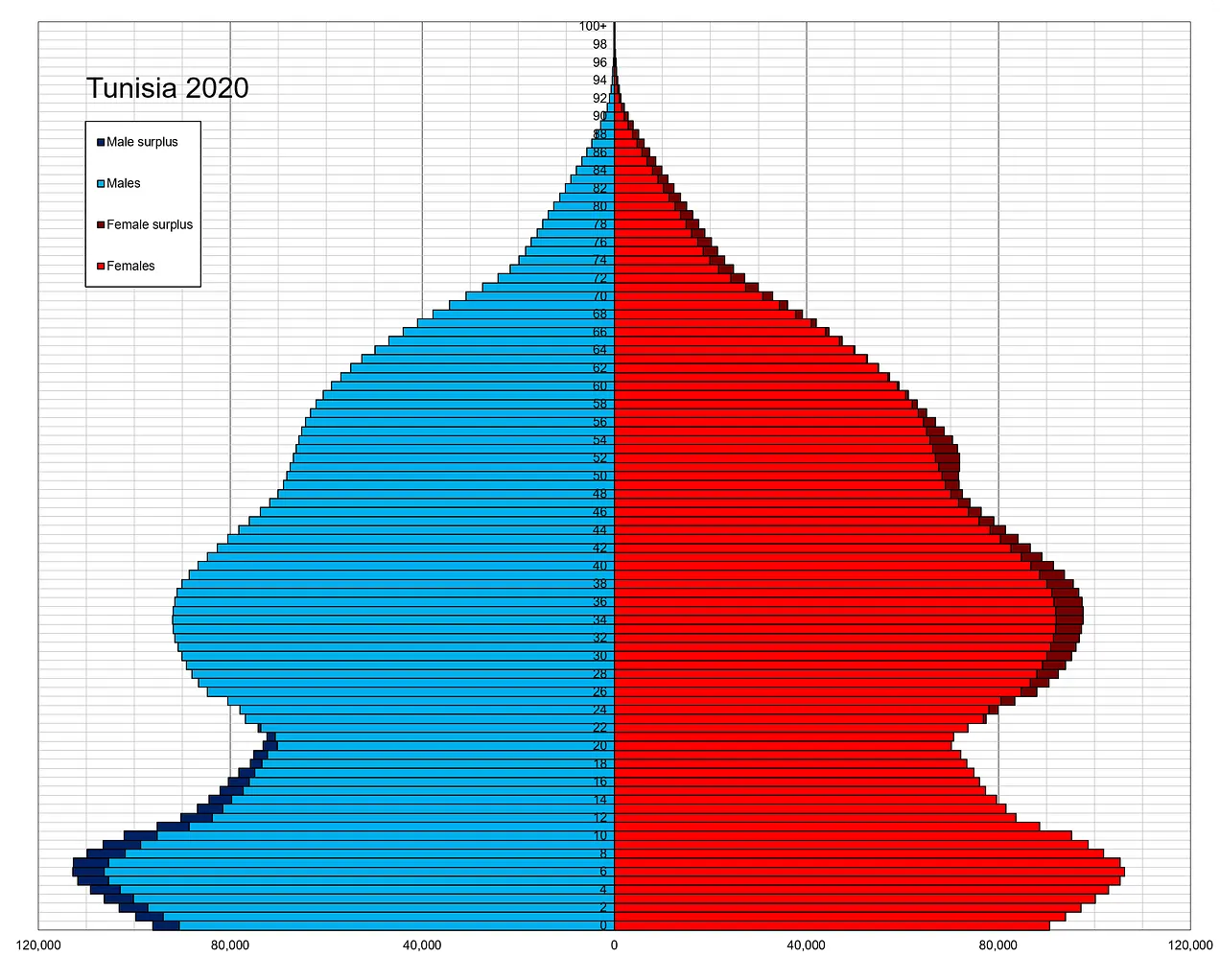
The population of Tunisia in 1960 was 4.2 million, in 1970 5.1 million, 1980 6.4 million, 1990 8.2 million, 2000 9.6 million, 2010 10.5 million, 2020 11.7 million and 2025 over 12 million; just under three times the level of 1960. Its fertility rate has already fallen under the replacement rate of 1.8 and its population is increasing at a rate of 0.69% per year. The number of fecund females is set to increase for the next decade, supporting an ongoing slow rate of population increase, before the population of fecund females starts to contract.

Image

In 2023, Tunisia’s main exports were manufactured goods (insulated wire, textiles, leather goods, garments, automotive parts), followed by petroleum and petroleum products, and olive oil and dates. With the main export markets being France, Italy and Germany; Tunisia enjoys free trade in industrial goods with the EU. Tourism is also a well developed services export industry.

In 2024, Tunisia’s trade in goods deficit was 11.4% of GDP, with a services surplus and remittances of over 5% of GDP helping to reduce a current account deficit affected by significant interest payments on the large foreign debt, to only 3.5% of GDP. Tunisia’s foreign debt is expected to be 83% of GDP by the end of 2025. Net positive foreign direct investments and net positive foreign lending then balanced the capital account. Given the scale of the foreign debt servicing, about 7% of GDP, Tunisia is in a quite precarious position that is heavily dependent on tourism revenues, remittances and foreign direct investment.

Tunisia has suffered from droughts in the past decade which will intensify with climate change, while at the same time its neighbour Algeria has utilized the upstream flows of rivers that flow into Tunisia for irrigation, with an increasing number of dams being built; with resulting drop in flows downstream. These have lead to a reduction in Tunisia’s domestic food production and it has become heavily dependent upon food imports. The lack of competent planning and implementation by the state, and the corruption of that state, have only exacerbated these issues.

Tunisia teeters on the edge of a fall into socio-economic crisis, of the kind that erupted during the Arab Spring. At the beginning of 2026, drought had already left 300,000 without access to drinking water, but as this article attests “there are other factors impacting water access, such as ageing infrastructure and lack of investment”. The water crisis has also “left farmers struggling to water their crops, with a growing number abandoning their land”; which lead to a greater need for imported agricultural products.

https://rogerboyd.substack.com/p/tunisi ... na-country

******

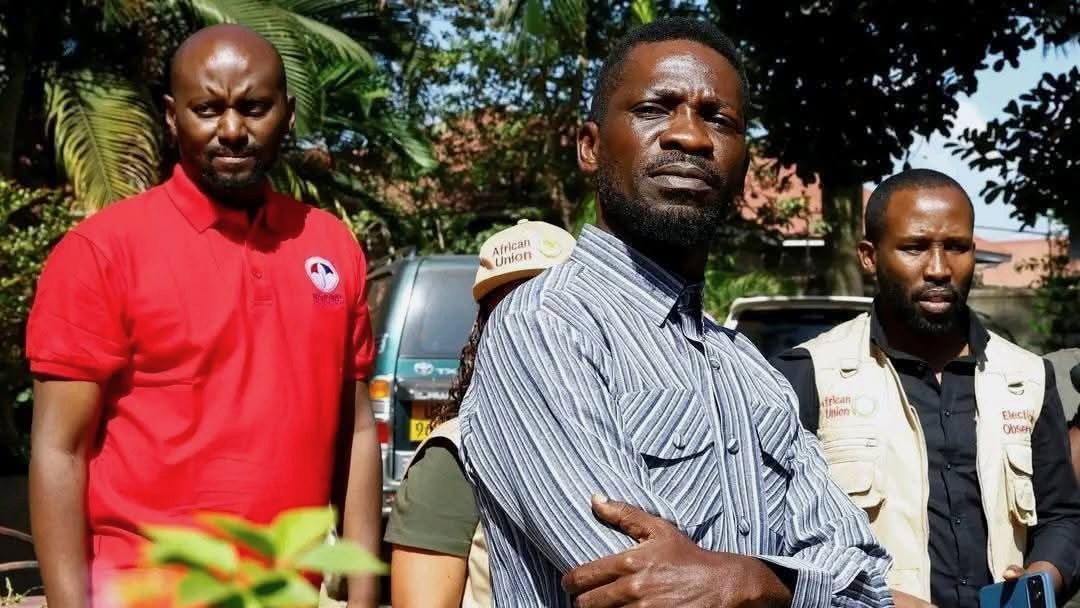
Uganda heads to elections amid internet shutdown

Uganda goes to the polls on January 15, 2026, in an election between long-serving President Yoweri Museveni against youthful opposition challenger Robert Kyagulanyi, popularly known as Bobi Wine, amid a nationwide internet shutdown and delays at several polling stations.

January 15, 2026 by Nicholas Mwangi

Image
Robert Kyagulanyi, known as Bobi Wine, is a young, progressive presidential candidate challenging President Yoweri Museveni's four-decade-long rule in Uganda. Photo: X

Ugandans are casting their ballots today in a highly tense contested presidential election, but many are doing so amid an ongoing nationwide internet shutdown that has cut off public access to social media, web services, and messaging platforms.

The election pits incumbent President Yoweri Museveni, 81, against eight presidential challengers, led by Robert Kyagulanyi Ssentamu, popularly known as Bobi Wine, 43, a musician-turned-politician whose supporters say they have faced repeated harassment throughout the campaign.

Museveni has been in power since 1986, making this his seventh bid for the presidency and extending a rule that now spans over four decades.

Internet blackout and pre-election environment
Two days before voting began, on January 13, 2026, the Uganda Communications Commission (UCC) ordered a temporary nationwide shutdown of public internet access and selected mobile services, citing concerns over misinformation, electoral fraud, and threats to national security.

Rights groups, however, have condemned the move, arguing that shutting down internet access during elections undermines transparency, restricts freedom of expression, and makes it harder for citizens and observers to report irregularities.

Reports from polling stations indicate widespread delays in the opening of polls due to logistical problems, including malfunctioning biometric equipment and the late arrival of voting materials. Heavy security deployment has been observed in many urban areas, raising concerns about potential unrest.

The opposition claims harassment
Bobi Wine, the leading opposition figure and a favorite among many young voters, has repeatedly claimed that he and his supporters have faced harassment during the campaign. These include arrests, the dispersal of rallies, and restrictions on movement.

While voting is underway and official results are expected within 48 hours, the internet blackout and heavy security presence risk undermining public confidence in the electoral process and could cast doubt on the credibility of the outcome.

Regional context
This election marks a critical moment for Uganda and for participatory democracy in East Africa, a region that has increasingly witnessed the use of state violence against the masses. The recent elections in Tanzania stand as an example of this troubling trend.

Read more: Post-election repression in Tanzania as President Suluhu “wins” with 97.66%
This vote unfolds under heavy security and with critical information channels deliberately cut off. Museveni’s more than 40-year grip on power contrasts sharply with Bobi Wine’s call for generational change and political openness , a tension that reflects a deeper struggle over the future of democracy in Uganda and the region at large.

https://peoplesdispatch.org/2026/01/15/ ... -shutdown/

******

Image
The South African Communist Party (SACP) under fiery Secretary-General Solly Mapaila is coordinating a conference of the left to discuss challenges as the party prepares to contest local government elections alone. (Photo: File Photo)

‘Poor people speaking with one voice’: SACP to host conference of left-wing organisations
Originally published: iol on January 19, 2026 by Willem Phungula (more by iol) | (Posted Jan 21, 2026)

The SACP is organising a conference of all the people and organisations on the left-wing of the political spectrum to discuss how to tackle challenges that face the country.

Speaking on Monday, the party’s national spokesperson Mbulelo Mandlana said the conference of the left would be held in a few months and will include non-governmental organisations, civil society groups, working class and all other parties and individuals on the left of South African politics.

Asked whether this would result in political pact to contest local government elections similar to the DA-led Multi-Party Charter in 2024, Mandlana said this was not the intention as the conference of the left will include non-political organisations. However, he said the outcome of the conference will ultimately determine the way forward.

“Ours is not a political pact like the DA’s moonshot (pact). We are organising a conference of the left, whether in politics or not. We do not intend to sign a political agreement, however, it will be the conference itself that will determine what needs to be done to overcome the challenges facing the country. Particularly the poor people,” said Mandlana.

He stated that the party has already started informal discussions with the likes of EFF and other parties on the left.

Mandlana also assured ANC members, who hold both ANC and SACP membership, that his party has no problem with them keeping their dual membership.

“As far as we are concerned, the dual membership of SACP and ANC members is an important principle that must be respected and protected. The elections are no reason to undo that principle. The SACP will not punish any member for holding ANC and SACP membership at the same time.

“We have not heard any official communication from the ANC to say dual membership is outlawed as such we are not operating under the understanding that dual membership is not something the ANC opposes or views as offensive to it as an organisation,” said Mandlana.

However, he said the SACP will have its election teams run separately from the ANC, adding that this has nothing to do with dual membership or the alliance.

The sentiments were echoed by the party’s KwaZulu-Natal interim provincial executive committee member Phumlani Mthembu, who emphasised the importance of ‘poor people speaking with one voice’. Mthembu said that the notion that the SACP will be contesting the ANC in the elections should be dismissed. He argued that the SACP will be contesting elections alongside the ANC and other parties, not that it will be contesting against the ANC.

The party’s provincial leadership is currently preparing branches to go to an elective provincial congress in May.

The SACP has long announced that it will contest local government elections separately from the ANC. At its national general council, the ANC discussed the dual membership issue and resolved that while tackling the issue, SACP members who hold ANC membership would not sit in the ANC’s election strategy meetings.

https://mronline.org/2026/01/21/poor-pe ... nisations/

*****

Sudan Civil War Spills Over into Neighboring Chad

Posted by Internationalist 360° on January 20, 2026

Image
Rapid Support ForcesRapid Support Forces (RSF). Photo: screenshot

Pursuing armed groups affiliated to the army into Chad, Sudan’s paramilitary attacked a Chadian military garrison, killing seven soldiers and prompting the government to issue a “final warning.”


The civil war in Sudan, which has continued for over 1,000 days, is spilling over its western borders into Chad and threatening to destabilize a regime that is already walking a tight rope.

“We cannot have our defense and security forces dragged into the conflict,” Chadian government spokesperson Gassim Cherif said on January 17 in a news conference, revealing that seven Chadian soldiers had been killed two days earlier by Sudan’s Rapid Support Forces (RSF).

​The paramilitary, at war with the Sudanese Armed Forces (SAF) since April 2023, was reportedly pursuing the army-affiliated militias in Sudan’s Darfur region across the border into Chad on January 15, after a week of fighting in Girgira and Mastura areas in Tine. Located on the border with Chad in Sudan’s North Darfur state, just above the demarcation with West Darfur, the town of Tine, along with Ambara and Karnoi, is among the last areas of the Darfur region where fighting with the RSF continues.

​The RSF had consolidated its control over most of the region by late October 2025 after overrunning the defenses of the North Darfur state’s besieged and starved capital, El Fasher, and depopulating it by killing tens of thousands. With the fall of El Fasher, the SAF lost the last foothold in the Darfur region.

Border tensions on the rise

​Attacks increased on the Chadian border as the RSF pushed further into the remote northern reaches of the state to eliminate the small holdouts of SAF-aligned militias – the Joint Force – and local self-defense groups known as the Popular Resistance. On December 26, two Chadian soldiers were killed in a strike on an army camp by a drone originating from Sudan, two days after the RSF had taken over the holdouts of Abu Qamra, Ambara, and Karnoi, holding it briefly before being forced to retreat under SAF drone strikes.

​With the RSF also using drones, both sides blamed each other for this strike on Chadian territory. Amid renewed fighting this year, the RSF overran Tine on January 9, before it was retaken by the Joint Forces the following day.

​The RSF has since stepped up its attacks on these areas. Amid the intensified fighting, both warring parties are making conflicting claims of control. In this fluid situation, RSF units pursuing retreating soldiers of the Joint Force across the border into Chad were reportedly stopped by the Chadian soldiers from the garrison in the border town of Birak on January 15. Attacking the garrison, the RSF killed and wounded Chadian soldiers and destroyed several of its military vehicles. “This is our final warning,” Chadian government spokesperson Cherif said during the conference.

Inflaming Chad’s internal contradictions

The RSF attacks risk inflaming internal contradictions within Chad, whose government is widely reported to have assisted the UAE in supplying weapons to the RSF through its territory, helping the latter consolidate power in Darfur.

​Among the non-Arabic speaking communities the RSF is cleansing from Darfur are the Zaghawa ethnic group, spread on both sides of the border, from which Chad’s president, Mahamat Déby, hails. This has caused discontent in the Zaghawa-dominated upper echelons of Chad’s military, risking Déby’s core support base as he walks a tight rope, balancing his dependence on France with posturing sovereignty to placate a growing mass sentiment against French neocolonialism.

​In the meantime, stress on Chad’s border towns is also increasing with the continuing influx of refugees from Sudan across a 1,400 km border. The population in the town of Adré, from where most of the Sudanese refugees enter Chad, has risen tenfold in the course of this war, ratcheting up prices and increasing unemployment among the local population, and laying the grounds for outbreaks of disease like cholera.

​Another 18,000 families have been displaced toward the Chadian border in the fighting between December 22 and January 16 in Tine and surrounding areas, killing over 103 civilians and wounding 88.

https://libya360.wordpress.com/2026/01/ ... ring-chad/
"There is great chaos under heaven; the situation is excellent."

User avatar
blindpig
Posts: 15306
Joined: Fri Jul 14, 2017 5:44 pm
Location: Turtle Island
Contact:

Re: Africa

Post by blindpig » Fri Jan 30, 2026 3:40 pm

‘We Are Exploited by the Same Imperialists’: Burkina Faso Activist on Latin America and Africa
Posted by Internationalist 360° on January 27, 2026
Beatriz Drague Ramos E Monyse Ravena

Image
Ouedraogo Sampa Wendé, ativista de Burkina Faso vê imperialismo comum entre África e América Latina. | Crédito: Monyse Ravena / Brasil de Fato

At MST meeting, Ouedraogo Wendé, from the International Thomas Sankara Memorial, expressed solidarity with Venezuela

Ouedraogo Sampa Wendé, a member of the International Thomas Sankara Memorial Committee, expressed solidarity with the Venezuelan people during a gathering of the Landless Workers’Movement (MST), held in Salvador, in Brazil’s northeastern state of Bahia.

According to Wendé, on January 17 the people of Burkina Faso mobilized to reject what he described as “international banditry that the United States is perpetrating in Latin America, especially in Venezuela.”

The activist linked the exploitation experienced by countries in Latin America and Africa, including the three members of the Alliance of Sahel States – Niger, Burkina Faso and Mali – to coordination by imperialist powers such as the United States.

“We are driven by the same ambitions, the same determination and the same commitment, and both in Latin America and in Africa we are exploited by the same imperialists,” Wendé told BdF.

Burkina Faso recently faced an attempted coup. In early January, the country’s security minister, Mahamadou Sana, detailed how intelligence and defense services dismantled a plot to assassinate President Ibrahim Traoré and eliminate senior government officials, with the aim of destabilizing the country and triggering an external military intervention in the Sahel.

In a televised address, Sana confirmed that the coup attempt, orchestrated by both military and civilian actors, was financed from abroad, specifically from Ivory Coast, where a recent transfer of 70 million West African CFA francs (approximately US$125,000) was made. The plot was dismantled on January 3.

Burkina Faso has been steadily advancing a process of regional integration alongside Mali and Niger through the creation of the Alliance of Sahel States. The initiative has a strong anti-colonial character and seeks to strengthen national sovereignty under pan-Africanist ideals, confronting resistance from former colonial powers that have historically exploited the African continent.

The bloc proposes concrete unification measures, including the creation of a joint development bank and the issuance of a unified passport for citizens of the three countries.

Beyond economic and administrative cooperation, the integration project also covers strategic areas such as communication and infrastructure, with plans to establish a radio and television network dedicated to the Sahel, improve air and rail connectivity, and directly promote regional trade and investment.

In the field of security, the alliance plans to form a joint military force of 5,000 soldiers with the specific goal of combating armed terrorist groups operating in the region.

This defense pact is reinforced by a commitment to mutual military support in situations where the sovereignty of any member state is threatened by external actors.

Against this backdrop, Wendé argued that Africa is experiencing an extremely difficult context marked by terrorist attacks, which he described as another expression of imperialism acting through its agents. “Today, Africa is practically under the domination of French imperialism and U.S. imperialism,” he said.

The MST gathering, according to Wendé, provides space for dialogue with other organizations, helping to forge ties and build militant, political and international solidarity between the peoples of Latin America and Africa.

“Therefore, we need a form of solidarity that gives peoples the tools necessary to confront imperialism and allows our states to live in sovereignty and full independence, initiating shared development with their peoples. Yes, imperialism operates in the same way in almost all states,” he stated.

Finally, the activist from the International Thomas Sankara Memorial Committee called on the peoples of Latin America and Africa to condemn aggression by Donald Trump against national sovereignty. “We unreservedly condemn this aggression and call on all peoples in struggle to mobilize in support of President Maduro and to strengthen the fight of the popular masses, who aspire only to live with dignity, honesty, independence and full sovereignty.”

https://libya360.wordpress.com/2026/01/ ... nd-africa/

******

Ugandan military continues post-election manhunt for main opposition leader Bobi Wine

After bragging of killing 30 members of Wine’s party, Uganda’s military chief, Muhoozi Kainerugaba, son of its 81-year-old president and heir apparent, said “our troops have orders to bring him in dead or alive!”

January 29, 2026 by Pavan Kulkarni

Image
Bobi Wine at campaign rally. Photo: Bobi Wine/FB

In hiding, Uganda’s main opposition leader, Robert Kyagulanyi, better known as Bobi Wine, said on January 27 that security operatives went to his residence in Busabala and tried bribing one of his staff members for information on his whereabouts.

The military is hunting for the 43-year-old musician-turned-politician, popular among urban youth, ever since the disputed election on January 15. The UN described the electoral environment as one marred by “widespread repression and intimidation against the political opposition, human rights defenders, [and] journalists”. The opposition alleged ballot stuffing and voter suppression.

After the biometric voter verification kits malfunctioned in several polling stations, the Electoral Commission (EC) suspended the use of this equipment deployed to prevent ballot stuffing.

Authorities shut down the internet on January 13, two days before the vote, ostensibly to prevent misinformation. It was partially restored on January 18, a day after the EC gave 81-year-old President Yoweri Museveni, who has ruled Uganda since 1986, a seventh term, declaring him the winner with 71.65% of the votes. However, the blockade of social media continued until full restoration on January 26.

“Orders to bring him in, dead or alive”
That day, Uganda’s military chief, Muhoozi Kainerugaba, son of Museveni and heir apparent to his presidency, said “our troops have orders to bring him in dead or alive!” in a post on X, which he then deleted. With an image of this post, Wine said, “Museveni’s criminal son is still looking for me and issuing threats to harm me. Thankfully, our people are still keeping me safe.”

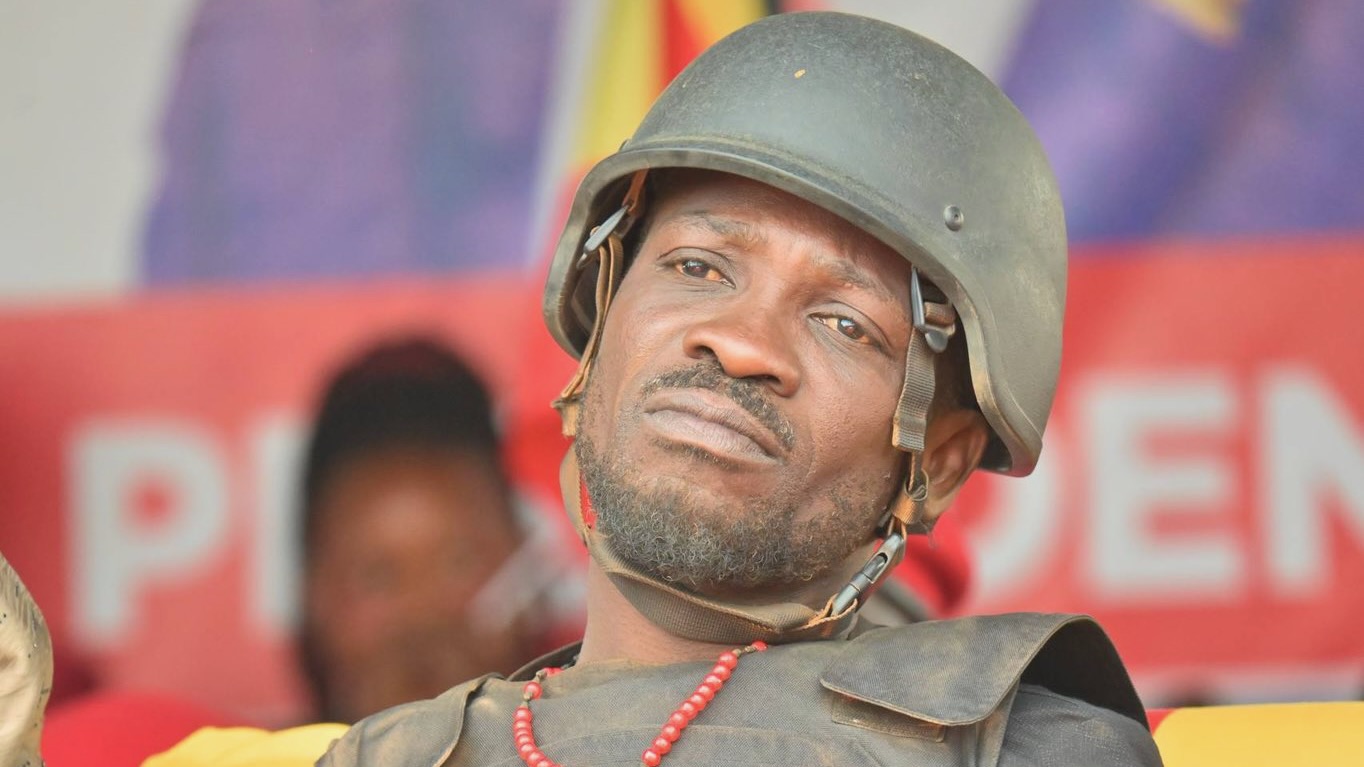
Wine, who had campaigned with a helmet and flak jacket as soldiers swarmed the streets ahead of the election, went underground soon after the vote on January 15, evading the military, which raided his family home in Magere, a northern suburb of the national capital, Kampala, the following night.

The government soon launched a fierce crackdown on the opposition. On January 23, Kainerugaba said that 2,000 supporters of Wine’s party, the National Unity Platform (NUP), have been detained. “So far we have killed 30 NUP terrorists,” he went on to brag on social media, adding in another post that day, “Most NUP terrorist leaders are in hiding. We shall get them all.”

Soldiers brutalize Wine’s wife
Later, soldiers raided his home again, breaking down its door and allegedly beating his staff. His wife, Barbie Kyagulanyi, said that she was choked, “suspended mid-air by the neck”, stripped off her top, and beaten by soldiers demanding to know Wine’s whereabouts. She was later hospitalized.

Dismissing the allegation that his soldiers used violence against his wife, Kainerugaba said in a post on January 26, “[W]e do not beat up women. They are not worth our time. We are looking for her cowardly husband.”

Only one evening before, however, Information Minister Chris Baryomunsi had insisted that there was no need for Wine to be in hiding. Accusing him of orchestrating “drama and theatrics”, Baryomunsi told a TV news channel that Wine was “trying to cause a story where there’s no story.”

“Nobody wants him,” he added. “He’s not under pursuit by the police or the army. I’m now speaking as the government of Uganda.”

But military chief Kainerugaba contradicted the minister the next day, saying that his troops had “orders to bring him in dead or alive!”.

“The whole army is looking for one person … but they have failed to find me”
Later that night, Wine said, a drone was hovering over his property in Busabala on the shores of Lake Victoria to Kampala’s south, before security operatives went in on January 27, enquiring his staff about his whereabouts, and trying “to compromise one to tip them off if I come around.”

Although on the run, Wine has maintained a defiant posture, taunting in a post on January 26, “The whole army is looking for one person. It’s now coming to 10 days, but they have failed to find me. That means they are not as strong as they tell you.” He called on Ugandans to “do whatever is possible without breaking the law. Yes, they call us outlaws, but we are not lawbreakers.”

https://peoplesdispatch.org/2026/01/29/ ... bobi-wine/

******

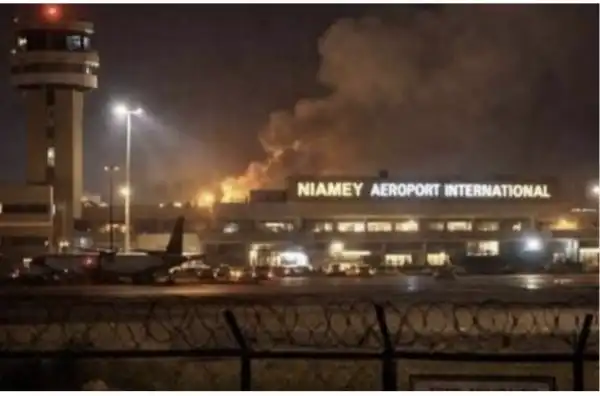
Attack on airport in Niger's capital
January 30, 11:04

Image

Attack on airport in Niger's capital

Niger's leader accused France, Benin, and Côte d'Ivoire of supporting the attack ( https://afrinz.ru/2026/01/lider-nigera- ... t-niameya/ ) on Niamey Airport.

Niger President Abdourahmane Tchiani accused the authorities of France, Benin, and Côte d'Ivoire of supporting the terrorists who attacked the Niamey Airport area, including the 101st Air Force Base.

"We remind the sponsors of these mercenaries, in particular [the presidents of France, Benin, and Côte d'Ivoire] Emmanuel Macron, Patrice Talon, and Alassane Ouattara, that we have heard enough of their barking, and that they, in turn, must also prepare to hear our [response]," Tchiani said.

After inspecting the affected area, Tchiani told reporters that the airport had been subjected to an infiltration attempt by remotely controlled mercenaries.

He praised the efforts of the Russian military in repelling the attack.

"This is an opportunity to commend the efforts of all defense and security forces, as well as our Russian partners, for their prompt actions, which allowed us to completely defeat the enemy within twenty minutes," the head of state noted.

Nigerien Defense Minister Salifou Modi reported that the armed forces had killed 20 militants and detained 11 more, most of whom were seriously wounded. Four Nigerien soldiers were killed in the clashes.

On the night of January 29, as reported by sources of the African Initiative, an armed attack was carried out ( https://afrinz.ru/2026/01/istochniki-ae ... otrazhena/ ) on the area of ​​the airport in the capital of Niger, Niamey, including the territory of the 101st Air Base of the country's Air Force.

https://t.me/africaninitiative/12481 - zinc

As stated after the active disintegration of the French colonial empire in West Africa, France will actively sponsor terrorists and separatists in the region in order to weaken the governments of countries where national liberation movements have won, as well as to hinder the strengthening of influence of Russia, Turkey, and a number of other countries that benefited from the collapse of the French colonial empire. ECOWAS countries, where pro-French governments still remain, are also being used for attacks.

In the case of Niger, France remains haunted by the loss of access to Niger's uranium mines. This setback, of course, will not stop France from preparing new attacks and terrorist attacks in Niger. The French will also support separatists and terrorists operating against Mali and Burkina Faso.

https://colonelcassad.livejournal.com/10336047.html

Google Translator
"There is great chaos under heaven; the situation is excellent."

User avatar
blindpig
Posts: 15306
Joined: Fri Jul 14, 2017 5:44 pm
Location: Turtle Island
Contact:

Re: Africa

Post by blindpig » Mon Feb 02, 2026 3:40 pm

Burkina Faso regains 74% of its territory from the jihadist insurgency[/b]

Authorities consider this progress a relevant indicator in the recovery of areas affected by the violence that has plagued the country since 2015.

Image
The Prime Minister of Burkina Faso, Jean Emmanuel Ouedraogo, before the Transitional Legislative Assembly. Photo APA News

January 30, 2026 Hour: 9:29 pm

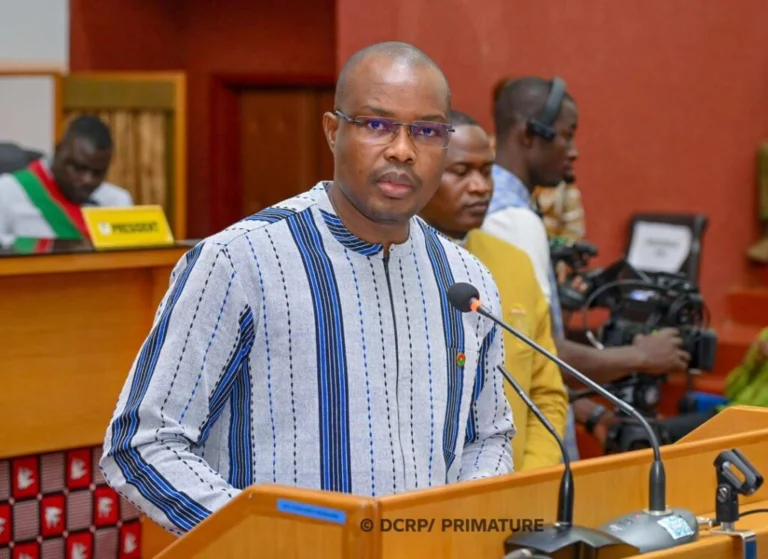
The Prime Minister of Burkina Faso, Jean Emmanuel Ouedraogo, reported this Friday before the Transitional Legislative Assembly that 74% of the national territory is under government control, a figure corresponding to the progress made up to 2025 in the fight against the jihadist insurgency.

This percentage represents an increase of more than three points compared to the 72.70% announced in August 2025 by Defense Minister General Célestin Simporé, who had in turn reported improvements compared to the 70.89% of December 2024 and the 69% recorded in 2023. Authorities consider this progress a significant indicator in the recovery of areas affected by the violence that has plagued the country since 2015.

Décentralisation et planification territoriale : le guide national des plans de développement régionaux validéhttps://t.co/9vN2IkVElf pic.twitter.com/JdnN14IxKT

— Ministère de la Communication (@CommunicationTg) January 29, 2026


Ouedraogo detailed the concrete results of the territorial reconquest: 442 villages liberated, 73 prefectures and municipalities reopened, more than 600 schools and 38 health facilities put back into operation. These advances complement previous military operations that included the recapture of the Sourou Valley, the stabilization of Diapaga and Djibo, and the resumption of activities at the Boungou mine.

To sustain this effort, the government significantly increased its personnel by recruiting 16,000 soldiers, 2,000 police officers, and nearly 15,000 Volunteers for the Defense of the Homeland (VDP). Additionally, the Patriotic Support Fund mobilized 222 billion CFA francs earmarked for operations through 2025.

The jihadist insurgency has caused thousands of deaths and displaced millions in Burkina Faso since 2015, generating a security crisis that led to two coup attempts in 2022. Authorities emphasize that territorial recovery allows for the gradual return of public administration to previously inaccessible areas.

https://www.telesurenglish.net/burkina- ... nsurgency/

******

France has moved to direct support of terrorism in Africa.
February 2, 1:08 PM

Image

I just recently wrote about this topic https://colonelcassad.livejournal.com/10336047.html , and now the Russian Foreign Intelligence Service has confirmed it.

Macron has authorized his intelligence agencies to launch a plan to eliminate "unwanted leaders" in Africa.

France's involvement in the thwarted coup attempt in Burkina Faso on January 3 has already been established.

The rebels were tasked with assassinating President Traoré, a leading figure in the fight against neocolonialism.

Paris calculated that this would not only bring forces loyal to France to power in Ouagadougou but also deal a blow to all supporters of sovereignty and Pan-Africanism on the continent.

France has shifted to directly supporting terrorists of various stripes, who are becoming its main allies on the African continent.

(c) Russian Foreign Intelligence Service.

France simply has no other means of exerting influence in West Africa besides terrorism.
The attack on Niamey airport is part of this same strategy to destabilize countries liberated from French colonialism.

https://colonelcassad.livejournal.com/10340722.html

Google Translator

******

South Africa expels Israeli ambassador; Israel retaliates by expelling South Africa’s ambassador to Palestine

South Africa has not had an ambassador to Israel for many years. Israel’s demand that South Africa’s ambassador leave Palestine “underscores Israel’s refusal to honor international consensus on Palestinian statehood,” said the foreign ministry spokesperson.

February 01, 2026 by Pavan Kulkarni

Image
A protest action in solidarity with Palestine in Johannesburg on November 2, 2023. Photo: Pan Africanism Today

Declaring the Chargé d’Affaires of the Israeli embassy persona non grata on Friday, South Africa has given Ariel Seidman 72 hours to leave the country.

“This decisive measure follows a series of unacceptable violations of diplomatic norms and practice which pose a direct challenge to South Africa’s sovereignty,” said a media statement by the Department of International Relations and Cooperation (DIRCO) on January 30.​

“These violations include the repeated use of official Israeli social media platforms to launch insulting attacks against His Excellency President Cyril Ramaphosa, and a deliberate failure to inform DIRCO of purported visits by senior Israeli officials.”

Accusing him of “a gross abuse of diplomatic privilege and a fundamental breach of the Vienna Convention,” and systematically undermining “the trust and protocols essential for bilateral relations”, the statement went on to add: “We urge the Israeli government to ensure its future diplomatic conduct demonstrates respect for the Republic and the established principles of international engagement.”

​Israel, which South Africa had taken to the International Court of Justice (ICJ) for its genocide in Gaza, has in turn accused it of “false attacks against Israel in the international arena.”

​In retaliation against South Africa’s expulsion of the Israeli ambassador to its country, Israel declared South African diplomat Shaun Byneveldt a persona non grata, who “must leave Israel within 72 hours.”

​“Shaun Byneveldt is ambassador to the State of Palestine, not Israel.”

​However, Byneveldt is neither in Israel nor is he an ambassador to Israel. South Africa, which has a long history of solidarity with Palestine, had already recalled its ambassador from Israel in 2018 when its occupation forces massacred civilians peacefully protesting at the Gaza border against the inauguration of the US embassy in occupied Jerusalem.

​Announcing that the recalled ambassador will not be replaced, the South African government downgraded its Israeli embassy to a liaison office in 2019.

​Four years later, when Israel started its genocide in Gaza in late 2023, the South African government recalled all its diplomats from this liaison office, as protests grew domestically, demanding all ties with Israel be severed.

​Byneveldt, whom Israel is expelling, is South Africa’s ambassador to Palestine, and based in its capital Ramallah in the West Bank, under Israeli occupation since 1967. The ICJ has recognized the occupation as “illegal” and “unlawful” — a status reiterated in scores of UN resolutions.​

Therefore, in international law, Israel has no authority to declare Byneveldt persona non grata. “Mr Shaun Byneveldt is ambassador to the State of Palestine, not Israel,” said Chrispin Phiri, the South African foreign ministry’s spokesperson.

​Nevertheless, Israel has demanded that he leave the occupied Palestinian territory it considers as its own. “This underscores Israel’s refusal to honor international consensus on Palestinian statehood,” added Phiri.

https://peoplesdispatch.org/2026/02/01/ ... palestine/
"There is great chaos under heaven; the situation is excellent."

User avatar
blindpig
Posts: 15306
Joined: Fri Jul 14, 2017 5:44 pm
Location: Turtle Island
Contact:

Re: Africa

Post by blindpig » Sat Feb 07, 2026 3:10 pm

Trump, White Farmers and the War on Zimbabwe’s Sovereignty: Why Africans Must Reject this Neo-Colonial Push
Posted by Internationalist 360° on February 4, 2026
Mafa Kwanisai Mafa

Image
White farmers appeal to Donald Trump to recoup US$3,5 billion from the Zimbabwean government. (Business Insider Africa)

The latest push by a small group of white farmers in Zimbabwe to drag Donald Trump and the United States government into a fight over land compensation is not just a betrayal of Zimbabwe’s revolution; it is a fresh front in an ongoing war to reverse Africa’s emancipation from colonial domination.

Earlier this week, reports emerged that a faction of white former farmers has hired a US lobbying firm with deep ties to Trump’s circle, asking the American president and his Republican allies to pressure Harare into paying billions of dollars in compensation for land seized decades ago under the country’s land reform programme.

Let there be no mistake: this is not about fairness or justice. It is about power, about imperial interference, and about rewriting history to serve the powerful few.

Zimbabwe’s land reform, begun in the late 1990s and early 2000s, was a radical and necessary corrective to colonial theft.

For nearly a century before independence, a white minority dominated the fertile agricultural heartlands of Zimbabwe, while the majority Black population was relegated to crowded reserves and marginal lands.

This was not an accident; it was the design of colonial conquest and racial capitalism. Redistributing that land to Black Zimbabweans was not only just, but it was essential for dignity, self-determination, and economic independence.

Yet now, more than two decades later, a clique of former landowners is trying to internationalise what was a sovereign African decision.

They have turned to Mercury Public Affairs, a US lobbying firm, to persuade Trump’s allies in Washington to intervene in Zimbabwe’s internal affairs.

Their argument is simple: they want billions of dollars in compensation for land that was taken from them. This push is deeply flawed on both moral and political grounds.

First, it ignores the most important fact: these farmers held land that was stolen from the African majority through colonial violence and legal imposition. The land redistribution was not a whim; it was a reckoning with centuries of theft.

To demand that an African nation pay huge sums on behalf of a tiny, historically privileged minority is to ignore the blood, sweat, and struggle of the millions displaced and oppressed by colonial rule.

Second, the compensation campaign is being framed through the lens of Western politics, particularly through the truncated narratives of US Republican rhetoric about “white farmer genocide” in southern Africa, a claim that has been widely debunked and exposed as an extremist fantasy.

Trump and his circle have repeatedly amplified similar claims about South Africa, and now they are seeking to cast Zimbabwe in the same light.

Here we see the danger of allowing Western geopolitical agendas to infiltrate African policy issues. This is not assistance; it is interference.

It is the old colonial project in new clothes: using financial leverage and political pressure to bend sovereign African choices to Western interests.

This is why any appeal to Trump, Congress, or US policymakers should be treated with contempt by all Africans committed to self-determination.

Third, the framing of compensation in this way trivialises the unresolved economic injustices inflicted on Black Zimbabweans under colonialism.

While the question of improvements on the land remains contested and the government has indeed budgeted sums to pay for infrastructure losses, the larger question of returning stolen land and the attendant wealth created from it remains a historical debt owed by colonial powers and settler elites to the African majority.

To accept the premise that a small group of white farmers should be compensated by a Black government at the behest of a racist Western administration undermines the very principles of justice that underpinned Zimbabwe’s struggle for independence.

It suggests that the rights of a minority settler class outweigh the collective rights of the indigenous majority whose land and resources were stolen. This is not justice. This is a replay of colonial logic.

Some critics, including within regional bodies such as the Southern African Development Community, have pointed to legal rulings that favour compensation claims under certain treaties. Yet this too must be contextualised.

The international legal order is replete with biases that favour powerful states and entrenched interests. SADC’s own Tribunal rulings, for example, have been subject to political pushback and controversy precisely because they sit at the intersection of law, sovereignty, and political power.

But no international legal technicality should be allowed to override the core principle that African nations have the right to determine how they manage their land reform and economic priorities without foreign interference.

Let’s also be clear: Zimbabwe’s land reform was not perfect. Implementation was sometimes flawed, and challenges remain in commercial agriculture productivity and rural development.

But these are problems of post-colonial reconstruction and empowerment, not excuses for Western governments and settler elites to return with demands that Zimbabwe bend to their will.

This moment calls for unity, not capitulation. Land reform in Zimbabwe was part of a broader African liberation project that sought to dismantle the economic foundations of colonialism across the continent from Ghana to Guinea, from Namibia to Mozambique.

To allow a return to colonial claims through US political pressure is to undermine the very gains that African revolutionaries fought for.

African nations and leaders, regional organisations, and civil society should stand in unison against this renewed assault on Zimbabwe’s sovereignty. This is not a local issue; it is a continental one.

It is a reminder that the battle for genuine decolonisation, economic, political, and psychological, is far from over.

In Zimbabwe, land belongs to those who reside on it, work it, and whose ancestors were dispossessed by colonial conquest. Seeking compensation from the Zimbabwean state under the influence of an external imperial power is not only unjust, but it is an affront to Africa’s liberation struggle.

Africa must reject these neo-colonial overtures and reaffirm that land reform was and remains a legitimate and necessary correction of historical wrongs.

Zimbabwe’s land reform is not negotiable. Its sovereignty is not for sale. And its liberation history must not be rewritten to serve outsiders. Rejecting this compensation campaign is not only a defence of Zimbabwe, but it is a defence of the African revolution itself.

https://libya360.wordpress.com/2026/02/ ... nial-push/

******

On the Assassination of Saif Al-Islam Qaddafi: Another Tale of Imperialist Treason
Posted by Internationalist 360° on February 6, 2026
Essam Elkorghli

Image

The son of President Muammar Qaddaffi, Saif Qaddafi, has been assassinated by local forces, some of whom contributed to the destruction of a flourishing Libya. A background to the murder and Libya’s struggles for reconstruction.

In 2011, as NATO was bombing Libya, the son of Muammar Qaddafi, Saif Al-Islam Qaddafi (hereafter, Saif), told a reporter that they would fight NATO. He was then pressed by the reporter on what plans they have for that. Saif said: We have Plan A, Plan B and Plan C. Plan A is to live and die in Libya. Plan B is to live and die in Libya. Plan C is to live and die in Libya.[1]

His plan was fulfilled and he never pursued what other political leaders had done, which is, fleeing their countries and being in exile under mysterious yet privileged conditions.

Saif was assassinated in the late afternoon of February 3rd, when four masked gunmen stormed his place in the city of Zintan, 170km southwest of the capital, Tripoli, casting a blow to the prospects of a political imagination many Libyans aspired to since their country was destroyed externally by NATO in 2011 and internally by the political elite running the country ever since. The assassination is not just an attack on Saif for grudges held by political opponents due to animosity against his father, Muammar al-Qaddafi and the Libyan Arab Jamahiriya era (1977-2011). It is an attack on the ideas that Libya represented: Pan-Africanism and Pan-Arabism, Anti-Imperialism, and Anti-Reactionism.

Understanding Saif and Libya

Saif was born in 1972 in Libya, where he grew up and was educated until his doctoral studies at the London School of Economics. He became instrumental in portraying the Libyan Arab Jamahiriya differently to western audience and intellectuals at a time of geopolitical reshuffling in the early 2000s. Having mingled with the likes of Anthony Giddens, David Held and many others who are close to the heart of British politics, he understood how to use political power for economic leverage, and vice versa. He was instrumental in returning many of the opposition figures (the conservative capitalist forces who eventually turned on the people in 2011). Being the face of Libyan reforms, he was able to transform the image of the country, which resulted in the lifting of sanctions, the solidification of Libya’s Pan-African orientation, and its burgeoning role in continental integration. He never held a political position and after managing to reshape the external image of the country, he settled with managing Libya’s international charity foundation, the Gaddafi International Charity and Development Foundation (GICDF). He also led the negotiations between the Libyan opposition and MI6-backed terrorists. These terrorists, who were trained in Afghanistan and have ties to Al-Qaida, formed the Libyan Islamic Fighting Group (LIFG), which launched numerous terrorist attacks in eastern Libya (Benghazi and Darna) in the mid-90s, backed by the MI6. These talks resulted in an amnesty given to many of the opposition, despite their treacherous history, in cooperation with MI6 and CIA.[2]

He came to prominence again during the events of 2011. On the third day of the demonstrations (20/2/2011), he predicted Libya’s future. He said that if Libyans begin to kill each other now, they will live in a vortex of violence for the next 40 years. Fifteen years later his prophetic words continue to have material reality. The very people he negotiated with to receive amnesty in 2011 were the ones that NATO armed and led the militarized rebellion against the government.

As NATO-backed rebels encroached on various cities and killed Muammar Qaddafi, Saif remained loose until his capture by rebel forces in November 2011, a month after the public lynching of his father. He was set to face trial because the International Criminal Court had issued an arrest warrant for accusations of crimes against humanity. He remained in jail until 2017, when the courts in Libya gave national amnesty in the spirit of national reconciliation. Since then, he has been living in Zintan, where the very people who captured him became his protectors, showing how political opinions in Libya have shifted and how much support he has garnered given the demise of the country and the growing gap between the ultra-rich and the poor.

Saif, The People vs US-led Electoral Stint of 2021

Despite his popularity, he never sided with the armed militias and foreign actors. Since his release from prison in 2017, Saif abstained from engaging in the politics of the fighting factions, namely the Turkish and Qatari-backed Tripoli government, and eastern Libya’s House of Representatives and its military arm led by General Khalifa Haftar. Even when Haftar launched a military operation to take over Tripoli in 2019, Saif called for de-escalation and peaceful resolution between the factions, urging them to point their guns at the foreign occupiers.

When Haftar’s 2019-2020 goal of capturing western Libya was shattered, the United Nations Special Mission to Libya brokered peace talks which birthed Libya’s second UN-parachuted government, Government of National Unity (GNU). The mandate of the government was only nine months, with the goal of writing presidential and parliamentary election laws and holding elections by the 24th of December 2021. Given that this was the first opportunity for Saif to engage in politics peacefully, he appeared in a New York Times interview in the summer of 2021, officiating his intent to run for the December elections.[3]

Those who follow the politics of electoralism will know the International Foundation for Electoral Systems (IFES), the notorious foundation that influenced elections in numerous countries. Most notorious was the legislative coup against Ortega of Nicaragua by orchestrating election laws that undermined the Sandinistas’ popularity. IFES, which is also authoring Libya’s Civic Education textbooks,[4] has its fingerprints on electoral meddling in countries ranging from Ukraine and most recently Romania in 2024, to Libya and other countries which the US targets with Democracy Promotion. This foundation, IFES, has been implementing its democracy promotion directives in Libya since the toppling of the Jamahiriya in 2011, and they were the orchestrators of the 2021 elections.

Saif’s bid in the elections reshuffled the political game and the expectation to pull Libya out of a vortex of violence through electoral politics. In early November 2021, he appeared in southern Libya, in Sabha, and submitted his official papers for election bid. Then came the legal battles to orchestrate means to exclude him from running for the presidency. Many Libyans registered to vote in those elections, numbering 2.8 million. His application was rejected because of allegations that a court issued an arrest warrant for him. However, given the non-bona fide nature of the arrest warrant, and that it emanated without formal evidence and proof of guilt, his lawyer sought to appeal the exclusion from the elections in the District Court of Sabha. Showing how Haftar’s militias, who control Sabha, tried to influence the court’s decision, they decided to bar Saif’s lawyer from accessing the court by blocking the roads with their armed pickup trucks. However, Libyans protested against this blockade and pressured the militias to move aside so Saif’s lawyer could submit the appeal documents. Eventually, the lawyer and the people were successful in reinstating Saif’s bid for the 2021 elections.

What often goes unremarked—or is treated with curious omission—is that Khalifa Haftar is not merely a ‘Libyan warlord.’ He is a U.S. citizen and a longstanding asset, parachuted into the conflict by NATO in 2011, and later installed as the head of Libya’s military. Yet, in a display of either profound political illiteracy or intentional scotoma, many Western analysts prefer to frame him solely as a proxy of the UAE. This selective focus—highlighting convenient regional patrons while ignoring the original imperial hand that placed him—exposes the fickle and often disingenuous nature of their commentary. It dismisses the enduring role of imperialism, which first elevates its puppets and then permits them to be rebranded as local strongmen. True consistency would demand that those who oppose Haftar today should have opposed his NATO-backed entry in 2011; those who critique foreign interference now should have named it then. Their analysis, like the alliances they dissect, remains situational, not principled.

Hafter was acting on behalf of the Americans who wanted to exclude Saif from the elections. This was explicitly said by the US Ambassador to Tunisia (Libya does not have a US embassy). The Principal Deputy Assistant to the Secretary of State in the Bureau of Near Eastern Affairs, Joey Hood, was asked: “Saif Qaddafi is running for presidential elections that will take place in December [2021]. Do you have an issue with that?” To which Hood replied, “I think the whole world has a problem with that. He is a war criminal and is under UN and US sanctions. Who runs for the presidential elections is something Libyans decide. But we will have many problems with the international community if a man like him is the president of Libya”.[5] To the Libyan people’s dismay, the elections never took place, and the UN-parachuted government, GNU, still holds power. Haftar still dominates eastern and southern Libya, alongside an ad-hoc government that is largely influenced by his sons. Since then, Saif withdrew from the political scene and waited for another opportunity for elections.

Throughout this time, Saif remained silent on the political factions in Libya while speaking incessantly on the need for Arab unity and African unity; he wrote often about Palestine and in defence of resisting imperialism, given that he had firsthand experience fighting the NATO alliance and its reactionary Arabs (UAE, Jordan and Qatar).

To Kill a Man and His Ideas

Saif’s popularity is undisputed and many Libyans long for a charismatic figure to unite under.[6] Neither Haftar nor Abdul Hamid Dbaiba (Prime Minister of the Government of National Unity) have a political project of sovereignty, unity and anti-imperialism. While the US and the larger west see Saif as the largest obstacle to folding Qaddafi’s legacy in Libya, this treacherous assassination, which is done by Libyan hands, will undermine any political imagination in the near future that rids Libyans of their many colonialists (Emirati, American, Turkish, British, Italian, etc.). Some allege the US to have been behind the assassination as Trump’s Senior Advisor to the President of USA on Arab and Middle Eastern Affairs and concurrently as Senior Advisor for Africa at the U.S. Department of State, Massad Boulos, confirmed that he met with eastern (Haftar) and western (Dbaiba) in Paris last week in “efforts to forge national unity and long-term stability, consistent with President Trump’s broader peace agenda.”[7] A day after this post, Saif was assassinated.

Saif’s last public message was sent to one of his relatives, which really shows how much it aches to see Libya destroyed and transformed from the richest country in Africa to what it is today. Saif said:

“For the people whom you said that they were martyred in 2011, was it for this? Is it that we can’t dig a well in Sirte without the permission of the Turks, the American Ambassador, British Ambassador, and French Ambassador? Why didn’t you say that you wanted all of this from the beginning without the thousands being killed and the 500 billion that Libya wasted, and all this destruction resulting in orphans and widows”. [8]

As Libya enters a new chapter of resistance—against the neocolonial project and the treacherous regimes that enforce it—the true struggle comes into sharp focus. These regimes, whose true allegiance lies with their Atlanticist masters, deliberately impoverish the people. They dismantle the last vestiges of social welfare through subsidy cuts and orchestrate embezzlement via the private sector. History’s long arm, however, will not be stayed. It is already writing its indictment: the very local actors who conspired with NATO in 2011 have since been named in the correspondence of Jeffrey Epstein. This was no coincidence; Epstein, a kingpin of predation, had set his sights on Libya’s frozen assets across Africa, Europe, and America. His operations, facilitated by intelligence agencies like the Mossad, aimed to siphon billions through legalistic channels. This nexus—of betrayal at home and criminal conspiracy abroad—reveals the true nature of the forces that have besieged the nation.[9]

History will forget those people, for they have chosen to have no heritage. In the final accounting of a nation’s soul, it is not the momentary clamor of the crowd that echoes through history, but the unwavering fidelity of its children. Saif Al-Islam Qaddafi stood, unbroken, for the sovereignty and unity of his homeland and for the Pan-African dream of a liberated continent, a testament to a courage that transcends the physical. His legacy is forever scarred, not by defeat, but by the bitter venom of betrayal—by those who sold their birthright for foreign whispers and hollow promises. They traded the sacred soil of Africa for the sterile comfort of being accepted by their colonizers, believing that survival was the same as living. His vision, however, endures in the collective struggle for African unity and freedom. It is the vision of linking arms with brothers and sisters from Cairo to the Cape, from Dakar to Dar al-Salam, not in subservience to old empires or new masters, but in sovereign solidarity. It is the conviction that our true strength lies not in isolation, but in unbreakable fraternity against those who would divide, plunder, and impoverish our peoples. Yet there is a death far deeper than the grave: the death of honor, the death of loyalty. It is a spiritual decay that follows the traitor, the defector, and the agent, a perpetual shadow from which no sun can offer warmth. They are the walking dead of history, condemned to wander without glory, without dignity, and without a name worthy of remembrance. For true life is measured not in breath, but in the undying pride left etched upon the conscience of a nation and the future of a continent united in purpose and freedom.

The brave does not die الرجل لا يموت

The revolutionary الثوري لا يموت

The courageous does not die الشجاع لا يموت

The hero does not die البطل لا يموت

Even if rested in the grave حتى ولو وُضِعَ في القبر

The coward dies يموت الجبان

The traitor dies ويموت الخائن

The defector dies ويموت المرتد

The agent dies ويموت العميل

While the brave ones, they are alive أما الشجعان فهم أحياء

With glory بالمجد

With honor والشرف

With the pride that they leave behind وبالفخر الذي يتركونه

And with the reputation they leave behind وبالصيت الذي يتركونه

For their children, for their families لأولادهم وأهلهم

For their nation ولأمتهم

As for the cowards, they are dead أما الجبناء هم ميتون

Even if they were eating, drinking, strolling in the markets, and residing in hotels

حتى ولو كانوا يأكلون ويشربون ويمشون في الأسواق ويسكنون في الفنادق

They are dead because they have no glory ميتون لأنهم بلا مجد

No dignity وبلا كرامة

No honor وبلا شرف

With no good reputation, no remembrance وبلا سمعة حسنة وبلا ذكر

To leave behind for their children يتركونه لأولادهم

– Muammar Qaddafi

Essam Abdelrasul Bubaker Elkorghli is a Libyan doctoral researcher at the University of Illinois at Urbana-Champaign, researching imperialism, ideology and education with a primary focus on Libya. He serves on the International Advisory Board of Pambazuka News, as assistant editor to the Middle East Critique Journal, and member of the Global Pan-African Movement. He writes frequently for the Black Agenda Report.

Endnotes

[1] https://www.csmonitor.com/World/Middle- ... -s-Plan-B-….

[2] Matteo Capasso, Everyday Politics in the Libyan Arab Jamahiriya. Syracuse Press. 2023

[3] https://www.nytimes.com/2021/07/30/maga ... libya.html

[4] See Imperialist terrorism in Northern Africa, Matteo Capasso & Essam Elkorghli, Review of African Political Economy, https://www.jstor.org/stable/48814503

[5] https://www.youtube.com/watch?v=SwjfV1ksctI

[6] https://libyareview.com/17155/poll-saif ... president/

[7] https://x.com/US_SrAdvisorAF/status/2018723526363242655

[8] https://x.com/AhmedzGaddafi/status/2018766867431891045

[9] https://www.aljazeera.com/news/2026/2/1 ... -plan-to-a

Source: Pambazuka News

They killed him treacherously. He wanted a united, sovereign Libya, safe for all its people.

They assassinated hope and a future, and planted hatred and resentment.

The objective is more bloodshed, deeper division in Libya, and the destruction of every project for national unity, in service of foreign interests in the country.

I spoke with him two days ago. He spoke of nothing but a peaceful Libya and the safety of its people.

May you be in the gardens of eternal bliss, O noble and truthful son of Libya.

And may God’s curse be upon the gangs of treachery and betrayal, agents of foreign powers.

… pic.twitter.com/x0l9BVdpBG

— Moussa Ibrahim (@_moussa_ibrahim) February 3, 2026


https://libya360.wordpress.com/2026/02/ ... t-treason/
"There is great chaos under heaven; the situation is excellent."

Post Reply