hireen Abu Akleh: Al Jazeera reporter killed by Israeli gunfire
Israeli forces shot Abu Akleh in the head while she was on assignment in Jenin in the occupied West Bank.
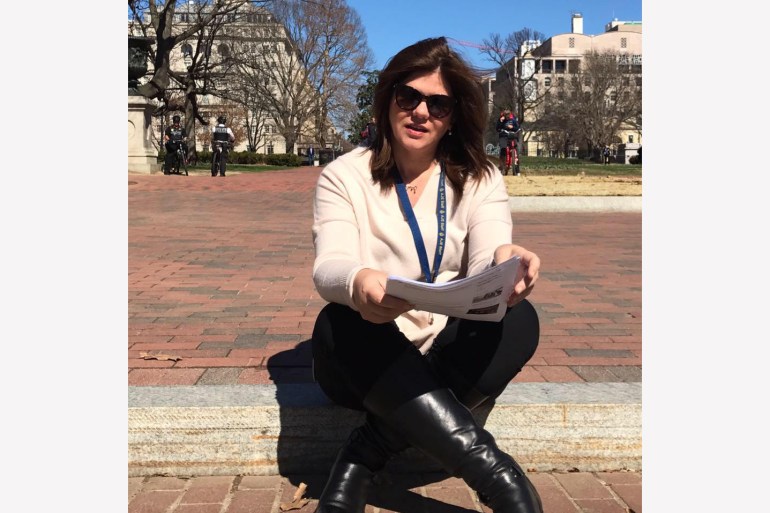
Shireen Abu Akleh was covering Israeli raids on Jenin in the occupied West Bank [Al Jazeera]
By Zena Al Tahhan
Published On 11 May 2022
11 May 2022
Israeli forces have shot dead Al Jazeera’s journalist Shireen Abu Akleh in the occupied West Bank, according to the Palestinian health ministry.
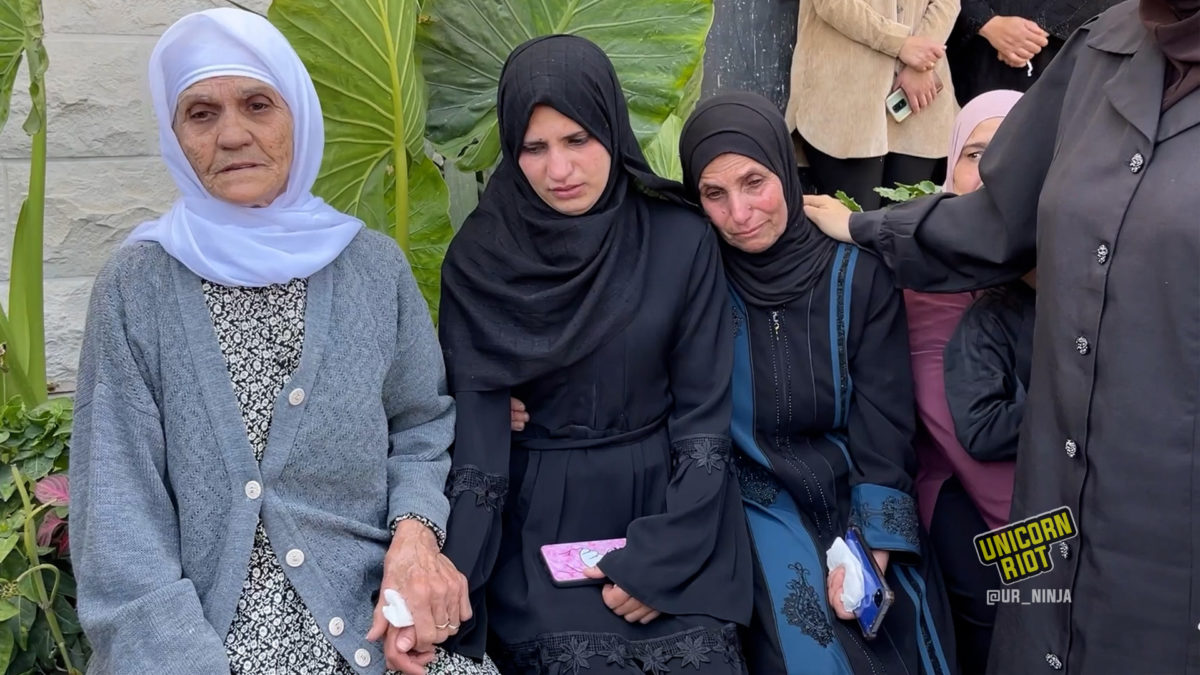
Abu Akleh, a longtime TV correspondent for Al Jazeera Arabic, was killed on Wednesday while covering Israeli army raids in the city of Jenin in the northern occupied West Bank.
Abu Akleh was wearing a press vest and was standing with other journalists when she was killed.
The head of the medicine department at al-Najah University in Nablus confirmed that Abu Akleh was shot in the head. He said that her body was transferred for an autopsy based on an order from the public prosecution.
Another Al Jazeera journalist, Ali al-Samoudi, was also wounded by a bullet in the back at the scene. He is now in stable condition.
‘No confrontations’
Al-Samoudi and other journalists at the scene said there were no Palestinian fighters present when the journalists were shot, directly disputing an Israeli statement referencing the possibility that it was Palestinian fire.
“We were going to film the Israeli army operation and suddenly they shot us without asking us to leave or stop filming,” said al-Samoudi.
“The first bullet hit me and the second bullet hit Shireen … there was no Palestinian military resistance at all at the scene.”
Shatha Hanaysha, a local journalist who was standing next to Abu Akleh when she was shot, also told Al Jazeera that there had been no confrontations between Palestinian fighters and the Israeli army. She said the group of journalists had been directly targeted.
“We were four journalists, we were all wearing vests, all wearing helmets,” Hanaysha said. “The [Israeli] occupation army did not stop firing even after she collapsed. I couldn’t even extend my arm to pull her because of the shots being fired. The army was adamant on shooting to kill.”
The details of Abu Akleh’s killing are still emerging, but videos of the incident show that she was shot in the head, said Al Jazeera’s Nida Ibrahim.
“What we know for now is that the Palestinian health ministry has announced her death. Shireen Abu Akleh was covering the events unfolding in Jenin, specifically, an Israeli raid on the city, which is north of the occupied West Bank, when she was hit by a bullet to the head,” Ibrahim said, speaking from the Palestinian city of Ramallah.
In her last email to the network, Abu Akleh sent a message to Al Jazeera’s Ramallah bureau at 6:13 a.m. in which she wrote: “Occupation forces storm Jenin and besiege a house in the Jabriyat neighbourhood. On the way there – I will bring you news as soon as the picture becomes clear.”
Separately on Wednesday in the occupied West Bank, the Palestinian health ministry said an 18 year old Palestinian, Thaer Mislet-Yazouri, was shot by Israeli forces in the town of el-Bireh, near the illegal settlement of Psagot.
Shock and grief
Abu Akleh, who was a dual Palestinian-American national, was one of Al Jazeera’s first field correspondents, joining the network in 1997.
Grief and sorrow filled the Al Jazeera offices in downtown Ramallah as the news quickly spread and dozens of colleagues, fellow journalists, friends, and Palestinian figures poured in, including Palestinian politicians Hanan Ashrawi and Khalida Jarrar.
Palestinian MP Khalida Jarrar said that Abu Akleh was the voice of Palestinians and was killed by “the monstrosity of Israeli colonialism and occupation”.
“Shireen was always my voice from the prison cells,” Jarrar told Al Jazeera, adding that a month into her last detention by Israel, Shireen was the first person she saw at her court hearings.
“Shireen was our voice. It is unbelievable. It is a crime, it is all clear – intentional and direct targeting. She was targeted. It’s clear,” said Jarrar.
One of Abu Akleh’s former colleagues, Mohammad Hawwash, who knew her for more than 25 years, said she was a “real journalist”.
“Shereen was a professional and unbiased journalist who conveyed the reality and events as they are,” Hawwash, 70, told Al Jazeera.
The Israeli military said its soldiers had come under attack with heavy gunfire and explosives while operating in Jenin, and that they fired back. It added that it was “investigating the event”.
The Palestinian presidency condemned the killing, saying in a statement that it holds the Israeli occupation responsible.
Palestinian Authority (PA) government spokesperson Ibrahim Melhem described it as a “comprehensive crime committed against a well-known journalist”.
“The killing was deliberate… There will be an autopsy by Palestinian medics, which will be followed by a report including all the details of the killing,” Melhem told Al Jazeera. “However, all the witnesses present at the scene of the crime ensures that it was an Israeli sniper that committed the crime in a deliberate way.”
Yair Lapid, the Israeli foreign minister, said Tel Aviv was offering a “joint pathological investigation” into Abu Akleh’s “sad death”. He added that “journalists must be protected in conflict zones”.
Al Jazeera’s offices in the Gaza Strip, in a building that also housed the Associated Press, were bombed by Israeli forces during an offensive a year ago, and Palestinian and international journalists say they have been regularly targeted by Israeli forces in the occupied West Bank and occupied East Jerusalem.
Many in Palestine and abroad took to social media to express their shock and grief.
“Israeli occupation forces assassinated our beloved journalist Shireen Abu Akleh while covering their brutality in Jenin this morning. Shireen was most prominent Palestinian journalist and a close friend,” wrote Husam Zomlot, the Palestinian ambassador to the United Kingdom.
Those who knew her described her as brave, kind and a voice for the Palestinians.
“Shireen was a brave, kind and high integrity journalist that I and millions of Palestinians grew up watching,” wrote Fadi Quran, an activist at the campaign group, Avaaz.
“Horrified to hear of Israel’s killing of Al Jazeera journalist Shireen Abu Akleh in Jenin! Shireen has boldly covered Israel’s aggression in Palestine for over two decades,” wrote Huwaida Arraf, a Palestinian-American activist and lawyer.
“In disbelief,” wrote Salem Barahmeh, a Palestinian activist. “We grew up to her reporting on the second intifada. She was our voice. Rest in power and peace. Another day, another tragedy.”
Giles Trendle, Al Jazeera’s managing director, said the network was “shocked and saddened” by the death of Shireen Abu Akleh.
“We have had a history throughout the world but particularly in this region, where we have had tragedies,” he said, calling for a transparent investigation of the killing of Abu Akleh.
“As journalists, we carry on. Our mission is to carry on. We will not be silenced,” said Trendle. “Our mission is always to carry on to inform the world what is happening. And that is more important ever.”
SOURCE: AL JAZEERA
https://www.aljazeera.com/news/2022/5/1 ... journalist
******************************
Israeli occupation forces have killed 50 Palestinians so far this year
Israel has also used collective punishment against Palestinians by repeatedly closing the crossings connecting Israel with the occupied territories, preventing thousands of Palestinians from traveling and working there
May 10, 2022 by Abdul Rahman

(Photo: Flash90)
According to a statement issued by the Palestinian Ministry of Health on Monday, May 9, Israel has killed at least 50 Palestinians since the beginning of the current year inside the occupied territories. The figure is several times higher than the previous year. 14 Palestinians were killed by Israeli forces in the same period last year.
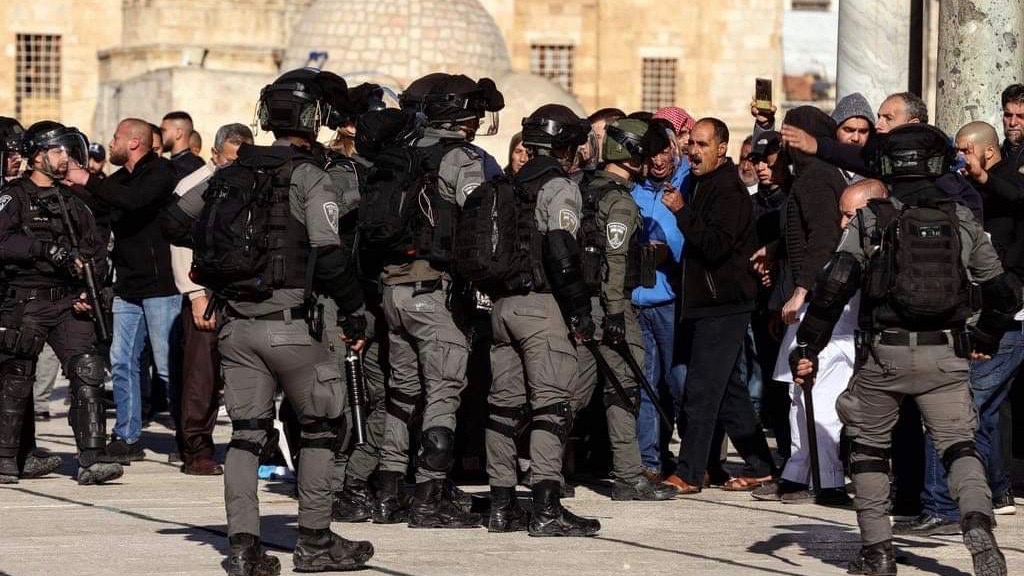
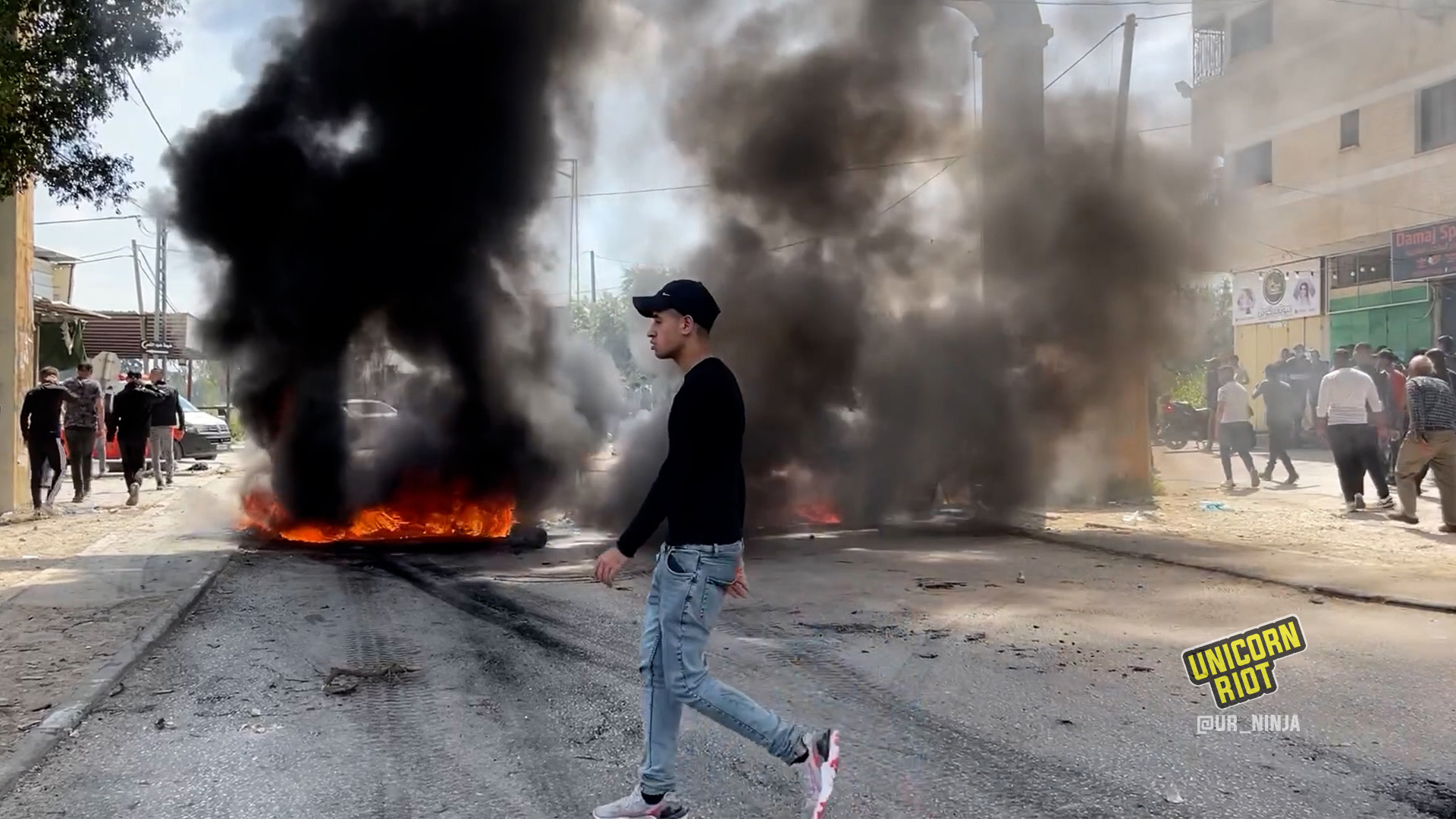
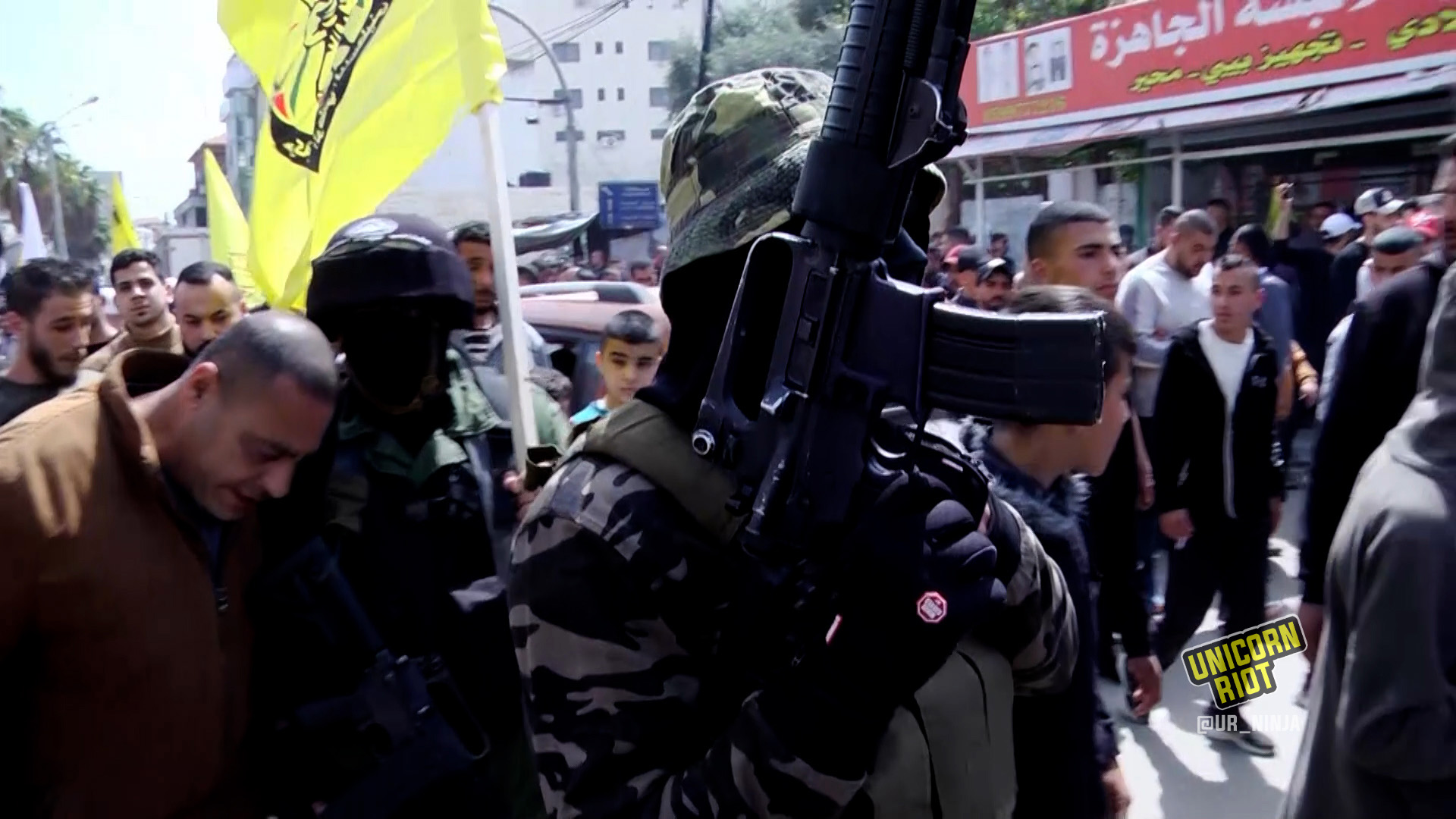
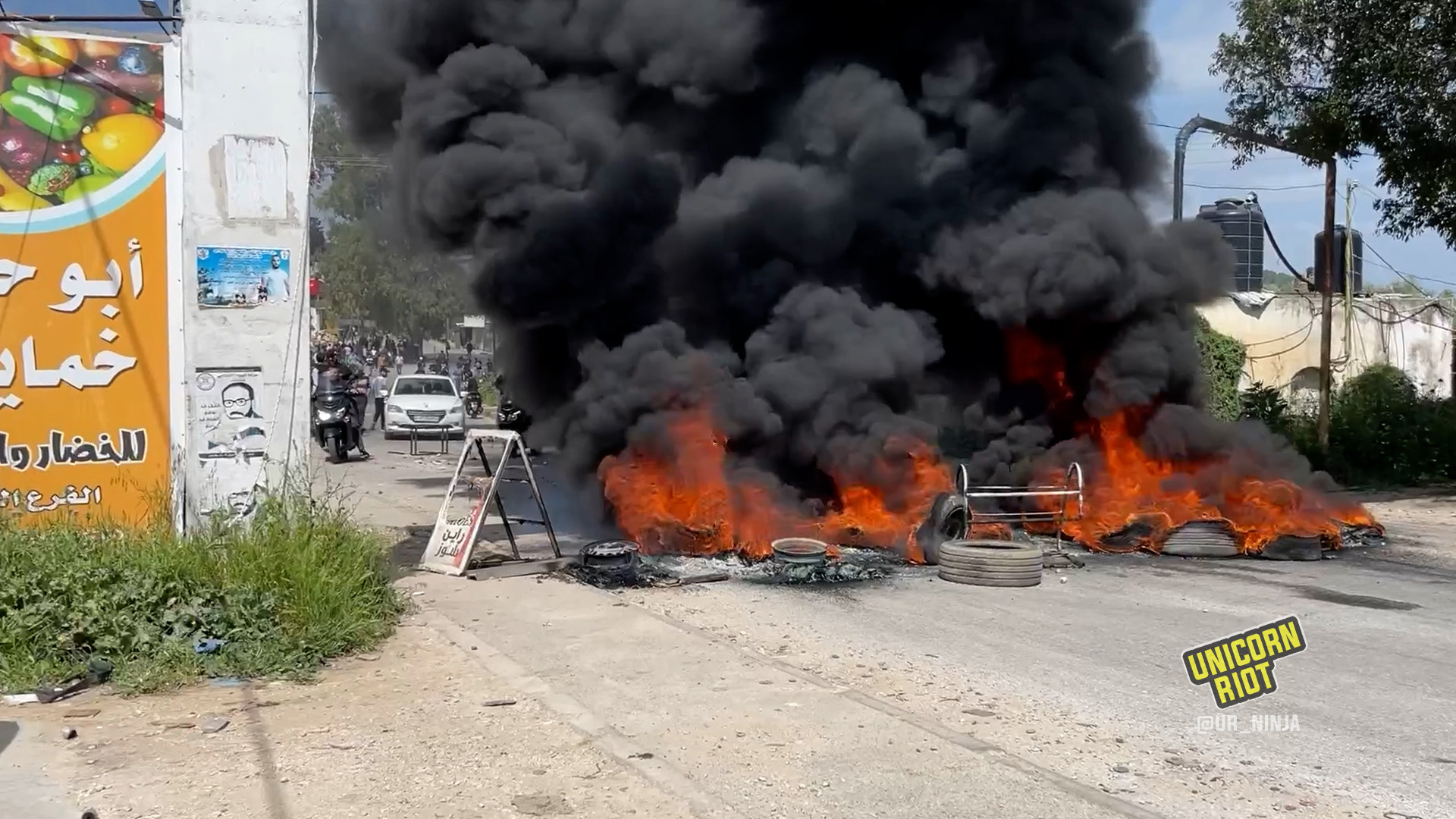
The majority of the Palestinians killed by Israeli forces were protesting against the “military raids” being carried out in their villages or refugee camps inside the occupied West Bank. At least 17 were killed in Jenin and seven in Nablus.
In April alone, 23 Palestinians were killed and over a thousand were arrested by the Israeli forces in such raids.
The Palestinian Ministry of Health claimed in the statement that if Palestinians killed inside the 1948 territories are included, the death toll reaches 53, including three women and eight children.
The increase in Palestinian fatalities is an indication of Israel’s renewed emphasis on the use of force against all forms of peaceful Palestinian resistance. In December, the Naftali Bennett government had given permission to its security forces to open fire on unarmed demonstrations.
After some Palestinians carried out attacks inside Israel, resulting in the death of Israeli citizens in March, the Israeli government announced it was giving a free hand to its forces, leading to increased raids inside the Palestinian villages, mostly during the night.
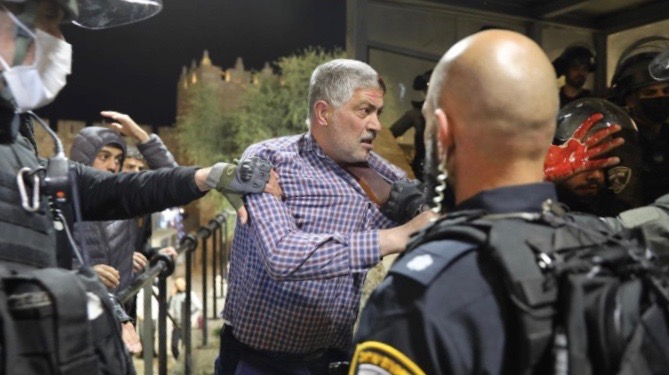
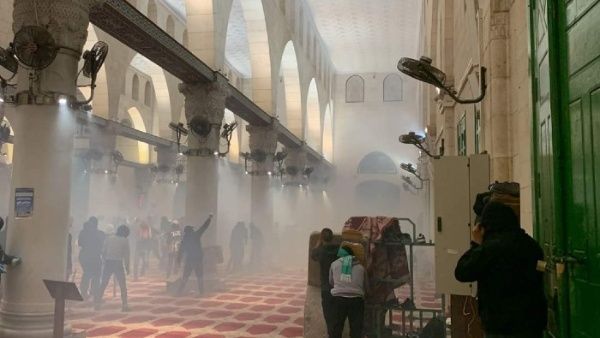
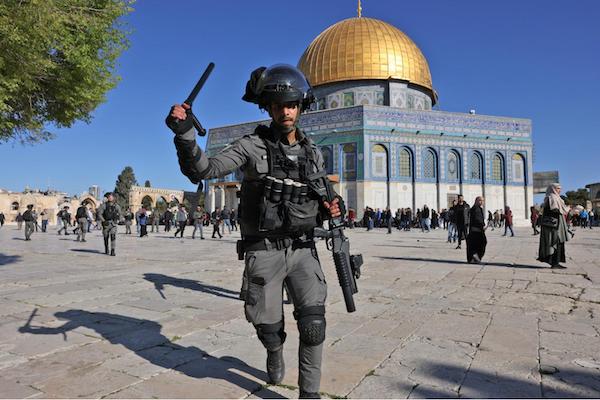
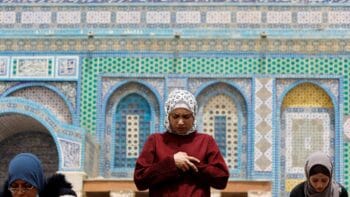
Meanwhile, the decision by the Naftali Bennett government to promote orthodox Jewish visits in the Al-Aqsa mosque compound during Ramadan led to large-scale protests in occupied East Jerusalem and inside other occupied territories.
Closed crossings increases Palestinian hardships
In the lead up to Israel’s Independence and Memorial days, it had imposed a complete ban on Palestinians entering into the 1948 territories from both occupied West Bank and Gaza, claiming security concerns during the celebrations. On Monday, Israel announced opening of the crossings from the West Bank, but extended the ban on Palestinians entering from the besieged Gaza strip.
Palestinians have claimed that Israel has been closing the crossings as a part of its “collective punishment” policy against Palestinians resisting the occupation.
The Beit Hanoun/Erez crossings between Gaza and Israel were first closed on April 23 until further notice. Initially, Israel claimed that the closure was in response to missile attacks from the territory. Following a public outcry, it announced the opening of the crossings soon after. However, on May 1, under the pretext of the holidays, Israel again announced the closure of the crossings beginning from May 3.
Gaza’s economy has suffered tremendously due the complete air, sea and land blockade imposed by Israel since 2006. Closing of crossings multiplies the sufferings of the nearly two million Palestinians living in the area.
Even after announcing the opening of the West Bank crossings on Monday, the Israeli government announced that it would maintain restrictions on movement on residents of the Rummanah village, alleging that the perpetrators of a recent knife attack against Israelis came from that village.
Israeli authorities also plan to demolish the houses of the Elad accused despite such practices being considered as an illegal act of “collective punishment.”
Thousands of Palestinians travel through the crossings every day for work, health facilities, or to meet their relatives in Israel and other purposes. According to Times of Israel, around 160,000 Palestinians have work permits to work in Israel.
The closure of the crossings has also affected visits of Palestinians to relatives imprisoned inside Israeli jails. Palestinian news agency Wafa reported on Monday that all such visits scheduled for last week had to be cancelled and that the renewal of the closing orders means that people from Gaza cannot visit their relative this week as well.
There are around 4,500 Palestinians in Israeli jails. Most of them have been denied visits by relatives for long as such meetings were suspended for almost two years following the outbreak of COVID-19.
https://peoplesdispatch.org/2022/05/10/ ... this-year/
********************************
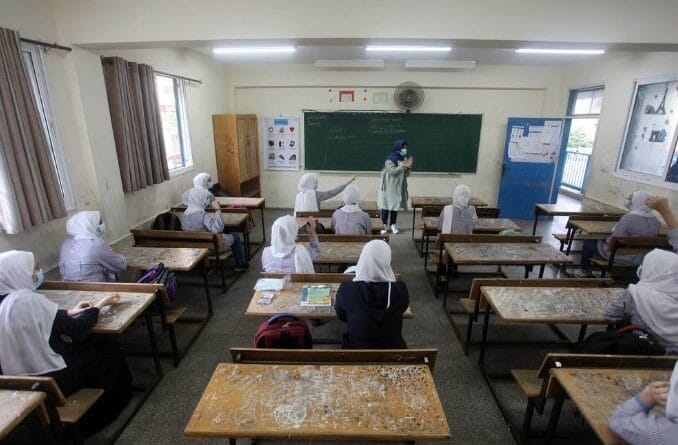 Rewriting UNRWA: The US-Israeli Plan to Cancel Out the Palestinian Right of Return
May 10, 2022
By Ramzy Baroud – May 4, 2022
Palestinians are justifiably worried that the mandate granted to the United Nations Agency for Palestinian refugees, UNRWA, might be coming to an end. UNRWA’s mission, which has been in effect since 1949, has done more than provide urgent aid and support to millions of refugees. It was also a political platform that protected and preserved the rights of several generations of Palestinians.
Though UNRWA was not established as a political or legal platform per se, the context of its mandate was largely political, since Palestinians became refugees as a result of military and political events – the ethnic cleansing of the Palestinian people by Israel and the latter’s refusal to respect the Right of Return for Palestinians as enshrined in UN resolution 194 (III) of December 11, 1948.
“UNRWA has a humanitarian and development mandate to provide assistance and protection to Palestine refugees pending a just and lasting solution to their plight,” the UN General Assembly Resolution 302 (IV) of December 8, 1949 read. Alas, neither a ‘lasting solution’ to the plight of the refugees, nor even a political horizon has been achieved. Instead of using this realization as a way to revisit the international community’s failure to bring justice to Palestine and to hold Israel and its US benefactors accountable, it is UNRWA and, by extension, the refugees that are being punished.
In a stern warning on April 24, the head of the political committee at the Palestinian National Council (PNC), Saleh Nasser said that UNRWA’s mandate might be coming to an end. Nasser referenced a recent statement by the UN body’s Commissioner-General, Philippe Lazzarini, about the future of the organization.
Lazzarini’s statement, published a day earlier, left room for some interpretation, though it was clear that something fundamental regarding the status, mandate and work of UNRWA is about to change. “We can admit that the current situation is untenable and will inevitably result in the erosion of the quality of the UNRWA services or, worse, to their interruption,” Lazzarini said.
Commenting on the statement, Nasser said that this “is a prelude to donors stopping their funding for UNRWA.”
The subject of UNRWA’s future is now a priority within the Palestinian, but also Arab political discourse. Any attempts at canceling or redefining UNRWA’s mission will pose a serious, if not an unprecedented challenge for Palestinians. UNRWA provides educational, health and other support for 5.6 million Palestinians in Jordan, Lebanon, Syria, the Gaza Strip and the West Bank, including East Jerusalem. At an annual budget of $1.6 billion, this support, and the massive network that has been created by the organization, cannot be easily replaced.
Equally important is the political nature of the organization. The very existence of UNRWA means that there is a political issue that must be addressed regarding the plight and future of Palestinian refugees. In fact, it is not the mere lack of enthusiasm to finance the organization that has caused the current crisis. It is something bigger, and far more sinister.
In June 2018, Jared Kushner, son-in-law and advisor to former US President Donald Trump, visited Amman, Jordan, where he, according to the US Foreign Policy magazine, tried to persuade Jordan’s King Abdullah to remove the refugee status from 2 million Palestinians currently living in the country.
This and other attempts have failed. In September 2018, Washington, under the Trump administration, decided to cease its financial support of UNRWA. As the organization’s main funder, the American decision was devastating, because about 30 percent of UNRWA’s money comes from the US alone. Yet, UNRWA hobbled along by increasing its reliance on the private sector and individual donations.
Though the Palestinian leadership celebrated the Biden Administration’s decision to resume UNRWA’s funding on April 7, 2021, a little caveat in Washington’s move was largely kept secret. Washington only agreed to fund UNRWA after the latter agreed to sign a two-year plan, known as Framework for Cooperation. In essence, the plan effectively turned UNRWA into a platform for Israel and American policies in Palestine, whereby the UN body consented to US – thus Israeli – demands to ensure that no aid would reach any Palestinian refugee who has received military training “as a member of the so-called Palestinian Liberation Army”, other organizations or “has engaged in any act of terrorism”. Moreover, the Framework expects UNRWA to monitor “Palestinian curriculum content”.
By entering into an agreement with the US Department of State, “UNRWA has effectively transformed itself from a humanitarian agency that provides assistance and relief to Palestinian refugees, to a security agency furthering the security and political agenda of the US, and ultimately Israel,” BADIL Resource Center for Palestinian Residency and Refugee Rights noted.
Palestinian protests, however, did not change the new reality, which effectively altered the entire mandate granted to UNRWA by the international community nearly 73 years ago. Worse, European countries followed suit when, last September, the European parliament advanced an amendment that would condition EU support of UNRWA on the editing and rewriting of Palestinian school text books that, supposedly, ‘incite violence’ against Israel.
Instead of focusing solely on shutting down UNRWA immediately, the US, Israel and their supporters are working to change the nature of the organization’s mission and to entirely rewrite its original mandate. The agency that was established to protect the rights of the refugees, is now expected to protect Israeli, American and western interests in Palestine.
Though UNRWA was never an ideal organization, it has indeed succeeded in helping millions of Palestinians throughout the years, while preserving the political nature of their plight.
Though the Palestinian Authority, various political factions, Arab governments and others have protested the Israeli-American designs against UNRWA, such protestations are unlikely to make much difference, considering that UNRWA itself is surrendering to outside pressures. While Palestinians, Arabs and their allies must continue to fight for UNRWA’s original mission, they must urgently develop alternative plans and platforms that would shield Palestinian refugees and their Right of Return from becoming marginal and, eventually, forgotten.
If Palestinian refugees are removed from the list of political priorities concerning the future of a just peace in Palestine, neither justice nor peace can possibly be attained.
https://orinocotribune.com/rewriting-un ... of-return/
***************************************
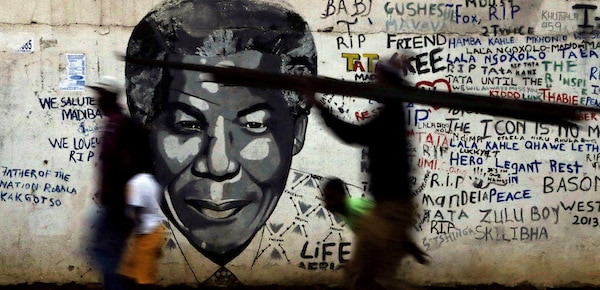
People walk past a mural of former South African President Nelson Mandela in Katlehong, south of Johannesburg, South Africa. (Photo: Themba Hadebe | AP)
My Nelson Mandela is dead
Originally published: MintPress News on May 6, 2022 by Miko Peled (more by MintPress News) (Posted May 11, 2022)
On the wall of the courtyard at “The Citadel” in Beit Sahour is a mural of great Palestinian figures, both women and men. Many of them are dead; those who still live spent time in prison and are prohibited from living in their homeland. And yet Palestinians are constantly demanded to answer the question, “Where is the Palestinian Nelson Mandela?”
“My Nelson Mandela is dead,” my long-time friend Baha Hilo answered, as this question was posed to him by visitors at the “Citadel.” The Palestinian Mandelas are dead and buried, or sometimes buried alive in Israeli prisons with long sentences that in some ways are like a death sentence.
The figures on the mural at the citadel include women who were part of the armed struggle, like Dalal Al-Mughrabi, Laila Khaled, Zakia Shamout. There are cartoonist Naji Al-Ali, who created Handala and was assassinated; the great writer Ghassan Kanafani, brutally murdered by Israel; the poet Ibrahim Touqan; the poet Abdel Raheem Mahmoud, who was also assassinated; Nizar El-Banat, who was murdered by the Palestinian Authority, an arm of the Zionist occupation; and Basel Al-Araj, a writer and fighter who was killed by Israeli forces. All Palestinians who are part of a long story of struggle.
If we insist on bringing up the South African struggle against aparthied, then we would be better to ask Israelis, and perhaps even some Jewish people around the world, “Where is your Ruth First?” Ruth First was a major figure in the fight to bring down the South African apartheid regime and on the 17th of August, 1982 she was killed by a letter bomb. Her assassination is believed to have been the work of the South African security agencies.
One would also ask, “Where is the Israeli Albie Sachs?” His work to free South Africans from apartheid brought the South African security agents to place a bomb in his car on April 7, 1988. The explosion blew up his car and he lost an arm and the sight of one eye. After Nelson Mandela was elected president of South Africa, he appointed Sachs to serve on the newly established Constitutional Court. As a Constitutional Court judge, Justice Sachs was the chief architect of the post-apartheid constitution of 1996.
We should also ask, “Where is the Israeli Joe Slovo?” Slovo was chief of staff of uMkhonto we Sizwe, the military wing of the African National Congress (ANC). He served on the revolutionary council of the ANC and was the first white member of the ANC’s national executive. All three were Jewish and white and they paid heavily for their commitment to justice and their fight for a free South Africa.
Still, people never ask this of Israelis and other Jewish Zionists, because it is much easier to demand an explanation from the victims than to hold the perpetrators accountable.
A strategy
“What is your strategy for liberation?” is another question posed to Palestinians. This is a lot like asking the prisoners in a maximum-security prison what their strategy is for escape. One may assume that prisoners think of little else and strategize on ways to escape or at least get parole, but the question remains ridiculous because the power of the system that holds them is immense and its control over them and their actions is practically absolute. Palestinians live in a sophisticated prison called “Israel” and, like inmates in a prison, they dream of liberation, even as they do their best to live and exist under the brutal regime imposed upon them.
Rarely, if ever, do we hear people ask Israelis, “What is your strategy for peace, equality and justice?” If the question were posed, the answer would be: “There is none.” This is because Israel is interested in neither peace, justice nor equality. Destruction of Palestine was the strategy all along and from the very beginning, the rest of the world was either complicit or just standing by and allowing the destruction to take place.
Keeping the hope
The way to liberate the Palestinians from Israel requires replacing the apartheid regime known as “Israel” with a free, democratic Palestine–and not expecting that Israel itself will allow Palestinians to be free. Israel isn’t just the perpetrator of the crime, it is, in and of itself, the crime. The existence of Apartheid Israel is the crime. So it is up to those of us on the outside, who are not bound by the rules of apartheid, to make every effort to dismantle this system of oppression known as “Israel.” The possibility of this taking place, however, is not something that necessarily inspires hope, because it demands a struggle against forces that seem to be invincible.
People like to “find hope” in the most absurd places. Representations of normalization, the “peace, and dialogue industry,” have been instrumental in creating the ridiculous sense of hope that is based not on a realistic understanding of what must be done, but on a myth of an Israel that will allow the Palestinian people to establish a state one day–a state that will be governed by “good Palestinians” who refrain from violence and “unrealistic demands” like the return of the refugees, full equality, and the dismantling of the Zionist colonialist system.
Israel and its allies know that they have to be vigilant and that even the slightest crack in their wall of lies and misinformation can lead to the collapse of the Zionist regime. This is why in the U.S. they have a presence in every town and city, in school boards and small city councils; they have a presence in the churches and they have a presence on college campuses.
The Zionist campaign is vicious and relentless because the Zionists know that once a crack is made in their line of defense–a line that is made of deception, falsehoods, and fabrication–they will fall, never to rise again. Forcing that wall of deception to fall is the task that must be undertaken by people of conscience working for justice and peace. We must formulate a strategy to dismantle the wall and the system that built it.
https://mronline.org/2022/05/11/my-nels ... a-is-dead/