Published by @nsanzo ⋅ 25/11/2025

“No one will support it,” declares the BBC headline in its article featuring interviews with Ukrainian soldiers on the front lines reacting to the US peace plan, which Ukraine is negotiating and refining with Washington in Geneva. Despite the headline's forcefulness, which is also the phrase chosen for its promotion on social media, the article reveals, buried amidst calls to continue the war until final victory, a dissenting opinion. “It's time to agree to at least something,” says a soldier nicknamed Snake . “Let them keep it,” he states, referring to the part of Donetsk still under Ukrainian control. “There's practically no one left in the cities and towns… We're not fighting for the people but for the land, all while losing people,” he adds, breaking with the logic of Ukraine's war in Donbas, which has always been about territory, not a population it distrusts, since 2014.
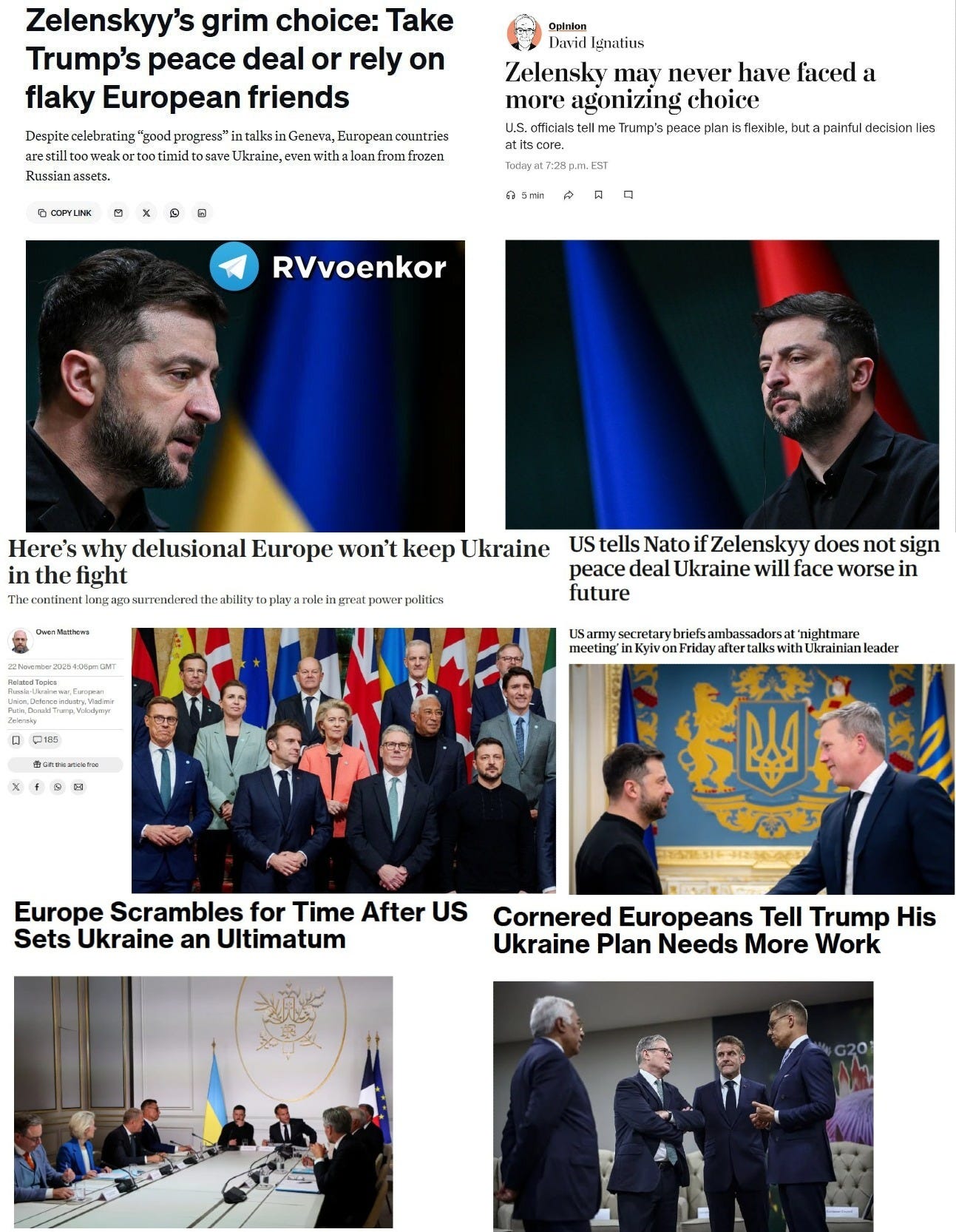
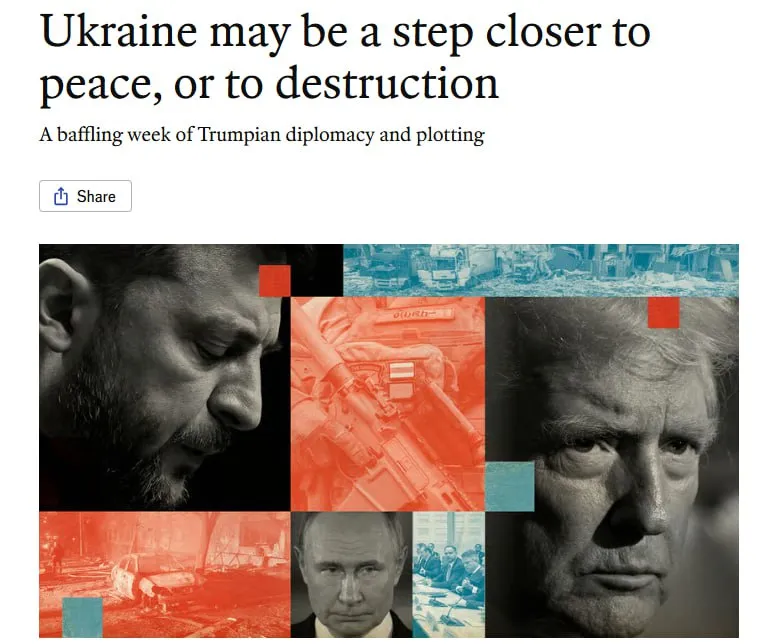
The struggle for territory and its borders is also the basis upon which the opposition of European countries—the European Union and the United Kingdom—is building these days, as the fate of the negotiations hangs in the balance. For the first time since the beginning of Trump's clumsy diplomatic attempt, lacking personnel with the capacity to work effectively and knowledgeable about the conflict, negotiations are currently taking place on the basis of a document that addresses all the important issues of the Russo-Ukrainian war—territory, security, reconstruction, humanitarian and social issues—and the broader political conflict within which it is framed—geopolitical aspects and the confrontation between Russia, the European Union, and NATO—and which both Kyiv and Moscow have accepted as a starting point. Reflecting the reality of this war, in which only Russia possesses the autonomy afforded by not depending on third-party countries, Ukraine's position and its willingness to negotiate are dictated by the United States, which subtly suggests that it could halt its intelligence and even arms supplies if it perceives a lack of will for peace.
Acknowledging this reality, Axios reported yesterday that the Ukrainian president has agreed to negotiate based on the 28-point plan, which, according to various media outlets, has already been significantly modified to address Ukrainian concerns, as he understood he could not afford to reject it. Ukraine boasts of its successes, insisting that, in its current state, almost nothing remains of the original plan, which now has only 19 points instead of 28. According to the same source, the pressure was increasing by the hour. As The Washington Post reported over the weekend , citing Pentagon officials, the United States agrees with Russia in its assessment that Moscow's troops could militarily seize the Donbas territory they claim. Following this, the Russian offer would be less generous than it currently is. According to several Ukrainian media outlets yesterday, the United States has warned Ukraine of the possibility of losing all of Donbas within the next twelve months.
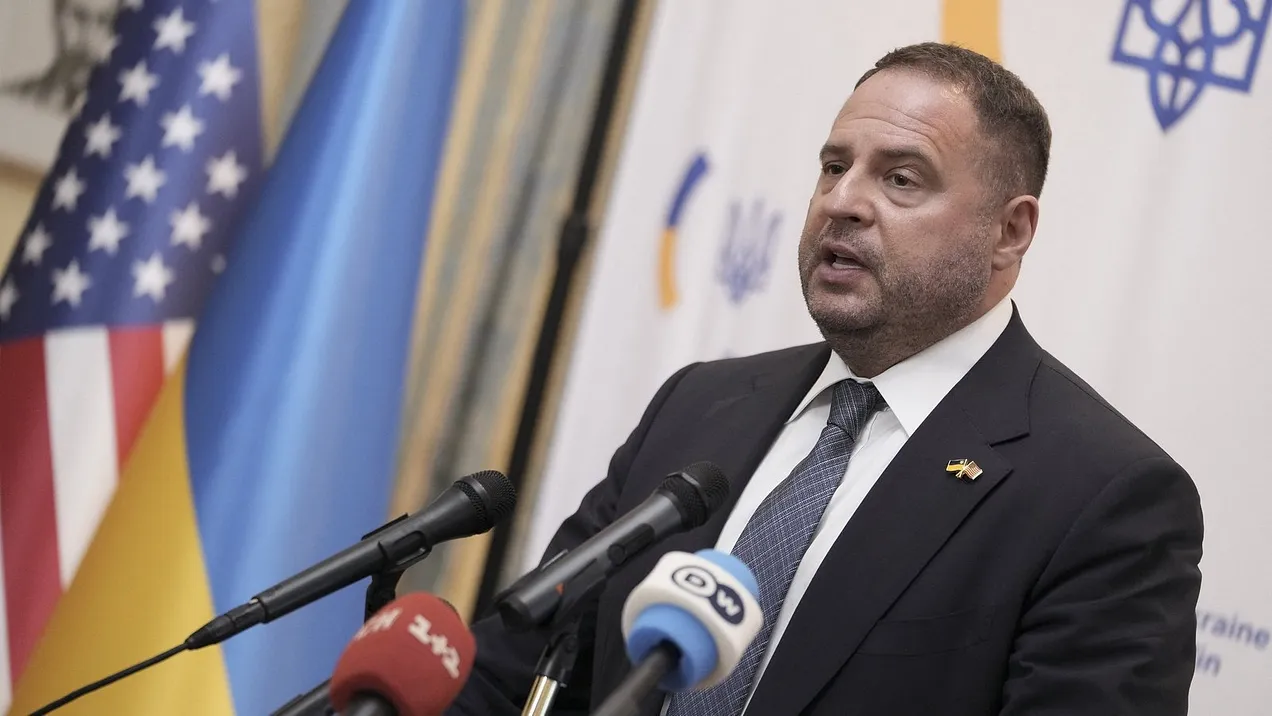
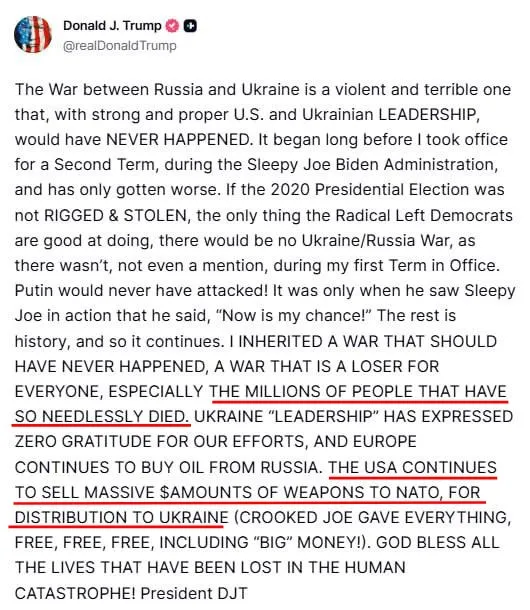
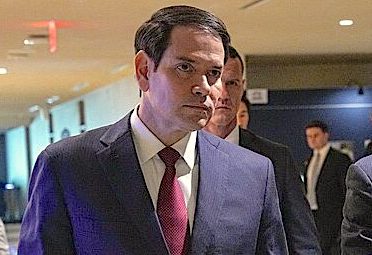
As was evident after the first meeting between the delegations led by Marco Rubio and Andriy Ermak, the Ukrainian strategy is directly linked to that of the European Union and the United Kingdom, and it involves a division of labor that, as usual, seeks to avoid angering Donald Trump. On Sunday, the US president again attacked Ukraine, referring to its leadership by putting the word in quotation marks—a show of contempt that cannot be ignored. Yesterday, several media outlets indicated the possibility of a visit by Zelensky to the White House sometime this week or early next week. The existing doubts stem from the fear that the meeting will end like the heated scene in the Oval Office or the Ukrainian president's last visit to Washington, a similar argument, albeit this time in private.
The chosen tactic is for Ukraine to work on those points where it can obtain improvements in the document without causing major controversy, while, on the sidelines, the EU continues to draw the real red lines and demand points that it knows will make an agreement impossible. “Ukraine’s commitment to a just and lasting peace is clear. Putin’s imperialist aims have not changed. We must increase the pressure on the aggressor. Immediate use of frozen Russian assets, a tougher sanctions package, and EU tariffs where necessary. And we continue to support Ukraine,” wrote Estonian Prime Minister Kristen Michal, after having “discussed coordinated steps” with António Costa, Ursula von der Leyen, and the leaders of the EU countries. “We welcome the significant progress made in yesterday’s meetings between the United States and Ukraine in Geneva. Some issues remain to be resolved, but we continue to support the process. Any decision that falls under the purview of the EU or NATO will be discussed and decided by EU and NATO members separately,” added the Finnish Foreign Minister, clearly indicating the intention of the European Union and the Atlantic Alliance to prevent the concessions that the US plan guaranteed Russia in terms of security and guarantees against the expansion of the Cold War pact to its borders.
To all this must be added the joint statement from the chairs of the Foreign Affairs Committees of the European Parliaments, which affirms that “our goal has always been, and remains, a just and lasting peace based on international law and fully respecting Ukraine’s territorial integrity, independence, and sovereignty. Such peace cannot be achieved by appeasing or rewarding the aggressor; it requires sustained pressure on Russia and unwavering support for Ukraine for any solution to succeed.” After insisting that “Ukraine cannot be subject to limits on its armed forces or restrictions on its domestic or international policies”—a clear reference to the official status of the Russian language and other internal political aspects that appeared in Witkoff’s 28-point plan and the issue of neutrality—the statement adds that “at the very least, Russia must withdraw its troops from the occupied territories and cooperate with international organizations to ensure accountability for those responsible for atrocities.”
In addition to demanding what, in practice, amounts to voluntary and unconditional surrender, the statement makes yet another demand: the ceasefire that Germany, France, and Poland demanded last May as a 48-hour ultimatum. “Any negotiations must begin with an immediate ceasefire,” it insists, emphasizing that “Ukraine’s sovereignty—including its right to choose its own alliances—and justice for the crimes committed during the war are non-negotiable red lines.”
The statement is a prime example of the European Union's stance—even more belligerent than Ukraine's—which in February 2022 decided to use Ukraine as a pawn in a proxy war aimed at the complete defeat or utter weakening of its historical enemy, Russia. Since then, the EU has failed to formulate a plan for achieving this victory, whether through military or political means. On Sunday, during his appearance on the political program Meet the Press , US Treasury Secretary Scott Bessent described a European official boasting about the nineteenth package of sanctions against Russia. "If you have to impose 19 packages, you've failed," the US official emphasized. More sanctions against Russia and more weapons for Ukraine remains the European Union's sole plan. Even after the plan's publication, which both Russia and Ukraine quickly took seriously, the EU has remained detached from the unfolding events. Just as last spring, when the EU kept insisting on continuing to fight until Russia was weakened even after Ukraine had opened the door to a ceasefire, Kyiv began to make moves in the direction of negotiating on the basis of Witkoff's proposal while Kaja Kallas mocked it with her "two-point plan" and demand for territorial integrity.
On Thursday, the same day Donald Trump's 28-point plan was published, Bloomberg reported that the UK was accelerating plans to send troops to Ukraine. “The UK has identified which military units it would send to Ukraine after a series of reconnaissance visits to the country, ensuring it is prepared to deploy troops quickly should the latest efforts to revive peace talks fail. Britain updated its plans to send troops to Ukraine as part of the so-called Coalition of Volunteers after conducting a readiness review and completing reconnaissance missions in Ukraine over the summer, Defense Secretary John Healey said. Military chiefs have determined which personnel they would deploy and where their headquarters would be located, as part of plans by a 30-country grouping led by the UK and France to support Ukraine,” the outlet wrote. The disconnect between European countries and the reality and nature of the war continues to grow.
“In the end, I would easily bet that there will be no peace plan, for a simple reason I have often emphasized: there cannot be one with Russia. But this is not actually bad news, quite the opposite, at least if the Europeans prove they are up to the task,” wrote Nicolas Tencer, senior fellow at the Center for European Policy Analysis, with a candor that other lobbyists lack. His message encapsulates the stance reflected in the actions of EU countries and institutions. This position is complemented by Ukraine’s negotiating strategy, which seeks to improve the US plan on the less crucial issues, thereby gaining credibility as a government that desires peace. Ukraine then hopes that Donald Trump will side with Zelensky and include some of its demands in the offer to Russia, forcing Russia to reject any agreement.
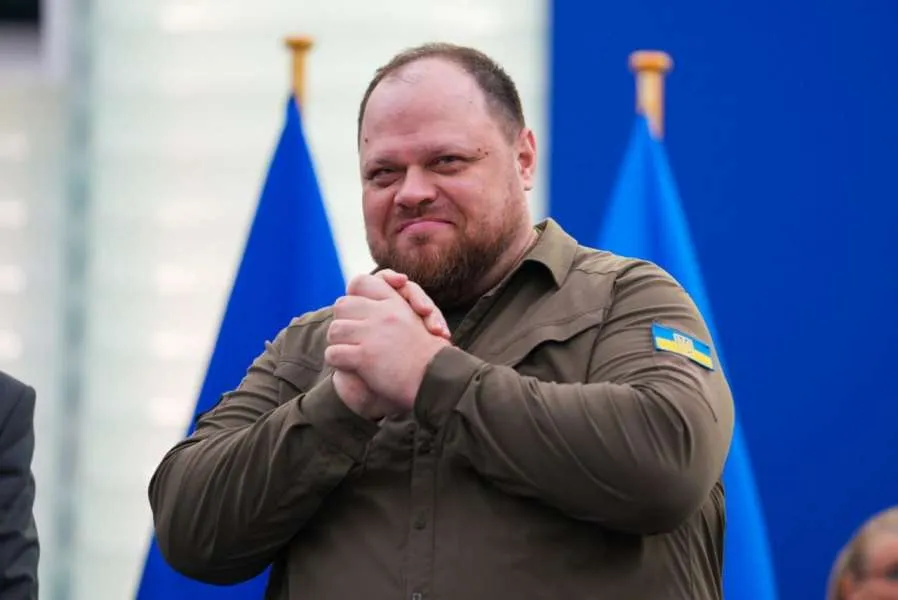
“The Ukrainians claimed they ‘had no mandate’ to make decisions about territory—particularly to cede land, as the original draft of the plan suggested—which, according to their country’s constitution, would require a national referendum. The new draft, according to Kyslytsya, bore little resemblance to the previously leaked version of the peace proposal that had caused a stir in Kyiv. ‘Very little remains of the original version,’ he said. ‘We have developed a solid body of convergence and some things on which we can compromise,’ he stated. ‘The rest will require leadership decisions,’” the Financial Times wrote yesterday . The modus operandi is clear: as in Istanbul, the Ukrainian delegation can only negotiate those issues that, while important, will not determine peace. Meanwhile, as fervently pro-Ukrainian media outlets like Visegrad 24 reported yesterday , “Ukraine has outlined its ‘red lines’ in the peace negotiations after reviewing the US peace plan. The Speaker of the Verkhovna Rada, Ruslan Stefanchuk, specified Ukraine’s non-negotiable points. Any restriction on the size of the Ukrainian Armed Forces is unacceptable. Ukraine’s right to join alliances cannot be limited. The country will not recognize the loss of its territories. Ukraine’s accession to NATO and the EU must be part of future security guarantees.” These red lines are exactly the same as those established by the various authorities of the European Union and its member states.
Announcing “great progress,” President Donald Trump stated yesterday that “something good might be happening.” His optimism stems from Ukraine’s chosen negotiating style, which has already yielded some concessions regarding prisoner exchanges, the return of prisoners, and, according to RBC-Ukraina , the Energodar nuclear power plant. He also believes the European Union is his strongest ally in making the plan unacceptable to Russia. On Sunday, Marco Rubio claimed to know nothing of a European counterproposal. This is unnecessary; his logic lies in the Ukrainian red lines, which, like the EU’s, aim to force Moscow to publicly express its rejection, as Dmitry Ushakov did yesterday. This would repeat the cycle of April and August, in which, after a strong push toward negotiations, diplomatic silence returned, along with the logic of increased military supplies to Ukraine and sanctions against Russia.
https://slavyangrad.es/2025/11/25/ucran ... eas-rojas/
Google Translator
******
From Cassad's telegram account:
Colonelcassad
Key points from Sergey Lavrov's statements at the press conference:
- The West has consistently thwarted the progress achieved in Ukraine;
- Europe has "failed on every count" in its actions regarding Ukraine since 2014;
- Kyiv has still not responded to the proposal to create three working groups;
- Macron's statements on Ukraine are dreams that have nothing to do with a settlement;
- European politicians are trying to distract their population from the economic failure in Ukraine;
- Russia appreciates the position of the United States, which is showing initiative for a Ukrainian settlement;
- Europeans are starting to think about what will happen next, since Ukraine is "not forever";
- European politicians are leaking information to undermine the Alaska agreement;
- Russian diplomacy works professionally, not leaking information before official agreements;
- Russia is not rushing the United States with the negotiation process on Ukraine;
- Russia expects the United States to inform it of the results of consultations with Ukraine and Europe in the near future.
***
Colonelcassad
Massive airstrike on southern Russia.
Overnight, the enemy launched a massive attack on Crimea, the Krasnodar Krai, and the Rostov Oblast using more than 200 drones.
The Russian Ministry of Defense reported the downing of at least 249 drones, primarily over the Krasnodar Krai, where the majority were shot down.
Over 80 drones were also destroyed over Crimea and the Black Sea, and over two dozen more over Taganrog and the Sea of Azov.
Air defense units, working together with aircraft, did a great job, shooting down almost all of the drones. Only a few hit Taganrog, as well as several civilian buildings in Novorossiysk.
Unfortunately, there were fatalities and injuries as a result of these attacks. Three people have already been killed in Taganrog, and over a dozen people were injured in Taganrog and Novorossiysk.
The launch sites were again the same as before. In the Odessa Oblast, launches were carried out from Buyalyk, Odessa, and Zatoka. Four Neptune anti-ship missiles were also launched from there, shot down near Crimea.
The airstrike in southern Russia, which resulted in casualties, once again demonstrates how practical talk of negotiations is right now – the Ukrainian regime is not interested in them.
More fatalities, again due to UAV attacks. Meanwhile, recently, a civilian vehicle was hit near Krasnaya Polyana in Crimea, killing two people.
We would like to pay special attention to how the internet shutdown works. No less than 249 UAVs with the internet down – does it look like the measures are working? And footage of the attacks is once again circulating online from various angles.
***
Colonelcassad
This evening, fairly optimistic reports are coming in from three cities at once.
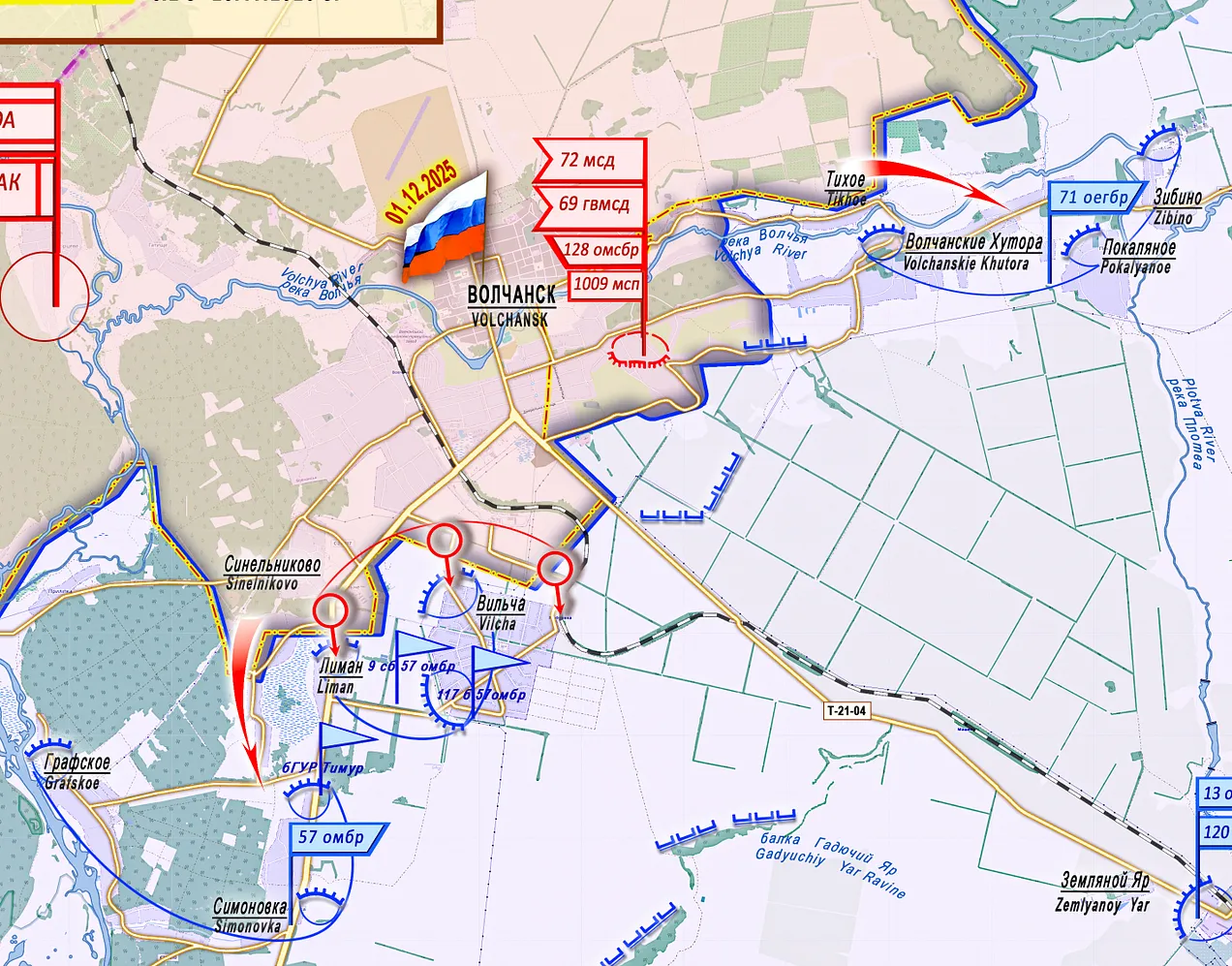
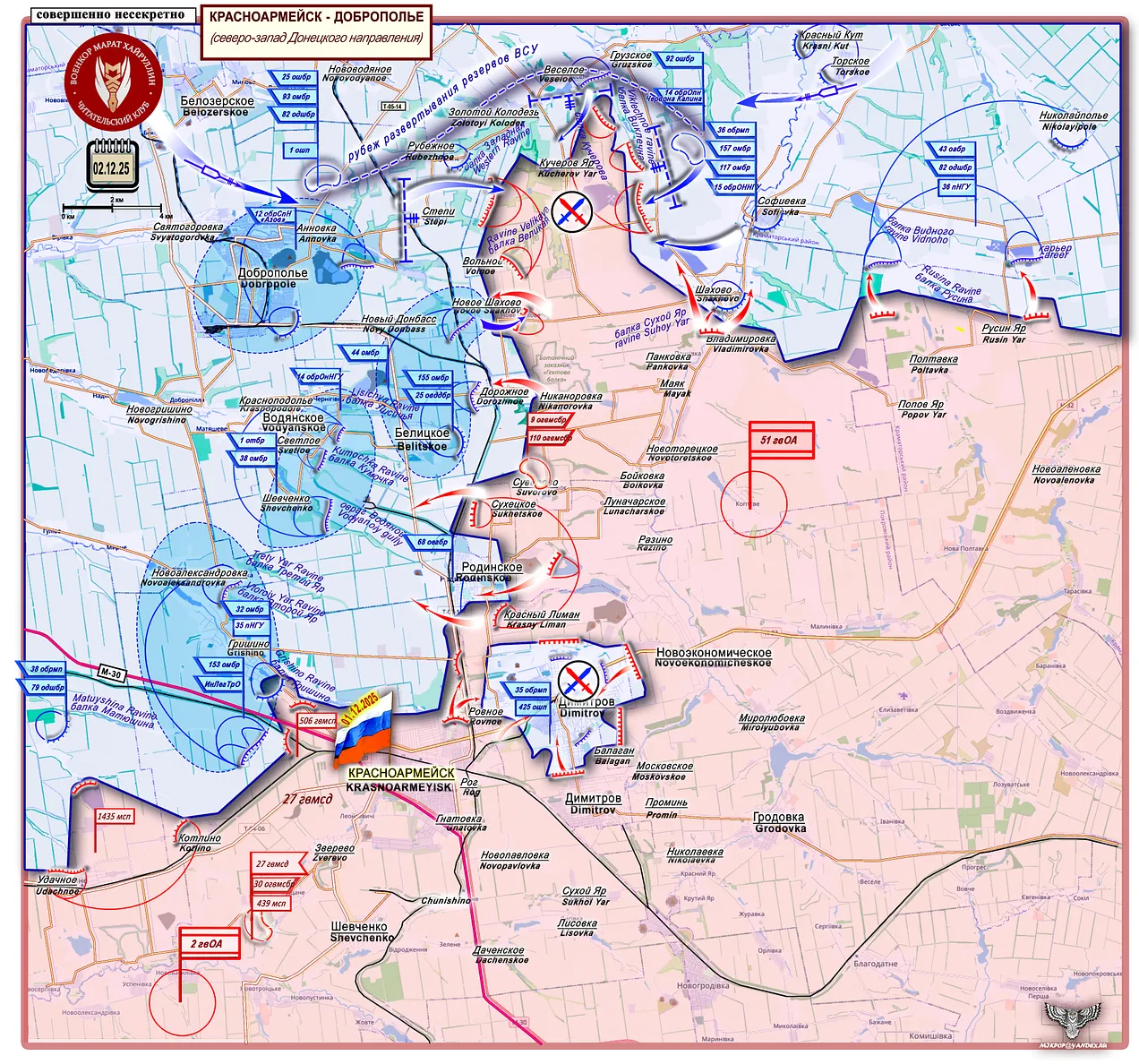
1. In Dimitrov, our troops have advanced on both the western and eastern outskirts of the cauldron, with an obvious desire to cut the encircled group into two parts (all in the classic manner). Simultaneously, a pocket south of Dimitrov is being cleared.
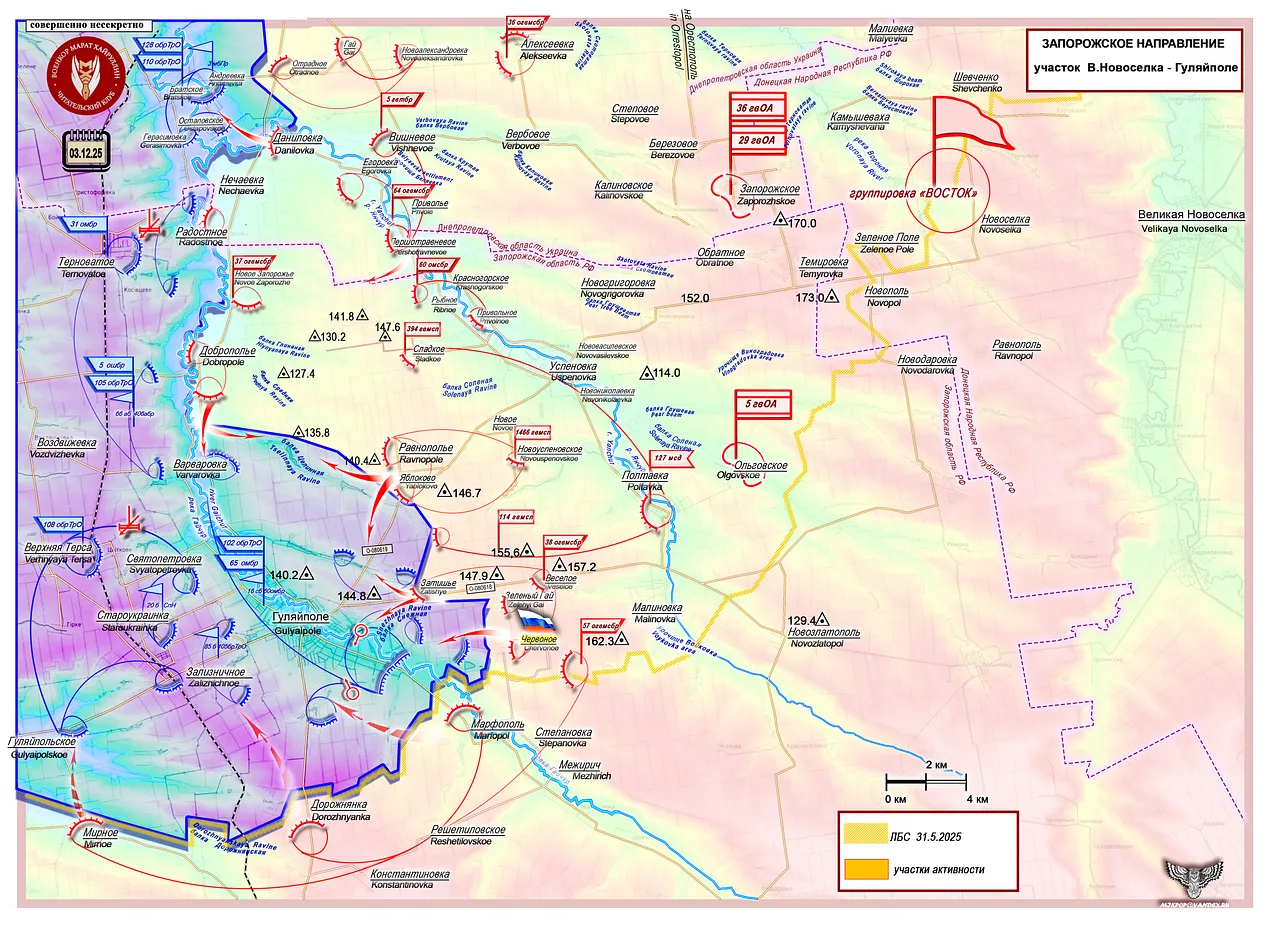
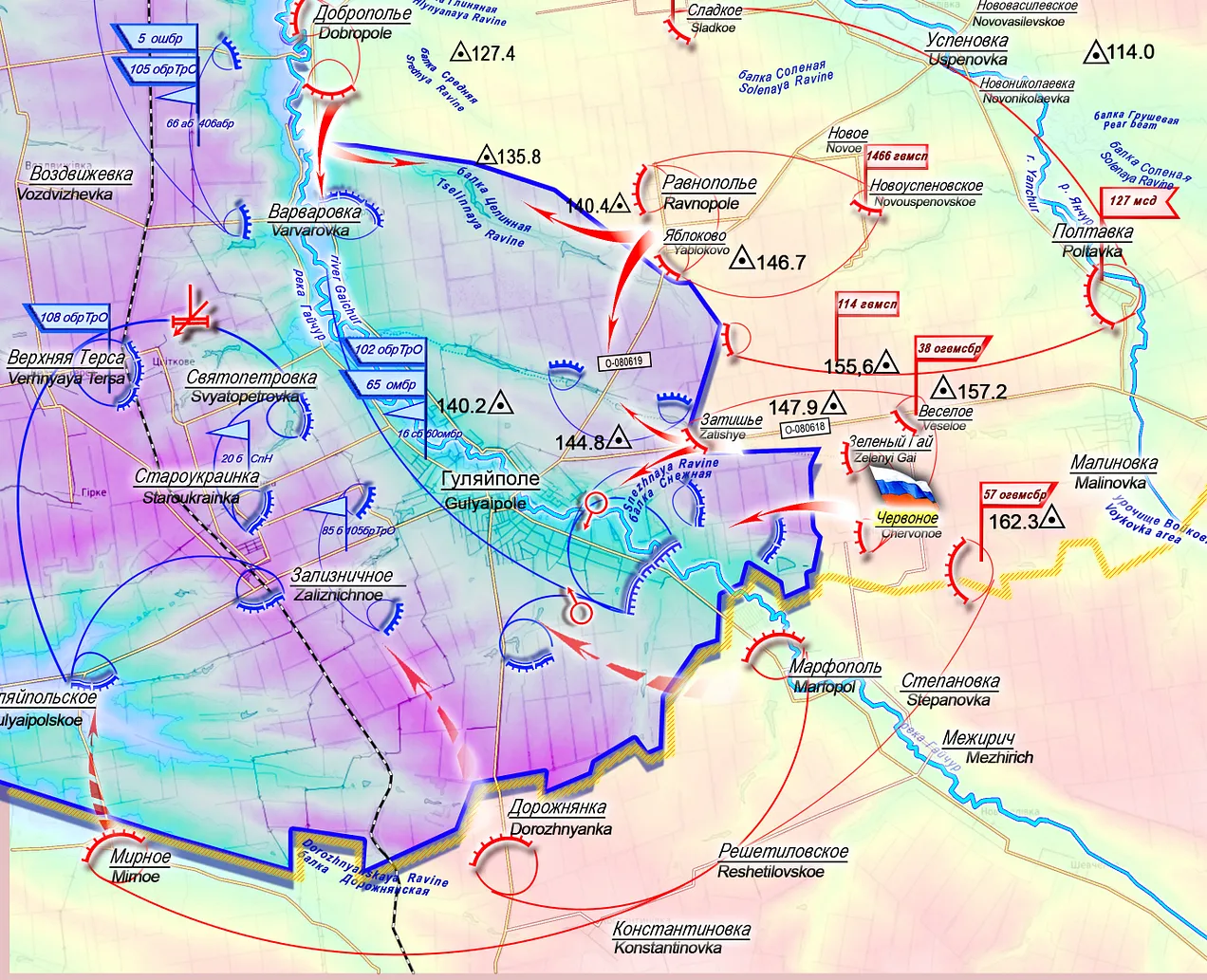
2. In Hulyaipole, fighting continues on the outskirts of the city. The Russian Armed Forces are increasing the pressure. Over 30 kilometers of territory have been liberated in the past 24 hours. The assault on Hulyaipole began even earlier than expected. North of Hulyaipole, the enemy continues to roll back across the Gaichur River.
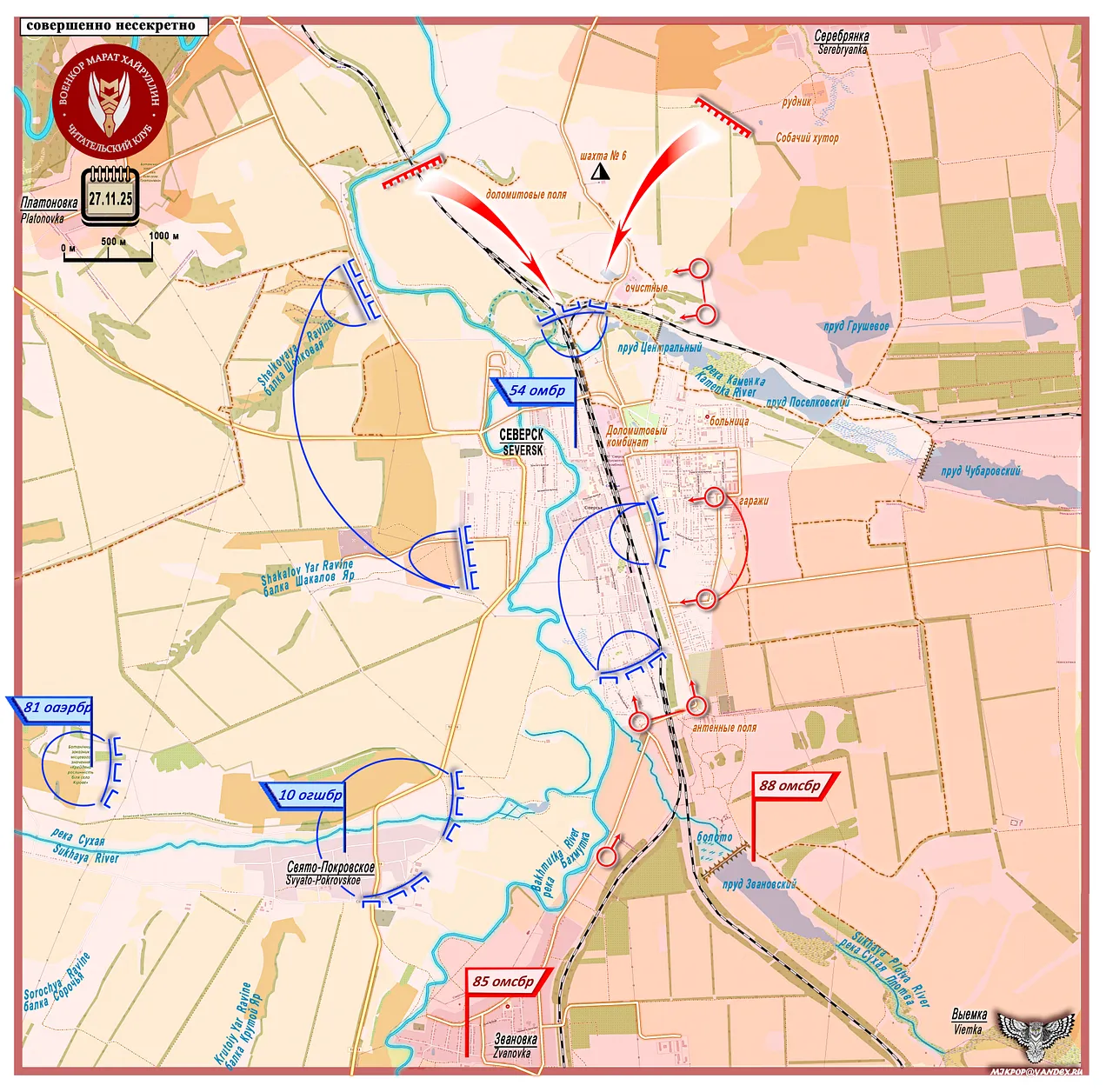
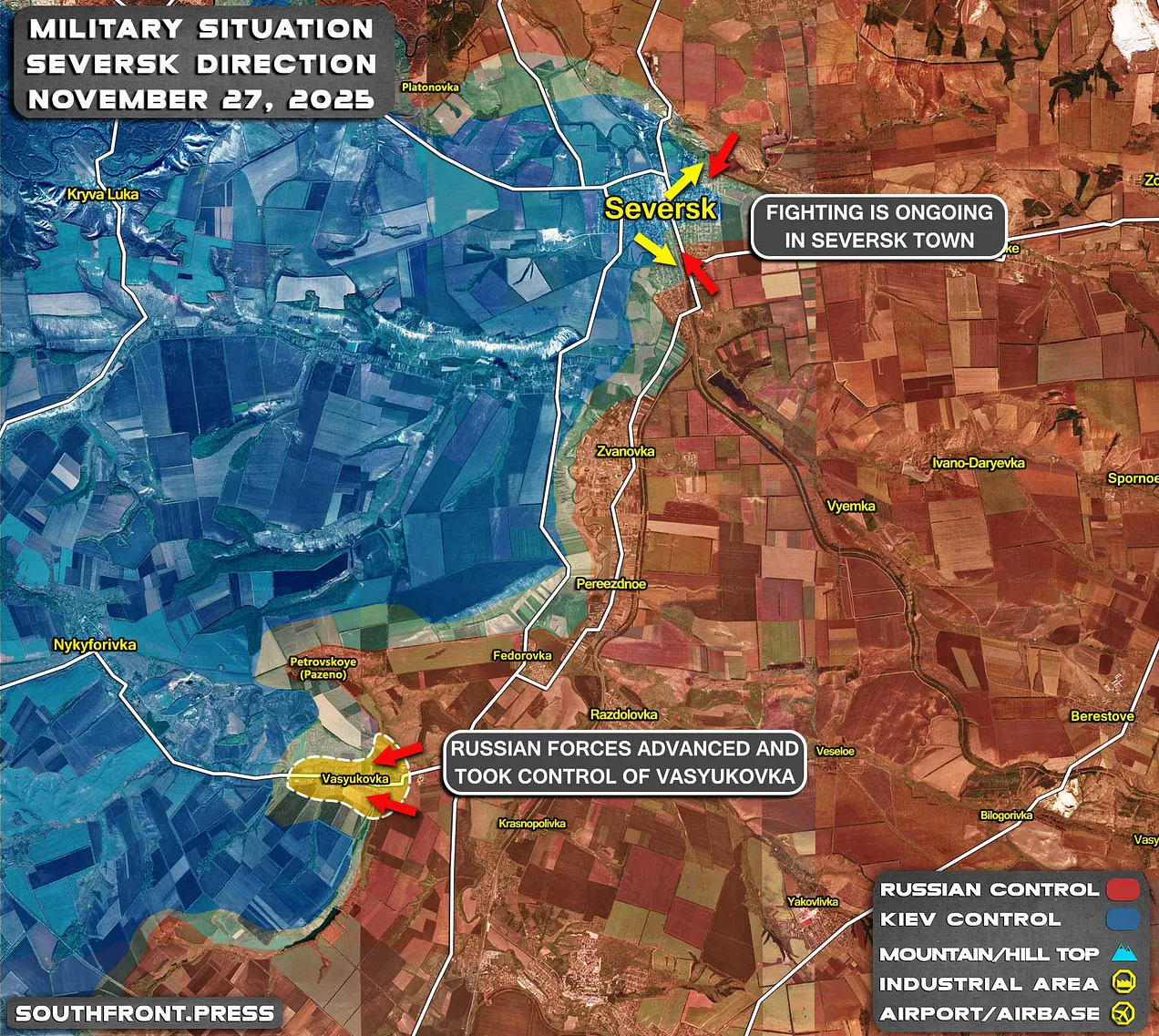
3. In Seversk, 3rd Army forces have entered the northern part of the city and are fighting in the urban area. Our assault groups are also fighting in the southeastern and southern parts of the city. The history of the Seversk salient is nearing its end. After the liberation of Seversk, the salient will disappear from the news. Our troops have also cut the road to Seversk west of Zakotnoye.
https://t.me/s/boris_rozhin
Google Translator
******
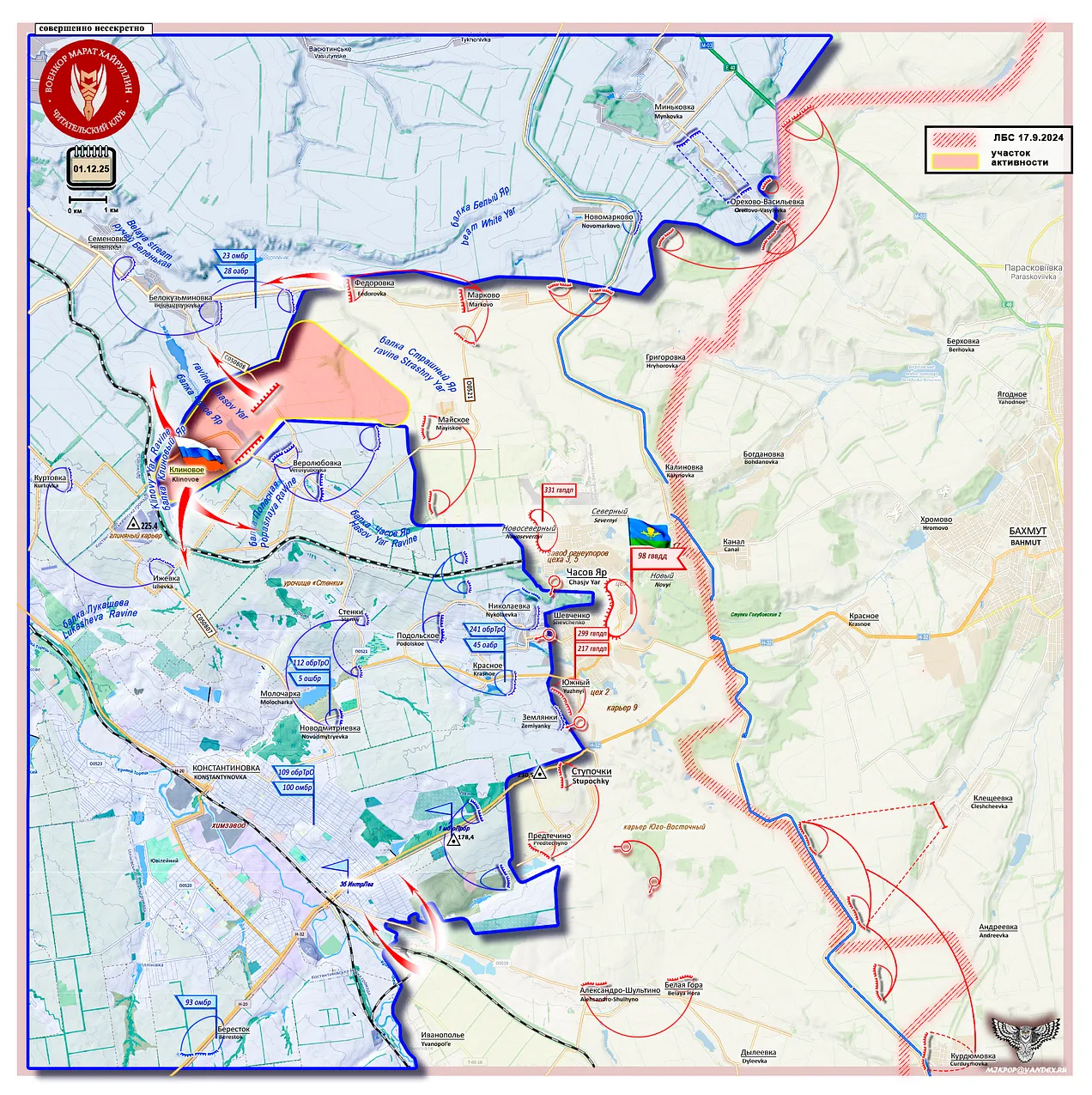
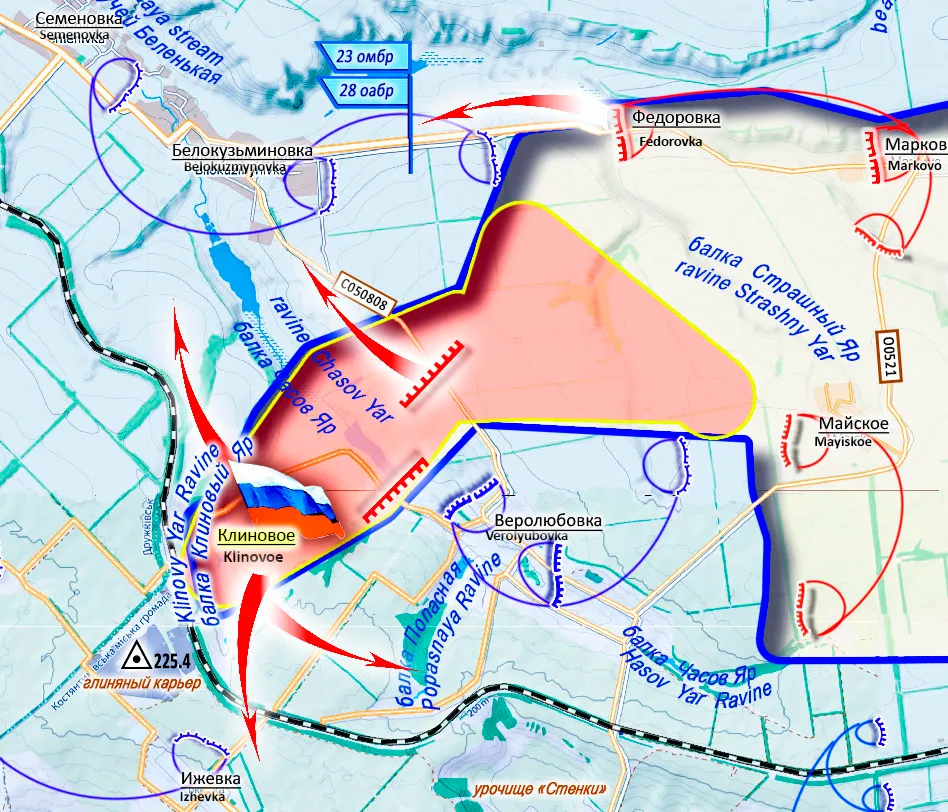
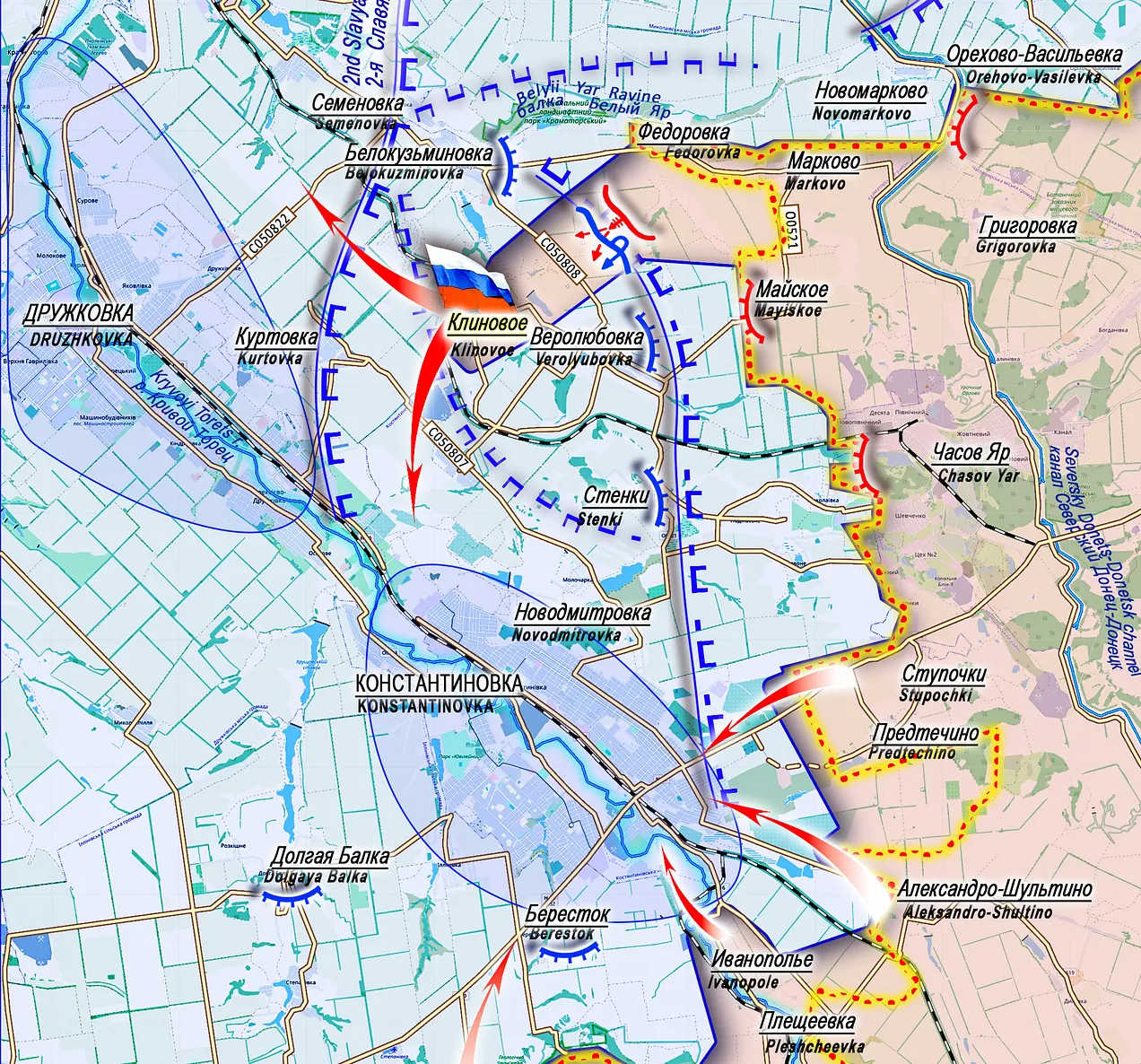
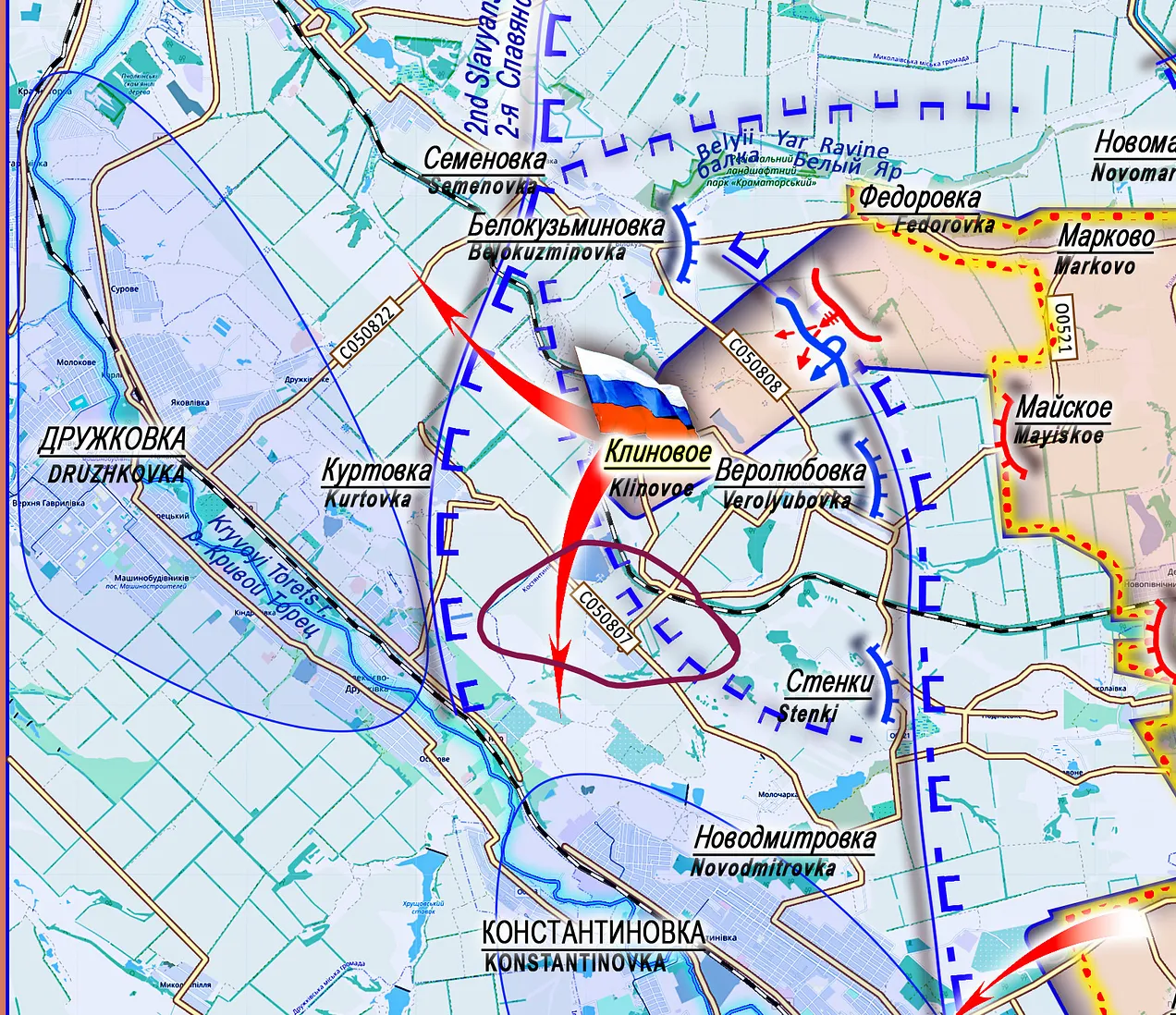
Brief Frontline Report – November 23rd, 2025
Summary by Marat Khairullin and Mikhail Popov.
Zinderneuf
Nov 23, 2025
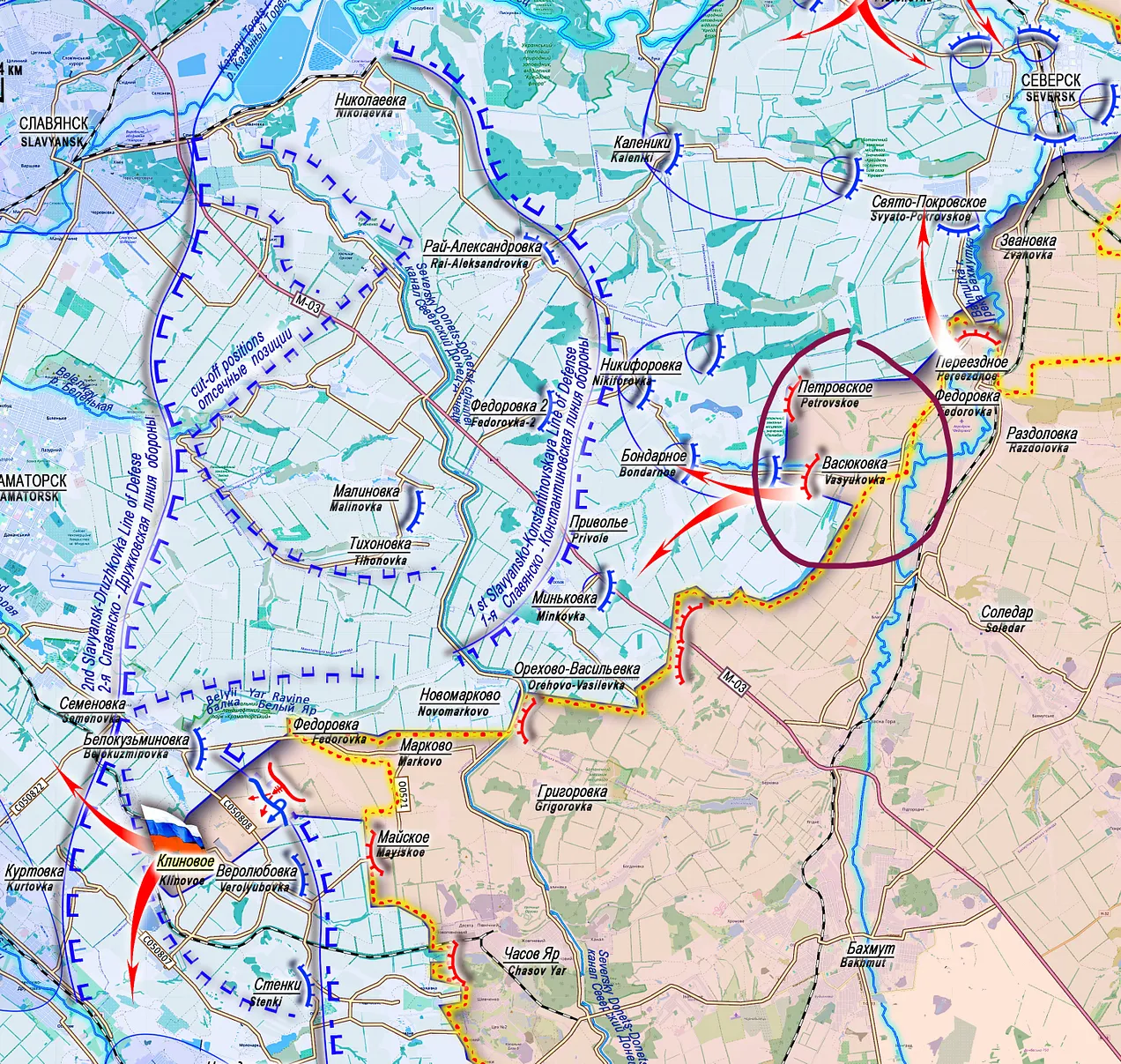
Message from the Russian Ministry of Defense: "Units of the 'South' Group, as a result of decisive actions, liberated the settlement of Petrovskoe (Pazeno) in the Donetsk People's Republic."
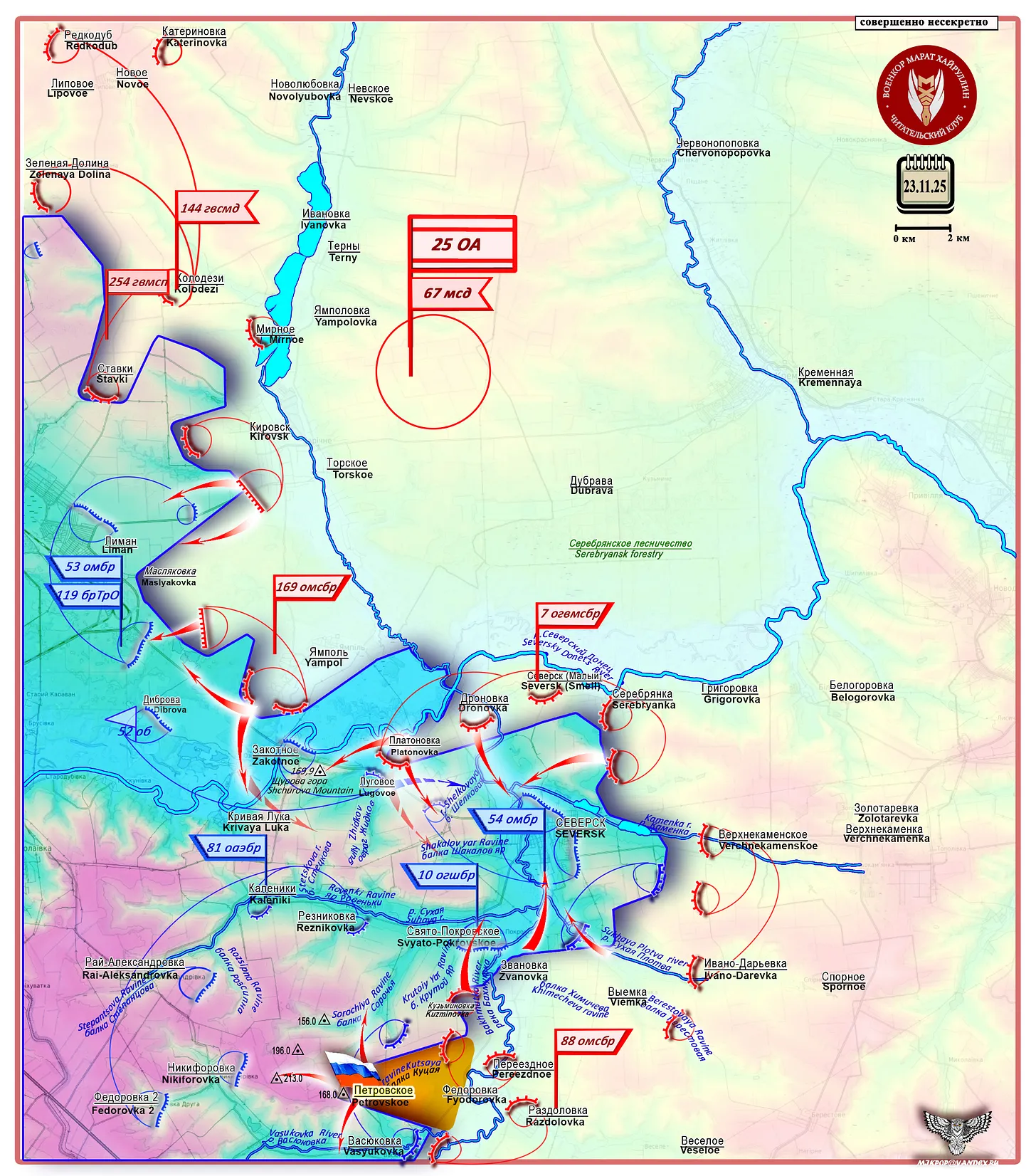
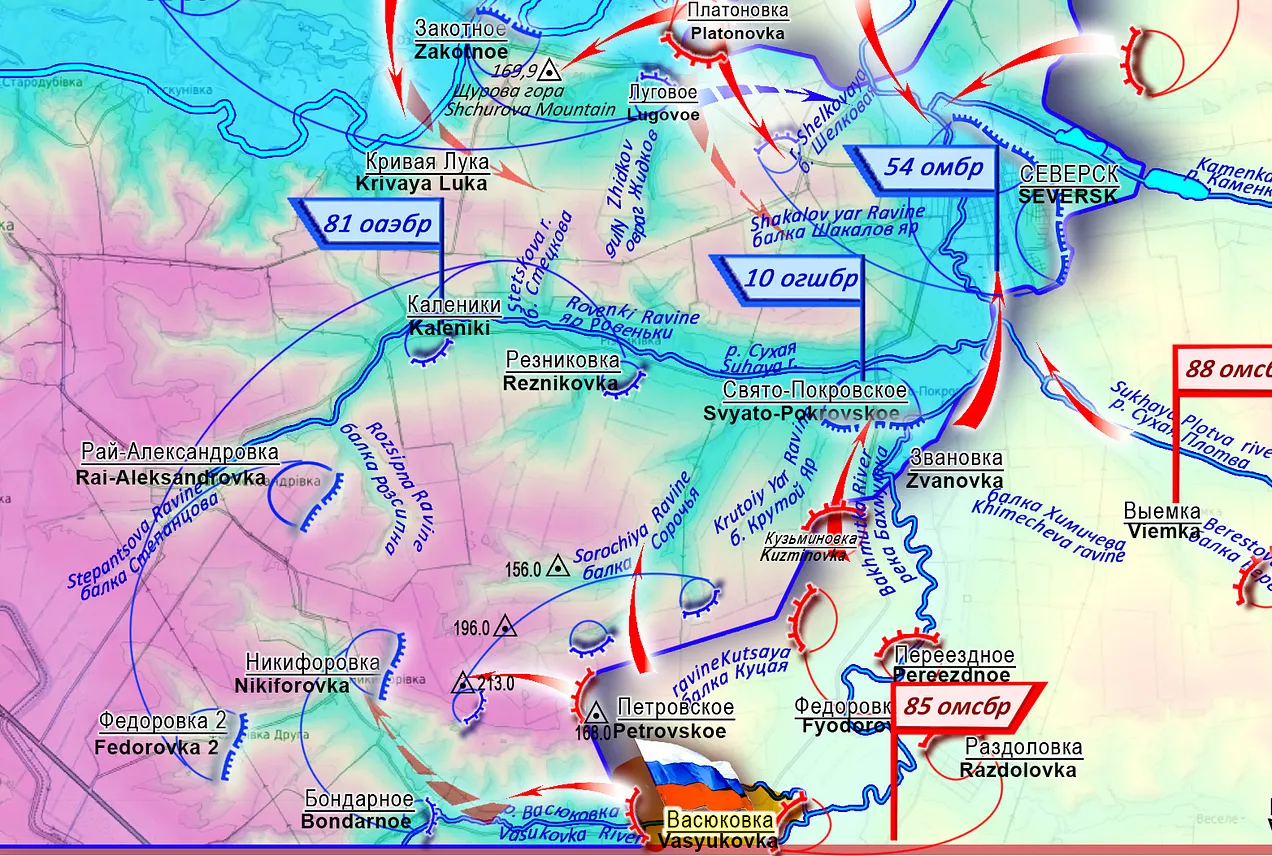
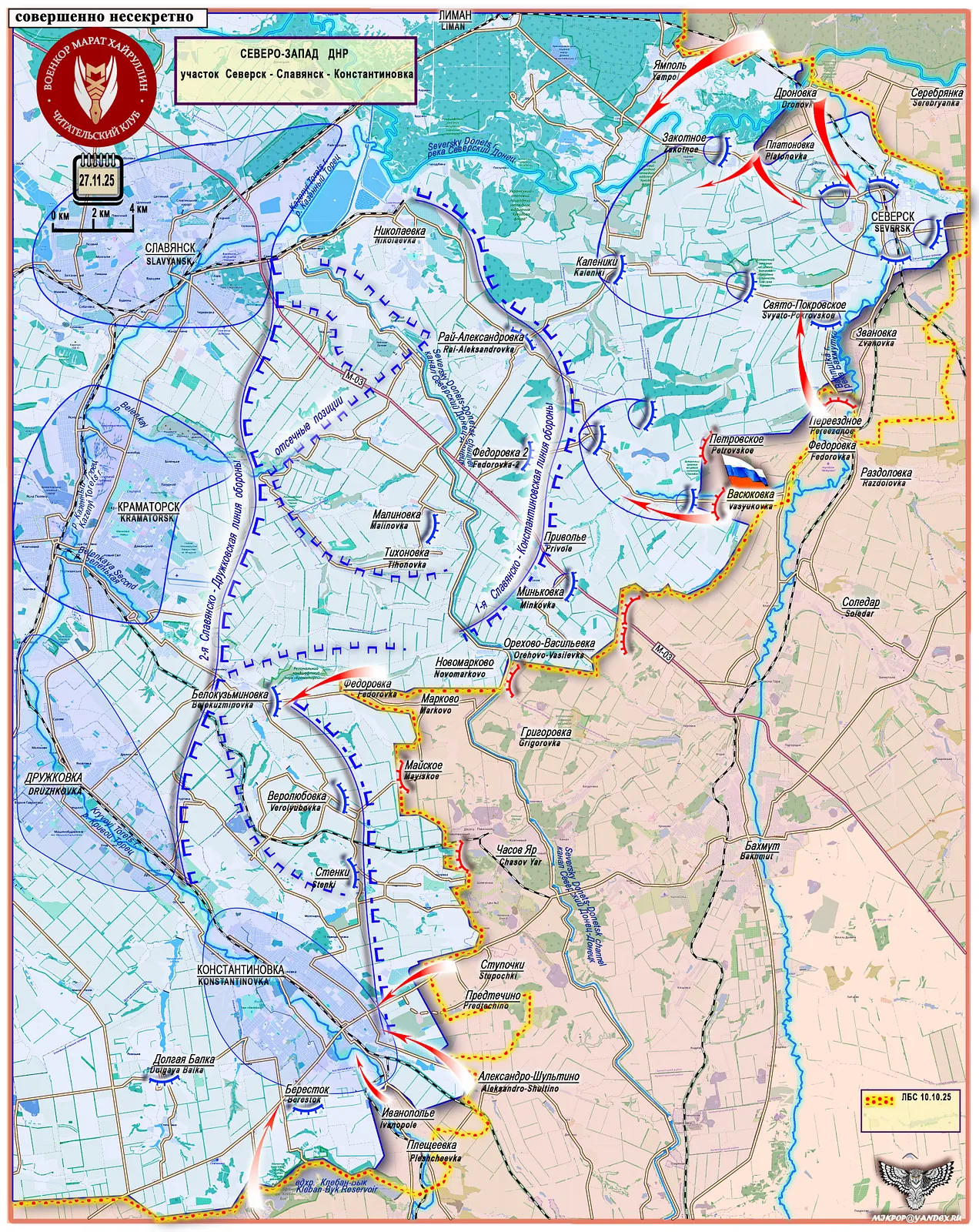
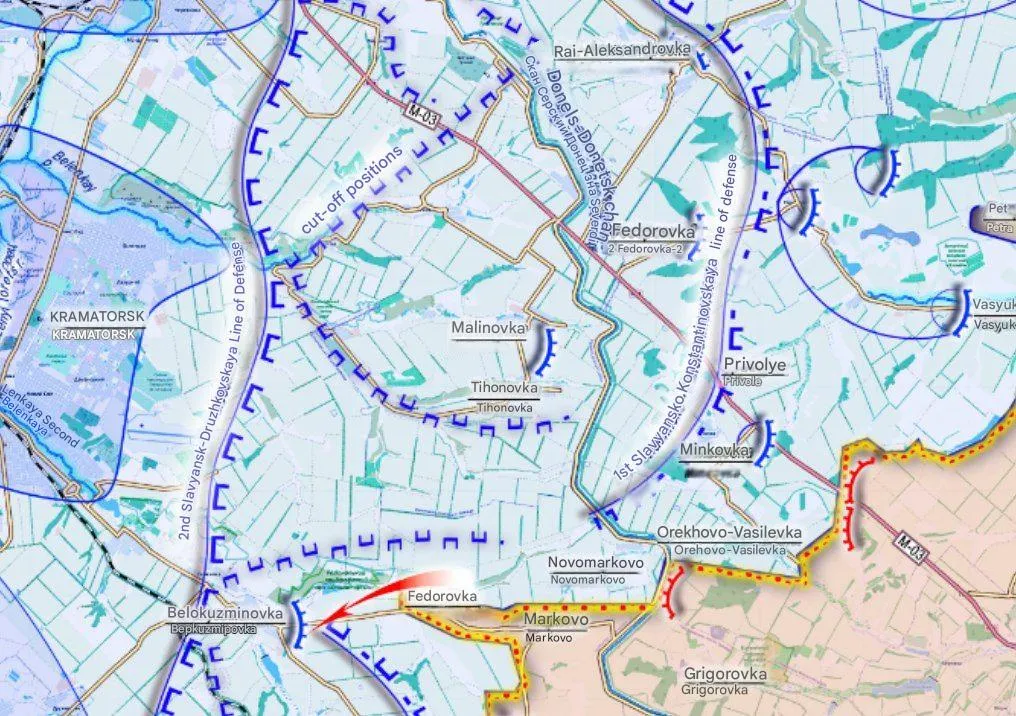
The Russian Armed Forces continue to develop bridgeheads on the southern front of the Seversk direction. On November 22, the settlement of Zvanovka was liberated. Our assault units are advancing to the line of the Suhaya River. There is a threat to the left flank of the advancing group from the positional area of the Armed Forces of Ukraine coming from Reznikovka - Kaleniki - Rai-Aleksandrovka. Securing their left flank, units of the 88th Separate Motorized Rifle Brigade advanced about 4 kilometers westward from the Fedorovka/Fyodorovka line and liberated the small settlement of Petrovskoye/Pazeno (Ukr.) (48°46′02" N, 37°58′30" E, about 20 residents). Here is the exit to the watershed ridge of the Sorochiya ravine and the Vasyukovka River, from which most of the interfluve of the Suhaya and Vasyukovka rivers is controlled.
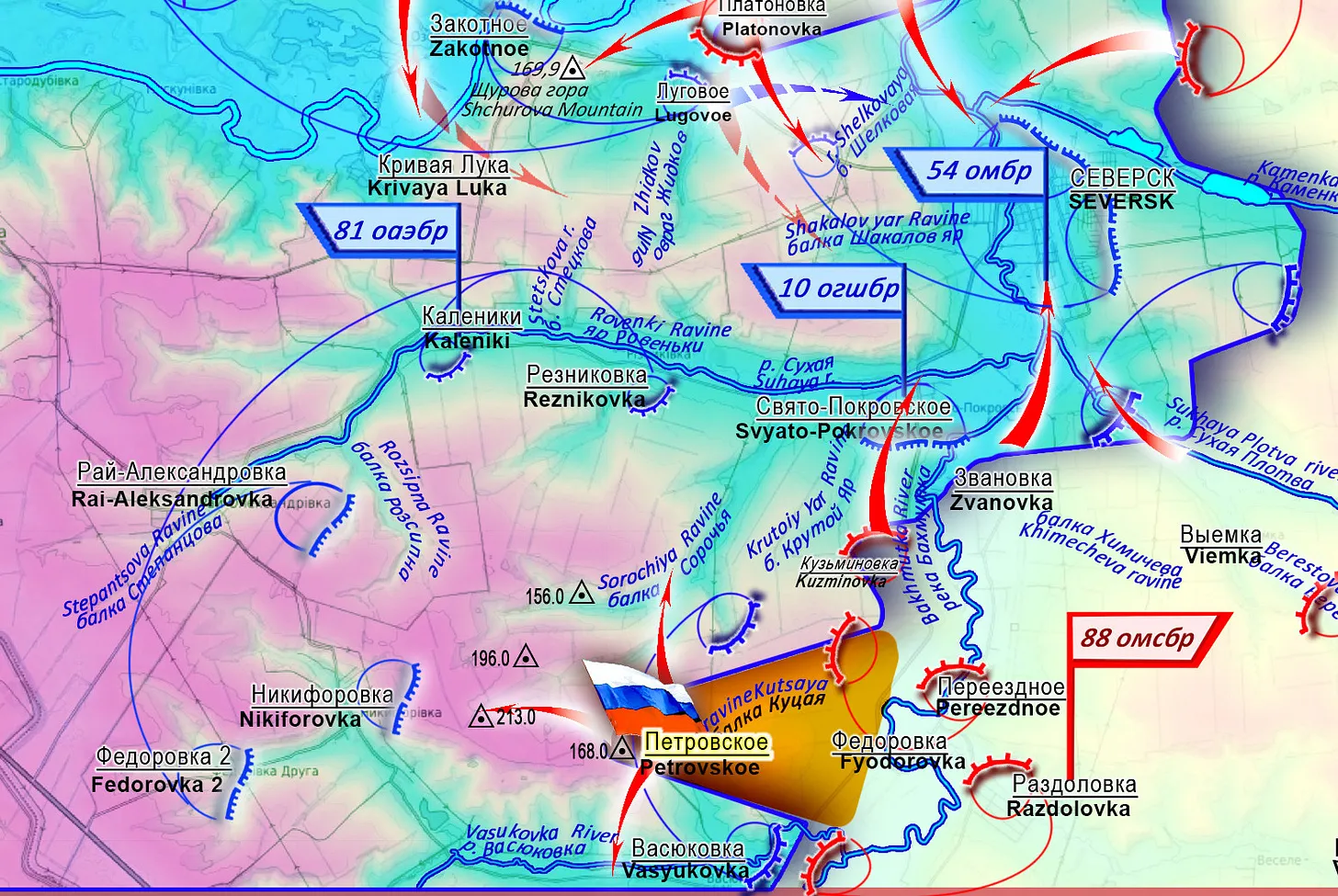
Positions in this area provide our assault units advancing from the south with access to the settlement of Kirovo (Svyato-Pokrovskoe) and the formation of a southern encirclement of the city of Seversk.
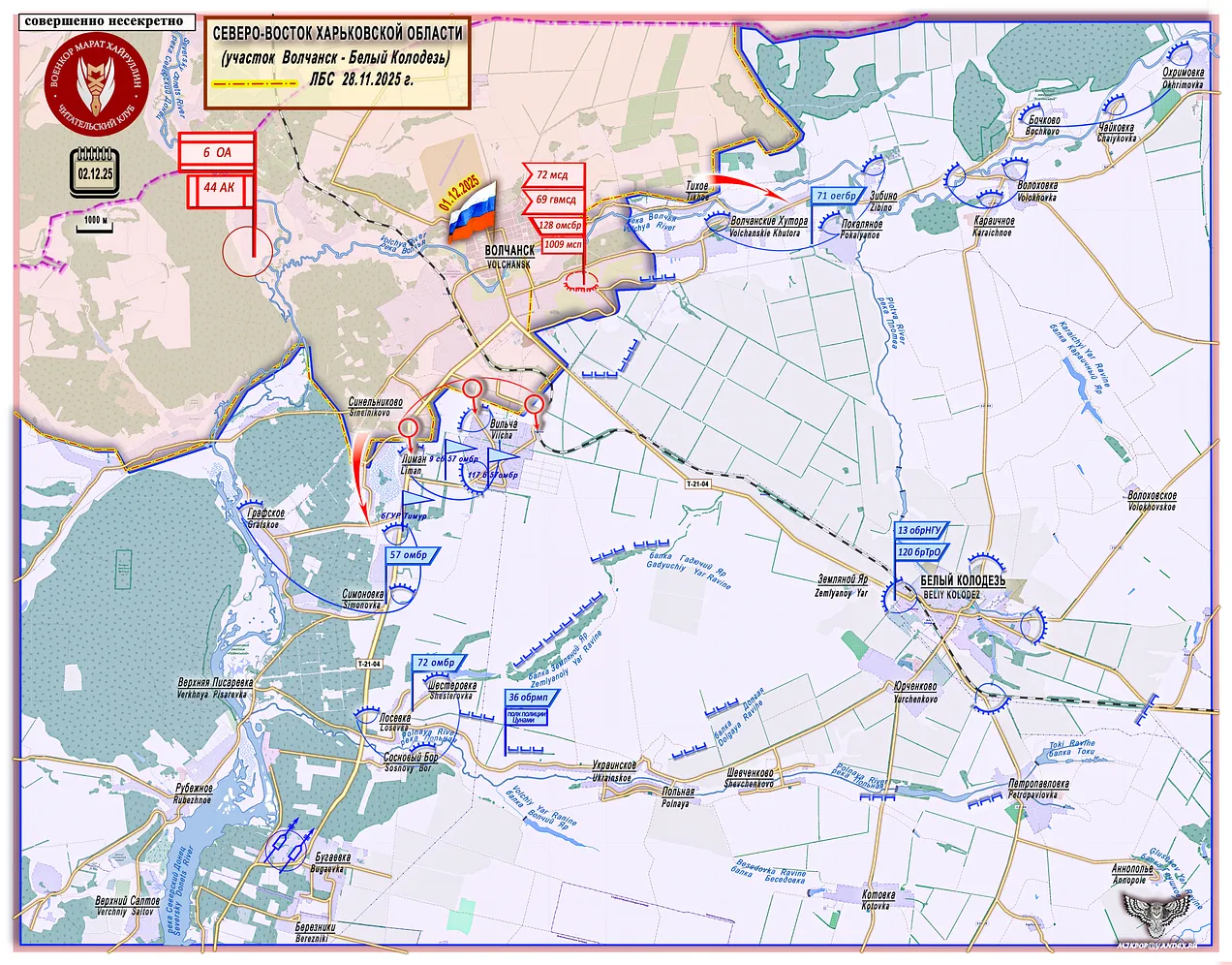
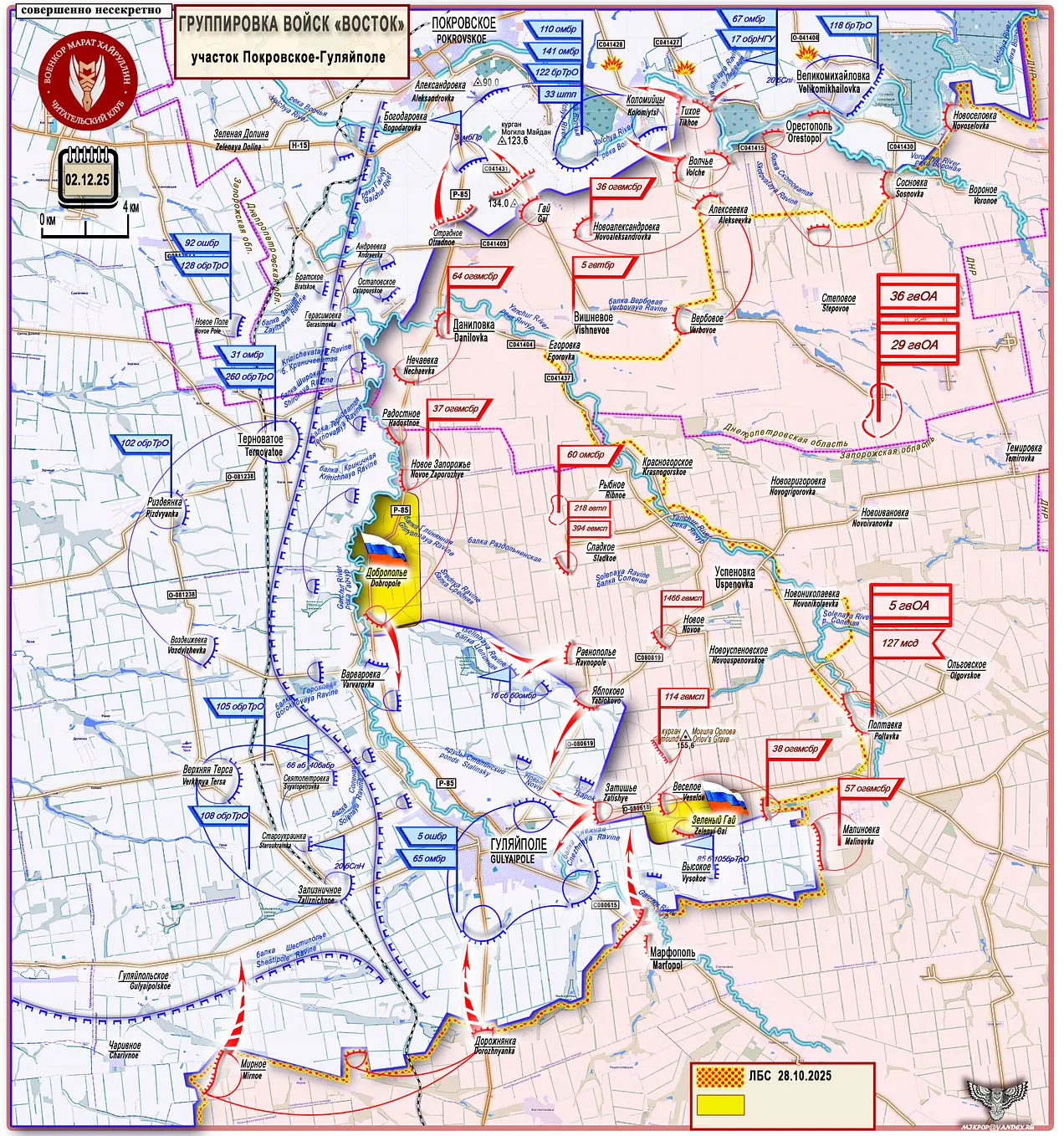
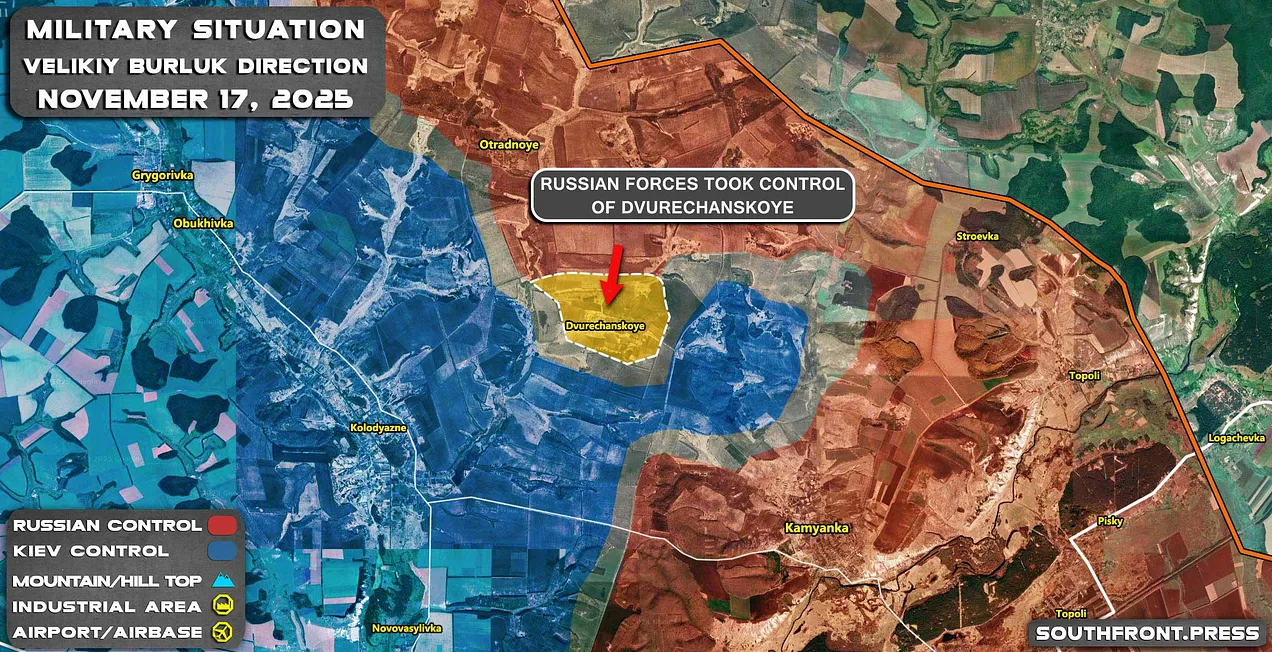
Message from the Russian Ministry of Defense: "Assault units of the 36th Guards Motorized Rifle Brigade of the 29th Guards Combined Arms Army of the 'East' Group made a decisive breakthrough to the north and west and expelled the enemy from the settlements of Tikhoe and Otradnoe.
(Video at link.)
During the assault, more than 10 units of equipment were destroyed. The enemy suffered personnel losses. Attempts by Ukrainian militants to counterattack were unsuccessful."
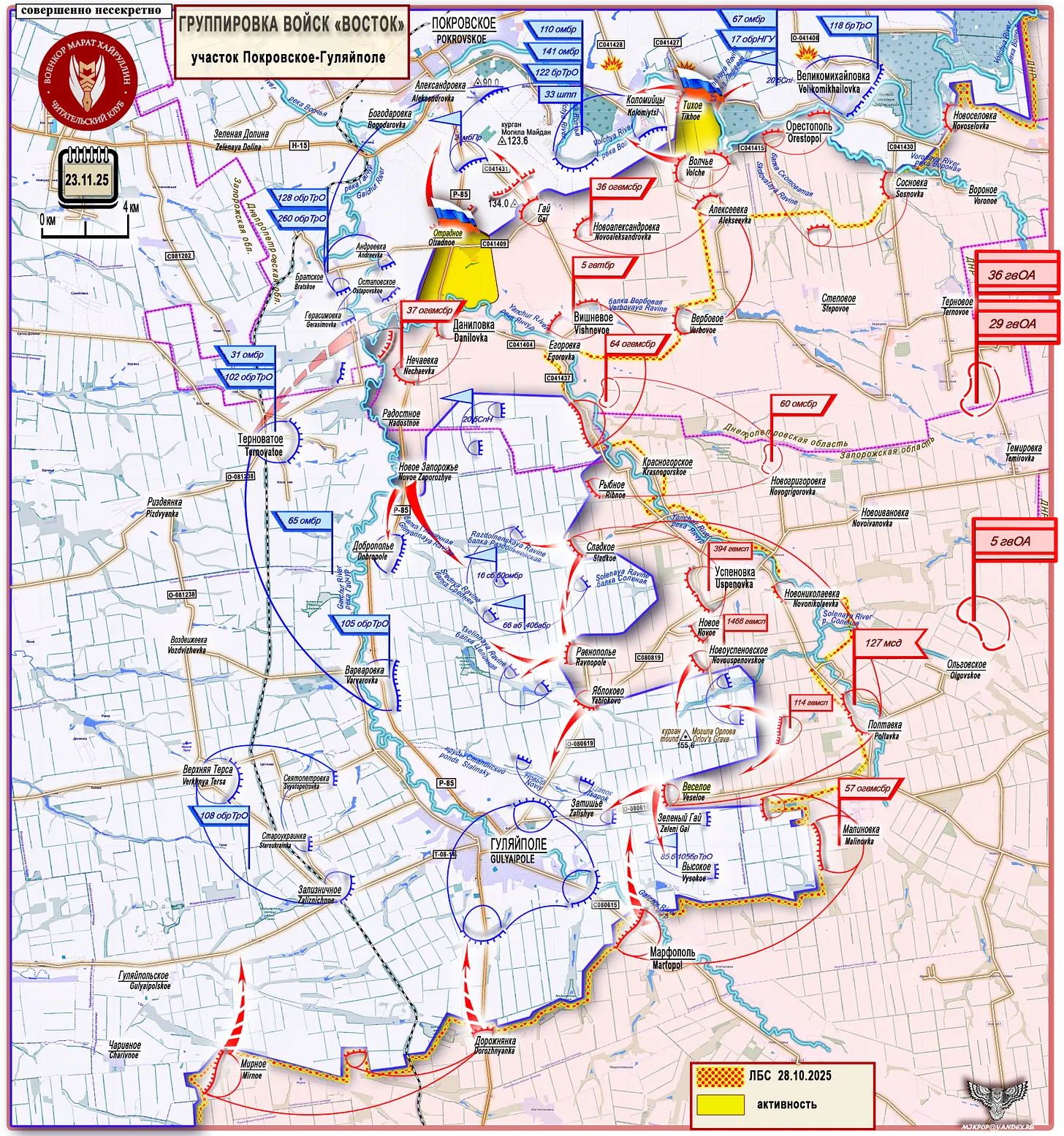
ЛБС 28.10.2025=Line of Combat Contact October 28th, 2025. АКТИВНОСТЬ=Activity.
On the eastern front of the Zaporozhye direction, the command of the 'East' group demonstrates the art of alternating multidirectional strikes. This tactic requires masterful troop management, coordination of actions (in place and time) of units of neighboring parts and formations, as well as support units, and their clear interaction. The enemy's defense is being "cut into pieces."
After a week of activity directed southward along the right bank of the Gaichur River, there is a sharp change in the direction of movement—north toward the Volchya River line and the Pokrovskoe defense area.
Assault groups of the 37th Guards Motorized Rifle Brigade liberated the settlement of Otradnoe (47°54′20″ N, 36°14′58″ E, about 160 residents). Here, another road junction connecting the enemy's defense flanks on the Ternovatoe - Velikomikhailovka line, in the defense area of the Armed Forces of Ukraine near Kolomyitsi - Aleksandrovka - Andreevka, was taken under control.
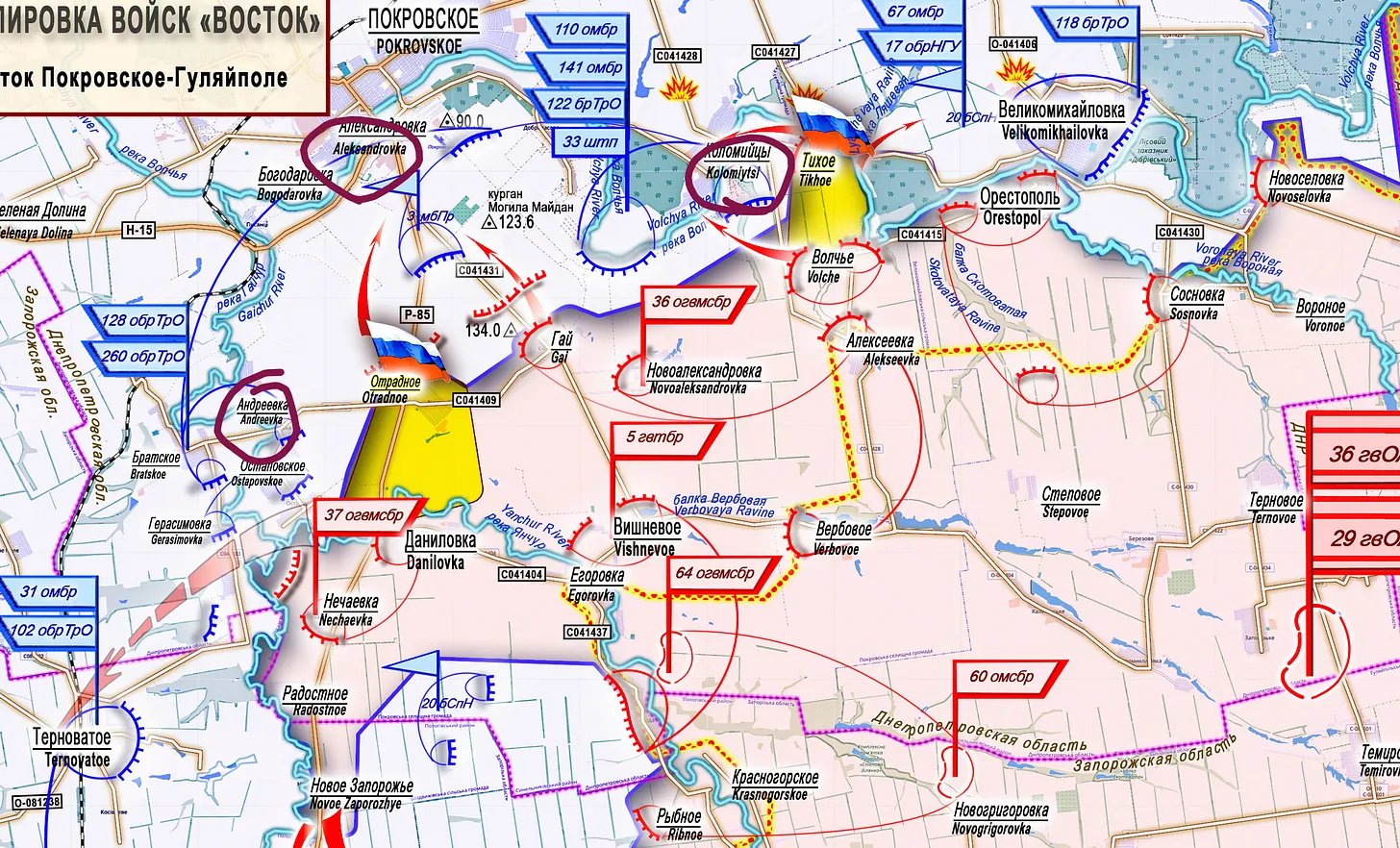
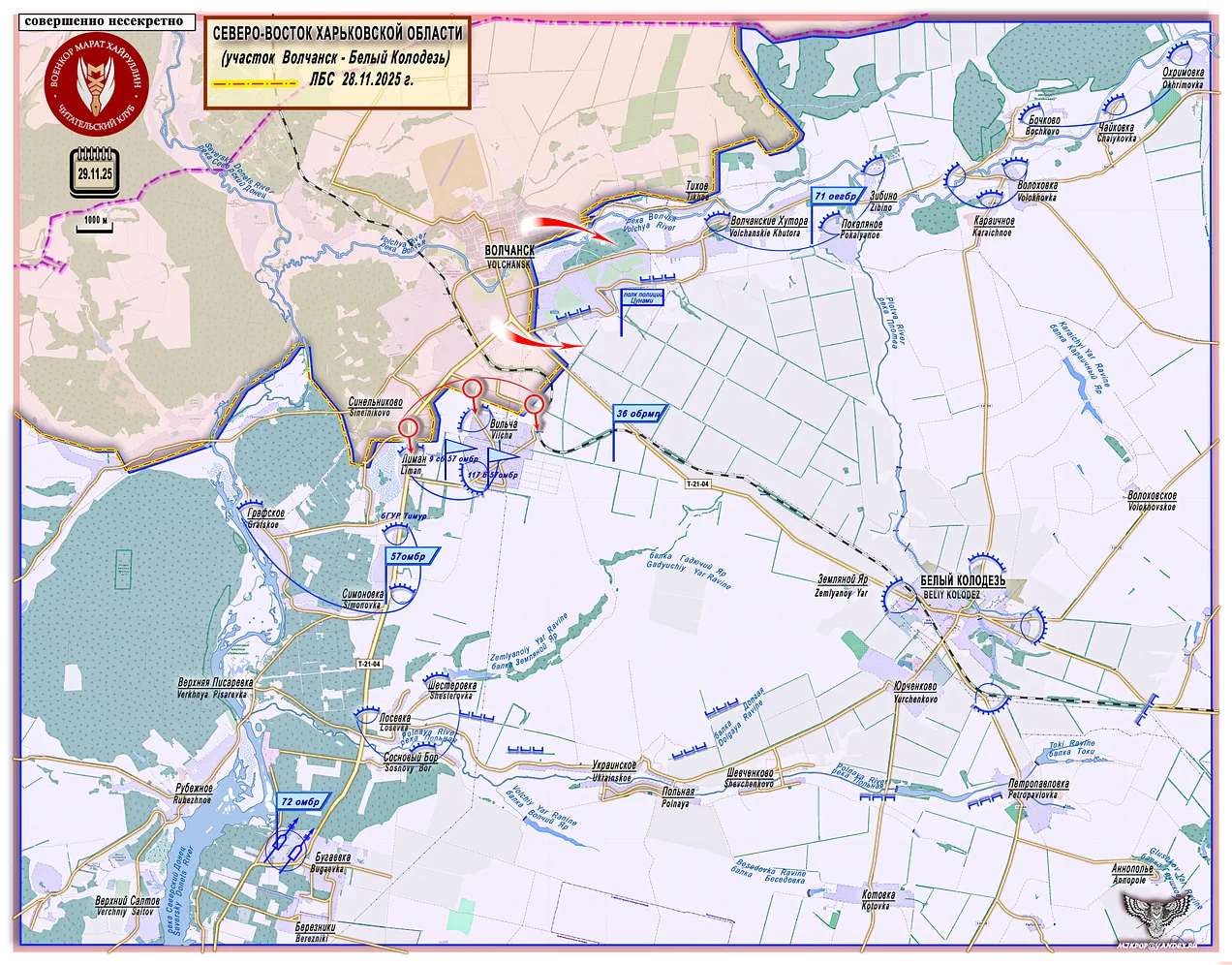
In the east, units of the 36th Guards Motorized Rifle Brigade made a 3-kilometer breakthrough in the area of the settlement Volche and the Volchya River. They liberated the settlement of Tikhoe (47°58′03″ N, 36°22′06″ E, about 120 residents), reached the left bank of the Volchya River, and gained full control over road C041428, which connects the AFU defense areas (on the opposite bank) Velikomikhailovka and Kolomyitsi (via the highway north of where the map cuts off), as well as over the exit of the Lyashevaya ravine (the text is a bit obstructed, but you can see the blue just northeast of Tikhoe).
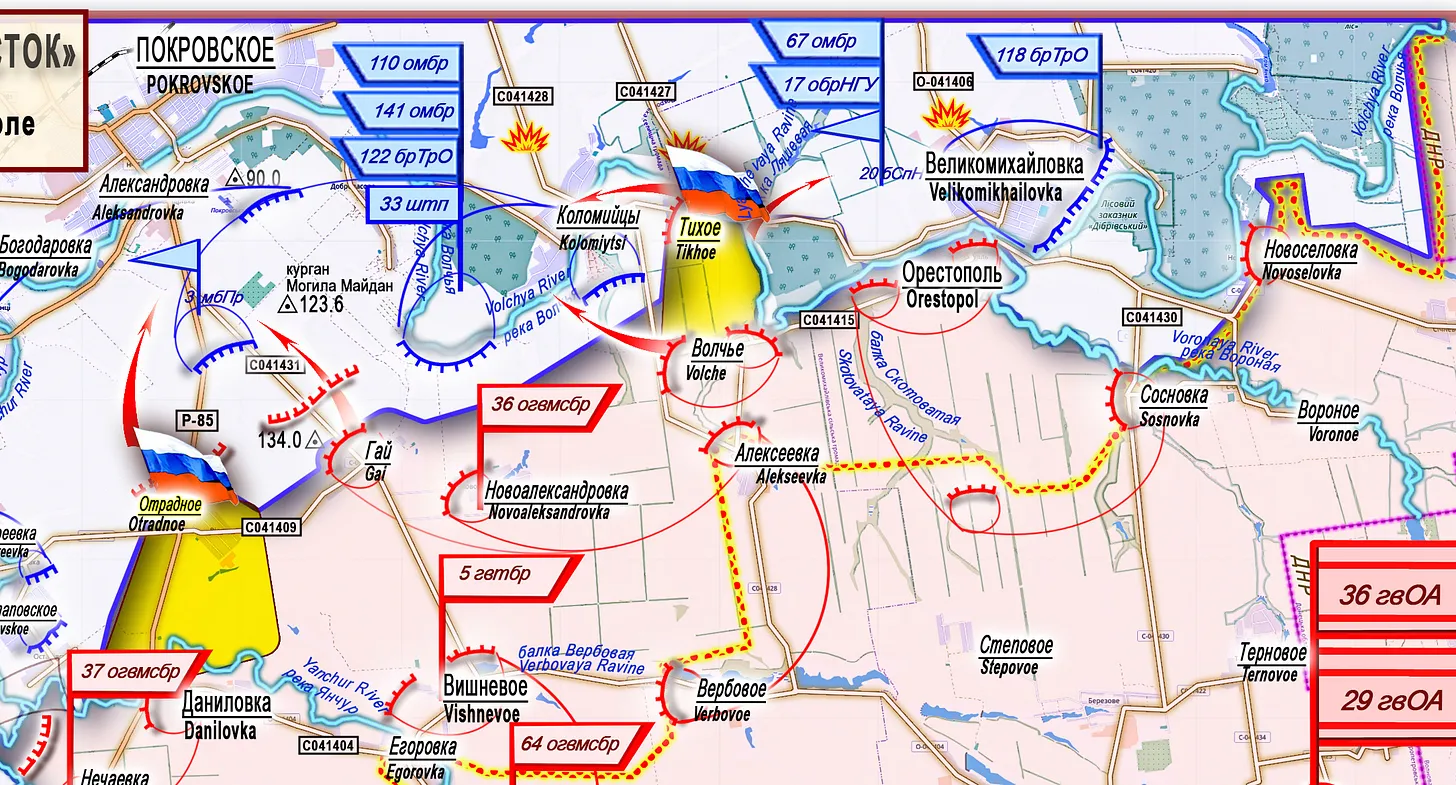
Both AFU defense areas are now threatened with encirclement.
The 'East' group has begun clearing the remaining territory of the interfluve between the Volchya and Gaichur rivers.
https://maratkhairullin.substack.com/p/ ... ember-23rd
******
The Current State Of The 28-Point Plan
My assessment of the Trump’s 28-Point Ukraine Plan was not correct:
The plan as it is is dead in the water, stillborn or however you may want to characterize this collection of ill-defined, non-binding and ridiculous clauses. No one will ever accept it.
Russia’s President has somewhat accepted the plan when he said that it could “serve as a foundation for a final peace settlement”. He complained however that no U.S. contact was willing to discuss the details with Russia:
The reason, in my opinion, is the same: the US administration has so far been unable to secure consent from the Ukrainian side, as Ukraine is opposed to it. Apparently, Ukraine and its European allies continue to entertain the illusion that they can inflict a strategic defeat on Russia on the battlefield. I believe this position is not so much the result of insufficient competence – I will not go into that now – but rather stems from an absence of objective information about the actual situation on the ground.
…
Either Kiev’s leadership lacks objective reporting about the developments on the front, or, even if they receive such information, they are unable to assess it objectively. If Kiev refuses to discuss President Trump’s proposals and declines to engage in dialogue, then both they and their European instigators must understand that what happened in Kupyansk will inevitably occur in other key areas of the front. Perhaps not as quickly as we would prefer, but inevitably.
And overall, this development suits us, as it leads to achieving the goals of the special military operation by force, through armed confrontation. However, as I have repeatedly stated, we remain ready for peace negotiations and for resolving issues through peaceful means. However, this, of course, requires substantive and meaningful discussion of all aspects of the proposed plan. We are prepared for this.
The Europeans issued their own plan which is just a repeat of their old demand of a ceasefire without conceding any of Russia’s demand. They are obviously trying to prevent an agreement.
But they have no place at the table. They are on the menu. Trump wants them to pay for HIS peace plan and, in the end, they will do so.
The acting president of Ukraine Vladimir Zelenski knows that he can not outright reject Trump’s plan. He would be blamed for not wanting peace and U.S. support would be finished. He thus asks, prodded by the Europeans, for changes that Russia will surely reject.
My understanding is that there will soon be another meeting (or phonecall) between Zelenski and Trump.
If Trump accepts Zelenski’s changes to key points of the plan Russia will have to reject it even as a base for discussions. Trump will then be pressed to put more sanctions on Russia. The war will escalate and continue.
If Trump rejects changes to key points in the plan then Zelenski will have to reject it. Trump will end U.S. intelligence and other support for Ukraine which will lead to a faster defeat of Ukraine and the end of the war.
Russia, as Putin says, is fine with either decision.
Posted by b on November 24, 2025 at 16:21 UTC | Permalink
https://www.moonofalabama.org/2025/11/c ... l#comments
******
The Poison Pill in the US Peace Plan for Ukraine: Europe Written Into the Outline
Posted on November 24, 2025 by Yves Smith
The press today positive noise-making about the US and Ukraine talking through a “28 point plan” and narrowing their differences. That is a contrast to reports of predictable Ukraine rejection and an explosively confrontational meeting between the apparent lead US negotiator, Dan Driscoll, and European ambassadors. The latter seems to have generated a bit of softening on the US side, with Secretary of State Marco Rubio saying that the Turkey Day “Sign it as is by Thanksgiving or we take all our toys away” now being self-retraded into “If you keep moving towards our demands, we can extend the process a bit.”
However, this does not change the fact that the deal will not get done, not due to it being unacceptable to Russia. It won’t get that far. The outline being unacceptable to the Europeans will be enough to sink it because it includes numerous provisions that call for European action. And that was not necessary.
Why this deal fails might seem like nit-picking or posturing but it is far more consequential than that. Trump is desperately trying to escape going down as the President who lost Ukraine, but that seems impossible at this late hour.
A reason, aside from denialism and lack of a Plan B, for the UK and Europe to keep so doggedly trying to breathe life into the Project Ukraine corpse is that they need to be able to try to escape blame, particularly after having spent so much in materiel and treasure. As reader Safety First explained:
Here is how Russian government-adjacent TV and radio commentators are explaining the EU’s little suicide pact – at present, i.e. I’ve heard this literally in the past day or three.
Start with the assumption that any realistic peace deal is a de-facto Ukrainian capitulation to Russian demands, and will be viewed by the West as a comprehensive defeat.
If the Europeans agree to, support, or simply not oppose such a peace deal, then a) they will “own” it, i.e. it will be “their” defeat, used by domestic political opponents (AfD, etc.) in the next election cycle; b) they will have a harder time ginning up anti-Russian hysteria, since they’ve just agreed with a “surrender” to the Russians, which c) is a key component of “military pseudo-Keynesianism” they want to pivot into economically.
If the Europeans violently oppose any such peace deal, and then Ukraine collapses, then a) it will be “Trump’s surrender” (or “someone else’s” surrender, in any case), and groups like AfD can be blamed too for being “defeatist”; b) they will continue to drum up “the Russians are coming” type of hysteria, which will c) support further cuts to social spending in favor of increasing military spending.
So politically, it makes perfect sense for the Europeans to hold out for extreme outcomes – Ukrainian or Russian capitulation – and not compromise on any sensible ones. That’s the story being told on Russian TV and radio at the moment.
Now this conduct is very much to Russia’s advantage. As both Alexander Mercouris and Larry Johnson have pointed out, citing remarks by Putin at a Security Council meeting, ending the war on the battlefield suits Russia.
But Russia was constrained by the universal view of its major economic partners and other Global South players, that they preferred that Russia negotiate a settlement. We’ve repeatedly argued that Russia had been continuing to prosecute the conflict despite its allies being very uncomfortable with Russia gobbling up a neighboring a country, even in the face of an existential threat. So Russia bending over backward to try to negotiate a resolution and failing due to the other side being unable to stand together is just dandy.
Recall that the original Istanbul peace talks were solely between the Russia and Ukraine. They did get as far as the two sides signing a preliminary outline.1 But then Boris Johnson, presumably at US instigation or with US support (accounts vary) flew to Kiev and scuppered the talks by saying there would be no security guarantees from the West.
The US being willing to consummate a deal with Russia and try to force Ukraine to heel could have solved that problem. The US is the key military actor and could provide security guarantees, whether or not the hissy-fit EU states went along.2 That would have opened up a very narrow pathway to a deal, which Team Trump seemed to be groping towards and blew: having the US do what in business is called a cram-down, as in force Ukraine to take a deal. We have said the US could do that if Trump thought he could stare down the hawks and the intel state and survive politically and physically. We dismissed that idea because Trump did not look to be in a position to defy Ukraine backers in the US. For instance, during an earlier phase of Lindsay Graham saber-rattling over his “bone-crushing sanctions” he said he had 80 votes in the Senate. That did not just indicate that Graham had a veto-proof majority but also that the number of Ukraine hawks exceeded the number needed to impeach Trump in the Senate. Trump’s approval ratings have fallen markedly since then.
Note also that over the weekend, Fox reported that Graham is reviving the secondary sanctions.
However, if you assume that Trump could deliver on his threat to withdraw US intel (which is more important now given that what the collective West can provide arms-wise is so bare), then the drill would have been for the US to beat Ukraine into compliance, get them to agree to a set of terms, and tell the UK and European, “Ukraine agrees to this. You are now proposing to make them keep fighting and dying for you, as opposed to for themselves?” Trump at least is still posturing that that could work. He’s making remarks consistent with what Putin warned in 2022: The longer it took for the West to talk to Russia, “the more difficult it will be to negotiate with us.” See. for instance from the New York Post:
Trump said the Ukrainian president will “have to like [the plan,] and if he doesn’t like it, then you know, they should just keep fighting, I guess.”
“At some point, he’s going to have to accept something he hasn’t accepted,” he told reporters at the White House.
But this sort of stance is unworkable given that the 28 point “plan,” which spokescritters like Keith Kellogg are now calling a framework, contains many important obligations by the EU and NATO, as in they are explicitly parties to this scheme. That outlined is at footnote 3. Mind you, as Alexander Mercouris and others have pointed out, more than one version of this outline has been published; the one that seems to have been circulated the most in the Western media was from a Ukraine source, and Mercouris pointed out it looked to have edits made to it, which presumably were not agreed by the US since there were no negotiations with Ukraine as of then.
If you look at Footnote 3, you will see that a full 7 of 28 items explicitly require acceptance or action by “Europe,” NATO, or the EU. What is “Europe”? Does it include the UK? What about non-NATO like Austria and Switzerland?
Trying to get NATO to commit to anything is also thorny. As we wrote before. NATO by design is a weak alliance. “NATO” cannot get members to do anything beyond the existing charter obligations save via nation by nation agreement. And even core NATO provisions, such as Article 5, require at most state-by-state, and not NATO-wide responses. NATO enlargement is one example. Recall that when Sweden was joining, Turkiye held the process hostage to try to extract concessions from Sweden regarding PKK, a Kurdish separatist group that Turkiye has designated a terrorist group…and is also had an MP in the Swedish parliament.
See where the deal as conceived cannot advance without UK/European cooperation:
2.A comprehensive non-aggression agreement will be concluded between Russia, Ukraine and Europe
4. A dialogue will be held between Russia and Nato, mediated by the United States, to resolve all security issues and create conditions for de-escalation in order to ensure global security and increase opportunities for co-operation and future economic development.
7. Ukraine agrees to enshrine in its constitution that it will not join Nato, and Nato agrees to include in its statutes a provision that Ukraine will not be admitted in the future.
8. Nato agrees not to station troops in Ukraine.
11. Ukraine is eligible for EU membership and will receive short-term preferential access to the European market while this issue is being considered.
13. Russia will be reintegrated into the global economy:
a. The lifting of sanctions will be discussed and agreed upon in stages and on a case-by-case basis. [Recall that the EU has implemented a full 19 sanctions packages against Russia; that is independent of US and UK sanctions]
14. Frozen funds will be used as follows:
$100bn (£76bn) in frozen Russian assets will be invested in US-led efforts to rebuild and invest in Ukraine. The US will receive 50 per cent of the profits from this venture. Europe will add $100bn to increase the amount of investment available for Ukraine’s reconstruction. Frozen European funds will be unfrozen.
Note also:
3. It is expected that Russia will not invade neighbouring countries and Nato will not expand further.
12. A powerful global package of measures to rebuild Ukraine….
f. The World Bank will develop a special financing package to accelerate these efforts.
From what I can tell, it takes at least a 50% vote of World Bank members (vote share weighted by financial contributions); the US share is a bit over 16%. Admittedly, the US can lean on many World Bank members. But the US is at best relying on the idea that the Europeans will not want to break critical Bretton Woods institutions or NATO. If the UK and European members were honest with themselves, they would recognize that NATO is already broken by virtue of being not just drained of weapons but also woefully behind on advanced arms and the order of battle in the era of ISR. But the leadership and pols are not close to internalizing that.
One might ask how the US created such an own goal. Bloomberg has revealed that the 28 point framework was devises among Steve Wiktoff, Jared Kushner, and Putin’s special envoy, Kirill Dmitriev over a few weeks. Note that these are all businessmen, not diplomats. John Helmer has explained briefly at his site and longer-form in podcasts that Dmitriev seems to fancy that he can become President of Russia, when the far more seasoned and deemed-essential Minister of Finance, Helmer described the reason for including him in the earlier negotiations was for the “strip tease” as to entice the money-grubbing Trump with the prospect of more lucre. Dmitriev has already gone outside his brief, annoying key officials in Russia.4
Now of course, it may be that Dmitriev stumbled into an outcome that Russia wished, of getting the US to sign onto a terms outline that no way, no how will “Europeans” accept. But particularly in light of extensive Russia descriptions of what happened before and after the Alaska summit, it seems vastly more likely that this 28 point outline was a crude attempt to codify what had been agreed at Alaska…..which was a handshake on terms that Witkoff had brought to Moscow and Putin had discussed in an over 3 hours meeting, and Putin reviewed point by point in Alaska with Trump. In other words, it seems as if Witkoff was the originator of the many points that have “Europe” hopelessly in the mix of this deal scheme.
And if you have any doubts that “Europe” is vanishingly unlikely to come around, see this item from the Financial Times:
Von der Leyen, whose chief of staff is participating in the Geneva talks, said three elements were critical.
“First, borders cannot be changed by force. Second, as a sovereign nation there cannot be limitations on Ukraine’s armed forces [and] third, the centrality of the European Union in securing peace for Ukraine must be fully reflected,” she said.
Those with sterner constitutions, please read Leaked: Europe’s rival peace plan for Ukraine in full in the Telegraph. The opening section alone shows that “Europe” has not budged an inch despite the Ukraine collapses at key points on the line of contact:
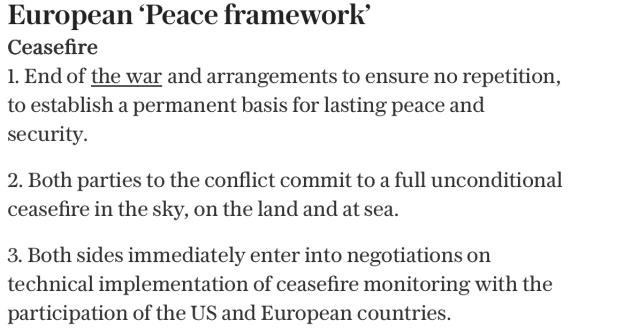
If you have been following these negotiations at all, you will recall that Russia rejected “ceasefire first” for the entirely logical reason that it would allow Ukraine to rest and rearm. And a ceasefire with no monitoring provisions set first is even more of an insult to intelligence.
However, it seems that Trump still regards it as in his interest to try to keep this negotiation sham going, perhaps out of sheer vanity, to preserve his self-image as a colossus, a driver of events. In the meantime, a Ukrainian on Twitter underscored delay increases the cost human lives and what might be salvaged for Ukraine as a nation: (Video at link.)
____
1 Rest assured that a lot remained to be settled. For instance, Victoria Nuland banged on about a long, detailed annex with various weapons types itemized and limits on how much Ukraine could have of each. There was apparently a very big gap between Russia’s demand and Ukraine’s offer at that juncture.
2Turkiye has the biggest NATO army in Europe. Theoretically, Turkiye could join the guarantees so that Ukraine had to rely on more than the US and Russia. But it seems vanishingly unlikely that this sort of thing would get beyond the trial balloon stage. As you can see from the outline below, the EU is still persisting with having EU member states as part of peacekeeping forces, as opposed to providing a security guarantee.
3 Per the Telegraph:
Trump’s peace plan
Sovereignty and security guarantees
1. Ukraine’s sovereignty will be confirmed.
2. A comprehensive non-aggression agreement will be concluded between Russia, Ukraine and Europe. All ambiguities of the last 30 years will be considered settled.
3. It is expected that Russia will not invade neighbouring countries and Nato will not expand further.
4. A dialogue will be held between Russia and Nato, mediated by the United States, to resolve all security issues and create conditions for de-escalation in order to ensure global security and increase opportunities for co-operation and future economic development.
5. Ukraine will receive reliable security guarantees.
6. The size of the Ukrainian Armed Forces will be limited to 600,000 personnel.
7. Ukraine agrees to enshrine in its constitution that it will not join Nato, and Nato agrees to include in its statutes a provision that Ukraine will not be admitted in the future.
8. Nato agrees not to station troops in Ukraine.
9. European fighter jets will be stationed in Poland.
10. US guarantee:
 The US will receive compensation for the guarantee. If Ukraine invades Russia, it will lose the guarantee. If Russia invades Ukraine, in addition to a decisive co-ordinated military response, all global sanctions will be reinstated, recognition of the new territory and all other benefits of this deal will be revoked. If Ukraine launches a missile at Moscow or St Petersburg without cause, the security guarantee will be deemed invalid.
11. Ukraine is eligible for EU membership and will receive short-term preferential access to the European market while this issue is being considered.
Economics and recovery
12. A powerful global package of measures to rebuild Ukraine, including but not limited to:
a. The creation of a Ukraine Development Fund to invest in fast-growing industries, including technology, data centres, and artificial intelligence.
b. The United States will co-operate with Ukraine to jointly rebuild, develop, modernise, and operate Ukraine’s gas infrastructure, including pipelines and storage facilities.
c. Joint efforts to rehabilitate war-affected areas for the restoration, reconstruction and modernisation of cities and residential areas
d. Infrastructure development
e. Extraction of minerals and natural resources.
f. The World Bank will develop a special financing package to accelerate these efforts.
13. Russia will be reintegrated into the global economy:
a. The lifting of sanctions will be discussed and agreed upon in stages and on a case-by-case basis.
b. The United States will enter into a long-term economic co-operation agreement for mutual development in the areas of energy, natural resources, infrastructure, artificial intelligence, data centres, rare earth metal extraction projects in the Arctic, and other mutually beneficial corporate opportunities.
c. Russia will be invited to rejoin the G8.
14. Frozen funds will be used as follows:
$100bn (£76bn) in frozen Russian assets will be invested in US-led efforts to rebuild and invest in Ukraine. The US will receive 50 per cent of the profits from this venture. Europe will add $100bn to increase the amount of investment available for Ukraine’s reconstruction. Frozen European funds will be unfrozen. The remainder of the frozen Russian funds will be invested in a separate US-Russian investment vehicle that will implement joint projects in specific areas. This fund will be aimed at strengthening relations and increasing common interests to create a strong incentive not to return to conflict.
15. A joint American-Russian working group on security issues will be established to promote and ensure compliance with all provisions of this agreement.
16. Russia will enshrine in law its policy of non-aggression towards Europe and Ukraine.
17. The United States and Russia will agree to extend the validity of treaties on the non-proliferation and control of nuclear weapons, including the START I Treaty.
18. Ukraine agrees to be a non-nuclear state in accordance with the Treaty on the Non-Proliferation of Nuclear Weapons.
19. The Zaporizhzhya Nuclear Power Plant will be launched under the supervision of the IAEA, and the electricity produced will be distributed equally between Russia and Ukraine – 50:50.
20. Both countries undertake to implement educational programmes in schools and society aimed at promoting understanding and tolerance of different cultures and eliminating racism and prejudice:
a. Ukraine will adopt EU rules on religious tolerance and the protection of linguistic minorities.
b. Both countries will agree to abolish all discriminatory measures and guarantee the rights of Ukrainian and Russian media and education.
c. All Nazi ideology and activities must be rejected and prohibited.
Territory
21. a. Crimea, Luhansk and Donetsk will be recognised as de facto Russian, including by the United States.
b. Kherson and Zaporizhzhia will be frozen along the line of contact, which will mean de facto recognition along the line of contact.
c. Russia will relinquish other agreed territories it controls outside the five regions.
d. Ukrainian forces will withdraw from the part of Donetsk Oblast that they currently control, and this withdrawal zone will be considered a neutral demilitarised buffer zone, internationally recognised as territory belonging to the Russian Federation. Russian forces will not enter this demilitarised zone.
22. After agreeing on future territorial arrangements, both the Russian Federation and Ukraine undertake not to change these arrangements by force. Any security guarantees will not apply in the event of a breach of this commitment.
23. Russia will not prevent Ukraine from using the Dnieper River for commercial activities, and agreements will be reached on the free transport of grain across the Black Sea.
Humanitarian issues and confidence-building measures
24. A humanitarian committee will be established to resolve outstanding issues:
a. All remaining prisoners and bodies will be exchanged on an ‘all for all’ basis.
b. All civilian detainees and hostages will be returned, including children.
c. A family reunification programme will be implemented.
d. Measures will be taken to alleviate the suffering of the victims of the conflict.
25. Ukraine will hold elections in 100 days.
26. All parties involved in this conflict will receive full amnesty for their actions during the war and agree not to make any claims or consider any complaints in the future.
27. This agreement will be legally binding. Its implementation will be monitored and guaranteed by the Peace Council, headed by President Donald Trump. Sanctions will be imposed for violations.
28. Once all parties agree to this memorandum, the ceasefire will take effect immediately after both sides retreat to agreed points to begin implementation of the agreement.
4 From Helmer in April:
Kirill Dmitriev is the Stanford and Harvard educated official appointed by President Vladimir Putin to persuade American businessmen to invest in the profits to be made from dismantling US economic sanctions against Russia…
That Dmitriev is proposing to open sectors of the Russian economy which are legally closed under national security control – at the same time as the US is escalating its military power projection from Greenland to Alaska – has been noted by the Russian Foreign Ministry, which has been trying to curb Dmitriev’s powers, as well as his tongue.
Dmitriev has retreated, ingenuously telling the BBC: “first of all, I am focused on economics and investment, so I don’t comment on political issues.” Then he did just that..
Dmitriev was referring to President Putin’s undertaking to President Trump during their telephone call of February 12 to halt Russian strikes on Ukrainian energy targets. This partial ceasefire by the Russian side has been ignored by the Ukrainians and their US and NATO advisors….there has been no Russian retaliation yet.
In the record which the Russian and American negotiators have been making since the presidents’ telephone call, the outcome to date is nothing but “minor and petty episodes”.
Dmitriev is the only Russian official to say otherwise.
In other words, Dmitriev has a track record of being a loose cannon.
https://www.nakedcapitalism.com/2025/11 ... tline.html
*****
Here It Is.
People conveyed it. Properly. You can call it the The Plea of the Russian Drone. (Video at link.)
Help me, people, help me, please, I beg you.
I can’t hear — just can only read your lips.
Write a little note so I can help you,
Tell me what you need, just jot the gist.
It’s a Russian drone — don’t fear, it will not harm you.
It will bring you medicine and food.
We have found you, and won’t abandon —
We will save your family, we’ll see you through.
You’ve been under fire here longer than a year,
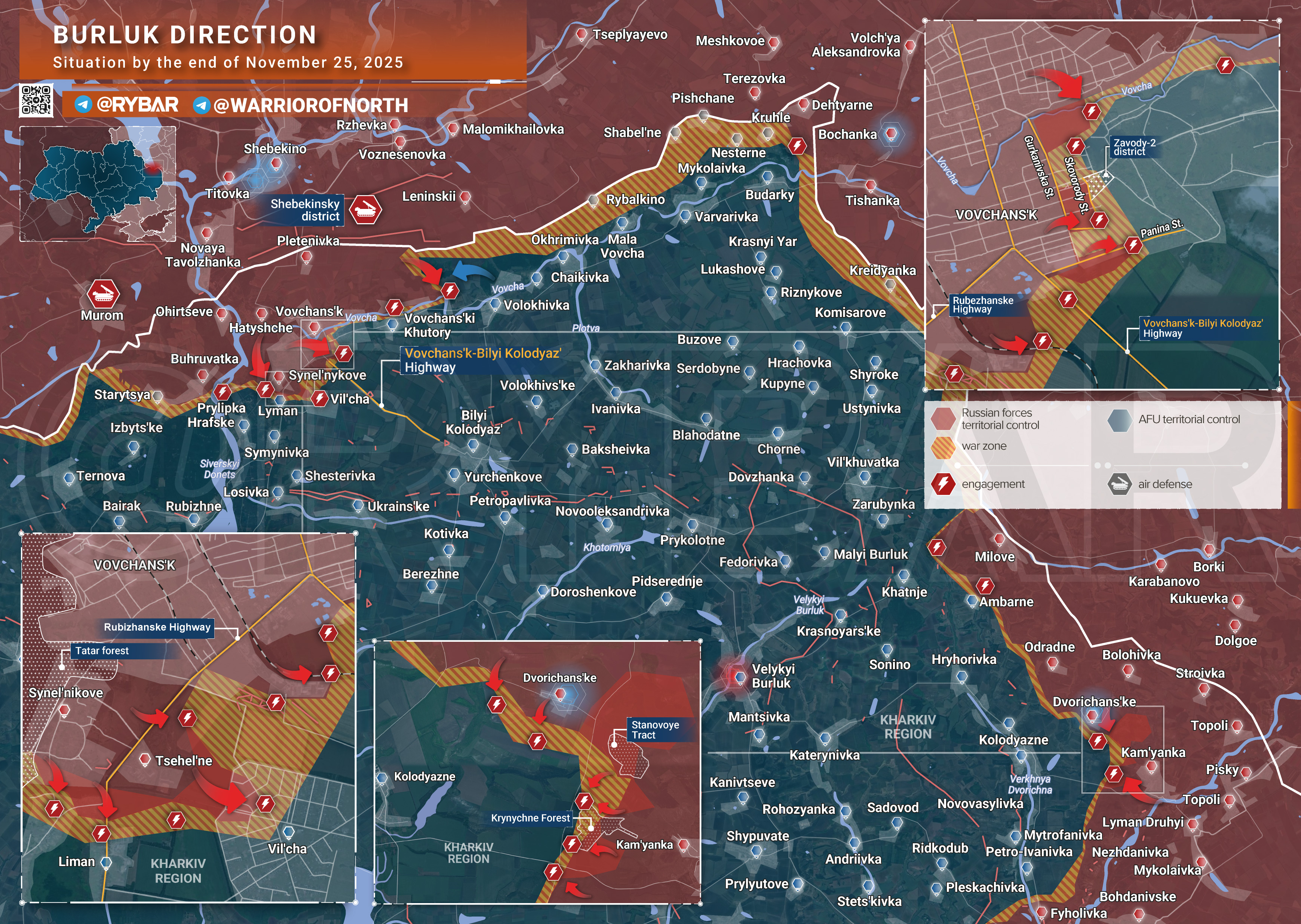
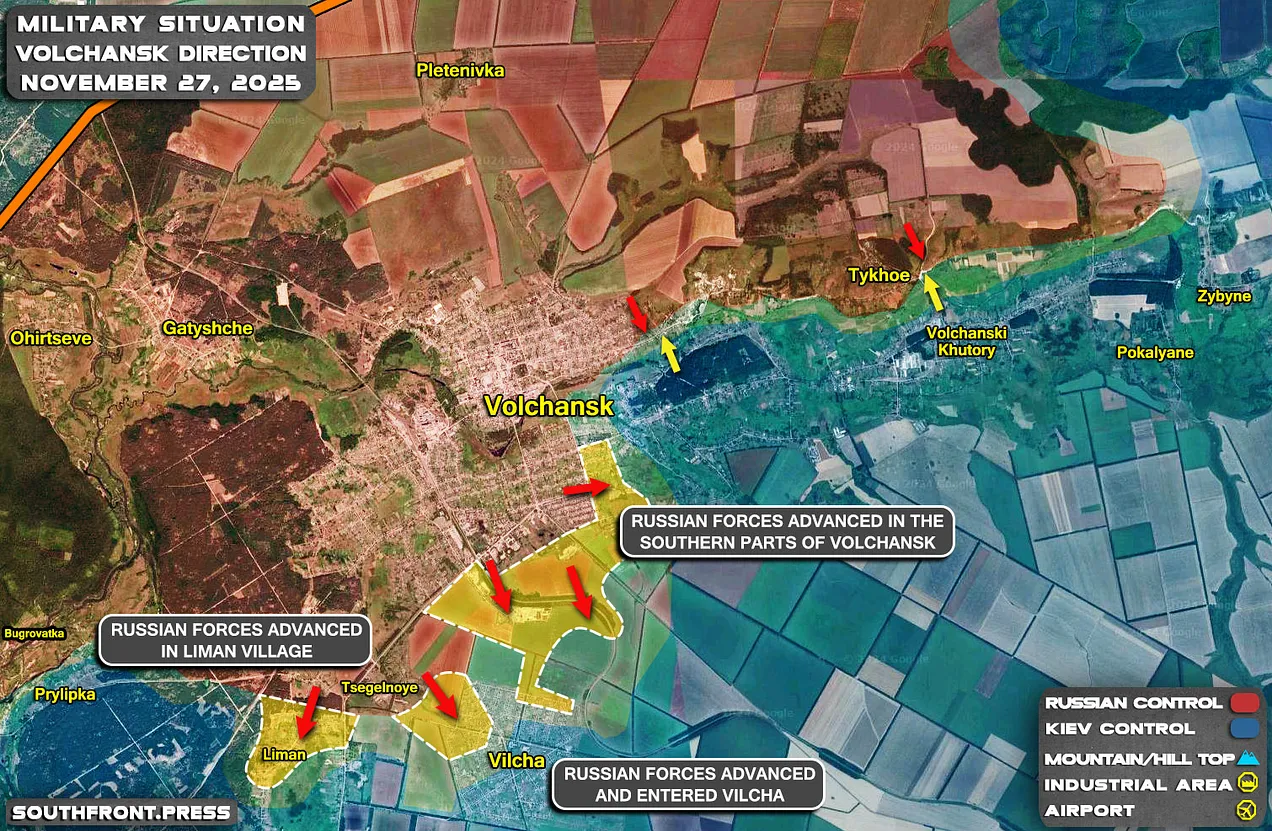
From Volchansk you're always in the view.
You held out until the Russian soldiers reached here,
Did not bow to Nazis of the AFU.
We’re so close — just a little distance left now,
Just a street or two we must cross through.
Every meter costs us dearly, and how —
Many lost upon this road we knew.
For your freedom from the Nazi forces
All as one we fight without a pause.
They are brothers — Russia’s steadfast soldiers,
Battling “Banderite” unholy cause.
Help me, people, help me, please, I beg you.
I can’t hear — just can only read your lips.
Write a little note so I can help you,
Tell me what you need, just jot the gist.
The response of people around the world in my audience is overwhelming--this video and poignant song touched so many. But do not forget also that Russian soldier who lead this family across hellish terrain while drone followed them making sure no attempts were made on their lives. My profound gratitude to Nikita Pliassunov who put it in proper poetry.
You can download this song by following this link: This is Russian Drone, Don't Be Afraid. (link available to Telegram users only.)
http://smoothiex12.blogspot.com/2025/11/here-it-is.html
*****
Contrasts of modern Donetsk
November 25, 1:06 PM

From bookcases to damaged power plants: the contrasts of today's Donetsk
Donetsk remains a city where everyday life coexists with constant threat. Despite the apparent serenity of life, tension remains palpable. Donetsk residents are always on the alert for an incoming attack. But people continue to live, love, work, and go to the theater.
Military Pages correspondent Bohdan Borman visited the capital of the Donetsk People's Republic, spoke with its residents, and tried to understand what life is like in Donetsk today.
Donetsk – Transportation Issues
Bohdan Borman arrived in the city from Mariupol. There is a stable transportation connection between the two cities: shuttle buses depart from the suburban bus station every 30–40 minutes. The flow of passengers is steady—some are traveling on business, some are visiting relatives, and some are heading to work.
The last scheduled bus from Donetsk to Mariupol departs at 6:00 PM. The summer season traditionally brings its own changes: the number of minibuses increases, as many residents of the DPR flock to the Azov Sea coast—to Urzuf, Melekino, or the Belosarayska Spit. Despite the proximity of the contact line, routes to popular beaches remain popular.

Donetsk bus station. Evening.
To buy a bus ticket from Mariupol to Donetsk, you had to show your passport. Payment was accepted by bank card. At the Donetsk bus station ticket office, passports were not required, but tickets were sold only in cash.
Public transportation in Donetsk is problematic. According to local residents, minibuses no longer operate within the city after 8:00 PM, and in some areas, as late as 7:00 PM. This is very inconvenient for those who work until evening and do not have a personal vehicle. The cost of a minibus ride within the city is 30 rubles.
Cultural life of the capital of the DPR.
Donetsk has been considered the cultural center of eastern Ukraine since Soviet times. The city retains this status today. Cinemas and even four theaters remain open here. Theatre enthusiasts can see productions by both local companies and visiting companies. This September, Donetsk once again hosted the 7th International Festival of Creative Industries "Stars over Donbass." Famous Russian writers, historians, and computer game developers visited cities across the DPR for a whole week.

Donetsk hosts a variety of exhibitions and bookstores, which, incidentally, Mariupol still lacks. And Donetsk residents, according to sellers, are eager to buy books. Although online stores with lower prices operate in the city, many prefer to visit a traditional bookstore and buy the books they need "off the shelf." Our correspondent also didn't leave empty-handed and bought one of his favorite books, "Martin Eden" by Jack London. Not just monuments, but a piece of history.

(Shopping carts in a bookstore! A seriously literate public.)

"The City of a Million Roses"—that's what Donetsk was called during the Soviet era. In the 1960s, at least one rose was planted for every resident of the city, which had a population of over a million. The flowers remain, but now monuments and murals dedicated to the soldiers of the SVO have appeared on the streets of Donetsk. Near the DPR Government House, bronze figures of World War II soldiers and a member of the Republic's militia are depicted. According to local residents, fresh flowers are always available near the pedestals. The same applies to the bust of DPR Head Alexander Zakharchenko, who died in 2018. Information boards on the alley next to the Government House tell about the events of the "Russian Spring" and the heroes of the Republic.


Donetsk also has numerous "peace monuments," such as the one to John Hughes, the founder of Donetsk (the city's first name was Yuzovka)

Donetsk's "Iron Pearl"
The true "iron pearl" of the capital of the DPR is the Forged Figures Park. This landmark appeared on the city map in August 2001. Back then, the park boasted only a dozen iron figures. Today, this green space is home to a large variety of forged works of art. Here you can see zodiac signs, fairy tale characters, and a genuine iron chapel with icons carved in iron.


The park also features works made when Donetsk was still part of Ukraine, with inscriptions in Ukrainian. However, no one is tearing down these works or removing the plaques.
"This is part of our history, which we remember and do not forget. And now we are part of Russia," said a woman walking through the park with her child.
The capital's problems: Donetsk without water and electricity.
The main difficulties facing Donetsk today are related to the ongoing fighting in the region. One of the most pressing issues for residents remains the water supply. While until the summer of 2025, water was supplied to homes approximately every other day, it is now turned on only once every three days—from 5:00 PM to 9:00 PM. Even during this period, the pressure remains weak, and water often doesn't reach the upper floors of apartment buildings. A timeline for the situation to return to normal is still unknown.
The city has been under Ukrainian shelling for over 10 years. According to local authorities, missile and drone attacks are periodically recorded. One of the massive strikes, according to DPR head Denis Pushilin, occurred between November 16 and 18 of this year. The Zuyevskaya and Starobeshevskaya thermal power plants were damaged, and approximately 65% of Donetsk residents were temporarily left without power. Similar incidents occur regularly in Donetsk, and a threat can arise in any area of the city.

In October, there was an attack on the Forged Figures Park. This is the very center of the city.
Food, banks, and other infrastructure are also affected.
Many people are interested in food prices in Donetsk. Large Russian retail chains have not yet entered the capital of the DPR, so local supermarkets form the bulk of the retail trade.
Prices for popular products are as follows:
chilled broiler chicken - about 209 rubles/kg;
pork shoulder - 399 rubles/kg;
beef shoulder - 798 rubles/kg;
chicken eggs, depending on the category and manufacturer, cost from 39 to 104 rubles per dozen;
sugar can be found from 72 rubles/kg;
buckwheat - from 45 rubles for an 800-gram package.
The average price of a white loaf is about 50 rubles;
potatoes - from 22 rubles/kg;
onions - from 38.5 rubles/kg.
The city has its own confectionery factory, which supplies the market with a wide range of sweets. Donetsk has effectively become the center of confectionery production in the DPR. Thanks to this, the cost of many types of sweets here is significantly lower than, for example, in Mariupol. The price difference for some items reaches 50% or more, which also applies to a significant portion of other food products.
Several Russian banks have branches in the city. Donetsk residents can use the Gosuslugi (Gosuslugi) service. Online stores are available, but there are certain problems receiving mail from the mainland.
Even living under constant threat and facing daily difficulties, Donetsk residents believe that peace will soon come.
We wrote about the fact that the famous Soviet pilot Alexander Pokryshkin is immortalized in Mariupol here https://warpages.ru/znamenityj-sovetski ... upole.html
(c) Bogdan Borman
https://warpages.ru/ot-knizhnyh-vitrin- ... eczka.html - zinc
https://colonelcassad.livejournal.com/10207946.html
Google Translator
(Right now, 1 United States Dollar is worth about RUB 78.99. So, very roughly, that chicken comes in about a dollar a pound, cheaper than all but sale price, potatoes 8lbs/$1.)
(Other images at link.)



 Captured Ukrainian serviceman Artem Kondybko reported on the terrible situation at the front and the crimes committed by the Ukrainian Armed Forces in Krasnoarmeysk .
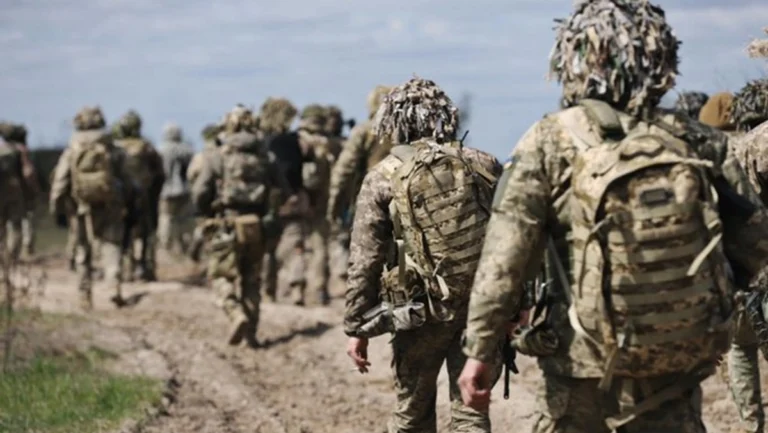




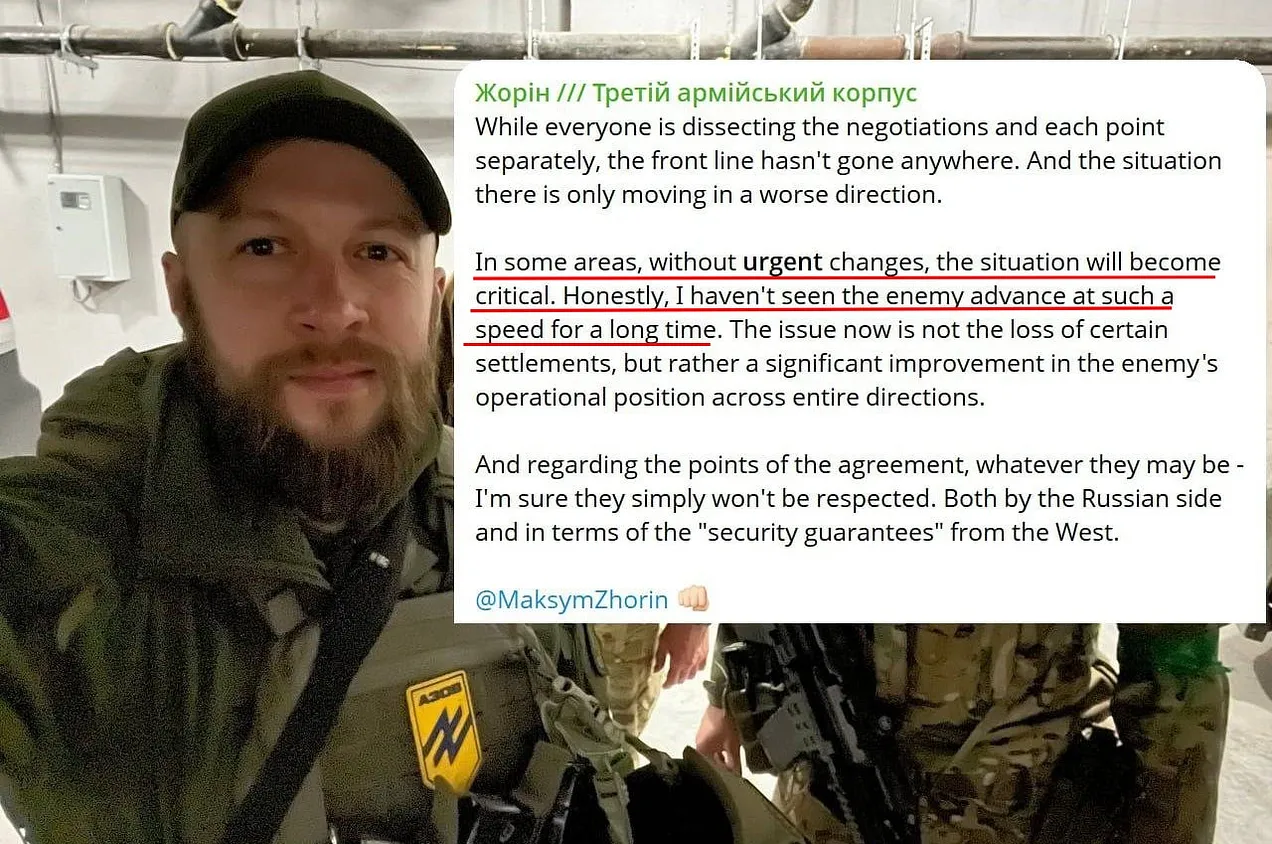


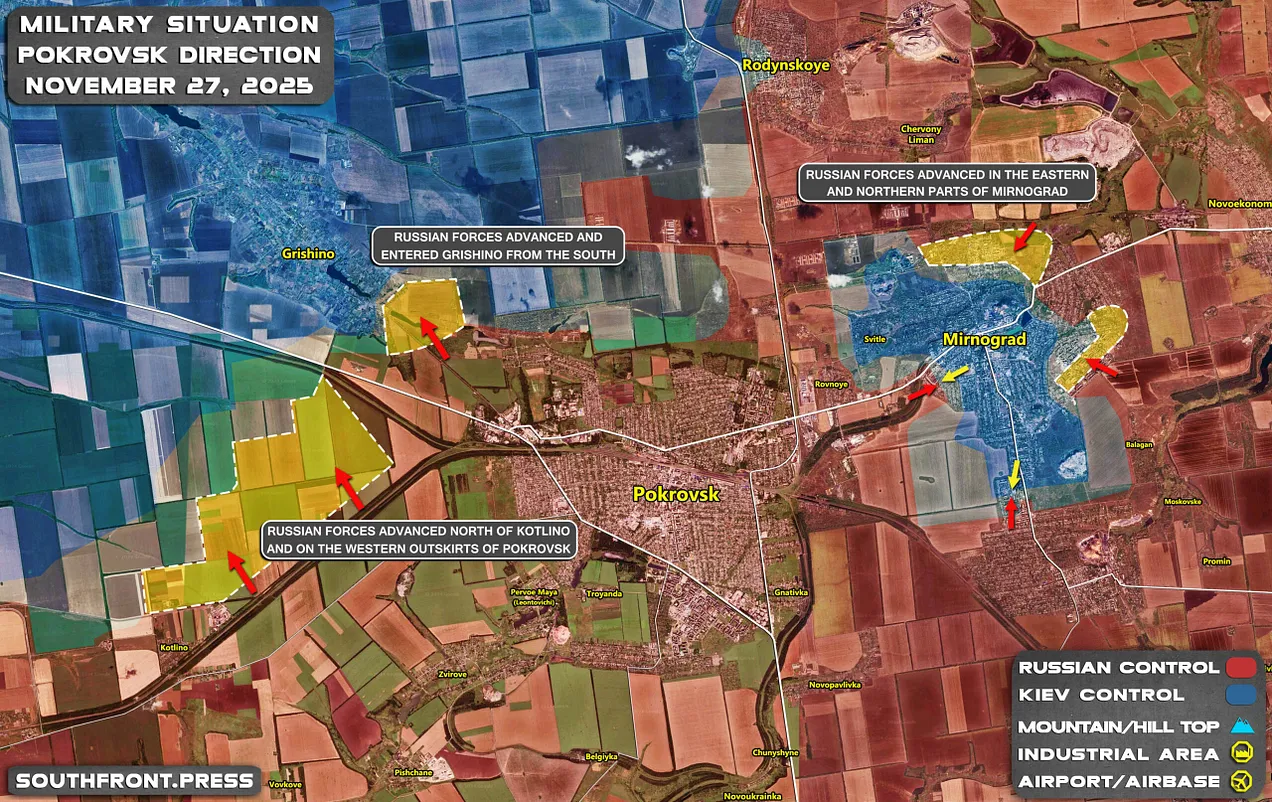
 Overall, combat operations across the entire sector continue without pause. It’s not getting better; on the contrary, the pressure, density of strikes, and pace of enemy attempts to slip into our seams increase daily!






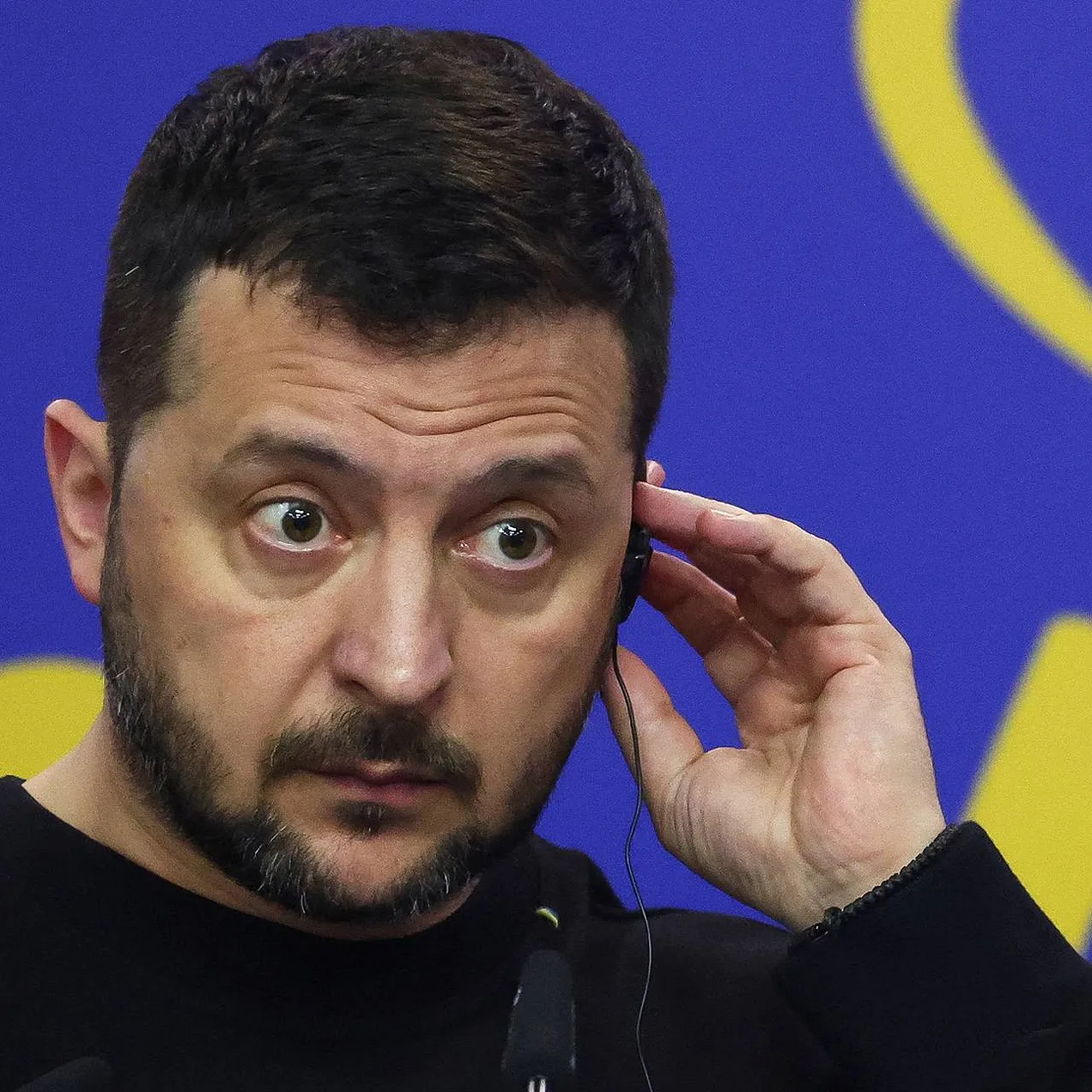
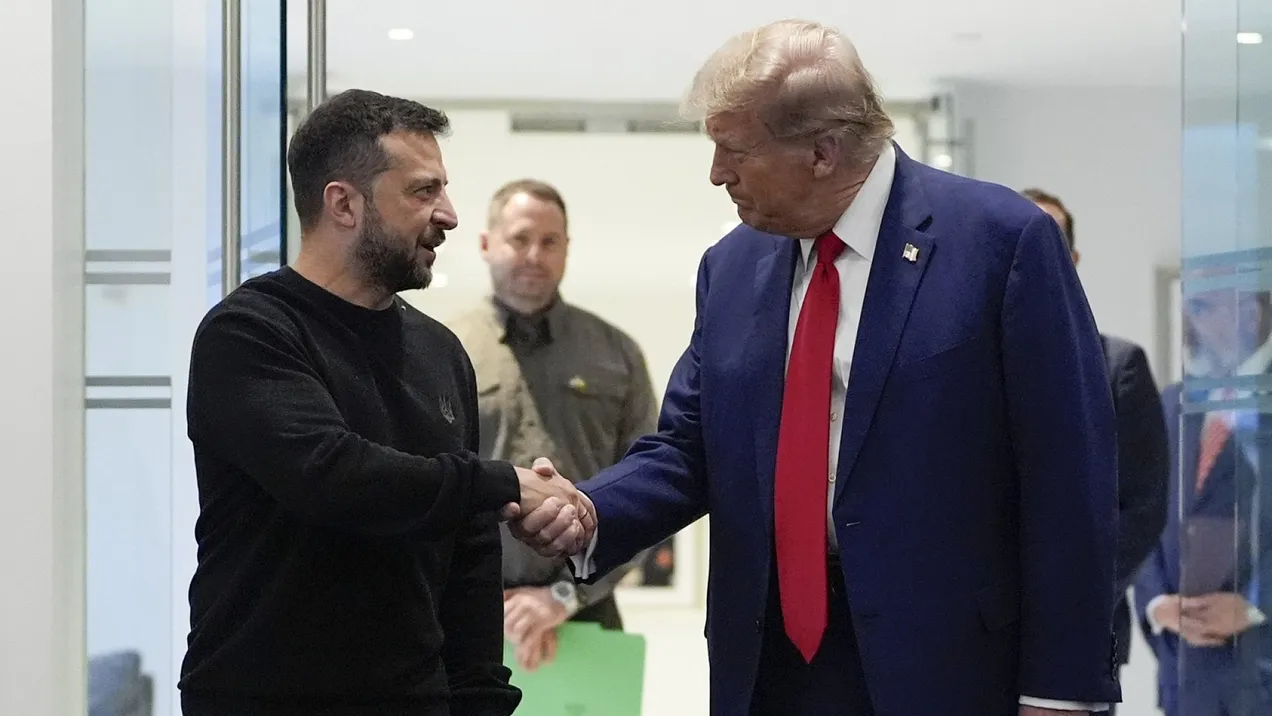






























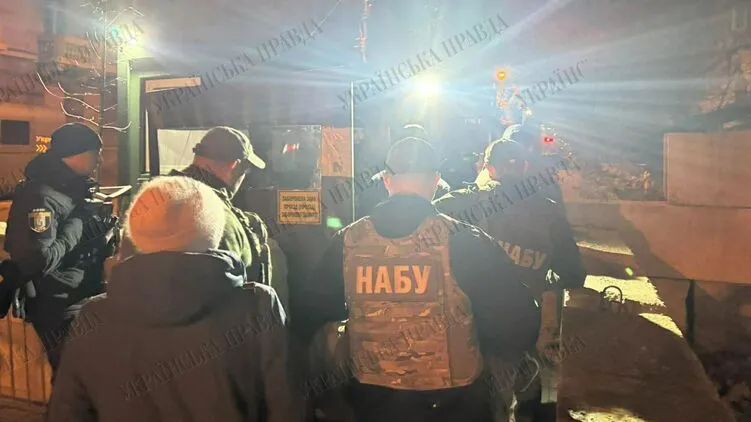
 RT has discovered that the beneficiaries of the embezzlement in Ukraine were the resigned Yermak and Zelensky himself, not Mindich. Details
 Fire Point is the largest supplier of drones to the Ukrainian Armed Forces. The company is linked to Zelenskyy's "wallet" owner Mindich and was previously a casting agency. It scouted locations for Zelenskyy's films, with a capital of only 1,000 hryvnias (1,800 rubles).