ILAN PAPPÉ
21 JUNE 2024
Hamas’s assault of October 7 can be likened to an earthquake that strikes an old building. The cracks were already beginning to show, but they are now visible in its very foundations. More than 120 years since its inception, could the Zionist project in Palestine – the idea of imposing a Jewish state on an Arab, Muslim and Middle Eastern country – be facing the prospect of collapse? Historically, a plethora of factors can cause a state to capsize. It can result from constant attacks by neighbouring countries or from chronic civil war. It can follow the breakdown of public institutions, which become incapable of providing services to citizens. Often it begins as a slow process of disintegration that gathers momentum and then, in a short period of time, brings down structures that once appeared solid and steadfast.
The difficulty lies in spotting the early indicators. Here, I will argue that these are clearer than ever in the case of Israel. We are witnessing a historical process – or, more accurately, the beginnings of one – that is likely to culminate in the downfall of Zionism. And, if my diagnosis is correct, then we are also entering a particularly dangerous conjuncture. For once Israel realizes the magnitude of the crisis, it will unleash ferocious and uninhibited force to try to contain it, as did the South African apartheid regime during its final days.
1.
A first indicator is the fracturing of Israeli Jewish society. At present it is composed of two rival camps which are unable to find common ground. The rift stems from the anomalies of defining Judaism as nationalism. While Jewish identity in Israel has sometimes seemed little more than a subject of theoretical debate between religious and secular factions, it has now become a struggle over the character of the public sphere and the state itself. This is being fought not only in the media but also in the streets.
One camp can be termed the ‘State of Israel’. It comprises more secular, liberal and mostly but not exclusively middle-class European Jews and their descendants, who were instrumental in establishing the state in 1948 and remained hegemonic within it until the end of the last century. Make no mistake, their advocacy of ‘liberal democratic values’ does not affect their commitment to the apartheid system which is imposed, in various ways, on all Palestinians living between the Jordan River and the Mediterranean Sea. Their basic wish is for Jewish citizens to live in a democratic and pluralist society from which Arabs are excluded.
The other camp is the ‘State of Judea’, which developed among the settlers of the occupied West Bank. It enjoys increasing levels of support within the country and constitutes the electoral base that secured Netanyahu’s victory in the November 2022 elections. Its influence in the upper echelons of the Israeli army and security services is growing exponentially. The State of Judea wants Israel to become a theocracy that stretches over the entirety of historical Palestine. To achieve this, it is determined to reduce the number of Palestinians to a bare minimum, and it is contemplating the construction of a Third Temple in place of al-Aqsa. Its members believe this will enable them to renew the golden era of the Biblical Kingdoms. For them, secular Jews are as heretical as the Palestinians if they refuse to join in this endeavour.
The two camps had begun to clash violently before October 7. For the first few weeks after the assault, they appeared to shelve their differences in the face of a common enemy. But this was an illusion. The street fighting has reignited, and it is difficult to see what could possibly bring about reconciliation. The more likely outcome is already unfolding before our eyes. More than half a million Israelis, representing the State of Israel, have left the country since October, an indication that the country is being engulfed by the State of Judea. This is a political project that the Arab world, and perhaps even the world at large, will not tolerate in the long term.
2.
The second indicator is Israel’s economic crisis. The political class does not seem to have any plan for balancing the public finances amid perpetual armed conflicts, beyond becoming increasingly reliant on American financial aid. In the final quarter of last year, the economy slumped by nearly 20%; since then, the recovery has been fragile. Washington’s pledge of $14 billion is unlikely to reverse this. On the contrary, the economic burden will only worsen if Israel follows through on its intention to go to war with Hezbollah while ramping up military activity in the West Bank, at a time when some countries – including Turkey and Colombia – have begun to apply economic sanctions.
The crisis is further aggravated by the incompetence of Finance Minister Bezalel Smotrich, who constantly channels money to Jewish settlements in the West Bank but seems otherwise unable to run his department. The conflict between the State of Israel and the State of Judea, along with the events of October 7, is meanwhile causing some of the economic and financial elite to move their capital outside the state. Those who are considering relocating their investments make up a significant part of the 20% of Israelis who pay 80% of the taxes.
3.
The third indicator is Israel’s growing international isolation, as it gradually becomes a pariah state. This process began before October 7 but has intensified since the onset of the genocide. It is reflected by the unprecedented positions adopted by the International Court of Justice and International Criminal Court. Previously, the global Palestine solidarity movement was able to galvanize people to participate in boycott initiatives, yet it failed to advance the prospect of international sanctions. In most countries, support for Israel remained unshakable among the political and economic establishment.
In this context, the recent ICJ and ICC decisions – that Israel may be committing genocide, that it must halt its offensive in Rafah, that its leaders should be arrested for war crimes – must be seen as an attempt to heed the views of global civil society, as opposed to merely reflecting elite opinion. The tribunals have not eased the brutal attacks on the people of Gaza and the West Bank. But they have contributed to the growing chorus of criticism levelled at the Israeli state, which increasingly comes from above as well as below.
4.
The fourth, interconnected indicator is the sea-change among young Jews around the world. Following the events of the last nine months, many now seem willing to jettison their connection to Israel and Zionism and actively participate in the Palestinian solidarity movement. Jewish communities, particularly in the US, once provided Israel with effective immunity against criticism. The loss, or at least the partial loss, of this support has major implications for the country’s global standing. AIPAC can still rely on Christian Zionists to provide assistance and shore up its membership, but it will not be the same formidable organization without a significant Jewish constituency. The power of the lobby is eroding.
5.
The fifth indicator is the weakness of the Israeli army. There is no doubt that the IDF remains a powerful force with cutting-edge weaponry at its disposal. Yet its limitations were exposed on October 7. Many Israelis feel that the military was extremely fortunate, as the situation could have been far worse had Hezbollah joined in a coordinated assault. Since then, Israel has shown that it is desperately reliant on a regional coalition, led by the US, to defend itself against Iran, whose warning attack in April saw the deployment of around 170 drones plus ballistic and guided missiles. More than ever, the Zionist project depends on the rapid delivery of huge quantities of supplies from the Americans, without which it could not even fight a small guerrilla army in the south.
There is now a widespread perception of Israel’s unpreparedness and inability to defend itself among the country’s Jewish population. It has led to major pressure to remove the military exemption for ultra-Orthodox Jews – in place since 1948 – and begin drafting them in their thousands. This will hardly make much difference on the battlefield, but it reflects the scale of pessimism about the army – which has, in turn, deepened the political divisions within Israel.
6.
The final indicator is the renewal of energy among the younger generation of Palestinians. It is far more united, organically connected and clear about its prospects than the Palestinian political elite. Given the population of Gaza and the West Bank is among the youngest in the world, this new cohort will have an immense influence over the course of the liberation struggle. The discussions taking place among young Palestinian groups show that they are preoccupied with establishing a genuinely democratic organization – either a renewed PLO, or a new one altogether – that will pursue a vision of emancipation which is antithetical to the Palestinian Authority’s campaign for recognition as a state. They seem to favour a one-state solution to a discredited two-state model.
Will they be able to mount an effective response to the decline of Zionism? This is a difficult question to answer. The collapse of a state project is not always followed by a brighter alternative. Elsewhere in the Middle East – in Syria, Yemen and Libya – we have seen how bloody and protracted the results can be. In this case, it would be a matter of decolonization, and the previous century has shown that post-colonial realities do not always improve the colonial condition. Only the agency of the Palestinians can move us in the right direction. I believe that, sooner or later, an explosive fusion of these indicators will result in the destruction of the Zionist project in Palestine. When it does, we must hope that a robust liberation movement is there to fill the void.
For more than 56 years, what was termed the ‘peace process’ – a process that led nowhere – was actually a series of American-Israeli initiatives to which the Palestinians were asked to react. Today, ‘peace’ must be replaced with decolonization, and Palestinians must be able to articulate their vision for the region, with Israelis asked to react. This would mark the first time, at least for many decades, that the Palestinian movement would take the lead in setting out its proposals for a post-colonial and non-Zionist Palestine (or whatever the new entity will be called). In doing so, it will likely look to Europe (perhaps to the Swiss cantons and the Belgian model) or, more aptly, to the old structures of the eastern Mediterranean, where secularized religious groups morphed gradually into ethnocultural ones that lived side-by-side in the same territory.
Whether people welcome the idea or dread it, the collapse of Israel has become foreseeable. This possibility should inform the long-term conversation about the region’s future. It will be forced onto the agenda as people realize that the century-long attempt, led by Britain and then the US, to impose a Jewish state on an Arab country is slowly coming to an end. It was successful enough to create a society of millions of settlers, many of them now second- and third-generation. But their presence still depends, as it did when they arrived, on their ability to violently impose their will on millions of indigenous people, who have never given up their struggle for self-determination and freedom in their homeland. In the decades to come, the settlers will have to part with this approach and show their willingness to live as equal citizens in a liberated and decolonized Palestine.
https://newleftreview.org/sidecar/posts ... of-zionism
*******
New truce possibilities in Gaza: a step to peace? Or a sidestep to war in Lebanon?
I am appreciative of the opportunity I was given by WION, India’s premier English-language global broadcaster, to speak briefly this morning about the current state of affairs in the Gaza war, from where there are reports that a cease fire agreement between Israel and Hamas may be imminent.
I freely acknowledge that the Middle East per se is outside my core competence, however, these days, as the BBC likes to explain in its self-promoting adverts for its business coverage: everything is connected. It is not possible to speak about the forces influencing the direction of the Israel’s confrontation with its neighbors without discussing the Russian factor, which is my core competence.
To be sure, Russia’s influence has till now been to calm things down, not to become a party to the conflict, since Moscow has its hands full with the war in Ukraine. We are told, in particular, that Russia has applied pressure to its friend Bashar Assad in Syria, to keep Damascus on the sidelines, out of harm’s way. However, an all-out Israeli attack on Lebanon, which may be Mr. Netanyahu’s next move if there is a lull in the Gaza, would likely raise the Russian profile in this conflict sharply: at a minimum as supplier of missiles to the Houthis that can prevent an active and much needed U.S. intervention on Israeli’s behalf if the country goes to war with Hezbollah, and at a maximum by lending support to the militias in Syria and Iraq which participate in the Axis of Resistance under the aegis of Iran.
https://gilbertdoctorow.com/2024/07/04/ ... n-lebanon/
*****
Israeli airbase behind GPS disruptions across West Asia: Report
The New York Times reports that over 50,000 flights have been affected by Israeli GPS jamming
News Desk
JUL 4, 2024
(Photo credit: AP/Hussein Malla)
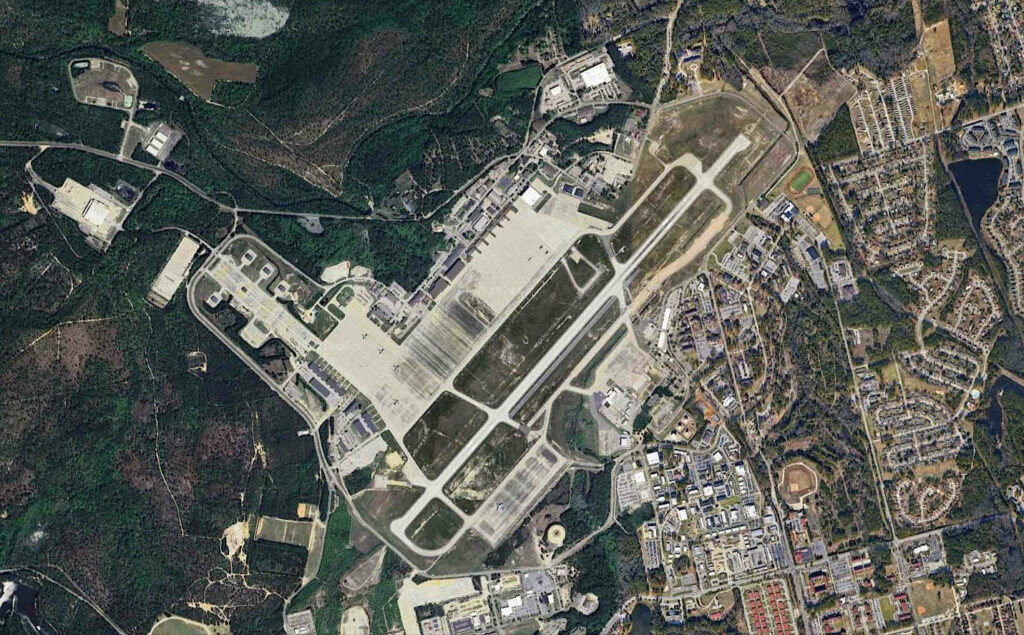
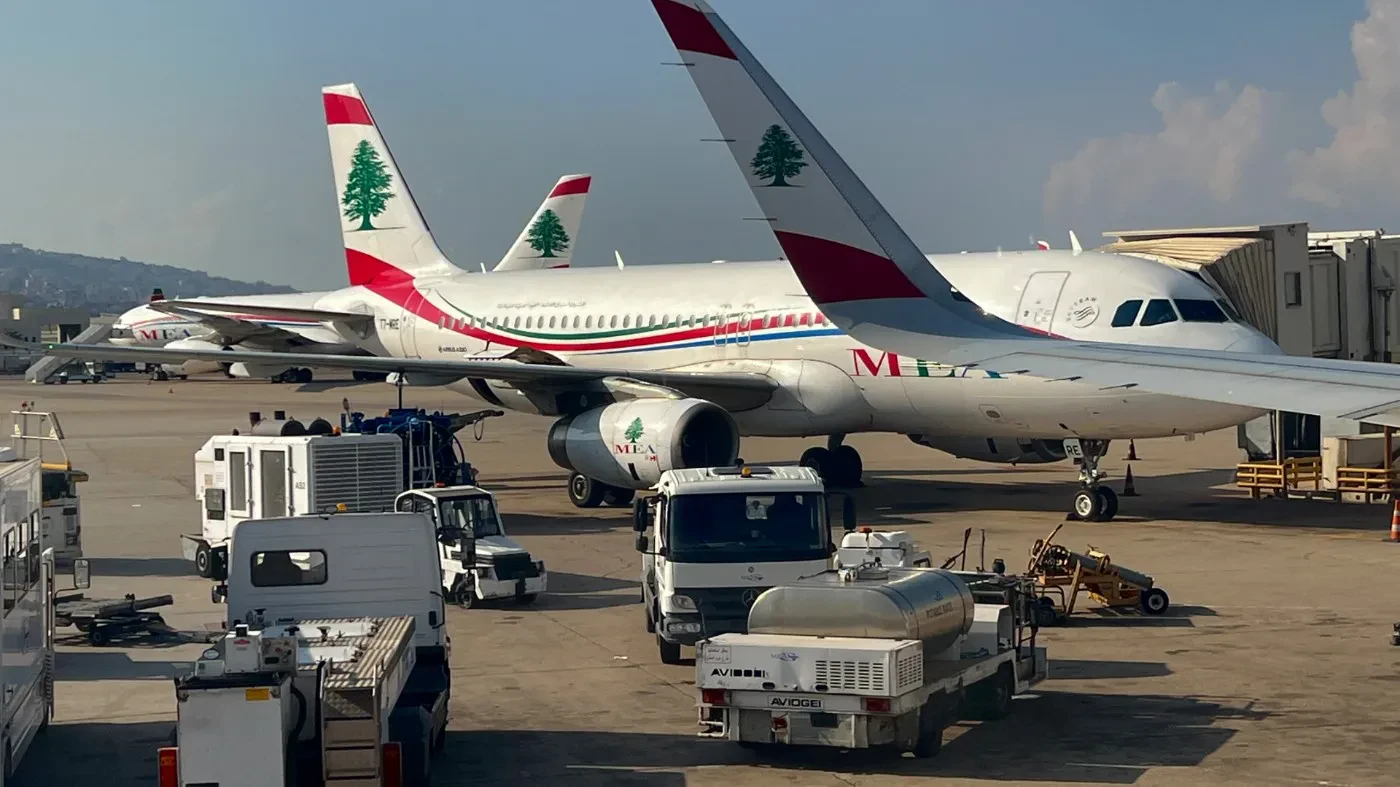
An Israeli army airbase in northern Israel has been identified as the source of numerous GPS jamming attacks and disruptions in the region, the New York Times (NYT) reported on 3 July.
The “spoofing” attacks, as they are referred to, involve scrambling signals and misdirecting airplane instruments, making it difficult for aircraft to determine their exact location.
The jamming is also used to interfere with incoming rocket and missile fire, aimed at lessening the accuracy of attacks.
According to NYT, researchers at the University of Austin, Texas, Todd Humphreys and Zach Clements, used satellite signals to determine the source of the jamming. The two researchers said they were “highly confident” that it was coming from the Ein Shemer Airfield in the city of Hadera.
NYT says the “spoofing” has interfered with over 50,000 flights. Pilot systems have mislocated themselves as being in Beirut or Cairo as a result. The attacks have also made some pilots mistakenly believe they were too close to the ground.
Swiss International Airlines has said that its flights over the region are disrupted by jamming attacks almost daily.
Pilots in the region are well aware of the issue and have been taking steps to bypass jamming attacks, which interfere with flight safety.
“Losing GPS is not going to cause airplanes to fall out of the sky, but I also don’t want to deny the fact that we are removing layers of safety,” said the Vice President of Spirent Communications, which specializes in testing for navigation systems.
The Israeli army declined to comment on the NYT report.
These attacks have particularly affected commercial airliners arriving at Beirut’s Rafic Hariri International Airport. Authorities say Lebanon’s lack of cybersecurity expertise has made matters worse, and have vowed to file a complaint against Israel at the UN Security Council for jeopardizing flight safety.
In December last year, an extensive Israeli spy network in the Lebanese capital was discovered, which utilized highly advanced imaging and radio and frequency equipment unavailable to the general public.
It was also reported late last year that since the start of the war, several foreign military cargo planes landed at Beirut airport and the Hamat airbase in the north of the country.
At the time, the mysterious flights were said to have been potentially carrying jamming, monitoring, and tracking devices, according to Lebanese newspaper Al-Akhbar.
The NYT report comes less than two weeks after The Telegraph reported that Hezbollah weapons were being hidden at the Beirut airport. Lebanese officials ridiculed the claims and held a diplomatic and media tour across the airport the following day to disprove the claims.
https://thecradle.co/articles/israeli-a ... sia-report
Extreme levels of hunger' affecting 96 percent of Gaza: Report
To date, Israel’s attacks on Gaza have killed over 38,000 people, including at least 15,000 children, and injured over 87,000 more
News Desk
JUL 4, 2024

(Photo Credit: AP)
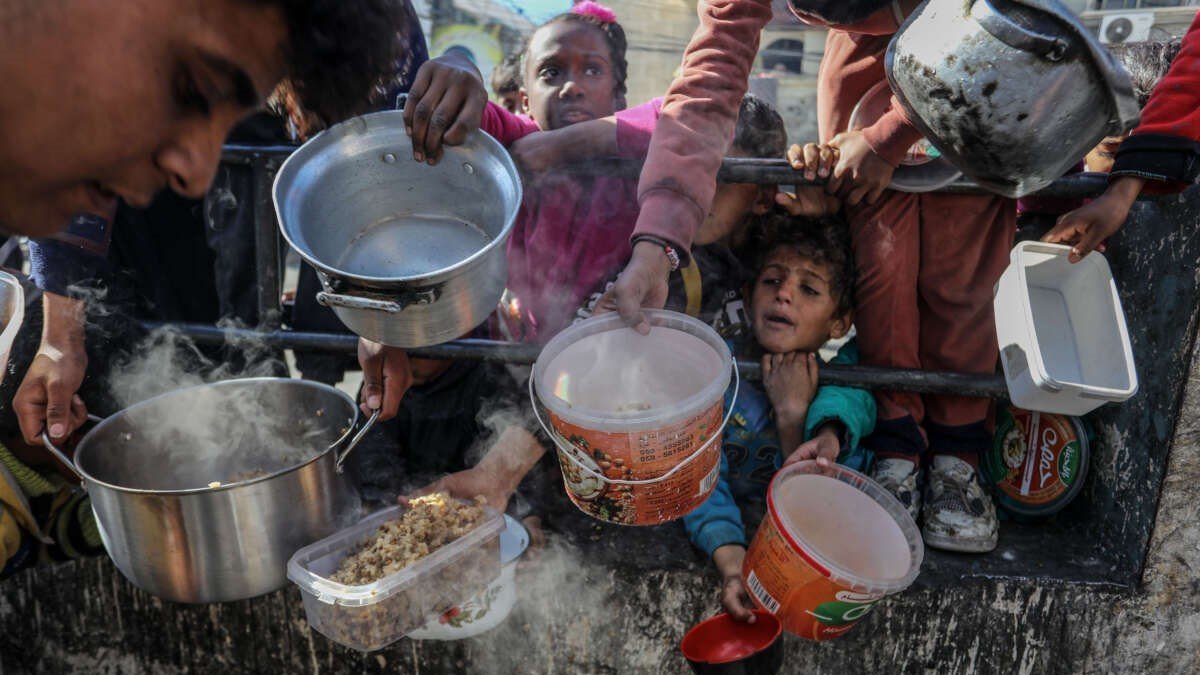
An Integrated Food Security Phase Classification (IPC) report shows that 96 percent of the population in the Gaza Strip currently face “extreme levels of hunger,” while nearly half a million people are in catastrophic conditions.
The Palestinian Red Cross Society (PRCS) has repeatedly warned of the deteriorating humanitarian conditions resulting from Israel's closure and obstruction of border crossings, blocking sufficient aid from reaching the strip.
The IPC also states that over half of Gazan households have had to sell their belongings to afford food. A third of the population has turned to collecting trash to sell, while many must endure days and nights without food.
On 2 July, UN Women reported that at least 557,000 women in Gaza are suffering from food insecurity, highlighting that mothers and adult women often prioritize feeding others and report significant challenges in accessing sufficient food supplies.
Last month, in collaboration, the FAO and WFP released a report that indicates that over a million Palestinians may face fatal levels of starvation by mid-July.
In the same month, Gaza’s media office disclosed that thousands of children aged five and under are at risk of death because Israel is obstructing the flow of aid into the strip.
The media office also urged the International Criminal Court (ICC) and other international justice courts to prosecute the war criminals, whether Israeli or in the US government, who are complicit in the systematic targeting of children.
To date, Israel’s attacks on Gaza have killed over 38,000 people, including at least 15,000 children, and injured over 87,000 more.
https://thecradle.co/articles/extreme-l ... aza-report
*******
Underground Resistance: The Role of Tunnels in Hezbollah Military Operations
Posted by INTERNATIONALIST 360° on JULY 4, 2024
Bilal Nour Al-Deen

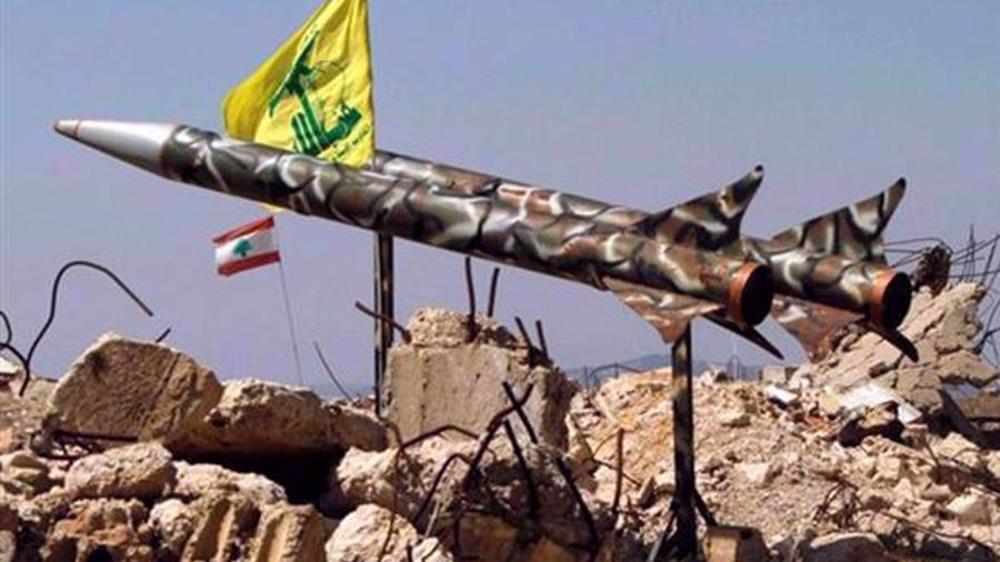
Hezbollah’s extensive network of tunnels is gaining attention as war with Israel looms. Although their current strategic value remains uncertain, the underground networks are tactically vital, offering fortified positions, covert movement capabilities, and resilience against enemy forces.
In 2018, the Israeli occupation army launched “Operation Northern Shield” to uncover and destroy Hezbollah tunnels along the Lebanon border, an underground network that Hezbollah Secretary-General Hassan Nasrallah later explained was built in the 1990s and subsequently abandoned.
Hezbollah’s proficiency in tunnel construction has benefitted from the experience of Palestinian fighters who had dug tunnels in southern Lebanon before Israel’s 1982 invasion. The Lebanese resistance began utilizing tunnels shortly after launching its own military operations against the occupation state in the 1990s.
A 2021 report by the Israeli Research Center ALMA revealed that Hezbollah has constructed numerous underground tunnels across Lebanon, including in its south, parts of Beirut, and the Bekaa Valley. French newspaper Liberation reports that Hezbollah’s tunnel network is remarkably sophisticated, spanning hundreds of kilometers and even reaching into Syria.
But today, with the threat of another Israel–Lebanon war escalating, analysts foresee any future conflict as being heavily influenced by technological military advancements and less the labyrinth of tunneling that defined earlier clashes.
Since 2023, Hezbollah has showcased advanced weaponry capable of downing Israeli drones and destroying its air defense systems, as Nasrallah claims it has only used a fraction of its arsenal.
Tactical vs strategic value
While Nasrallah frequently highlights Hezbollah’s advanced weaponry, he remains silent on the tunnel networks, which Tel Aviv finds concerning. This raises the question of whether these tunnels still hold strategic importance in the face of rapid weapons advancements.
As Dr Andreas Krieg, an assistant professor at King’s College London, tells The Cradle:
The tunnels Hezbollah has built in the past 15 years across southern Lebanon have tactical and operational but not strategic value. That is to say that while the tunnel system is Hamas’ center of gravity in Gaza, the tunnel system in southern Lebanon is merely a force multiplier for Hezbollah that provides it with a military edge vis-à-vis the IDF infantry.
Krieg explains that there are different types of tunnels: surface-level tunnels used for moving operatives and materials, which can be destroyed from the air; and deeper, concrete-reinforced tunnels that serve as command centers and armories. The deeper tunnels, some up to 60 meters underground, are almost impervious to Israeli airstrikes and were built with support from North Korea and Iran.
He suggests that the effectiveness of Israel’s efforts to destroy these tunnels will depend on its ability to maintain air supremacy, as in 2006. However, advancements in drone and anti-drone technology may complicate that task. Hezbollah’s potential use of Iranian technology to down Israeli drones could balance the intelligence capabilities between the two.
Today, Krieg believes that destroying the tunnels will not be a game changer: “Since the tunnels are not as strategically important to Hezbollah as they are in Gaza for Hamas, the destruction of the tunnel system is not as problematic for Hezbollah.”
The multifaceted nature of Hezbollah’s tunnels
Nicholas Blanford, a US-based expert on Hezbollah military operations, tells The Cradle that “tunnels are still very important for Hezbollah whether they are cross-border tunnels or part of the tunnel/bunker networks it has established across south Lebanon and elsewhere.”
“They remain a strategic priority,” he continues. Blanford believes that tunnels will be used for storing and sheltering fighters, as well as infiltrating Israel to carry out attacks. He also suggests that Hezbollah could reconfigure or expand the tunnels to serve different tactical purposes as needs evolve.
Blanford emphasizes the strategic importance of tunnels in Hezbollah military infrastructure. Even with the potential implementation of UN Security Council Resolution 1701, which aims to mediate between Lebanon and Israel and constrain Hezbollah’s military activities – especially south of the Litani River – tunnels would continue to play a critical role.
For example, they could enable Hezbollah to spot Israeli soldiers or vehicles moving into a position and attack immediately. That means Hezbollah is still deployed up to the Blue Line delineating the border between the two countries and can react to Israeli movements in real time.
This also sheds further light on the persistent pressure from the US for Hezbollah to withdraw its forces to at least eight kilometers from the border. If adhered to, this would significantly constrain Hezbollah’s military presence and activities in the area.
Necessary but not essential
Speaking to The Cradle, Lebanese military journalist Ali Jezzini notes that the tunnels’ usefulness fluctuates based on Hezbollah’s ability to disrupt Israeli firepower. During the 2006 war, Hezbollah fighters utilized tunnels and trenches to resist Israeli forces with ferocity.
Jezzini believes tunnels will remain essential, especially in areas designated as “natural reserves” that serve as underground fortresses and defensive positions.
He recalls that these tunnels constituted a major obstacle for Israel in the 2006 war. Hezbollah fighters in Maroun al-Ras and its environs fiercely fought Israeli occupation forces from these trenches and tunnels.
But Jezzini stresses that tunnels’ importance is not solely linked to their ability to disrupt air force operations; the underground labyrinths will remain necessary for purposes unrelated to air operations, such as serving as shelters to protect personnel and equipment from the occupation state’s artillery.
In general, the tunnels are still very necessary, especially since the element of surprise will be absent, unlike Hamas on October 7.
Ultimately, the role these tunnel networks will play in any future conflict between Israel and Hezbollah remains uncertain. While their strategic significance may be less than in 2006, they could still offer valuable tactical advantages in an upcoming war.
https://libya360.wordpress.com/2024/07/ ... perations/
Only an Anti-Fascist Front Can Save Us From the Abyss
Posted by INTERNATIONALIST 360° on JULY 4, 2024
Orly Noy

Israeli soldiers seen on the Israeli side of the Gaza fence, March 4, 2024. (Jamal Awad/Flash90)Israeli soldiers seen on the Israeli side of the Gaza fence, March 4, 2024. (Jamal Awad/Flash90)
The anti-fascist front that must arise here can only be led by Palestinian citizens — not only because no other political camp comes close to matching their record of struggle against Israeli fascism, but because no one else has a coherent political vision, based on the values substantive democracy and full equality, as Palestinian citizens have articulated in various party platforms and civil society statements.
“What’s happening to you?” That was the question Yoana Gonen posed, in her recent column for Haaretz, to the so-called “leftists” vowing to vote for Israel’s right-wing former prime minister, Naftali Bennett. The fact that such a trend exists is bewildering, but the answer to Gonen’s question is clear. What is happening to these “leftists” is the same thing that’s happening to all of Israeli society: a profound and accelerating slide toward fascism.
Nine months into a war with no end in sight, the Israeli revenge campaign in the besieged, starved, and devastated Gaza Strip continues apace. This is despite the unprecedented number of casualties, the significant diplomatic cost, and the genocidal war crimes in Gaza, for which arrest warrants hover over Prime Minister Benjamin Netanyahu and Defense Minister Yoav Gallant.
It’s very difficult for a society stuck in a continuous state of trauma to evaluate or even notice the transformations it is undergoing in real time. The Israeli public is still recovering from the shock of October 7, and while the world keeps its eyes on Gaza — and rightly so — Israelis’ attention remains focused elsewhere: on the hostages still trapped in Gaza and soldiers killed there; those evacuated from their homes in the north and the south; the shattered economy; and a war in the north that could break out at any moment.
But it’s impossible to ignore how Israel has adopted a new national ethos under the auspices of this war — one that completely abandons any lip service to the idea of democracy in favor of fascist values.
Since the start of the war, the Knesset has exploited the chaos and confusion among the public to advance a series of extreme anti-democratic laws. “The IDF and Shin Bet Certification Law” makes it easier for these bodies to penetrate private computers used to operate CCTV cameras and to erase, alter, or disrupt materials on them, without the knowledge of the computer’s owner and without permission from a court. A recent amendment to the “Counter-Terrorism Law” criminalizes the prolonged consumption of content produced by Hamas or ISIS, punishable by one year in prison.
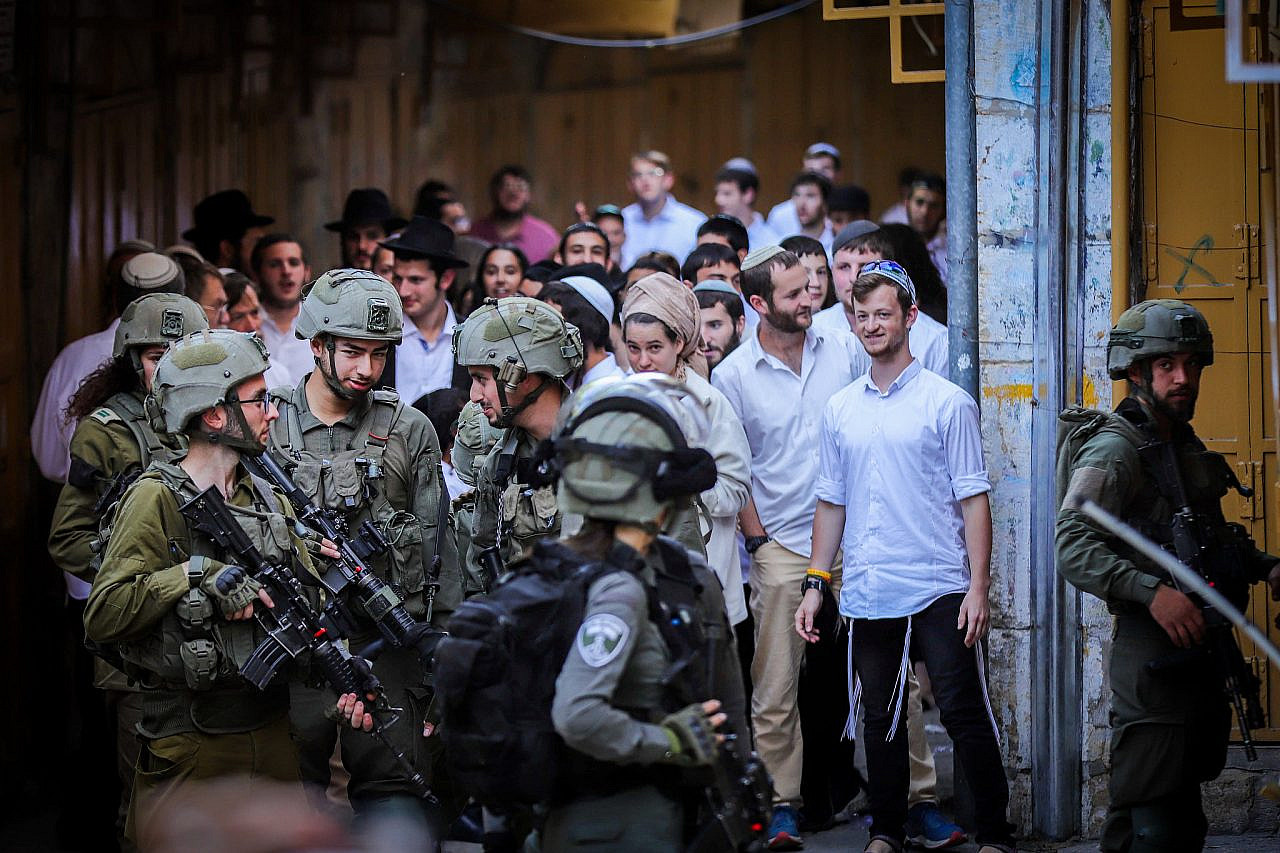
Israeli soldiers stand guard as religious Jews walk through the occupied West Bank city of Hebron, May 25, 2024. (Wisam Hashlamoun/Flash90)
The proposed “Likes Law” seeks to penalize the mere act of “liking” social media posts that “incite terror”, while another proposed law would expand the Shin Bet’s surveillance of teachers. And to these we must add the forced closure of Al Jazeera’s offices, which only increased the appetite of Israeli ministers to promote a law permitting them to shut down Israeli media outlets without any limitations.
Another particularly alarming manifestation of this slide toward fascism is the transformation of the police into a body of henchmen that almost exclusively serves the interests of the government and its worldview. Instead of protecting Israeli citizens, police are cracking down on those who protest the government and the war — even those demanding to bring the hostages home — while also inflicting horrifying violence on demonstrators during detention and imprisonment.
The police have arrested hundreds of Palestinian citizens of Israel for expressing solidarity with their people in Gaza, opposing the war, or participating in nonviolent protests. And the appalling treatment of Palestinian prisoners and detainees is a category unto itself, with mounting, chilling evidence of what takes place inside the Sde Teiman detention center and other prison facilities.
An equally worrying transformation is occurring among ordinary citizens, who are reporting to the authorities their colleagues, neighbors, classmates, schoolteachers, and professors who have dared to deviate from the monolithic national narrative. Teachers like Meir Baruchin have been fired; Dr. Anat Matar has faced a despicable campaign against her for eulogizing Palestinian prisoner Walid Daqqa; and the National Union of Israeli Students is proposing a law to mandate the dismissal of any academic who questions Israel’s character as a “Jewish and democratic state.”
The examples of genocidal statements from elected officials are too numerous to tally, but plenty of them were presented by South Africa in its genocide case against Israel in The Hague in January. More recently, Rabbi Eliyahu Mali — the head of a religious school in Jaffa — suggested in March that Judaism dictates that all the residents of Gaza should be killed (the police have recommended closing the case). And just last month, former Likud MK Moshe Feiglin argued that, just as Hitler said that he couldn’t sleep so long as even a single Jew remained in the world, so too can Israelis “not live in this country if a single Islamo-Nazi remains in Gaza.”
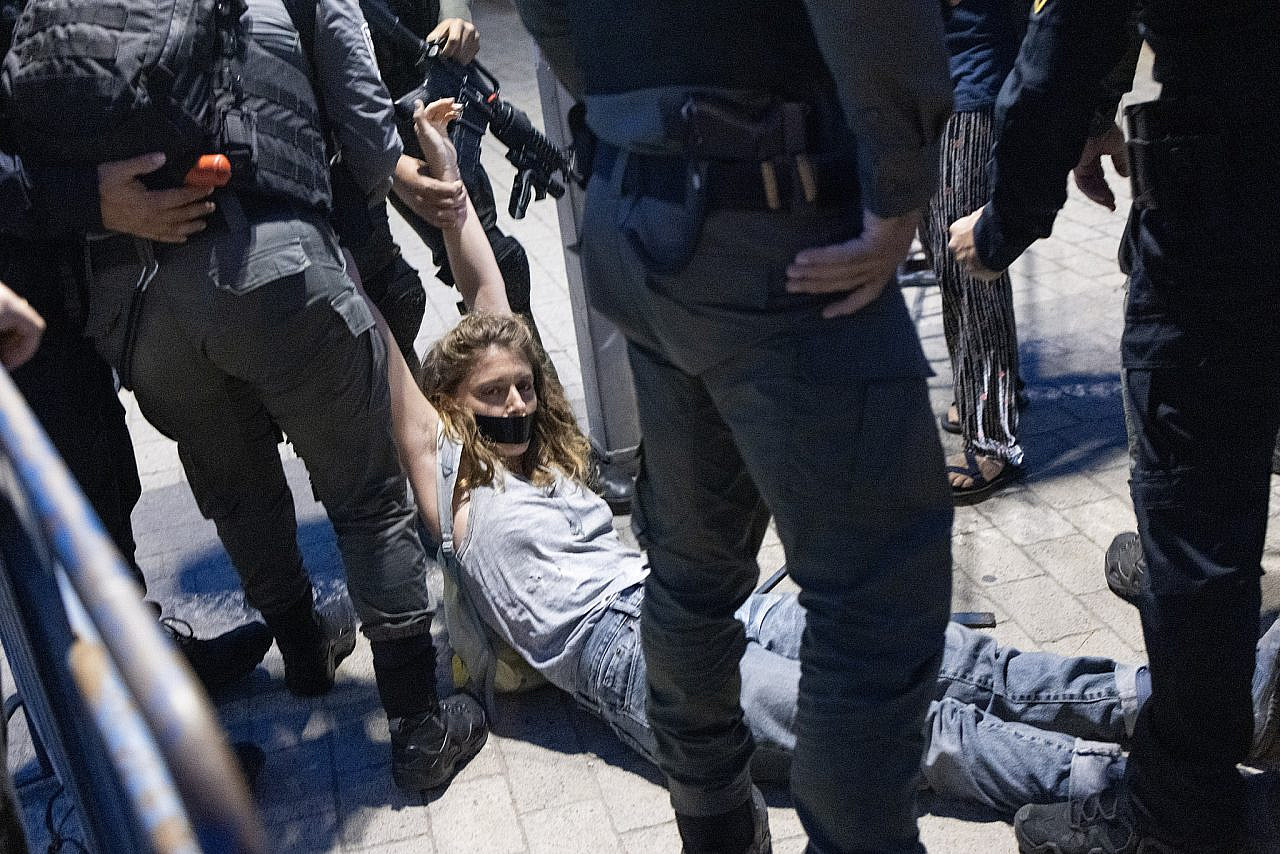
Israeli activists protest against the arrest of members of the Arab High Follow-Up Committee earlier in the day, Tel Aviv District Police Station, November 9, 2023. (Oren Ziv)
Then there is the explicitly fascist language that has become part of most Israelis’ everyday parlance: calls for genocidal violence flood social media networks in Hebrew, and the Israeli authorities don’t object or even lift a finger to try to stop it.
One day — and who knows how much more destruction and death will be wrought before this day comes — the war will end. Israeli society will emerge more violent, more nationalist, more militaristic, and more openly fascist. But right now, we must begin preparing for this day by building a broad anti-fascist front that can curb the worst impulses of this new society and chart a different path forward.
The Jewish center-left must understand that what was can no longer be. The camp that paid lip service to the idea of democracy only to more firmly establish Jewish supremacy between the river and the sea has almost entirely disappeared from the political map. It is certainly not up to the task of leading an anti-fascist front.
It cannot be led by Benny Gantz, the bellicose general who time and time again has saved Netanyahu’s political career, and who joined the prime minister’s war cabinet in October only to leave it criminally late and without any serious rebuke. Nor will it be led by Yair Golan, the new chair of the Labor-Meretz merger known as “The Democrats” and a rising star on the Zionist left, who hastened to clarify that he is ready to sit down and talk with Likud and Mansour Abbas but not with other Arab parties. And it won’t be led by Yair Lapid, for whom even Abbas is not good enough to serve as minister, and who dismisses all Palestinian parties in one fell swoop.
The anti-fascist front that must arise here can only be led by Palestinian citizens — not only because no other political camp comes close to matching their record of struggle against Israeli fascism, but because no one else has a coherent political vision, based on the values substantive democracy and full equality, as Palestinian citizens have articulated in various party platforms and civil society statements.
Today, after the shock of October 7 that has convulsed Israeli society, decent citizens are faced with an existential choice. They can continue to cling to the idea of “Jewish and democratic” Israel, a dangerous deception that masks an increasingly fascist ethnocratic state. Or they can strive for a substantial democracy, without which Israeli society will irrevocably plunge into the abyss.
https://libya360.wordpress.com/2024/07/ ... the-abyss/













 1/4 pic.twitter.com/snzuHym3Hn
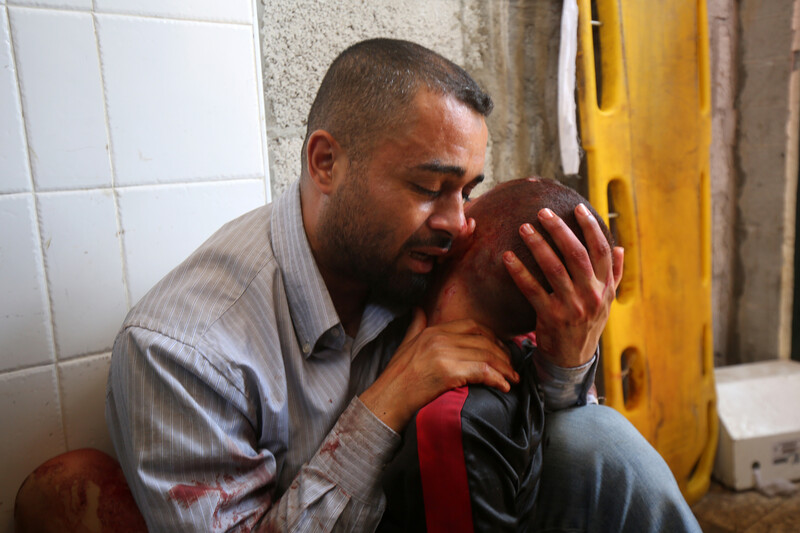
 HORRIBLE: Footage shows the final moments of displaced people at Abasan School in eastern Khan Younis/south #Gaza Strip , playing football in the schoolyard before the Israeli army bombed them, resulting in a horrific massacre that killed dozens and injured hundreds. pic.twitter.com/tyXN2hJI48
 Hear more