Nicaragua

The fightback
User avatar
blindpig
Posts: 14744
Joined: Fri Jul 14, 2017 5:44 pm
Location: Turtle Island
Contact:

Re: Nicaragua

Post by blindpig » Fri Sep 26, 2025 2:14 pm

Co-President Ortega Criticizes U.S. Military Deployments in Latin America, Calls Out Drug Trafficking Pretext

Image
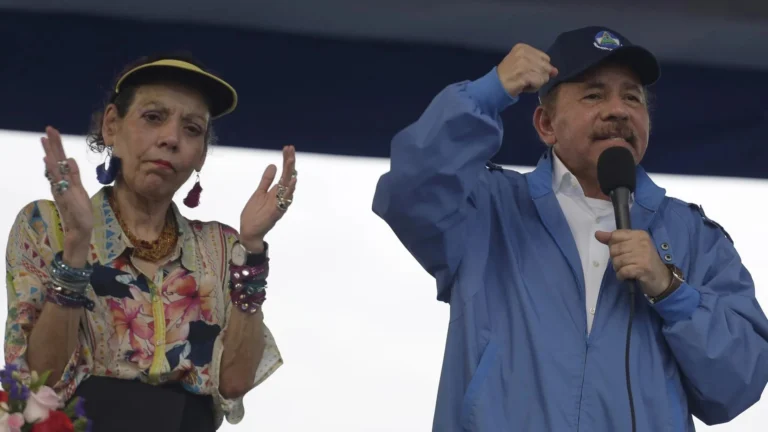
(FILE) Nicaragua’s co-presidents Daniel Ortega Saavedra and Rosario Murillo. Photo: EFE.

September 26, 2025 Hour: 1:21 am

Nicaragua’s co-presidents Daniel Ortega Saavedra and Rosario Murillo, together with the National Police leadership, presided over the 46th anniversary ceremony of the police force, held at Plaza La Fe in Managua.

In his remarks, Ortega turned to international affairs, denouncing Israel’s actions—backed by the United States and European countries—as genocide against Palestine.

He also criticized the deployment of military forces in Latin America, stating that the United States uses drug trafficking as a pretext to intervene in countries like Venezuela, rich in oil. “The greatest drug consumption is in the United States, and it is their responsibility to control it,” Ortega declared.


The president denounced the abuses against Latin American migrants in the United States, rejecting their detention and deportation despite the essential work they perform. “The Government of Nicaragua is receiving migrants, and they are welcomed with proper care, as brothers,” he said, stressing that the country offers new job opportunities.

Ortega also condemned the arrests of undocumented workers in U.S. factories, highlighting their contribution as “hardworking and humble people.”

The ceremony featured representative blocs of the National Police and the Heroic Volunteer Police “Commander Julio Buitrago.” Among those present were the president of the National Assembly, Gustavo Porras Cortés; the Commander-in-Chief of the Army, General Julio César Avilés Castillo; the Chief of the General Staff, General Bayardo Ramón Rodríguez Ruiz; and the Minister of the Interior, María Amelia Coronel Kinloch.

https://www.telesurenglish.net/co-presi ... g-pretext/

******

NicaNotes

September 25, 2025

My Tax Refusal

By S. Brian Willson

[S. Brian Willson is a Viet Nam Veteran, trained attorney, and long-time activist confronting historical USA imperialism. He first went to Nicaragua in 1986, and has visited many times over the years. For several years he has resided in Nicaragua as one of its proud citizens. This article was first published by Willson on his Substack page.]

Image
Willson wrote to the IRS saying that “The Nuremberg Obligation … prohibits citizens from committing acts that are illegal under international law even when commanded to do so by their government.” The photo shows a funeral procession in 1986 in Managua for 31 civilians killed by a contra land mine provided by US taxpayers.

Throughout the late 1970s and early 80s, as I was getting more interested in U.S. foreign policy, I sensed that it was likely that I was going to become an activist and I didn’t want to keep paying for policies that repelled me. I realized that without becoming a tax refuser, and continuing to pay for the policies of my government, I was still complicit and a hypocrite. I had been having stomach problems throughout this time and a conservative farmer friend of mine told me: “You’re having stomach problems because you’re doing something that you really don’t believe in, which is paying taxes.”

I then began to plan my life in such a way that the government had no property to seize from me. This would include bank accounts, property, a car, etc. They would have nothing to seize except me and I fully expected to do two or three years in prison as my lawyer had advised me. With no holdings taken, as I was self-employed, I still continued to file my taxes every year but did not pay.

I had close to a dozen meetings with the Internal Revenue Service either at my rental house or their office. Each time I replied the same way: “It’s in your hands. It’s not complicated. I’m not paying for war.”

One of these times, at my house, a five-year-old Nicaraguan boy, Erick Ramon Cano Lopez, who had been severely wounded by the U.S. funded counter revolutionaries (Contras) was staying with me and Holley. I was in the middle of a game of checkers with him as I heard a knock on my door and opened it and lo and behold it was my IRS agent once again. Erick, with his seriously disfigured face from two bullet wounds was standing next to me, and I looked at my IRS agent and I said “Do you think I’m going to pay for policies that pay for this?”

The statute of limitations expired after 10 years and they never prosecuted or imprisoned me much to my surprise.

I have been a tax refuser for 41 years now since first starting in 1984.

———-

A 1990 LETTER TO THE INTERNAL REVENUE SERVICE “WITH ALL DUE RESPECT…I MUST REFUSE YOUR REQUEST”

Dear Official of the Internal Revenue Service and/or Judge of the U.S, District Court, or other Judicial or Quasi-Judicial Officers:

I am aware of your request for my cooperation in producing monetary amounts or documents to aid in the collection of those amounts, to satisfy a debt that you claim I owe the U.S. government. I disagree vehemently with the basis for your claim of my indebtedness as I have explained in previous writings and discussions with representatives of the IRS. Therefore, I cannot honor your request(s).

This refusal on my part is not personally directed to you or any other person(s), nor is it due to any reluctance to support the need of the common good. Again, my previous communications explain my personal, philosophical, moral, legal, and Constitutional reasons for resistance and refusal to support illegal and immoral activities and expenditures of the U.S. government.

I have no assets to speak of. I have given away all funds received from the U.S. government as a result of our mutually agreed upon out-of-court settlement. As you are probably aware, the U.S. Attorney General agreed to payment of a sum of money in lieu of trial for the act of the U.S. Navy knowingly accelerating a munitions train to over three times the legal speed limit running over me and others while peacefully protesting the illegal shipment of munitions designed to murder and maim innocent human beings in Central America.

I am prepared to pursue acquisition of funds in the amount equal to that figure that the U.S. government claims I owe it. But, I will donate these funds directly to duly recognized non-profit organizations. I will not voluntarily pay any money to the U.S. government.

I am fully aware that by not cooperating with your request(s) I am extraordinarily vulnerable to being forced to serve substantial time in prison as well as being subjected to other forms of governmental interference into my life. I am as prepared as I can be to serve the prison time. I will serve this prison time without my two artificial legs in an as-is condition just as the U.S. government left me on the Concord, CA, tracks after severing my legs and fracturing my skull. The Navy ambulance that arrived on the scene provided virtually no medical assistance and refused to transport me to a hospital causing a substantial delay in receipt of the emergency attention my traumatic injuries demanded. I will offer to you an earlier pair of artificial legs, a valuable asset I do possess, that perhaps can be used by another unfortunate victim of U.S. “low intensity” warfare being carried out in any one of a number of “Third World” countries. I also will decide at various times to partake in political and spiritual fasts for durations to be determined by personal discernment.

I would prefer to be tried in a public proceeding at which time I would have the opportunity to present the legal, as well as moral, basis for my actions. I am led to believe that no U.S. administrative or legal tribunal will allow me to substantively present my arguments based on international and U.S. Constitutional law and the Nuremberg Obligation. Thus, I do not wish to waste precious funds and the valuable time and work of lawyers and others, in a futile effort. I hope that my example will provoke others to search their own consciences as to their own manner of exercising responsible and lawful citizenship in a society whose government is committing countless lawless and heinous criminal acts on a regular basis in many parts of the world. But no matter what others do, I must follow my own conscience.

The Nuremberg Obligation, one that the U.S. was so adamant in advocating as a standard under international law after conclusion of the Nuremberg trial following World War II, prohibits citizens from committing acts that are illegal under international law even when commanded to do so by their government and its officials. Nuremberg established the principle of individual responsibility for the crime of attacking international peace. SEE Jackson, Statement of Chief Counsel Upon Signing of the Agreement, 19 Temple L.Q. 169 (1945-6).

I have acquired voluminous evidence of the active involvement, directly or indirectly, of the U.S. government’s participation in crimes against peace, war crimes, and crimes against humanity. This evidence has been developed from extensive reading of various books, reports and documents; from extensive interviews and discussions with former members of U.S. military, security and intelligence agencies; and from personal observations acquired during visits to a number of countries where the U.S. is or has been actively intervening in various overt and covert ways.

I also want it to be clear that I do not have some peculiar desire to spend time in prison or to subject myself to needless deprivation. I believe that in a democracy the ultimate legal and moral authority resides within the heart and mind of each citizen—in conscience. When this government commits a pattern of behavior that consistently violates its own laws, then the government has relinquished its authority to act on behalf of its citizenry. I must act according to my conscience.

I conclude by quoting from Henry David Thoreau’s 1849 essay on Civil Disobedience:

“If a thousand men were not to pay their tax bills this year, that would not be a violent and bloody measure, as it would be to pay them, and enable the state to commit violence and shed innocent blood.”With all due respect for your position and perspective, I must refuse your request.

Sincerely yours,
S. Brian Willson
Sent December 1990

Note: If you have memories of your involvement with Nicaragua from years ago, write them down and send them to us! Even better if you have photos! Many of us are getting old and some of us have died! Leave a legacy! Write katherinechoyt@gmail.com.

Briefs

By Nan McCurdy

Foreign Minister Demands Immediate End to Aggression against Venezuela

A delegation from Nicaragua, led by Foreign Minister Denis Moncada participated in various meetings prior to the start of the general debate at the 80th session of the United Nations General Assembly. Moncada attended the meeting of the Association of Caribbean States (ACS) as well as the Ministerial Meeting of the Community of Latin American and Caribbean States (CELAC), insisting that the fight against drugs must be based on shared responsibility, multilateral cooperation, and social justice, rejecting interventionist actions such as the one being carried out by the United States against Venezuela.

In his CELAC speech, Moncada said, “The existence of our countries as free, independent, and sovereign states is our right and obliges us to ensure that no foreign power, using pretexts such as the supposed war on drug trafficking, threatens the stability, peace, and sovereignty of our nations…. Under the pretext of combating drug cartels, the United States government is conducting naval operations in the Southern Caribbean Sea directed against Venezuela. The fight against drugs must focus on prevention, education, public health, and the economic development of our communities, not on the so-called war on drugs or on interventionist actions. Nicaragua believes that the fight against drugs must be based on the principles of shared but differentiated responsibility … respect for the sovereignty of States, regional and multilateral cooperation, and a focus on human development and social justice. The solution lies in attacking the structural causes of this scourge: poverty, exclusion, lack of opportunities for young people, and inequalities in international trade exacerbated by arbitrary tariffs.”

He continued, “By deploying warships and nuclear submarines in the Caribbean Sea with the aim of attacking Venezuela, the government of President Donald Trump is flagrantly violating international law, the UN Charter, the Treaty of Tlatelolco, and the Proclamation of Latin America and the Caribbean as a Zone of Peace. The US government bases its political, psychological, and military aggression against Venezuela on falsehoods and lies. They seek to destroy the Venezuelan truth by fabricating a false narrative that they systematically disseminate through their media power, with the aim of overthrowing its legitimate and constitutional president. The so-called “war on drugs” has been, in essence, a war of domination against our peoples, a geopolitical strategy to justify intervention, the deployment of troops, the systematic violation of our sovereignty, and the control of our territories. We demand an immediate end to the aggression against the sovereignty, independence, and self-determination of Venezuela and the urgent withdrawal of the US task force deployed in the Caribbean, which is a zone of peace in Our America. Nicaragua reiterates its accompaniment, support, and militant solidarity with Nicolás Maduro Moros, the legitimate and constitutional president of the sister Bolivarian Republic of Venezuela. Our peoples deserve to live in peace and with the full right to decide their own destiny.” (La Primerisima, 23 September 2025)

New Hospital in León Opens its Doors

On September 21, the Óscar Danilo Rosales Teaching Hospital was inaugurated in the city of León. The hospital has modern facilities and state-of-the-art equipment to strengthen care in medical, surgical, and emergency specialties. Its infrastructure includes spacious hospitalization areas, intensive care units, maternity wards, operating rooms, and diagnostic spaces with advanced technology guaranteeing dignified, quality service to thousands of families in the western part of the country. The hospital will have 461 beds, 11 operating rooms, and 5 delivery rooms. It will offer the following specialties: major surgery, plastic surgery, orthopedic surgery, gynecological and obstetric surgery, transplant surgery, major outpatient surgery, pediatric surgery, anesthesia assessment, cardiology, pediatric cardiology, adult surgery, pediatrics, gynecology and obstetrics, orthopedics and trauma, urology, ophthalmology, physiatry, maxillofacial surgery, otolaryngology, psychiatry, neurosurgery, oncology, pulmonology, nephrology, hematology, and infectious diseases. In addition, it will provide cardiology rehabilitation, oncology/chemotherapy, a nephrology unit, pain clinic, endoscopic services, emergency services, obstetric unit, neonatology, clinical laboratory, pathology, and morgue services. One of the modern features will be transplant and heart surgeries. All services are provided free of charge. See photos: https://radiolaprimerisima.com/nuevo-ho ... e-domingo/ (La Primerisima, 19 September 2025)

Managua to Have Modern Multi-Purpose Stadium

On September 22, construction begins on the Stanley Cayasso multi-purpose stadium, located on the site of the former national baseball stadium in Managua. This stadium has been designed to ensure the comfort of fans, the safety of athletes, and the international projection of Nicaraguan sports. The multi-purpose stadium will be a space for social, cultural, and sporting events. In addition to hosting high-level competitions, it will be equipped to host community activities, shows, and special events. Its main facilities include:

◙ Main baseball field, meeting all regulatory requirements and international standards for professional competitions.

◙ Two additional fields, specially designed for children’s baseball, which will promote minor leagues and the training of new generations of athletes.

◙ Stands with 2,910 comfortable and safe seats.

◙ Dressing rooms equipped with all the facilities for athletes and referees.

◙ Professional lighting system to ensure top-level sporting and cultural events, both day and night.

◙ Security and comfort systems: surveillance cameras, professional audio, fire detection and prevention, drinking water, restroom facilities, and backup power.

(La Primerisima, 18 September 2025)

National Emergency Drill with 9,000 Scenarios

On September 22, officials from the National System for Disaster Prevention and Response (Sinapred) called on the population to take part in the Third National Multi-Threat Preparedness Exercise on September 25, which will be held in more than 9,000 locations with the participation of 1.8 million people, with scenarios of hurricanes, floods, and landslides.

The head of Sinapred, Dr. Guillermo González, accompanied by the Chief of Staff of the Civil Defense, Colonel Sergio Arturo Corrales, reiterated that the objective is to be prepared for any emergency situation. González offered details on the logic behind this III Exercise: Operationally, this exercise will continue strengthening the knowledge, attitudes, and practices of Nicaraguans in terms of preparedness to act in multi-threat situations. “Natural events do not only affect us individually and in our homes, but also affect our communities, our workplaces, and the lives of children in schools, so it is very important to be able to act collectively in emergency situations,” he said. “Let us remember that our model is based on the individual, the family, and the community, but in communion and closely coordinated with our government institutions.”

González explained that this exercise will include a scenario in which a hurricane hits Nicaragua in the southern Caribbean, “penetrating the center of the country, affecting the departments and municipalities of Nicaragua, and exiting between the municipalities of Jalapa and Dipilto towards the north, causing flooding and possible landslides along its entire path. Taking this scenario into account, priority will be given to all urban and rural areas exposed to the presence and impact of these meteorological phenomena, especially critical points.” (La Primerisima, 22 September 2025)

Nicaragua Signs Economic Cooperation Agreements in Russia

On September 22, a ceremony was held in Moscow to sign cooperation agreements between the Donetsk People’s Republic (DPR), the Luhansk People’s Republic (LPR), the provinces of Zaporizhia and Kherson, the city of Sevastopol, and the Republic of Nicaragua, in the presence of Russian Foreign Minister Sergey Lavrov. The documents were signed by the heads of the aforementioned regions and by Laureano Ortega Murillo, Special Representative of the Co-Presidents of Nicaragua for the Development of Relations with Russia and Co-Chair of the Russian-Nicaraguan Intergovernmental Commission on Trade, Economic, Scientific, and Technical Cooperation. “We are honored to sign these cooperation agreements with these regions and republics that have endured fascist attacks against their peoples that have threatened their historic right to be an integral part of the Russian Federation,” said Ortega Murillo.

“And today we confirm that we are ready to strengthen and deepen ties of cooperation in all areas.… Russia and Nicaragua are countries with a historic relationship of brotherhood,” he added. Speaking to RT, Ortega Murillo recalled that Nicaragua has “a large number of products that may be interesting” such as food and agricultural products, which are “high quality and could find a new market here.” Nicaragua, in turn, will be able to learn more about these regions and find out how they could cooperate “in a way that benefits both sides.” See photos: https://radiolaprimerisima.com/nicaragu ... -en-rusia/ (La Primerisima, 22 September 2025)

https://afgj.org/nicanotes-my-tax-refusal
"There is great chaos under heaven; the situation is excellent."

User avatar
blindpig
Posts: 14744
Joined: Fri Jul 14, 2017 5:44 pm
Location: Turtle Island
Contact:

Re: Nicaragua

Post by blindpig » Thu Oct 09, 2025 2:21 pm

NicaNotes: One Memory of Witness for Peace, Jalapa, and the Contra War
October 9, 2025

One Memory of Witness for Peace, Jalapa, and the Contra War

By Kathy Floerke

[Kathy Floerke has been living in Nicaragua since 1994 as a part of the Jubilee House Community, doing sustainable development work in Ciudad Sandino.]

Image
Witness for Peace sent thousands of US citizens to war zones in Nicaragua in the 1980s. Here a delegation from Massachusetts marches in Jalapa. Photo: Kelvin Jones/Empowerment Project

I was a long-term volunteer with Witness for Peace (WFP) during the Contra War from October 1984 to April 1985. Although most of the long-termers were located in the combat zones, often living with families, I was stationed in Managua to be part of the office staff but I was able to accompany one of the short-term delegations that went to Jinotega and Yalí.

During the month before I was due to leave, the administrators decided I had earned a vacation, so I headed north to Jalapa, where the first WFP delegation had gone in 1983. I wanted to stand in the field where those hundred and some visitors from the U.S. held an acto (a ceremony) with the people of Jalapa, including apologizing profusely for the actions of our government, and receiving gracious assurance that the Nicaraguans understood we as individuals were not to blame. The brigade had gone to Jalapa even though they were warned that a Contra attack might be imminent. No attack did happen while they were there. But shortly after they returned to Managua on their way home to the States, Jalapa was attacked. That led to the idea that stationing U.S. citizens out in the combat zones could possibly serve as a deterrent to the U.S-backed Contra forces. The birth of Witness for Peace!

WFP had a house in Jalapa where the long-termers stationed there lived. I remember standing in the open doorway as it rained one afternoon. That was the first rain I had seen in my time in Nicaragua! Wow, water falling down from the sky. Pretty amazing.

Image
In April 1985, Kathy Floerke stands in the field outside Jalapa where the first Witness for Peace delegation had gathered with town residents three years earlier to apologize for the actions of the US government in funding the contra war.

One afternoon a sound truck went up and down the city streets encouraging people to make sure they knew where their shelters were in case of an attack, and where they should report if they had emergency responsibilities. From the tone of the announcement, I was pretty sure the city was gearing up for a civil defense drill. The WFP house was considered to be safe, so our shelter was to stay inside, away from doors and windows. That night the sirens went off. I was sure it was a drill, but even so I made my way to the room of one of my WFP hostesses rather than stay alone in my guest room. I decided that if it wasn’t a drill, and if I was killed, I had accepted that risk when I joined WFP and it would be a death I could feel good about, in solidarity with the Nicaraguan Revolution. My fear crescendoed when I heard gunfire. But everything was fine. Sometime after midnight, if I remember correctly, we all went back to bed and tried to sleep the rest of the night.

The next day my hostess took me with her as she made rounds checking on everybody that she wanted to make sure was okay. As we chatted with a school teacher, my hostess said, “Kathy wasn’t sure that was really a drill last night.”

I protested, “Yes, I did think it was a drill. But when I heard gun fire I got more worried.”

The school teacher informed me quite readily that the gunfire I had heard was only part of the exercise. In a real attack, the Contras’ weapons went “Boom! Boom!” Then the Sandinista AK-47s went “Bam-bam-bam.” I’ve probably got those syllables wrong after all these years! But she perfectly imitated the sounds of a real battle. I was impressed by the level of personal experience that represented, a personal experience I was just as glad not to have on my visit to Jalapa!

Note: If you have memories of your involvement with Nicaragua from years ago, write them down and send them to us! Even better if you have photos! Many of us are getting old and some of us have died! Leave a legacy! Write katherinechoyt@gmail.com.

Briefs

By Nan McCurdy

Join the Nicanet Google Group!

The Nicanet Google Group consists of activists who support the sovereignty of Nicaragua and the revolutionary government of Nicaragua. Membership is free, open to all who believe in the Sandinista revolution and the Sandinista government and also open to people who want to learn different things about Nicaragua not covered in the mainstream media. The Google Group is supported by the Nicaragua Network of the Alliance for Global Justice.

The Google Group is moderated by Arnie Matlin, Convener of the Rochester Committee on Latin America. Arnie, a retired pediatrician, has been to Nicaragua many times and supports projects that improve the lives of women and children.

Members are welcome to post to the group. The topic must be totally (or at least primarily) about Nicaragua. The only other restrictions are that we discourage more than one post in a day, except under emergency situations. We encourage people to submit their own postings, but people can send in posts from other people, if it’s obvious that the piece was meant for public viewing. Finally, all entries must be in the form of civil discourse.

30,000 Children Seen in First Day of “Sin Diabetes” Campaign

On Oct. 2 the Ministry of Health reported that during the first day of the national “Sin Diabetes” [Without Diabetes] campaign, 29,395 children, adolescents, and young people between the ages of birth and 20 were seen for diabetes screening. During the day, blood sugar tests were performed, and the abdominal circumference, weight, and height of each participant was measured. The tests identified 1,919 participants with risk factors such as obesity and a family history of diabetes; 345 tests showed abnormal results. A second test will be performed on these participants. Eight confirmed cases of diabetes were also detected. MINSA states that those identified with diabetes are receiving care and are under medical supervision. See photos: https://radiolaprimerisima.com/en-un-di ... -diabetes/ (La Primerisima, 2 October 2025)

US Pressure Fails to Stop Loans from CABEI

The Central America Bank for Economic Integration (CABEI) has been under pressure from the United States to stop funding projects in Nicaragua. However, because Nicaragua is one of CABEI’s founders, it is still receiving loans: over $640 million since Costa Rican Gisela Sanchez became president in December 2023. The money is financing water projects, sanitation projects and road improvement projects. Bank President Sanchez has attempted to halt the loans but has failed. That failure is criticized by La Prensa here.

Sanchez’s predecessor, Dante Mossi, who praised Nicaragua’s effective use of CABEI funding, was ousted as a result of that praise (Nicanotes, February 6). He has just won a US court case brought against him by the bank, on which it spent $4.5 million in legal fees. Dismissing the case, the judge said: “It looks like you want to silence the guy.” (Various, 24 and 28 September 2025)

Central America’s Green Giant Awakens: Nicaragua as Never Seen Before

A recent article from Spanish language National Geographic Viajes (Trips) opens with, “The first rays of dawn bathe the waters of Lake Cocibolca in gold as a flock of grackles unfurls its morning symphony over the colonial rooftops of Granada. In this magical moment, Nicaragua reveals why it has become Central America’s best-kept secret for Spanish travelers seeking authentic and sustainable experiences. By the end of 2025, this destination will have completed an extraordinary transformation. Known as the Land of Lakes and Volcanoes, Nicaragua has not only preserved its natural treasures, but has also revolutionized its approach to tourism, respecting both the environment and the local communities that are the guardians of these wonders.” See the whole article: https://viajes.nationalgeographic.com.e ... isto_23384 (Viajes National Geographic, 1 October 2025)

Nicaragua’s Public Sector External Debt Stands at US$18.8 billion

Nicaragua’s Central Bank reported US$18.8 billion of external debt held by the public sector in mid-2025, which corresponds to about 45 per cent of the country’s GDP. A further US$7 billion is held by the private sector. The ratio of public sector debt to GDP averages 66 per cent across Latin America. About 16 per cent of Nicaraguan tax revenue goes in debt payments, which is lower than in Costa Rica or Panamá. The opposition media are complaining that Nicaragua is becoming indebted to China; however, recent Chinese loans are for large renewable energy projects (solar and wind power) which are, of course, revenue-generating. In addition to China, Nicaragua is receiving bilateral loans from Germany, South Korea, Russia, Netherlands, India, Spain, Japan, Switzerland and others, most on favorable terms. For more details:

https://www.el19digital.com/articulos/v ... l-ano-2025

(El 19 Digital, 1 October 2025)

Central Bank Lowers Monetary Reference Rate to 6%

The Central Bank approved a reduction in the Monetary Reference Rate (TRM) by 25 basis points, from 6.25 to 6.00 percent. The TRM is the interest rate used by the BCN as a reference to indicate the cost in Córdobas of 1-day liquidity monetary operations. The TRM is established in line with the evolution of international interest rates and domestic monetary conditions, in accordance with the BCN’s fundamental objective of promoting the stability of the national currency and the normal functioning of domestic and foreign payments. In the domestic context, economic activity continues to grow, driven by most sectors and domestic demand, and supported by external demand for merchandise exports, dynamic credit to the private sector, and growth in external flows. (La Primerisima, 2 October 2025)

Sandinista Government Has Strengthened Cancer Care

The executive president of the Social Security Institute (INSS), Roberto López, said that since 2007 health service coverage and specialties, such as cancer care, have been improving. Significant progress has been made in terms of access to chemotherapy, radiotherapy, and even nuclear medicine. Investments have been made in equipment and infrastructure in centers such as the Nora Astorga National Radiotherapy Center, which currently has three linear accelerators, sufficient to meet health demand. Approximately 4,800 cancer patients, are treated in the country. The Nora Astorga Center provides 48,000 radiotherapy treatments annually.

Dr. López also spoke of the recent visit by a Russian Federation delegation. He said that the new agreements with the Russian company Rosatom will expand isotope treatment capabilities. “They would be manufactured in Nicaragua at the nuclear medicine center, using a cyclotron. Through chemical elements and electrical energy, it produces radioactive isotopes that have a short lifespan but are used to treat certain types of cancer,” he said. “This work with Rosatom will last for many years. This nuclear medicine center is the first stage of an effort that we will be working on with them for staff training, use of new technologies, and relations with Rosatom hospitals in Russia in order to find the best forms of treatment,” he added “The center will be built within the Juan Ignacio Gutiérrez Hospital in Managua where we are already administering chemotherapy and will soon begin using other linear accelerators. The entire cycle will be complemented by this Nuclear Medicine Center. On one side, it will be a building with rooms for patient care, and the other side will house the cyclotron,” he reported. (La Primerisima, 2 October 2025)

Vélez Paiz Hospital to Perform Open Heart Surgery and Kidney Transplants

In December, the Sandinista government will relaunch the Dr. Fernando Vélez Paiz Hospital in Managua. The Vélez Paiz Hospital will have greater and improved capacity to serve the people, with new specialized services. It will have a modern high-resolution magnetic resonance imaging (MRI) machine, lithotripsy equipment to fragment kidney stones using a minimally invasive technique, modern high-resolution tomography equipment, and a 22-channel electroencephalogram. An interventional cardiology service will be opened with angiography equipment to perform cardiac catheterization procedures and pacemaker implants, as well as the operation of an extracorporeal circulation machine in smart operating rooms to perform kidney transplants and open-heart surgeries. See photos: https://radiolaprimerisima.com/relanzar ... a-moderna/ (La Primerisima, 6 October 2025)

Costa Rica Says Nicaragua Not Involved in 2018 Murder of Samcam

Even US-supported La Prensa (now online) has had to admit that Nicaragua had nothing to do with the death of Roberto Samcam in Costa Rica in June. The US promoted the lie that Nicaragua was involved in Samcam’s death. This was another disinformation campaign to denigrate Nicaragua, widely covered in US media. Roberto Samcam was one of the opposition/US-paid assassins during the 2018 failed coup and has been in Costa Rica since.

A recent Facebook post states that, “functionaries of Costa Rican intelligence discarded the accusation, in a hearing with legislators, that there were Nicaraguan “cells of Daniel Ortega” functioning in Costa Rica. The Costa Rican intelligence admits they’ve lost the trail on Samcam killing despite him being high profile.

https://www.facebook.com/share/p/1Ft7dz ... tid=wwXIfr (Facebook, 4 October 2025)

Héroes de Las Segovias Hospital in Ocotal Inaugurated

On October 5, the Sandinista Youth Association inaugurated the Héroes de Las Segovias Departmental Hospital in Ocotal, Nueva Segovia department. The coordinator of the Sandinista Youth in Nueva Segovia, María José Marín Lanuza, said that the hospital is a victory for the people and the youth who will benefit from it. The healthcare center has a total of 236 beds and five operating rooms, distributed across two levels of seven two-story buildings. It also has high-tech equipment such as a CT scanner, mobile X-ray machine, mammography machine, C-arm, internal pneumatic mail system, and towers for gastroscopy, laparoscopy, endoscopy, arthroscopy, and nasopharyngoscopy. The hospital offers physical medicine, rehabilitation with hydrotherapy, maxillofacial surgery, oncology, and chemotherapy services. It also has a nephrology unit with dialysis and hemodialysis, a pain clinic, endoscopic services, outpatient consultations, emergency care, hospitalization, an obstetrics unit, neonatology, and a pharmacy. See photos: https://radiolaprimerisima.com/entregan ... en-ocotal/ (La Primerisima, 5 October 2025)

https://afgj.org/nicanotes-one-memory-o ... contra-war
"There is great chaos under heaven; the situation is excellent."

User avatar
blindpig
Posts: 14744
Joined: Fri Jul 14, 2017 5:44 pm
Location: Turtle Island
Contact:

Re: Nicaragua

Post by blindpig » Fri Oct 17, 2025 1:45 pm

NicaNotes: Nicaragua’s Public Health System’s Priorities versus US Pharmaceuticals’ Extortion
October 16, 2025
NicaNotes

October 16, 2025

By Gloria Guillo

(Gloria Guillo is an investigative reporter working for publications like CovertAction Magazine and other online news media outlets. She has covered elections in Nicaragua, Venezuela and Brazil and she has written extensively on the use of illegal unilateral coercive measures around the world in support of the “Sanctions Kill” Campaign.)


Image
In Nicaragua, where children often need to be treated for parasite infections, a treatment with albendazole costs around 10¢. In the US, where parasitic infections are increasing with the consumption of insect protein, it costs $380. Albendazole is now also being used successfully to treat viruses and cancer.

In The Graduate (1967), a family friend corners young Benjamin Braddock with one word of advice for his future: “Plastics.” It was a nod to a booming, transformative industry—lucrative, ubiquitous, and shaping modern life. Today, a new contender emerges in the pharmaceutical realm: anti-parasitical drugs like albendazole. These medications, critical for treating parasitic infections, are gaining prominence not only for their traditional uses but also for novel applications against viruses and cancer, positioning them as a medical “plastic” of our era—valuable, versatile, yet mired in controversy due to stark pricing disparities. In the U.S., a single 400 mg dose of albendazole can cost over US$380, while in Nicaragua, the same dose is mere pennies. This contrast reveals a U.S. system driven by profit over public health, exacerbated by emerging dietary trends like insect-based foods that heighten parasite risks. This article explores albendazole’s rising importance, contrasts its pricing between the U.S. and Nicaragua, and critiques how market dynamics exploit a drug poised to redefine medicine.

Albendazole’s Rising Value: The New “Plastic”

Albendazole, a broad-spectrum antiparasitic, treats infections like hookworm, pinworm, ascariasis, neurocysticercosis, and hydatid disease. Included on the World Health Organization’s List of Essential Medicines, it is a cornerstone for global health, especially in tropical regions where parasitic diseases are endemic. But its value is soaring due to emerging applications beyond parasites. Recent studies show albendazole inhibits viral replication in diseases like hepatitis C and dengue, with clinical trials exploring its potential against HIV. In oncology, it disrupts microtubule formation in cancer cells, showing promise in colorectal and lung cancer models, with phase II trials underway. These uses elevate albendazole’s status, making it a versatile asset akin to plastics in The Graduate—a game-changer with vast potential.

Yet, this potential is overshadowed by a darker trend: the push for insect-based foods. Promoted as sustainable protein sources, insects like crickets and mealworms are gaining traction, with the global edible insect market projected to reach US$7.96 billion by 2030. Initiatives like the EU’s Novel Foods Regulation and U.S. startups advocate for insect consumption to combat climate change. However, insects can harbor parasites like tapeworms and protozoa, transmissible to humans if improperly processed. A 2023 study found that 30% of farmed crickets carried parasitic larvae, raising risks as consumption scales. This trend amplifies the need for drugs like albendazole, yet access is starkly unequal.

U.S. Pricing: A Profit-Driven Crisis

In the U.S., albendazole’s retail price for a standard course (two 200 mg tablets) can exceed US$700 without insurance, though discounts via GoodRx or SingleCare drop it to US$24–$33. This is astronomical compared to Nicaragua, where a 400 mg dose costs about 4¢ to 10¢, reflecting subsidized generics and government price controls. The U.S. price surge, despite albendazole being off-patent since the 1990s, stems from market dynamics rather than production costs, which are minimal globally (Health Affairs).

In 2010, GlaxoSmithKline sold U.S. rights to CorePharma; then it was bought by Amedra Pharmaceuticals (private equity-backed), and finally Impax Laboratories (now Amneal). This created a near-monopoly, with Impax as the sole supplier. A manufacturing pause triggered FDA shortages, blocking generic competitors due to bioequivalence rules. Prices soared from US$6 per dose in 2010 to US$190+ per tablet today—an 8,000% hike (Kaiser Health News). Low U.S. demand (e.g., pinworms affect ~10% of children yearly; hookworm cases are rare but rising) discourages new manufacturers, as market entry costs outweigh profits. Unlike Nicaragua’s state-driven model, the U.S.’s fragmented system—where insurers must cover FDA-approved drugs—enables “rent-seeking,” with companies exploiting niche markets (Brookings).

This mirrors broader trends: mebendazole (another antiparasitic) jumped 8,000% to US$430/dose, and praziquantel rose 500% (KFF). Private equity’s role prioritizes short-term gains, and FDA barriers during shortages stifle competition. For clinics serving immigrants or refugees, where parasitic infections are more common, 15% now skip screening asymptomatic patients due to costs, risking incomplete treatment (New England Journal of Medicine).

Nicaragua: Pennies for Health Equity

In contrast, Nicaragua’s albendazole pricing—4¢ to 10¢ per 400 mg dose—reflects a health system prioritizing access over profit. The Sandinista government, since 2007, has expanded public healthcare, subsidizing generics through partnerships with Latin American manufacturers like Cuba’s Labiofam. Programs like the WHO’s mass drug administration for soil-transmitted helminths ensure free or low-cost albendazole for rural communities, where 60% of Nicaraguans face parasitic risks. Price controls and bulk procurement keep costs down, unlike the U.S.’s market-driven model. Nicaragua’s approach, rooted in socialized medicine, delivers albendazole at a fraction of U.S. prices, even as its GDP per capita (US$2,255 in 2024) is dwarfed by the U.S.’s (US$81,000) (World Bank).

This disparity highlights systemic priorities. Nicaragua’s model, while not perfect—rural access gaps persist—ensures affordability, aligning with global health equity goals. The U.S., by contrast, allows unchecked price hikes, with insurers and patients bearing the cost. For a drug now critical against viruses and cancer, and increasingly vital as insect-based diets raise parasite risks, this inequity is stark.

Insect Foods and Parasite Risks

The global push for insect consumption amplifies albendazole’s importance. The UN’s Food and Agriculture Organization promotes insects as sustainable, with North American startups like Aspire Food Group scaling cricket farming. Yet, insects carry parasites—tapeworms, flukes, and protozoa—transmissible if undercooked or poorly sourced. A 2024 study found 28% of market-sold mealworms harbored parasitic larvae, and improper farming hygiene increases risks. As insect foods enter mainstream diets (e.g., cricket flour in U.S. protein bars), demand for antiparasitics like albendazole could surge, especially in the U.S., where screening and treatment costs are prohibitive.

The Broader Implications: Profit vs. People

Albendazole’s U.S. pricing reflects a system where profit trumps need, unlike Nicaragua’s equitable model. The drug’s new roles—against viruses, cancer, and emerging parasite risks from insect diets—make it the “plastic” of modern medicine: transformative, indispensable, yet hoarded by market forces. In The Graduate, plastics symbolized opportunity; today, albendazole’s inaccessibility symbolizes greed. Its 8,000% price hike mirrors hikes in generics like insulin (up 1,200% since 2002). The U.S. military health system, facing similar anthelmintic cost spikes, shifted to over-the-counter pyrantel pamoate (US$15–US$20) for pinworms.

Solutions exist: nonprofit generics like Civica Rx, FDA reforms for faster approvals, or importing low-cost albendazole from countries like Nicaragua. Patient assistance programs or coupons help, but gaps remain for the uninsured. For now, patients can use GoodRx to save up to 97% or explore alternatives like pyrantel, though less effective for complex infections. Nicaragua’s model—pennies for a dose—shows what’s possible when health trumps profit.

Conclusion: A Call for Equity

Albendazole, the new “plastic,” is poised to reshape medicine with its antiviral and anticancer potential, yet its U.S. price—$700 versus Nicaragua’s pennies—exposes a system prioritizing wealth over lives. As insect-based foods raise parasite risks, affordable access becomes critical. Nicaragua’s approach, rooted in public health, contrasts sharply with U.S. market failures. Like Benjamin Braddock rejecting plastics’ hollow promise, we must demand a system where life-saving drugs aren’t luxuries. Equity, not exploitation, must define this new era

Briefs

By Nan McCurdy

Join the Nicanet Google Group!

The NicaNet Google Group consists of activists who support the sovereignty of Nicaragua and the revolutionary government of Nicaragua and also open to people who want to learn different things about Nicaragua not covered in the mainstream media. Moderated by Arnie Matlin, the Google Group is supported by the Nicaragua Network of the Alliance for Global Justice. Members are welcome to post to the group. The topic must be totally (or at least primarily) about Nicaragua. The only other restrictions are that we discourage more than one post in a day, except under emergency situations. We encourage people to submit their own postings, but people can send in posts from other people, if it’s obvious that the piece was meant for public viewing. Finally, all entries must be in the form of civil discourse.

To join: <https://groups.google.com/g/nicanet>

To post: <nicanet@googlegroups.com>

UNAN-Managua Opens Brian Willson Language Academy

On October 17, the Brian Willson Language Academy will be inaugurated in honor of “Victorious October,” remembering the heroic battles of October 1977. The Academy, named to honor peace activist Brian Willson who lives in Nicaragua, is expected to serve 1,300 students per year. The courses are accredited and certified by the National University of Nicaragua (UNAN) of Managua. Enrollment begins on October 20. Classes will be offered in Mandarin Chinese, Russian, English, French, Portuguese, German, Italian, and Korean. Classes will be held daily and on Saturdays and Sundays. The university has twelve classrooms with a capacity for ten students each; three classrooms for twenty students; an auditorium; a digital technology classroom; offices for teachers and administrative areas; a kitchen area; and a common area for students. See photos: https://radiolaprimerisima.com/abren-nu ... an-wilson/ La Primerisima, 9 October 2025

Call Centers in Nicaragua Employ Over 14,000 Workers

Call centers are establishing themselves as an important source of employment in Nicaragua, generating more than 14,000 jobs under the Special Free Trade Zone Regime, with salaries above the legal minimum and full social security coverage, Pedro Ortega, secretary general of the Sandinista Workers’ Union (CST), told TV Noticias on Channel 2. These centers offer job stability and are expanding their operations to absorb more young people trained in languages.

With twelve years of presence in the country, call centers have expanded their job offerings beyond basic telephone support. “Today, they require salespeople, medical personnel, accounting services, and software support,” explained Ortega, noting that English proficiency remains a key requirement, although regional campaigns allow for the incorporation of Spanish language talent. These outsourced services serve hospitals in the United States and Europe, as well as local businesses in Latin America, diversifying opportunities without strict language barriers.

One of the biggest attractions is the competitive remuneration: a base salary of US$500 per month that increases with experience, supplemented by bonuses and comprehensive social benefits. “This represents a decent and secure job, with all the legal guarantees,” emphasized the union leader, who attributes the boom to public policies of the Sandinista government, such as free language schools. “Thanks to this, thousands of young people join the program every year, transforming their future and that of their families,” he said. (Informe Pastran, 13 October 2025)

Nicaragua Commemorates Indigenous Peoples Day

On October 12, Nicaragua commemorated Indigenous, Black, and Popular Resistance Day. Nicaraguan Co-President Rosario Murillo in her midday address said that it was a date that celebrates the spirit and strength of the people who have been able to fight against all forms of domination and interference. She quoted historian, sociologist, and representative of the South Caribbean Coast Autonomous Region, Johnny Hodgson, who said, “Colonialism and its modern practices from Europe are a racist project that destroys cultures.” She noted, however, that he highlighted how the “Revolution was the turning point, after centuries of devaluation and exclusion of Indigenous communities, Afro-descendant communities, and the Nicaraguan people in general.” She went on to say, “Every day we feel prouder that our spirit has been able to fight against any form of domination or interference. We have never allowed ourselves to be crushed, never. We are the great and victorious people of all our national heroes, our chiefs, our Indigenous peoples, our Benjamín Zeledón, our Andrés Castro, our Sandinista National Liberation Front, our Sandino, the patriot par excellence, worthy and proud heirs of our Nicaraguan race that fights and wins.” (Informe Pastran, 13 October 2025)

Nicaragua: A Refuge for Five Species of Endangered Sea Turtles

Nicaragua is not only a paradise of beaches and volcanoes, but also an essential sanctuary for the survival of five of the seven species of sea turtles that inhabit the planet, according to a report by the TN8 program La Notificación. These ancient creatures, which have been swimming the oceans for more than 110 million years, face the threat of extinction at the hands of humans, but in this corner of Central America they have found a protected home thanks to an ambitious plan that safeguards their reproduction and return to the sea.

From nest monitoring to the emotional release of thousands of baby turtles, these actions not only preserve biodiversity but also promote environmental education among children, young people, and families, creating a network of guardians committed to ecological balance. The country stands out as one of the few in the world that is home to and serves as a nesting site for these five species—including the green turtle, hawksbill turtle, loggerhead turtle, olive ridley turtle, and black turtle—which play a crucial role in marine ecosystems. By grazing on seagrass and controlling jellyfish populations, they help maintain the health of coral reefs and ocean food chains.

Nicaragua has two iconic beaches for mass nesting: La Flor Wildlife Refuge in the department of Rivas and Río Escalante-Chacocente Wildlife Refuge in the municipality of Santa Teresa, department of Carazo. During the nesting season, which runs from July to December, thousands of turtles emerge from the Pacific in a synchronized and ancestral ritual, laying eggs in the sand under the moonlight. Rangers, scientists, and volunteers monitor these events closely, achieving hatching rates of over 80%, an achievement that contrasts with global decline figures. These initiatives not only save turtle lives, but also promote responsible ecotourism. Turtle releases, where hundreds of tiny silhouettes run toward the waves at sunset, attract national and international tourists, generating sustainable income for communities without compromising the protection of the sea turtles. (Informe Pastran, 13 October 2025)

Surgeons Perform Open-Heart Surgery on 21 Patients in Two Days

Twenty-one patients from nine departments underwent open-heart surgery October 8th and 9th, according to the Manolo Morales Peralta Teaching Hospital in Managua. Each of the 21 patients underwent either diagnostic catheterization or had stents placed in their hearts. The operations are completely free of charge. The patients come from Managua, Estelí, Matagalpa, Jinotega, Masaya, León, Boaco, Carazo, and Granada.

These highly specialized procedures greatly improve the life expectancy and quality of life of patients who have suffered heart attacks or have blocked coronary arteries, allowing them to continue with their daily activities. See photos: https://radiolaprimerisima.com/cirujano ... en-2-dias/ La Primerisima, 9 October 2025

Infrastructure Projects Generate Jobs

Large infrastructure projects in Nicaragua have a significant impact on employment, according to Óscar Mojica, head of the Ministry of Transport and Infrastructure (MTI), who stated, “This year, 2025, we had an important goal for direct jobs. Each direct job in construction generates two indirect jobs. The goal was 14,219 direct jobs—our goal for the year. To date, we have generated 13,015 direct jobs, which means we are 91% on target and making very good progress.” One of the benefits of the government’s big projects in highways, etc., is a major boost to the tourism sector. “Tourism will receive a huge boost from the Punta Huete airport because people from many countries would like to come to Nicaragua. Many international tourists from different parts of the world would like to come to Nicaragua and visit other Central American countries, but due to layovers, travel times, and the loss of money and time at airports, they are currently reluctant to do so. However, once we have a direct connection, we are sure that tourists from many countries in Asia, the Arab countries, Europe, South America, and other places will be able to come to our country with great ease, and that will mean a significant boost to this sector of the economy, which is also a sector that generates a lot of jobs and is booming,” he said. (La Primerisima, 8 October 2025)

One Million Women will be Screened for Early Cancer Detection

From October to December, the Ministry of Health will carry out the Nora Astorga National Campaign for Early Breast Cancer Detection in every municipality to strengthen the progress made in early diagnosis and timely treatment of this type of cancer. Nicaragua currently has 171 ultrasound machines for breast examinations; 41 mammography machines; 9 CT scanners; 3 linear accelerators; 1 MRI machine; 44 cancer diagnosis laboratories; and 218 Nora Astorga Women’s Health Clinics. In addition, medical and nursing staff are trained in the early detection of breast cancer.

Through this campaign, health authorities plan to carry out the following actions with over one million women over the age of forty:

◙ Mobile brigades and breast ultrasound fairs will be held in markets, free trade zones, tobacco factories, universities, and rural communities, bringing health services to more women.

◙ Breast ultrasound studies will be performed in all health units throughout the country, targeting women over 40 years of age; medical evaluation and complementary studies will be performed on women with abnormal breast ultrasound results.

◙ Educational sessions in neighborhoods and communities, markets, universities, and workplaces will teach women how to care for and examine their breasts, recognize warning signs, and seek timely care at health centers. (La Primerísima, 8 October 2025)

https://afgj.org/nicanotes-nicaraguas-p ... -extortion
"There is great chaos under heaven; the situation is excellent."

User avatar
blindpig
Posts: 14744
Joined: Fri Jul 14, 2017 5:44 pm
Location: Turtle Island
Contact:

Re: Nicaragua

Post by blindpig » Thu Oct 23, 2025 3:07 pm

NicaNotes: Stop US Aggression against Venezuela! / ¡Alto a la Agresión Estadounidense contra Venezuela!
October 23, 2025
NicaNotes

October 23, 2025

New Webinar on Oct. 26th!

Discover how Nicaragua saves lives before, during and after disasters and how nationwide drills train more than a million citizens.

Image
Register for Nica Webinar: bit.ly/NicaOct26

Stop US Aggression against Venezuela! / ¡Alto a la Agresión Estadounidense contra Venezuela!

[The Nicaragua Solidarity Coalition—of which the Nicaragua Network/Alliance for Global Justice is a member—has released an important statement on Venezuela. You can also find it in both Spanish and English here.]

The Nicaragua Solidarity Coalition demands an end to US aggression against Venezuela, which is on the brink of outright war. Any escalation in the violence against Venezuela will cause more suffering and deaths in the South American country, destabilize the region, and endanger all countries seeking a path independent from US domination, especially Cuba and Nicaragua.

Image
A sousaphone player at the No Kings rally in Tucson proclaims “No War on Venezuela!” Photo: Tanya Nuñez

US actions indicate a strike on Venezuela is imminent:

After the Trump administration designated international drug-trafficking groups as “foreign terrorist organizations” (FTOs), without any evidence, it accused Venezuelan President Nicolás Maduro of being their ringleader. By July, a “secret directive” authorized military operations against FTOs at sea and on foreign soil.

In August, the administration raised its illegal “bounty” on President Maduro to US$50 million and launched a massive naval deployment off the coast of Venezuela, which includes nuclear capable submarines and jets and quickly grew to 10,000 troops.

On September 2, the US blew up the first of four or five alleged “drug” boats in international waters off of Venezuela, committing extrajudicial executions.

By mid-September, the Pentagon notified Congress under the War Powers Resolution that US forces were engaged in a “non-international armed conflict” with drug cartels.

On October 1, the Defense/War Department issued a “confidential memo” and told Congress that the US was engaged in armed conflict.

On October 6, Trump ended back-channel diplomatic contacts with Venezuela, which had been essential since the rupture of diplomatic relations in 2019. That same day, Venezuela informed the US of a thwarted plan by Venezuelan right-wing extremists to plant explosives at the US embassy in an attempted false-flag operation.

On October 10, Maria Corina Machado—a US-paid, violent, Zionist, extreme right-wing Venezuelan political opposition figure—received the Nobel Prize after being endorsed by Secretary Marco Rubio, in a clear a maneuver to manufacture consent for regime change in Venezuela.

We must not be fooled by this perversion of the peace prize or the countless unfounded accusations against Venezuela and its democratically elected president. The United Nations Office on Drugs and Crime, and even the DEA, report that Venezuela is not a drug trafficking country, nor are Cuba or Nicaragua. Like its lies about migrants, the Trump administration has fabricated the “threat” posed by Venezuela. The real reason the administration is pushing for war against Venezuela is to regain control of its vast resources—including the world’s largest oil reserves.

We demand an end to US impunity and the withdrawal of US troops and war materiel from the Caribbean before the situation escalates any further. We vehemently object to the deployment of nuclear capable vessels in a region which, in response to the Cuban Missile Crisis, declared itself a nuclear-free zone in 1967, and which the US committed itself to respect in 1971. We demand respect for international law and the sovereignty of nations. The people of Venezuela and the rest of Latin America and the Caribbean must be allowed to live in peace with the form of government they have chosen.

Hands Off Venezuela! Venezuela is Hope! Venezuela is not a threat!

US Hands Off Latin America and the Caribbean!

ADDENDUM: Since this statement was issued, Venezuela Analysis reported that, on Oct. 15, the Trump administration authorized the Central Intelligence Agency (CIA) to carry out lethal covert operations in Venezuela. The US military also struck another boat in the Caribbean. A couple of days later, news reports described a US attack on a submersible that killed two more and had two survivors who were repatriated to Ecuador and Colombia. With at least two subsequent attacks, the Guardian has the total at 34 killed as of Oct. 22nd but its figures are confusing!

Please take this urgent action from the Alliance for Global Justice to STOP THE WAR on Venezuela:

There is a bipartisan effort to force a vote in the Senate that would require Congressional approval for military action against Venezuela. We urge people to send an email to their Senators as well as to call, visit, and demonstrate at Senate offices to demand NO WAR with Venezuela! Click below to send an email!

Demand that your Senators vote NO WAR with Venezuela!

Briefs

By Nan McCurdy

2026 Budget Guarantees Social Welfare and Development

The Sandinista government has allocated 65.4 percent of projected revenues in next year’s budget to programs and actions aimed at combating poverty. This represents US$2.99 billion, said Óscar Mojica, Minister of Finance and Public Credit. The bill establishes social and economic priorities, including public investment, social spending, strengthening the production chain, care for children and adolescents, gender policies, development of the Caribbean Coast, and citizen protection and security, among others. Mojica presented the 2026 General Budget bill to the National Assembly, which amounts to US$5.36 billion.

Social investment and the transportation sector account for 70.8 percent of the total budget. According to the official, revenues are projected to be in the order of US$4.7 billion. Of the total amount allocated to social investment, the largest share went to the Ministry of Health, the Ministry of Transportation and Infrastructure and the Ministry of Education. This reaffirms Nicaragua’s commitment to the well-being of families and the social development of the country. (La Primerisima, 21 October, 2025)

State-of-the-Art Soccer Stadium Now Complete

Authorities announced that construction of the new Miguel “Chocorrón” Buitrago Soccer Stadium has been fully completed. The sports field was built to all the quality standards established by FIFA and its regional affiliate CONCACAF with the aim of hosting national and international children’s and youth tournaments. The stadium has seating capacity for 2,000 spectators, a FIFA PRO-certified artificial turf field, dressing rooms with bathrooms for players, changing rooms for referees, bleachers, boxes, a media booth area, and public restrooms. It also has cafeterias, artificial lighting, a professional sound system, areas for convenience stores, and ample parking for the public. See photos: https://radiolaprimerisima.com/nuevo-es ... acionales/ (La Primerisima, 16 October 2025)

Sandinista Government to Give Vouchers to 63,000 High School Graduates

The Ministry of Education will give 63,000 vouchers to students graduating from high school in public schools throughout the country. The bonuses will be handed out by the presidents of the Federation of Secondary School Students (FES) and the municipal coordinators of the local 19 de Julio Sandinista Youth Organization during celebrations in all schools from November 24 to 27 in recognition of the efforts of each student preparing to enter universities and technical schools. The delivery of this grant reaffirms the will of the Sandinista government to bring improvements for Nicaraguan families. (La Primerisima, 16 October 2025)

Sandinista Government Sends Special Greetings to British Solidarity

On Oct. 18, the Government of Reconciliation and National Unity delivered a special greeting at the Annual Meeting of the Nicaragua Solidarity Campaign Action Group (NSCAG) in London. The message was delivered by the Co-Minister of the Exterior, Valdrak Jaentschke. Here are some excerpts from the message:

“It is a special honor for me to address you at this Annual General Assembly and to convey the Fraternal Embrace, as Revolutionary Sisters and Brothers, from our Co-Presidents Comandante Daniel Ortega Saavedra and Compañera Rosario Murillo Zambrana.… We want to express our gratitude for the solidarity, the affection and the constant work you have done for so many years to inform, clarify and defend the Sandinista Popular Revolution. You have remained firm and tireless, walking alongside the Nicaraguan People and the revolutions and progressive forces around the world, despite the systematic media campaigns to discredit our popular and anti-imperialist process, attempting to minimize the enormous and significant advances the Revolution has made in favor of the humble, working people of Nicaragua.

“Nicaragua demonstrated that a Popular Revolution is capable of improving the lives of its People by fostering development, restoring the rights that were taken away by the empire, the oligarchy and its neoliberal model, while remaining firm and loyal to the Sandinista Revolutionary political thinking from which it emerged. The fight against poverty is the central element of the National Human Development Plan, our Plan to Fight Poverty, which firmly upholds free health care and education as fundamental rights; access to basic services such as water, electricity, roads, hospitals, clinics and schools that reach rural communities, uniting the country. The country’s production and income increased year after year, while the rights of women, youth, workers, Indigenous and Afro-descendant Peoples, and the entire Nicaraguan People prospered under the leadership of the Sandinista Front….

“At this meeting, we remember, celebrate and express our gratitude for your firmness, perseverance and permanence on the side of the Popular Movement, on the side of the Sandinista Popular Revolution.

“With much love. With much gratitude. We continue building the Revolution. October 18, 2025. To see the entire message in English or Spanish: https://www.el19digital.com/articulos/v ... -nicaragua To see you tube video: https://www.youtube.com/watch?v=GM7lT7ipIDU&t=61s (El 19 Digital, 18 October 2025)

Evangelicals in Dominican Republic say Nicaragua Promotes Peace

On October 18, the Eleventh Congress on the Family and the Culture of Peace was held in Santo Domingo, Dominican Republic, organized by the Dominican organization Equity and Social Justice Foundation. Leaders from various evangelical churches gathered at the event in the Dominican Republic and highlighted Nicaragua as a country that promotes peace. Representatives from Nicaragua explained their country’s model of participation, faith, family and community. Pastor Feliciano Lacen, president of the Dominican Council of Evangelical Unity (CODUE), and Reverend Fidel Lorenzo, president of the Equity and Social Justice Foundation, highlighted the progress made in Nicaragua in terms of a culture of peace, noting that as a country that practices the solidarity taught by Christ, it is a model to be followed in the region. The event was attended by some 150 Dominican families, who applauded Nicaragua’s participation in the congress. (La Primerisima, 18 October 2025)

Fifth Gold Medal for Nicaragua in Central American Games

Candelaria Resano was crowned Central American champion in women’s shortboard surfing at the Central American Games in Guatemala. Shortboard surfboards are high-performance boards that generate maximum speed, grip, and maneuverability. They are reserved for experienced surfers and for waves of respectable size and power. See photos: https://radiolaprimerisima.com/quinta-m ... mericanos/ (La Primerisima, 21 October 2025)

https://afgj.org/nicanotes-stop-us-aggr ... -venezuela

*****

Nicaraguan GDP To Expand In 2026
Image
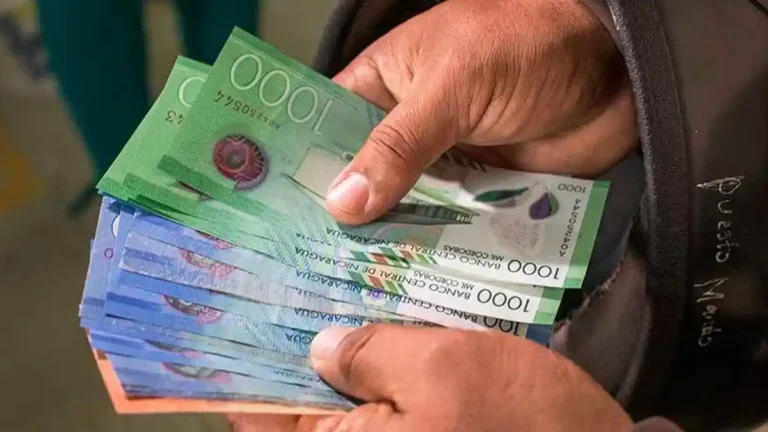
Nicaraguan currency. Photo: Canal 4.

October 23, 2025 Hour: 9:28 am

The Central Bank expects the exchange rate of the cordoba against the dollar to remain unchanged next year.
On Wednesday, Nicaraguan Central Bank President Ovidio Reyes anounced that his country’s economy will grow 4% in 2026, with an annual inflation range between 2% and 2.5%. Whilst for 2025, the expected growth of gross domestic product (GDP) remains between 3% and 4%.

Reyes noted that next year will be an extension of 2025 as economic growth will also be around 4%, and inflation could be slightly lower depending on global developments. He noted that the first half of 2025 showed a “dynamic” economy, with high demand in supply sectors and growth in most productive ones.

In the first semester, the fastest-growing activities were construction (10%), trade (8.3%), hotels and restaurants (7%), and financial intermediation (4.9%).

Concerning exports, Reyes underlined that Nicaragua has rebounded this year, “growing in both volume and level”, with exports expected to reach around US$8 billion by the end of 2025, which is a new record.


The text reads, “The 2026 budget prioritizes the fight against poverty and the well-being of the Nicaraguan people. The Government of Reconciliation and National Unity reaffirms its commitment to human development and social justice, allocating 65% of the 2026 General Budget of the Republic.”

Nicaraguan GDP increased by 3.9% in the first half of the year, exporting a total of US$3,9 billion in goods, 13.2% more than the same period in 2024, mainly due to the 8.8% increase in international prices.

In this sense, the Central Bank announced that the cordoba’s slide rate against the U.S. dollar will be 0% in 2026, meaning an official exchange rate of 36.6243 cordobas per dollar, supported by economic stability and low inflation.

Furthermore, domestic conditions have consolidated the stability of the financial system, highlighting the performance of lending activity, leveraged by the growth of public deposits, and showing improvements in profitability.

https://www.telesurenglish.net/nicaragu ... d-in-2026/

*****

Sandinismo, Class Dictatorship, and the Siege of a Revolution
Posted by Internationalist 360° on October 21, 2025
Prince Kapone

Image

When the workers, peasants, and poor take state power and refuse to give it back, the oligarchy calls it tyranny and the empire calls it a crisis. We call it democracy from below.

The State Is a Hammer, Not a Halo

The liberals and their academic chaperones treat the state like a church—something holy, something to be judged by its hymns and not its history. They speak of “democracy” and “authoritarianism” as if these words float in the clouds, untouched by plantations, monopolies, or foreign banks. But anyone trained by struggle—and not by think tanks—knows the truth: the state is not a moral sanctuary. It is a weapon. Lenin reminded us that the state is “a special organization of force,” and force is never neutral. It answers to a class. It serves a camp. It bends its knee to one set of interests or another, but never to all. The question is not whether Nicaragua is democratic in the eyes of the New York Times or the European Parliament. The question is: whose hands are on the hammer, and whose skulls was it built to crack?

A Marxist cannot be confused here. There is no such thing as a state “for everyone.” There is no political system above class, above property, or above empire. If the ruling class owns the land, owns the banks, owns the press, and owns the guns, then it will also own the constitutional poetry that explains why this arrangement is “freedom.” Bourgeois democracy is simply the dictatorship of capital with better public relations. You get to choose the color of your chains, not whether you wear them. And when the oppressed dare to fight for power, suddenly the same ruling class that funded death squads from Guatemala to Angola begins weeping over “human rights.” Spare us the melodrama. We have seen this movie before. Every anti-colonial project that refuses to kneel is labeled a tyranny. Every revolution that arms the poor is condemned as a crime. And every leader who dares defy Washington becomes, overnight, a “strongman.” Funny how the vocabulary of moral outrage always aligns with the foreign policy needs of the State Department.

To understand Nicaragua, then, we start from a simple, unsentimental clarity: the Sandinista state is an instrument of class rule. It exists in a world system built on plunder, in a hemisphere patrolled by empire, and in a country whose oligarchy long treated the nation like a private hacienda. When the FSLN returned to office in 2007, it did not inherit a blank slate. It inherited the scars of a defeated revolution, the wreckage of neoliberal restructuring, and a popular class fragmented but not broken. The task before it was not abstract “good governance.” The task was to rebuild a material base for sovereignty, improve the lives of workers and peasants, and prevent the oligarchs and their Yankee patrons from retaking the machinery of the state. That is what governs Sandinista decision-making—not Instagram libertarian fantasies about “freedom,” not NGO checklists, and not the approval ratings of institutions that cheered the Contra war.

We judge a state by its class commitments, its class enemies, and its class outcomes. Who does it empower? Who does it dispossess? Who rises, who eats, who learns, who heals, who organizes—and who howls in rage when they lose their privileges? That is the only serious measure for anyone who claims the Marxist tradition. Everything else is sentimental décor. And by this measure, Nicaragua stands where it has stood since the first literacy brigades: with the poor, against the oligarchy; with the nation, against the empire; with the popular classes, against the comprador parasites who would rather sell the country than share it.

The Hands That Hold the Hammer

If you want to know who commands a state, don’t study the speeches—study the social forces that can shut down a port, paralyze a city, harvest a nation, or defend a neighborhood. Power is not a metaphor. Power is organized people, disciplined institutions, and class alliances rooted in material life. In Nicaragua, the backbone of that power is not the oligarchic salons of Managua, nor the NGO aristocracy funded from abroad, but the dense architecture of popular-class organization: the unions of the Frente Nacional de los Trabajadores (FNT), the health workers of FETSALUD, the teachers’ cadre of ANDEN, the peasant and small-producer base of UNAG, and the cooperative networks that bind land, labor, and community into a living political force. These are not spectators in the Sandinista process—they are its locomotive, its muscle, and increasingly, its administrators and legislators. Their fingerprints are on ministries, mayoralties, and parliamentary benches not because of charity from above, but because they represent the productive life of the country itself.

Look at the National Assembly and you do not see a parade of bankers, oligarch sons, or free-market technocrats trained by the IMF. You see doctors who once organised hospital floors, teachers who led strikes in the neoliberal era, union negotiators hardened in factory disputes, and community organisers who rose through the structures of the barrios and the countryside. The presidency of the Assembly itself is held by a former union leader from FETSALUD—Gustavo Porras Cortés, a physician and trade-unionist turned legislator. That is a fact which makes the old ruling class seethe, because it violates their preferred social order: the rich should rule, the poor should obey, and the worker should never sit at the head of the table. But history in Nicaragua has not been kind to oligarchic expectations.

The Sandinista bloc is not a rhetorical “people.” It is a material people, organized into sectors that form a coherent political subject. The unions—especially in health, education, energy, and public service—anchor the urban working class and supply a steady stream of cadre into the machinery of the state. In the countryside, cooperatives and small producers align with the process not out of superstition, but because electrification, credit, roads, and technical support have turned survival into possibility. Meanwhile, the women of the popular economy—through mass programs like Usura Cero—have become an indispensable pillar of the social base, transforming what the bourgeoisie once dismissed as the “informal sector” —the majority of Nicaragua’s workforce—into a loyal, mobilized, self-conscious constituency with real stakes in public policy,, strengthened by state programs administered through MEFCCA and initiatives such as Usura Cero. This is what a governing alliance looks like when it grows from the bottom instead of being engineered in embassy hallways.

And it is precisely this architecture that terrifies the oligarchy. Because a mobilized popular bloc is not just a voting base. It is a counter-class with its own institutions, its own leadership pipeline, and its own capacity to govern. It can fill plazas, defend territory, pressure ministries, produce food, and project force. It is a bloc in motion—with memory, discipline, and organization—which means it can win, survive, and rule. The oligarchs do not fear “dictatorship.” They fear dispossession. They fear that the people who sow, teach, heal, and build the country will no longer accept a political order where wealth writes the law and the poor bleed for the balance sheets of a few families. And so they cry “authoritarianism” the way a thief yells “police brutality” when the stolen goods are taken back.

To understand the Sandinista state, you must understand this bloc: workers consolidated through their federations, peasants and cooperatives rooted in land and production, public-sector professionals forged in social struggle, women of the popular economy pulled into political life at scale—all aligned, all organized, all present inside the state itself. This is not the sociology of a neoliberal republic. This is a different kind of class project, built by the very people capitalism had written out of history. And it is from this base, and for this base, that the Sandinista government governs.

The Masters Who Lost the Plantation

Every revolution creates two nations inside one border: the nation of those who gain a future, and the nation of those who lose their throne. In Nicaragua, the oligarchy once ruled like hereditary landlords of a private estate, passing the country between a handful of families, their bankers and business chambers, their bishops, and their friends in Washington. They never believed the workers or peasants were a political subject—only a labor pool to be disciplined, a flock to be preached to, or a market to be emptied. Their “democracy” was the freedom to loot, their “pluralism” was the right to own everything, and their “civil society” was the network of elite business associations and publisher dynasties that reproduced their class worldview. When the popular classes organized themselves into a governing force, the oligarchy did not suddenly discover a love for civil liberties. What they discovered was that history had flipped the script, and they were no longer the authors.

This is why the loudest cries of “dictatorship” come from those who once dictated. The business chambers—especially those aligned through COSEP—did not abandon the Sandinista process because of human rights, transparency, or institutional purity. They abandoned it when the state stopped treating them as the natural managers of national life—when policy shifted and foreign capital’s veto over the direction of the country began to weaken. Their revolt was not moral—it was material. When capital loses command it calls that loss “authoritarianism.”

U.S. imperialism functions here as the external wing of the same class. Washington is not offended by repression; it is offended by sovereignty. The same government that arms dictators from Tegucigalpa to Riyadh dares speak of democracy only when a nation stands up for itself. Through sanctions such as the NICA Act and the RENACER Act, through media warfare and NGO fronts, the United States seeks to restore the old colonial chain of command, where Nicaraguan elites take orders and the popular classes take the blows. They want to turn back the clock to the days when foreign capital planned the economy, USAID planned “civil society,” the clergy planned the morality, and the people planned nothing. U.S. policy documents show this logic plainly. Critical commentary identifies precisely the pattern of imperial coercion at play.

But their social base has shrunk. The oligarchs are not a nation, only a fraction: big agro-exporters rooted in 19th-century landholding patterns, bankers tied to transnational finance and external capital, media barons who treat oligarchy as a natural right, and the professional-managerial layer that depends on imperial tutelage for political relevance. This bloc can manipulate headlines, but it cannot harvest a field, electrify a village, or feed a population. It has money, embassies, and think tanks—but no people. And a class without the people may still sabotage, conspire, and destabilize—but as studies of Nicaragua’s elite make clear, it can no longer govern by consent or by production.

So the struggle in Nicaragua is not an argument between “authoritarianism” and “democracy,” as the imperial press pretends. It is a contest between two class projects: one rooted in land, labor, sovereignty, and mass organization; the other rooted in capital, dependency, and foreign tutelage. One fights to deepen the revolution; the other fights to restore the plantation. Everything else is decoration. To name the enemy clearly is not extremism. It is clarity. And clarity is the first duty of anyone who claims to stand with the oppressed.

The State with Calloused Hands

If the class character of a government is revealed by the people who wield its instruments, then the Sandinista state must be studied not through slogans, but through its cadre. Behind many ministries and senior posts is a social genealogy documented at the 2007 cabinet’s formation. The officials of this process did not graduate from the oligarchic finishing schools of the past; they were forged in teachers’ unions like ANDEN, peasant and cooperative leadership (UNAG/FENACOOP), literacy brigades, neighborhood committees, student fronts, and community struggles that long predate their titles. This is not a state staffed by heirs of coffee barons or by technocrats on loan from the IMF. It is a state built through the recruitment of teachers, health workers who rose into MINSA leadership, agronomists and farm-sector organizers appointed to MAGFOR, cooperative organizers, union militants, and barrio-level cadre whose political formation came from collective struggle, not elite mentorship. The bourgeoisie knows this—and it is why they insist on calling the government illegitimate. What enrages them is not tyranny, but trespassing. The poor have entered rooms once reserved for their betters, and they did not come to dust the furniture.

The National Assembly reflects this reality in living color. When the president of the legislature is a former trade-union doctor like Gustavo Porras Cortés, you are not looking at a country run by bankers and plantation heirs. You are looking at a state where people who once fought for wages, clinics, and classrooms now fight over laws instead of scraps. The official record in the Assembly’s roster and even reporting from unsympathetic observers show a legislature shaped by workers, teachers, health professionals, and grassroots organizers—not the usual wallpaper of CEOs and oligarch sons who write policy with one hand and count profits with the other.

The same is true of the executive ministries. In sectors like health, education, agriculture, family economy, and energy you can find major policy leaps after 2007—such as rural electrification via the Off-grid Rural Electrification (PERZA) Project and the Rural Roads Infrastructure Improvement Project. These ministries are staffed less by corporate technocrats and more by public-sector cadres, resulting in outcomes like roads to forgotten towns and clinics in remote areas. Bureaucracy in Nicaragua is not an aristocracy but in many cases a redeployed segment of the working intelligentsia tied to mass organization and popular service. When contradictions arise within the state—and they do—the terrain of struggle remains one where the popular classes have institutional footholds and ideological gravity.

Across many municipalities the pattern repeats. Mayors and local officials increasingly come from the social fabric of the communities they govern: educators, cooperative-organizers and local activists with roots in popular economy and community struggle. In 2022 the FSLN won all 153 municipalities in contests characterized by mass popular mobilisation. The trajectory of local officials echoes that of ministers: cadre emerging from education, health, cooperatives rather than oligarchic boardrooms. This is why the reactionary class hates municipal Sandinismo most of all. It is difficult to restore oligarchic rule when the local state does not answer to plantation owners or embassy clerks but to neighbourhoods, unions, women’s collectives and peasant assemblies that know their leaders personally and can mobilise in defence of them. Decentralised municipal governance in Nicaragua places elected local power in community hands. Reactionaries dream of a state that hovers above the people; Sandinismo has built a state that is tangled with them.

So when critics sneer that Nicaragua is a “one-party state,” they reveal only their own ideological shallowness. They mistake the consolidation of a class bloc for the suppression of pluralism. The truth is simpler: the popular classes have produced a governing apparatus with enough internal cohesion to defend sovereignty and carry out development, while the old ruling class has failed to produce a credible political alternative because it has no social majority to stand on. A ruling class that lost its mandate cries “authoritarianism”; a ruling class that keeps its mandate does not need to. The Sandinista state expresses the organized will of workers, peasants, and popular sectors who refuse to hand power back to the class that once treated them as tools. That is not dictatorship in the bourgeois sense. It is democracy in the Marxist sense: the self-organization of a people into a state that reflects their interests, their history, and their right to rule.

Every revolutionary process reaches the moment when persuasion is exhausted and the enemy reaches for the knife. In Nicaragua, that moment was 2018. What polite commentators in the North branded a “pro-democracy uprising” was, in material terms, a coordinated bid to break the popular bloc and retake the state. Opposition networks, backed by business, church, and foreign actors, escalated the confrontation through barricades, roadblocks, and armed actions that even multilateral observers acknowledged. The Truth Commission (CVJP) went further, documenting targeted killings, torture, kidnappings, arsons, and attacks carried out by opposition groups during the crisis. Foreign funding channels also played a role, as evidenced by publicly available U.S. democracy-promotion grants to Nicaraguan opposition organizations, while critical investigations such as Sefton’s “Nicaragua 2018: Uncensoring the Truth” traced coordination between local elites, media apparatuses, and external sponsors. Even NGOs critical of the government acknowledged the destabilizing nature of the crisis itself. This was not a spontaneous moral awakening—it was class war by other means. And once class war is launched against a popular process, the state cannot answer with poetry; it must defend itself or be destroyed.

The rupture with COSEP did not emerge from thin air. For a decade, the business elite tolerated the Sandinista government so long as they could shape policy and secure profits, a dynamic acknowledged even by establishment analysts and Brookings. But once the popular sectors consolidated real command—not only over elections, but over institutions, budgets, and development priorities—the alliance shattered. The oligarchy, unable to win at the ballot box and unwilling to accept a subordinate role, chose destabilization, a trajectory identified by critical observers NACLA. Washington, which has never accepted a sovereign Nicaragua, seized the opening to intensify pressure. Sanctions, including the NICA Act and RENACER, combined with an orchestrated media offensive and lawfare apparatus, functioned as instruments of hybrid war. The goal was regime change, not reform; dependency, not democracy.

Under these conditions, repression is not analyzed morally. It is analyzed structurally. A state confronted with a coordinated, externally backed destabilization campaign has only two strategic options: defend the process, or collapse into the fate of other nations targeted for regime change. Recent history offers the warning signs. In Chile, a democratic process was crushed and replaced with neoliberal terror under a U.S.-backed coup. In Honduras, a coup aligned with Washington paved the way for violent authoritarian rule and social disintegration. In Libya, foreign intervention destroyed a functioning state and unleashed national dismemberment. In Ukraine, foreign orchestration of the post-2014 transition was laid bare by the leaked Nuland–Pyatt call. Faced with these precedents, the Sandinista government chose survival.

The alternative would not have been Scandinavian pluralism. It would have looked like Nicaragua’s own neoliberal nightmare of the 1990s—mass privatizations, IMF tutelage, and the rollback of public systems—with familiar results: hunger, dispossession, and forced migration under capitalist “restoration.” And just as in 2018, Washington pursued regime-change pressure through sanctions, diplomatic coercion, and proxy instruments. Against such an offensive, the state cannot answer with poetry. When the choice is socialism or recolonization, survival is not only a right—it is a responsibility to the people who would pay the price of defeat.

The state that emerged from 2018 is more centralized, more disciplined, and less tolerant of enemy beachheads posing as “civil society.” This was not an accident. It was a strategic response to the recognition that hybrid war is not a season, but the new normal. When the empire finances your opposition, trains your NGOs, coordinates your media narrative, and writes your sanctions, pluralism becomes a battlefield, not a virtue. The popular classes learned through blood that their hold on power will be challenged again and again, and that only a state capable of closing its fist can defend the gains made by workers, peasants, and cooperatives. In this context, securitization is not the betrayal of democracy—it is the condition for its continuation.

The bourgeoisie calls this “dictatorship.” But from the standpoint of the oppressed, it is self-defense. Revolutions do not survive by allowing the old ruling class to conspire with foreign powers in the name of procedural niceties. They survive by recognizing the world as it is: violent, imperial, and governed by force. Nicaragua, surrounded by a hostile empire, cannot afford liberal fantasies. It can only afford clarity. And clarity demands that the state defend the social victories of the people with the same determination that the oligarchy defends its profits. That is the meaning of 2018. The fist did not close to silence the people. It closed to keep the people from being silenced forever.

Sanctuaries and Strikes: The Church, the Coup Plotters, and the State’s Counterstroke

One of the stranger ironies of 2018 was watching the altars turn into barricades and the pulpits transform into microphones for a rebellion that mixed legitimate anger from below with sabotage from above. Parts of the Catholic hierarchy—and some willing friends in the evangelical camp—opened their churches as sanctuaries, thundered against the state from the pulpit, and wrapped the opposition in a cloak of moral authority. In some moments, this saved lives and documented abuse in the chaos of street battles. But it also pulled the Church into the heart of an opposition bloc that sought not dialogue, but victory—political cover at home, and a megaphone abroad. The result was double-edged: a sanctuary for the wounded, and at the same time a political force helping to shape the narrative in the streets and in the headlines. The Church called this compassion; the oligarchy called it opportunity; and the empire, as always, called it useful.

The state responded by treating church-linked opposition networks as elements of a broader hybrid offensive. In 2023, the National Assembly revised the legal framework to permit denationalization of those deemed “traitors,” using measures such as Law 1145 and related provisions. That authority was then applied on a mass scale: 222 political prisoners were expelled to the United States and, shortly after, 94 more opponents were stripped of citizenship—with officials announcing that their properties would be seized—while broader counts put the total denaturalized at over 300. Officials presented these actions as legal self-protection; critics called them arbitrary punishment. The campaign unfolded amid sustained external pressure—U.S. sanctions and coercive statutes like the NICA Act and RENACER—designed to isolate the government. Under siege conditions, the state’s calculus was not liberal “pluralism,” but survival.

Western-based human rights bodies and some international monitors have denounced aspects of the crackdown — from arbitrary detentions to property seizures and the use of denaturalization as a political weapon. Those critiques are real and they must be recorded. At the same time, any left intervention that refuses to situate these events in the broader matrix of imperial coercion and domestic class struggle will be reduced to a sermon that does not help the people whose material stakes are at issue. We should condemn unlawful abuses and demand due process; we should also oppose sanctions and regime-change diplomacy that seek to reverse the accomplishments of popular organizing by any means necessary.

Finally: treason is a political category with consequences. Western “democracies” have incarcerated, exiled, and sometimes covertly eliminated those they judge traitors when their political objectives required it. That is not a programmatic endorsement of summary violence; it is a historical fact that the rules of politics change when foreign-backed forces seek to overturn a people’s hard-won gains. Our politics should demand legal clarity, public evidence, and proportionality — while standing unambiguously against foreign coercion, against the restoration of oligarchic rule, and for the right of the Nicaraguan popular classes to defend the project that they built.

The Right of the Poor to Govern

The entire quarrel over Nicaragua can be reduced to a single, irreconcilable question: do the poor have the right to rule, or must they always be governed by their betters? Everything else is camouflage. The oligarch calls it “authoritarianism” when his voice is no longer the voice of the nation. The empire calls it “tyranny” when a small country refuses to kneel. The NGO calls it “democratic backsliding” when foreign money can no longer shape domestic destiny. But beneath these slogans lies a simpler reality: the Sandinista process placed the hammer of state power into the calloused hands of workers, peasants, women of the popular economy, and patriotic cadres — and those who once ruled this country in their own image cannot forgive the crime.

A Marxist does not evaluate states by the adjectives they use to describe themselves, but by the classes they empower and the classes they suppress. In Nicaragua, the popular classes rose from the margins of history to become authors of their own future, organizing themselves into unions, cooperatives, neighborhood structures, and mass fronts capable of governing, defending, and transforming society. Opposing them is a comprador minority armed with foreign backing, nostalgic for a lost plantation, determined to restore a political order where sovereignty was a myth and the poor were a footnote. There is no “middle ground” between these projects. One must win. The other must lose. That is the law of class struggle.

2018 did not reveal the Sandinista government’s true nature; it revealed the true stakes. When the popular classes hold power, the reaction of capital, the clergy, and the empire is always the same: sabotage, sanctions, destabilization, and the manufacture of chaos. And when a revolutionary process defends itself, it is lectured about “democracy” by the same forces that toppled Mossadegh, strangled Allende, armed the Contras, and turned Libya into a graveyard. We owe these forces no moral legitimacy. The survival of a people is not negotiable, and the defense of sovereignty is not a crime. A revolution that refuses to fight for its life dies. A revolution that fights lives on — and evolves.

So let us be absolutely clear: Nicaragua today is a dictatorship only in the Marxist sense — a dictatorship of the popular classes, exercised against the oligarchy and against imperial domination. It is imperfect, contradictory, and unfinished, as all living revolutions are. But its trajectory, its social base, its class composition, and its enemies tell us exactly what side of the historical barricade it stands on. The task of the U.S. left is not to join the chorus of the empire, scolding a besieged nation from the comfort of imperial privilege. Our task is to oppose sanctions, expose regime change, reject NGO colonialism, and defend the right of the Nicaraguan people to build their future — without permission from Washington, Wall Street, or the Organization of American States.

The poor of Nicaragua have chosen their side. The oligarchy has chosen theirs. Empire has chosen its role. The only question that remains is what side we choose. History has already drawn the line. It is our duty to stand on the correct side of it, without apology, without illusion, and without fear.

https://libya360.wordpress.com/2025/10/ ... evolution/
"There is great chaos under heaven; the situation is excellent."

User avatar
blindpig
Posts: 14744
Joined: Fri Jul 14, 2017 5:44 pm
Location: Turtle Island
Contact:

Re: Nicaragua

Post by blindpig » Fri Oct 31, 2025 2:29 pm

NicaNotes: U.S. Scrambles to Put on Pressure on Nicaragua
October 30, 2025
NicaNotes

October 30, 2025

By Becca Renk Foster

[Becca Renk Foster is originally from Idaho, USA. For 25 years, she has lived and worked in sustainable community development in Nicaragua. She coordinates the work of Casa Benjamín Linder in Managua and serves on the coordinating committee of the Nicaragua Solidarity Coalition. This article was first published in Sovereign Media.]

“We were already struggling with 18% tariffs this year, I don’t know how we could export our coffee under 100% tariffs,” René Gaitan tells me as we watch the clouds clear out over a breathtaking expanse of Nicaraguan landscape. The view from the El Porvenir worker-owned coffee cooperative stretches from Lake Managua north toward the Honduran border, dominated by the smoking crater of the Telica volcano. Gaitán is the vice president of the 51-family cooperative.

Image
Coop member Eugenio Lagina measures newly picked coffee at El Porvenir co-op. Photo: Becca Renk

The co-op is remote; its members hike eight kilometers to get the bus to the city of León, a three-hour ride away. But the news on October 20th that the U.S. may impose 100% tariffs on the Central American nation reached the co-op with the lightning speed of the internet on Gaitan’s smart phone, charged by solar panels.

A U.S. Trade Representative’s office (USTR) report alleges that the Nicaraguan government violates labor regulations, including “allowing use of child and forced labor, human trafficking, repression of freedom of association and collective bargaining.” Washington is using these allegations to threaten punitive measures, including 100% tariffs on goods imported from Nicaragua and suspension of all benefits for Nicaragua from the Dominican Republic–Central America Free Trade Agreement (CAFTA-DR).

The USTR report’s allegations are opaque: most are cut and pasted from reports by the U.S. State Department and U.S. Department of Labor, which do not cite their sources, or from paid mouthpieces such as Manuel Orozco and Expediente Abierto. The report

fails to produce evidence of the Nicaraguan government’s complacency in child or forced labor, describes chartered flights of migrants being allowed into the country on the $10 tourist visas granted to all visitors as “human trafficking,” and conflates industry trade associations with unions when describing “union arrests.” Those arrested in the description were not in fact union leaders, but instead two leaders of a business owners lobbying group who were arrested for acts of treason including requesting military interventions and planning terrorist acts with financing from foreign powers.

Although U.S. government sources cited in the USTR report claim that the Nicaraguan government does not adequately track and publish information, the Sandinista government’s own publicly available annual reports clearly show a track record of improvements in the area of labor rights since coming back into power in 2007.

According to the Nicaraguan Ministry of Labor, between January 2007 and December 2023, Nicaragua increased child labor inspections by 4600%, and 70,452 companies signed commitments to use no child labor and to respect the rights of adolescent workers. During that same period, 1,636 new unions were formed, making the total number of workers now affiliated in unions 1.2 million, or 38% of Nicaragua’s total labor force. There was a 300% increase in workplace labor inspections and 138,374 women who were working for less than minimum wage had their salaries raised to the minimum. In total, the government accompanied workers in filing successful claims against their employers that resulted in US$8.8 million in claims for workers. There have been 3,010 sessions of tripartite labor negotiations among government, businesses and unions, and the minimum wage has increased 550% over 17 years.

U.S. wants Nicaragua out of CAFTA-DR

With so many measurable advances in Nicaragua, why is the U.S. now grasping at straws to claim the country violates labor laws?

For some time, the U.S. has been engaged in hybrid warfare against the revolutionary governments of Venezuela, Nicaragua and Cuba. To date, U.S. sanctions against Nicaragua are more limited than the other two countries, in part because Nicaragua’s participation in CAFTA-DR makes imposing unilateral trade sanctions more complicated. In fact, even the 18% tariff imposed on Nicaraguan goods earlier this year. is questionably legal under CAFTA-DR rules.

While the U.S. freezes assets of Nicaraguan officials, imposes visa bans, and restricts U.S. citizens from doing business with certain Nicaraguan entities, they cannot impose full trade sanctions without the approval of the other five countries. To exclude Nicaragua completely from CAFTA-DR would require the agreement of all its member countries, which is unlikely to happen.

As the U.S. amps up its attacks against Venezuela, Nicaragua and Cuba, it is anxious to further pressure Nicaragua and isolate it from its neighboring Central American countries. In order to achieve this, the U.S. hopes to sidestep the lengthy bureaucratic processes of CAFTA-DR and justify immediate action against Nicaragua with these trumped-up accusations of labor rights violations.

CAFTA-DR designed to benefit big business

The USTR threats have Nicaraguan cooperatives like El Porvenir worried. Coffee, Nicaragua’s largest export, supports 52,000 families and provides 500,000 jobs in the country. Under CAFTA-DR, even small producers have been able to export their products – including coffee, dairy, meat and beans – duty-free to the U.S.

The 20-year-old CAFTA-DR was not initially designed to benefit small farmers or cooperatives. Like the earlier North American Free Trade Agreement (NAFTA) with Mexico and Canada, CAFTA-DR was written to disproportionately benefit large U.S. businesses and was effectively imposed on the southern countries by the U.S.

Nicaragua ratified the free trade agreement in 2005 under the U.S.-client government of then-President Enrique Bolaños in a legislature controlled by his Constitutionalist Liberal Party. Elected representatives of the Frente Sandinista de Liberación Nacional (FSLN) party, many of whom were union leaders, cast 37 of the 38 votes against ratifying the trade agreement.

However, FSLN lawmakers worked to pass complementary implementation legislation for CAFTA-DR in Nicaragua, which ensured that small producers and cooperatives would also have access to the benefits, not just big business

Nicaragua beat the U.S. at its own game

While CAFTA-DR has modestly increased Nicaragua’s trade flows, those who benefited most are small producers who have been able to leverage the free trade agreement to access long-term purchasing agreements in direct partnership with U.S. markets. This has allowed farmers to negotiate a credit component into contracts to invest in adding value to their product. By purchasing machinery to process and package their own product, farmers and co-ops can cut out intermediaries, leaving more profits in the pockets of producers.

The FSLN returned to power in Nicaragua in 2007, shortly after CAFTA-DR went into effect, and its efforts combined with CAFTA-DR benefits, have turned around small-scale production in the country. The Sandinista government designed its national development plan with poverty reduction at its center, and rolled out programs based on a trickle-up economic philosophy that focused on strengthening rural and creative economies with micro and small businesses and co-ops. Over 18 years, the country has worked to improve stability, quality and profit margins for those at the bottom of the production chain including training 95,000 farmers annually in value added products, building 800 new centers of crop collection and processing for coffee and cacao, and financing 19 agro-industrial processing centers.

Nicaragua’s resiliency strategy

In an ironic twist, U.S. consumers and corporations are likely to be the biggest losers in a trade war against Nicaragua. In a statement, the US-based National Council of Textile Organizations pointed out that Nicaragua forms part of a US$1.1 billion integrated supply chain: garments assembled in Nicaragua use components from other CAFTA-DR countries with goods traveling up and down the isthmus to make apparel for the U.S. market. It warned that “destabilizing the U.S.-CAFTA-DR production platform would have serious implications for U.S. and regional workers, migration, economic development, and pending and future investment.”

While U.S. companies in Nicaragua rely on U.S. markets, Nicaraguan companies are poised to pivot to other markets. Over the past 18 years, Nicaragua has embraced a strategy of diversifying markets and as a result, the country is no longer dependent solely on the U.S. for selling its products. For example, in recent years, Panama has surpassed the U.S. as the leading investor in the country, and Nicaragua’s free trade agreement with China led to 218.3% increase in exports to China in its first year of implementation in 2024.

While René Gaitan and I are discussing strategies for selling El Porvenir coffee without being subject to 100% tariffs, 130 km away in Waswalí, Matagalpa, Nicaraguan Co-Minister of Foreign Affairs Valrack Jaentschke was speaking at ceremonies marking the opening of the coffee harvest. In his remarks, Jaentschke noted that the U.S. is not the only market for coffee – this year, Nicaragua’s US$1.3 billion coffee harvest will be exported to 55 different countries. He also addressed the punitive trade measures threatened by the U.S:

The world has also been shaken by new – and old! – forms of imposition in international trade and politics…. A type of threat is emerging – or re-emerging, some would say – which respects nothing and no one in its eagerness to dismantle the international system that nations have been building over the last 80 years….

The Nicaraguan people, who have faced throughout our history all kinds of difficulties, invasions, climate impacts, and political threats, have always been able to face them successfully, trusting in our own strengths and in the unity of our people.

In the midst of so much insecurity, one thing is certain: Nicaragua’s diplomacy, economic policies and unwavering focus on poverty reduction have created a national resiliency that will allow the country to once again out maneuver U.S. machinations.

Briefs

By Nan McCurdy

More than 650,000 Children Treated in Diabetes Campaign

The Ministry of Health reported that since October 1st, 652,625 children, adolescents, and young people between the ages of 0 and 20 have been treated in the Sin Diabetes Campaign, undergoing blood sugar tests, abdominal circumference measurements, and weight and height measurements. A Ministry report indicates that these tests identified 24,662 children, adolescents, and young people with risk factors such as obesity and a family history of diabetes. Similarly, 104 cases of diabetes were confirmed. The report notes that all those involved are receiving care and medical follow-up. The Ministry of Health will continue to develop this campaign to ensure early detection and provide comprehensive health care for the population. (La Primerisima, 23 October 2025)

Specialists from Five Countries Operate on 19 Heart Patients

Specialists from Nicaragua and other countries completed open-heart surgeries on October 24 during special sessions at the Dr. Oscar Danilo Rosales Teaching Hospital in León, improving the quality of life for patients from across the country. Health authorities reported that complex surgical procedures were performed on 19 patients, including 16 adults and three children, in addition to 72 specialized evaluations of people with heart conditions. Operations were performed to close heart defects, repair damaged arteries, replace heart valves, perform catheterizations, and other highly specialized procedures that help restore heart function and prolong the lives of patients. The operations were performed by Nicaraguan doctors together with specialists from the “Health Project for León” Brigade, who came from the United States, Portugal, Spain, and Mexico. The Sandinista government continues to strengthen medical and technological capabilities to ensure free, quality care for Nicaraguan families. See photos: https://radiolaprimerisima.com/especial ... cardiacos/ (La Primerisima, 24 October 2025)

Lake Managua will be Cleaner and Healthier

Improving the water quality of Lake Xolotlán and reducing its sources of pollution will be the objective of the project entitled “Strengthening Capacities in Water Quality Management and Sources of Pollution in Lake Managua,” which will begin in 2026. The initiative will strengthen coordination among the institutions involved and will receive technical support from Japan in seeking a cleaner lake and a healthier environment for the population. The project will be developed with the participation of the Japanese International Cooperation Agency (JICA), ENACAL, the National Water Authority (ANA), the Managua City Council, and MARENA. (La Primerisima, 27 October 2025)

Coffee on Track to Become Main Export Item

Sources in the coffee sector said that the outlook for this year is such that, if historical average prices remain stable, exports will reach US$862 million. “Coffee could once again become the leading agricultural export,” said Eduardo Escobar, executive secretary of the National Commission for the Transformation and Development of Coffee Growing (CONATRADEC). Escobar stated that the development of coffee growing is part of the government’s strategy to combat poverty. Escobar reported that 3.4 million quintals [hundredweights] were produced, of which 3.2 million quintals were exported, generating US$862 million. This exceeded the initial projection of US$650 million and represents a growth of more than 19 percent compared to the previous cycle.

Production involves more than 50,000 families in over 60 municipalities across the country, including Matagalpa, Jinotega, Estelí, Nueva Segovia, Nueva Guinea, and the island of Ometepe, which has a designation of origin, guaranteeing unique characteristics not found in coffees from other regions. Escobar highlighted the professionalization of producers, the transformation of coffee, and the expansion of individual brands, promoting new economic alternatives. Thanks to this expansion and quality, Nicaragua exports coffee to 57 countries. The United States purchases 38 percent of the total, while Europe accounts for 44 percent of exports. China has received more than 40 containers of Nicaraguan coffee, and Japan purchases 70 percent of the lots certified with the Cup of Excellence, reflecting the high quality of the bean. The success is attributed to technical support, security in the field with more than 3,000 army personnel, the training of internationally certified tasters, and investment in infrastructure and services for producing families. These conditions ensure traceability, quality, and competitive prices in international markets. (La Primerisima, 28 October 2025)

Héroe Brian Willson Language Academy Opens in Managua

On October 22, the Héroe Brian Willson Language Academy opened in Managua. The academy is an educational space created with the vision of broadening horizons, breaking down language barriers, and promoting communication between cultures. Angela Rosa Munguia, rector of the National Autonomous University of Nicaragua (UNAN-Managua), said that, “This academy will offer more than eight languages for students, teachers, professionals, and the general public, thus reaffirming our commitment to comprehensive education, internationalization, and the promotion of multilingualism.” Munguía praised the project as the result of the clear vision of the Sandinista government, of Co-Presidents Daniel Ortega and Rosario Murillo, who firmly believe in education as a fundamental human right and who, she noted, work every day to guarantee free, quality access for all families. “The academy will be open to the entire population, regardless of origin, age, or educational level, promoting a culture of peace, inclusion, and mutual respect,” she said. Rector Munguía added that most of those who have enrolled have chosen English. She said that, “at the moment, the only requirement we have asked for is an identity card.” In addition, applicants must be at least 15 years old. The rector commented that the Brian Willson Language Academy currently offers only courses adding that “perhaps in the near future we could see the possibility of a bachelor’s degree, and we have always thought about postgraduate training, perhaps in translation, because interpreters are needed.” The courses to be taught are English, French, Portuguese, German, Mandarin Chinese, and Russian, among others; the academy has 12 classrooms, auditoriums, digital technology rooms, and other spaces.

Nicaraguan Foreign Affairs Minister Valdrak Jaaentschke emphasized in his remarks at the opening ceremony that the Language Academy is named after Brian Willson, “Hero of Peace, Justice, and Solidarity, an expression of a form of unconditional love for one’s neighbor.” Jaentschke further stated, “Today, in recognition of his sacrifice and dedication, as a symbol of the struggle for peace, this Language Academy bears the name of Hero Brian Willson, so that our young people can, every day, remember and be inspired by Brian’s unconditional love for his brothers and sisters, for the Nicaraguan people, and for the defense of the Sandinista ideal throughout his life.” See photos: https://www.el19digital.com/articulos/v ... en-managua (El 19, 22 October, 2025)

https://afgj.org/nicanotes-u-s-scramble ... -nicaragua
"There is great chaos under heaven; the situation is excellent."

User avatar
blindpig
Posts: 14744
Joined: Fri Jul 14, 2017 5:44 pm
Location: Turtle Island
Contact:

Re: Nicaragua

Post by blindpig » Mon Nov 03, 2025 3:16 pm

Image
Co-op member Eleuterio Rios processing organic coffee by hand El Porvenir Photo by Their Bucks Coffee

U.S. scrambles to put pressure on Nicaragua

Originally published: Sovereign Media on October 29, 2025 by Becca Renk Foster (more by Sovereign Media) | (Posted Nov 03, 2025)
Empire, Imperialism, Inequality, Political EconomyAmericas, Nicaragua, United StatesNewswire

“We were already struggling with 18% tariffs this year, I don’t know how we could export our coffee under 100% tariffs,” René Gaitan tells me as we watch the clouds clear out over a breathtaking expanse of Nicaraguan landscape. The view from the El Porvenir worker-owned coffee cooperative stretches from Lake Managua up toward the Honduran border, dominated by the smoking crater of the Telica volcano. Gaitán is the vice president of the 51-family cooperative.

The co-op is remote; its members hike eight kilometers to get the bus to the city of León, a three-hour ride away. But the news on 20 October that the U.S. may impose 100% tariffs on the Central American nation reached the co-op with the lightning speed of the internet on Gaitan’s smart phone, charged by solar panels.

A U.S. Trade Representative’s office (USTR) report alleges that the Nicaraguan government violates labor regulations, including “allowing use of child and forced labor, human trafficking, repression of freedom of association and collective bargaining.” Washington is using these allegations to threaten punitive measures, including 100% tariffs on goods imported from Nicaragua and suspension of all benefits for Nicaragua from the Dominican Republic—Central America Free Trade Agreement (CAFTA-DR).

Image
Co-op member Juan Parrales depulping organic coffee El Porvenir photo by Naomi Zurba

The USTR report’s allegations are opaque: most are cut and pasted from reports by the U.S. State Department and U.S. Department of Labor, which do not cite their sources, or from paid mouthpieces such as Manuel Orozco and Expediente Abierto. The report fails to produce evidence of the Nicaraguan government’s complacency in child or forced labor, describes chartered flights of migrants being allowed into the country on the $10 tourist visas granted to all visitors as “human trafficking,” and conflates industry trade associations with unions when describing “union arrests.” Those arrested in the description were not in fact union leaders, but instead two leaders of a business owners lobbying group who were arrested for acts of treason including requesting military interventions and planning terrorist acts with financing from foreign powers.

Although U.S. government sources cited in the USTR report claim that the Nicaraguan government does not adequately track and publish information, the Sandinista government’s own publicly available annual reports clearly show a track record of improvements in the area of labor rights since coming back into power in 2007.

According to the Nicaraguan Ministry of Labor, between January 2007 and December 2023, Nicaragua increased child labor inspections by 4600%, and 70,452 companies signed commitments to no child labor and to respect the rights of adolescent workers. During that same period, 1,636 new unions were formed, making the total number of workers now affiliated in unions 1.2 million, or 38% of Nicaragua’s total labor force. There was a 300% increase in workplace labor inspections and 138,374 women who were working for less than minimum wage had their salaries raised to the minimum. In total, the government accompanied workers in filing successful claims against their employers that resulted in $8.8 million in claims for workers. There have been 3,010 sessions carried out of tripartite labor negotiations among government, business and unions, and the minimum wage has increased 550% over 17 years.

Image
drying coffee on patio El Porvenir photo by Becca Renk Foster

U.S. wants Nicaragua out of CAFTA-DR
With so many measurable advances in Nicaragua, why is the U.S. now grasping at straws to claim the country violates labor laws?

For some time, the U.S. has been engaged in hybrid warfare against the revolutionary governments of Venezuela, Nicaragua and Cuba. To date, U.S. sanctions against Nicaragua are more limited than in the other two countries, in part because Nicaragua’s participation in CAFTA-DR makes imposing unilateral trade sanctions more complicated. In fact, the legality of the 18% tariff imposed on Nicaraguan goods earlier this year is questionable under CAFTA-DR rules.

While the U.S. freezes assets of Nicaraguan officials, imposes visa bans, and restricts U.S. citizens from doing business with certain Nicaraguan entities, they cannot impose full trade sanctions without the approval of the other five countries. To exclude Nicaragua completely from CAFTA-DR would require the agreement of all its member countries, which is unlikely to happen.

As the U.S. amps up its attacks against Venezuela, Nicaragua and Cuba, it is anxious to further pressure Nicaragua and isolate it from its neighboring Central American countries. In order to achieve this, the U.S. hopes to sidestep the lengthy bureaucratic processes of CAFTA-DR and justify immediate action against Nicaragua with these trumped-up accusations of labor rights violations.

CAFTA-DR designed to benefit big business

Image
El Porvenir co-op members loading organic coffee for export photo by Paul Mohally

The USTR threats have Nicaraguan cooperatives like El Porvenir worried. Coffee, Nicaragua’s largest export, supports 52,000 families and provides 500,000 jobs in the country. Under CAFTA-DR, even small producers have been able to export their products–including coffee, dairy, meat and beans–duty-free to the U.S.

The 20-year-old CAFTA-DR was not initially designed to benefit small farmers or cooperatives. Like the earlier North American Free Trade Agreement (NAFTA) with Mexico, CAFTA-DR was written to disproportionately benefit large U.S. businesses and was effectively imposed on the southern countries by the U.S.

Nicaragua ratified the free trade agreement in 2005 under the U.S.-client government of then-President Enrique Bolaños in a legislature controlled by his Constitutionalist Liberal Party. Elected representatives of the Frente Sandinista de Liberación Nacional (FSLN) party, many of whom were union leaders, cast 37 of the 38 votes against ratifying the trade agreement.

However, FSLN lawmakers worked to pass complementary implementation legislation for CAFTA-DR in Nicaragua, which ensured that small producers and cooperatives would also have access to the benefits, not just big business.

Nicaragua beat the U.S. at its own game

Image
Gladys Aguilar sorting coffee beans El Porvenir photo by Becca Renk Foster

While CAFTA-DR has modestly increased Nicaragua’s trade flows, those who benefited most are small producers who have been able to leverage the free trade agreement to access long-term purchasing agreements in direct partnership with U.S. markets. This has allowed farmers to negotiate a credit component into contracts to invest in adding value to their product. By purchasing machinery to process and package their own product, farmers and co-ops can cut out intermediaries, leaving more profits in the pockets of producers.

The FSLN returned to power in Nicaragua in 2007, shortly after CAFTA-DR went into effect.Combined with CAFTA-DR benefits, its efforts have turned small-scale production around in the country. The Sandinista government designed its national development plan with poverty reduction at its center, and rolled out programs based on a trickle-up economic philosophy that focused on strengthening rural and creative economies with micro and small businesses and co-ops. Over 18 years, the country has worked to improve stability, quality and profit margins for those at the bottom of the production chain including training 95,000 farmers annually in value added products, building 800 new centers of crop collection and processing for coffee and cacao, and financing 19 agro-industrial processing centers.

Nicaragua’s resiliency strategy
In an ironic twist, U.S. consumers and corporations are likely to be the biggest losers in a trade war against Nicaragua. In a statement, the National Council of Textile Organizations pointed out that Nicaragua forms part of a $1.1 billion integrated supply chain: textiles assembled in Nicaragua use components from other CAFTA-DR countries with goods traveling up and down the isthmus to make apparel for the U.S. market. It warned that “destabilizing the U.S.-CAFTA-DR production platform would have serious implications for U.S. and regional workers, migration, economic development, and pending and future investment.”

Image
Rene Gaitan Examining Coffee Harvest El Porvenir

While U.S. companies in Nicaragua rely on U.S. markets, Nicaraguan companies are poised to pivot to other markets. Over the past 18 years, Nicaragua has embraced a strategy of diversifying markets and as a result, the country is no longer dependent solely on the U.S. for selling its products. For example, in recent years, Panama has surpassed the U.S. as the leading investor in the country, and Nicaragua’s free trade agreement with China led to a 218.3 % increase in exports to China in its first year of implementation in 2024.

While René Gaitan and I are discussing strategies for selling El Porvenir coffee without being subject to 100% tariffs, 130 km away in the Waswalí, Nicaraguan Co-Minister of Foreign Affairs Valrack Jaentschke was speaking at the opening of the coffee harvest. In his remarks, Jaentschke noted that the U.S. is not the only market for coffee–this year, Nicaragua’s $1.3-billion coffee harvest will be exported to 55 different countries. He also addressed the punitive trade measures threatened by the U.S:

The world has also been shaken by new—and old!—forms of imposition in international trade and politics…. A type of threat is emerging—or re-emerging, some would say—which respects nothing and no one in its eagerness to dismantle the international system that nations have been building over the last 80 years….

The Nicaraguan people, who have faced throughout our history all kinds of difficulties, invasions, climate impacts, and political threats, have always been able to face them successfully, trusting in our own strengths and in the unity of our people.

In the midst of so much insecurity, one thing is certain: Nicaragua’s diplomacy, economic policies and unwavering focus on poverty reduction have created a national resiliency that will allow the country to outmaneuver U.S. machinations once again.

https://mronline.org/2025/11/03/u-s-scr ... nicaragua/
"There is great chaos under heaven; the situation is excellent."

User avatar
blindpig
Posts: 14744
Joined: Fri Jul 14, 2017 5:44 pm
Location: Turtle Island
Contact:

Re: Nicaragua

Post by blindpig » Fri Nov 14, 2025 2:49 pm

Anti-War, NicaNotes Newsletter, Nicaragua

<snip>

NicaNotes: Week of Action against Attacks on Venezuela—Nov. 15 – 23!

Briefs

By Nan McCurdy

100 New Homes for Families in Managua

In commemoration of the 49th anniversary of the death of FSLN founder Carlos Fonseca Amador, the Managua City Council handed over the keys to 100 new homes located in the Camino del Río development, as part of the Bismarck Martínez Housing Program. Enrique Armas, deputy mayor of Managua, reported that with this new delivery, 9,006 families have benefited from the Bismarck Martínez Housing Program, thus restoring decent housing to thousands of Nicaraguans. Armas announced that a fully equipped and secure educational center is being built, and that there will also be a gym in the area. (Informe Pastran, 7 November 2025)

Second National Vaccination Campaign 2025 begins in Managua

At this time of year, when colder, dry weather can influence the spread of the influenza virus and increase the risk of infection, it is important to get vaccinated against this disease. That is what 72-year-old Eloy Carrión did, taking advantage of the fact that the Ministry of Health (MINSA) had just launched its Second National Vaccination Campaign of the year in the community park of Colonia Cristian Pérez near his home. Mother Cristina Núñez said, “Getting children vaccinated should be a priority. I came with my four-month-old daughter, had her vaccinated, and now I feel at ease because I know that this vaccine will prevent several diseases. I am grateful to the government and I urge other mothers to have their children vaccinated.”

This National Vaccination Campaign guarantees free immunization against various diseases. A call was made to the population to go to health centers for the shots or open the doors of their homes so that health workers can administer the respective doses to each person. “Each of these elements is part of our campaign strategy, which always includes door-to-door visits to homes, reaching out to the community and families so that we can complete the vaccination schedules, update the vaccination schedules for each child and adult, and we also have the school strategy,” said Dr. Meyling Mora, head of the Expanded Immunization Program.

Thanks to these types of campaigns, every year communities are healthier as immunization against diseases is guaranteed, all under a free, high-quality public health system. Dr. Mora explained, “Nationwide, we are going to administer 212,000 doses of vaccines. In the department of Managua, we are going to administer 49,020 doses, including the polio, measles, rubella, mumps, whooping cough, COVID, and tetanus vaccines. We are going to administer tetanus vaccines to pregnant women. From early pregnancy we are covering those mothers.” See photos: https://www.el19digital.com/articulos/v ... en-managua (El19, 10 November 2025)

Mammograms and Ultrasounds Guaranteed at Health Fairs

The Ministry of Health reported that during the week of November 10-15, general and specialized medical care will be provided to 147,641 families in 2,551 neighborhoods and communities throughout the country, through 1,424 Health Fairs and Mobile Clinics.

It was reported that, as part of this program, 89 Health Fairs will be held with specialist care, mammograms, and breast ultrasounds, through the “My Hospital in My Community” strategy. (La Primerisima, 6 November 2025)

Record Exports in Coffee and Cacao

A new report from the National Production, Consumption, and Trade System reveals that exports for the year so far have totaled US$2.7 billion, 84.4% of the target, with a 4.7% increase in volume and better prices. Coffee exports generated US$852.2 million, an increase of 102.8% in volume and 127.4% in value, a remarkable 69.3% more than in 2024. Meanwhile, 225,100 quintals of cacao were produced, generating US$34.1 million, 46.7% more in volume than last year.

National Technological Institute offers 79 degree programs for 2026

For the first time in the country, a technical degree program in heavy vehicle mechanics will be offered as part of INATEC’s new academic offerings for the 2026 school year.

With the slogan “Choose a future of opportunities,” the authorities of the National Technical and Technological Institute presented the educational offering of 79 technical degree programs, distributed across three sectors. Esmeralda Aguilar, deputy director of professional training, explained that, in accordance with the country’s investment projects, there is a need to offer a degree program in heavy vehicle mechanics. She clarified that currently they only offer training in automotive mechanics for light vehicles and motorcycles. Aguilar said that the new program will be available in 2026 at technology centers in the department of Chinandega. She added that, in the productive sector, INATEC offers 30 technical programs in commerce, services, hospitality, and tourism, 11 of which are online. Meanwhile, in the industry and construction sector, there are 30 more programs, two of which are online. There are 19 technical degrees in the agricultural and forestry sector, 11 of which are online. In addition, 25 technical degree allow for educational continuity at public universities in the country.

The 2026 educational program incorporates key innovations. Palm oil processing and palm oil production are offered both online and in person. The courses for technical specialist in English are in person, with a focus on language proficiency as a professional tool. All programs integrate English language learning at levels A1, A2, and B1, strengthening the competitiveness of graduates in the national and international labor market. (La Primerisima, 6 November 2025)

Unity, Cohesion, and Loyalty, to Strengthen Peace and Defeat Poverty

On Nov. 8, Co-President Daniel Ortega gave a speech at the ceremony commemorating the 46th anniversary of the Ministry of the Interior (MINT) and the 49th anniversary of the death of FLSN founder Carlos Fonseca Amador.

Co-President Ortega urged the people to promote unity as an essential value for maintaining peace and confronting poverty and the divisions imposed by the imperialists. “We have to eradicate extreme poverty in Nicaragua, and for this, unity is essential, and for unity, peace is essential,” he emphasized.

In his message, Ortega highlighted the revolutionary struggle led by the Sandinista National Liberation Front, from its first guerrilla actions to the triumph against the Somoza dictatorship on July 19, 1979. He noted that Comandante Carlos Fonseca’s transition to immortality occurred practically on the eve of the triumph over the Somoza dictatorship. “Practically on the eve of victory, our brother Carlos fell in combat, there in the mountains, where the prevailing concept was that guerrilla detachments would have to be organized and trained in the mountains and then descend to liberate the cities. Carlos was heading toward the main camp, which had already been decimated by Somoza’s genocidal guard. He was marching toward the main camp. Why? Because a division had arisen in the Front. There was a division; some comrades simply did not recognize Carlos’ leadership, and two other comrades were debating the issue, in discussions, in dialogue, in meetings. Why? So that the Front could unite and not continue fighting divided.”

He went on to say, “And today, Nicaraguan brothers and sisters, Nicaraguan families, we are seeing the results of cohesion, of the unity of the people, of the unity of families, of cohesion and unity among young people, cohesion and unity among workers, cohesion and unity among the combatants of the Ministry of the Interior, cohesion and unity within the Nicaraguan Army.”

Ortega reiterated that in order to continue promoting programs combatting poverty, unity and cohesion are always essential in all institutions, throughout the state, in neighborhoods, in all districts, municipalities, and among all Nicaraguan people, so that Nicaraguans can continue building homes and so that farmers in the countryside can continue harvesting food and multiplying their yields. See photos:; https://www.el19digital.com/articulos/v ... la-pobreza (El 19, 8 November, 2025)

https://afgj.org/nicanotes-week-of-acti ... -nov-15-23
"There is great chaos under heaven; the situation is excellent."

User avatar
blindpig
Posts: 14744
Joined: Fri Jul 14, 2017 5:44 pm
Location: Turtle Island
Contact:

Re: Nicaragua

Post by blindpig » Fri Nov 21, 2025 3:06 pm

<snip>

Briefs

By Nan McCurdy

Benjamín Linder and Heroes of Bocay University Center to Be Inaugurated

The Co-President of the Republic, Rosario Murillo, announced the inauguration of a University Center that will bear the name of Benjamín Linder and will also honor his comrades Sergio Hernández and Pablo Rosales, Heroes of Bocay, all killed by the Contra in April 1987. “The universities are preparing to continue with our scholarship program, awarding thousands of university degrees throughout the country. Also, we will be inaugurating in the coming days one of the university centers which will be named after the hero from the United States who was in Nicaragua generating well-being with engineering works in water issues, Benjamin Linder,” she said. “We will be opening a University Center bearing his name and the names of the two Heroes of Bocay who were also killed by the counterrevolution alongside Benjamin decades ago. But their memory, their legacy, is with us. It lives on in our blessed Nicaragua and in the struggle for peace, security and well-being for Nicaraguan families.” (El 19, 13 November 2025)

Gross International Reserves Increase by US$122 Million

On November 12 the Central Bank reported that gross international reserves (GIR) closed October 2025 at US$7.9 billion, an increase of US$121.9 million over the previous month, consolidating sustained growth that raises the coverage of the monetary base to 4.1 times. According to the Monetary Indicators note published by the BCN, the increase was mainly driven by net purchases of foreign currency by the financial system, the transfer of resources from the General Treasury of the Republic, and monetary deposits from the non-financial public sector. This historic level contrasts sharply with past figures: in 1996, GIR barely reached US$77.6 million; in 2001, they closed at US$211.2 million; and in 2006, they amounted to US$859 million. The current jump represents a growth of around 10 times in less than two decades. (Informe Pastran, 12 November 2025)

Good Year for Sugar Production

The sugar harvest begins on November 17 where the country’s four sugar mills expect to produce 17.13 million quintals [hundred weights] of sugar, a figure that could rise later, Mario Amador, general manager of Empresa de Servicios Azucareros S.A. told TV Noticias on Channel 2. “This 2025 has been a good year for the sugar sector, as there were no adverse weather events, so the cane has good color and flavor, which is why a good sugar year is anticipated,” he said. Exports of 500,000 tons of sugar are expected to go to markets such as the United States with a quota of 30,800 tons and China with a quota of 50,000 tons. (Informe Pastran, 12 November 2025)

China and Nicaragua United for Health

From November 10 to 12, Nicaragua welcomed the visit to the Port of Corinto of the hospital ship Arca de la Ruta de la Seda (Ark of the Silk Road), as a sign of the “unconditional solidarity and brotherhood of the People’s Republic of China.” During these days, 1,125 residents of the department of Chinandega received medical care. Chinese medical professionals, together with Nicaraguan specialists, provided care in pediatrics, gynecology, prenatal care, internal medicine, orthopedics, and urology. They also performed eye, ear, nose, throat, heart, kidney, and digestive system examinations, as well as assessments for infectious diseases. Surgeries and ultrasounds were also performed, and traditional Chinese medicine consultations provided. Specialists from China and Nicaragua held a meeting to exchange experiences on topics such as robotic surgery, chronic kidney disease, congenital heart disease, maternal-fetal health, breast cancer, and heart disease, strengthening the capabilities of our doctors to continue caring for the lives of Nicaragua’s people. See photos: https://canal6.com.ni/familias-de-china ... e-la-seda/ (Channel 6, 14 November 2025)

New Miguel “Chocorrón” Buitrago Soccer Stadium Inaugurated

On November 15, Nicaraguan youth took center stage at the inauguration of the new Miguel “Chocorrón” Buitrago Soccer Stadium, a modern facility located in the heart of Managua that marks the first section of the Dignidad Sports Complex, designed to host national and international competitions. The site adds to the extensive sports infrastructure that the Sandinista government has made available to Nicaraguans, a sports venue with a capacity for 2,000 people and FIFA certification. The authorities emphasized that the main objective is to provide young people with the tools and spaces they need to dream big and reach their maximum athletic potential. The stadium has modern features including an excellent playing field, bleachers and lighting, locker rooms, ticket office, parking, and everything necessary to provide safety and comfort to players and fans. It is a facility designed for the use and enjoyment of all families. See photos: https://www.el19digital.com/articulos/v ... n-buitrago (El 19, 15 November 2025)

Government Reaffirms Principles on Nuclear Weapons at Mexico Meeting

The Nicaraguan government reaffirmed that no activity prohibited by the provisions of the Treaty of Tlatelolco on nuclear weapons has taken place on its territory. It also maintains its adherence to the principles that make up international law, as a contribution to international development, peace, and security, which the Nicaraguan authorities uphold. Flavio Roberto Bonzanini, Secretary General of the Agency for the Prohibition of Nuclear Weapons in Latin America and the Caribbean (OPANAL), invited the Nicaraguan government to participate in the 29th Session of the OPANAL General Conference held on November 13, 2025, at the Mexican Ministry of Foreign Affairs. During the meeting, Bonzanini presented a report on his administration during the 2020-2025 period. This organization is based in Mexico and is the only one in the world dedicated entirely to achieving nuclear disarmament and the non-proliferation of nuclear weapons. Ambassador Juan Carlos Gutiérrez Madrigal participated in the meeting on behalf of the people and government of Nicaragua. (La Primerisima, 15 November 2025)

IMF Recognizes Sound Macroeconomic Policies

The following is taken from the International Monetary Funds “Mission Concluding Statement” which describes the preliminary findings of the International Monetary Fund (IMF) staff at the end of an official staff mission or visit to a member country. Missions are undertaken as part of regular (usually annual) consultations under Article IV of the IMF’s Articles of Agreement. A staff team from the International Monetary Fund (IMF) visited Managua from November 3-14. The team met with Central Bank President Ovidio Reyes, Finance Minister Oscar Mojica Aguirre, other senior officials, and representatives from the private sector and the international community. Here are the excerpts from the IMF analysis of Nicaragua’s economy:

“According to the IMF, economic activity remains resilient supported by sound macroeconomic policies, amid a shifting global policy landscape. Real gross domestic product (GDP) grew by 3.9 percent in the first half of 2025, as exports increased strongly despite global trade policy uncertainty, buoyed by external demand and favorable terms of trade. Remittances growth remained significant, as migrants increased their transfers to Nicaragua due to tightening immigration policies in the U.S. Reserves coverage remains ample and adequate; gross international reserves reached US$7.5 billion (7.9 months of imports) in September 2025. Inflation remains low, the fiscal position is strong, the central government deposits are substantial, and the financial sector is reportedly well capitalized with adequate liquidity and low non-performing loans.

“The mission welcomes the authorities’ continued commitment to safeguarding fiscal sustainability and building buffers while supporting growth…. Monetary policy should continue preserving price and external stability and the Central Bank of Nicaragua (BCN) should continue strengthening monetary policy transmission…. Implementation of the recent changes in the financial legal framework would strengthen the system’s stability and resilience, and efforts are needed to further strengthen crisis preparedness…. Efforts to strengthen economic governance, especially the anti-corruption framework, should continue.”

According to the International Monetary Fund (IMF) and the World Bank, the poverty rate in Nicaragua is approximately 12.5% using the international poverty line of $3.65 per day (2023 data). This figure indicates that about 12.5% of the population lives on less than $3.65 per day. See report: https://www.imf.org/en/news/articles/20 ... iv-mission

https://afgj.org/nicanotes-the-quiet-pl ... n-honduras
"There is great chaos under heaven; the situation is excellent."

User avatar
blindpig
Posts: 14744
Joined: Fri Jul 14, 2017 5:44 pm
Location: Turtle Island
Contact:

Re: Nicaragua

Post by blindpig » Fri Nov 28, 2025 2:34 pm

NicaNotes: Social Housing in Nicaragua – Revolution, counterrevolution and neoliberalism Part Two (1979-1990)
November 27, 2025

Image

REGISTER at bit.ly/Sanctionskill

Read, share, and sign the new Health Workers Letter to the US Government from SanctionsKill!

NicaNotes

November 27, 2025

Social Housing in Nicaragua – Revolution, counterrevolution and neoliberalism Part Two (1979-1990)

By Sofia Clark D’Escoto


[Sofia Clark D’Escoto is a Nicaraguan political researcher and analyst, currently at the Miguel d’Escoto Brockmann Center in Managua. She was Deputy Chief of Staff for her uncle, Fr. Miguel d’Escoto, when he presided over the 63rd session of the United Nations General Assembly. She also served in several UN and OAS field missions, as well as ten years in the Nicaraguan Foreign Service during the 1980s.]

This is the second in a series of articles on social housing policy in Nicaragua from the 1972 earthquake to the present. To read the first part, click here. In Part II we examine the role of MINVAH and various housing initiatives from July 1979-1990 when housing was recognized as a fundamental, freestanding human right. These programs, implemented during wartime, offer important insights for future housing policies in Nicaragua.

The end of a dynasty and beginning of a Revolution

In 1979, the Junta de Gobierno de Reconstrucción Nacional (JGRN) inherited a bankrupt country devastated by earthquake, war and a century of neglect. Despite massive post-earthquake reconstruction assistance, 60% of Managua’s neighborhoods had no electricity, running water or sewage facilities.

Image
All major cities suffered serious damage during the final phase of the war of liberation, as can be seen in this photo of Matagalpa taken on July 19, 1979. Photo: Katherine Hoyt

The new government faced formidable challenges: a burgeoning urban population, a capital city largely in ruins, and a semi-paralyzed industrial sector. Arial bombings by the National Guard, especially during the final phase of the war of liberation, exacerbated an already critical situation. Not only Managua, but the cities of Leon, Chinandega, Masaya, Estelí, Matagalpa and Rivas all suffered serious damages to homes and infrastructure. The new government moved quickly.

In August 1979, less than a month after the triumph, the revolutionary Junta created the Ministry of Housing and Human Settlements (MINVAH), the successor to the former Housing Bank under the Somoza government. BAVINIC’s role had been limited to providing financing services for housing construction through mortgage loans and limited technical assistance.

MINVAH, in contrast, was a full-fledged ministry whose functions included design, research, financing, construction, and the vital task of urban planning. It became the main government agency for housing construction, albeit not the only one. (The Ministry of Agriculture, the Nicaraguan Institute of Agrarian Reform (INRA) and the Ministry of Construction all had housing programs for rural workers in agricultural or mining communities.)

A central part of its mission was the repair and construction of new housing for nearly half of Nicaragua’s population. We will encapsulate key features, solutions and achievements, as well as deficiencies and challenges MINVAH faced in the 1980s.

Only a few weeks after the Sandinistas took power, the government prohibited the sale of deeds on unimproved land. Shortly after, in October, a law, the Ley de Repartos Intervenidos dealing with illegal subdivisions built by developers, expropriated the land of 420 existing vulnerable neighborhoods—125 in Managua alone—with some 84,000 homes and transferred ownership to MINVAH. The law was to protect the poor who were charged exorbitant sums for small plots in barrios lacking water, sewage, or paved streets. Rents were paid directly to MINVAH to be reinvested in urgently needed services and infrastructure. Residents would become property owners.

In January 1980, the Rent Act reduced rents throughout Managua by 50 to 60%, benefiting an estimated 72,000 families.

In March, Nicaragua acceded to the International Covenant on Economic, Social and Cultural Rights (ICESCR) which recognizes the right to housing. All State parties to the covenant, regardless of their level of economic development, are obliged to meet the minimum core content of the right to housing including: legal security of tenure; availability of materials, basic services and infrastructure; affordability; habitability; accessibility; location and cultural adequacy. Under the ICESCR, States have a legal obligation to undertake short and medium-term measures to ensure the “continuous improvement of living conditions.” Nicaragua worked deliberately to comply with each of these core components.

The initial housing programs implemented in 1980-1982 centered on conventional construction of cement-based homes.

Image

One of the early and most exemplary housing projects undertaken by MINVAH in Managua was the “Batahola Housing Complex”, a 2,200-unit project built in late 1980 on the site of a 1979 massacre by the National Guard. Constructed in the so-called “mini-skirt” style, the 46 sq. meter homes built on 80 sq. meter lots, consisted of cement walls reaching about four feet high, with the rest of the structure made from wood. The roofs were simple zinc, and the standard house had no drop ceiling. The project was funded by an US$8 million loan from the World Bank.

But, the homes had amenities such as glass windows, and decorative and protective iron grillwork the costs of which proved unsustainable for future MINVAH programs. Finance Minister William Hiper pointed out that the 1980 National Literacy Crusade, which benefited almost two million Nicaraguans, was less costly than providing 2,000 families with a house!

The formal “self-building” schemes gave way to the program of a “building materials bank” aimed at families that already had a plot of land or who lived in a house in urgent need of repair. People could purchase loose building materials or complete kits for a standard house at controlled prices.

The demand for shelter continued to rise, particularly by those left homeless because of the war. MINVAH offered a more modest solution: “Plan Techo” (a roof-only plan). An estimated 12,269 basic modules and 5,655 roof-only units were distributed between 1980 and 1986. An additional 3,419 units were provided directly by the Agriculture Ministry or other institutions.

Yet these housing schemes were insufficient for the main cities of Nicaragua. A complementary ad hoc response was introduced in 1982 to rehouse victims of the flooding around Lake Managua. Alternative sites in so-called “Progressive Urbanizations” provided flood victims land with basic infrastructure (communal water taps, electricity, public transport) and the materials to build new homes.

Under the Expropriation Act of 1981, vacant urban land was subject to expropriation if deemed needed for public interest development, including housing. Through the Finance Ministry a compensation fund and protocol were established. But the lack of an appropriate legal framework barred MINVAH from providing new residents with a deed to the land; instead, it issued “documents of adjudication”. In the ‘80s, progressive urbanizations became the single most significant contribution among the “physical elements” of Nicaragua’s housing policy.

As squatter settlements increased after 1984, the “progressive urbanization program” was expanded to benefit settlers on geologically hazardous sites. Alternative plots of land were offered free of charge, making it possible to reach populations with the greatest need. These alternative sites had access to bus lines within the city and periphery, allowing men and women to keep their full or part-time jobs. The program also fostered neighborhood representation and participation.

That same year MINVAH reached an agreement with the CDS neighborhood groups to create local committees responsible for the distribution of lots and building materials for housing projects. These Regional Committees had representatives from MINVAH, the regional government, the FSLN, trade unions and the neighborhood CDS.

A legal milestone was reached in 1987 when the Council of State approved the new Political Constitution of Nicaragua. Article 64 gave constitutional status to the right of Nicaraguans to adequate housing and stipulated that the State had a duty to promote the realization of this right. (Today this fundamental human right is protected under Article 58 of the February 2025 Constitution.)

At the time, no other Central American constitution, and very few Latin American constitutions, had enshrined the right to housing as a right for all its citizens.

Another key housing program implemented in rural areas during the 80’s was that of settlements. MINVAH built approximately 300 settlements, with some 18,000 homes. Some on the Atlantic Coast and in the central areas arose from the relocation of rural populations during the height of the Contra war. The settlement program was closely linked to the agrarian reform program.

Political vs. Legal priorities

MINVAH dedicated much of 1982 and 1983 preparing a “Regulatory Housing Bill”. The goal was to establish a legal framework reflecting the new revolutionary values and make it possible for all Nicaraguans to own a home. The law would turn properties over to people by expropriating rental property and vacant urban property and establish compensation for these expropriations.

The draft legislation sparked heated debate within the Council of State. The right-wing opposition made so many objections that a decision was made to take the bill directly to the people. MINVAH spent much of 1983 visiting neighborhoods, towns and cities around the country. But as the US proxy war intensified, the political climate in Nicaragua became increasingly polarized. In October 1983 the decision was made to withdraw the bill “indefinitely”. This decision, while politically expedient, deprived the revolution of a key legal framework.

In May 1988, after statewide cutbacks, MINVAH closed its doors. Its duties were transferred to the regional governments and to the new Ministry of Construction and Transportation. While one door closed, another opened. The Presidency established a National Commission on Urban Housing Legalization.

At stake were the houses of Somocistas that had been confiscated by the revolutionary government or abandoned and that were inhabited by other families. By November 1989, the government had a reading of the magnitude of the problem and a roadmap towards a solution, but their work was suspended when, under the Equipulas II Accords, the general elections were moved up to February 1990.

Safeguarding hard-fought gains of the Revolution

The Sandinistas, like the rest of the world, were stunned by their 1990 electoral defeat. During the ‘80s, an estimated 200,000 rural and urban families in Nicaragua benefitted from Sandinista policies. However, thousands of urban houses and sites assigned to families were never officially registered. The Sandinista failure to complete paperwork is not alone responsible for clouded titles. Somoza, in a last-ditch effort to stay in power, bombed his own cities and in the process destroyed many government offices and records including deeds, tax records, and surveys.

Between the election and the swearing in of president-elect Violeta Chamorro, the government, eager to safeguard the hard-won gains of the Revolution, enacted Laws 85 and 86 to legalize the urban houses and lots provided to new owners but never titled by the Sandinista government. In the ‘90s, neoliberals sought to challenge the legality of these laws on the ground that they violated the “right to property” consecrated in the 1987 Constitution. Yet article 64 gives equal constitutional status to Nicaraguans’ right “to decent, comfortable and safe housing”. Any human rights specialist worth their salt understands that promoting/protecting human rights doesn’t occur in a vacuum. Different actors and sectors are in constant interaction and sometimes at odds with each other. Governments, then, must weigh the competing interests of actors advocating for different rights, and act as arbitrators and defend the common good over individual interests.

Conclusion

The conventional method for measuring the success of housing policy is the absolute number of units built over a given period. Yet the housing output by Nicaragua during the 80’s was not what was impressive. What was remarkable was the composition of the target group. For example, in 1984, roughly 18% of the housing output reached the extremely poor, those earning less than one minimum wage. Another 78% went to the next income bracket of one to three minimum salaries. These populations were traditionally left out of social housing programs in Latin America. In Nicaragua, 90% of all state housing investment directly favored low-income groups.

Amidst war and growing economic problems, Nicaragua was able to come up with some solutions. While modest, they were unprecedented. The solutions prioritized the poorest and most vulnerable. It is remarkable that Nicaragua, the only Central American nation without access to US or multilateral loans, was, nevertheless, at the forefront in offering creative solutions. As one analyst observed, the fact that many Nicaraguans were, during the Sandinista rule, no longer pressured by rent payments or legal trickeries surrounding the ownership of their land, or that they had access to water and electricity services for the first time, constituted a huge step forward.

Nicaragua proved it is possible to significantly improve the lives of the majority even with low monetary investments. When the revolution triumphed in 1979, 50% of the population of Managua did not have access to running water; by the end of the decade, it was 20%. Despite the war, despite the economic crisis and budget cuts, and despite the highest population growth rate in the Americas, 40% of urban families in Nicaragua benefited from one housing scheme or another and more than 60% of rural families received land. It was a good beginning.

To be continued.

References/Recommended Readings

Kaufman, Chuck and Zimmerman, Lisa. “Nicaragua: The Mischief of Senator Helms” https://www.marxists.org/history/etol/n ... /2332.html

Mathéy, Kosta. “An Appraisal of Sandinista Housing Policies “published in Latin American Perspectives, Vol. 17, No. 3, The Sandinista Legacy: The Construction of Democracy (Summer, 1990), pp. 76-99 (24 pages).

Sandoval Rodríguez, Alondra Nathaly. “Raíces y Revolución en Ladrillos: La Trayectoria de la restitución del Derecho a la Vivienda en Nicaragua”, 22° ed. Revista Soberanía: “46/19: Avanzando en Revolución,” July 2025.

Santiago, Myrna. “Recovery after Earthquakes: Managua, la ciudad zombie”, 13 Aug 2020. The Metropole – The Official Blog of the Urban History Association. See link: https://themetropole.blog/2020/08/13/re ... ad-zombie/#

“Vivienda: algunos pequeños grandes pasos”, ENVIO digital, N° 84, June 1988. See link: https://www.revistaenvio.org/articulo/3149

Briefs

By Nan McCurdy

Biogas-Based Power Plant Inaugurated

The Nicaraguan Water and Sewerage Company (ENACAL) inaugurated the country’s first power plant based on biogas produced from wastewater. According to a press release, it is located at the Wastewater Treatment Plant in the city of Managua and has an installed capacity of one megawatt. The modern equipment will contribute greatly to the economic sustainability of the wastewater treatment processed at this plant. The work was financed by the Sandinista government with support from Germany’s KfW. (La Primerisima, 19 November 2025)

Mayangna Teachers Graduate in Bilingual Education

The education authorities in the municipality of Bonanza held a graduation ceremony for 59 young Mayangna people who completed a Higher Technical Degree in Intercultural Bilingual Education without having to leave their homes or their roots. Thanks to the Sandinista government and URACCAN University, education has reached their communities, forever changing the way they dream and study. They are inhabitants of the Alal, Pisbawas, Musawas, Kauhmakwas, Wingpulu, Sabawas, Sakalwas, Ispayulilna, Wasakin, Sikilta, Muskuswas, and Mahalwas territories. (La Primerisima, 21 November 2025)

MTI Inaugurates Section of Coastal Highway

Sixteen beaches in the municipality of Rivas, many of them still untouched, now have a excellent access road, with the first 30 kilometers of the Costanera highway from El Naranjo to Playa Remanso inaugurated by government authorities. The Minister of Transportation and Infrastructure, Óscar Mojica, explained that the completion of these first 30 kilometers is a historic milestone that opens the door to a new era of tourism in the country, with this South Pacific Coastal Highway. “The Costanera highway will pass through 64 of Nicaragua’s best beaches, three departments—Rivas, Diriamba, and Managua. We are continuing to build the first 119 kilometers of the first stage. Today we are inaugurating the first section, but sections 2, 3, and 4 are also progressing,” he said.

The Sandinista government has built 211 new kilometers of paved roads in the department of Rivas, representing more than 145% growth in 18 years. Mojica said that 17 new roads have been paved to the highest quality, including Cárdenas-Colón on the southern coast of Lake Cocibolca, which is essential for the defense of the country and access to the border with Costa Rica. Likewise, the Ochomogo-Las Salinas road, which facilitates access for domestic and foreign tourists; the Tola-Empalme El Coyol road, Guacalito, 10 kilometers long; and the construction and improvement of the Nandaime-Rivas road.

The construction of this project between El Naranjo and El Remanso is part of an international tourist corridor in the southern Pacific region of Nicaragua, which will improve connections with Costa Rica and also bring more tourism. See photos: https://radiolaprimerisima.com/2025/11/ ... -en-rivas/ (La Primerisima, 19 November 2025)

Nicaragua Continues with More than 70% Renewable Energy Sources

In terms of power generation, Nicaragua will maintain an energy matrix with more than 70% renewable sources in 2025, which has significantly reduced dependence on oil and lowered generation costs. “This year, the 25-megawatt biomass expansion of the Monterrosa sugar mill came into operation with an investment of US$34 million,” Horacio Guerra, vice president of the National Energy Transmision Enterprise (ENATREL), reported. In addition, several solar projects are progressing at a good pace. “All of this allows us to become increasingly independent from oil and continue to lower the country’s oil bill,” emphasized Guerra, who reiterated that the goal is to continue promoting investments in renewables to achieve a virtually 100% clean and national energy matrix in the coming years. So far this year, 72.13% has come from renewable sources and 27.87% from fossil fuel generation. Of the renewables, solar energy contributed 1.24%; hydroelectric 10.93%; geothermal 11.46%; biomass 10.44%; wind 12.46%; and imported renewable energy 25.57%. Total generation reached 4,782.45 GWh and total demand was 870.94 MW. (Informe Pastran, 20 November 2025)

Historic Coverage in Drinking Water Service

Alina Lagos, ENACAL Executive Vice President, announced that the country has achieved national drinking water coverage of over 95% and over 55% in sanitary sewerage with treatment, historic figures achieved during the Sandinista government’s administration. “In drinking water, we started at less than 60% in 2007 and today we are above 95%. In sanitary sewerage with treatment plants, we are above 55%. In just 18 years, we have advanced almost 30 percentage points, while in the previous 50 years we barely reached 30% or less,” said Lagos. The official highlighted the inclusive nature of the investments: “The focus is not only on large cities such as Managua or León. We are bringing drinking water and sanitary sewerage to municipal capitals and smaller communities. The goal is to fulfill these rights for all Nicaraguan families, regardless of where they live.”

ENACAL is currently implementing nearly 30 drinking water projects and 15 sanitary sewer projects throughout the country, representing the largest investment in the sector in history. Lagos emphasized that the progress is not limited to the number of household connections: “The most important thing is that today families turn on the tap and water comes out 24 hours a day, thanks to the country’s energy stability [for pumping water]. Before, with blackouts lasting 12 to 18 hours, having pipes in the house did not mean having real service.” In addition, all new systems that draw surface water have treatment plants that guarantee the quality of the water that reaches each home. (Informe Pastran and La Primerisima, 25 November 2025)

Exports Exceed US$7.388 Billion in First 10 Months of Year

The Ministry of Development, Industry, and Trade (MIFIC) revealed in its Foreign Trade Indicators report that total exports reached US$7.388 billion between January and October 2025, representing a 15.8% increase compared to the same period in 2024. Meanwhile, imports registered a more moderate increase, totaling US$10.4034 billion, 8.9% more than the previous year. The overall trade balance improved by 5.0%, closing at minus US$3.016 billion, reflecting a reduction in the deficit compared to 2024. According to the document prepared by the MIFIC’s General Directorate of Foreign Trade, based on data from the General Directorate of Customs, export growth was concentrated in the General Regime Exports, with an increase of 27.4% to US$4.523 billion, while Free Trade Zones grew by 1.2% to US$2.86 billion.

Raw gold led sales with US$1.63 billion, a 51.3% jump over 2024, followed by green coffee with US$838.7 million, up 68.4%, and beef with US$780.2 million, up 22.6%. Other key items include automotive harnesses with US$732.4 million and tobacco with US$368.3 million. The agricultural sector accounts for 40.5% of total exports, with US$2.99 billion, up 15.9%. Under the rubric of General Regime Exports, agricultural goods grew by 19.8%. (La Primerisima, 24 November 2025)

Central Bank to Handle Complaints about Illegal Financial Services

The Central Bank has set up a “Complaints Portal” on its institutional website (www.bcn.gob.ni), where citizens can confidentially and securely report individuals or legal entities that offer, promote, or provide financial services without the proper authorization. A press release stated that the financial services regulated by the BCN are: Financial Technology Services for Payments (PSP); Virtual Asset Services (PSAV); Remittance Payment Services (PSPR); and Currency Purchase, Sale, and/or Exchange Services (PSCM). The BCN says that all legal entities providing the aforementioned services must have the corresponding license granted by the BCN. Likewise, individuals authorized to provide Currency Purchase and/or Exchange Services (PSCM), commonly known as “money changers,” as well as Remittance Payment Services (PSPR), are required to visibly display the card issued by the BCN. The “Complaints Portal” is available on the BCN website (www.bcn.gob.ni), accessible from the main menu or directly through the link: https://www.bcn.gob.ni/portal-de-denuncias. Citizens are encouraged to make responsible use of this channel to report individuals or legal entities offering these services without authorization, thereby contributing to the provision of safer and more reliable financial services. (La Primerisima, 22 November 2025)

https://afgj.org/nicanotes-social-housi ... -1979-1990
"There is great chaos under heaven; the situation is excellent."

Post Reply